
自动驾驶

Search documents
Nullmax 徐雷:视觉能力将决定智驾系统上限,反对把激光雷达当 “拐棍”
晚点LatePost· 2025-12-04 12:09
Core Viewpoint - The ongoing debate in the autonomous driving field revolves around the merits of pure vision systems versus sensor fusion approaches, with a strong emphasis on the superiority of camera-based systems in terms of information richness and processing frequency [5][6][11]. Group 1: Technical Insights - Cameras provide higher frequency and richer information compared to LiDAR, with frame rates reaching 30 frames per second for cameras versus 10 frames per second for LiDAR [7][11]. - The reliance on LiDAR in some fusion systems may indicate a deficiency in the visual processing capabilities of those systems [5][6]. - The performance ceiling of autonomous driving systems is significantly influenced by the choice of sensors, with pure vision systems having a higher potential if algorithms and computational power are sufficiently advanced [8][11]. Group 2: Industry Perspectives - The current trend shows that many domestic manufacturers are achieving around 10 frames per second, while Tesla's systems are reportedly exceeding 20 frames per second, highlighting a gap in visual processing capabilities [17]. - The use of LiDAR is often seen as a shortcut to quickly deploy systems, but it may limit the long-term performance and development of autonomous driving technologies [6][19]. - The integration of multiple sensor types, including cameras and LiDAR, is viewed as beneficial, but the primary focus should remain on enhancing visual capabilities [14][19]. Group 3: Future Considerations - The industry is moving towards data-driven systems that leverage AI to generate diverse driving scenarios, which can enhance the training of autonomous systems without the high costs associated with extensive data collection [19]. - The evolution of sensor technology, such as the increase in LiDAR line counts, aims to improve detection capabilities, but this also raises cost considerations [18]. - The debate over sensor reliance continues, with some manufacturers still favoring LiDAR due to perceived limitations in visual processing, indicating a need for further advancements in camera-based systems [17][19].



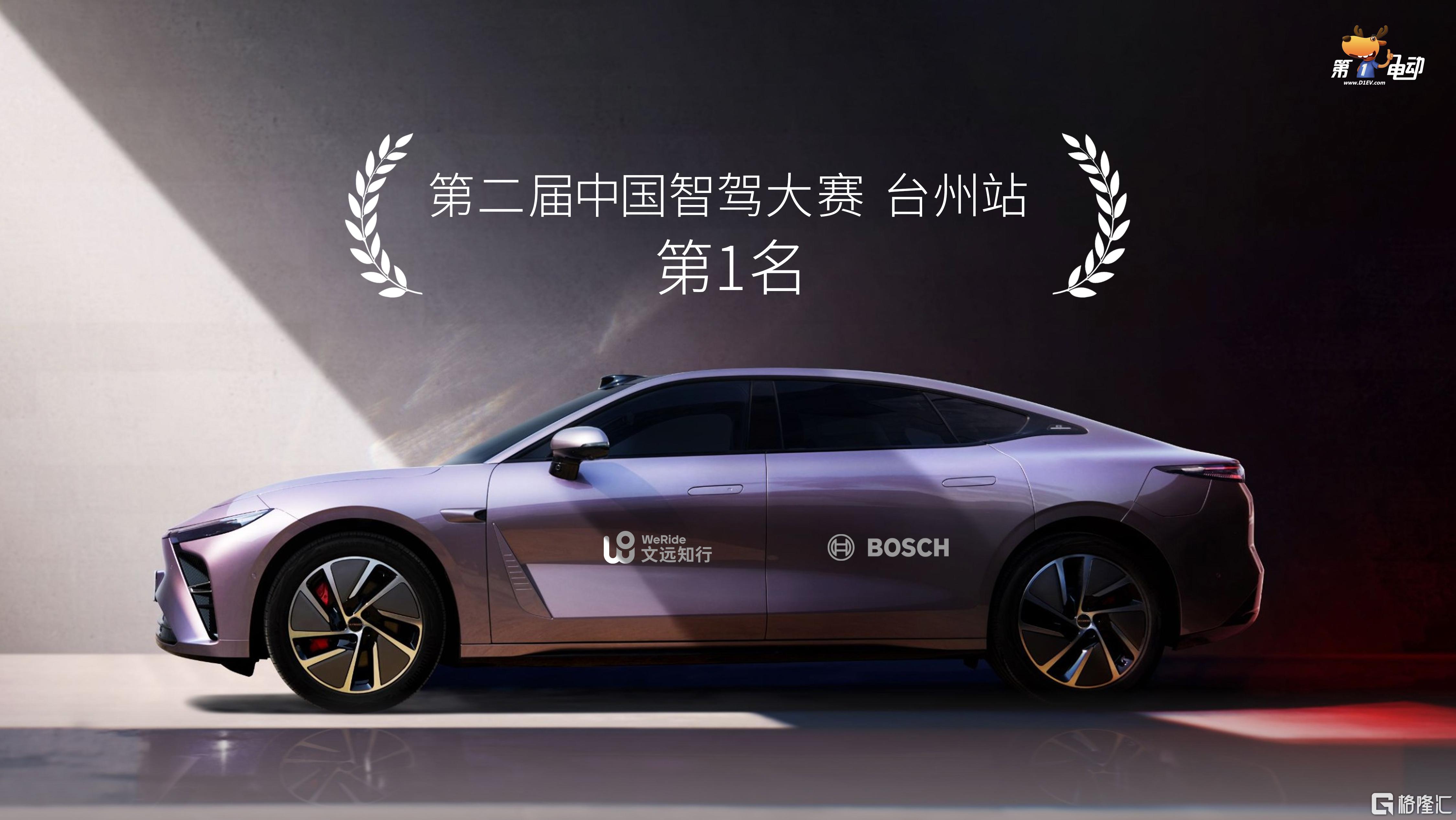
技压群雄,文远知行一段式端到端ADAS方案问鼎中国智驾大赛
Ge Long Hui· 2025-12-04 07:10
Core Insights - The Chery Star Era ES, empowered by WeRide and Bosch, won the championship at the China Intelligent Driving Competition in Taizhou, achieving a unique "zero takeover" performance and scoring the highest in the event, leading the second place by nearly 10 points [1][4][11]. Group 1: Competition Overview - The competition consisted of preliminary and final rounds, selecting the highest-scoring models from various ADAS solutions for the finals, while other solutions had a main model directly enter the finals [4]. - The Taizhou event featured a record-long course of 35 km and introduced a strict scoring system where all takeovers were recorded and deducted points, significantly increasing the difficulty of scoring [7][11]. Group 2: Performance and Technology - The Chery Star Era ES achieved a score of 112.81 points, demonstrating its ability to maintain stable performance under complex road conditions and a zero-tolerance takeover scoring mechanism [11]. - WeRide's WePilot 3.0 represents a significant advancement in AI model integration, showcasing high human-like performance in various countries and receiving praise from customers and media [11]. - WePilot 3.0 employs a single end-to-end AI model that integrates perception, prediction, and planning control, enhancing decision-making consistency and safety in dynamic environments [11][12]. Group 3: Future Developments - WePilot 3.0 is designed to support the mass development of L2 advanced driver assistance systems, compatible with various computing platforms and multi-modal perception hardware, facilitating rapid adaptation for different manufacturers [17]. - The technology is already in mass production in the Chery Star Era ES and ET models, with plans to expand its availability to more models from Chery and GAC Group, providing consumers with reliable and efficient L2 assistance at accessible prices [17].

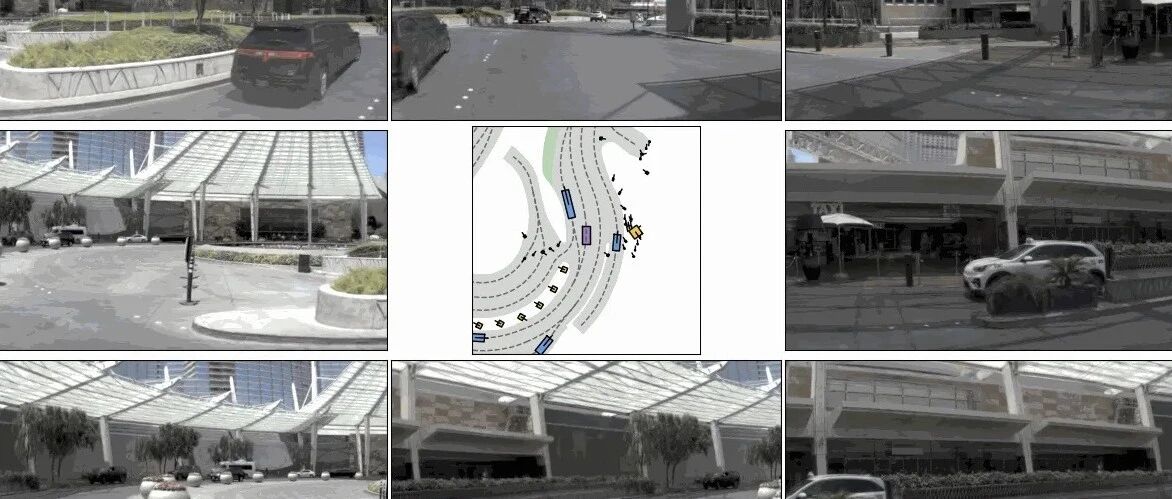
李弘扬团队最新!SimScale:显著提升困难场景的端到端仿真框架,NavSim新SOTA
自动驾驶之心· 2025-12-04 03:03
Core Viewpoint - The article discusses the limitations of current data scaling methods in autonomous driving and introduces SimScale, a framework designed to generate critical driving scenarios through scalable 3D simulation, enhancing the performance of end-to-end driving models without the need for more real-world data [2][5][44]. Background Review - Data scaling has been a fundamental principle in modern deep learning across various fields, including language and vision. In autonomous driving, end-to-end planning leverages large-scale driving data to create fully autonomous systems [5][44]. SimScale Framework - SimScale is a simulation generation framework that utilizes high-fidelity neural rendering to create diverse reactive traffic scenarios and pseudo-expert demonstrations. It integrates simulation and real-world data to enhance the robustness and generalization of various end-to-end models [6][12][44]. Simulation Data Generation - The framework employs a 3D Gaussian Splatting (3DGS) simulation data engine to control the states of the vehicle and other agents over time, rendering multi-view videos from the vehicle's perspective. This process involves perturbing vehicle trajectories to maximize state space coverage and generating corresponding expert trajectories for comparison [13][15][19]. Experimental Results - The results from the navhard and navtest benchmark tests show significant performance improvements across all models, with GTRS-Dense achieving a score of 47.2 on navhard, marking a new state-of-the-art performance. The integration of simulation data enhances model robustness in challenging and unseen scenarios [30][31][32][44]. Data Scaling Analysis - The study analyzes the scaling behavior of different planners under fixed real-world data conditions, revealing that the performance of planners improves predictably with increased simulation data. The exploration of pseudo-expert behaviors and interactive environments significantly enhances the effectiveness of simulation data [33][38][39][44]. Conclusion - SimScale demonstrates how large-scale simulation can amplify the value of real-world datasets in end-to-end autonomous driving. The framework's ability to generate pseudo-expert data and its collaborative training approach lead to notable improvements in model performance, emphasizing the importance of simulation in the development of autonomous driving technologies [44].
驭势科技 | 环境感知算法工程师招聘(可直推)
自动驾驶之心· 2025-12-04 03:03
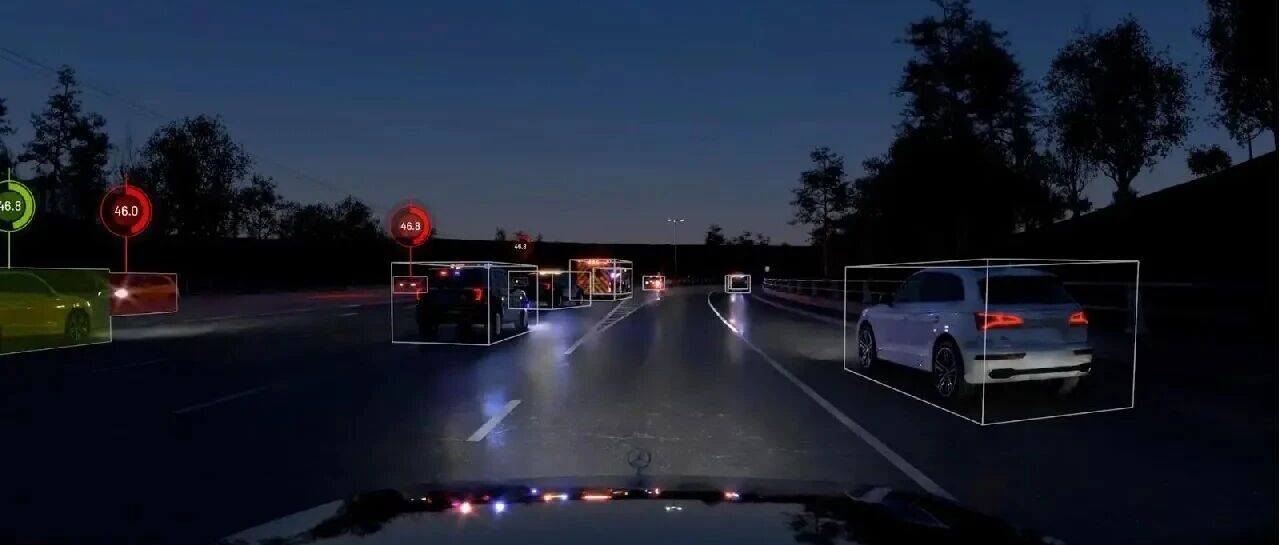
Core Viewpoint - The article emphasizes the critical importance of environmental perception algorithms in ensuring the safety of autonomous driving, highlighting the need for skilled professionals in this field [5]. Group 1: Job Responsibilities - The role involves accurately detecting and locating all objects in the surrounding environment, such as roads, pedestrians, vehicles, and bicycles, to ensure safe driving [5]. - Responsibilities include processing data from machine vision and LiDAR for autonomous driving applications, achieving complex perception functions like multi-target tracking and semantic understanding [5]. Group 2: Qualifications - A solid mathematical foundation is required, particularly in geometry and statistics [5]. - Proficiency in machine learning and deep learning, along with practical experience in cutting-edge technologies, is essential [5]. - Experience in algorithms related to scene segmentation, object detection, recognition, and tracking based on vision or LiDAR is necessary [5]. - Strong engineering skills are required, with expertise in C/C++ and Python, as well as familiarity with at least one other programming language [5]. - Knowledge of 3D imaging principles and methods, such as stereo and structured light, is important [5]. - A deep understanding of computer architecture is needed to develop high-performance, real-time software [5]. - A passion for innovation and creating technology to solve real-world problems is encouraged [5].
三年半亏近8亿、现金流告急,驭势科技再闯港股“补血”
3 6 Ke· 2025-12-04 00:35
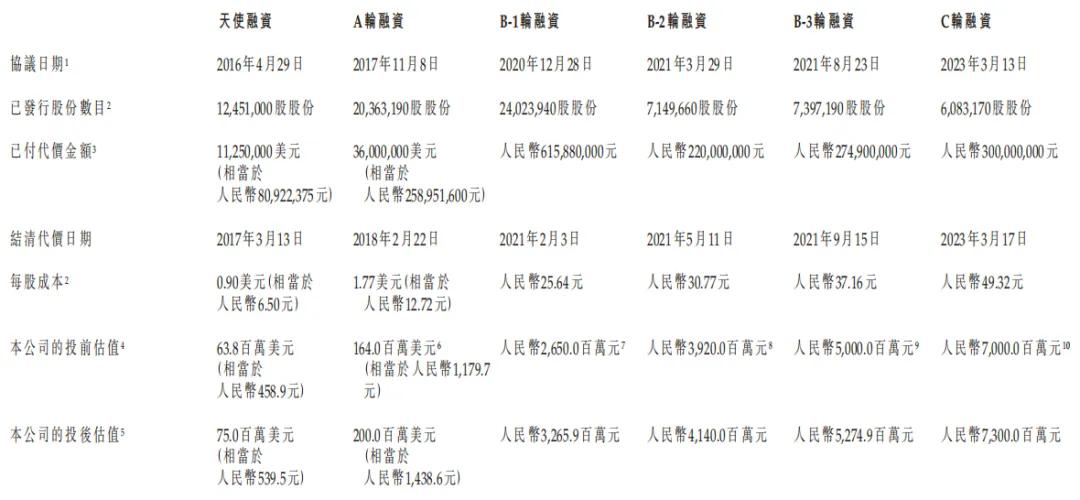
Core Viewpoint - Yushi Technology has submitted a second application for listing on the Hong Kong Stock Exchange, focusing on L4 autonomous driving solutions, particularly in closed and semi-closed scenarios such as airports and industrial parks [2][5][30]. Group 1: Company Overview - Founded in 2016, Yushi Technology specializes in L4-level autonomous driving solutions and has developed 52 models suitable for various scenarios [3][5]. - The company was co-founded by Wu Gansha, a notable figure in the autonomous driving industry and former head of Intel's China Research Institute [3][9]. Group 2: Financial Performance - Yushi Technology has raised approximately 1.751 billion RMB through six rounds of financing, with a post-financing valuation reaching 7.3 billion RMB [5][12]. - The company reported a significant revenue increase from 65.48 million RMB in 2022 to an estimated 265.5 million RMB in 2024, with a compound annual growth rate of about 110% [22][24]. - Despite revenue growth, Yushi Technology remains unprofitable, with pre-tax losses of 249.7 million RMB in 2022 and 213.1 million RMB in 2023 [22][24]. Group 3: Business Segments - The company's revenue is primarily derived from four segments: autonomous vehicle solutions, autonomous driving kits, software solutions, and vehicle leasing services [15][24]. - In 2024, the autonomous vehicle solutions segment accounted for 55.2% of total revenue, while the software solutions segment contributed 25.4% [24]. Group 4: Market Position - Yushi Technology holds a 91.7% market share in the airport scenario market in Greater China and a 45.1% share in the industrial park scenario market [16][17]. - The company has established partnerships with 17 airports in China and 3 overseas airports, indicating a strong presence in the market [16]. Group 5: Funding and Cash Flow - As of June 30, 2025, Yushi Technology had cash and cash equivalents of 170 million RMB, down from 222 million RMB at the end of 2024, highlighting ongoing cash flow challenges [29][30]. - The company is under pressure to list due to its financial situation, as it continues to operate at a loss while investing heavily in research and development [30].
英伟达开源自动驾驶软件,中国车企要接吗?
汽车商业评论· 2025-12-03 23:07
Core Insights - The article discusses the launch of the Alpamayo-R1 model by NVIDIA, which is the world's first open-source visual-language-action (VLA) model designed for autonomous driving scenarios, enhancing decision-making through "chain reasoning" [5][10][12] - The model significantly improves safety in complex long-tail scenarios, achieving a 12% increase in planning accuracy, a 35% reduction in accident rates, and a 25% decrease in near-miss incidents [10][12] - NVIDIA's strategy includes expanding its ecosystem influence by providing open-source technology, allowing automakers to quickly assemble autonomous driving systems [14][16] Technical Advancements - The Alpamayo-R1 model processes sensor data into natural language descriptions, enabling step-by-step reasoning similar to human drivers [5][10] - The model's low latency response of 99 milliseconds enhances its effectiveness in real-time decision-making [10] - The accompanying Cosmos developer toolchain offers resources for data construction, scene generation, and model evaluation, facilitating model fine-tuning and deployment [12] Strategic Considerations - NVIDIA's move to open-source its core algorithms is seen as a strategic effort to solidify its market position and drive demand for its hardware, such as the Orin/Thor automotive-grade chips [14][16] - The initiative is expected to establish industry standards for safety and evaluation, aligning with global regulatory demands for transparency in autonomous driving [19] - The shift from closed to open-source models in the autonomous driving sector may trigger a new wave of open-source development, as decision-making algorithms become critical competitive factors [24] Industry Impact and Opportunities - NVIDIA's open-source approach intensifies competition between open-source and closed-source ecosystems in the autonomous driving industry [21][24] - Chinese automakers, heavily reliant on NVIDIA's platforms, stand to benefit from the open-source tools for local algorithm development and scene tuning [26][27] - However, the industry faces challenges, including a significant talent gap in autonomous driving engineering, with a projected shortfall of over one million professionals by 2025 [29][30]

无人物流车行业即将迎来爆发期
Zhong Guo Zheng Quan Bao· 2025-12-03 20:28
Core Insights - The company has made significant progress in the large-scale deployment of its autonomous logistics vehicles, securing a total of 500 orders for the Xiaozhu T5 model from Master Company, indicating a growing market demand for autonomous logistics solutions [1][2] - The company is optimistic about the future of autonomous logistics vehicles, anticipating a surge in demand and a potential explosion in the industry as it continues to iterate on technology and expand its application boundaries [1][3] - The company aims to enhance its production capacity, with expectations to deliver around 10,000 units in the coming year, reflecting a strategic approach to scaling operations gradually [3][4] Order Acquisition and Market Expansion - The company has recently secured additional orders, including 100 units of autonomous logistics vehicles and a strategic partnership with Hunan Xiangjiang Intelligent, focusing on deepening technology applications in the region [2][3] - The Xiaozhu autonomous vehicles are beginning to penetrate the national market, with reports indicating that the company’s L4 autonomous driving business has made significant breakthroughs [2][3] - The company is collaborating with various partners to design, produce, and deliver 800 units of logistics vehicles that meet automotive standards, showcasing its commitment to expanding its product matrix [2][4] Technological Advancements and Cost Reduction - The company is focused on reducing costs through technological advancements and economies of scale, which are seen as key competitive advantages in the autonomous logistics vehicle market [4][5] - The company plans to continue investing in technology iteration and research and development for its autonomous logistics vehicles, aiming to build a mutually beneficial ecosystem with partners [4][5] - The company has announced plans to issue new H-shares to raise approximately HKD 204 million, with a significant portion allocated to the development of L4 autonomous logistics vehicles [4][5] Strategic Collaborations and Product Development - The company has achieved breakthroughs in the passenger vehicle sector, collaborating with a leading domestic automotive brand to provide advanced intelligent driving solutions for flagship SUV models [5] - The company is expanding its global footprint by entering multiple export vehicle supply chains and exploring diverse application scenarios, enhancing overall system cost-effectiveness and user experience [5] - The company has established partnerships with 42 automotive manufacturers, indicating a broadening customer base and ongoing global expansion efforts [5]
美股异动 | 文远知行(WRD.US)涨逾3% 获木头姐旗下投资公司建仓
Zhi Tong Cai Jing· 2025-12-03 15:00
Core Viewpoint - Cathie Wood's ARK Investment has initiated a position in WeRide (WRD.US), purchasing 417,000 shares, indicating confidence in the company's long-term prospects [1] Group 1: Company Performance - WeRide's stock rose over 3% to $8.99 following the news of ARK Investment's acquisition [1] - Bank of America has initiated coverage on WeRide with a "Buy" rating, setting a target price of $12 for US shares and HK$31 for Hong Kong shares, suggesting an upside potential of approximately 45.6% and 50% respectively [1]
文远知行(WRD.US)涨逾3% 获木头姐旗下投资公司建仓
Zhi Tong Cai Jing· 2025-12-03 14:51
Core Viewpoint - Cathie Wood's ARK Investment has initiated a position in WeRide (WRD.US), purchasing 417,000 shares, indicating confidence in the company's long-term prospects [1] Group 1: Company Developments - WeRide's stock price increased by over 3%, reaching $8.99 [1] - ARK Investment's acquisition reflects a strategic long-term investment in WeRide [1] Group 2: Market Analysis - A U.S. bank has initiated coverage on WeRide, assigning a "Buy" rating with a target price of $12 for U.S. shares and HK$31 for Hong Kong shares, suggesting potential upside of approximately 45.6% and 50% respectively [1]
优步(UBER.US)持续拓展业务版图!携手Avride于达拉斯推出自动驾驶出租车服务
智通财经网· 2025-12-03 13:47
Core Insights - Uber is collaborating with Nebius's autonomous vehicle subsidiary Avride to launch self-driving ride-hailing services in Dallas, marking the fourth U.S. city for Uber's autonomous services [1][2] - The initial phase will involve a small number of Avride's autonomous taxis, with plans to expand to hundreds of vehicles in the coming years [2] - Uber has committed to investing up to $375 million in Avride to accelerate the expansion of its autonomous fleet, contingent on achieving specific milestones [2] Group 1 - Uber's partnership with Avride is part of a broader strategy to integrate human-driven and autonomous vehicles into its ride-hailing and delivery platforms [1] - The service will initially include a safety operator in each vehicle, with future plans for fully autonomous operations [1] - Uber has established over ten similar technology partnerships in the past year, aiming to deploy autonomous vehicles in at least ten cities by the end of 2026 [1] Group 2 - The investment in Avride will support product development and expansion into new markets, with a target fleet size of 500 autonomous vehicles [2] - Uber's existing partnerships for autonomous services include collaborations with Waymo in Phoenix, Austin, and Atlanta, and with WeRide in Abu Dhabi and Riyadh [2] - Future pilot projects are planned in Los Angeles with Volkswagen, Arlington with May Mobility, Dubai with WeRide, and London with Wayve [3]
