半导体

Search documents
英伟达近期做出调整,震惊华尔街
财富FORTUNE· 2026-03-06 13:09
Core Viewpoint - Nvidia reported record revenue of $215.9 billion for the fiscal year 2026 and $68.1 billion for the fourth quarter, exceeding market expectations. The CFO announced that starting from the first quarter of fiscal year 2027, stock-based compensation will be included in non-GAAP financial metrics, a significant shift in accounting policy [1][4]. Group 1: Financial Performance - Nvidia's stock-based compensation expenses rose from approximately $4.7 billion in fiscal year 2025 to $6.4 billion in fiscal year 2026, marking a 35% increase. The company's stock price has also surged, with a 60% increase over the past year, although it saw a slight decline after the latest earnings report [4]. - The adjustment in accounting policy is seen as a response to the company's strong profitability, as the impact of excluding stock-based compensation on its financial results has diminished over time. In 2020, excluding stock-based compensation inflated Nvidia's revenue by 28.3%, while by 2025, the same adjustment only increased revenue by 4.7% [5][6]. Group 2: Industry Context and Implications - The decision to include stock-based compensation in non-GAAP metrics aligns Nvidia with other major tech companies like Alphabet, Amazon, Apple, and Microsoft, making comparisons more straightforward. This move may provide Nvidia a competitive edge over its semiconductor peers, as it allows for a more accurate assessment of its financial health [6][7]. - Analysts suggest that if Nvidia's competitors were pressured to adopt similar accounting practices, they would face a significant decline in their earnings per share (EPS), with estimates showing a drop of 14% to 20% for companies like Broadcom and AMD, while Nvidia's EPS would only decrease by about 3% [7].


资讯日报:美国据悉拟将 AI 芯片出口管制扩展至全球-20260306
Guoxin Securities Hongkong· 2026-03-06 11:13
Market Overview - The Hong Kong stock market showed mixed performance with the Hang Seng Index closing at 25,321, up 0.28%, while the Hang Seng Tech Index fell by 0.69% to 4,796 [3][9] - The Shanghai Composite Index increased by 0.64% to 4,109, while the Nikkei 225 rose by 1.90% to 54,246 [3][9] - The S&P 500 and Nasdaq experienced slight declines of 0.56% and 0.26%, respectively, closing at 6,870 and 22,807 [3][9] Industry Insights - The demand for AI-related electricity has significantly boosted the power equipment sector, with Northeast Electric rising by 22.11%, Dongfang Electric by 17.62%, and Shanghai Electric by 15.76% [9] - The brain-computer interface concept gained traction, with Nanjing Panda Electronics rising over 10% following the government's focus on future industries including quantum technology and brain-computer interfaces [9] - The oil and gas sector faced pressure from falling international oil prices, with Shandong Molong dropping 15.29% and Sinopec Oilfield Services declining by 11.11% [9] - The strong US dollar negatively impacted gold's safe-haven appeal, leading to declines in stocks like Zhumeng Gold and Chifeng Gold by 5.33% and 3.69%, respectively [9] - The aviation sector was hit by Middle East tensions, with China Southern Airlines and Air China falling by 4.10% and 2.79% [9] - MINIMAX reported a significant revenue increase of 158.9% year-on-year, with total revenue reaching $79.04 million [9] - The semiconductor industry is expected to see strong growth, with Broadcom projecting AI chip revenues to exceed $100 billion next year, leading to a 4.8% increase in its stock price [12]
放蒋出笼,打击伊朗
债券笔记· 2026-03-06 10:52
Group 1 - The government work report from the Two Sessions emphasizes the cultivation and growth of emerging and future industries, including future energy, quantum technology, embodied intelligence, brain-computer interfaces, and 6G technology [2] - The A-share market showed strong performance across various sectors, with funds actively investing in the areas mentioned in the Two Sessions report, although many stocks experienced a pattern of rising and then falling [2] - Global risk assets are experiencing a rebound, indicating a shift in market sentiment [2] Group 2 - The South Korean stock market's volatility is linked to its "three highs" structure: high foreign ownership, active retail investor leverage, and a significant weight in the semiconductor sector [4] - As of December 2025, foreign ownership in South Korea reached 32.9%, the highest since April 2020, with foreign stakes in major semiconductor companies like SK Hynix and Samsung Electronics at 53.8% and 52.3%, respectively [4] - Retail investors account for 80% of trading in the South Korean market, contributing to increased market fluctuations due to their tendency to engage in high-leverage trading [4] - The semiconductor sector, particularly Samsung Electronics and SK Hynix, holds a combined weight of approximately 40% in the KOSPI index, making the index highly sensitive to the semiconductor market's performance [4]

思瑞浦:持续高景气-20260306
China Post Securities· 2026-03-06 10:25
Investment Rating - The report maintains a "Buy" rating for the company, SIRUI (688536) [5][12]. Core Insights - The company reported a significant revenue increase of 75.65% year-on-year, achieving 2.142 billion yuan in revenue for 2025, with a net profit of 173 million yuan [2][3]. - The integration of Chuangxin Micro through acquisition has allowed the company to cover four major downstream markets: industrial, automotive, communication, and consumer electronics, enhancing its product matrix and deepening collaborations with leading clients [3]. - The company's optical module market business continues to grow, with an increase in market share for AFE products and new product shipments in the general and AI server markets [4]. Financial Forecast - Revenue projections for 2025, 2026, and 2027 are estimated at 21.4 billion yuan, 28.8 billion yuan, and 35.4 billion yuan, respectively, with net profits expected to be 1.7 billion yuan, 3.2 billion yuan, and 4.5 billion yuan [5][7]. - The company is expected to maintain a strong growth trajectory, with a projected revenue growth rate of 75.65% for 2025, followed by 34.28% in 2026 and 22.92% in 2027 [7][11]. Company Overview - The latest closing price for SIRUI is 161.36 yuan, with a total market capitalization of 22.3 billion yuan [8]. - The company has a low debt-to-asset ratio of 14.5%, indicating a strong financial position [8]. - The first major shareholder is Shanghai Huaxin Venture Capital Partnership [8].

电装拟收购罗姆
半导体芯闻· 2026-03-06 10:24
Core Viewpoint - Denso Corporation has proposed to acquire shares of Rohm Co., a major semiconductor manufacturer, indicating a strategic move to enhance collaboration in the semiconductor sector, particularly in automotive electrification and digital technology development for next-generation vehicles [1]. Group 1: Acquisition Proposal - Denso has expressed its consideration of various strategic options, including the acquisition of shares in Rohm [1]. - Rohm confirmed receipt of the acquisition proposal from Denso, which includes the acquisition of its shares [1]. Group 2: Existing Relationship - In May 2025, Denso and Rohm reached a basic agreement to collaborate in the semiconductor field, focusing on automotive electrification and the development of next-generation vehicles using digital technology [1]. - As of September last year, Denso held approximately 5% of Rohm's shares [1]. Group 3: Market Context - Both companies are listed on the Tokyo Stock Exchange's top tier, the First Section [1].

芯片巨头,都投了这家光公司
半导体芯闻· 2026-03-06 10:24
Core Insights - Ayar Labs, a startup focused on optical chip technology, has raised $155 million in Series D funding and an additional $500 million, achieving a valuation of $3.8 billion [2][4] - The company aims to address the limitations of traditional copper interconnects in AI infrastructure by introducing optical interconnect solutions [10][12] Company Background - Founded in 2011 by a research team from MIT and other universities, Ayar Labs focuses on overcoming the physical limits of electronic communication in chips [5][6] - The founders, including Chen Sun, Mark Wade, and Vladimir Stojanovic, have a background in high-performance computing and optical technology [6][8] Technology Overview - Ayar Labs has developed TeraPHY, the first in-package optical I/O chip, and SuperNova, a multi-wavelength light source, to enhance data transfer speeds and reduce latency [10][12][16] - TeraPHY features a modular design with 70 million transistors and supports 4 Tbps bidirectional bandwidth, significantly improving data movement for AI applications [12][14] Market Challenges - The AI infrastructure faces bandwidth, latency, and power consumption challenges due to traditional copper interconnects, which limit GPU efficiency as systems scale [10][18] - Ayar Labs' technology aims to provide a solution to these challenges, with the potential for significant performance improvements in AI workloads [10][18] Competitive Landscape - Ayar Labs competes with other startups like Lightmatter and Xscape Photonics, as well as established companies like Intel and Broadcom, all of which are exploring optical interconnect technologies [26][37] - The competitive environment is characterized by varying technological approaches, with Ayar Labs focusing on modular integration while others pursue more radical designs [27][30] Future Outlook - Ayar Labs plans to achieve mass production of its chips by mid-2026, with an expected annual output of over 100 million units by 2028 [41][43] - The transition from copper to optical interconnects in data centers is anticipated to be critical between 2026 and 2028, positioning Ayar Labs to capitalize on this shift if it can meet production timelines and reliability standards [43][44]


H200出口新变化,20万颗
半导体芯闻· 2026-03-06 10:24
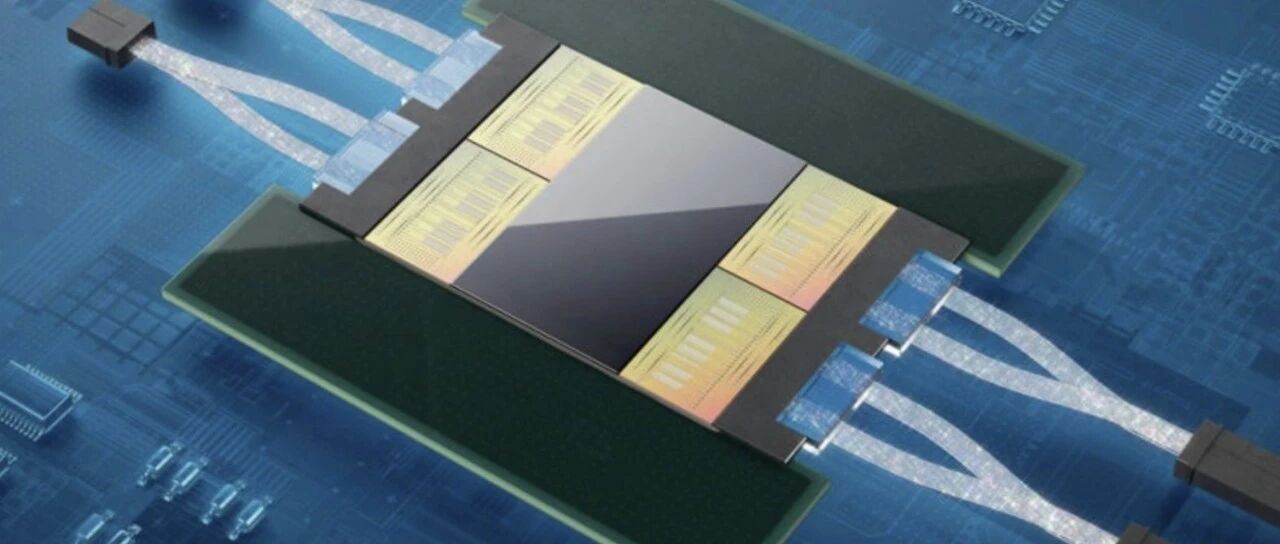
Core Viewpoint - The article discusses the potential new regulatory framework by the U.S. government to strengthen oversight on the export of artificial intelligence chips, particularly in light of the uncertain export prospects for NVIDIA's H200 GPU [1]. Group 1: Regulatory Changes - U.S. officials are considering new rules that would require foreign governments to commit to investing in U.S. AI data centers or provide security assurances for the export of 200,000 or more chips [1]. - This proposal marks the first attempt to control the flow of AI chips to allies since the previous "AI diffusion" rules were abolished under the Trump administration [1]. - The new framework would give the U.S. government greater influence over domestic AI investments and determine the allocation of AI processors to different countries [1]. Group 2: Export Requirements - To obtain exemptions, chip manufacturers like NVIDIA or AMD would need to monitor the chips post-export, and buyers must run software to prevent processors from being connected to large-scale clusters [2]. - Even small shipments of fewer than 1,000 AI chips may require export licenses, while larger orders could face stricter conditions, such as government-to-government assurances for orders up to 100,000 chips [2]. - For orders approaching 200,000 chips, additional oversight may be introduced, including on-site inspections by U.S. export control officials [2]. Group 3: Comparison with Existing Frameworks - The proposed rules differ significantly from the Biden administration's framework, which allows close allies to import advanced AI chips with minimal restrictions while maintaining existing bans on countries like Russia [1]. - Previously restricted China was allowed to purchase NVIDIA's second most advanced AI chips last December, but deliveries have reportedly stalled due to national security reviews [1]. Group 4: Tiered Export System - A tiered export system is proposed, categorizing shipments based on volume and requirements: - **Tier 1**: Less than 1,000 units - streamlined review for NVIDIA GB300 GPUs [4]. - **Tier 2**: 1,000 to 100,000 units - foreign buyers may need government assurances [4]. - **Tier 3**: 100,000 to 200,000 units - additional oversight and likely on-site inspections [4]. - **Tier 4**: More than 200,000 units - requires host government approval and is limited to allies with U.S. AI investments [4].
三星 Exynos 2700芯片研发,快马加鞭
半导体芯闻· 2026-03-06 10:24
Group 1 - The core viewpoint of the article highlights Samsung's accelerated development of the Exynos 2700 chip, driven by the success of the Exynos 2600, with initial samples already sent for testing in the Galaxy S27 series [1][2] - Samsung's System LSI division has completed the design of the Exynos 2700 by the end of 2025 and has produced the first smartphone chip samples early this year, aiming for final development completion in the first half of this year [1] - The Exynos 2700 will utilize Samsung's second-generation 2nm process technology (SF2P), expected to enhance performance capabilities by 95% compared to the Exynos 2600, potentially widening the gap with Qualcomm's Snapdragon series [1] Group 2 - The Exynos 2600 has shown success in performance and efficiency, with CPU performance nearing that of Snapdragon 8 Elite Gen 5 and slightly better GPU performance, indicating a strong comeback for Samsung after previous negative perceptions from Exynos 990 and Exynos 2200 [2] - Samsung plans to use Exynos chips in more Galaxy devices, as the rising costs of processors and memory chips make self-developed Exynos chips a more economical choice for the company [2]
安世中国最新发声
券商中国· 2026-03-06 09:54
Core Viewpoint - Nexperia B.V. has disabled all employee office accounts in China, significantly impacting operations at Nexperia China, particularly affecting key systems like Office 365 and SAP [1] Group 1: Operational Impact - The disabling of accounts led to interruptions in production processes, specifically in the "customer-supplied wafers to factory SAP order transfer to production" stage [1] - Orders that had already been entered into the production process in SAP were not affected, indicating that some operational continuity was maintained [1] - Nexperia China has activated an emergency plan to restore critical systems and production scheduling, with most business operations now back online [1] Group 2: Financial Market Reaction - Following the announcement, the stock price of Nexperia's parent company, Wingtech Technology, surged, with an increase of over 9% at one point, closing with a gain of 5.05% [1]


特朗普表态下一个就是古巴,OpenAI推出GPT-5.4,胡润全球富豪榜发布
新财富· 2026-03-06 08:22
Major Events Observation - Air China resumed its Middle East route with the first flight landing in Riyadh, signaling a gradual restoration of regional order [2] - South Korea announced a market stabilization project worth 100 trillion KRW to support industries heavily reliant on the Middle East [4] AI Frontline Observation - SoftBank is seeking up to $40 billion in loans for investment in OpenAI, marking its largest dollar-denominated borrowing [10] - OpenAI released GPT-5.4 and GPT-5.4 Pro models, enhancing capabilities in reasoning and programming while reducing error rates by 33% [11] - ByteDance introduced the Doubao-Seedance-2.0 video generation AI model, with pricing set at 28 CNY per million tokens for video input [13] Capital Market Updates - US stock markets experienced a collective decline, with the Dow Jones down 1.61% and the S&P 500 down 0.56%, amid rising oil prices and geopolitical concerns [18] - A-shares saw a positive trend with the Shanghai Composite Index rising 0.41%, driven by strong performances in AI, semiconductor, and agricultural sectors [20] - Notable stocks in the semiconductor sector showed mixed results, with Broadcom rising over 4.8% while AMD and Micron experienced slight declines [19]