集成电路

Search documents
申万宏源证券晨会报告-20251226
Shenwan Hongyuan Securities· 2025-12-26 00:42
Group 1: JD (京东) Analysis - The revenue for Q4 2025 is projected to decline by 0.4% year-on-year to 345.5 billion yuan, with adjusted net profit expected to be 216 million yuan, resulting in a net profit margin of 0.1% [2][12] - JD's retail revenue is anticipated to decrease by 4.7% year-on-year to 292.6 billion yuan in Q4 2025, primarily due to a high base effect from the previous year driven by national subsidies [3][12] - The company is expected to face pressure on growth in the battery-powered category, while the daily necessities category is projected to maintain relatively stable growth [3][12] - JD is actively responding to market changes by increasing subsidies, which may lead to a decline in retail profit margins year-on-year [3][12] - The company is focusing on its food delivery and international business, with expectations of narrowing losses in the food delivery segment in Q4 [12] - JD has launched "JD Review" to innovate the local life service ecosystem, aiming to provide objective consumer references [12] Group 2: Deer Chemical (迪尔化工) Analysis - Deer Chemical is transitioning from a cyclical business model to a growth-oriented one by integrating its nitrate production with molten salt energy storage [4][11] - The company is expected to see a gradual increase in production capacity starting in 2025, which will enhance its sales and overall performance [4][11] - The traditional business is anticipated to recover as the chemical industry stabilizes, with nitrate prices supported by liquid ammonia [11][13] - The demand for molten salt is projected to grow significantly due to its applications in concentrated solar power and flexible coal power generation [13][16] - The company aims to establish a complete product matrix involving potassium nitrate and sodium nitrate, enhancing its competitive edge in the energy storage market [16] Group 3: Unisoc (紫光国微) Analysis - Unisoc is collaborating with Ningde Times to establish a leading platform for automotive-grade chips, enhancing its market competitiveness [15][16] - The establishment of Unisoc Tongxin aims to optimize capital structure and improve performance in the automotive domain [16] - The company is expected to benefit from the growing demand for special integrated circuits driven by national defense and commercial aerospace sectors [16] - Unisoc maintains its profit forecasts for 2025-2027, projecting net profits of 1.723 billion, 2.460 billion, and 3.495 billion yuan respectively, with a strong growth outlook [16]


强化江苏在长三角一体化中的辐射带动功能
Xin Hua Ri Bao· 2025-12-26 00:22
Group 1: Core Perspectives - The emphasis on promoting the integrated development of the Yangtze River Delta to achieve significant breakthroughs and lead in Chinese modernization [1] - Jiangsu's strategic focus on breaking down administrative barriers and facilitating the deep integration of innovation, industry, data, capital, and talent chains [1][2] Group 2: Responsibilities and Governance - Jiangsu's need to understand its significant responsibilities and demonstrate a new model of effective government-market integration [2] - Promotion of cooperation pilot experiences such as "Suzhou-Singapore" and "Wuxi-Greater Bay Area" through policy guidance and collaborative platforms [2] Group 3: Industrial Development - The focus on core functional agglomeration to build an original innovation system and achieve disruptive breakthroughs in strategic sectors like integrated circuits, biomedicine, and new energy [3] - The establishment of collaborative platforms for innovation ecosystems in the Yangtze River Delta, including technology transaction hubs and talent mobility networks [3] Group 4: Data and AI Development - The need for market-oriented reforms in data elements to create a new intelligent economic ecosystem centered on "computing power-data-algorithm" [4] - Development of AI-enabled service platforms and smart agriculture solutions to enhance the region's industrial capabilities [4] Group 5: Education and Talent Integration - The proposal for a comprehensive reform pilot in education, science, and talent to eliminate barriers between disciplines and industries [5] - Support for dynamic adjustment of academic disciplines based on industry needs and the establishment of cross-disciplinary supercomputing centers [5] Group 6: Regional Collaboration - The integration of collaborative networks into national strategic layouts to enhance regional coordinated development [6] - Promotion of industrial cooperation between different regions, focusing on strategic emerging industries like integrated circuits and biomedicine [6] Group 7: Open Systems and Trade - Strengthening Jiangsu's role as a dual-directional open hub and advancing institutional openness through innovative practices in trade and data flow [7] - Development of new energy equipment and high-end textiles as part of the export base, alongside the establishment of a digital trade international hub in the Yangtze River Delta [7]
臻镭科技股价大涨市值286亿 前三季扣非增18倍负债率仅7%
Chang Jiang Shang Bao· 2025-12-26 00:13
Core Viewpoint - Zhenlei Technology (688270.SH) has seen a significant stock price increase, reaching a market capitalization of approximately 28.58 billion yuan, driven by strong operational performance and market optimism [1][2][5]. Stock Performance - On December 25, Zhenlei Technology's stock opened slightly higher and surged throughout the day, closing up 16.90% at 133.50 yuan per share, marking a 2.81-fold increase since the beginning of 2025 [1][3]. - The stock price has risen from 35 yuan per share at the start of 2025 to a peak of 137.04 yuan per share, representing a maximum increase of 291.54% [3][4]. Financial Performance - For the first three quarters of 2025, Zhenlei Technology reported a net profit attributable to shareholders of approximately 101 million yuan, a year-on-year increase of 598.09%, and a non-net profit of about 79.1 million yuan, up 1801.49% [5][6]. - The company's operating revenue for the same period reached 302 million yuan, reflecting a year-on-year growth of 65.76% [5][6]. Market Position and Product Application - Zhenlei Technology specializes in integrated circuit chips and micro-systems, with products applied in various critical equipment models, including wireless communication terminals and Beidou navigation terminals [2][8]. - The company has established itself as a significant supplier of core components in special fields and has formed partnerships with leading research institutions and enterprises in the satellite internet sector [8][9]. Financial Health - As of September 2025, Zhenlei Technology's debt-to-asset ratio was a low 7.07%, with zero interest-bearing debt and a cash and investment total of 1.393 billion yuan, accounting for 58.21% of total assets [9]. - The company has consistently maintained a gross profit margin above 80% since 2020, with a gross profit margin of 82.26% for the first three quarters of 2025 [10].

宁德时代子公司参投!600亿龙头 大动作
Zhong Guo Zheng Quan Bao· 2025-12-25 23:26
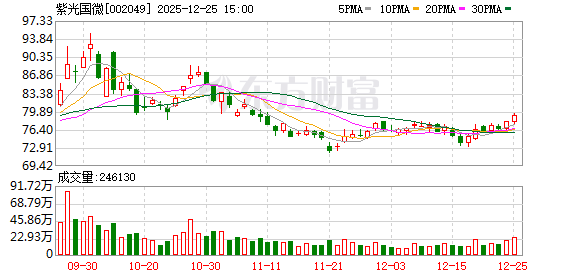
Core Viewpoint - Unisoc plans to acquire its automotive domain control chip business assets for an assessed price of 193 million yuan, reflecting an impressive valuation increase of 3723.15% [1][5]. Group 1: Company Announcements - Unisoc's wholly-owned subsidiary, Unisoc Tongxin, intends to jointly invest with five related parties and non-related party Ningde Times New Energy Technology Co., Ltd. to establish Unisoc Tongxin Technology (Beijing) Co., Ltd. with a registered capital of 300 million yuan [3][4]. - Unisoc Tongxin will contribute 153 million yuan, holding a 51% stake in the new company, while other investors will hold varying stakes [4]. Group 2: Business Operations - The primary business purpose of Unisoc Tongxin Technology is to engage in the research, development, production, and sales of automotive domain control chips [5]. - Following the completion of the transaction, Unisoc Tongxin Technology will be included in Unisoc Tongxin's consolidated financial statements [5]. Group 3: Impact of the Transaction - The transaction is expected to enhance company performance by allowing external investors to share losses according to their equity stakes, thereby improving financial health and market valuation [6]. - The independence of the automotive domain control chip business is anticipated to strengthen collaboration with key clients and enhance product definition, technological innovation, and competitiveness [6]. - The establishment of employee stock ownership platforms is expected to motivate core personnel, fostering team cohesion and growth alongside the company [6]. - Strategically, the independence of the automotive domain control chip business will improve its financing capabilities and overall competitiveness, solidifying its leading position in the automotive electronics sector [6]. Group 4: Financial Performance - Unisoc is recognized as a leading domestic integrated circuit design enterprise, with significant influence in special integrated circuits and smart security chips [7]. - For the first three quarters of 2025, Unisoc reported revenues of approximately 4.904 billion yuan, a year-on-year increase of 15.05%, and a net profit attributable to shareholders of approximately 1.263 billion yuan, up 25.04% year-on-year [7].


美媒年终感慨:“永远不要低估中国”
Xin Lang Cai Jing· 2025-12-25 22:48
Group 1 - The article emphasizes the importance of not underestimating China as a major economic superpower, especially in light of its resilience against challenges such as the trade war initiated by former President Trump [1][4][5] - Predictions at the beginning of the year suggested that China might follow Japan's economic downturn in the 1990s, but by the end of the year, perceptions shifted as China maintained its position as a vital manufacturing hub [5][6] - The return of foreign investors to the Hong Kong stock market, which reached a four-year high, is attributed to the ongoing advancements in artificial intelligence and China's ability to counteract trade pressures [5][6] Group 2 - China's focus on higher education has led to a significant increase in talent, with the number of engineers rising from 5.2 million in 2000 to 17.7 million in 2020, and 47% of top AI researchers being educated in China [2][5] - The article highlights China's pragmatic approach in the AI sector, focusing on application-oriented advancements that enhance manufacturing efficiency, exemplified by the use of industrial robots in automated factories [2][5] - China's trade surplus reached a record $1 trillion this year, surpassing other export powerhouses like Germany and Japan, with the fastest growth seen in advanced manufacturing sectors such as automobiles, integrated circuits, and shipbuilding [6] Group 3 - Domestic brands in China are successfully capturing consumer demand and gaining opportunities in global trade, with examples like Pop Mart achieving a gross margin of 70%, significantly higher than typical toy manufacturers [3][6] - The article suggests that Chinese brands will increasingly gain global recognition for their design and aesthetics, offering products that rival those from established markets [3][6]
共聚创新力 激活强引擎
Su Zhou Ri Bao· 2025-12-25 22:33
Core Insights - The Shanghai-Suzhou innovation cluster ranks sixth globally in the "Top 100 Global Innovation Clusters" list for 2025, as reported by the World Intellectual Property Organization, highlighting its strong intellectual property and innovation capabilities [1] - The integration of Shanghai and Suzhou's innovation resources is significantly enhancing collaborative effects, contributing to high-quality development in the Yangtze River Delta region [1][2] Group 1: National Strategy and Innovation Collaboration - The Central Economic Work Conference emphasizes the construction of international technology innovation centers in Beijing, Shanghai, and the Guangdong-Hong Kong-Macau Greater Bay Area, providing new opportunities for Suzhou to deepen its integration with Shanghai [2] - Suzhou has become a prominent area for the release of urban synergy effects, actively aligning with Shanghai to accelerate their integration and collaborative innovation efforts [2] Group 2: Innovation Ecosystem Development - The G60 Science and Technology Innovation Corridor and the Yangtze River Delta industrial innovation belt are crucial links for deepening collaboration between Shanghai and Suzhou [3] - The establishment of various innovation alliances and joint ventures, such as the "Large Size Silver-Free Battery Full Chain Technology and Equipment Innovation Alliance," showcases the commitment to overcoming key technological challenges [3] Group 3: Economic Performance and Innovation Capacity - By 2024, the combined GDP and industrial output of Shanghai and Suzhou are expected to exceed 8 trillion yuan, reflecting the maturity of the "Shanghai R&D + Suzhou Transformation" model [4] - As of October 2025, there are over 42,500 national high-tech enterprises and nearly 2,000 specialized "little giant" enterprises in the region, indicating a robust innovation capacity [4] Group 4: Resource Sharing and Ecosystem Integration - The collaboration between Suzhou and Shanghai has evolved from project-based interactions to a shared innovation ecosystem, exemplified by the establishment of the Shanghai Jiao Tong University Suzhou Innovation Institute [5] - The new Shanghai Jiao Tong University Suzhou Advanced Research Institute aims to integrate academic resources with local industry, fostering innovation and talent development [5] Group 5: Strategic Innovations and Infrastructure - The establishment of the COMAC Taicang Research Center marks a significant step in integrating Suzhou into the aircraft design and research chain, enhancing the local aerospace industry [6] - Kunshan is actively integrating into Shanghai's innovation ecosystem, implementing initiatives like the "Hu-Kun Technology Innovation Voucher" to facilitate cross-regional collaboration [6] Group 6: Cross-Regional Collaboration and Efficiency - The launch of the "Shanghai Airport-Suzhou Pre-Positioning Cargo Station" has significantly improved logistics efficiency, reducing costs and time for high-tech product exports [7][8] - The development of a comprehensive financial service system for high-tech enterprises in Suzhou has led to 57 companies successfully listing on the Shanghai Stock Exchange's Sci-Tech Innovation Board [8] Group 7: Future Directions - The Shanghai-Suzhou innovation cluster is poised to further integrate into the international technology innovation center framework, focusing on deepening collaborative development and enhancing new productive forces [9]
“十四五”时期我国信息化应用水平大幅提升 互联网普及率从70.4%提升至79.7%
Ren Min Ri Bao· 2025-12-25 22:19
Core Insights - During the "14th Five-Year Plan" period, China's level of information application has significantly improved, with internet penetration increasing from 70.4% to 79.7% [1] - The added value of the core digital economy industries as a percentage of GDP rose from 7.8% to 10.4%, maintaining China's position as the second-largest digital economy globally [1] - A nationwide government service "one network" has been established, with 92.5% of provincial administrative licensing matters processed online and achieving "one visit at most" [1] Technological Advancements - Breakthroughs in key core technologies have accelerated, with new achievements in integrated circuits, artificial intelligence, and basic software, including over 700 generative AI large model products registered [1] - The research and standardization of 6G technology is progressing steadily, with the first phase of technical testing completed [1] Network Infrastructure - The number of mobile IoT users increased from 1.136 billion to 2.9 billion [1] - The number of active IPv6 users rose from 462 million to 869 million [1] Rural Digital Development - The gap in internet penetration between urban and rural areas has narrowed by 8.2 percentage points compared to the end of the "13th Five-Year Plan" [1] - The rate of informationization in agricultural production increased from 22.5% to over 30% [1]
无锡“造极”:于产业高处立标杆
Shang Hai Zheng Quan Bao· 2025-12-25 18:50
Group 1 - Wuxi's industrial output value for 2024 is projected to reach 2.66 trillion yuan, with significant growth in key industries such as IoT, integrated circuits, and biomedicine [2] - The city has established a "465" modern industrial system, featuring four major industrial clusters: IoT, integrated circuits, biomedicine, and high-end equipment, which serve as its primary competitive forces [3] - Wuxi's IoT industry cluster has been recognized as a national advanced manufacturing cluster, while its integrated circuit industry has received multiple national designations, positioning it among the top tier of industrial development [3] Group 2 - Innovation is a driving force behind Wuxi's industrial growth, with the city leading the province in technological progress contributions and a net increase of over 3,000 high-tech enterprises in the past five years [4] - Wuxi has achieved significant breakthroughs in original innovation, exemplified by the "Shenwei Taihu Light" supercomputer and the mass production of photonic chips, enhancing its production capabilities [4] - The city is leveraging collaborative efforts through concept verification centers and multiple innovation funds to transform laboratory results into industrial applications, showcasing its strategic ambition and confidence in future growth [4]

锡创投:“耐心资本”的新解法
Shang Hai Zheng Quan Bao· 2025-12-25 18:50
Core Viewpoint - Wuxi Innovation Investment Group (referred to as "Xichuangtou") is leveraging a unique "patient capital" approach to drive industrial upgrades in the hard technology sector, balancing strategic missions with market returns [1] Group 1: Strategic Role and Investment Approach - Xichuangtou defines its role as a "three-dimensional integration," focusing on strategic guidance, strengthening local industrial chains, and empowering ecosystems by integrating policies, scenarios, technologies, and talent resources [1] - The company employs a "classification and combination management" strategy to address the dual demands of high-risk hard technology investments and the preservation and appreciation of state assets [2] - Xichuangtou manages overall risk through an "olive-shaped" portfolio, investing in high-risk early-stage projects and high-certainty late-stage projects while focusing on growth-stage projects in between [2] Group 2: Investment Achievements and Future Plans - As of 2025, Xichuangtou aims to manage a cumulative scale of 287 billion yuan, with total investments exceeding 130 billion yuan, having invested in over 800 local projects since the 14th Five-Year Plan [3] - The company emphasizes "deep localization" in its investment strategy, aligning investment decisions closely with local industrial chain needs, and aims to support hard technology with "patient capital" to effectively reduce innovation risks [3] - Looking ahead to the 15th Five-Year Plan, Xichuangtou plans to strategically develop S funds to revitalize existing assets and optimize capital structures, while focusing on AI and integrated circuits, as well as biomedicine sectors for future investments [3]
成都如何加快建设全国先进制造业基地?
Xin Lang Cai Jing· 2025-12-25 18:26
Core Viewpoint - The construction of a national advanced manufacturing base in Chengdu is a strategic initiative aimed at enhancing the city's competitiveness and supporting national manufacturing development goals [4][10]. Group 1: Strategic Importance - The national government aims to optimize the spatial structure of productivity and enhance the resilience and security of industrial supply chains through the establishment of advanced manufacturing bases [4]. - Chengdu is expected to play a crucial role in supporting high-quality national manufacturing development and act as a significant growth pole in the new development landscape [4][10]. - The city is tasked with not only strengthening its own manufacturing capabilities but also leading regional manufacturing coordination and development [4][5]. Group 2: Current Challenges - Chengdu has made significant progress in manufacturing, establishing five national-level advanced manufacturing clusters and eleven trillion-level industrial chains, but still lags behind cities like Shanghai and Shenzhen in terms of scale, core competitiveness, and innovation capabilities [5][10]. - The number of national high-tech enterprises in Chengdu is approximately half that of Shanghai and Shenzhen, indicating a need for improvement in technological support [5]. Group 3: Development Strategies - Chengdu aims to strengthen its key industrial chains by supporting leading enterprises in sectors like new displays and aerospace to integrate into national productivity layouts [6]. - The city plans to enhance industrial chain quality and efficiency by creating detailed maps of manufacturing chains and attracting high-quality supporting projects [7]. - Collaborative efforts between Chengdu and the surrounding regions, particularly in the Chengdu-Chongqing area, are essential for mutual development and leveraging complementary advantages [8][9]. Group 4: Future Directions - The city is focused on building an advanced manufacturing industry system that emphasizes new industrialization and the development of emerging industries [11]. - An innovation system will be established to support the growth of technology enterprises and foster collaboration between large enterprises and specialized small and medium-sized enterprises [12]. - Chengdu will enhance its industrial park system to improve competitiveness and visibility, ensuring a robust foundation for the advanced manufacturing base [12].