
制药业

Search documents
新加坡7月出口同比下降4.6%,跌幅远超预期
Sou Hu Cai Jing· 2025-08-18 00:54
Core Insights - Singapore's non-oil domestic exports in July fell by 4.6% year-on-year, exceeding analyst expectations of a 1.8% decline, primarily due to a drop in pharmaceutical exports [1][1][1] - The Singapore government raised its economic growth forecast for 2025 from a range of 0.0%-2.0% to 1.5%-2.5% following better-than-expected performance in the first half of the year [1][1][1] - Despite a free trade agreement with the U.S. and a trade deficit with the U.S., Singapore is still subject to a 10% tariff, which may impact future economic growth [1][1][1] Export Performance - Non-oil exports to the U.S., China, and Indonesia decreased in July, while exports to the EU, Taiwan, South Korea, and Hong Kong increased [1][1][1] - The Singapore Economic Development Board maintained its forecast for non-oil export growth at 1%-3% for the year, anticipating some weakness in the second half of 2025 [1][1][1] Trade Policy Concerns - Singapore's Prime Minister expressed uncertainty regarding potential increases in U.S. tariffs on specific industries such as pharmaceuticals and semiconductors, highlighting the pressure on small open economies due to rising trade barriers [1][1][1]
印度撑不住了,美方撤回谈判代表,中方一架专机将直飞新德里
Sou Hu Cai Jing· 2025-08-17 22:18
Group 1: Trade Impact - The U.S. has imposed punitive tariffs of up to 50% on Indian goods, primarily targeting India's purchase of Russian oil, which poses a significant risk to India's exports to the U.S., accounting for 18% of its total exports, approximately $87 billion annually [1][2] - The textile industry, a key sector with $10 billion in exports to the U.S. (28% of total textile exports), faces severe challenges, with nearly 70% of textile companies forced to cut production due to the tariffs [1] - The electronics manufacturing sector, previously growing at 35% annually, has been halted, impacting companies like Apple and local manufacturers such as PG Electroplast, which have lowered profit forecasts and seen stock price declines [1] Group 2: Government Response - The Modi government has taken a strong stance against U.S. trade actions, publicly criticizing the U.S. for its double standards and halting $3.6 billion in military purchases from the U.S. as a form of protest [2] - Modi has called for citizens to support local products to boost domestic industries and has emphasized India's ambition to become one of the world's top three economies [4] Group 3: Energy and Geopolitical Shifts - India maintains a 39% share of Russian oil imports despite U.S. pressure, and has signed new agreements with Russia for rare earth mining and initiated a currency settlement system to reduce reliance on the U.S. dollar [6] - The share of local currency settlements in India-Russia trade has surged to 65%, a 50 percentage point increase since sanctions were imposed, while the dollar's share in India's foreign reserves has fallen below 50% [6] Group 4: India-China Relations - India is seeking to improve relations with China, with Modi announcing a visit to China for the SCO summit and resuming tourist visas for Chinese citizens, indicating a thaw in bilateral relations [6] - Bilateral trade between India and China has reached $138.4 billion, with China becoming India's largest trading partner, and discussions are underway to build supply chains in rare earths and chip manufacturing [7] Group 5: Domestic Challenges - The U.S. demands for opening agricultural markets threaten the livelihoods of 500 million Indian farmers, prompting Modi to prioritize farmer interests despite potential economic costs [9] - Russian oil discounts have helped India keep inflation below 3%, saving $9 billion annually, which benefits 300 million low-income individuals and supports Modi's high approval ratings [9] Group 6: Global Economic Trends - The trade conflict has led to a reconfiguration of global supply chains, with India striving to find a new balance in its economic and geopolitical landscape [10]

国际锐评丨这份成绩单让世界有理由“看多”中国
Yang Shi Xin Wen Ke Hu Duan· 2025-08-16 07:06
Economic Performance - China's economy is showing stable growth with key indicators reflecting resilience and vitality, such as a 1.6% year-on-year increase in fixed asset investment and a 5.9% rise in the service sector production index from January to July [1] - The retail sales of consumer goods increased by 4.8% year-on-year during the same period, indicating a strong consumer market [4] Trade and External Relations - In the first seven months, China's goods trade imports and exports grew by 3.5%, with July imports rising by 4.8%, marking a recovery trend despite external pressures like the US tariff war [3] - China has approved 183 Brazilian coffee exporters for a five-year sales license, showcasing its commitment to opening up trade [3] Policy and Innovation - The Chinese government has implemented proactive macroeconomic policies to stabilize growth, with equipment manufacturing value added increasing by 9.9% from January to July [4] - High-tech manufacturing value added grew at a rate 3.6 percentage points faster than the overall industrial growth in July, highlighting the integration of technological and industrial innovation [5] Foreign Investment and Market Sentiment - The International Monetary Fund has raised its 2025 economic growth forecast for China to 4.8%, driven by domestic demand, exports, and innovation [7] - Foreign interest in Chinese assets is at a high, with institutions like Deutsche Bank and Swiss asset management firms expressing bullish views on Chinese investments [7]
长春高新:祝先潮辞去公司第十一届董事会董事职务
Mei Ri Jing Ji Xin Wen· 2025-08-14 09:35
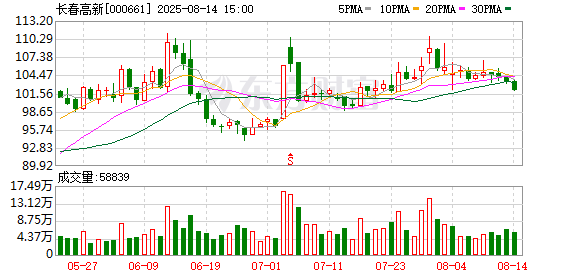
长春高新(SZ 000661,收盘价:102元)8月14日晚间发布公告称,长春高新技术产业(集团)股份有 限公司董事会于近日收到公司董事祝先潮先生的书面辞职报告,基于个人工作原因,祝先潮先生申请辞 去公司第十一届董事会董事职务(原定任期自2024年6月24日至2027年6月23日),辞职后将不再在公司 及控股子公司担任任何职务,其辞职申请自送达董事会之日起生效。 2024年1至12月份,长春高新的营业收入构成为:制药业占比94.07%,房地产占比5.61%,服务业占比 0.32%。 (文章来源:每日经济新闻) ...

瑞士央行面临政策抉择 瑞郎升值拖累出口
Jin Tou Wang· 2025-08-14 04:15
Core Viewpoint - The Swiss franc is experiencing slight appreciation against the US dollar, influenced by recent economic data and trade tariffs imposed by the US on Swiss goods [1] Group 1: Economic Indicators - The Swiss Consumer Price Index (CPI) for July increased by 0.2% year-on-year, compared to a 0.1% increase in June, indicating a slight upward trend but still close to negative territory [1] - The Swiss National Bank (SNB) may consider lowering interest rates below zero later this year due to the current economic conditions [1] Group 2: Currency Dynamics - The USD/CHF exchange rate opened at 0.8042 and is currently trading at 0.8055, reflecting a 0.15% increase [1] - The exchange rate has rebounded from a low of 0.7871, currently positioned above the middle band of the Bollinger Bands at 0.7976 [1] - The upper Bollinger Band is at 0.8065, while the lower band is at 0.7887, indicating reduced volatility and a market in a consolidation phase [1] Group 3: Trade and Tariffs - The US has imposed a surprising 39% tariff on most Swiss goods, which is higher than previous signals from the Trump administration, potentially impacting Swiss exports [1] - The appreciation of the Swiss franc is reducing demand for Swiss export products, including pharmaceuticals and luxury watches [1]
今起停牌!603058 筹划重大资产重组
Shang Hai Zheng Quan Bao· 2025-08-13 23:05
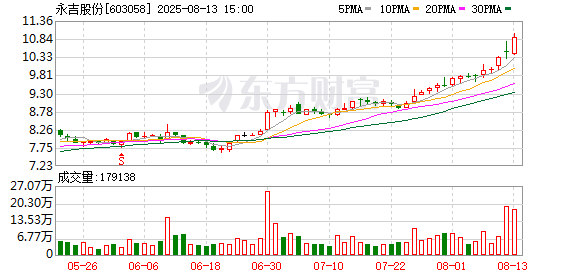
Core Viewpoint - Yongji Co., Ltd. is planning to acquire control of Turnerfly through a combination of issuing shares and cash payment, which may constitute a significant asset restructuring [2][5]. Group 1: Acquisition Details - On August 13, Yongji Co., Ltd. signed a letter of intent with the controlling shareholder of Turnerfly, agreeing to pay for the equity of the target company through share issuance and cash [5]. - The acquisition involves issuing shares to no more than 35 specific investors to raise matching funds, with the final transaction price to be determined based on audit and evaluation reports [5]. - The transaction is still in the planning stage, and no formal agreement has been signed yet, indicating uncertainty in the specific transaction plan [5]. Group 2: Business Operations - Yongji Co., Ltd. primarily engages in the design, research and development, production, and sales of cigarette labels and other packaging products, serving brands such as Guoyan and Nanjing [6]. - The company is expanding into the social printing market, including cigarette labels, liquor packaging, and pharmaceutical packaging, to enhance its competitive edge [6]. Group 3: Semiconductor Sector Involvement - This acquisition is not Yongji Co., Ltd.'s first attempt to enter the semiconductor sector; in September 2021, the company invested 107 million yuan to acquire a 51% stake in Shanghai Aiyuan Semiconductor [7]. - Due to changes in the external environment and delays in the commercialization of technology, Yongji Co., Ltd. terminated its second-phase investment in Shanghai Aiyuan in 2024 to control risk exposure [7]. Group 4: Pharmaceutical Business Growth - Yongji Co., Ltd. has also entered the regulated pharmaceutical industry, with revenue from this sector reaching 142 million yuan in 2024, a year-on-year increase of 75.57% [8]. - The regulated pharmaceutical business has become the company's second main business, surpassing liquor label revenue and only trailing behind cigarette label revenue [8]. - The company is focusing on product innovation and market expansion, particularly in Australia, where it offers products for chronic pain, cancer pain relief, and other conditions [9]. Group 5: Financial Performance - In the first quarter of 2025, Yongji Co., Ltd. reported revenue of 227 million yuan, a year-on-year increase of 1.24%, while net profit attributable to shareholders decreased by 7.58% to 37.42 million yuan [10].

南非正经受美国加征关税考验
Jing Ji Ri Bao· 2025-08-12 22:12
美国加征关税措施还将给南非经济及社会发展带来更为广泛的不利影响,包括造成大量失业、拉低经济 增长率、削弱南非货币兰特并造成汇率波动、降低南非产品在全球贸易中的竞争力、影响南非供应链安 全等。兰特被削弱后将造成南非居民可支配收入减少,进而抑制消费支出。南非对美国出口货运公司的 业务将大受影响,甚至会逐步停止服务,这一后果不仅会造成相关就业岗位丧失,也会打击南非的贸易 竞争力和供应链韧性,将加大南非经济的不确定性。标准普尔全球南非采购经理人指数显示,南非当前 的商业信心仍低于长期平均水平。南非从事对美出口业务的中小企业受到的冲击尤其巨大,这些企业将 面对出口美国订单大幅减少的局面。 南非经济专家指出,尽管美国对南非施以关税重压,但南非仍重视维护与美国的经贸关系,认为与美国 保持贸易关系对南非多个行业的长期发展有重要意义。南非官方近期多次以不同方式表示,南非将继续 与美国进行贸易及投资谈判。南非决定不对美国关税措施采取报复措施,称无意与美国"脱钩"。南非总 统拉马福萨近日表示,南非将在南美双边贸易投资谈判中继续尽一切努力维护南非国家利益。此前,南 非政府在美国对南非实施关税措施最后期限之前,已向美方提交了旨在加强双 ...
特朗普无奈之下,决定对中国“网开一面”,集中火力攻向印度
Sou Hu Cai Jing· 2025-08-11 11:50
Core Viewpoint - The anticipated US-China trade confrontation has shifted to a US-India conflict, with the US imposing a 250% tariff on India while easing pressure on China, highlighting the strategic importance of supply chain control in modern geopolitical dynamics [1][4][6] Group 1: Trade Dynamics - The trade deficit between the US and India stands at $46 billion, which is minor compared to the $295 billion deficit with China [4] - Trump's aggressive tariff policy towards India reveals vulnerabilities in the US defense supply chain, particularly its reliance on Chinese-controlled minerals [4][6] Group 2: Supply Chain Control - The US defense industry is heavily dependent on 80,000 components that rely on Chinese-controlled minerals, making it vulnerable to supply chain disruptions [4][9] - China's dominance in rare earth production (90% of global capacity) serves as a strategic leverage point against the US, demonstrating the effectiveness of non-traditional deterrence methods [4][9] Group 3: Geopolitical Implications - The US-India relationship, previously seen as a strategic alliance, is under strain due to conflicting interests, particularly in energy transactions with Russia [6][9] - The US's dual standards in sanctioning countries, as seen in its treatment of India versus the EU's dealings with Russia, undermine the cohesion of Western sanctions [6][9] Group 4: Future Outlook - The evolving geopolitical landscape suggests that future conflicts will increasingly revolve around critical minerals, chips, and pharmaceuticals, diminishing the effectiveness of traditional tariff strategies [9] - The US faces a dilemma: maintaining a hard stance against China risks crippling military modernization, while pressuring India could push it closer to anti-US alliances [9]

瑞士这回知道自己的地位了吧
Hu Xiu· 2025-08-11 11:05
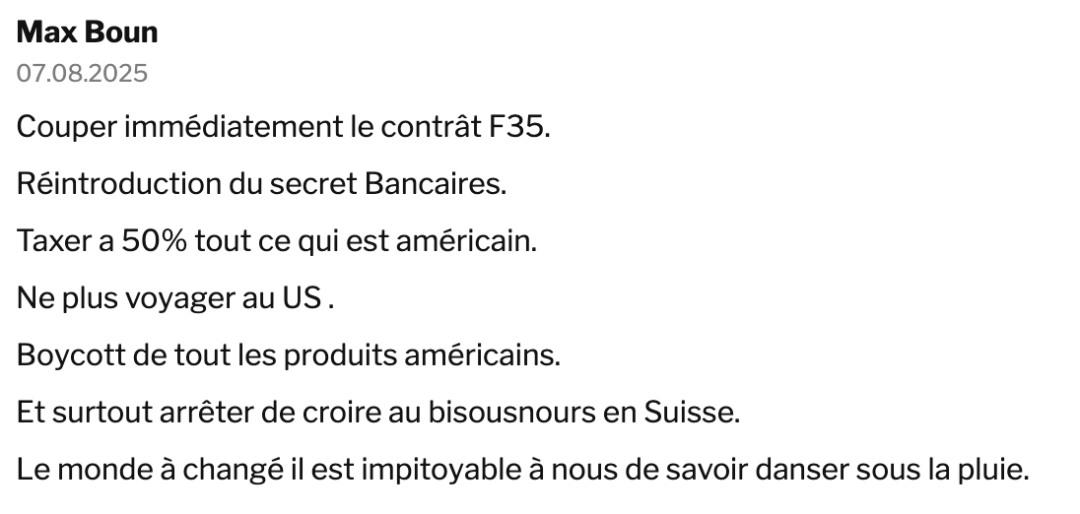
Core Points - The introduction of a 39% tariff by the Trump administration has significantly impacted Switzerland, a long-time ally of the United States [1][2] - Despite urgent talks between Swiss officials and the U.S., the tariffs took effect on August 7, 2024, leading to concerns about the Swiss economy [2][3] Economic Impact on Switzerland - Switzerland's economy, heavily reliant on trade, is projected to see a total export of 283 billion Swiss francs in 2024, a 3% increase from 2023 [3] - The U.S. is Switzerland's most important trading partner, with exports to the U.S. accounting for 19% of total Swiss exports in 2024 [4] - Swiss investments in the U.S. total approximately $307 billion, surpassing investments in Germany, France, Italy, and the UK combined [5] - The pharmaceutical sector, a major contributor to Swiss exports, is currently not affected by the tariffs, but future tariffs on this sector are a possibility [6] Sector-Specific Effects - The Swiss watch industry, which exported about $7.6 billion to the U.S. in 2024, is expected to face challenges due to the new tariffs and a stronger Swiss franc [7] - High-end watch brands may be less sensitive to price changes, but mid-range brands could suffer more due to price sensitivity [7][8] Government Response and Public Sentiment - The Swiss government is exploring negotiation strategies, including increasing investments in the U.S. as leverage [8][9] - Public sentiment is mixed, with calls for boycotting U.S. products and terminating defense contracts, reflecting frustration over the tariffs [10][12] - The Swiss government is implementing measures like partial unemployment to mitigate the economic impact on businesses and protect jobs [16][18] Neutrality and International Relations - Switzerland's long-standing neutrality is being questioned due to its involvement in sanctions against Russia and cooperation with NATO [13][14] - Nationalist sentiments are rising, advocating for a return to strict neutrality in foreign policy [14][16]
宏观周报-20250811
Guoxin Securities Hongkong· 2025-08-11 05:49
Market Overview - The U.S. stock market showed recovery last week, with the Nasdaq reaching a record closing high due to better-than-expected July non-farm payroll data and the Federal Reserve's decision to hold rates steady[5] - Initial jobless claims in the U.S. rose to 226,000, exceeding expectations, while continuing claims surged to the highest level since November 2021, indicating a weakening job market[8] - The Hang Seng and Shanghai Composite indices in China continued to decline, influenced by corporate earnings reports and U.S. tariffs on semiconductor imports[5] Economic Indicators - The U.S. services PMI for July was reported at 50.1, below the expected 51.5, raising concerns about domestic consumption resilience[24] - China's July exports reached $321.78 billion, up 7.2% year-on-year, surpassing the Bloomberg consensus of 5.6%[24] - China's July CPI was flat at 0% year-on-year, while PPI fell by 3.6%, indicating deflationary pressures[28] Monetary Policy and Interest Rates - The probability of a 25 basis point rate cut by the Federal Reserve in September has exceeded 90% due to economic concerns[5] - The Bank of England cut rates by 25 basis points, bringing the policy rate down to 4%[6] - The U.S. 10-year Treasury yield rose to 4.29%, while the Chinese 10-year yield fell to 1.69%[39] Investment Recommendations - Investors are advised to increase allocation to bond assets due to potential short-term risks in equity markets[5] - For low-risk investors, the Taikang Kaitai Overseas Short-Term Bond Fund, yielding over 6% in the past year, is recommended[67] - For high-risk investors, the Huaxia Hang Seng Biotechnology Index ETF, which has seen over 100% returns in the past year, is suggested due to its growth potential in the biotech sector[67]