航天航空

Search documents
A股超90股涨停,军工航天大爆发,半导体下挫,利欧股份封死跌停,黄金白银集体反弹
21世纪经济报道· 2026-01-22 07:34
Market Overview - On January 22, A-shares saw all three major indices close higher, with the Shanghai Composite Index up 0.14%, the Shenzhen Component Index up 0.5%, and the ChiNext Index up 1.01% [1] - The total trading volume in the Shanghai and Shenzhen markets reached 2.72 trillion yuan, an increase of 927 billion yuan compared to the previous day, marking the 14th consecutive trading day above 2.5 trillion yuan [1] Index Performance - The Shanghai Composite Index closed at 4122.58, the Shenzhen Component Index at 14327.05, and the ChiNext Index at 1865.34, with respective changes of +5.64 (+0.14%), +71.92 (+0.50%), and +2.66 (+0.14%) [2] - The total A-share market index (Wande All A) was at 6827.05, up by 29.70 (+0.44%) [2] Sector Performance - The market experienced rapid rotation of hotspots, with over 3500 stocks rising and more than 90 stocks hitting the daily limit [3] - The commercial aerospace sector saw significant gains, with nearly twenty constituent stocks hitting the daily limit, including Jili Suojue and Shunhao Co., which both achieved consecutive limit-ups [3] - The oil and gas sector continued its strong performance, with Intercontinental Oil and Gas achieving consecutive limit-ups [3] Declining Sectors - The insurance, semiconductor, and pharmaceutical sectors faced the largest declines, with the semiconductor sector experiencing a net outflow of over 12.2 billion yuan [4] - Notable declines included stocks like Lio Co. and Changdian Technology, which fell by 10.04% and 6.10%, respectively [5] Notable Stocks - The commercial aerospace sector's resurgence was attributed to favorable domestic and international industry catalysts, including updates from several companies regarding their IPO progress [10] - The controlled nuclear fusion concept stocks also saw a collective rise, with Zhejiang Fu Holdings experiencing a significant surge after signing a cooperation agreement for core component development [11] Hong Kong Market - In the Hong Kong market, new consumption stocks and technology stocks saw gains, with Pop Mart rising by 6% and Baidu increasing by over 3% [13]


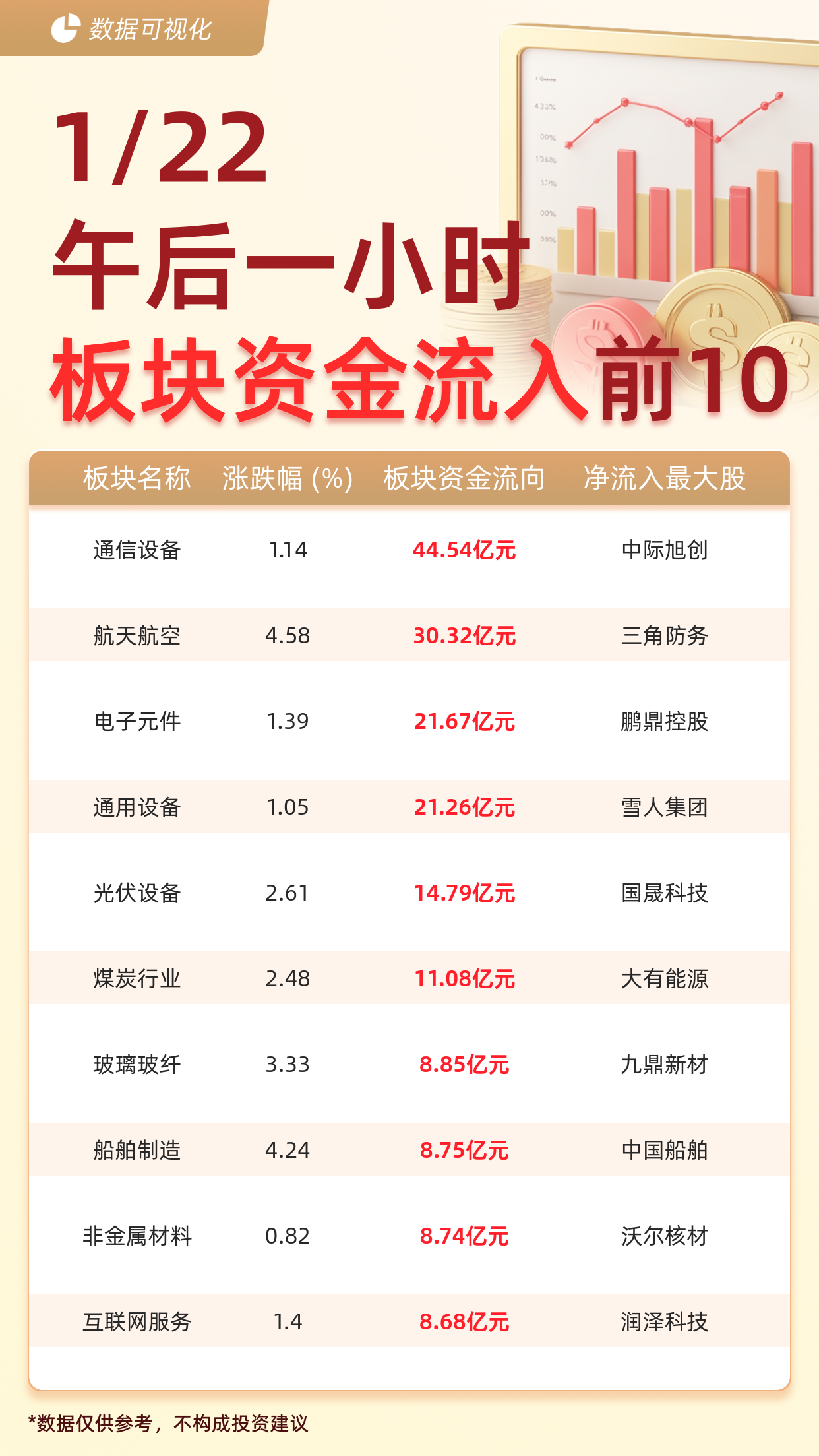
主力板块资金流入前10:通信设备流入44.54亿元、航天航空流入30.32亿元
Jin Rong Jie· 2026-01-22 06:50
Group 1 - The main market experienced a net outflow of 29.841 billion yuan in principal funds as of January 22 [1] - The top ten sectors with inflows of principal funds include: Communication Equipment (4.454 billion yuan), Aerospace (3.032 billion yuan), Electronic Components (2.167 billion yuan), General Equipment (2.126 billion yuan), Photovoltaic Equipment (1.479 billion yuan), Coal Industry (1.108 billion yuan), Glass Fiber (0.885 billion yuan), Shipbuilding (0.875 billion yuan), Non-Metallic Materials (0.874 billion yuan), and Internet Services (0.868 billion yuan) [1] Group 2 - Communication Equipment saw an inflow of 4.454 billion yuan, with Zhongji Xuchuang as a notable company [2] - Aerospace received 3.032 billion yuan, with Triangle Defense being a key player [2] - Electronic Components attracted 2.167 billion yuan, with Pengding Holdings highlighted [2] - General Equipment had an inflow of 2.126 billion yuan, represented by Xue Ren Group [2] - Photovoltaic Equipment garnered 1.479 billion yuan, with Guosheng Technology noted [2] - The Coal Industry received 1.108 billion yuan, with Dayou Energy mentioned [2] Group 3 - Glass Fiber attracted 0.885 billion yuan, with Jiuding New Materials as a significant company [3] - Shipbuilding saw an inflow of 0.875 billion yuan, with China Shipbuilding as a key entity [3] - Non-Metallic Materials received 0.874 billion yuan, represented by Wolong Nuclear Materials [3] - Internet Services attracted 0.868 billion yuan, with Runze Technology highlighted [3]
午评:主要股指小幅下跌 航天航空股领涨 贵金属股领跌
Xin Hua Cai Jing· 2026-01-22 05:20
Market Overview - The Shanghai and Shenzhen stock markets opened higher on January 22, with the Shanghai Composite Index experiencing slight fluctuations before closing at 4110.86 points, down 0.15% with a trading volume of approximately 798.7 billion yuan [1] - The Shenzhen Component Index closed at 14230.97 points, down 0.17%, with a trading volume of about 974.9 billion yuan [1] - The ChiNext Index closed at 3282.48 points, down 0.40%, with a trading volume of around 441.3 billion yuan [1] - The North Star 50 Index increased by 0.43% to 1526.30 points, with a trading volume of approximately 16.22 billion yuan [1] Sector Performance - Semiconductor, memory chip, and IT equipment sectors opened significantly higher, while oil and gas extraction, shipbuilding, aerospace, Kimi concept, satellite internet, and controllable nuclear fusion sectors also showed strong initial gains [1] - By midday, aerospace, oil and gas extraction, and shipbuilding sectors were among the top gainers, while precious metals, high-bandwidth memory, and electronic chemicals faced the largest declines [1] Investment Insights - CITIC Securities highlighted the acceleration of surgical robot promotion in China due to new pricing guidelines from the National Healthcare Security Administration, suggesting a focus on the surgical robot industry and its supply chain [2] - GF Securities noted a shift in electricity consumption from secondary to tertiary industries and urban-rural residents, with wind and solar power contributing significantly to electricity generation growth [2] - Huatai Securities pointed out key changes in the automotive industry, including rising costs due to price increases in storage chips and metals, and opportunities for Chinese automakers in the North American market following tariff reductions [2] Government Initiatives - The National Development and Reform Commission announced the allocation of 93.6 billion yuan in special bonds to support equipment upgrades across various sectors, with total investments expected to exceed 460 billion yuan [3] - The Ministry of Agriculture and Rural Affairs reported that by 2025, the contribution rate of agricultural technology progress is expected to exceed 64%, with significant advancements in high-standard farmland construction and smart agriculture applications [4]
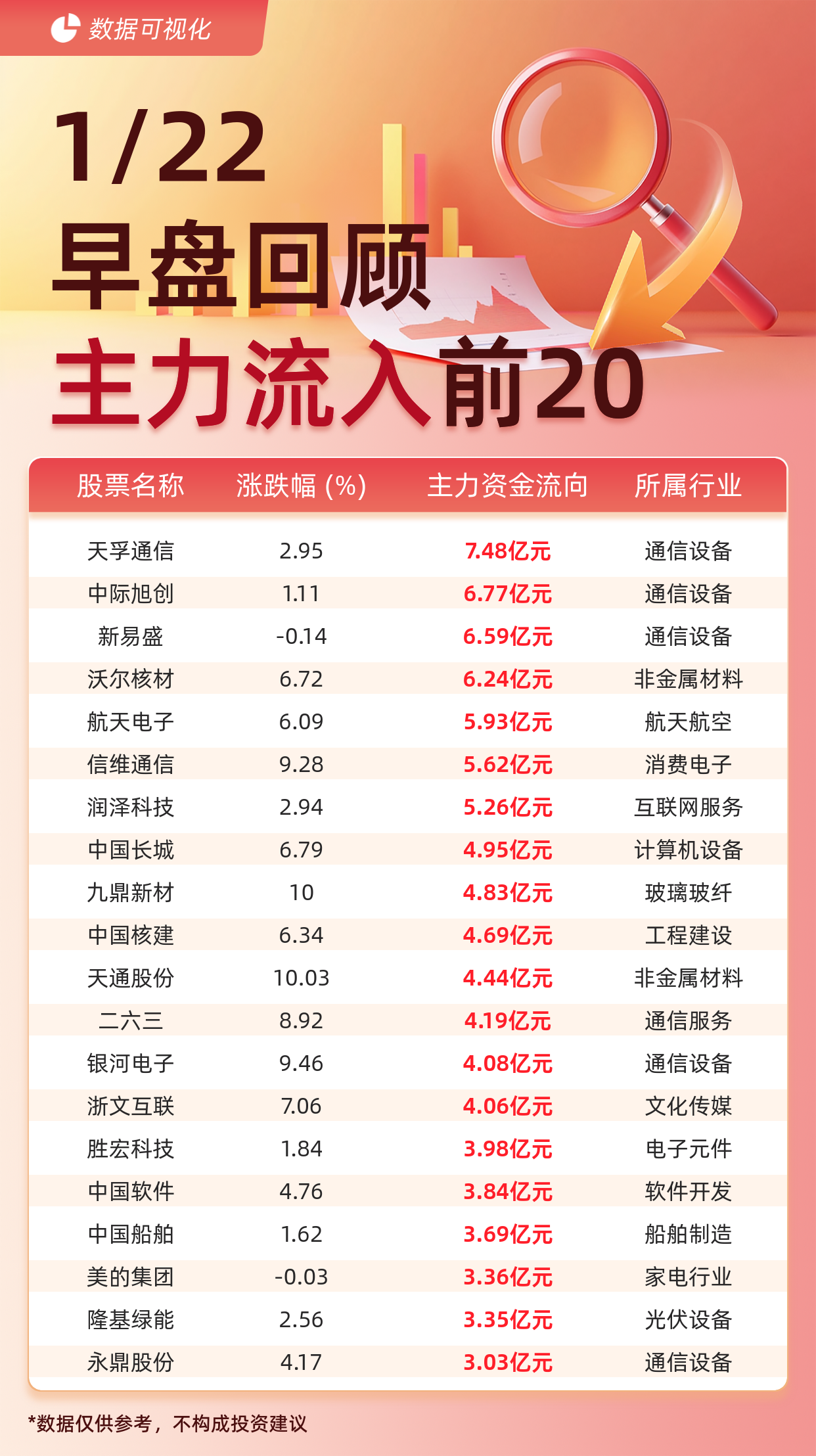
主力资金流入前20:天孚通信流入7.48亿元、中际旭创流入6.77亿元
Jin Rong Jie· 2026-01-22 03:45
Group 1 - The top 20 stocks with significant capital inflow include Tianfu Communication (748 million), Zhongji Xuchuang (677 million), and Xinyi Sheng (659 million) [1] - The sectors represented among the top inflow stocks include communication equipment, non-metal materials, aerospace, and software development [2][3] - Notable stock performances include Tianfu Communication with a 2.95% increase, Zhongji Xuchuang with a 1.11% increase, and Walden Materials with a 6.72% increase [2][3] Group 2 - The highest capital inflow was observed in Tianfu Communication with 748 million, followed by Zhongji Xuchuang with 677 million and Xinyi Sheng with 659 million [1] - Other significant stocks with capital inflow include Aerospace Electronics (593 million), Xinwei Communication (562 million), and Runze Technology (526 million) [1][2] - The stock with the highest percentage increase is Tiantong Co., Ltd. with a 10.03% rise, followed by Jiu Ding New Materials with a 10% increase [3]


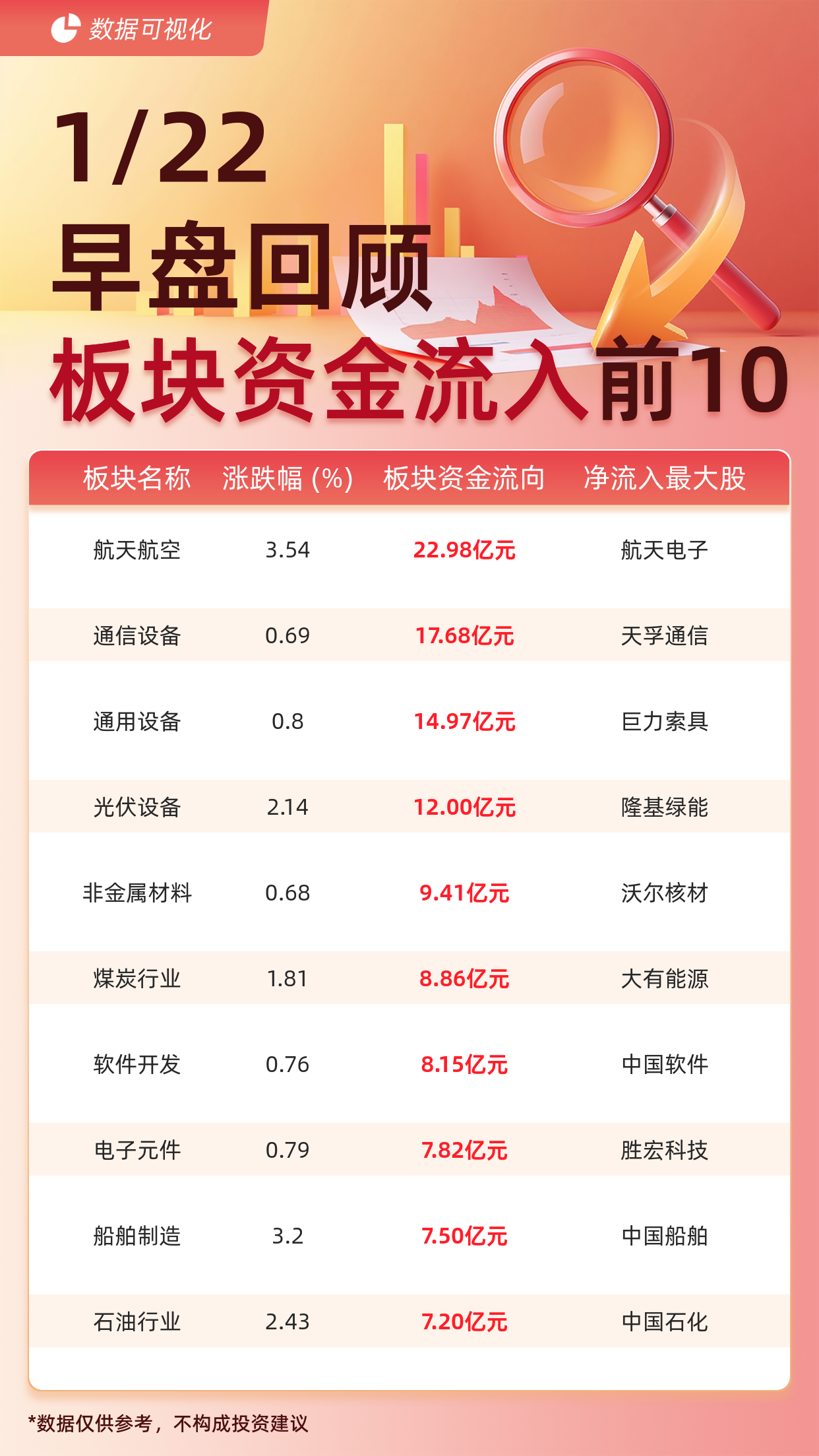
主力板块资金流入前10:航天航空流入22.98亿元、通信设备流入17.68亿元
Jin Rong Jie· 2026-01-22 03:45
Core Insights - The main market experienced a net outflow of 28.413 billion yuan in major funds as of January 22 [1] Group 1: Sector Performance - The top sectors with net inflows were Aerospace and Defense (2.298 billion yuan), Communication Equipment (1.768 billion yuan), and General Equipment (1.497 billion yuan) [1][2] - Aerospace and Defense sector saw a price increase of 3.54% [2] - The Communication Equipment sector had a price increase of 0.69% [2] - General Equipment sector experienced a price increase of 0.8% [2] - The Photovoltaic Equipment sector recorded a price increase of 2.14% with a net inflow of 1.2 billion yuan [2] - The Coal Industry sector had a price increase of 1.81% with a net inflow of 0.886 billion yuan [2] Group 2: Notable Companies - Aerospace Electronics was the leading company in the Aerospace and Defense sector with a net inflow of 2.298 billion yuan [2] - Tianfu Communication led the Communication Equipment sector with a net inflow of 1.768 billion yuan [2] - JuLi Rigging was the top company in the General Equipment sector with a net inflow of 1.497 billion yuan [2] - Longi Green Energy was the leading company in the Photovoltaic Equipment sector with a net inflow of 1.2 billion yuan [2] - Wole Nuclear Materials led the Non-Metallic Materials sector with a net inflow of 0.941 billion yuan [2] - Dayou Energy was the top company in the Coal Industry sector with a net inflow of 0.886 billion yuan [2][3] - China Software was the leading company in the Software Development sector with a net inflow of 0.815 billion yuan [3] - Shenghong Technology led the Electronic Components sector with a net inflow of 0.782 billion yuan [3] - China Shipbuilding was the top company in the Shipbuilding sector with a net inflow of 0.75 billion yuan [3] - Sinopec was the leading company in the Oil Industry sector with a net inflow of 0.72 billion yuan [3]
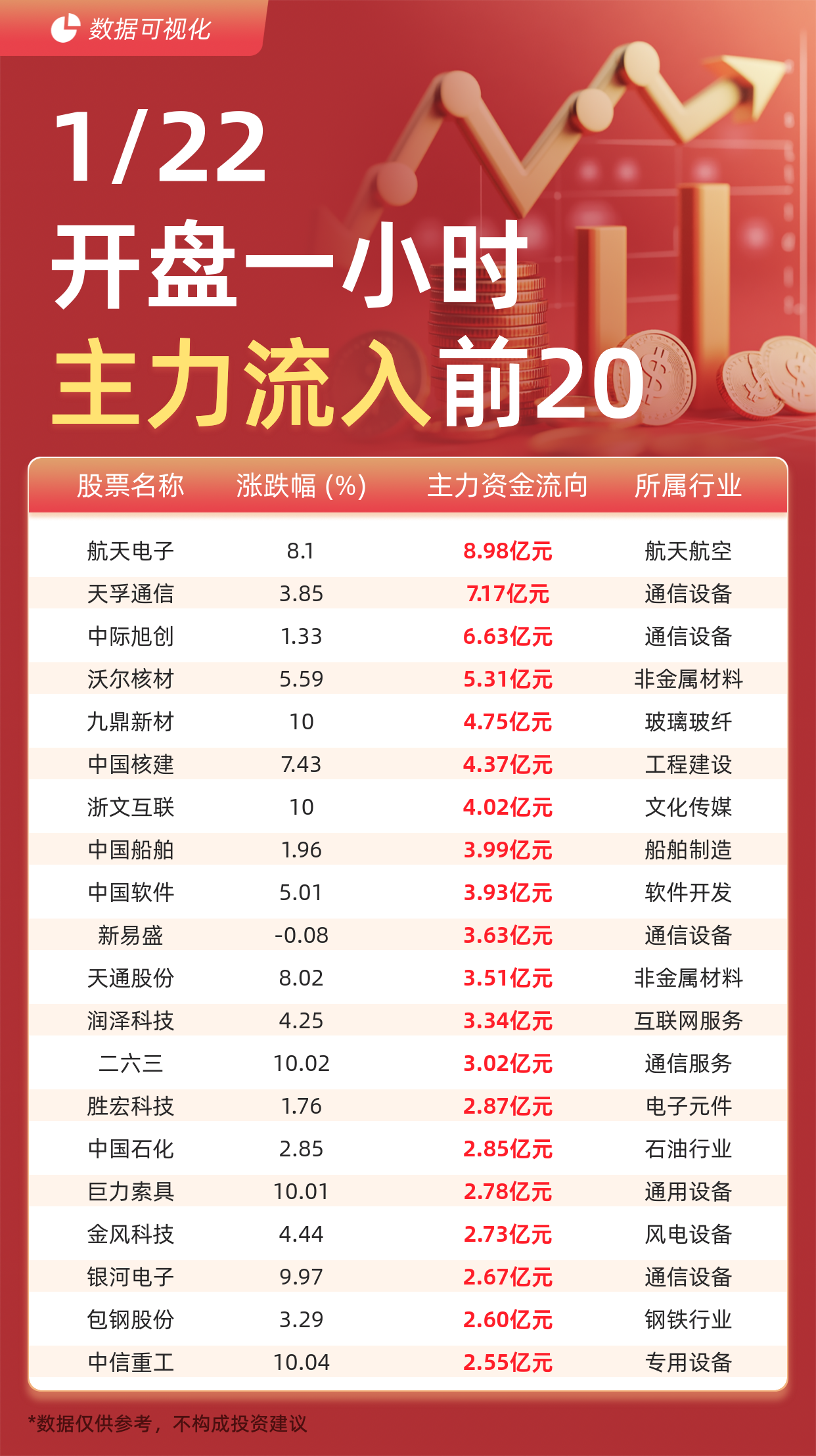
主力资金流入前20:航天电子流入8.98亿元、天孚通信流入7.17亿元
Jin Rong Jie· 2026-01-22 02:43
Group 1 - The top 20 stocks with significant capital inflow include Aerospace Electronics (8.98 billion), Tianfu Communication (7.17 billion), and Zhongji Xuchuang (6.63 billion) [1] - Aerospace Electronics experienced a price increase of 8.1%, while Tianfu Communication and Zhongji Xuchuang saw increases of 3.85% and 1.33% respectively [2] - Other notable stocks with substantial capital inflow include Woer Nuclear Materials (5.31 billion), Jiuding New Materials (4.75 billion), and China Nuclear Engineering (4.37 billion) [1][2] Group 2 - Jiuding New Materials had a significant price increase of 10%, while Zhejiang Wenlian and China Shipbuilding also saw increases of 10% and 1.96% respectively [2][3] - The energy sector is represented by China Petroleum with a capital inflow of 2.85 billion and a price increase of 2.85% [3] - Companies like Jushi Group and Goldwind Technology also showed strong performance with capital inflows of 2.78 billion and 2.73 billion, and price increases of 10.01% and 4.44% respectively [3]


人类成功应对过哪些太空紧急事件?
Xin Lang Cai Jing· 2026-01-21 19:36
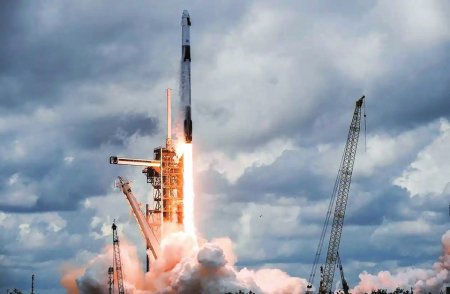
Core Viewpoint - The article discusses the challenges and protocols related to astronaut health in space, highlighting a recent medical evacuation from the International Space Station (ISS) and the historical context of similar incidents in space exploration [4][7]. Group 1: Medical Protocols and Training - All astronauts undergo professional medical training to perform basic medical procedures in emergencies, such as suturing wounds and administering injections [4][5]. - NASA has a dedicated ground team of medical professionals who monitor astronauts' health throughout their missions, ensuring they are prepared for potential medical issues [5][6]. - The ISS is equipped with a pharmacy and medical equipment to address various health issues, but serious emergencies may require astronauts to return to Earth for advanced care [5][6]. Group 2: Historical Context of Medical Emergencies - The article notes that the recent medical evacuation is the first of its kind since the ISS began hosting rotating crews in November 2000, marking a significant event in spaceflight history [4]. - Historical incidents, such as the Soviet "Soyuz" missions and the Apollo 13 crisis, illustrate the risks astronauts face, including health emergencies and spacecraft malfunctions [7][8]. - Recent events, including the Russian "Soyuz MS-22" coolant leak and the Boeing "Starliner" delays, further emphasize the ongoing challenges in ensuring astronaut safety during missions [9].
策略月报:全球失序关注黄金,政策主线轮动出圈-20260121
Jin Yuan Tong Yi Zheng Quan· 2026-01-21 13:14
Market Review - In early 2026, the global asset market continued a pattern of "risk and safety coexisting," with the Asia-Pacific stock market leading the gains and gold reaching new highs. The Federal Reserve and the People's Bank of China both leaned towards a "dual expansion" monetary policy, boosting global risk appetite. However, aggressive actions in geopolitics by the US have increased uncertainty, driving sovereign assets higher but potentially disturbing risk assets [1][7]. Economic Environment - The national economy concluded 2025 with a stable GDP growth of 5.0%. The information transmission, software, and IT services sector led with a growth of 11.1%. Exports remained resilient, but fixed asset investment declined by 3.8%, and consumption growth was below expectations. Price signals showed signs of stabilization, with CPI rising by 0.8% year-on-year in December 2025, and PPI showing positive month-on-month changes for three consecutive months [1][26][30]. Policy Environment - Monetary easing commenced with the central bank lowering the re-lending and rediscount rates by 0.25 percentage points on January 19. This move aims to support major strategies and key areas. The China Securities Regulatory Commission raised the margin financing ratio from 80% to 100%, indicating a prudent approach to counter-cyclical adjustments. The synergy of policies has significantly increased, with financial, fiscal, industrial, and technological policies working in concert to support new productivity and domestic consumption [1][26]. Investment Strategy - The investment strategy emphasizes a "barbell allocation" focusing on "technology innovation and dividend assets," implementing a dynamic timing principle with ETF tools to smooth the curve and optimize risk-return ratios. The report suggests a focus on wide-based, major asset classes, technology innovation, advanced manufacturing, upstream cycles, medical consumption, and undervalued dividend sectors [1][2]. Market Outlook - The current market faces multiple factors influencing its dynamics. High valuation levels, regulatory cooling signals, and overseas geopolitical risks are suppressing overheating tendencies. Conversely, the dual drivers of technological innovation and domestic demand expansion are strengthening, with continuous policy support creating structural investment opportunities [2][3]. ETF Recommendations - The report recommends continued attention to gold stocks ETF, military industry ETF, and tourism ETF. The early 2026 geopolitical landscape, marked by the US withdrawal from 66 international organizations, has led to a deep disorder in global governance, providing medium to long-term support for safe-haven assets like gold and military stocks. Domestic policies are also expected to enhance service consumption recovery, suggesting investment opportunities in tourism [3][17].
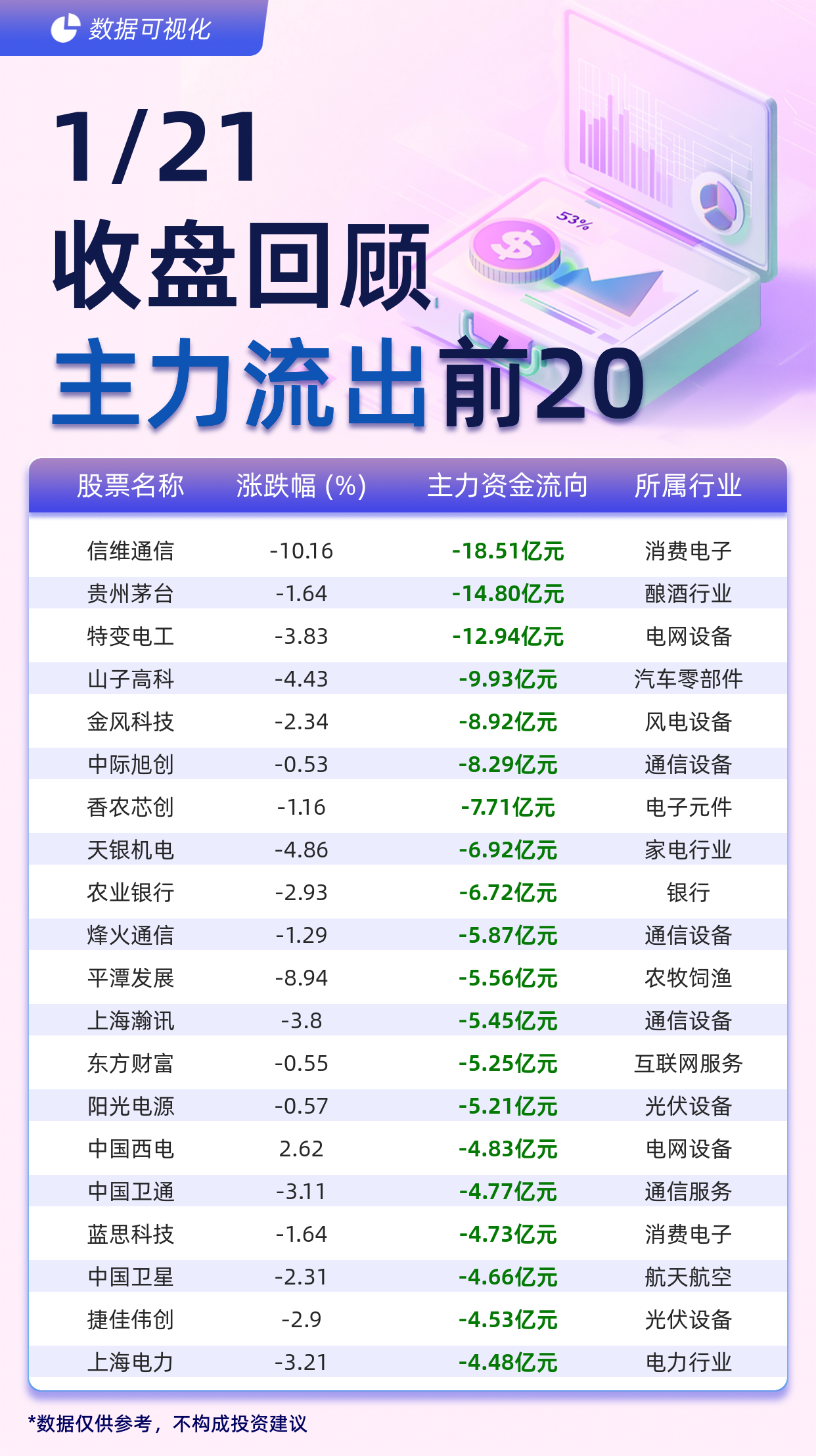
主力个股资金流出前20:信维通信流出18.51亿元、贵州茅台流出14.80亿元
Jin Rong Jie· 2026-01-21 07:11
Core Viewpoint - The data indicates significant outflows of main funds from various stocks, with notable amounts withdrawn from companies across different sectors, suggesting a potential shift in investor sentiment and market dynamics [1][2][3] Group 1: Stock Performance and Fund Outflows - The top stock with the largest fund outflow is XW Communication, with a withdrawal of 1.851 billion yuan and a decline of 10.16% in its stock price [2] - Guizhou Moutai follows with a fund outflow of 1.480 billion yuan and a decrease of 1.64% [2] - TBEA Co., Ltd. experienced a fund outflow of 1.294 billion yuan and a drop of 3.83% [2] - Other notable companies with significant outflows include: - Sanzi Gaoke: -0.993 billion yuan, -4.43% [2] - Goldwind Technology: -0.892 billion yuan, -2.34% [2] - Zhongji Xuchuang: -0.829 billion yuan, -0.53% [2] Group 2: Sector Analysis - The consumer electronics sector is represented by XW Communication and Lens Technology, both experiencing substantial fund outflows [2][3] - The beverage industry, highlighted by Guizhou Moutai, shows a minor decline in stock price despite significant fund outflow [2] - The power equipment sector, including TBEA Co., Ltd. and China Western Power, reflects mixed performance with varying fund outflows [2][3] - The telecommunications sector, represented by companies like Zhongji Xuchuang and Fenghuo Communication, also shows notable fund withdrawals [2][3]






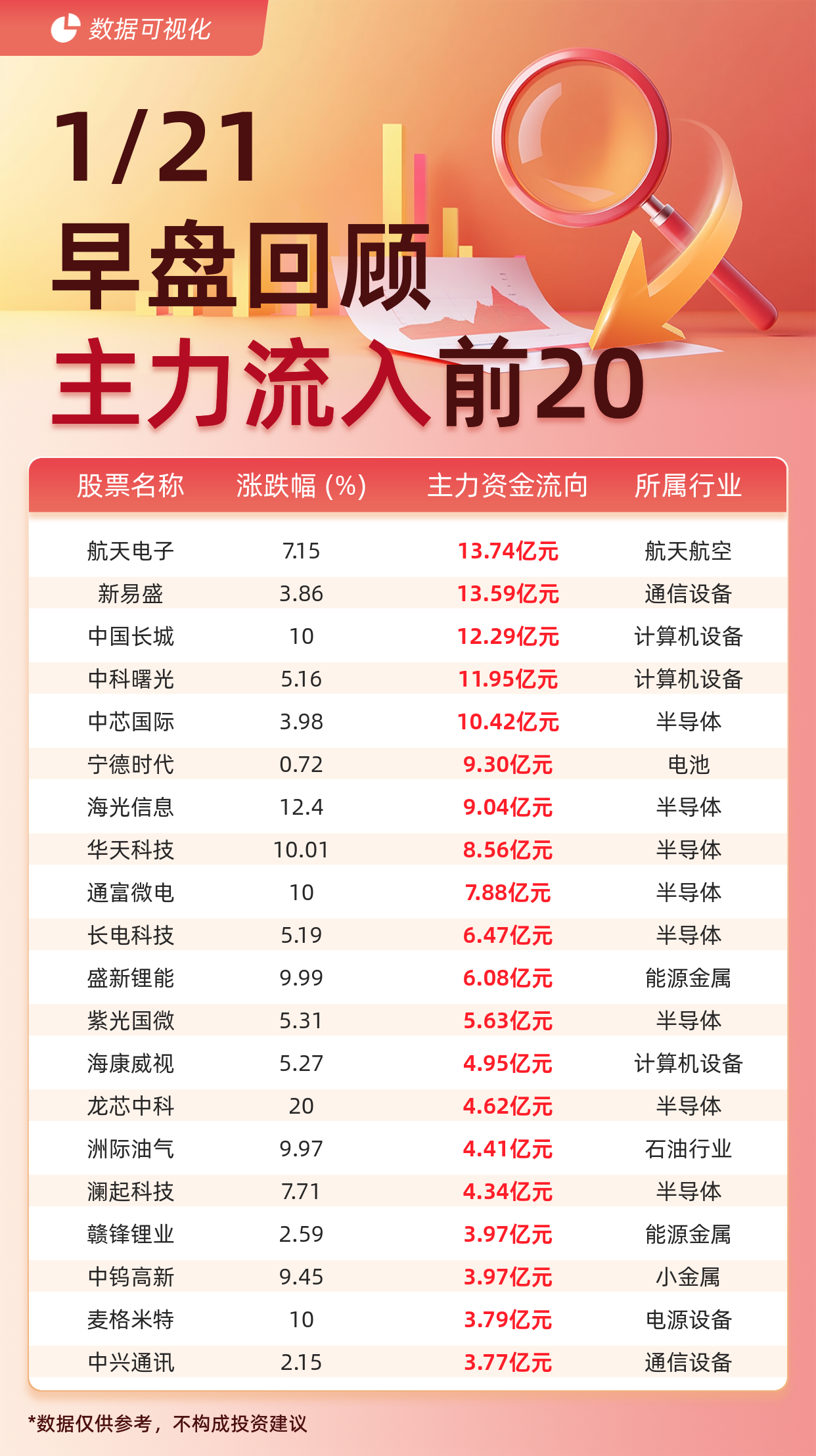
主力资金流入前20:航天电子流入13.74亿元、新易盛流入13.59亿元
Jin Rong Jie· 2026-01-21 04:04
Core Insights - The main focus of the news is on the significant inflow of capital into specific stocks, indicating strong investor interest and potential growth in these companies. Group 1: Stock Performance and Capital Inflow - Aerospace Electronic (航天电子) saw a capital inflow of 1.374 billion yuan with a price increase of 7.15% [1][2] - New Yisheng (新易盛) experienced a capital inflow of 1.359 billion yuan and a price rise of 3.86% [1][2] - China Great Wall (中国长城) had a capital inflow of 1.229 billion yuan, with a notable increase of 10% in its stock price [1][2] - Zhongke Shuguang (中科曙光) attracted 1.195 billion yuan in capital, reflecting a 5.16% increase [1][2] - SMIC (中芯国际) received 1.042 billion yuan with a stock price increase of 3.98% [1][2] - CATL (宁德时代) had a capital inflow of 930 million yuan, with a modest increase of 0.72% [1][2] - Haiguang Information (海光信息) saw a significant capital inflow of 904 million yuan and a price increase of 12.4% [1][3] - Huatian Technology (华天科技) attracted 856 million yuan with a stock price increase of 10.01% [1][3] - Tongfu Microelectronics (通富微电) had a capital inflow of 788 million yuan and a price increase of 10% [1][3] - Changdian Technology (长电科技) received 647 million yuan with a 5.19% increase in stock price [1][3] - Shengxin Lithium Energy (盛新锂能) saw a capital inflow of 608 million yuan and a price increase of 9.99% [1][3] Group 2: Additional Stocks and Their Performance - Unigroup Guowei (紫光国微) had a capital inflow of 563 million yuan with a price increase of 5.31% [3] - Hikvision (海康威视) attracted 495 million yuan with a stock price increase of 5.27% [3] - Loongson Technology (龙芯中科) saw a significant capital inflow of 462 million yuan and a remarkable price increase of 20% [3] - Intercontinental Oil and Gas (洲际油气) had a capital inflow of 441 million yuan with a price increase of 9.97% [3] - Lanke Technology (澜起科技) received 434 million yuan with a stock price increase of 7.71% [3] - Ganfeng Lithium (赣锋锂业) attracted 397 million yuan with a modest price increase of 2.59% [3] - Zhongtung High-tech (中钨高新) saw a capital inflow of 397 million yuan and a price increase of 9.45% [3] - Magpow (麦格米特) had a capital inflow of 379 million yuan with a price increase of 10% [3] - ZTE Corporation (中兴通讯) attracted 377 million yuan with a stock price increase of 2.15% [3]