航空运输

Search documents
能源危机加剧,多国被迫推行“4天工作制”,航班停飞
华尔街见闻· 2026-03-20 10:19
Group 1 - The core viewpoint of the article highlights the rapid escalation of energy crises in Asia, driven by a significant tightening of refined oil supplies, leading to emergency energy-saving measures across multiple economies [1] - In the past 10 days, the export volume of refined oil products from major Asian exporting countries has decreased by approximately 30% compared to a five-month baseline, with the latest data indicating a further decline to 35% [1] - Jet fuel prices have seen the most drastic drop, exceeding 40%, while gasoline and diesel have decreased by over 30% and 20% respectively [1] Group 2 - Diesel prices have surged sharply, becoming a critical economic bottleneck affecting transportation and logistics, prompting governments to implement administrative measures to curb demand [4] - Countries like the Philippines and Sri Lanka have adopted a four-day workweek to reduce diesel consumption, while Bangladesh has adjusted holiday schedules to save fuel [4] - Thailand and Vietnam have encouraged officials to minimize travel, and Myanmar has implemented vehicle restrictions to lower fuel demand [4] Group 3 - The price of jet fuel is nearing $200 per barrel, forcing airlines to shift from cost control to direct capacity reductions, rendering many routes economically unviable [5] - Several Asian airlines, including Qantas and Air India, have introduced phased fuel surcharges, with Air India charging up to $200 for long-haul tickets [6] - Scandinavian Airlines has announced the cancellation of approximately 1,000 flights in April due to soaring fuel costs [6] Group 4 - The energy crisis has extended from the demand side to the supply side, with many Asian petrochemical companies declaring force majeure due to raw material supply disruptions [7] - Over 50% of naphtha used by Asian petrochemical firms is sourced from the Middle East, and supply tightening has led to production halts or reductions [7] - In Japan, major chemical companies have cut ethylene production, while in South Korea, significant producers have also declared force majeure [8] Group 5 - Demand elasticity for oil is limited, with a projected shortfall of one million barrels per day potentially emerging in April [9] - The short-term price elasticity of global oil demand is estimated at -0.024, indicating that a 40% increase in oil prices would be required to reduce total consumption by 1% [9] - If Brent crude averages $100 per barrel in March, the price effect alone could lead to a demand reduction of approximately one million barrels per day in April, not accounting for additional impacts from flight cancellations and physical shortages [9]



交运月度会-交易-运价弹性-与-供应链重塑
2026-03-19 02:39
Summary of Conference Call Notes Industry Overview - **Industry Focus**: Transportation and logistics sectors, including shipping, rail, air travel, and express delivery services - **Geopolitical Context**: The situation in the Strait of Hormuz is impacting shipping, rail, and hazardous materials logistics positively, while high oil prices are increasing operational costs across various transport sectors Key Points and Arguments Shipping and Logistics - **Shipping Industry**: The daily passage through the Strait of Hormuz has decreased significantly, affecting 31% of global oil shipping exports and 5% of container shipping, leading to a re-evaluation of shipping rates and a potential restructuring of shipping networks [1][2] - **Rail Transport**: High oil prices are increasing road transport costs, making rail transport more attractive. The Daqin Railway is expected to benefit from increased coal transport demand due to rising coal prices linked to oil price increases [1][2] - **Hazardous Materials Logistics**: Companies with a high percentage of chemical and oil products in their storage are likely to benefit from increased demand for stockpiling, potentially raising warehouse rental rates [3] Air Travel - **Cost Pressures**: The aviation sector is facing significant cost pressures due to rising fuel prices, with fuel costs accounting for approximately 35% of total operating costs. The expected increase in fuel surcharges could reach 170-180 RMB per flight segment [6][17] - **Market Dynamics**: The geopolitical situation is creating opportunities for Chinese airlines as travelers seek alternatives to Middle Eastern hubs, potentially increasing international passenger volumes by 13% if 25% of transit passengers shift to Chinese carriers [18][19] Express Delivery - **Market Trends**: The express delivery sector is experiencing a "reverse involution" trend, with prices in key areas like Yiwu increasing. Major companies like YTO and ZTO are expected to gain competitive advantages [1][5] Investment Recommendations - **Stock Selection**: It is recommended to focus on stocks with low correlation to Middle Eastern geopolitical risks and those with defensive attributes, such as Anhui Expressway and Shenzhen International. SF Express is highlighted for its alignment with high-quality growth trends in the express delivery sector [7] - **Shipping vs. Oil Transport**: The recommendation is to prioritize container shipping over oil transport due to lower expected volatility and higher certainty in returns, even amidst geopolitical tensions [8] Market Conditions - **Current Market Sentiment**: The overall sentiment in the transportation sector is cautious, with a preference for rail over road transport due to the latter's vulnerability to rising fuel costs. The express delivery sector shows signs of recovery, while air travel is under pressure from fuel costs [15][20] Airport Operations - **White Cloud Airport**: A new duty-free agreement has been signed with a commission rate reduced to 21%, which is expected to positively impact profits, although the overall profit elasticity will depend on the recovery of duty-free sales [22][23] Future Outlook - **Long-term Adjustments**: The geopolitical situation is expected to lead to profound adjustments in global logistics networks, with potential shifts in trade routes and increased congestion at major ports [4][10] Risks and Challenges - **Cost Transferability**: The ability of the air, road, and express delivery sectors to pass on increased costs to consumers is limited due to weak supply-demand dynamics, which may suppress market demand if oil prices remain high [2][6] Additional Important Insights - **Rail Freight Benefits**: The closure of the Strait of Hormuz is driving up coal prices in the Asia-Pacific region, benefiting rail freight operations like the Daqin Railway [10] - **Container Transport Opportunities**: The potential shift from sea to rail transport for high-value goods due to increased shipping costs could benefit the China-Europe Railway Express [11] This summary encapsulates the key insights and trends discussed in the conference call, providing a comprehensive overview of the current state and future outlook of the transportation and logistics sectors.

盛全球行-从加州到中国-聚焦航空与医疗科技
2026-03-19 02:39
Summary of Key Points from Conference Call Records Industry Focus - **Aviation and Medical Technology**: The conference call primarily discusses the aviation industry, particularly the aircraft manufacturing sector, and the medical technology industry in China. Core Insights and Arguments Aviation Industry 1. **Fuel Cost Pressure**: Aviation fuel costs are significantly impacting profitability, with a $0.10 increase in oil prices potentially leading to a 6%-24% downward adjustment in profit forecasts for FY2025 [1][2][6]. 2. **Aircraft Demand**: The wide-body aircraft market is experiencing extreme demand, necessitating Boeing to double the production of the 787 from 8 to 15-20 units per month to meet market needs [1][3][4]. 3. **Production Capacity**: Boeing 737 MAX production has been approved to increase to 42 units per month, with potential to reach 60-70 units based on market demand [1][5]. 4. **Leasing Market Dynamics**: The leasing rates for aircraft have risen by 30%-40% compared to 2019 levels, driven by strong demand and limited supply [1][6][7]. 5. **Investment Opportunities**: Key investment targets include: - **LOR Holdings (LOAR)**: Target price of $98, with a 40% upside due to strong aftermarket pricing power [1][7]. - **Air Lease Corporation (AER)**: Target price of $169, with a 20% upside, demonstrating resilience post-COVID [1][8]. - **United Airlines (UAL)**: Target price of $135, with nearly 50% upside, benefiting from a strong balance sheet [1][8]. Medical Technology Industry 1. **Policy Changes in China**: The shift towards Value-Based Purchasing (VBP) and Diagnosis-Related Group (DRG) payment systems is accelerating domestic substitution, putting pressure on multinational companies in imaging and diagnostics [1][9][10]. 2. **Market Segmentation**: The medical technology sector is witnessing significant differentiation: - Life sciences tools are outperforming diagnostics due to increased biotech financing [1][12]. - CDMO companies are benefiting from the global demand surge for GLP-1 [1][12]. 3. **Local vs. Multinational Companies**: Local companies are increasingly expanding overseas, with a notable focus on markets outside the U.S. [1][10][12]. 4. **VBP and DRG Impact**: VBP is expected to cover most high-value consumables by the end of 2026, while DRG is limiting physician autonomy in treatment decisions, impacting revenue streams for diagnostics [1][11][12]. 5. **Investment in Local Firms**: Companies like United Imaging are leveraging technological advantages to challenge global market shares [1][16]. Additional Insights 1. **Geopolitical Risks**: The geopolitical landscape, particularly in the Middle East, is affecting oil prices and consequently the aviation industry's profitability outlook [2]. 2. **Supply Chain Recovery**: The supply chain for new aircraft is gradually improving, although challenges remain in specific components [3][4]. 3. **Hospital Purchasing Power**: There is a significant disparity in purchasing power among hospitals in China, with high-end hospitals in tier-one cities maintaining strong demand for advanced technologies, while lower-tier hospitals face budget constraints [13][14]. This summary encapsulates the critical insights and trends discussed in the conference call, highlighting the dynamics within the aviation and medical technology sectors, as well as potential investment opportunities and risks.
最高翻倍!国内航司集体上调燃油附加费
第一财经· 2026-03-19 02:17
Group 1 - The core viewpoint of the article highlights that several airlines, including China Southern Airlines, are adjusting international flight fuel surcharges due to changes in international fuel prices [1] - China Southern Airlines has announced specific increases in fuel surcharges for various international routes, such as an increase of 100 yuan for flights from China to Southeast Asia, 270 yuan to Australia, 150 yuan to the UAE, 250 yuan for economy class to the US, and 500 yuan for business class to the US [1] - Other airlines like Spring Airlines, Juneyao Airlines, China Eastern Airlines, and Changlong Airlines have also raised their international flight fuel surcharges, with Spring Airlines doubling its surcharge from 180 yuan to 360 yuan for flights from Shanghai to Kuala Lumpur and Penang [1]





中国东航3月18日获融资买入4982.62万元,融资余额3.90亿元
Xin Lang Zheng Quan· 2026-03-19 00:02
Group 1 - The core viewpoint of the news highlights the trading performance and financial metrics of China Eastern Airlines, indicating a decline in stock price and significant trading volume on March 18 [1] - On March 18, China Eastern Airlines experienced a stock price drop of 1.27%, with a trading volume of 937 million yuan, and a net financing purchase of 18.28 million yuan [1] - As of March 18, the total margin balance for China Eastern Airlines was 394 million yuan, with a financing balance of 390 million yuan, representing 0.49% of the circulating market value, which is above the 70th percentile of the past year [1] Group 2 - China Eastern Airlines, established on April 14, 1995, and listed on November 5, 1997, primarily engages in passenger and cargo transportation, with passenger service revenue accounting for 92.50% of total revenue [2] - For the period from January to September 2025, China Eastern Airlines reported operating revenue of 106.41 billion yuan, a year-on-year increase of 3.73%, and a net profit attributable to shareholders of 2.10 billion yuan, reflecting a significant year-on-year growth of 1623.91% [2] - The company has cumulatively distributed dividends of 3.30 billion yuan since its A-share listing, with no dividends paid in the last three years [3]
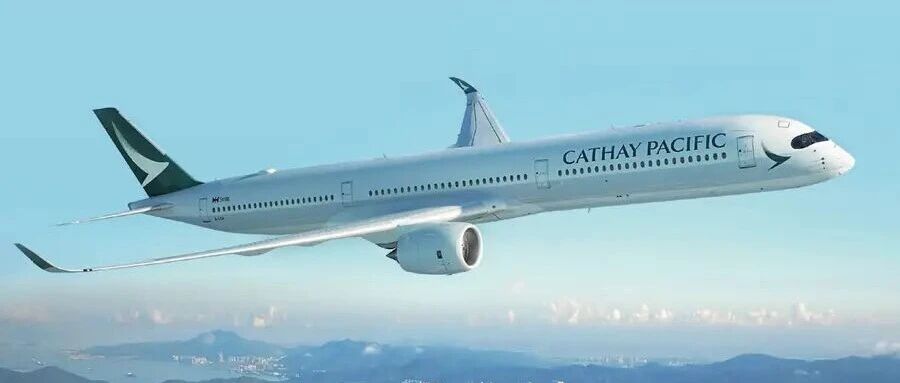
国泰航空2月载客量同比增加24%
Zhi Tong Cai Jing· 2026-03-18 11:25
Group 1 - Cathay Cargo's cargo volume in February 2026 increased by 7% compared to February 2025, with available cargo ton-kilometers rising by 4% year-on-year [1] - In the first two months of 2026, Cathay Cargo's cargo volume increased by 6% compared to the same period last year [1] Group 2 - Hong Kong Express's passenger volume in February 2026 exceeded 730,000, representing a 25% increase from February 2025, while available seat kilometers increased by 14% [1] - In the first two months of 2026, Hong Kong Express's passenger volume increased by 16% compared to the same period in 2025 [1] Group 3 - Cathay Pacific's passenger volume in February 2026 increased by 24% compared to February 2025, with available seat kilometers rising by 16% year-on-year [2] - In the first two months of 2026, Cathay Pacific's passenger volume increased by 17% compared to the same period in 2025 [2]

民航下半场:慢生长,远胜出
虎嗅APP· 2026-03-18 10:57
Core Viewpoint - The article discusses the challenges faced by the airline industry, particularly the issue of "involution" where airlines engage in price wars leading to reduced profitability and customer experience. Cathay Pacific stands out by focusing on quality and high-end services to maintain profitability and customer loyalty [2][3]. Group 1: Industry Challenges - The airline industry is experiencing structural difficulties characterized by "旺丁不旺财" (high passenger numbers but low profits), leading to a vicious cycle of price wars and declining service quality [2]. - The International Air Transport Association (IATA) highlights that airlines earn significantly less per passenger compared to other industries, emphasizing the need for airlines to find new profit sources beyond low ticket prices [2]. Group 2: Cathay Pacific's Performance - Cathay Pacific reported a net profit of HKD 10.828 billion for 2025, a 9.5% increase year-on-year, marking three consecutive years of profitability with cumulative net profits exceeding HKD 30 billion [2]. - The airline achieved a revenue of HKD 116.766 billion in 2025, reflecting an 11.9% year-on-year growth, and has maintained positive revenue growth for four consecutive years [3]. Group 3: Strategic Differentiation - Cathay Pacific differentiates itself through a focus on quality and high-end services rather than engaging in price competition, creating a competitive moat [5]. - The airline's dual-brand strategy has expanded its passenger network to over 100 destinations globally, with plans to add 20 new routes in 2025, including five new routes in mainland China [3][5]. Group 4: Investment in Quality - Cathay Pacific plans to invest over HKD 100 billion in 2024 for fleet upgrades, cabin products, and digital innovations, indicating a commitment to enhancing customer experience [7]. - The airline's in-flight service and passenger spending reached HKD 5.668 billion in 2025, a 35.8% increase year-on-year, showcasing its investment in service quality [9]. Group 5: Long-term Strategy - Cathay Pacific's long-term strategy emphasizes a balance between efficiency and quality, focusing on service standards and talent development post-pandemic [9]. - The airline has initiated a large-scale recruitment drive, aiming to hire around 3,000 new employees globally, with a focus on local talent in mainland China to enhance service localization [19]. Group 6: Digital Transformation - Cathay Pacific is advancing its digital transformation by establishing IT offices in mainland China and expanding its IT team to enhance global system development and support [19]. - The airline has implemented AI-driven tools for operational efficiency, including predictive maintenance and customer service enhancements, which are crucial for its long-term strategy [20]. Group 7: Future Outlook - As Cathay Pacific celebrates its 80th anniversary, it aims to strengthen its position as a leading airline by integrating more deeply into the mainland economy and enhancing its service offerings [18]. - The airline's focus on long-term investments in service, technology, and brand equity is seen as essential for navigating the cyclical nature of the airline industry [23].

国泰航空(00293)2月载客量同比增加24%
智通财经网· 2026-03-18 09:57
Group 1 - Cathay Pacific's passenger capacity in February 2026 increased by 24% compared to February 2025, with available seat kilometers rising by 16% year-on-year [1] - In the first two months of 2026, Cathay Pacific's passenger volume increased by 17% compared to the same period in 2025 [1] - Cathay Cargo's cargo volume in February 2026 increased by 7% compared to February 2025, with available cargo ton kilometers increasing by 4% year-on-year [1] Group 2 - In February 2026, Hong Kong Express recorded a passenger volume exceeding 730,000, which is a 25% increase compared to February 2025, with available seat kilometers increasing by 14% [1] - In the first two months of 2026, Hong Kong Express's passenger volume increased by 16% compared to the same period in 2025 [1]
国泰航空(00293.HK):2月份载客量同比增加24%
Ge Long Hui· 2026-03-18 09:56
Core Insights - Cathay Pacific Airways reported encouraging performance in January and February 2026, driven by the Lunar New Year travel peak, with a record single-day passenger count of approximately 128,000 on February 14 [1] - The airline and Hong Kong Express carried over 3.2 million passengers in February, representing a 24% increase compared to the same month last year [1] - The geopolitical situation in the Middle East has led to unexpected changes in passenger and cargo flows, prompting the airline to suspend flights to Dubai and Riyadh until April 30, 2026 [1] Passenger Traffic - In February 2026, Cathay Pacific's passenger volume increased by 24% compared to February 2025, with available seat kilometers rising by 16% year-on-year [1] - For the first two months of 2026, passenger volume increased by 17% compared to the same period in 2025 [1] - Hong Kong Express recorded over 730,000 passengers in February 2026, a 25% increase from February 2025, with available seat kilometers increasing by 14% [2] - For the first two months of 2026, Hong Kong Express's passenger volume increased by 16% compared to the same period last year [2] Cargo Traffic - Cathay Pacific's cargo volume in February 2026 increased by 7% compared to February 2025, with available cargo ton kilometers rising by 4% year-on-year [2] - For the first two months of 2026, cargo volume increased by 6% compared to the same period last year [2]
国泰航空的困局:油价急升票价红利减退
BambooWorks· 2026-03-18 09:30
Core Viewpoint - Cathay Pacific Airways has shown a strong recovery in its financial performance post-pandemic, but faces challenges in maintaining profitability as ticket price advantages diminish and low-cost operations continue to incur losses [3][6]. Financial Performance - In 2025, Cathay Pacific recorded a revenue of HKD 116.77 billion (USD 14.92 billion), an increase of 11.9% year-on-year, with a net profit of HKD 10.83 billion, up 9.5% from HKD 9.89 billion in 2024 [3][5]. - The company has significantly improved its financial structure, with net debt decreasing to HKD 46.812 billion, a 19.2% decline, and the debt-to-equity ratio dropping from 1.10 to 0.78 [5]. Passenger and Cargo Operations - Passenger numbers surged by 26.5% to 28.87 million in 2025, with a passenger load factor rising to 85.2% from 83.2% the previous year, leading to a 15.8% increase in passenger revenue to HKD 72.45 billion [5]. - However, passenger yield fell by 10.3% year-on-year, and revenue per available seat kilometer (RASK) decreased by 8%, indicating a decline in ticket prices as capacity returns to pre-pandemic levels [6]. Cargo Business - Cargo revenue grew by only 1.2% to HKD 24.28 billion, with cargo yield declining by 4.6%, reflecting a structural change in the market due to slowing cross-border e-commerce and global trade uncertainties [6]. Low-Cost Operations - Cathay's low-cost subsidiary, HK Express, reported a loss of HKD 999.6 million in 2025, significantly higher than the HKD 204 million loss in 2024, attributed to ongoing route development and operational issues [6]. Future Investments - The company plans to invest over HKD 100 billion in fleet renewal, cabin upgrades, and digitalization, with an order for 14 additional Boeing 777-9 aircraft, increasing the total order to 35 [6][7]. - The new aircraft are expected to enhance competitiveness in the high-end long-haul market, which is crucial for profitability [7]. Market Risks - Rising oil prices due to geopolitical tensions pose a risk, as fuel costs typically account for about 30% of airline operating expenses. Cathay has hedged only about 30% of its expected fuel needs for 2026 at a price of USD 70 per barrel [7]. - Despite these challenges, Cathay's stock has shown relative resilience, with only a slight decline of 0.23% over the past month, outperforming some international peers [7][8].