
互联网

Search documents
亚马逊股价盘后大跌近10%,巨额资本支出引发担忧
Xin Lang Cai Jing· 2026-02-05 23:13
亚马逊表示,预计 2026 年全公司的资本支出约为2000 亿美元,而 2025 年这一数字约为 1310 亿美元。 亚马逊对第一季度营业利润的预测为 165 亿至 215 亿美元,这一结果令人失望,低于分析师预测的 220.4 亿美元。 过去几天的科技公司财报显示,华尔街向科技企业传达了一个明确的信息:只有当公司展现出相应的运 营或财务回报时,人工智能领域的巨额支出才能继续下去。 亚马逊公司周四表示,预计今年的资本支出将大幅增长逾50%,加入了大举投资以构建人工智能基础设 施的同行之列。其股价在盘后交易中大跌了近10%。 这是最新的迹象,表明大型科技公司短期内不会放缓在AI领域的巨额投资步伐。在常规交易时段,亚 马逊的股价下跌了 4.4%,因为人们对AI热潮所带来的巨大成本愈发感到担忧。 美国排名前四的超大型科技公司——亚马逊、微软、Alphabet和Meta——今年的总支出预计将超过 6300 亿美元。 亚马逊还发布了其第一季度的盈利目标区间,该区间的下限比分析师的预期低四分之一。这一预测中包 含了约 10 亿美元与其高速互联网业务Leo相关的额外成本,以及在快速电子商务领域和其国际门店业 务中提高价格所 ...

中国资产大涨!微软市值蒸发超万亿元!现货白银跌近20%!比特币跌超14% 发生了什么?
Mei Ri Jing Ji Xin Wen· 2026-02-05 23:11
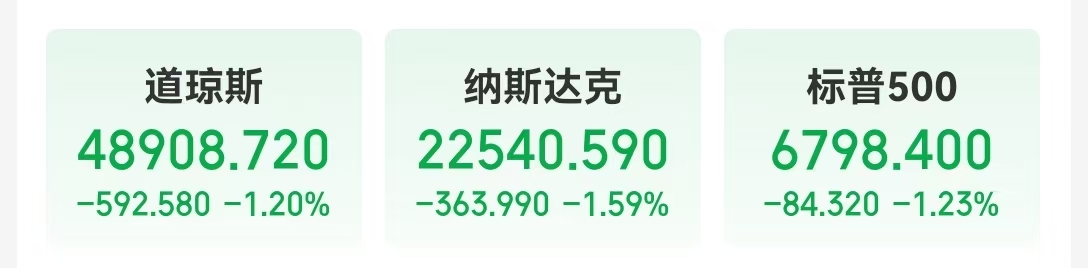
当地时间2月5日,美股三大指数集体收跌,道指下跌592.58点,跌幅1.20%;纳指跌1.59%;标普500指数跌1.23%。 热门科技股普跌,超微电脑、高通跌超8%,亚马逊跌超4%,AMD跌超3%,特斯拉跌超2%,英伟达跌超1%。 微软跌4.95%,市值一夜蒸发1524亿美元(约合人民币10573亿元)。 贵金属尾盘加速下跌,现货白银跌幅扩大至近20%,失守71美元/盎司。现货黄金现跌近4%,报4774.48美元/盎司。 比特币遭重挫,跌超14%,截至2月6日发稿,报62912.45美元。 CoinGlass数据显示,最近24小时,全球共有430667人被爆仓,爆仓总金额为20.60亿美元(约合人民币143亿元)。 | 总爆仓 | | | | | --- | --- | --- | --- | | 1小时爆仓 | $4708.69万 | 4小时爆仓 | $7.13亿 | | 多車 | $3734.17万 | 名東 | $6.26亿 | | 空单 | $974.52万 | 空单 | $8759.43万 | | 12小时爆仓 | $17.20亿 | 24小时爆仓 | $20.63亿 | | 多車 | $15.3 ...

陆家嘴财经早餐2026年2月6日星期五
Sou Hu Cai Jing· 2026-02-05 23:10
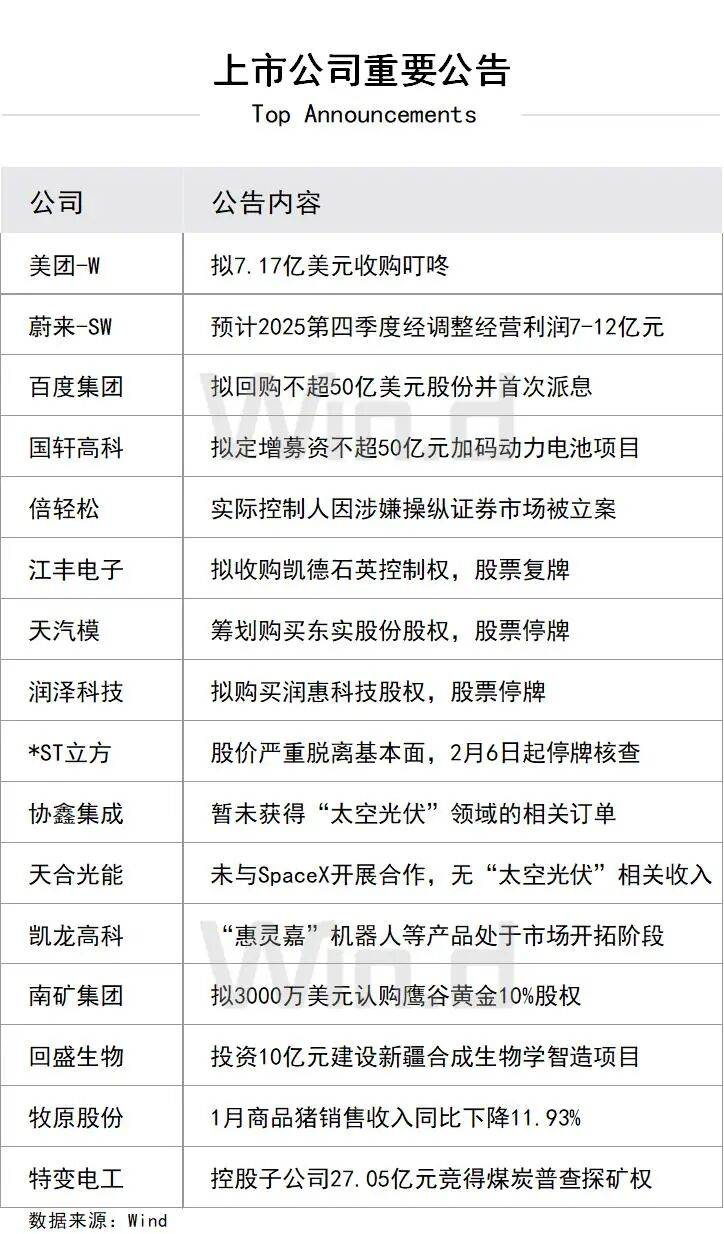
•A股2026年春节休市安排公布 •海南自贸港岛内居民消费进境商品免税额度为每人每年1万元 •AI热潮退烧、疲软就业数据冲击美股,三大指数跌逾1% •市场陷入"信心危机",贵金属再遭抛售,比特币跌破7万美元 •"AI编程大战"打响,OpenAI与Anthropic同步发布新模型 •亚马逊最新财报出炉,今年支出指引"爆表"盘后股价大跌 1、财政部、海关总署、税务总局联合发布通知,对海南自贸港岛内居民在指定经营场所购买的进境商 品,在免税额度和商品清单范围内免征进口关税、进口环节以及国内环节增值税和消费税。免税额度为 每人每年1万元人民币,不限购买次数。 2、贵金属市场抛售风暴再度来袭。国际市场方面,现货白银一度跌超20%,失守71美元/盎司;现货黄 金一度跌近4%失守4800美元/盎司关口,现货铂金、现货钯金同步大幅下挫。国内商品期市日盘收盘, 沪银跌近11%,夜盘则进一步下跌约10%;铂金收盘跌近8%。 3、"AI编程大战"打响第一枪。OpenAI发布GPT-5.3-Codex,称其为迄今为止能力最强的编程代理。此次 发布的时间点被精准安排在Anthropic推出其旗舰模型升级版Claude Opus 4.6 ...

上证早知道|八部门最新印发 中药产业迎利好;千问30亿元“春节请客计划” 今日上线
Shang Hai Zheng Quan Bao· 2026-02-05 23:08
Group 1 - The 25th Winter Olympic Games will be held in Italy from February 6 to 22 [1] - The National Health Commission has issued a notice to support the construction of high-value small incision scenarios, promoting the large-scale application of new technologies and products in the medical insurance field [2] - The Ministry of Industry and Information Technology and other departments have issued the "Implementation Plan for High-Quality Development of Traditional Chinese Medicine Industry (2026-2030)", aiming to establish a collaborative development system for the entire industry chain by 2030 [4] Group 2 - The launch of the "Digital Passport Technical Requirements for Light Industry Products" aims to provide a "digital ID" for light industry products, facilitating data connectivity throughout their lifecycle [3] - The National Supercomputing Internet Application Technology Conference has launched a core node for a supercomputing platform, providing over 30,000 domestic AI computing resources for large-scale AI computing scenarios [2] - Alibaba's Qianwen has become the first official large model for the Olympics, integrating over 400 AI service functions into its app, marking a significant upgrade in its service capabilities [5] Group 3 - Nanjing Mining Group announced a cash investment of $30 million to acquire a 10% stake in Eagle Valley Gold [7] - Huisheng Bio has approved a total investment of 1 billion yuan for a synthetic biology manufacturing project in Xinjiang, aimed at meeting market demand and achieving technological upgrades [7] - Guoxuan High-Tech plans to raise no more than 5 billion yuan through a private placement to fund various battery projects [8] Group 4 - Zairun New Energy received a net institutional buy of 32.16 million yuan, recognized as a core supplier in the global photovoltaic component market [9] - Jushi Group has seen a net institutional buy of 248 million yuan, leveraging its market position in the marine economy and securing international certifications [10] - The Hong Kong technology sector has attracted significant ETF inflows, indicating a potential structural market recovery in 2026 [11]
陈经:AI+中国制造,催动“一人公司”兴起
Huan Qiu Wang Zi Xun· 2026-02-05 22:55
Core Insights - The development of artificial intelligence (AI) and large models is shifting towards the application layer, with significant breakthroughs expected starting in early 2026 [1] - The concept of "one-person companies" is gaining traction, enabled by AI technology, allowing individuals to create globally popular products within a short timeframe [1] - China's manufacturing capabilities are crucial in supporting these "one-person companies," providing the necessary infrastructure for scaling production [2] Group 1 - The emergence of "one-person companies" is becoming a significant economic phenomenon, previously considered a niche due to limited revenue potential [1] - AI technology is enhancing the ability of entrepreneurs to transform creative ideas into scalable products, particularly in the context of China's manufacturing ecosystem [2] - The integration of AI with China's manufacturing capabilities is creating unprecedented growth conditions for "one-person companies" [4] Group 2 - The agility and efficiency of China's manufacturing ecosystem allow for the flexible integration of multiple "one-person companies," facilitating small-batch production and high-quality remote services [2] - AI's advancements are revolutionizing service delivery, transitioning complex processes from collaborative efforts to online operations, thus upgrading economic models [3] - The collaboration between Chinese individual developers and American AI tools exemplifies a complementary relationship that enhances creative efficiency in the current era [4]
陆家嘴财经早餐2026年2月6日星期五
Wind万得· 2026-02-05 22:43
1 、 2026 年全国服务消费和服务贸易工作会议在京召开。 会议强调,当前消费结构加快从商品消费主导向服务消费主导转变,要培育 服务消费新增长点,鼓励支持服务出口,创新发展数字贸易。 2 、 商务部公布数据显示, 2025 年我国服务贸易进出口总额 80823.1 亿元,同比增长 7.4% ,服务贸易逆差减少 3439.5 亿元。 旅 行服务增长较快,进出口达 22067 亿元,增长 7.6% 。 3 、国家网信办等十一部门联合出台 14 条工作举措,提升境外人员入境数字化服务便利性,到 2027 年, 居住、医疗、支付、旅游、 公共服务等领域的数字化应用服务堵点基本打通、应用场景全面拓展。 • 海南自贸港岛内居民消费进境商品免税额度为每人每年 1 万元 • AI 热潮退烧、疲软就业数据冲击美股, 三大指数跌逾 1% • 市场陷入"信心危机", 贵金属再遭抛售,比特币跌破 7 万美元 • " AI 编程大战"打响, OpenAI 与 Anthropic 同步发布新模型 • A 股 2026 年春节休市安排公布 •亚马逊最新财报出炉, 今年支出指引"爆表"盘后股价大跌 1 、 财政部、海关总署、税务总局联合发 ...

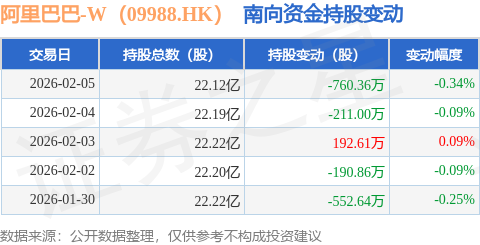
阿里巴巴-W(09988.HK):2月5日南向资金减持760.36万股
Sou Hu Cai Jing· 2026-02-05 19:43
Group 1 - The core point of the news is that southbound funds have reduced their holdings in Alibaba-W (09988.HK) by 7.60 million shares on February 5, 2026, marking a trend of net reductions over the past five trading days [1] - Over the last 20 trading days, there have been 12 days of net increases in holdings by southbound funds, totaling an increase of 1.67 million shares [1] - As of now, southbound funds hold a total of 2.21 billion shares of Alibaba-W, which represents 11.57% of the company's total issued ordinary shares [1] Group 2 - The trading data shows a total shareholding of 2.21 billion shares on February 5, 2026, with a decrease of 0.34% from the previous day [2] - The shareholding changes over the last five trading days include a reduction of 0.09% on February 4, 2026, and a reduction of 0.25% on January 30, 2026 [2] - Alibaba Group operates across seven business segments, including Chinese retail, international commerce, local services, logistics, cloud services, digital media and entertainment, and innovation and other businesses [2]

AI时代,企业为何集体走向艺术?京东、腾讯、梅见、喜茶的艺术实践观察
Sou Hu Cai Jing· 2026-02-05 18:50
Core Viewpoint - The rapid development of AI technology is prompting companies to adjust their organizational structures and job roles, leading to a re-evaluation of talent assessment standards and the integration of art into brand building and daily operations [1][3]. Group 1: Art Practices - JD.com plans to build a contemporary art museum in Shenzhen Bay, covering over 10,000 square meters, operating as an independent contemporary art institution, and focusing on themes related to technology, ecology, urbanization, and future living [5][6]. - Tencent is advancing the "Teng Chuang Future" art space, applying technologies like AI and VR/AR in cultural heritage protection and art display, including projects like the digital restoration of Dunhuang murals [8][9]. - Mei Jian Qing Mei Jiu has created China's first art space centered around alcohol, integrating online exhibitions and offline artistic collaborations, promoting Eastern aesthetics in contemporary life [11][12]. - Heytea incorporates artists and design agencies into its brand visual construction, launching global collaborations and themed stores to embed art into high-frequency consumer scenarios [15][16]. - Nongfu Spring integrates art into product packaging, collaborating with illustrators and photographers to create visually appealing designs that enhance brand recognition [20]. - Bilibili extends its online content ecosystem into offline public cultural spaces, showcasing original artworks and inviting creators to participate in exhibitions, enhancing community engagement [22][23]. Group 2: Core Characteristics - JD.com's art museum includes exhibition, performance, and educational spaces, facilitating various cultural activities while aligning with its technological and logistical background [5][6]. - Tencent's art initiatives leverage AI for detail restoration and digital archiving, enhancing efficiency in cultural heritage preservation and creating interactive exhibition spaces [9]. - Mei Jian Qing Mei Jiu collaborates with numerous artists to apply artistic works directly to product packaging, making art a part of everyday consumption [12]. - Heytea's artistic elements are integrated into packaging and store design, enhancing visual experiences and facilitating brand recognition among young consumers [17]. - Nongfu Spring's artistic packaging serves as a high-frequency display medium, reinforcing brand identity through consistent visual engagement [20]. - Bilibili's art practices emphasize community involvement, transforming viewers into participants and creators, thereby extending the lifecycle of content and IP [24]. Group 3: Brand Logic - JD.com's art museum enhances its brand image by adding cultural and emotional dimensions, transitioning from a purely e-commerce platform to a comprehensive institution with technological and cultural attributes [6]. - Tencent's involvement in cultural heritage and digital exhibitions strengthens its brand positioning as a technology and culture hybrid, expanding its business space in the digital cultural sector [9]. - Mei Jian Qing Mei Jiu differentiates itself in a saturated beverage market by enhancing the cultural and emotional value of its products through artistic collaboration [13]. - Heytea's artistic visual strategy helps establish brand recognition and emotional connections with consumers, increasing premium pricing and repeat purchase rates [17]. - Nongfu Spring's continuous design investment builds a stable perception of quality and aesthetics, creating long-term brand assets [20]. - Bilibili's offline exhibitions enhance community ties and user engagement, fostering a participatory culture that extends the relevance of its content [24]. Conclusion - Companies are increasingly entering the art sector through three main approaches: establishing physical cultural spaces, utilizing technology to transform art experiences, and integrating art into products and daily consumption [25].

数智生活向“新”向“好”
Xin Lang Cai Jing· 2026-02-05 18:10
Group 1: Internet Development - As of December 2025, the number of internet users in China is projected to reach 1.125 billion, with an internet penetration rate of 80.1%, reflecting a 9.7 percentage point increase since the beginning of the 14th Five-Year Plan [2][5] - The construction of a leading global information and communication network has been completed, with 4.838 million 5G base stations built, covering over 330 cities, significantly enhancing network service penetration [2][3] Group 2: AI Application Growth - The user base for generative artificial intelligence is expected to reach 602 million by December 2025, representing a 141.7% increase from the end of 2024 [4] - AI applications are increasingly integrated into key industries such as steel, electricity, and telecommunications, enhancing product development, quality inspection, and customer service [4][3] Group 3: Digital Inclusion and Quality of Life - Online government service users are projected to reach 940 million, providing efficient services that cover the entire lifecycle of businesses and individuals [5] - The online healthcare user base is expected to reach 411 million, with over 200 projects for mutual recognition of medical examination results among local medical institutions implemented across all provinces [5] - Online education users are anticipated to reach 327 million, with a growing number of digital educational resources available on the national smart education public service platform [5]
红包大战 意在超级流量入口
Shen Zhen Shang Bao· 2026-02-05 17:55
Core Insights - The competition among internet giants has shifted from mobile payments to artificial intelligence, with significant investments in AI-related initiatives and user engagement strategies [1][2] Group 1: Investment and Initiatives - Tencent launched the "Shangyuanbao, distributing 1 billion" campaign, marking a significant investment in user engagement during the Spring Festival, following a previous 500 million yuan investment in 2015 [1] - Alibaba's "Qianwen" announced a 3 billion yuan investment for its "Spring Festival Treat Plan," integrating various services within its ecosystem [1] - Baidu and ByteDance also participated, with Baidu embedding its AI assistant into its app and offering 500 million yuan in cash rewards, while ByteDance partnered with the Spring Festival Gala as the exclusive AI cloud partner [1] Group 2: Market Dynamics - The current AI competition is driven by the need for new traffic sources as mobile internet growth stagnates, with AI seen as the next major entry point for user engagement [2] - By 2025, the user base for generative AI in China is projected to reach 515 million, with a penetration rate of 36.5%, indicating a strong market foundation for AI applications [2] Group 3: Competitive Landscape - The battle for AI as a traffic entry point is reminiscent of past tech rivalries, with the potential for AI to aggregate traffic, data, and transactions, thus enhancing the competitive advantage for those who control these entry points [2][3] - The development of a super entry point requires advanced model capabilities, vast computational resources, and effective ecosystem integration, favoring major internet players over smaller competitors [3] Group 4: Opportunities for Smaller Players - Smaller players can still find opportunities by integrating with major AI models and creating plugins or skills that can be frequently utilized by mainstream AI agents [4] - The emergence of the AI agent economy is expected to create a trillion-dollar market by 2030, presenting new avenues for innovation and revenue generation [4] Group 5: Impact on Businesses - The shift in traffic entry points poses both challenges and opportunities for ordinary businesses, as AI agents may favor larger brands, potentially marginalizing smaller players [5][6] - Businesses that adapt to become "AI-friendly" and utilize available AI tools may gain a competitive edge in the evolving market landscape [6]

