
农产品加工

Search documents
索宝蛋白10月16日获融资买入1057.08万元,融资余额1.13亿元
Xin Lang Cai Jing· 2025-10-17 01:36
Group 1 - The core viewpoint of the news is that Sobao Protein's stock experienced a decline of 2.52% on October 16, with a trading volume of 57.79 million yuan, indicating market volatility and investor sentiment [1] - As of October 16, Sobao Protein's financing balance reached 113 million yuan, accounting for 5.71% of its circulating market value, which is above the 90th percentile of the past year, suggesting a high level of leverage [1] - The company reported a revenue of 774 million yuan for the first half of 2025, reflecting a year-on-year growth of 0.24%, while the net profit attributable to shareholders increased by 37.62% to 97.43 million yuan [2] Group 2 - Sobao Protein's main business revenue composition includes 32.42% from soybean isolate protein, 20.79% from non-GMO soybean oil, and 19.98% from soybean concentrate protein, indicating a diversified product portfolio [1] - The number of shareholders for Sobao Protein decreased by 3.86% to 19,000 as of September 30, while the average circulating shares per person increased by 4.01% to 5,599 shares [2] - Since its A-share listing, Sobao Protein has distributed a total of 153 million yuan in dividends [3]

品质化、个性化、功能化……农产品供给贴合“新吃法”
Ren Min Ri Bao· 2025-10-17 00:07
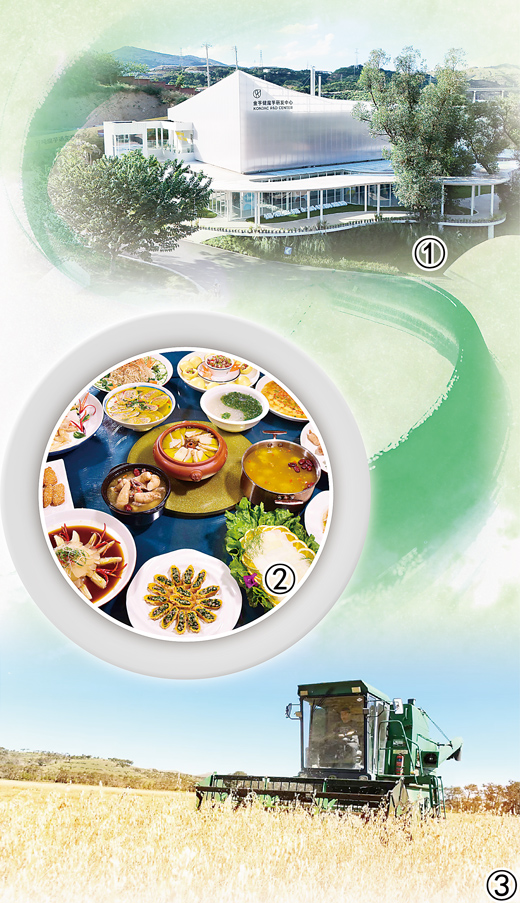
Core Insights - The article highlights the growing trend of high-quality, personalized, and functional agricultural products in China, with over 200 million tons of green quality agricultural products entering the market annually since the 14th Five-Year Plan began [1] Group 1: Nutritional and Functional Food Trends - There is a rising consumer interest in functional foods that integrate into daily meals, such as low glycemic index (GI) oats, which have gained popularity for their health benefits [2] - The market for functional foods is diversifying, with products like selenium-rich rice and DHA eggs becoming more favored by consumers [4] - The introduction of "medicinal food" products, such as Tianma, which has been added to the "medicinal food" directory, indicates a shift towards integrating health benefits into agricultural products [3] Group 2: Agricultural Processing and Value Addition - The agricultural processing sector is crucial for enhancing the value of agricultural products, with a processing conversion rate of 73% expected by the end of 2023, an increase of 4.5 percentage points since 2019 [6][8] - Companies are increasingly adopting modern food technologies and traditional methods to create unique products, such as the development of over 70 oat products by a company in Inner Mongolia [2][5] - The establishment of strategic partnerships between processing companies and local farmers has led to increased income for over 1.25 million farmers, with income growth exceeding 30% compared to other farmers [8] Group 3: Innovative Agricultural Practices and Market Expansion - The integration of agriculture with tourism and other sectors is expanding market opportunities, as seen with the development of a multifunctional agricultural park in Sichuan focusing on konjac [10][11] - Local governments are implementing standards and insurance mechanisms to support the growth of specialty crops like konjac, enhancing productivity by 40% [11] - The promotion of unique agricultural products and experiences is driving consumer engagement and sales, with significant revenue generated from agricultural festivals and leisure activities [12]

山东外贸“全国第五,北方第一”
Qi Lu Wan Bao· 2025-10-16 23:31
Core Insights - Shandong Province ranks fifth in China's foreign trade, with a total import and export value growth of 5.5% in the first three quarters of 2023, surpassing the national average growth of 1.5% [1][3] - The province's share of national trade has increased to 7.8%, with exports accounting for 8% and imports for 7.5% [1] Export Highlights - In the first three quarters, Shandong's tire and game console exports reached 68.11 billion and 54.08 billion yuan, representing 55.5% and 71.1% of the national total for these categories [2] - Agricultural exports from Shandong have maintained the top position in the country for over 20 years, totaling 121.74 billion yuan, which is 22.8% of the national agricultural exports [2] - Key agricultural products such as vegetables, fruits, and meat rank first nationally, while seafood ranks second [2] - Other notable exports include trucks, washing machines, tractors, plywood, and citric acid, each exceeding 20% of the national total [2] Import Highlights - Shandong leads the nation in metal ore imports, totaling 204.48 billion yuan, which is 14.5% of the national total [2] - The province ranks second in crude oil imports, accounting for 18.7% of the national crude oil import value [2] - Shandong's seafood processing and tire manufacturing sectors contribute to its leading positions in seafood and natural rubber imports, with shares of 21.7% and 30.6% respectively [2] - The cotton textile industry in Shandong also excels, with cotton imports making up 45.9% of the national total [2] Future Outlook - Shandong's balanced development of export-oriented industries is expected to continue, with the potential for new growth points in foreign trade as manufacturing advantages are solidified and industrial dynamics evolve [3]
农产品供给贴合“新吃法”(农产品新消费观察)
Ren Min Ri Bao· 2025-10-16 22:20
Core Insights - The article discusses the evolving trends in food consumption among urban and rural residents, highlighting the integration of health-oriented and functional foods into daily diets [3][4][6] - It emphasizes the growth of specialized agricultural products and the increasing demand for nutritious, low-calorie, and functional foods, reflecting a shift in consumer preferences [4][5][11] Group 1: Agricultural Product Trends - Since the start of the 14th Five-Year Plan, over 36,000 new green, organic, and geographical indication agricultural products have been certified, providing more than 200 million tons of quality agricultural products annually [3] - The demand for functional foods, such as low glycemic index (GI) oats and various health-oriented products, is rising, with companies developing over 70 new products to meet these needs [4][5] - The market for konjac-based snacks has seen significant growth, with online sales increasing by 128% year-on-year, indicating a strong consumer interest in innovative food products [11] Group 2: Nutritional and Functional Food Development - The introduction of "nutritional agriculture" is highlighted as a key direction for future agricultural development, with a focus on producing fortified foods that cater to health-conscious consumers [6][10] - The integration of traditional food processing with modern technology is enhancing the safety and appeal of processed foods, with a reported 73% processing conversion rate for major agricultural products by the end of 2023 [8][9] - The development of a variety of functional foods, such as selenium-rich rice and DHA-enriched eggs, is gaining traction among consumers, reflecting a shift towards more health-oriented dietary choices [6][10] Group 3: Economic Impact and Industry Growth - The agricultural processing industry is crucial for enhancing the value of agricultural products, with over 1.25 billion farmers benefiting from improved income through various cooperative models [9] - The establishment of specialized research institutions and partnerships is fostering innovation in agricultural processing, leading to the development of new products and improved processing techniques [9][10] - The integration of tourism and agriculture is expanding market opportunities, with regions like Shaanxi and Zhejiang successfully creating tourism routes that enhance the economic value of local agricultural products [13]

建行德州分行:2小时为外贸企业“补卡”保订单
Qi Lu Wan Bao· 2025-10-16 22:13
Core Insights - A hardware company in Le Ling faced a crisis due to a sudden failure of the electronic port card, risking over 1 million yuan in orders to Vietnam and Italy, which could miss customs deadlines [1] - The efficient response from the Construction Bank's Dezhou branch, which activated an emergency service channel for foreign trade enterprises, allowed the company to receive a new card in just 2 hours, resolving the crisis [1] - The "Guan Yin Yi KEY Tong" project by the Construction Bank's Dezhou branch has been instrumental in providing comprehensive services to foreign trade companies, saving them time and costs [1] Group 1 - The project has served over 20 foreign trade enterprises by the end of September, aiming to streamline processes and reduce transportation and labor costs [1] - The bank is also focusing on trade foreign exchange, having included 90 enterprises in a pilot program across 10 counties, covering key industries such as machinery manufacturing and chemical processing [1][2] - Since the beginning of the year, the Dezhou branch has processed 13,253 transactions for pilot enterprises, amounting to 690 million USD, improving efficiency by over 60% [2] Group 2 - The bank emphasizes compliance in its foreign trade financial services, establishing a full-process mechanism for review and monitoring [2] - The Dezhou branch has been recognized as an "A-class bank" for compliance and prudent operation in foreign exchange business for three consecutive years [2]
品质化、个性化、功能化 全国每年超2亿吨绿色优质农产品进入市场 农产品供给贴合“新吃法”(农产品新消费观察)
Ren Min Ri Bao· 2025-10-16 22:08
Core Insights - The article discusses the emerging trends in food consumption among urban and rural residents, highlighting the shift towards health-oriented and functional foods, as well as the integration of agricultural products into daily diets [1][2][4]. Group 1: Nutritional and Functional Foods - There is a growing trend towards incorporating functional foods into daily meals, with products like low glycemic index oats gaining popularity [2][4]. - The introduction of "medicinal and edible" plants, such as Tianma, into the market reflects a broader acceptance of health-oriented agricultural products [3][4]. - The agricultural sector is increasingly focusing on nutrition-oriented production, with a push for high-value processing of agricultural products [3][4]. Group 2: Agricultural Processing and Innovation - The deep processing of agricultural products is becoming essential, with companies like Quanrun Food Co. leveraging modern technology to meet consumer demands [5][6]. - The processing rate of major agricultural products in China has reached 73%, indicating a significant improvement in the sector since 2019 [6][8]. - Innovations in processing techniques, such as the use of robotics and plasma sterilization, are enhancing the efficiency and safety of food production [8]. Group 3: Market Expansion and Consumer Engagement - The rise of new consumption scenarios, such as leisure foods made from konjac, is driving market growth, with sales increasing significantly [9][10]. - The integration of agriculture with tourism and local culture is creating new business models, as seen in the konjac industry in Sichuan [10][11]. - The development of local agricultural standards and insurance mechanisms is supporting the growth of specialty crops like konjac, enhancing their market viability [11][12]. Group 4: Economic Impact and Future Directions - The agricultural sector is expected to continue evolving, with initiatives aimed at enhancing brand development and promoting high-quality agricultural products [12]. - The government's focus on modern agricultural parks and industry clusters is set to further stimulate growth in the agricultural sector [12].
价差复盘:过剩格局下的淀粉盈利博弈
Guang Fa Qi Huo· 2025-10-16 10:34
1. Report Industry Investment Rating No information provided in the content. 2. Core Viewpoints of the Report - The report systematically reviews the price spread between Chinese corn starch and corn from 2021 - 2025, aiming to analyze the profit - gaming logic of the starch industry under the over - supply situation. The main influencing factors of the spread are "cost - supply and demand". The price change of corn at the cost end is the basis for affecting the spread, while the supply - demand relationship of starch is the core driver of the spread's fluctuation. The supply and demand of starch are mainly reflected through processing profit, operating rate, and inventory. High inventory and high operating rate jointly form the greatest downward pressure on the spread, while low inventory and low operating rate are the core drivers for the spread to expand. High inventory limits the upward space of the spread, and industrial concentration strengthens the bottom support of the spread. In the future, the high inventory of starch serves as a major resistance, and the progress of inventory clearance will be a key observation indicator [1][36]. 3. Summary by Related Catalogs 3.1 Corn Starch Industry Chain Situation - Corn starch accounts for about 52% of the deep - processed consumption of corn. Its price is strongly influenced by the cost of corn and its own fundamentals. China's corn starch is mainly self - sufficient, with imports less than 1%. The main production areas are Shandong, Heilongjiang, and Hebei, accounting for 41%, 25%, and 7% respectively [5]. - The supply - related indicators of corn starch include production capacity, operating rate, cost - profit, etc. Downstream consumption is concentrated in starch sugar and papermaking. There is a substitution relationship between starch sugar and white sugar, and the substitution effect is evident when the price difference exceeds 1500 yuan/ton. The price difference between white sugar and F55 high - fructose corn syrup this year has been maintained at a relatively high level of 2500 - 2700 yuan/ton, and the substitution continues. The operating rate of corrugated paper and boxboard is relatively stable, with an annual change of about 5% [6]. 3.2 Corn Starch Production Capacity Changes - In recent years, the production capacity of corn starch has been expanding. In 2024, the production capacity slightly declined to 2630 million tons but still remained in an over - supply situation. The production capacity is mainly concentrated in Shandong, Heilongjiang, Hebei, and Jilin. Since 2020, the industry has witnessed intensified competition, and production capacity has been increasingly concentrated in leading enterprises. The over - supply has compressed industry profits and limited the upward space of the spread, while the concentration has strengthened the bottom support of the spread [9][10][11]. 3.3 Corn Starch and Corn Price Spread Review 3.3.1 2021: Starch Supply - Demand Dominated - The spread showed an M - shaped trend, fluctuating between 300 - 600 yuan/ton. From January to March, the spread widened from 350 to 600 yuan/ton due to high corn prices, limited starch operating rate, and tight inventory. From April to July, it narrowed to around 350 yuan/ton as both corn and starch faced supply - demand pressure. From August to October, it widened again to 600 yuan/ton because of the rebound of corn prices and low starch operating rate. From November to December, it narrowed as starch production increased while demand growth was slower [15][16]. 3.3.2 2022: Strong Cost Support - The spread had a larger amplitude and showed a narrowing trend. From January to February, it expanded from 350 to 580 yuan/ton due to high raw material prices and low operating rate. From March to October, it continuously narrowed to 80 yuan/ton under factors such as weak demand, over - supply, and profit - driven price cuts. From November to December, it fluctuated between 100 - 250 yuan/ton as both corn and starch were in a weak supply - demand balance [19][20]. 3.3.3 2023: Low Operating Rate - The spread showed an oscillating trend with a slowly rising center of gravity. From January to June, it widened to 400 yuan/ton due to stable corn prices and low operating rate caused by continuous losses in processing profit. From July to December, it slightly increased with a shrinking amplitude. In July - August, it narrowed due to high corn prices and weak starch supply - demand. After September, it slightly increased as new - season corn was listed [22][24]. 3.3.4 2024: Weak Supply - Demand - The spread fluctuated between 300 - 500 yuan/ton. From January to May, it first rose and then fell. In January, it reached 500 yuan/ton due to good starch demand and high operating rate. After February, it narrowed to 380 yuan/ton as corn prices rose and processing profit declined. From June to December, it also first rose and then fell. From June to early July, it slightly widened due to limited corn supply and good starch demand. From mid - July to December, it continuously narrowed as new - season corn production was expected to be high and starch inventory accumulated [25][27]. 3.3.5 2025: Supply Pressure - The spread's fluctuation amplitude was about 100 yuan/ton. From January to mid - March, it widened from 300 to 400 yuan/ton as corn prices rose and starch operating rate was high. From late March to early August, it oscillated between 340 - 400 yuan/ton due to corn price fluctuations and weak starch supply - demand. From mid - August to the present, it has been narrowing as new corn was listed, starch inventory remained high, and cassava starch squeezed the demand for corn starch [31]. 3.4 Summary and Outlook - From 2021 - 2025, the spread oscillated with a narrowing range, from 300 - 600 yuan/ton in 2021 to 280 - 400 yuan/ton in 2025, and the high point declined from 600 to 400 yuan/ton. The spread showed seasonal patterns. The spread is mainly affected by "cost - supply and demand", with corn price as the basis and starch supply - demand as the core driver. Starch inventory is a key factor, and "high operating rate + high inventory" is the greatest downward pressure on the spread, while "low operating rate + low inventory" is the core driver for the spread to expand. In the future, the high inventory of starch is a major resistance, and the spread may continue to narrow. Attention should be paid to the change in starch inventory [35][36][40].
2025重庆食农产业生态大会开幕
Zhong Guo Xin Wen Wang· 2025-10-16 10:27
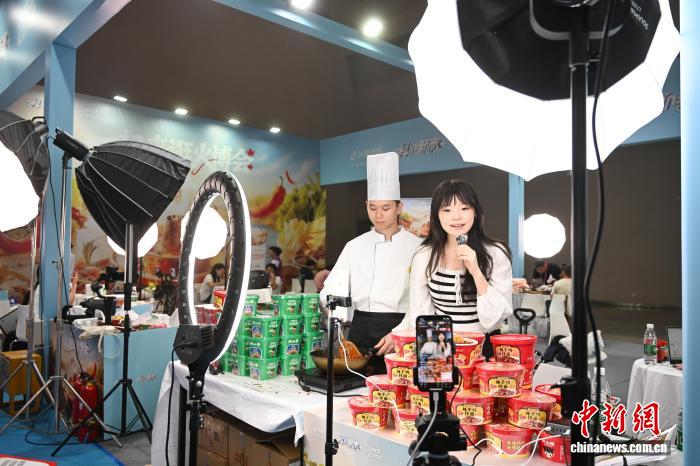
Core Points - The 2025 Chongqing Food and Agricultural Products Processing High-Quality Development Industry Ecosystem Conference opened on October 16, focusing on new trends in food development and optimizing industry ecosystems [2][4][6][10][14] Group 1: Conference Overview - The conference theme is "New Food Power, New Ecology," aiming to explore future food development trends and industry ecosystem optimization paths [2][4][6][10] - The event features three specialized exhibition halls: Food Processing Equipment Manufacturing Hall, Food and Agricultural Products Processing Industry Ecosystem Hall, and National/City Food Comprehensive Hall [2][4][6][10] Group 2: Exhibitions and Highlights - The Food and Agricultural Products Processing Industry Ecosystem Hall showcased various products, including the popular Rongchang marinated goose [4][6][11] - The National/City Food Comprehensive Hall displayed local specialties such as Guizhou Kaili sour soup [8][11] Group 3: Investment and Economic Impact - During the conference, a signing ceremony resulted in 81 projects being signed, with a total investment amount of 25.421 billion RMB [14]
农业农村部:引导创业项目与农民建立紧密利益联结机制
Shang Hai Zheng Quan Bao· 2025-10-16 09:37
Core Insights - The 2025 Rural Entrepreneurship Project Competition National Finals was held in Changsha, Hunan, focusing on "Innovation Ignites Rural Creation, Industry Empowers Revitalization" [1][2] - The competition featured 59 projects, with 6 winning first prize, 12 second prize, and 16 third prize [1] Group 1: Competition Overview - The competition was organized by the Ministry of Agriculture and Rural Affairs and local government, highlighting the importance of rural entrepreneurship in driving rural industry development and increasing farmers' income [2] - A rural entrepreneurship service plan and promotional activities were launched alongside the competition to support project development [1] Group 2: Policy and Development Goals - The event emphasized the need to implement national policies to promote high-quality rural entrepreneurship development [2] - Key strategies include strengthening industry support, enhancing service quality, and establishing talent stations and service centers to facilitate entrepreneurship [2] Group 3: Historical Context and Impact - Since 2017, the Ministry of Agriculture and Rural Affairs has hosted six competitions, with over 20,000 projects participating [2] - The competition has fostered the growth of "rural creators" and "new farmers," leading to the emergence of numerous small, specialized brands and promoting talent acquisition, industry development, and brand building [2]

玉米淀粉日报-20251016
Yin He Qi Huo· 2025-10-16 09:21
Group 1: Report Industry Investment Rating - No relevant content provided Group 2: Core Viewpoints of the Report - The U.S. corn report lowered the yield per unit, but the production remains high. The U.S. corn price declined and may continue to fall in the future. China has imposed a 15% tariff on U.S. corn and a 22% tariff on U.S. sorghum. The import profit of foreign corn is high. The northern port corn prices have stabilized and rebounded, while the North China corn prices continue to decline. The domestic corn market is expected to be relatively stable in the short term, but there may be selling pressure in late October. The corn starch market is affected by the corn price and downstream inventory, and the short - term price is expected to fluctuate narrowly [4][5]. - For trading strategies, it is recommended to hold long positions in 01 or 05 corn contracts and set stop - profit levels, and to wait and see for arbitrage [7]. - For options, a short - term strategy of accumulating puts and calls with rolling operations is recommended [10]. Group 3: Summary by Directory First Part: Data - **Futures Market**: On October 16, 2025, most corn futures contracts rose, with C2601 up 0.42%, C2605 up 0.76%, and C2509 up 0.66%. Some corn starch futures contracts also showed different trends, with CS2601 down 0.04%, CS2605 up 0.47%, and CS2509 up 0.89%. The trading volume and open interest of each contract also changed to varying degrees [2]. - **Spot and Basis**: The spot prices of corn in different regions showed different trends, with prices in some ports stabilizing and rebounding, and prices in North China falling. The basis of corn and corn starch also showed different values in different regions. The price differences between different periods of corn and corn starch and between different varieties also changed [2]. Second Part: Market Judgment - **Corn**: The U.S. corn report lowered the yield per unit, but the production is still high, and the price may continue to decline. China's import tariffs on U.S. corn and sorghum have changed. The northern port prices have stabilized and rebounded, and the North China prices continue to fall. The domestic corn market is expected to be relatively stable in the short term, but there may be selling pressure in late October [4][5]. - **Starch**: The number of trucks arriving at Shandong deep - processing plants has increased, and the corn and starch prices in Shandong and Northeast China are weak. The inventory of corn starch has increased. The price of starch depends on the corn price and downstream inventory. The short - term price is expected to fluctuate narrowly [6]. Third Part: Corn Options - The recommended option strategy is a short - term strategy of accumulating puts and calls with rolling operations [10]. Fourth Part: Related Attachments - The attachments include various charts showing the spot prices of corn in different regions, the basis and price differences of corn and corn starch futures contracts, which help to analyze the market trends of corn and corn starch [12][14][18].