
渔业

Search documents
全球首艘三文鱼养殖船江苏造
Xin Hua Ri Bao· 2025-07-22 20:57
Core Viewpoint - The delivery of the "Suhai No. 1," the world's first self-propelled closed salmon farming vessel, marks a significant advancement in deep-sea salmon farming in China, with the potential to produce 8,000 tons of salmon annually, aiming to replace imports and lower prices for consumers [1][2]. Group 1: Vessel and Technology - "Suhai No. 1" is designed by the Chinese Academy of Fishery Sciences and built by China Shipbuilding Industry Corporation, featuring self-navigation capabilities and the ability to operate year-round by relocating to optimal water temperatures [2][3]. - The vessel can travel at speeds up to 18 km/h and has a range of 20,000 nautical miles, allowing it to evade adverse weather conditions, thus enhancing the safety and stability of salmon farming [3][4]. - The closed farming system simulates natural conditions, ensuring optimal growth environments for salmon, with 15 closed compartments that allow for intelligent management of water, oxygen, feed, light, and waste [3][4]. Group 2: Production and Market Impact - The first batch of salmon from "Suhai No. 1" is expected to be available for sale around the Dragon Boat Festival in 2024, with the potential for a stable and sufficient supply of salmon in the market [5]. - The vessel's design allows for multi-functional use, enabling the farming of various high-value fish species, which could further enhance the seafood supply chain in China [5]. - The integration of an automated salmon processing facility onboard allows for efficient processing, with a capacity of 100 tons for fresh processing and 5 tons for quick freezing, ensuring freshness and quality that can compete with imported products [4][5]. Group 3: Industry Transformation - The successful delivery of "Suhai No. 1" represents a shift in the fishing industry from nearshore capture to deep-sea intelligent manufacturing, setting a new industrial standard for future aquaculture projects [4][5]. - The innovative design and construction methods used in building "Suhai No. 1" have improved efficiency, reducing the construction cycle to 28 months and achieving a 35% increase in design efficiency and a 16% increase in construction efficiency [4].
从“蓝色粮仓”到“蓝色动能”现代渔业激发经济新活力
Zheng Quan Shi Bao· 2025-07-22 19:18
Core Viewpoint - China's marine fishery is undergoing a profound transformation from traditional production to a modern industry, with a focus on high-quality development and strengthening the marine economy [1] Industry Overview - China's marine fishery maintains a leading global position, with a continuous expansion in scale and technological upgrades. In Q1 2025, the national marine aquatic product output increased by 4.5% year-on-year, with marine aquaculture output rising by 5.7% [1] - The industry is advancing towards deep-sea aquaculture, with significant innovations such as the launch of the deep-sea aquaculture vessel "Zhanjiang Bay No. 1" and the completion of inspections for the "Fuxi No. 1" deep-sea net cage platform [1] Technological Innovations - Companies like Dongfang Ocean have developed a large-scale brown algae germplasm resource bank and cultivated five national审海带新品种, capturing over 25% market share [2] - Guolian Aquatic Products has innovated in the freezing process, reducing the freezing time from 24 hours to 30 minutes using liquid nitrogen technology, which preserves the quality of aquatic products [2] Challenges and Shortcomings - Despite its scale, China's marine fishery faces challenges compared to international standards, particularly in marine aquaculture and fishing [3][5] - Key issues include reliance on imported high-end breeding varieties and a lack of automation in aquaculture equipment, with a need for advancements in deep-sea farming technologies [4] Economic Impact - The development of marine fisheries is becoming a crucial component of national food security, providing high-protein, low-fat aquatic products that meet the growing demand for healthy diets [7] - The marine fishery sector is driving the integration of primary, secondary, and tertiary industries, contributing significantly to the high-quality development of the marine economy [7] Social Contributions - The modern marine fishery is promoting rural revitalization and contributing to common prosperity by creating new business models such as modern marine ranching and ecological aquaculture, which enhance coastal region industries and increase fishermen's income [8]
海关总署:即日起,允许符合相关要求的新西兰野生水产品进口
news flash· 2025-07-22 09:05
海关总署:即日起,允许符合相关要求的新西兰野生水产品进口 金十数据7月22日讯,海关总署发布公告,根据我国法律法规和中华人民共和国海关总署与新西兰初级 产业部有关新西兰输华野生水产品的检验检疫和卫生要求规定,即日起,允许符合相关要求的新西兰野 生水产品进口。 (海关总署) 相关链接 ...
马来西亚寻求20%关税,但拒绝在电动车优惠和外资持股上让步
Hua Er Jie Jian Wen· 2025-07-22 07:44
Core Viewpoint - Ongoing tariff negotiations between the US and Malaysia face significant disagreements on sensitive issues, impacting Malaysia's economic growth expectations. Group 1: Tariff Negotiations - The US plans to impose tariffs ranging from 25% to 40% on imports from 14 countries, including a 25% tariff on Malaysian products starting August 1 [1] - Malaysia's negotiation team aims for a tariff rate below 25%, ideally around 20%, to align with neighboring countries like Indonesia and Vietnam [1][2] - The outcome of these negotiations is crucial for Malaysia's economic growth, with the government projecting a growth target of 4.5% to 5.5% for the year, contingent on the final tariff levels [1] Group 2: Controversial Issues - The extension of tax exemptions for US-made electric vehicles is a contentious point, with Malaysian officials hesitant to agree due to potential implications for other countries [2] - Malaysia is unwilling to lower foreign ownership limits in sensitive sectors like electricity and finance, reflecting the political sensitivity of these issues [2] - The request to reduce local fisheries subsidies and overfishing is seen as interference in domestic affairs, affecting key voter groups, particularly among the Malay fishermen [3] Group 3: Semiconductor Cooperation - Malaysia has shown willingness to cooperate on high-performance semiconductors, implementing stricter export controls for AI chips to the US [4]
互不相让!特朗普对欧盟加码关税要价,南美大国强烈“硬刚”美国
Sou Hu Cai Jing· 2025-07-22 02:59
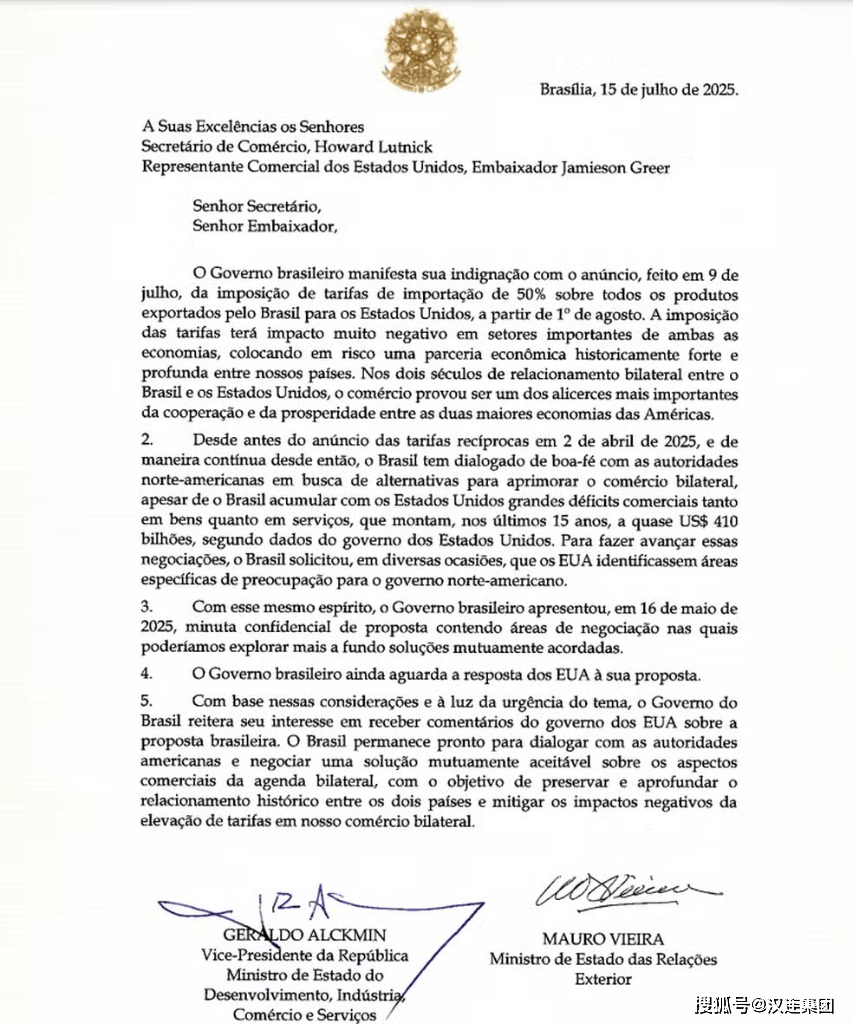
Group 1 - Brazil's government expressed strong outrage against the U.S. for imposing a 50% tariff on its imports, highlighting the potential negative impact on both economies and their long-standing trade relationship [1][3] - The Brazilian government has been willing to engage in sincere dialogue with the U.S. to seek alternative solutions for improving bilateral trade since the announcement of the tariffs [3] - Brazil's fishing industry announced a suspension of exports to the U.S. in response to the tariffs, with approximately 70% of its fishery products being sent to the U.S. [5][7] Group 2 - The Brazilian beef export sector is also affected, with some processing plants halting exports to the U.S. and around 30,000 tons of beef valued at $160 million uncertain for entry into the U.S. market [7] - The Brazilian government is advising exporters to pressure U.S. buyers and explore alternative markets, although no specific compensation measures have been proposed [5][7] - The fishing industry faces significant challenges, with over 1,000 tons of fish products worth approximately $50 million currently in cold storage and up to 3,500 fishing vessels potentially ceasing operations [7]

斗不过特朗普,加拿大打法变了,将对中国产品加税,中方反制就绪
Sou Hu Cai Jing· 2025-07-22 02:07
Group 1 - Canada announced a 25% tariff on steel and related products from China to protect its domestic industry from an influx of foreign steel following U.S. tariffs [1][3] - The Canadian government is responding to U.S. trade policies, particularly those imposed by the Trump administration, which have included tariffs ranging from 35% to 50% on various Canadian products [3][5] - The decision to target China is seen as a strategic move to demonstrate a tough stance externally while attempting to appease domestic dissatisfaction and signal cooperation to the U.S. [5][7] Group 2 - China is the largest steel producer globally and a significant source of steel imports for Canada, accounting for over 10% of Canada's steel imports last year, which could lead to increased costs for Canadian industries [5][7] - China's potential retaliatory measures include imposing punitive tariffs on Canadian agricultural products, which could severely impact Canada's agricultural sector that relies heavily on the Chinese market [7][9] - The evolving trade dynamics indicate a broader trend of countries aligning against China, with Canada’s actions reflecting this shift in international trade relations [7][9]

华宝中证全指农牧渔指数发起式A,华宝中证全指农牧渔指数发起式C: 华宝中证全指农牧渔指数型发起式证券投资基金2025年第2季度报告
Zheng Quan Zhi Xing· 2025-07-21 06:20
Core Viewpoint - The report provides an overview of the performance and management of the Hua Bao Zhong Zheng All-Index Agricultural, Animal Husbandry, and Fishery Index Fund for the second quarter of 2025, highlighting its investment strategy, financial indicators, and market conditions affecting the fund's performance [1][2][3]. Fund Overview - Fund Name: Hua Bao Zhong Zheng All-Index Agricultural, Animal Husbandry, and Fishery Index Fund - Fund Manager: Hua Bao Fund Management Co., Ltd. - Fund Custodian: Shanghai Pudong Development Bank Co., Ltd. - Total Fund Shares at Period End: 114,137,173.13 shares [1][2]. - Investment Objective: To closely track the performance of the benchmark index with minimal tracking deviation and error [2][3]. Financial Indicators and Fund Performance - The fund's net value growth rate for Class A shares was 6.00% over the past three months, while Class C shares had a growth rate of 5.92% [6][14]. - The performance benchmark for the fund is defined as the return of the Zhong Zheng All-Index Agricultural, Animal Husbandry, and Fishery Index multiplied by 95% plus the after-tax return of RMB bank demand deposits multiplied by 5% [6][14]. - The fund's performance over various periods includes: - Last three months: 6.00% (A), 5.92% (C) - Last six months: 4.30% (A), 4.14% (C) - Last year: 5.58% (A), 5.27% (C) - Since fund inception: -24.26% (A), -25.06% (C) [6][14]. Investment Strategy - The fund employs a passive index investment strategy, primarily using a full replication method to track the benchmark index's performance [3][14]. - The fund aims to keep the absolute value of daily tracking deviation within 0.35% and annual tracking error within 4% [3][14]. Market Conditions - The report notes a moderate recovery in the domestic macroeconomic environment, with supportive fiscal and monetary policies being implemented [13]. - The A-share market exhibited structural trends, with significant performance differences across sectors during the second quarter of 2025 [13]. - The Zhong Zheng Agricultural, Animal Husbandry, and Fishery Index increased by 5.61% during the reporting period [13].

夏日特色水产采收正当时 多样化供给丰富市民餐桌
Yang Shi Wang· 2025-07-19 08:47
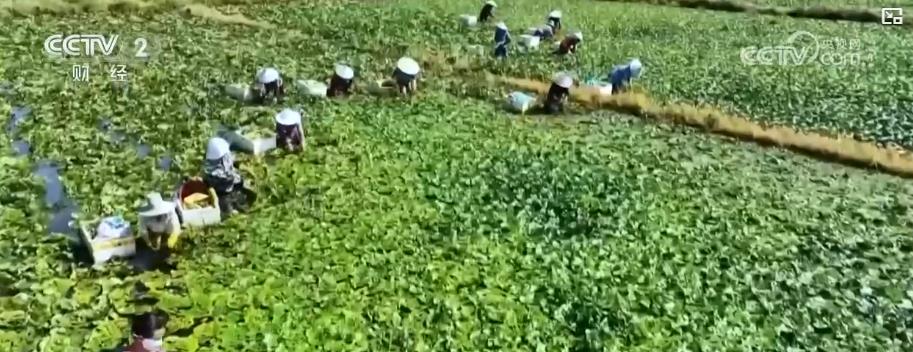
Group 1: Agricultural Production - The "Daqingling" variety of water chestnuts in Ruokeng Village, Fengyang Town, is harvested from early July to mid-November, with an average yield of approximately 2,000 pounds per acre, and peak daily harvests reaching 15,000 pounds, leading to an expected annual total production exceeding 2 million pounds [4] - In Yantai Longkou, the jellyfish harvest has begun, with 41 fishing boats successfully obtaining special permits for jellyfish fishing, contributing to local economic income and enhancing the variety of seafood available to consumers [6][8] Group 2: Fishing Practices - The summer fishing season has commenced at the Biali River fishing ground in Anhui, marking a shift from the traditional winter fishing practices to a seasonal rotation that aims to improve economic efficiency and meet market demand [9][11] - The Biali River fish hatchery can cultivate 1 million pounds of fish annually, primarily focusing on species such as silver carp and grass carp, with a sustainable fishing approach that includes seasonal catch and release [12]
印尼获美国较低关税 交易式外交达成“不良先例”?
Yang Shi Wang· 2025-07-18 03:22
Core Points - Indonesia has reached a trade agreement with the United States, which includes a 19% tariff on all imported Indonesian goods, while Indonesian purchases of $15 billion in U.S. energy, $4.5 billion in agricultural products, and 50 Boeing aircraft are promised [1][3] - The agreement is seen as a diplomatic victory for Indonesia, with President Prabowo emphasizing its mutual benefits and potential to enhance local industries [3][7] - The deal may set a concerning precedent for Indonesia's future negotiations with other economic partners, as it could lead to similar demands from other countries [2][10] Trade Impact - The U.S. trade deficit with Indonesia was $17.9 billion in 2024, with bilateral trade amounting to $38.3 billion [4] - Key Indonesian exports to the U.S. include palm oil, coffee, cocoa, textiles, and semiconductors, which may benefit from the tariff reduction [4] - Indonesia's textile and footwear sectors may face challenges due to the new tariffs, while the energy and agricultural sectors could see gains [1][4] Economic Concerns - The agreement's energy procurement commitment of $15 billion raises questions about Indonesia's goals to reduce fossil fuel dependency and promote renewable energy [6] - The removal of localization production requirements may negatively impact local manufacturing, leading to dissatisfaction among companies that have invested significantly to comply with these regulations [6][10] - The deal is perceived to offer more political than economic benefits, as the U.S. remains a less significant trading partner compared to Indonesia's Asian counterparts [7][10] Regional Reactions - Other Asian countries are closely monitoring the U.S.-Indonesia agreement to strategize their own trade negotiations [2][8] - The agreement may influence Indonesia's ongoing trade talks with the EU, as both parties have been at odds over localization policies and environmental regulations [8][9] - Concerns arise that Indonesia's concessions to the U.S. could weaken its negotiating position with other trade partners, including the Eurasian Economic Union and the Southern Common Market [10][12]
罗浮山下四时春——解码“岭南名郡”惠州的文化自信样本
Xin Hua Wang· 2025-07-17 23:09
Cultural Heritage and Development - Huizhou is recognized for its rich cultural heritage, with historical significance dating back over 1400 years, showcasing the integration of various cultural influences, particularly from the Song Dynasty poet Su Dongpo [2][3][4] - The city emphasizes the importance of cultural activities and education, with initiatives like the monthly science lectures and cultural events at the restored Fenghu Academy, which serves as a new cultural landmark [4][6] Economic Growth and Industrial Development - Huizhou has a coastline of 281.4 kilometers and a sea area of 4520 square kilometers, which has historically supported trade and maritime activities, contributing to its economic development [12] - The city has seen significant industrial growth, particularly in the petrochemical sector, with major projects from companies like Shell and ExxonMobil, indicating a strong confidence in the local industrial ecosystem [16][17] - In the past year, Huizhou's GDP surpassed 600 billion yuan, with the electronic information and petrochemical industries experiencing substantial growth rates of 13.6% and 17.9% respectively, aiming for the establishment of a trillion-level industrial cluster [17] Historical Significance and Red Culture - Huizhou played a crucial role during the anti-Japanese war, serving as a key transit point for rescuing cultural and political figures, which has contributed to its identity as a city with a strong revolutionary heritage [7][10] - The city is committed to preserving and promoting its revolutionary history, with initiatives to document and share stories of local heroes and significant events, reinforcing its cultural identity [10][11]
