石化

Search documents
更好发挥外贸外资“第一梯队”作用
Ren Min Ri Bao· 2025-06-01 19:29
Core Insights - The recently issued "Work Plan for Deepening the Reform and Innovation of National Economic and Technological Development Zones" aims to enhance high-level openness and promote high-quality development across the country [1] Group 1: Economic Development and Trade - The number of national economic and technological development zones is set to reach 232 by 2024, covering all 31 provinces, regions, and municipalities [1] - These zones are crucial for building an open economy, with over 60,000 foreign-funded enterprises and 99,000 foreign trade companies, contributing to 23.4% of the national foreign investment and 24.5% of total imports and exports in 2024 [1] Group 2: Industrial Growth and Employment - National economic and technological development zones are expected to achieve a regional GDP of 16.9 trillion yuan in 2024, with over 24 million jobs created in large-scale industrial and service enterprises [2] - A diverse industrial system has emerged, covering sectors such as electronics, high-end equipment manufacturing, automotive, petrochemicals, new energy, and new materials [2] Group 3: Regional Coordination and Support - These zones actively support regional development, enhancing economic growth in underdeveloped areas, with the central and northeastern regions projected to achieve a GDP of 6.65 trillion yuan and an industrial output of 3.73 trillion yuan, representing 67% and 74% of the eastern regions, respectively [2] Group 4: Management and Business Environment - The zones are focused on optimizing management systems to create a first-class business environment, with about 60% of them having fewer than 10 internal institutions to provide streamlined services [3] - Collaboration with over 30 free trade pilot zones and more than 60 comprehensive bonded zones has led to significant institutional innovations in resource flow, rights protection, and market order [3]
石化民企龙头ESG报告出炉,恒力石化排放最高、增幅最大 | ESG信披洞察
Xin Lang Cai Jing· 2025-05-31 08:23
Core Insights - The petrochemical industry is a cornerstone of modern economic development and a major carbon emitter, with China's petrochemical sector emitting 1.4 billion tons of carbon in 2022, accounting for 18% of industrial carbon emissions and 12% of national emissions [1] Group 1: Carbon Emissions Data - In 2024, the total greenhouse gas emissions for four major private petrochemical companies are as follows: - Dongfang Shenghong: 30.1 million tons CO2 equivalent [4] - Hengli Petrochemical: 53.92 million tons CO2 equivalent, a year-on-year increase of approximately 64% [4][5] - Hengyi Petrochemical: 7.94 million tons CO2 equivalent, a year-on-year decrease of 1.9% [5] - Rongsheng Petrochemical: 29.39 million tons CO2 equivalent, a year-on-year increase of 1.1% [5] Group 2: Emission Breakdown - Hengli Petrochemical's emissions include: - Scope 1: 47.2 million tons CO2 equivalent, up about 51% year-on-year [4] - Scope 2: 6.72 million tons CO2 equivalent, up over three times year-on-year [4] - Dongfang Shenghong's emissions include: - Scope 1: 15.81 million tons CO2 equivalent - Scope 2: 14.29 million tons CO2 equivalent [5] - Rongsheng Petrochemical's emissions include: - Scope 1: 26.41 million tons CO2 equivalent - Scope 2: 2.98 million tons CO2 equivalent [5] - Hengyi Petrochemical's emissions include: - Scope 1: 6.13 million tons CO2 equivalent - Scope 2: 1.81 million tons CO2 equivalent [4] Group 3: Environmental Investments - Dongfang Shenghong has the highest environmental investment at 1.84 billion yuan, followed by Hengyi Petrochemical at approximately 400 million yuan, Hengli Petrochemical at 375 million yuan, and Rongsheng Petrochemical at 270 million yuan [8] Group 4: Waste Management - The hazardous waste production for the companies is as follows: - Hengli Petrochemical: 148,000 tons - Dongfang Shenghong: 91,300 tons - Hengyi Petrochemical: 437 tons - Rongsheng Petrochemical: 337,000 tons [8] Group 5: Carbon Management Initiatives - Dongfang Shenghong is advancing CO2 resource utilization by capturing CO2 to reduce emissions and exploring new carbon-neutral development pathways [9] - Hengli Petrochemical has implemented systems to reduce CO2 emissions by approximately 3,435.72 tons annually through process optimizations [9] - Hengyi Petrochemical has initiated a renewable energy project in Brunei, with a planned capacity of 476 MWp [9] - Rongsheng Petrochemical has established a high-value CO2 utilization industry chain, reducing emissions by 103,000 tons annually [10]


最新报告:2060年我国工业碳排放将比今年下降约95%
Nan Fang Du Shi Bao· 2025-05-30 10:17
Core Insights - The report outlines the future industrial carbon neutrality technology evolution path, projecting that by 2060, China's industrial carbon emissions could drop to 450 million tons, a reduction of approximately 95% from 2025 levels [1] - Four common technologies—raw material substitution, waste recycling, electrification and clean power substitution, and hydrogen substitution—are expected to contribute nearly 80% to industrial carbon neutrality technology emissions reduction [1] Industrial Carbon Neutrality Technology Pathways - Climate change is a significant global challenge, with China's industrial sector accounting for nearly 70% of national emissions, necessitating research into industrial carbon neutrality technologies [2] - The report proposes a three-phase technology development path: - 2025-2035: Large-scale application of low-carbon process technologies, focusing on raw material substitution, waste recycling, and energy efficiency improvements [2] - 2035-2050: Explosive application of disruptive technologies such as hydrogen, electrification, and CCUS, aiming to restructure the industrial system [2] - 2050-2060: Deep application of carbon removal technologies, with CCUS expected to contribute 24% to emissions reduction [2] Sector-Specific Insights - In the steel industry, short-process electric furnace steel and energy efficiency technologies are mature, with hydrogen metallurgy and CCUS in demonstration stages; crude steel production is projected to drop to 700 million tons by 2060 [3] - The cement industry has large-scale applications of raw material and fuel substitution technologies, with CCUS expected to contribute over 50% of emissions reduction by 2050 [3] - The non-ferrous metals sector has mature waste aluminum recycling technologies, with total aluminum production stabilizing at 50 million tons by 2060 [3] - The petrochemical industry is in early application stages for green hydrogen substitution and electrification, with CCUS expected to contribute 23% to emissions reduction by 2060 [3] - The coal chemical industry is in demonstration stages for green hydrogen coupling and electric drive technologies, with CCUS expected to achieve a penetration rate of 50%-60% by 2060 [3] Challenges and Recommendations - Industrial carbon neutrality faces challenges such as low technology maturity, high costs, and insufficient industry chain collaboration [4] - The report recommends planning and deploying a comprehensive set of key industrial carbon neutrality technologies, which could cumulatively reduce carbon emissions by 14%-35% through early deployment [4] - It suggests enhancing the carbon market's incentive role, with expectations of driving 250-350 billion yuan in emission reduction investments by 2027 [4] - The report emphasizes the need for a supportive fiscal and tax policy framework, projecting a cumulative investment of 42 trillion yuan in industrial carbon neutrality from 2025 to 2060 [5]
山东三位民营企业家亮相记者见面会,讲述企业助力共同富裕的生动实践
Da Zhong Ri Bao· 2025-05-30 00:58
Group 1: Corporate Contributions to Common Prosperity - Three private entrepreneurs shared their experiences on how their companies contribute to social responsibility and promote common prosperity through technology innovation, industrial upgrading, and philanthropy [2] - Meide Group, founded in 1961, reported a revenue of 20.5 billion and tax contributions of 680 million in 2024, with over 500 million invested in charity across education, elderly care, ecology, and poverty alleviation [2] - The "Magang Scholarship Fund," established in 2005 with an initial capital of 30 million, has distributed over 38 million to support more than 10,000 students in achieving their university dreams [2] Group 2: Industry Innovations and Employment - Taishan Sports Industry Group, with 47 years in the sports sector, emphasizes the "Olympic quality, shared by all" philosophy and has supported over 2,000 top-tier events, including eight Olympic Games [3] - The company has initiated a "Sports+" model to enhance rural economic development, creating over 3,000 jobs through the establishment of two production bases during the 14th Five-Year Plan [3] - Dongming Petrochemical Group is transforming the perception of the petrochemical industry by implementing advanced technologies and achieving a 99.5% automation rate in production, resulting in a cost reduction of 1 billion [4] - The company is also focusing on green transformation by developing wind and solar energy projects, aiming to create zero-carbon and zero-waste parks, and has partnered with China University of Petroleum (East China) to develop a technology that reduces crude oil consumption by 60% [4]
利润修复的持续性?——4月工业企业效益数据点评(申万宏观·赵伟团队)
申万宏源研究· 2025-05-29 01:12
Core Viewpoint - April's profit growth is primarily driven by short-term improvements in costs and expenses, but attention is needed on potential profit decline pressures in the third quarter due to tariff disturbances [3][76]. Group 1: Profit and Revenue Analysis - In April, industrial profits increased by 0.4 percentage points year-on-year to 2.9%, mainly due to improved cost and expense pressures [3][9]. - The contribution of costs and expenses to overall profit improved, with costs contributing +2.7 percentage points and expenses +0.5 percentage points, while other losses contributed negatively [3][9]. - Actual operating revenue showed resilience, with a year-on-year decline of 1.6 percentage points to 5.5%, contributing 4.9% to overall profit growth [3][9]. Group 2: Cost Structure and Industry Performance - The overall cost rate for industrial enterprises was 86%, with a year-on-year marginal decline of 12.6 basis points [3][17]. - Downstream consumer manufacturing industries saw a cost rate increase of 59.7 basis points to 84.3%, which was significantly lower than seasonal trends [3][17]. - In contrast, the petrochemical and metallurgy chains experienced weaker cost performance, with respective cost rates rising to 86.5% and declining to 87% [3][17]. Group 3: Revenue Support from Infrastructure and Exports - Benefiting from infrastructure investment and export boosts, the coal and metallurgy chains, along with downstream consumer industries, provided significant revenue support [4][27]. - The actual revenue growth rate fell by 1.6 percentage points to 5.5%, with the petrochemical industry experiencing a notable decline of 3 percentage points to 2.1% [4][27]. - The consumer manufacturing chain maintained a relatively high revenue growth rate of 7.8%, supported by short-term export boosts [4][27]. Group 4: Future Outlook and Uncertainties - Future profit recovery remains uncertain due to potential lagging effects of tariffs and low capacity utilization in mid and downstream sectors [4][33]. - Historical data indicates that profit margins have a greater impact on profits than revenue, with current low capacity utilization keeping consumer manufacturing cost rates high [4][33]. - Previous experiences suggest that post-tariff implementation may lead to declines in asset turnover and rising fixed costs, resulting in profit growth rates declining more than revenue [4][33]. Group 5: Regular Tracking of Industrial Performance - Industrial enterprise profits showed a year-on-year increase of 0.4 percentage points, primarily due to improved profit margins [5][36]. - Revenue growth for industrial enterprises remained stable, with significant increases in the food and beverage sectors [5][50]. - Inventory growth slightly declined, indicating that terminal demand still requires further recovery [5][61].
全球最大,成功吊装!
Zhong Guo Hua Gong Bao· 2025-05-28 10:16
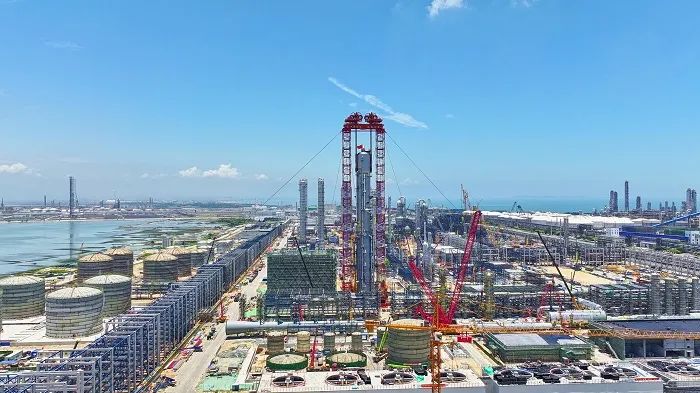
"此次吊装由5000吨级龙门液压提升机和2000吨级溜尾吊机共同完成,负责主吊的5000吨级龙门液压提 升机全球仅有两台。"中国石化重型起重运输工程有限责任公司项目经理陈涛谈道,这一"大国重器"组 装、拆卸全流程需要耗时近70天。设备组装完成后,团队每天会对其垂直度、水平度、紧固度等参数开 展多重检查,详细记录日志、编写操作总结,确保吊装作业精准完成。 "EO/EG装置作为项目核心单元,技术复杂、工期紧迫。洗涤塔25天完成'穿衣戴帽'的佳绩,为大家树 立了信心。"中石化上海工程有限公司副总经理熊凤鸣说。 全 球最大EO/EG洗涤塔吊装(柯少如/图) 5月16日,随着全球最大环氧乙烷/乙二醇(EO/EG)洗涤塔成功吊装,福建省迄今一次性投资最大外资 项目——中沙古雷乙烯项目顺利打通工程建设关键节点。 项目现场,EO/EG洗涤塔犹如银色巨龙在场地中央缓缓升起,数十条钢索牢牢锁定这一庞然大物。随着 总指挥一声令下,最后一根地脚螺栓精准嵌入基础锚板并完成液压紧固,标志着吊装完成。该设备自重 超2560吨、长度达109米、"穿衣戴帽"后吊装总重量3250吨,创下全球同类塔器之最。 为确保关键塔器就位,项目管理团队建立2 ...
辽宁大连一季度经济运行稳中有进 地区生产总值增长6.2%
Zhong Guo Xin Wen Wang· 2025-05-28 09:11
新兴产业聚能起势,金普新区氢能产业园开园,大连市成功加入国家燃料电池汽车示范城市群;召开低 空经济高质量发展大会,布局低空起降点280个,开通3条陆岛直升机航线,新质生产力加快培育。 在深化改革和扩大开放方面,对外开放水平进一步提升,大连创新招商引资体制机制,新达盟、正大能 源等重点项目实现增资。自贸片区整合提升加速,国内首单国际航行船舶保税液化天然气岸基加注业务 落户,2架保税融资租赁飞机业务落地,大窑湾保税物流中心运营。大连获批国家服务业扩大开放综合 试点。 (责任编辑:谭梦桐) 传统优势产业支撑有力,船舶制造强势增长,恒力重工、大船、中远重工和中远川崎等头部企业快速发 展;高技术船舶与海工装备配套产业大会吸引200余家配套企业参加,19个项目成功落地,产业集群加 快形成;石化产业向高端延链补链,恒力新材料陆续投产,中石油系列项目稳步推进。 一季度,大连规上装备制造业增加值增长18.4%,高于全部规上工业7.5个百分点;高技术制造业增加值 增长17.6%,连续23个月保持两位数增长;大连技术合同成交额50.8亿元、增长18.7%。 辽宁省政府新闻办28日发布消息称,一季度大连市经济运行稳中有进、量质齐升, ...
旭化成将退出甲基丙烯酸甲酯等4项业务
日经中文网· 2025-05-28 07:12
Core Viewpoint - As a result of increased production by Chinese companies, the market conditions have deteriorated, prompting Asahi Kasei to exit four specific businesses, including acrylic resin and its raw material MMA [1] Group 1: Business Exit and Restructuring - Asahi Kasei announced the decision to exit four businesses, including MMA (methyl methacrylate), acrylic resin, SB latex, and CHMA (cyclohexyl methacrylate) [1] - The production of these products will gradually cease between March 2026 and September 2027, with sales expected to stop by the end of the same year [1] - The company will incur approximately 25 billion yen in structural reform costs, which will be recorded as special losses in the financial report for March 2026 [1] Group 2: Workforce Management - The 190 employees at the Kawasaki manufacturing site will be reassigned to other positions within the facility [1]
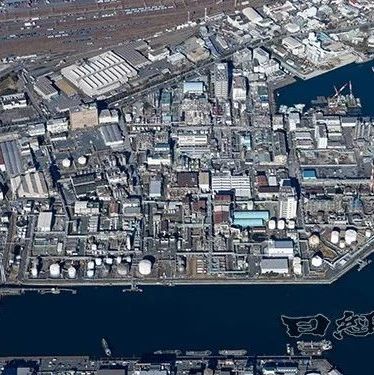
从“厂区禁区”到“开放景区”,南京做对了什么?
Nan Jing Ri Bao· 2025-05-27 23:39
Core Viewpoint - The article highlights the launch of a national environmental protection event in Nanjing, focusing on the opening of petrochemical industry environmental facilities to the public, showcasing the city's commitment to transparency and public engagement in environmental issues [1] Group 1: Event Overview - The national petrochemical industry environmental facility opening ceremony is set to take place in Nanjing, co-hosted by various governmental and industrial organizations [1] - Nanjing has previously hosted a successful environmental facility open day in 2018, which has been recognized and promoted as a model for other regions [1] Group 2: Public Engagement and Transparency - Jinling Petrochemical has transformed its site from a waste-filled area to a green space, attracting public interest and participation through regular open days, having received nearly 13,000 visitors since 2016 [2] - The company aims to change public perception of the petrochemical industry, which is often viewed as highly polluting, by inviting residents to experience the facilities firsthand [2][3] Group 3: Broader Industry Participation - Other companies in Nanjing, such as Nanjing Steel and Yangzi Petrochemical, have also embraced public engagement by opening their facilities to the public, contributing to a culture of transparency and trust [3] - Nanjing has achieved significant recognition in the environmental facility opening initiative, with eight units listed among the first batch of "new four categories" by the Ministry of Ecology and Environment [3] Group 4: Innovative Educational Approaches - Nanjing Steel has implemented advanced technology in its operations, showcasing real-time data and energy management systems to enhance public understanding of industrial processes [4] - The city has developed immersive educational experiences for students, combining technology and environmental education to engage younger audiences [4][5] Group 5: Online and Offline Engagement - The introduction of online activities, such as live-streaming and virtual tours, has broadened public access to environmental facility information, with over 100,000 views recorded for online events in 2024 [7] - Nanjing's approach integrates environmental education with cultural and industrial development, creating a comprehensive experience for the public [8] Group 6: Future Initiatives - Nanjing plans to continue enhancing public engagement in environmental facility openings through various initiatives, including educational programs and the development of creative materials [8]
利润修复的持续性?——4月工业企业效益数据点评(申万宏观·赵伟团队)
赵伟宏观探索· 2025-05-27 16:08
Core Viewpoint - The profit recovery in April is primarily due to short-term improvements in costs and expenses, but attention should be paid to the downward pressure on profits in the third quarter due to tariff disturbances [3][76]. Group 1: Profit and Revenue Analysis - In April, industrial profits increased by 0.4 percentage points year-on-year to 2.9%, driven by improvements in cost and expense pressures [3][9]. - The contribution of costs and expenses to overall profit improved, with costs contributing +2.7 percentage points and expenses +0.5 percentage points [3][76]. - Actual operating revenue showed resilience, with a year-on-year decline of 1.6 percentage points to 5.5%, contributing 4.9% to overall profit growth [3][9]. Group 2: Cost Structure and Industry Performance - The overall cost rate for industrial enterprises was 86%, with a year-on-year marginal decline of 12.6 basis points [3][17]. - The cost rate for downstream consumer manufacturing increased by 59.7 basis points to 84.3%, which is significantly lower than seasonal trends [3][17]. - The petrochemical and metallurgy sectors showed weaker cost performance compared to previous years, with cost rates rising by 37.3 basis points to 86.5% and declining by 18.2 basis points to 87%, respectively [3][17]. Group 3: Revenue Support from Infrastructure and Exports - The coal and metallurgy sectors, along with downstream consumer industries, provided significant support to revenue due to infrastructure investment and export activities [4][27]. - The actual revenue growth rate fell by 1.6 percentage points to 5.5%, with the petrochemical sector experiencing a notable decline of 3 percentage points to 2.1% [4][27]. - The consumer manufacturing sector maintained a relatively high revenue growth rate of 7.8%, supported by short-term export activities [4][27]. Group 4: Future Outlook and Uncertainties - The impact of tariffs on profitability may manifest with a lag, and the low capacity utilization in the mid and downstream sectors adds uncertainty to future profit recovery [4][33]. - Historical data indicates that the impact of profit margins on profits is greater than that of revenue, with current low capacity utilization keeping cost rates high [4][33]. - Previous experiences suggest that after tariff implementation, profit growth may decline more sharply than revenue due to increased fixed costs and reduced asset turnover [4][33]. Group 5: Regular Tracking of Industrial Enterprises - Industrial enterprise profits showed a recovery, primarily benefiting from improved profit margins, with a year-on-year increase of 0.4 percentage points [5][78]. - Revenue growth for industrial enterprises remained stable, with significant increases in the food and beverage sectors, where revenue growth rates rose by 8.8%, 7.0%, and 2.9% year-on-year [5][50]. - Inventory growth slightly declined, indicating that terminal demand still requires further recovery, with nominal inventory down 0.3 percentage points to 3.9% [5][61].