
风电

Search documents
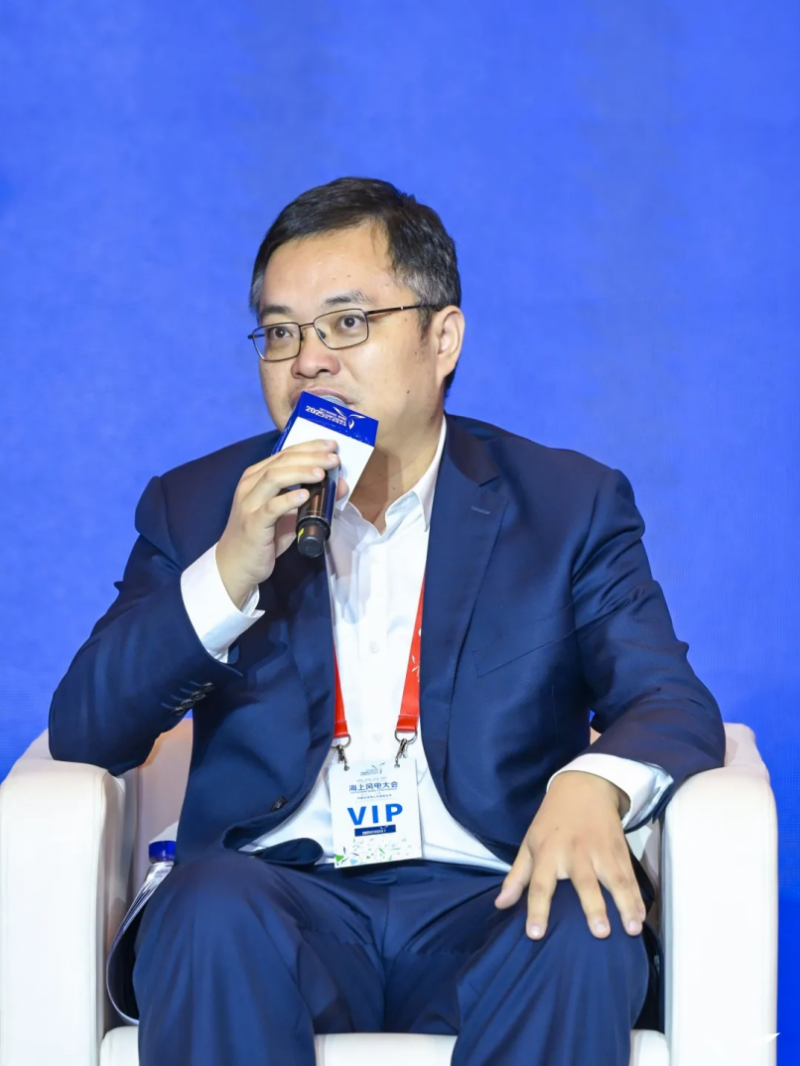
运达股份程晨光步履不停:上半年频繁亮相行业舞台,推动风电产业协同发展
Quan Jing Wang· 2025-11-26 09:45
Core Viewpoint - The Chinese wind power industry is experiencing a new round of development opportunities against the backdrop of a global shift towards cleaner and low-carbon energy structures, with significant growth potential in the offshore wind sector predicted from 2025 to 2030 [1][2]. Industry Developments - The Global Wind Energy Association forecasts stable growth in the global wind power market from 2025 to 2030, particularly highlighting the offshore wind sector's growth potential [1]. - The company actively participates in key industry events, showcasing its strategic positioning in emerging industries [1][2]. Company Performance - The company’s mid-year financial report for 2025 indicates a robust growth in overall operating performance, with revenue reaching 10.89 billion RMB, a 26% increase year-on-year [4]. - Wind turbine sales generated revenue of 9.54 billion RMB, reflecting a 47% year-on-year growth, solidifying its role as the core revenue pillar [4]. - The gross margin for wind turbine sales improved to 7.3%, up 2.2% year-on-year, attributed to advancements in large-scale turbine technology and product optimization [4]. - The company sold a total wind turbine capacity of 6.3 GW in the first half of the year, marking a 56% increase year-on-year [4]. - As of the end of Q2, the company had a strong order backlog of 45.9 GW, a 34% increase from the previous year, supporting future capacity release and performance realization [4]. Future Outlook - The company plans to continue focusing on its core wind power business, promoting technological innovation and market expansion, while enhancing domestic and international market positioning and industry chain collaboration [5].


10月装机数据:光伏新增装机12.60GW,风电新增装机8.92GW | 投研报告
Zhong Guo Neng Yuan Wang· 2025-11-26 08:04
Core Insights - The report highlights a significant decline in solar power installations in October, with a year-on-year decrease of 38% [1][2] - Despite the October decline, the total installed capacity of solar power is projected to reach 1.14 billion kilowatts by the end of October 2025, reflecting a year-on-year growth of 43.8% [2] - Wind power installations showed a positive trend, with an increase of 34% in October compared to the previous year [2] Solar Power - In October, the newly installed solar capacity was 12.60 GW, which is a 38% decrease year-on-year [2] - From January to October 2025, the total newly installed solar capacity reached 252.87 GW, marking a year-on-year increase of 39% [2] - The overall installed solar capacity is expected to be 1.14 billion kilowatts by the end of October 2025 [2] Wind Power - The newly installed wind capacity in October was 8.92 GW, representing a year-on-year increase of 34% [2] - The total installed wind capacity is projected to be approximately 590 million kilowatts by the end of October 2025, with a year-on-year growth of 21.4% [2] - For the period from January to October 2025, the newly installed wind capacity totaled 70.01 GW, reflecting a year-on-year increase of 53% [2] Investment Trends - From January to October, power generation investment increased by 0.7% year-on-year, while grid investment rose by 7.2% [2] - The cumulative average utilization of national power generation equipment was 2,619 hours, a decrease of 260 hours compared to the same period last year [2] - Major power generation companies completed investments of 721.8 billion yuan, showing a year-on-year growth of 0.7%, while grid projects saw investments of 482.4 billion yuan, up 7.2% year-on-year [2] Investment Recommendations - The industry is expected to see sustained long-term growth in new energy installations, maintaining a "recommended" rating for the sector [3] - Companies to watch in the solar sector include leading firms such as Longi Green Energy, Aiko Solar, JinkoSolar, Canadian Solar, and TCL Zhonghuan [3] - Attention is also recommended for profitable inverter and energy storage segments, with companies like Sungrow Power Supply, DeYe Shares, and Shangneng Electric being highlighted [3]
呼伦贝尔市全速推进重点项目建设
Nei Meng Gu Ri Bao· 2025-11-26 07:07
Core Insights - Hohhot City is actively promoting key project construction to achieve high-quality economic development goals, with a focus on renewable energy projects and infrastructure improvements [1][2] Group 1: Project Development - The Inner Mongolia Energy Group's 1 million kilowatt wind storage project in Zhalantun is a key initiative, with significant progress made in both segments of the project [1] - As of October, 493 key projects in the city have resumed work, with a resumption rate of 97.4%, marking an increase of 86 projects compared to the previous year [2] Group 2: Investment and Financial Support - The city has secured 4.235 billion yuan in funding from higher-level development and reform sectors, a year-on-year increase of 6.7%, supporting 78 projects across various sectors [1] - Total investment completed by the end of October reached 30.46 billion yuan, an increase of 5.1 billion yuan compared to the previous year, reflecting a growth rate of 20.1% [2]
三一重能股份有限公司 关于举办“我是股东”走进上市公司暨2025年投资者开放日活动的公告
Zhong Guo Zheng Quan Bao - Zhong Zheng Wang· 2025-11-26 04:22
Group 1 - The company is hosting an investor open day event titled "I am a Shareholder" to enhance communication with investors and increase market recognition and value realization [1][2] - The event is scheduled for December 2, 2025, from 14:00 to 17:00, at the SANY Industrial Park located at No. 31, Nanyan Road, Nankou Town, Changping District, Beijing [2][3] - Key attendees will include company executives such as the Vice General Manager and General Manager of Marketing, as well as representatives from Dongfang Caifu Securities and institutional and individual investors [2][3] Group 2 - The event will feature activities such as a factory tour, discussions on the wind power industry, and interactive sessions for investor engagement [3] - Investors are encouraged to register for the event by December 1, 2025, through a provided QR code or contact information [1][2]

盈利趋势向好,“两海”指引方向 | 投研报告
Zhong Guo Neng Yuan Wang· 2025-11-26 02:04
Group 1 - The core viewpoint is that the wind power industry is experiencing a positive trend in profitability, with improvements in the wind turbine manufacturing and bearing segments, and a slight recovery in wind turbine prices [1][2] - In Q3 2025, the domestic wind power installation saw a decline both year-on-year and quarter-on-quarter, primarily due to a wait-and-see approach following a rush in Q2 2025. However, long-term global onshore wind power is expected to grow steadily, supporting new installations, while offshore wind power is anticipated to contribute even more significantly [2] - The bidding prices for wind turbines are rebounding, aided by the effects of reducing internal competition and a slowdown in the trend towards larger turbines, leading to a continuous price recovery [2] Group 2 - The industry maintains high levels of contract liabilities and inventory, which supports future demand [1][2] - Companies with a focus on offshore wind power and increasing overseas revenue proportions are expected to benefit, including those involved in wind turbines, towers, and components [2] - The overseas market offers higher unit prices and better profitability, indicating that exporting companies and those with overseas production capacity are likely to see sustained profit growth [1][2]
明阳智能(601615):明阳智能:Q3风机出货同比放量,在手订单高位有望释放交付景气
Changjiang Securities· 2025-11-25 14:14
Investment Rating - The investment rating for the company is "Buy" and is maintained [6] Core Views - The company reported a revenue of 26.3 billion yuan for the first three quarters of 2025, representing a year-on-year growth of 30%, while the net profit attributable to shareholders was approximately 770 million yuan, a decline of 5% year-on-year. In Q3 alone, the revenue was about 9.2 billion yuan, with a year-on-year increase of 9%, and the net profit was approximately 160 million yuan, up 5% year-on-year [2][4] Summary by Sections Revenue Performance - In Q3, the company achieved a wind turbine shipment of approximately 4.2 GW, with onshore wind accounting for about 3.1 GW and offshore wind for about 1.1 GW, generating sales revenue of approximately 8.04 billion yuan, a year-on-year increase of 9%. The revenue from power station products was about 610 million yuan, showing some growth, while the revenue from power station operation decreased by 23% to approximately 270 million yuan [12] Profitability - The gross margin for Q3 was approximately 10.3%, an increase of 5.5 percentage points year-on-year. The period expense ratio was about 8.7%, down 0.7 percentage points year-on-year. The net profit margin was approximately 1.7%, showing a year-on-year decline [12] Other Key Indicators - The company's inventory and contract liabilities were approximately 18.5 billion yuan and 8.2 billion yuan, respectively, both at historical highs, which lays a foundation for future delivery performance [12] - The company is expected to see an improvement in the average delivery price of wind turbines in 2026, with a significant release of performance anticipated. The net profit attributable to shareholders is projected to be approximately 1.1 billion yuan and 2.8 billion yuan for 2025 and 2026, respectively, corresponding to price-to-earnings ratios of approximately 27 times and 11 times [12]

天顺风能(002531):天顺风能:Q3经营短暂承压,海风产能建设加速有望释放业绩成长弹性
Changjiang Securities· 2025-11-25 13:43
Investment Rating - The investment rating for the company is "Buy" and is maintained [7] Core Views - The company reported a revenue of 3.72 billion yuan for the first three quarters of 2025, representing a year-on-year increase of 4.6%. However, the net profit attributable to shareholders was 70 million yuan, a significant decline of 76.1% year-on-year [2][4] - In Q3 2025, the company achieved a revenue of 1.53 billion yuan, which is a year-on-year increase of 17.8% and a quarter-on-quarter increase of 21.4%. The net profit attributable to shareholders for this quarter was 20 million yuan, down 79.0% year-on-year and down 12.6% quarter-on-quarter [2][4] - The company's gross margin for Q3 was approximately 16.5%, a decrease of 6.3 percentage points year-on-year, primarily due to the company's proactive reduction of onshore wind business and a decline in power generation gross margin [6] - The company has seen an increase in contract liabilities, which reached 611 million yuan by the end of Q3 2025, indicating a solid foundation for future deliveries [13] Summary by Sections Revenue and Profitability - For the first three quarters of 2025, the company's gross margin was 19.07%, down 6.22 percentage points year-on-year. The total expense ratio for the same period was 14.38%, a decrease of 1.20 percentage points year-on-year [12] - The company received approximately 56 million yuan in other income due to increased government subsidies [12] Operational Insights - By the end of Q3 2025, the company's inventory and contract liabilities were 2.539 billion yuan and 611 million yuan, respectively, which are expected to support future delivery performance [13] - The company is actively expanding its domestic and international offshore wind product markets, which is anticipated to release growth potential in performance [13] Future Outlook - The company is expected to see net profits of approximately 180 million yuan and 760 million yuan for 2025 and 2026, respectively, corresponding to price-earnings ratios of approximately 69 times and 16 times [13]

新能源板块集体走强,储能电池ETF(159566)受资金关注
Sou Hu Cai Jing· 2025-11-25 12:01
Group 1 - The new energy sector showed strong performance today, with the Guozheng New Energy Battery Index rising by 2.1%, the Zhongzheng New Energy Index by 1.9%, the Zhongzheng Photovoltaic Industry Index by 1.8%, and the Zhongzheng Shanghai Carbon Neutrality Index by 1.2% [1] - The storage battery ETF (159566) attracted over 1.2 billion yuan in investments this month, indicating strong market interest [1] - Huatai Securities emphasizes the importance of accelerating the construction of a new energy system during the 14th Five-Year Plan, focusing on the development of new energy storage and smart grid construction [1] Group 2 - The index focusing on the energy storage sector consists of 50 companies involved in battery manufacturing, energy storage battery inverters, energy storage system integration, and battery temperature control and fire protection [4] - The photovoltaic ETF managed by E Fund tracks the Zhongzheng Photovoltaic Industry Index, which includes 50 representative companies across the upstream, midstream, and downstream of the photovoltaic industry chain [6]

AI的尽头是核电
格隆汇APP· 2025-11-25 09:24
Core Insights - The article emphasizes that the bottleneck for AI development is not funding or algorithms, but rather the availability of electricity and data centers to support AI operations [2] - Major tech companies are increasingly turning to nuclear power as a reliable energy source to meet the growing demands of AI [20][21] Group 1: AI's Energy Consumption - AI systems are consuming vast amounts of electricity, with a single training session for models like GPT-5 requiring 100,000 MWh, enough to power a medium-sized city for a week [3][6] - Daily operations of AI applications like ChatGPT consume over 500,000 kWh, which is 17,000 times the average daily electricity usage of a U.S. household [4] - The energy consumption for inference operations can exceed that of training, leading to a long-term energy demand that is unsustainable without reliable power sources [5] Group 2: Current Energy Landscape - Data centers in the U.S. currently account for 2.5% of total electricity consumption, projected to rise to 15% by 2028, with global data center energy demand expected to grow by 105% annually due to AI [6] - The existing energy infrastructure is struggling to keep pace with AI's rapid growth, with significant delays in building new power plants and transmission lines [6][11] - Renewable energy sources like wind and solar are not sufficient to meet AI's continuous power needs, as their utilization rates are low [7][9] Group 3: Nuclear Power's Resurgence - Nuclear power is gaining traction as a stable energy source for AI, with a utilization rate of 92%, making it a reliable option for continuous operation [14][18] - Major companies like Microsoft and Google are investing in nuclear energy, signing long-term agreements for nuclear power to support their AI data centers [20][21] - The integration of AI into nuclear operations can enhance efficiency and reduce operational costs, making nuclear power more attractive [23][24] Group 4: Future Outlook - The demand for nuclear energy is expected to increase significantly as AI capabilities expand, with projections indicating a 3-5 times rise in nuclear power needs by 2030 [29][30] - The collaboration between AI and nuclear power is seen as a mutually beneficial relationship, where AI can optimize nuclear operations while nuclear power provides the necessary energy for AI [33][37] - The article concludes that the future of AI is closely tied to nuclear energy, positioning it as a critical component for sustaining AI's growth [38]



博时市场点评11月25日:两市继续上涨,情绪略有修复
Xin Lang Ji Jin· 2025-11-25 09:17
Market Overview - The three major indices in the A-share market experienced a rebound, with total trading volume slightly increasing to 1.82 trillion yuan compared to the previous day [1] - The U.S. government has resumed operations, but the spending release from the TGA account will take time, and there are internal disagreements within the Federal Reserve regarding potential interest rate cuts in December [1] - The market lacks strong catalysts for further upward movement in the short term, with a potential acceleration in rotation speed [1] U.S.-China Relations - President Xi Jinping and President Trump had a phone call on November 24, indicating a stable and positive trend in U.S.-China relations since the Busan meeting [2] - The call reflects a shift towards a more normalized communication mechanism between the two countries, with a willingness to translate consensus into practical cooperation [2] Monetary Policy - The People's Bank of China announced a 1 trillion yuan MLF operation to maintain liquidity in the banking system, with a net injection of 100 billion yuan for November [2] - This marks the ninth consecutive month of increased MLF operations, supporting credit growth and economic stability [2] Energy Sector - As of the end of October, China's total installed power generation capacity reached 3.75 billion kilowatts, a year-on-year increase of 17.3% [3] - Solar power capacity grew by 43.8% year-on-year, while wind power capacity increased by 21.4%, indicating accelerated progress in renewable energy adoption [3] - However, the average utilization hours of power generation equipment decreased by 260 hours year-on-year, suggesting a continued loose power supply-demand balance [3] Stock Market Performance - On November 25, the A-share indices rose, with the Shanghai Composite Index up 0.87% and the Shenzhen Component Index up 1.53% [4] - The communication, media, and non-ferrous metals sectors led the gains, while defense and transportation sectors saw slight declines [4] Fund Tracking - The market turnover reached 1.826 trillion yuan, showing an increase from the previous trading day, while the margin trading balance decreased [5]