先进制造业

Search documents
主攻智能化绿色化融合化 浙江谋划新型工业化“新五年”
Xin Lang Cai Jing· 2026-01-08 12:49
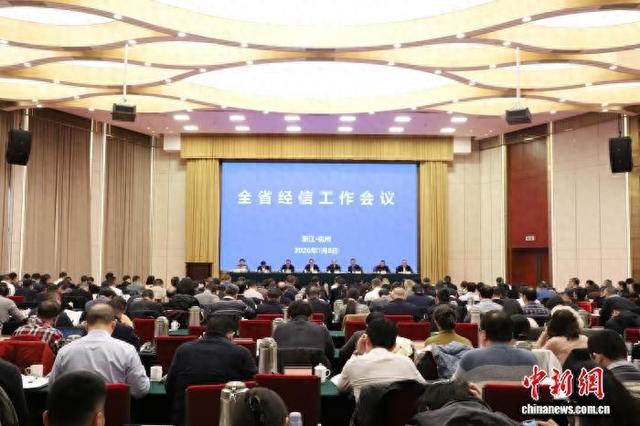
Core Viewpoint - Zhejiang aims to achieve an average annual growth of 5.5% in industrial added value during the "14th Five-Year Plan" period, with the digital economy's core industries accounting for 14% of GDP by 2030, and to establish a globally advanced manufacturing base by 2030 [1][3]. Group 1: Industrial Growth Targets - By 2025, Zhejiang's industrial added value is expected to grow by 6.8%, surpassing the province's GDP growth by approximately 1.3 percentage points [3]. - The province has set specific targets for 2026, including a 6% growth in industrial added value, an 8% growth in the digital economy's core industries, and over 8% growth in manufacturing investment [5]. Group 2: Achievements and Progress - Over the past five years, Zhejiang has effectively responded to challenges such as the pandemic and trade frictions, enhancing the resilience of key industrial chains and making significant progress in building a globally advanced manufacturing base [3][4]. - Key achievements include surpassing 3 trillion yuan in industrial added value, over 1 trillion yuan in the digital economy's core industries, and the establishment of 8 national advanced manufacturing clusters, with 5 clusters generating over 100 billion yuan in revenue [3][4]. Group 3: Future Directions and Strategies - Zhejiang will focus on the integration of intelligence, green technology, and innovation, with advanced manufacturing clusters as the main battleground and artificial intelligence as a key variable [4][6]. - The province plans to implement action plans for industries such as new materials, biomedicine, and commercial aerospace, while promoting the development of future industries through initiatives like the "Spark Plan" [6].

最新名单公布!浙江这些市县“挑大梁”
Xin Lang Cai Jing· 2026-01-08 11:43
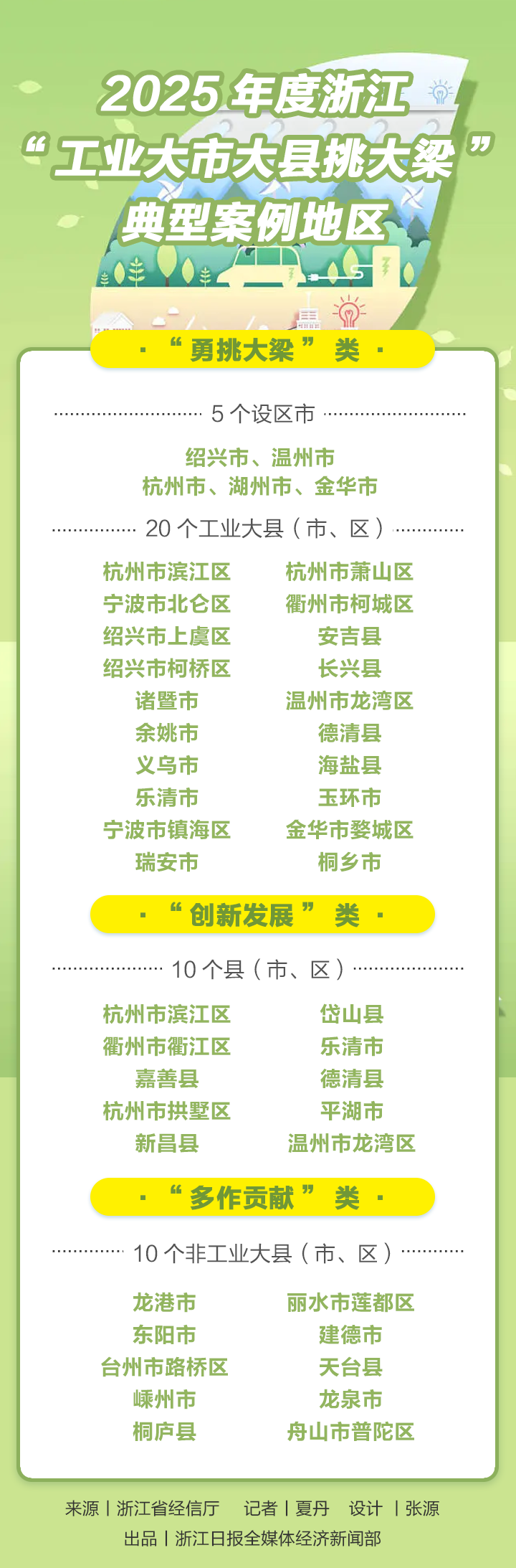
Core Viewpoint - Zhejiang's industrial economy is crucial for economic stability and growth, with significant contributions from key industrial cities and counties, as highlighted by the recent evaluation of "Industrial Cities and Counties Taking the Lead" [1][19]. Group 1: Industrial Cities and Counties Taking the Lead - Zhejiang has 45 industrial counties, representing half of the province's total counties, with 5 major cities and 20 counties recognized for their contributions [5][23]. - From January to November last year, these cities and counties contributed 58.5% and 52.6% to the province's growth, respectively, showcasing their leadership role [6][23]. - Notable cities like Shaoxing and Wenzhou achieved industrial value-added growth rates of 9.8% and 10.3%, significantly above the provincial average of 7.0% [6][23]. - Wenzhou has consistently outperformed, with 33 months of growth exceeding national and provincial rates, and signed major projects exceeding 100 billion yuan each quarter [6][23]. Group 2: Contributions from Industrial Counties - Among the 20 recognized counties, 8 reported growth rates above 10%, with Yiwu leading at 12.2%, demonstrating resilience in a challenging trade environment [8][25]. - Yiwu's focus on high-quality manufacturing and emerging industries has resulted in over 50% of its industrial output coming from new sectors [8][25]. - Newcomers like Kecheng and Wucheng also showed impressive growth rates of 12.5% and 12.4%, indicating a strong upward trend in industrial development [10][28]. Group 3: Contributions from Non-Industrial Counties - The evaluation identified 10 non-industrial counties making significant contributions, with Longgang City leading in manufacturing investment growth [29][30]. - Longgang's first major manufacturing project, a high-performance automotive wheel hub production base, is expected to generate an annual output value of 1 billion yuan [30][32]. - East Yang and Taizhou's Road Bridge District also made notable advancements in manufacturing investment, reflecting a broader trend of industrial growth across various regions [12][33]. Group 4: Innovation Development - The "Innovation Development" category recognized 10 counties excelling in innovation, with Hangzhou's Binjiang District and New Changxiang leading the way [16][34]. - Binjiang District achieved significant growth in high-tech and strategic emerging industries, maintaining double-digit growth rates [34]. - Emerging areas like Qujiang District and Daishan County are also making strides in innovation, focusing on enhancing product value and core competitiveness [36][36].
6000亿授信+百亿基金集群,全面打造产融结合示范区 龙华:金融活水奔涌中轴 产融共振向新而行
Sou Hu Cai Jing· 2026-01-08 02:38
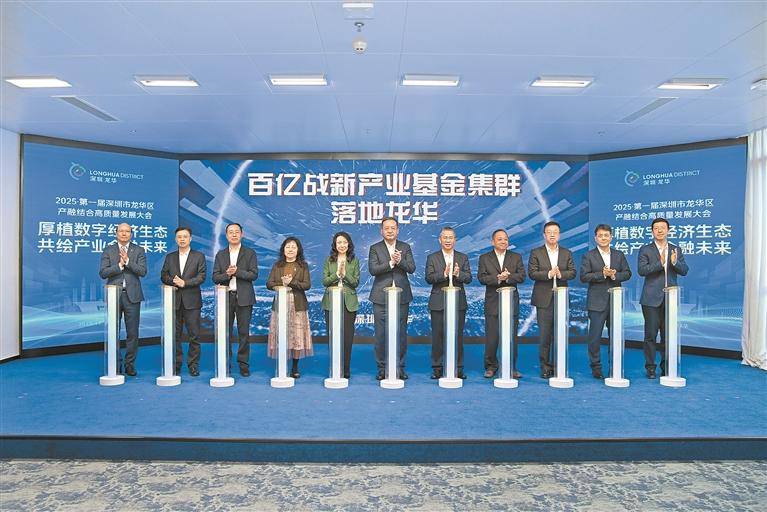
Core Insights - The article highlights the significant progress of Longhua District in Shenzhen towards becoming a "demonstration zone for industry-finance integration," marked by a strategic credit agreement of 600 billion yuan and the launch of a cluster of industrial funds [1][5]. Industry Foundation - Longhua District's industrial sector contributes over 40% to its GDP, with advanced manufacturing being a key driver of the regional economy [2]. - As of November 2025, there are 39 listed companies in Longhua with a total market capitalization exceeding 1.9 trillion yuan, with over 80% focused on advanced manufacturing [2]. - The district has established a modern industrial system supported by digital economy initiatives, with 1,286 digital economy enterprises and a scale exceeding 563.89 billion yuan by the end of 2024 [2]. Financial Empowerment - The establishment of a cluster of industrial funds, including two AIC funds each with a scale of 2 billion yuan, focuses on key sectors such as digital economy and new energy [5]. - A strategic credit agreement of 600 billion yuan has been signed with 12 major financial institutions, targeting key areas for infrastructure and urban renewal projects [5][10]. - Innovative financial products have been developed to address the financing challenges faced by small and micro enterprises, including the "Park Loan" and "Supply Chain Loan" [6]. Financial Network Development - By the end of 2024, Longhua has attracted 356 financial institutions, including 151 banks and 87 insurance companies, creating a diverse financial service network [8]. - The presence of financial institutions has facilitated the development of a comprehensive service system tailored to various industries and enterprise stages [8][9]. Future Outlook - Longhua aims to enhance its financial development framework with a focus on collaborative growth among government, industry, and finance, targeting the achievement of ambitious economic goals [11][12]. - The district plans to implement a "1+1+N" financial development system to foster partnerships with multiple financial institutions and promote various financial sectors [12].

坚定不移加快“五个中心”建设 上海市推动高质量发展专家座谈会召开
Jie Fang Ri Bao· 2026-01-08 01:45
记者 孟群舒 上海市推动高质量发展专家座谈会昨天召开。市委副书记、市长龚正与来自智库、高校、机构、企 业的8位专家代表深入座谈交流,听取对上海推动高质量发展、更好实现"十五五"经济社会发展良好开 局的建议。 市领导吴伟、舒庆出席。 会上,与会专家结合国际国内形势,立足上海实际,积极建言献策。第十四届全国政协经济委员会 副主任尹艳林提出,上海需要从增强消费拉动力、培育壮大新质生产力、推动长三角一体化发展等方面 着手,确保"十五五"开好局起好步。国务院发展研究中心副主任张琦提出,上海需要以高水平开放融入 开放合作与全球化,示范引领全国开放发展。中国科学院脑科学与智能技术卓越创新中心学术主任蒲慕 明提出,要重视渐进式、增量式的创新,培育引进更多在各领域处于"最活跃时期"的科学家。上海社会 科学院原院长张道根表示,上海要强化"四大功能",发挥制度"创新引擎"作用,更好引领、带动、服 务、支撑全国经济高质量发展。上海市宏观经济学会会长王思政建议,激发长三角高端产业协同效应, 夯实沿江沿海先进制造业产业带,培育激发新质生产力,增强国际竞争力。上海对外经贸大学教授黄建 忠提到,要促进货物贸易调结构、促平衡、优模式,推动服务 ...
好牌就要打好
Liao Ning Ri Bao· 2026-01-08 01:02
Core Viewpoint - The focus of the recent research and visits by the Liaoning Provincial Party Secretary, Xu Kunlin, emphasizes the importance of technological innovation as a key driver for revitalizing the old industrial base in Liaoning [1][2]. Group 1: Technological Innovation and Industry Integration - The research activities are aimed at addressing "bottleneck" challenges and achieving dual outputs of scientific research results and technological talent [2]. - There is a strong emphasis on combining basic research with applied research to help Liaoning build a competitive advanced manufacturing cluster [2]. - The strategy includes promoting the transformation of research results into products and industries, highlighting the deep integration of technological and industrial innovation [2]. Group 2: Strategic Planning and Continuous Learning - The provincial government has established a coherent and forward-looking strategic line regarding technological innovation over the past three months [2]. - High-level thematic learning sessions have been held, focusing on future topics such as atomic-level manufacturing and quantum information technology, inviting top experts to provide insights [2][3]. - The emphasis is on moving away from outdated industrial maps to navigate new production capabilities, indicating a shift in regional competition towards technological innovation [3]. Group 3: Talent Development and Support - The strategy includes providing quality services for scientific personnel and creating a supportive environment, which is crucial for retaining talent [3]. - Initiatives such as "attracting, nurturing, utilizing, and retaining talent" and granting greater autonomy to scientific personnel are part of the strategic deployment [3]. - The underlying logic is that talent is key to technological innovation, and effective support will enable innovation to flourish [3].
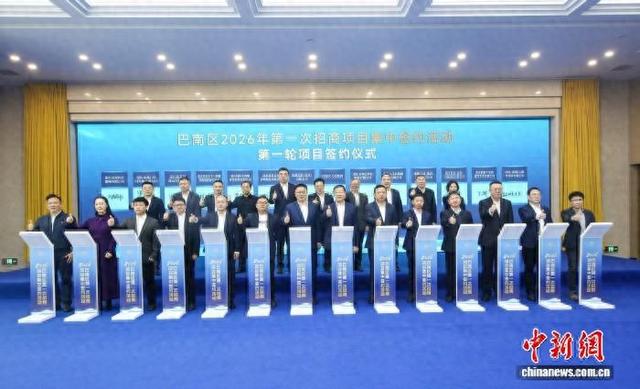
奋战“开门红” 重庆巴南2026年集中签约220亿元
Xin Lang Cai Jing· 2026-01-07 08:59
Group 1 - The core event is the signing of 29 investment projects in Banan District, Chongqing, with a total investment of approximately 22 billion yuan, focusing on key industries such as biomedicine, electronic information, intelligent connected new energy vehicles, technology services, financial services, and modern logistics [1][3] - The signed projects are characterized by high investment intensity, technological content, and strong industrial driving force, aligning with Banan's main industry development direction [1][3] - A significant advanced manufacturing project includes the establishment of a precision manufacturing base for components, new energy vehicle systems, and 5G communication products, covering an area of 227 acres [3] Group 2 - A notable project is the YG Space Satellite Intelligent R&D Production Base, which aims to produce 300 satellites annually, leveraging AI and modular technology for high-resolution and high-performance satellite development [3] - The signing event also includes modern service industry projects in technology services, financial services, modern logistics, trade services, and cultural services, aimed at enhancing the quality and capacity of productive services [3] - A strategic cooperation agreement was signed between Banan District Government and Guoxin Holdings (Chongqing) Co., Ltd., focusing on improving capital operation efficiency and local economic development [4]
长江经济带绿色转型实现新突破 :以三分之一能耗、碳排放贡献近一半GDP
Zhong Guo Dian Li Bao· 2026-01-07 05:44
Core Insights - The Yangtze River Economic Belt contributes nearly half of China's GDP while accounting for about one-third of the country's energy consumption and carbon emissions [1] Industry Developments - Traditional industries such as steel and petrochemicals in the Yangtze River Economic Belt are actively pursuing green transformation, establishing 24 national carbon peak pilot cities and parks, along with 14 zero-carbon parks [1] - Approximately 10,000 old operating vessels have been scrapped and updated as part of the push for clean energy and new energy ship development [1] Innovation and Industrial Upgrading - The region has cultivated 41 national-level advanced manufacturing clusters and 30 strategic emerging industry clusters, representing 51% and 45% of the national totals, respectively [1] - A regional innovation system is being enhanced, with three technology innovation centers and eight national laboratories established along the river, leading to breakthroughs in key technologies in fields such as artificial intelligence and quantum information [1] Future Directions - The Yangtze River Economic Belt will continue to focus on green, high-end, and intelligent development, fostering green low-carbon industries tailored to local conditions to achieve development while protecting the environment [1]
“超常规”举措推动高端仪器发展,不愧是“苏大强”
仪器信息网· 2026-01-07 03:55
Core Viewpoint - The article emphasizes the importance of Jiangsu's role in advancing Chinese-style modernization and outlines the strategic goals and initiatives for the "15th Five-Year Plan" period, focusing on high-quality development, reform, and social equity. Group 1: Achievements During the "14th Five-Year Plan" - Jiangsu has made significant progress during the "14th Five-Year Plan," with GDP expected to exceed 14 trillion yuan, innovation capabilities ranking second nationally, and high-tech industries accounting for over 50% of industrial output [2][4]. - The province has maintained its top position in manufacturing quality development for five consecutive years and has achieved comprehensive reforms and high levels of foreign trade [2][4]. - Environmental quality has improved, with the Yangtze River's water quality stabilizing at Class II, and the overall quality of life for residents has increased, with life expectancy surpassing 80 years [2][4]. Group 2: Opportunities and Challenges for the "15th Five-Year Plan" - Jiangsu faces a complex development environment with both opportunities and challenges, including geopolitical tensions, economic uncertainties, and structural imbalances within the province [4][5]. - The province must address issues such as insufficient effective demand, challenges in transitioning old and new growth drivers, and pressures on employment and income growth [4][5]. - However, there are opportunities from the global technological revolution, the advantages of China's socialist system, and Jiangsu's strong material and technological foundation [4][5]. Group 3: Guiding Principles for Economic and Social Development - The guiding ideology for the "15th Five-Year Plan" includes adherence to Marxism, Mao Zedong Thought, Deng Xiaoping Theory, and Xi Jinping's thoughts on socialism with Chinese characteristics [5][6]. - The focus will be on achieving a modern socialist country and the second centenary goal, emphasizing high-quality development and comprehensive reforms [5][6]. Group 4: Main Goals for the "15th Five-Year Plan" - The province aims to maintain high-quality economic growth, enhance technological innovation, and promote deep reforms and high-level openness [9][10]. - Specific targets include improving the quality of life for residents, achieving common prosperity, and enhancing ecological sustainability [9][10]. Group 5: Modernizing the Industrial System - Jiangsu will focus on building a modern industrial system with a strong emphasis on advanced manufacturing, green technology, and digital transformation [12][13]. - The province aims to enhance the competitiveness of traditional industries while fostering strategic emerging industries and future industries [12][13]. Group 6: Promoting Technological Innovation - The plan emphasizes the importance of technological self-reliance and innovation, aiming to establish Jiangsu as a leading center for industrial technology innovation [15][16]. - Key initiatives include strengthening original research, enhancing the integration of technology and industry, and fostering a collaborative innovation ecosystem [15][16]. Group 7: Expanding Domestic Demand - Jiangsu will prioritize expanding domestic demand as a strategic initiative, focusing on boosting consumption and effective investment [21][22]. - The province plans to enhance consumer spending through targeted actions and improve investment efficiency in major projects [21][22]. Group 8: High-Level Opening Up - The province aims to enhance its international cooperation and trade, focusing on expanding its role in the Belt and Road Initiative and improving its global economic integration [28][29]. - Jiangsu will work on institutional opening-up, promoting trade innovation, and attracting foreign investment [28][29]. Group 9: Agricultural Modernization - Jiangsu will prioritize agricultural modernization, focusing on building a strong agricultural province and improving rural living conditions [31][32]. - The province aims to develop a modern agricultural industry system and enhance rural infrastructure and public services [31][32]. Group 10: Regional Coordination and Development - The plan emphasizes the importance of regional coordination, linking Jiangsu's development with national strategies such as the Yangtze River Economic Belt and the integration of the Yangtze River Delta [36]. - Jiangsu will work on optimizing the layout of productive forces and enhancing regional economic cooperation [36].
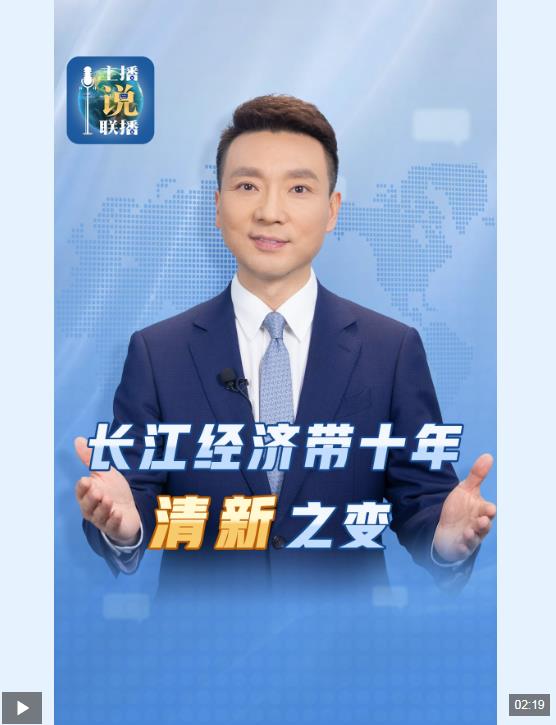
主播说联播丨长江经济带十年,“清新”之变!
Yang Shi Xin Wen Ke Hu Duan· 2026-01-06 14:13
Core Insights - The Yangtze River Economic Belt has seen a significant improvement in water quality, with the proportion of good water quality rising from 67% to 96.5% over the past decade, alongside a more than doubling of regional GDP [1][3] - The strategic direction of "promoting major protection and not major development" has been emphasized since a meeting chaired by President Xi Jinping in January 2016, leading to a consensus on prioritizing ecological restoration [3][4] Environmental Developments - The Yangtze River has maintained a Class II water quality for six consecutive years, with the cleanup of 1,361 illegal docks and the near elimination of black and odorous water bodies in cities along the river [3] - The ecological environment has transformed from being severely polluted to a state where "the water is clear and fish are jumping" [3] Economic Developments - The economic development of the Yangtze River Economic Belt has shifted from extensive growth to innovation-driven growth, with the establishment of international innovation centers in Shanghai and regional centers in Wuhan and Chengdu-Chongqing [3] - A total of 41 national advanced manufacturing clusters and 30 strategic emerging industry clusters have been cultivated, highlighting the emergence of innovative companies such as DeepSeek and Yushu Technology [3] Strategic Direction - The "14th Five-Year Plan" suggests the continuous advancement of the Yangtze River Economic Belt, reinforcing the commitment to the strategy of "promoting major protection and not major development" [4]
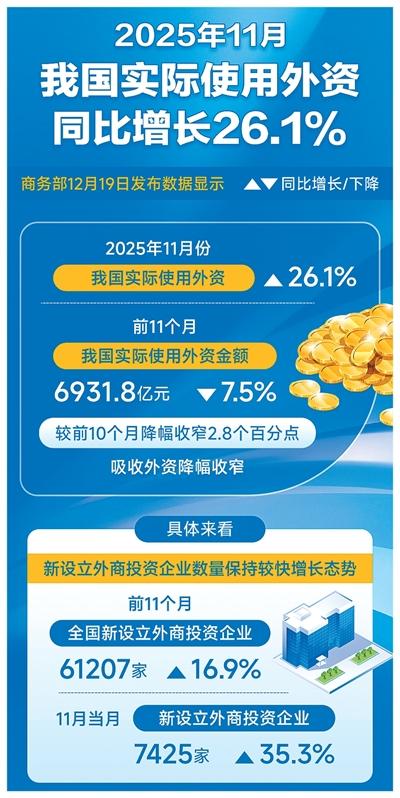
外资鼓励目录“上新”——中国修订扩大《鼓励外商投资产业目录》
Ren Min Ri Bao Hai Wai Ban· 2026-01-06 03:23
Core Viewpoint - The Chinese government has released the "Encouraged Foreign Investment Industry Catalog (2025 Edition)" to promote foreign investment in specific sectors and regions, effective from February 1, 2025, which aims to optimize the structure of foreign investment and enhance high-quality development [1][4]. Summary by Relevant Sections Encouraged Sectors and Regions - The 2025 edition continues the structure of the 2022 version, comprising a national catalog applicable nationwide and a regional catalog for the central and western regions, Northeast China, and Hainan Province [4]. - The total entries in the encouraged catalog have increased to 1,679, with a net addition of 205 entries and 303 modifications compared to the 2022 version [4]. Policy Incentives - Foreign investment in encouraged sectors will continue to enjoy benefits such as tax exemptions on imported self-use equipment, priority land supply for intensive land-use projects, and a reduced corporate income tax rate of 15% for investments in the western regions and Hainan [5]. - New policies allow foreign enterprises more flexibility in land use, including long-term leasing and flexible terms for land transfer, reducing initial land costs [5][6]. Focus on Advanced Manufacturing and Modern Services - The national catalog emphasizes advanced manufacturing and modern services, with new entries for research and production in areas like zero-magnetic medical equipment and smart detection devices [10]. - The catalog aims to attract foreign investment in technology innovation, supporting sectors such as equipment manufacturing and key components [10]. Regional Investment Focus - The catalog encourages foreign investment in the central and western regions, with Hainan Province seeing significant growth in foreign investment, reaching 102.5 billion yuan with an annual growth rate of 14.6% [12][14]. - New entries in the regional catalog include sectors like marine environmental governance and clean energy, aligning with Hainan's development goals [14][15]. Expansion of Investment Opportunities - The regional catalog has added new sectors for investment in various provinces, such as cruise tourism in Liaoning and snow equipment manufacturing in Heilongjiang, reflecting regional strengths [15]. - The government aims to enhance foreign investment inflow by implementing policies effectively and organizing international investment cooperation activities [15][16].