农业生产

Search documents
科技助力抢收抢烘保秋粮 多部门联动深入一线确保粮食颗粒归仓
Yang Shi Wang· 2025-10-10 05:03
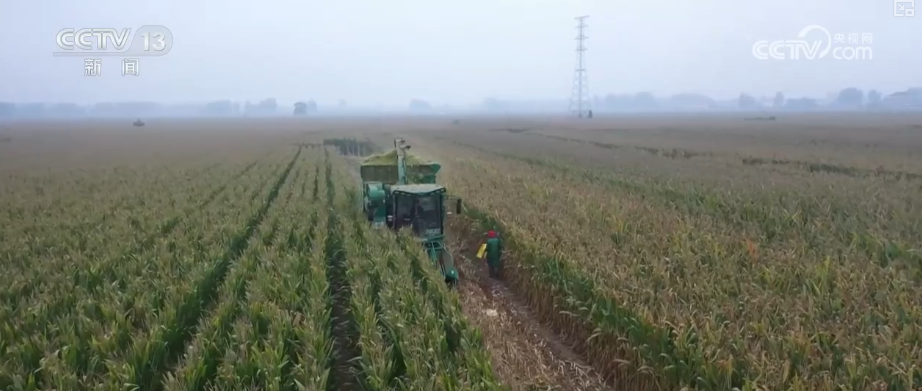
Core Viewpoint - The article highlights the ongoing efforts in China, particularly in the Huanghuai region, to ensure the timely harvesting and drying of autumn grain amid continuous rainfall, with a national harvest progress exceeding 40% [1][9]. Group 1: Harvesting Efforts - The national autumn grain harvest has progressed over 40%, with local authorities mobilizing resources for emergency harvesting and drying operations due to persistent rain in the Huanghuai region [1][9]. - In Henan, multiple drying points have been opened to mitigate adverse weather impacts and ensure timely grain collection [1][3]. - In New County, Henan, 12 drying facilities have processed a total of 15,000 tons of autumn grain [4]. Group 2: Use of Technology - In Shandong, agricultural drones are being utilized to transport corn from waterlogged fields, showcasing innovative solutions to overcome traditional harvesting challenges [6][7]. - In Yuncheng County, over 40 drones are operational, each capable of transporting corn from approximately 20 acres daily, contributing to a total daily operational area of around 1,000 acres [7]. Group 3: Equipment Mobilization - Henan Province has mobilized 8,000 local tracked corn harvesters and imported over 3,000 from other provinces to enhance harvesting efficiency [11]. - The Ministry of Agriculture has coordinated the allocation of 24,550 tracked harvesters and 2,229 mobile drying machines to meet the demands of the Huanghuai region [14]. Group 4: Collaborative Efforts - Various departments in Shandong are collaborating to guide farmers on effective harvesting and drying techniques, with 18 drying units capable of processing 400 tons of corn daily [14]. - The Ministry of Agriculture has established a hotline with 3,223 numbers to facilitate immediate assistance for harvesting operations during adverse weather conditions [16].

量质齐升,经济大省逐“高”向“新”——江苏“十四五”经济社会发展综述之一
Xin Hua Ri Bao· 2025-10-09 23:17
Core Insights - Jiangsu province has achieved significant economic growth during the "14th Five-Year Plan" period, with a projected GDP of 13.7 trillion yuan in 2024, marking a continuous increase across three trillion-yuan milestones [1] - The province has maintained a stable economic contribution of over 10% to the national economy, demonstrating resilience amid global challenges [1][3] Economic Performance - In the first half of this year, Jiangsu's GDP reached 6.7 trillion yuan, reflecting a year-on-year growth of 5.7%, leading the nation in economic increment [3] - The agricultural sector has shown robust performance, with summer grain production totaling 28.43 billion jin, ensuring food security despite adverse weather conditions [3] Industrial Growth - Jiangsu's manufacturing sector has been a cornerstone of its economic strength, with 54 companies listed in the 2025 China Manufacturing 500 Strong list [2][4] - The province's industrial output value increased by 6.8% year-on-year from January to August, surpassing the national average [4] Service Sector Development - The service industry has also seen growth, with revenue from large-scale service enterprises increasing by 9.5% from January to May, supported by initiatives like consumption vouchers [4] Structural Optimization - Jiangsu has focused on optimizing its industrial structure, with 14 national-level advanced manufacturing clusters, the highest in the country [5] - The province has implemented over 56,000 digital transformation projects, achieving significant advancements in manufacturing digitization [6] Foreign Investment and Trade - Jiangsu has maintained its position as a leading destination for foreign investment, with actual foreign capital utilization exceeding 100 billion USD from 2021 to 2024 [7] - The province's exports of high-value products, such as machinery and new energy vehicles, have been on the rise, with a projected 68.7% share of total exports by 2024 [7] Innovation and Technology - Jiangsu has established a strong foundation for innovation, with 44 national key laboratories and 18 national high-tech zones, leading to increased R&D investment [9] - The integration of technology and industry has been emphasized, with local initiatives fostering the growth of new and traditional industries [9] Green Development - The province is actively pursuing green upgrades, with 443 national-level green factories and 51 green industrial parks, reflecting a commitment to sustainable development [10] Cultural and Economic Synergy - Jiangsu's rich cultural heritage is being leveraged to enhance economic development, with significant tourist attractions contributing to local GDP [11] - The interaction between cultural prosperity and economic growth is seen as a pathway to expanding development potential [11]
新型农业经营主体 金融需求更待关注
Jin Rong Shi Bao· 2025-10-09 02:12
Core Insights - The agricultural sector in China has achieved significant milestones during the "14th Five-Year Plan" period, with grain production expected to exceed 1.4 trillion jin in 2024, ensuring food security and self-sufficiency [1] - The transformation from smallholder farming to large-scale, intensive agricultural production is essential for building a strong agricultural nation, influenced by policy support and market demand [2] Group 1: Agricultural Development Achievements - China's grain production has reached a new level, with per capita grain availability at 500 kg, ensuring basic self-sufficiency and absolute food security [1] - Over 2 million farmer cooperatives and more than 4 million family farms have been established, with over 1.1 million agricultural social service entities providing services across 2.29 billion acres [1] Group 2: New Agricultural Operating Entities - The shift towards new agricultural operating entities is driven by changes in market demand, requiring these entities to adapt their business models from simple production to value-added processing and brand development [2] - New agricultural entities are increasingly sensitive to market changes, necessitating financial institutions to adjust credit strategies to support their transformation needs [3] Group 3: Financial Support and Challenges - The demand for funding among new agricultural entities is rising, particularly for investments in environmental improvements and product quality enhancement [4] - Financial institutions are encouraged to tailor their services to meet the specific needs of agricultural operators, especially in green credit and loan conditions [4] Group 4: Labor Force and Demographics - The agricultural labor force is aging, with an average age of 57-58.6 years, leading to a structural challenge in the workforce [5] - There is a pressing need to cultivate new agricultural operating entities to address the aging workforce and enhance market competitiveness through financial support [5]
农业农村部努力保障黄淮地区秋粮抢收抢烘
Qi Huo Ri Bao· 2025-10-08 22:45
Core Points - The Ministry of Agriculture and Rural Affairs has reported that the autumn harvest progress in the Huanghuai region, particularly in Henan, Shandong, and Anhui, has been slow due to continuous rain [1] - To address the disaster response, the Ministry has strengthened emergency machinery support to ensure timely harvesting and drying of autumn grains [1] Group 1 - The Ministry has established a task force to enhance machinery scheduling and technical guidance for disaster response [1] - A total of 244,300 tracked harvesters and 1,986 mobile dryers have been allocated to meet the needs of the Huanghuai region [1] - The Ministry is coordinating with financial departments to clarify subsidy matters for disaster relief machinery, allowing funds to support machinery repair, transportation, and operations [1] Group 2 - The Ministry plans to maintain close communication with eight provinces in the Huanghuai region to adjust emergency machinery needs based on the latest disaster situation [1] - There will be continued implementation of emergency response mechanisms, including mutual assistance agreements for emergency harvesting and planting [1] - The Ministry aims to enhance policy support from financial departments and streamline processes to ensure rapid deployment of emergency machinery to affected areas [1]
应对持续阴雨天气,山东积极行动保障“三秋”生产
Da Zhong Ri Bao· 2025-10-08 01:00
Group 1 - The article discusses the proactive measures taken by Shandong province to ensure the successful harvest and storage of crops during the ongoing rainy season, particularly focusing on corn drying facilities [1][2] - In response to the persistent rainfall, over 20 corn drying centers in Wudi County have ramped up operations, achieving a daily drying capacity of over 4,000 tons, effectively addressing post-harvest storage issues [2][3] - The provincial agricultural department has issued technical guidance to combat the adverse weather conditions and has deployed six working groups to assist local farmers in maximizing their harvests [2][3] Group 2 - The article highlights the investment of 2 million yuan by a village collective to construct a grain drying tower, which is ready to operate during the large-scale harvest [3] - Qingdao City has published a letter to farmers and technical guidance, providing information on 54 emergency agricultural service teams, 207 corn harvesters, and 184 grain drying service points to support farmers in their harvesting and drying efforts [3] - In Pingyuan County, a grain service center has established 27 drying centers with a daily drying capacity of 710 tons and a storage capacity of 170,000 tons, showcasing the region's commitment to solving the "reliance on weather for drying" issue [3]
卖不掉 根本卖不掉!美国“豆贱伤农” 议员喊话:救救农民 我们正失去数十年心血开拓的市场
Mei Ri Jing Ji Xin Wen· 2025-10-03 14:05
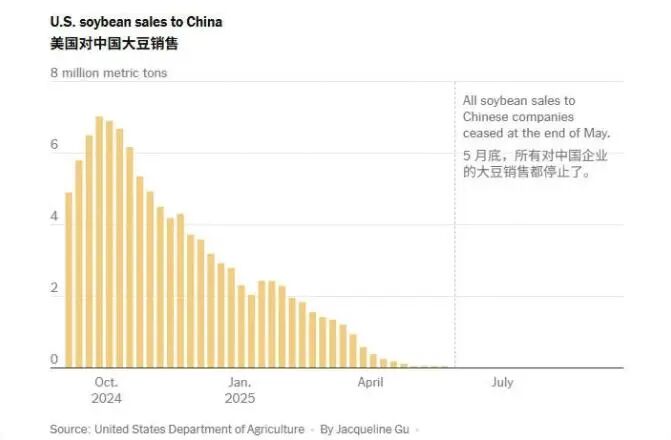
Core Insights - Despite record agricultural yields in the U.S. this year, farmers are experiencing widespread pessimism due to market access issues and declining prices for their crops [1][2][3] - The U.S. agricultural sector is facing a "devastating blow" from multiple factors including rising operational costs due to tariffs, low commodity prices, and shrinking markets [2][3][6] - The U.S. government is expected to provide over $40 billion in subsidies to farmers by 2025, marking the second-highest record since 1933, but this may not be sufficient to alleviate the current crisis [2][4] Group 1: Farmer Sentiment and Economic Impact - The Purdue University and Chicago Mercantile Exchange's agricultural economic barometer indicates a continuous decline in farmer sentiment in July and August [1] - Farmers are struggling to maintain their livelihoods, with some resorting to selling equipment due to plummeting crop prices [2][3] - The agricultural sector is experiencing its most challenging economic period in decades, as stated by the chairman of the House Agriculture Committee [3] Group 2: Tariff Effects and Market Access - The imposition of tariffs on steel and aluminum has resulted in a $600 million loss for John Deere, the largest agricultural machinery manufacturer in the U.S., leading to significant layoffs [2] - The trade war has severely impacted U.S. agricultural exports, particularly soybeans, with China not placing any orders since May, marking a historic low [10][12] - Other countries are capitalizing on the U.S. market share loss, with Brazil and Argentina increasing their exports to China significantly [10][12] Group 3: Government Response and Future Outlook - The U.S. government has promised compensation to farmers, but many are skeptical about the effectiveness and timeliness of these measures [12][15] - Predictions indicate that U.S. agricultural net income could decline by over $30 billion by 2026 due to reduced subsidies and low commodity prices [5] - Farmers express a strong desire for market access rather than government subsidies, emphasizing the need for immediate action from the government [12][15]
绿意盎然间,乡村蝶变(大地风华)
Ren Min Ri Bao· 2025-10-02 22:13
Core Viewpoint - The article discusses the "Million Project" in Zhejiang Province, highlighting its impact on rural transformation through literature, showcasing various stories of revitalization and innovation in rural areas [3][4]. Group 1: Overview of the "Million Project" - The Zhejiang Writers Association organized over 20 writers to observe and present the "Million Project" from July 2023 to November 2024, resulting in a compilation of 14 works in the book "Zhijiang New Green: Poetic Narration of the 'Million Project'" [3]. - The selected works cover various genres such as novels, essays, and report literature, focusing on rural economy, intangible cultural heritage, history, and culture, emphasizing the newness in Zhejiang's rural areas [3][4]. Group 2: Case Studies of Rural Transformation - The report literature "Rice Aroma" details the transformation of Yong'an Village in Hangzhou's Yuhang District, where the village's collective economic income grew from 28,500 yuan in 2017 to nearly 100 million yuan by 2024 through innovative management and product development [4]. - The village's revitalization involved hiring a rural CEO, Liu Song, who implemented strategies such as product diversification and community events to attract visitors and promote local products online [4]. - Other stories in the book illustrate similar transformations, such as the evolution of Gao Ni Village in yellowfish farming and the creative community projects led by young people, showcasing the blend of technology, business models, and artistic thinking in rural development [5][6].

稳中求进每月看|金秋启航势正劲——9月全国各地经济社会发展观察
Xin Hua She· 2025-09-29 13:19
Group 1: Agricultural Production - The autumn harvest season is crucial, with various regions working together to ensure a bountiful grain harvest, supported by advanced agricultural technologies like IoT and AI [6][10] - National summer grain production reached 2,994.8 million jin, indicating stable yields, while autumn grain acreage is increasing, laying a solid foundation for a good harvest [10][11] - Local governments are implementing measures to enhance grain quality and yield, such as introducing good seeds and improving agricultural practices [10] Group 2: Intelligent Economy Development - Recent exhibitions, including the World Intelligent Industry Expo, showcase the rapid development of China's AI industry, with over 5,000 AI companies now operating [15][16] - The integration of AI technologies into various sectors is accelerating, with applications in smart vehicles, healthcare, and digital trade [15][16] - The AI industry is transitioning into a new phase characterized by technological breakthroughs and ecosystem development, driving significant industrial changes [16] Group 3: Consumer Policy Initiatives - New fiscal policies, such as personal consumption loan interest subsidies, are being implemented to stimulate consumer spending and support businesses [17][20] - Various local governments are launching initiatives to promote consumption, including subsidies for vehicle trade-ins and restaurant vouchers [20] - These policies aim to enhance consumer confidence and drive economic growth, highlighting the importance of consumption as a key economic engine [20] Group 4: Service Industry Growth - The service industry in China is entering a new phase of high-quality development, with the 2025 China Service Industry Enterprises Top 500 report indicating a total revenue of 51.1 trillion yuan [22][24] - New business models and service sectors are emerging, contributing to the transformation and upgrading of the economy [24][25] - Local governments are actively supporting the development of the service industry through various policies, enhancing service quality and expanding service offerings [24][25]
阿布扎比进一步深化对乌兹别克斯坦援助
Shang Wu Bu Wang Zhan· 2025-09-26 16:20
Core Insights - Abu Dhabi Development Fund has launched a sustainable agriculture production system development project in Uzbekistan with a total investment of 18.7 million dirhams (approximately 5 million USD) [1] - The project aims to restore desertification and salinization of land caused by the Aral Sea crisis, enhancing agricultural productivity and climate resilience [1] - The initiative is expected to improve soil and water resource quality while strengthening the economic resilience of local communities, serving as a practical example of the United Nations Sustainable Development Goals [1] - The Abu Dhabi Development Fund collaborates with various international organizations to provide replicable sustainable agriculture and food security solutions for Global South countries [1]
惠农“税费通” | 支持乡村振兴系列税费优惠政策(19)医疗机构占用耕地免征耕地占用税
蓝色柳林财税室· 2025-09-24 08:21
Group 1 - The article discusses the exemption of land occupation tax for medical institutions that occupy arable land, specifically those approved by health authorities at or above the county level [4][5]. - It clarifies that only medical institutions engaged in disease diagnosis and treatment activities are eligible for this tax exemption, while staff housing within these institutions is subject to local tax rates [5][6]. - The relevant legal framework includes the "Land Occupation Tax Law of the People's Republic of China" and its implementation measures issued by various government departments [6]. Group 2 - The article highlights a conversation among villagers regarding the implications of land occupation for the expansion of a local health clinic, indicating a common misunderstanding about tax exemptions [2][3]. - It emphasizes that the exemption does not apply to private construction projects that do not meet the necessary conditions set by health authorities [2].