医药行业

Search documents
嘉应制药:累计回购924万股
Mei Ri Jing Ji Xin Wen· 2025-08-04 11:17
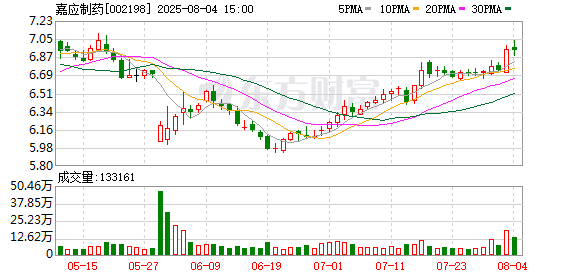
(文章来源:每日经济新闻) 嘉应制药(SZ 002198,收盘价:6.94元)8月4日晚间发布公告称,截至2025年7月31日,公司通过股票 回购专用证券账户以集中竞价方式已累计回购公司股份924万股,占公司目前总股本的1.8206%,回购 的最高成交价格为7.04元/股,最低成交价格为5.96元/股,成交总金额约为6226万元。 2024年1至12月份,嘉应制药的营业收入构成为:医药行业占比99.8%,其他业务占比0.2%。 ...


【光大研究每日速递】20250804
光大证券研究· 2025-08-03 23:06
Macro - The significant downward revision of the U.S. non-farm employment data for June indicates a major impact from tariffs on the U.S. economy, suggesting that the resilience of the economy should not be overestimated, and the direction of interest rate cuts remains clear [5]. Basic Chemicals - The Central Political Bureau emphasized "capacity governance" and "technological innovation," indicating that the domestic chemical industry may benefit from the exit of outdated capacity and the focus on high-performance new materials such as semiconductor materials and OLED materials [5]. Coal Mining - The average price of thermal coal at Qinhuangdao Port increased by 9 CNY/ton (+1.36%) week-on-week, marking six consecutive weeks of price increases. The coal inventory at the port decreased to 5.22 million tons, down 10.77% week-on-week, indicating a tightening supply-demand situation [6][7]. Company Updates - China Merchants Shekou (001979.SZ) has repurchased a total of 44,804,006 shares, accounting for 0.494% of the total share capital, with a total payment of approximately 430.27 million CNY [8]. ARM - ARM's FY26Q1 revenue was $1.053 billion, a year-on-year increase of 12%, but the guidance for FY26Q2 is relatively flat, indicating challenges and opportunities in self-designed chips [8]. Apple - Apple's FY3Q25 results exceeded expectations, showcasing strong resilience due to its core product strength and software ecosystem. However, there is a need for continued focus on AI advancements and tariff pressures [8]. Yunnan Baiyao - Yunnan Baiyao has made significant progress in cost reduction and efficiency enhancement, accelerating the development of innovative nuclear drugs [9].
医药行业周报:本周医药上涨2.9%,第六批高耗国采启动,恒瑞与石药再迎大额BD,药明康德上调全年业绩指引-20250803
Shenwan Hongyuan Securities· 2025-08-03 12:12
Investment Rating - The report rates the pharmaceutical industry as "Overweight," indicating an expectation for the industry to outperform the overall market [27]. Core Insights - The pharmaceutical sector saw a weekly increase of 2.9%, outperforming the Shanghai Composite Index, which declined by 0.9% [2][3]. - The overall valuation of the pharmaceutical sector is at 32.6 times PE for 2025E, ranking 6th among 31 primary industries [6][13]. - Significant transactions in the innovative drug sector have been noted, with large business development (BD) deals driving growth expectations [2]. Market Performance - The pharmaceutical and biotechnology index increased by 2.9%, ranking first among 31 sub-industries [3]. - The performance of various sub-sectors includes: - Chemical preparations (+5.5%) - Other biological products (+5.4%) - Traditional Chinese medicine (+3.1%) - Medical devices (-1.4%) [6][11]. Key Events - The sixth batch of high-cost medical supplies procurement was initiated on August 1, focusing on drug-coated balloons and urological intervention products [14]. - The eleventh batch of drug procurement rules was released for public consultation, introducing new bidding mechanisms and price caps [14]. - The State Council approved the "Artificial Intelligence+" action plan, promoting AI applications across various sectors [15]. Major Transactions - Heng Rui Pharmaceuticals entered a $12.5 billion overseas licensing agreement with GSK, with an upfront payment of $500 million and potential milestone payments of up to $12 billion [16]. - Shiyao Group signed a licensing agreement with Madrigal for a GLP-1 drug, with a total potential value of $2.075 billion [16]. Company Performance - WuXi AppTec forecasted a revenue of 20.8 billion yuan for H1 2025, a 20.6% year-on-year increase, and raised its full-year revenue guidance to 42.5-43.5 billion yuan [17].


“反内卷集采”催化医药版块估值重塑在即,科创100ETF华夏(588800)近一周累计涨幅达5%!
Mei Ri Jing Ji Xin Wen· 2025-07-30 07:12
Group 1 - The Shanghai Stock Exchange Sci-Tech Innovation Board 100 Index decreased by 0.59% as of July 30, 2025, with mixed performance among constituent stocks [1] - Dongxin Co., Ltd. led the gains with an increase of 18.63%, while Shengyi Electronics fell by 5.66% [1] - The Huaxia Sci-Tech 100 ETF (588800) dropped by 0.56%, with a recent price of 1.07 yuan, but saw a weekly increase of 5.06% as of July 29, 2025 [1] Group 2 - The State Council Information Office recently held a press conference discussing the high-quality completion of the 14th Five-Year Plan, focusing on deepening medical insurance reform [1] - The National Medical Insurance Administration emphasized the principle of "anti-involution" in the 11th batch of centralized procurement, aiming to optimize procurement rules [1] - The impact of centralized procurement on drug prices in the pharmaceutical industry has been significant, but expectations for price stabilization may lead to gradual improvement in profitability [1] Group 3 - Zhongyin Securities noted a shift in policy attitudes towards the pharmaceutical sector, with optimized procurement rules and a recovery phase for R&D pipelines [2] - The trend of overseas business development in the pharmaceutical industry is accelerating, showcasing the global competitiveness of China's innovative drugs [2] - The Huaxia Sci-Tech 100 ETF (588800) closely tracks the Sci-Tech 100 Index, focusing on high-growth sectors such as semiconductors, pharmaceuticals, and new energy [2]
“十四五”以来 医保基金累计支出12.13万亿元 年均增速9.1%
Zhong Guo Chan Ye Jing Ji Xin Xi Wang· 2025-07-30 00:32
Group 1 - The core viewpoint of the news is the emphasis on the dual role of medical insurance as both a financial support system and a service provider, highlighting its contributions to the healthcare industry and economic development [1][2] - The National Medical Insurance Bureau has established a prepayment system for medical insurance funds and has implemented real-time settlement reforms, covering 357 regions and disbursing 594.8 billion yuan since 2025 [2] - The medical insurance fund has cumulatively spent 12.13 trillion yuan since the beginning of the 14th Five-Year Plan, with an annual growth rate of 9.1%, significantly supporting both patient reimbursements and the pharmaceutical industry [3] Group 2 - The medical insurance system is promoting reforms and openness, including the implementation of centralized drug procurement reforms and the establishment of a new directory for innovative drugs under commercial health insurance [4] - The National Medical Insurance Bureau is actively supporting the development of traditional Chinese medicine while also fostering innovation in medical technologies, such as artificial hearts and brain-machine interfaces [5] - Future initiatives will focus on effectively managing medical insurance funds to enhance the efficiency, safety, and accessibility of medical products and services, contributing to the overall health of the population [5]
香港医药(513700)获融资买入0.36亿元,近三日累计买入0.82亿元
Jin Rong Jie· 2025-07-30 00:28
最近三个交易日,25日-29日,香港医药(513700)分别获融资买入0.22亿元、0.24亿元、0.36亿元。 7月29日,沪深两融数据显示,香港医药(513700)获融资买入额0.36亿元,居两市第574位,当日融资偿 还额0.39亿元,净卖出228.48万元。 本文源自:金融界 作者:智投君 融券方面,当日融券卖出0.00万股,净卖出0.00万股。 ...
15%关税+万亿欧元投资采购,欧盟输了吗
2 1 Shi Ji Jing Ji Bao Dao· 2025-07-28 13:47
Group 1 - The US and EU have reached a new trade agreement, with the US imposing a 15% tariff on EU products and the EU committing to invest $600 billion and purchase $750 billion worth of US energy [2][4] - The agreement is seen as a compromise, avoiding a potential trade war that could have resulted from a proposed 30% tariff by the US [3][4] - The new tariff rate is significantly higher than the previous average of around 2%, which poses challenges for EU product competitiveness [5][7] Group 2 - Germany, as the largest EU economy, benefits from the agreement as it reduces the average tariff on automotive exports from 27.5% to 15%, thus protecting its key industries [4][6] - The agreement has sparked criticism within the EU, with some leaders arguing it represents a loss for European industries and could threaten jobs [7][8] - The potential for increased US procurement and investment from the EU raises questions about the actual implementation and market willingness to follow through [8]
1.35万亿换15%关税!欧盟“割肉”让步,特朗普最大赢家
Ge Long Hui· 2025-07-28 04:28
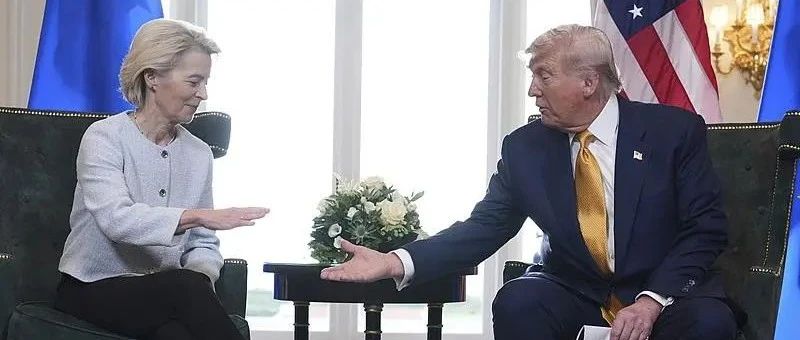
Core Points - The US and EU have reached a significant trade agreement, marking the end of months of trade uncertainty [2][4] - The agreement includes a 15% uniform tariff, $600 billion in investments, and $750 billion in energy purchases from the US [4][6] - The deal is seen as a major win for President Trump, who claims it is the largest agreement of its kind [4][7] Trade Agreement Details - The agreement stipulates a 15% tariff on EU products entering the US, with key industries exempted [4][11] - The EU will increase investments in the US by $600 billion and purchase $750 billion worth of US energy products [4][6] - The agreement is expected to benefit the automotive industry and have significant implications for agriculture and the semiconductor sector [4][6] Reactions from EU Officials - EU Commission President von der Leyen stated that the agreement is the best possible outcome given the current circumstances [6] - There are concerns within the EU about the reliance on US liquefied natural gas and the impact of the 15% tariff on the overall EU GDP [12][14] - Some EU officials express dissatisfaction, arguing that the agreement does not align with Europe's fundamental interests and may cause long-term harm [14][15] Market Implications - The agreement alleviates fears of a transatlantic trade war, providing a sense of predictability for financial markets [17][20] - Analysts suggest that the deal is a moderate positive for the stock market, as much of the content may have already been priced in [21] - The removal of the risk of further tariff increases is seen as a significant macroeconomic relief [19][20] Future Considerations - Attention will shift to the interpretation and execution of the agreement, which may present political and technical challenges [23] - The potential for ongoing uncertainty remains, as highlighted by some analysts [22]
关税突发!美欧重大宣布:15%!欧元、欧美股指期货拉升
证券时报· 2025-07-27 23:31
Group 1: Trade Agreement Overview - The United States and the European Union have reached a new trade agreement, with the US imposing a 15% tariff on EU products entering the US, while the EU commits to increasing investments in the US by $600 billion and purchasing $750 billion worth of US energy products [1][7][12] - The agreement aims to stabilize trade relations and is expected to have significant impacts on the automotive and agricultural sectors, as well as increased focus on the semiconductor industry [7][10] Group 2: Market Reactions - Following the announcement of the trade agreement, the euro strengthened against the dollar, rising by 0.25% during trading [2] - Major US and European stock index futures showed positive movements, indicating market optimism regarding the trade deal [4] Group 3: Tariff Details - The agreed 15% tariff will apply uniformly across various goods, including automobiles and pharmaceuticals, as confirmed by EU Commission President Ursula von der Leyen [10][11] - The US Secretary of Commerce indicated that the EU will open its $20 trillion market to US standards for automobiles and industrial products [11][12] Group 4: Criticism and Concerns - European officials expressed dissatisfaction with the agreement, arguing it is unbalanced and detrimental to European interests, with concerns that it may harm local employment and industry [13][15] - Finnish Trade Minister Ville Tavio noted that despite the agreement easing tensions, the high tariff levels do not warrant celebration and may not be sustainable in the long term [16]

15%!美国与欧盟达成贸易协议;美国将两周内确定有关芯片的关税政策
21世纪经济报道· 2025-07-27 22:40
Core Viewpoint - The article discusses the recent trade agreement between the United States and the European Union, highlighting the implications for tariffs, investments, and specific industries such as energy and automotive. Group 1: Trade Agreement Details - The U.S. and EU have agreed on a 15% tariff on goods exported from the EU to the U.S. [1][3] - The EU is expected to increase its investment in the U.S. by $600 billion and purchase $750 billion worth of U.S. energy products [1][9] - The agreement aims to provide stability to the market and is particularly beneficial for the automotive industry [3][6] Group 2: Industry Implications - The energy sector is a key focus of the agreement, with the EU looking to reduce its reliance on Russian liquefied natural gas by importing more affordable U.S. LNG [6] - The automotive industry will be subject to the newly established 15% tariff rate, which is seen as the best outcome achievable by the EU [6] - The pharmaceutical sector will also see a unified 15% tariff rate as part of the agreement [6] Group 3: Reactions and Criticism - European officials have expressed dissatisfaction with the agreement, stating it is unbalanced and detrimental to European interests [10][12] - Concerns have been raised that the agreement may harm local employment and industry development in Europe due to the significant U.S. investment commitments [12] - The Finnish Minister of Foreign Trade and Development noted that while the agreement may ease tensions, it does not provide a sustainable long-term solution [15]