服务器

Search documents
A股人气第一!13天12板后,再冲涨停
Zhong Guo Zheng Quan Bao· 2025-11-14 08:36
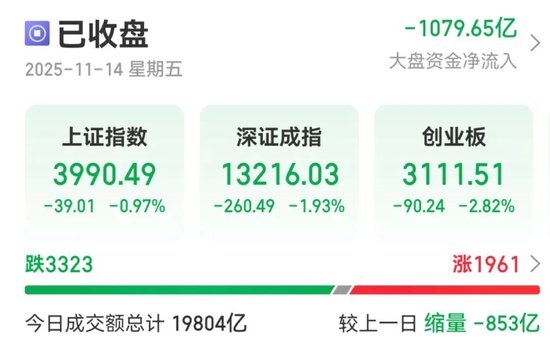
Market Overview - The A-share market experienced fluctuations, with the Shanghai Composite Index down by 0.97%, the Shenzhen Component Index down by 1.93%, and the ChiNext Index down by 2.82% [1] Sector Performance - Technology stocks saw a general decline, with notable drops in companies like Yizhongtian (Xinyi, Zhongji Xuchuang, Tianfu Communication) and a 4% decrease in SMIC [3] - The gas sector surged, with Shouhua Gas hitting the daily limit up, while the banking sector strengthened, with Industrial and Agricultural Bank of China reaching historical highs [3] - The port and transportation sectors also showed strength [3] Notable Stock Movements - HeFu China, which had a remarkable run of 12 gains in 13 days, attempted to hit the limit up again but closed with a 7.69% increase after a late surge [3] - The company issued a risk warning regarding its stock price significantly deviating from its fundamentals, indicating potential trading risks [3] Renewable Energy Sector - The photovoltaic sector saw activity, with Longi Green Energy experiencing a peak increase of over 8%, closing at 21.88 CNY per share, with a market capitalization of 165.81 billion CNY [5] - Longi Green Energy announced plans to acquire approximately 61.9998% of Suzhou Jingkong Energy Technology Co., indicating a strategic move into the energy storage sector [7] Energy Storage Market Insights - According to Guoxin Securities, the domestic energy storage system bidding has seen a significant increase, with a cumulative bidding scale of 166.3 GWh from January to October, representing a year-on-year growth of approximately 172% [7] - New energy storage installations reached 85.5 GWh in the same period, a 71% increase year-on-year, with a notable 224% increase in new project filings in October [7] GPU and AI Sector Developments - The GPU sector saw a boost with the announcement of the IPO intentions of Moer Thread, aiming to become the first domestic GPU stock, leading to a rise in related stocks like Lihexing and Heertai, which increased by over 5% [8] - ZTE Corporation introduced a super node server supporting 64 GPUs, enhancing its capabilities in large-scale intelligent computing clusters [11] - Minsheng Securities highlighted the potential of super nodes in cluster expansion and the focus on aerospace computing as a key area for domestic computing development [11]

超聚变IPO提速,河南国资大动作
Shang Hai Zheng Quan Bao· 2025-11-14 05:29
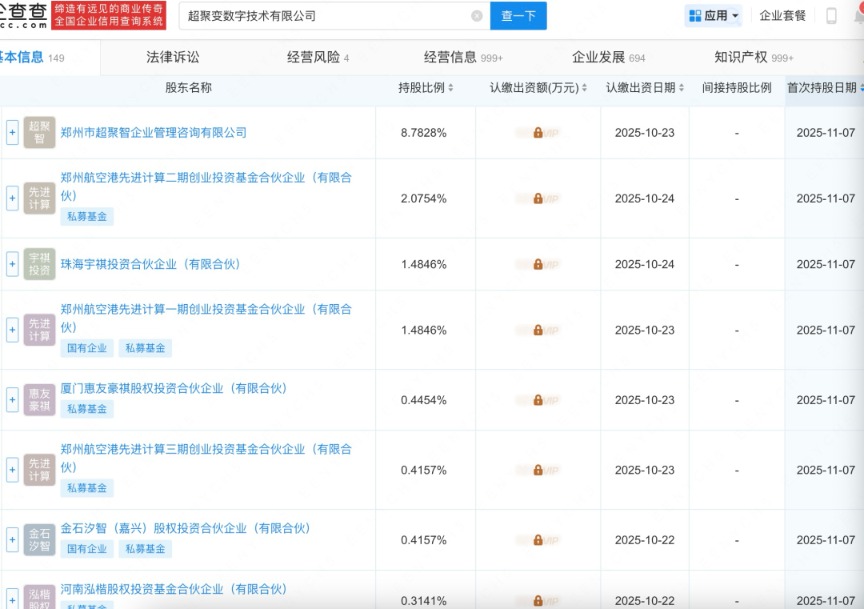
Core Insights - Chaojuvian has recently completed a new round of equity changes, with multiple new investors joining the company [1] - The company is preparing for its IPO, with significant recruitment efforts underway for financial experts [4] - Chaojuvian, established in 2021 from Huawei's X86 server business, has shown impressive revenue growth, surpassing 100 billion in 2022 and projected to exceed 400 billion by 2024 [8] Investment and Shareholder Changes - New investors include ten institutions such as Zhengzhou Airport Advanced Computing Phase I, II, and III Venture Capital Partnerships, and others [1] - Several existing shareholders have also increased their investments in this round [1] Company Growth and Market Position - Chaojuvian's sales revenue reached over 280 billion in 2023, maintaining the top market share in China's standard liquid-cooled server market for two consecutive years [8] - The company is part of a broader initiative by Henan provincial government to accelerate the cultivation of new productive forces and asset securitization [8]
疯狂的内存,被炒成了“金条”
虎嗅APP· 2025-11-13 09:47
Core Insights - The article discusses the significant price surge in memory storage products driven by AI companies' aggressive procurement strategies, leading to a super cycle in the storage industry [4][5][9] - The price of DRAM chips has increased by 171.8% year-on-year in Q3, with SSD prices also doubling in a short period [4][6] - Major tech companies are investing heavily in AI data centers, which is a key factor pushing storage prices higher [9][11] Group 1: Price Surge and Market Dynamics - AI giants are hoarding memory products, causing a drastic increase in prices, with solid-state drives and memory modules seeing prices double within two months [4][5] - The price of a 16GB Samsung DDR4 memory module rose from 200 yuan in September to 400 yuan in November, compared to just over 100 yuan for the same product last year [4] - Companies like Xiaomi are facing challenges in maintaining profit margins due to rising storage costs, with their smartphone gross margin dropping from 14.6% in 2023 to 12.6% in 2024 [12] Group 2: Impact on End Products - The price increases have affected consumer electronics, with smartphone prices rising significantly; for instance, Xiaomi's K90 series saw a price increase of 600 yuan for a specific model [5][12] - PC components are also experiencing price hikes, with some consumers reporting increases of 1,000 to 2,000 yuan for desktop PCs during the shopping season [13] - Companies are struggling to manage the impact of rising storage costs on their product pricing and sales strategies [13] Group 3: Future Outlook and Industry Response - The demand for storage is expected to continue outpacing supply, with many manufacturers already locking in orders for 2027 [11] - Companies are exploring ways to mitigate the impact of rising costs, such as developing smaller AI models that require less memory [14][15] - The industry is also focusing on increasing production capacity for memory chips to stabilize prices in the long term [14][15]

一份指南:关于“高低切”
Guotou Securities· 2025-11-13 03:05
Group 1 - The report outlines the "A-share high-low cut index" as a tool to track the pricing patterns in the A-share market, indicating that an increase in the index suggests a rise in the differentiation of returns among industries, while a peak followed by a decline indicates the emergence of high-low cut phenomena [1][2] - The report notes that typically, the A-share market experiences 2-3 significant high-low cut pricing cycles within a year, each lasting approximately 2-3 months. When the index exceeds the upper range (around 60%), it often signals an overheated high-position sector, while a drop to the lower range (around 30%) suggests the end of a low-position rebound or the brewing of a new differentiation cycle [1][3] - The report explains that high-low differentiation in the A-share market is driven by chip differentiation and fundamental divergence, particularly when there is a significant influx of capital and stark growth differences between high and low sectors [2][3] Group 2 - The report discusses the relationship between the high-low cut index and market structure, indicating that when the index peaks and declines, it often signals a recovery in low-position sectors, but the clarity of style switching depends on the logic signals from low-position sectors [3][4] - The report highlights that the high-low cut index often correlates with the overall market index, particularly when the index peaks and declines, which can signal a transition from a bull to a bear market [3][4] - The report emphasizes that since late October, the outperformance of overseas and low-position cyclical sectors has begun to manifest, with the report suggesting that true style switching will occur when liquidity transitions to a fundamental-driven market [4][5] Group 3 - The report provides a historical review of high-low cut phenomena, detailing significant transitions in market styles from 2017 to 2025, including shifts from cyclical sectors to consumer and technology sectors, and from high-dividend defensive sectors to low-position rebounds [6][10] - The report notes that the high-low cut phenomenon in 2023 was characterized by a shift from technology-driven sectors to low-position cyclical sectors, driven by policy catalysts in the real estate market [19][22] - The report indicates that the most recent high-low cut in October 2025 reflects a transition from high-position technology sectors to low-position cyclical resources, influenced by macroeconomic factors and policy expectations [27][28]
液冷服务器板块持续上扬,超频三触及20cm涨停
Mei Ri Jing Ji Xin Wen· 2025-11-13 02:55
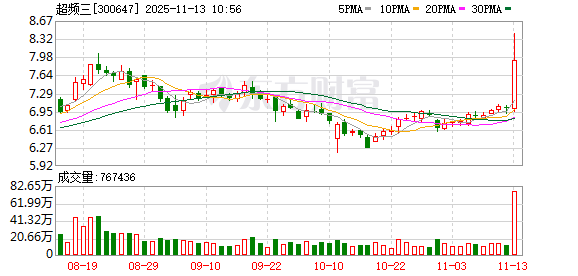
Group 1 - The liquid cooling server sector is experiencing a significant upward trend, with multiple companies seeing substantial stock price increases [2] - Overclocking Three has reached a 20% limit up, indicating strong market interest and investor confidence [2] - Companies such as Tongfei Co., Ltd. and Invec have also reported notable gains, with increases of over 10% and 7% respectively [2] Group 2 - Jinfu Technology and Shenling Environment are also following the upward trend, suggesting a broader positive sentiment in the liquid cooling server industry [2]


华尔街见闻早餐|2025年11月13日
Sou Hu Cai Jing· 2025-11-12 23:43
Group 1 - The Dow Jones Industrial Average reached a new high, while technology stocks dragged the Nasdaq down [1] - The Japanese yen fell below the 155 mark against the US dollar for the first time since February [1] - Gold prices have risen for four consecutive days, while crude oil futures experienced a significant drop [1] Group 2 - The White House announced that the inflation and employment reports for October may not be released following the end of the government shutdown [1] - The Atlanta Fed President, who advocated for no interest rate cuts in December, will retire in February next year [1] - US Treasury Secretary Yellen indicated that the structure of government bond issuance will gradually change based on investor demand [1] Group 3 - The US Supreme Court will hear a case involving Fed Governor Cook, scheduled for January 21 [1] - OPEC revised its global oil demand forecast, shifting from a "supply shortage" to a "supply surplus" in Q3, leading to a 4% drop in oil prices [1] - The Vice Chairman of the China Securities Regulatory Commission emphasized the need to prevent significant market fluctuations [1] Group 4 - Strong demand for AI servers led to Hon Hai's Q3 net profit increasing by 17% year-over-year, with revenue growth of 11% [1] - Waymo, a subsidiary of Alphabet, became the first company to supply autonomous taxi services on highways [1] - Circle, a stablecoin issuer, reported a 66% increase in Q3 revenue to $740 million, with USDC circulation doubling year-over-year, although concerns over declining interest rates led to a 12% drop in stock price [1] Group 5 - Luckin Coffee's CEO announced plans to prepare for a relisting in the US stock market, although no specific timeline has been established [1] - Tencent and JD.com are set to release their earnings reports on Thursday [1]
科技赛道延续承压调整
Tebon Securities· 2025-11-11 11:12
Market Analysis - The A-share market is experiencing a mild adjustment with a decrease in trading volume, indicating a continuation of pressure on the technology sector [2][6] - The Shanghai Composite Index closed at 4002.76 points, down 0.39%, while the ChiNext Index fell 1.40% to 3134.32 points, reflecting a divergence in market preferences for "policy certainty" and "high growth elasticity" [6][5] - The photovoltaic equipment sector showed strong performance, driven by favorable policies and technological breakthroughs, while major technology stocks faced declines [6][5] Sector Performance - The photovoltaic equipment sector saw significant gains, with companies like Zhonglai Co. and Xiexin Integration hitting the daily limit, supported by new energy consumption policies [6][5] - The technology sector, including server and consumer electronics indices, experienced declines of 2.45% and 2.11% respectively, attributed to profit-taking after previous gains [6][5] - The report suggests that if there are new catalysts in semiconductor domestic substitution or AI applications, there may be opportunities for rebounds in the technology sector [7] Bond Market Insights - The bond market is characterized by narrow fluctuations with a continued loose funding environment, as evidenced by the central bank's reverse repo operations [11][8] - The 30-year main contract closed at 116.30, while the 10-year contract slightly decreased to 108.475, indicating stable but cautious market conditions [11][8] - The report maintains a cautiously optimistic view on the bond market, emphasizing the need to monitor changes in U.S. Treasury yields [11][8] Commodity Market Overview - The commodity market displayed a mixed performance, with the South China commodity index slightly down by 0.06%, while precious metals continued to show strength [10][8] - Precious metals like gold and silver saw price increases of 3.20% and 2.67% respectively, driven by expectations of U.S. Federal Reserve easing and safe-haven demand [10][8] - The report notes a significant drop in coking coal prices, attributed to weak demand, as steel production has declined to levels comparable to the previous year [10][8] Investment Strategy Recommendations - The report suggests a balanced allocation strategy focusing on dividend stocks, micro-cap stocks, and technology sectors, with a long-term positive outlook on technology [12][7] - In the bond market, a continued loose funding environment is expected, with attention to domestic policies and the potential impact of further U.S. rate cuts [12][7] - For commodities, the report recommends accumulating positions in precious metals, particularly as the Fed's easing policies become more pronounced [12][10]
光模块CPO蓄力回调,创业板人工智能ETF华夏、5G通信ETF获得资金密集加仓
Mei Ri Jing Ji Xin Wen· 2025-11-10 02:57
Core Viewpoint - A-shares experienced a volatile trading session with major indices opening high but subsequently retreating, while sectors like lithium batteries and AI computing saw increased activity, indicating a potential spring market rally driven by growth-oriented technology sectors [1] Market Performance - Major A-share indices opened high but faced a pullback, with sectors such as lithium batteries and AI computing showing activity, while previously strong sectors like optical modules and robotics led the decline [1] - Notable stocks such as New Yisheng, Industrial Fulian, and Jingwang Electronics fell over 3% [1] - The 5G Communication ETF (515050) dropped nearly 3%, and the ChiNext AI ETF (159381) fell over 2% [1] Fund Flows - The AI computing sector has seen a consolidation phase, with significant capital inflows; in the last 10 trading days, the 5G Communication ETF (515050) attracted a net subscription of 450 million yuan, while the ChiNext AI ETF (159381) accumulated 250 million yuan [1] Future Outlook - Institutions are optimistic about the upcoming spring market, particularly for high-growth technology sectors [1] - Dongwu Securities predicts that the spring market will primarily focus on growth-oriented industrial trends, particularly those represented by AI [1] - The global technology industry is expected to experience a trend-driven growth, supported by China's unique advantages such as a large user base and manufacturing capabilities, which will facilitate deeper participation in global tech transformations [1] - The long-term logic of industrial development remains unchanged, with core global industry segments expected to build momentum for future growth after recent adjustments [1]






谨慎加仓?
第一财经· 2025-11-07 12:07
Core Viewpoint - The market is currently experiencing a cautious sentiment with a predominance of declines over gains, indicating a potential shift in investment strategies among institutional and retail investors [6][9]. Market Performance - The market showed a decline with 2,099 stocks rising and 3,155 stocks falling, reflecting a bearish trend [5]. - The trading volume decreased by 2.73%, indicating reduced market activity compared to the previous trading day [7]. Sector Analysis - The computing hardware and software sectors led the declines, while chemical stocks, particularly in fluorine and phosphorus industries, saw significant gains [6]. - Institutional investors are shifting from high-performing tech sectors to lower-priced cyclical and defensive sectors, suggesting a strategy of "high-low switching" [9]. Investor Sentiment - Mainstream funds are flowing out of technology sectors while entering basic chemicals and photovoltaic equipment sectors [7][9]. - Retail investor sentiment is at 75.85%, indicating a mix of cautiousness and speculative behavior, with some actively pursuing hot sectors despite overall market declines [10][9].

超3100只个股下跌
第一财经· 2025-11-07 07:34
Market Overview - The A-share market experienced fluctuations, with the Shanghai Composite Index down by 0.25%, the Shenzhen Component Index down by 0.36%, and the ChiNext Index down by 0.51% as of the close [3][4]. - The total trading volume in the Shanghai and Shenzhen markets was 2 trillion yuan, a decrease of 56.2 billion yuan compared to the previous trading day, with over 3,100 stocks declining [7]. Sector Performance - The computing hardware and software sectors led the decline, with significant drops in server, DeepSeek, and fintech indices. Conversely, chemical stocks surged, particularly in fluorine and phosphorus chemical sectors, while solid-state battery themes gained strength [6]. - Major capital inflows were observed in basic chemicals, photovoltaic equipment, and energy metals, while there were notable outflows from computing, electronics, and power grid equipment sectors [9]. Individual Stock Movements - Specific stocks that saw net inflows included Tianfu Communication (22.32 billion yuan), Tianci Materials (9.66 billion yuan), and Duofluor (8.65 billion yuan) [10]. - Stocks that faced significant net outflows included Industrial Fulian (21.42 billion yuan), Sanhua Intelligent Control (15.36 billion yuan), and Silis (8.87 billion yuan) [11]. Institutional Insights - Longcheng Securities noted that the market has entered a quiet period in November, lacking major policy or event-driven catalysts, suggesting that market movements will rely more on technical and fundamental support [12]. - Huaxi Securities indicated that following the release of Q3 reports, the A-share market is entering a performance vacuum period of about three months, shifting focus towards next year's performance expectations and industry trends, with trading likely returning to active themes [12].