港口运输

Search documents
陆海统筹 看中国经济向海图强的价值共生
Sou Hu Cai Jing· 2025-12-06 12:54
Core Insights - The Chinese marine economy is entering a new phase of growth, driven by national strategies aimed at enhancing marine capabilities and promoting high-quality development [1][3] - By 2024, China's marine GDP is expected to exceed 10.5 trillion yuan, marking the entry into the "trillion" era, with a continuous growth trend [1][3] Group 1: Industry Trends - The marine economy is evolving along the coastline, with new growth poles, innovation hubs, and industrial chains being shaped [3] - The integration of advanced technologies in logistics, such as the automated cold chain logistics hub in Ningbo, is enhancing operational efficiency [5][8] - The Shanghai Yangshan Port's automated terminal has increased its annual throughput capacity from 6.3 million TEUs to 7 million TEUs, aiming for 8 million TEUs [8] Group 2: Technological Advancements - The introduction of smart terminal operating systems is optimizing port operations, allowing for real-time scheduling and increased efficiency [8][10] - AI and optimization algorithms at Qingdao Port have improved unloading efficiency by over 20%, setting new records in paper pulp unloading [10] - The use of AGV robots and smart parking systems in Lianyungang is transforming traditional port operations into automated processes [20] Group 3: Ecological and Cultural Integration - Ecological restoration efforts, such as the removal of sea cucumber enclosures in Dalu Island, are revitalizing local marine ecosystems and supporting new industries [12][15] - The integration of cultural heritage with modern industries, as seen in Shouguang's salt production and tourism initiatives, is enhancing the value of the blue economy [17][19] Group 4: Economic Impact - Traditional marine industries continue to play a stabilizing role, with shipbuilding metrics showing significant growth, including a 25.7% increase in new orders [20] - Emerging sectors like offshore wind power and marine ranching are rapidly expanding, with offshore wind capacity increasing by 42.1% year-on-year [20][22] - The comprehensive development of the Antarctic krill industry is projected to generate an annual output value exceeding 2 billion yuan [19]

中国稳居秘鲁第一大出口目的地国
Zhong Guo Qing Nian Bao· 2025-12-06 06:28
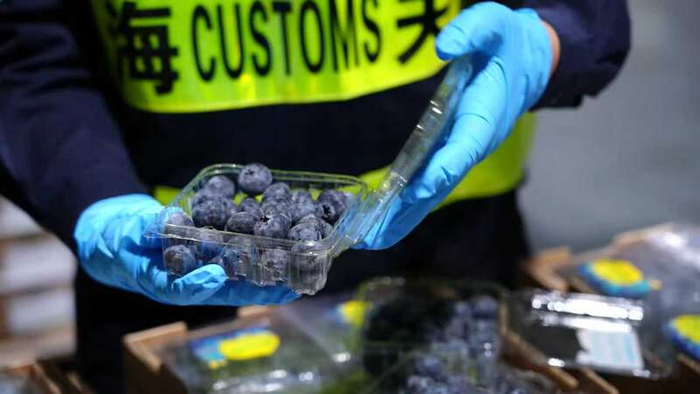
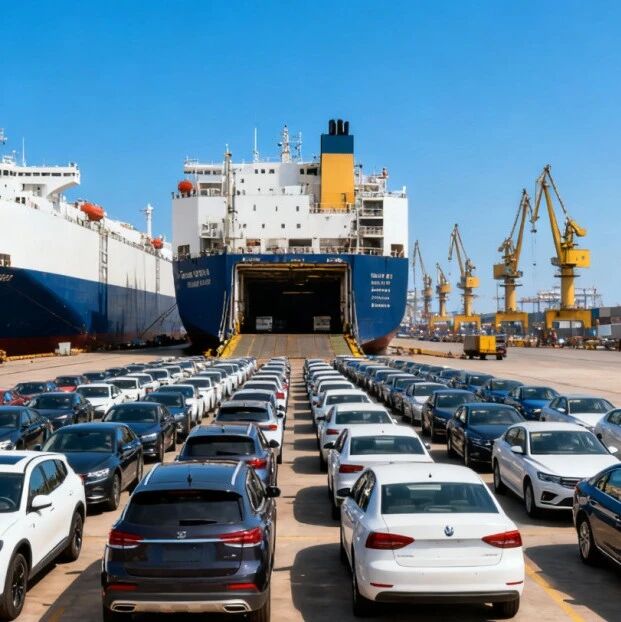
Core Insights - The trade value between Shanghai and Peru has significantly increased by 47.1% in the first ten months of this year, with the "QianKai-Shanghai" shipping route surpassing 5.35 billion yuan in trade value and handling 197,000 tons of goods [1][5]. Group 1: Trade Growth - The "QianKai-Shanghai" shipping route has reduced the shipping time between the two countries from 35-40 days to 23 days, resulting in over 20% savings in logistics costs for businesses [5]. - Peru's exports have shown a notable increase, with a year-on-year growth of 17.3% from January to September 2025, and China remains the largest export destination for Peru [5]. Group 2: Infrastructure Development - QianKai Port, located in Peru, serves as a key hub for trade between Asia and South America, facilitating direct shipping routes that previously required transshipment through Mexico and Panama, thus lowering costs and transit times [3][5]. - The port's construction began in June 2019, and the first cargo ship is expected to arrive on November 7, 2024, marking a significant milestone in the "Belt and Road" initiative in Latin America [3]. Group 3: Product Flow - A specialized "green channel" for high-time-sensitive products has been established by the Yangshan Customs to ensure efficient customs clearance for imported fruits and other goods from Peru [5]. - The export of Chinese manufactured goods to Peru has also increased, with 5,948 domestic vehicles shipped to QianKai Port by the end of November, following the initial shipment of over 1,300 vehicles in July [5].
加拿大宣布推进建设两批11个国家级重大项目
Shang Wu Bu Wang Zhan· 2025-12-04 16:25
Core Insights - The Canadian government announced two batches of 11 major national projects aimed at enhancing economic autonomy and security, with a total investment of CAD 116 billion [4]. Group 1: Major Projects Overview - The Kitimat LNG Phase 2 project in British Columbia will double the LNG production capacity, positioning Canada as the second-largest facility globally [1]. - The Darlington new nuclear project in Ontario will make Canada the first G7 country to operate a small modular reactor (SMR), capable of powering 300,000 homes once the first unit is operational [1]. - The Montreal Port Contrecoeur terminal expansion in Quebec will increase the port's throughput capacity by approximately 60% [2]. Group 2: Mining and Energy Initiatives - The McIlvenna Bay copper and zinc project in Saskatchewan, developed in partnership with local Indigenous communities, aims to become Canada's first net-zero emissions copper mine [2]. - The Red Chris mine expansion in British Columbia, also in collaboration with local Indigenous groups, plans to extend the mine's life by over ten years, increasing Canada's annual copper production by more than 15% [2]. - The NCTL project in British Columbia aims to integrate the Yukon grid into the national grid, providing clean electricity to Northwest communities [2]. Group 3: Additional Projects - The Timmons Crawford project in Ontario will produce high-quality low-carbon nickel, expected to attract CAD 5 billion in investment [3]. - The Saint-Michel-des-Saints graphite mine in Quebec will integrate with a planned battery materials plant, projected to attract CAD 1.8 billion in investment [3]. - The Wison mine in New Brunswick plans to extract tungsten and molybdenum [4]. - The Iqaluit-Nukikshautit hydroelectric project in Nunavut will be the first hydro project fully owned by Inuit, helping the region reduce its reliance on imported diesel [4].
广西内外联动兴产业
Ren Min Wang· 2025-12-03 22:24
Core Insights - The integration of Guangxi into the Guangdong-Hong Kong-Macao Greater Bay Area is emphasized as a strategic move to enhance economic connectivity and development [2][4][7] - Guangxi's geographical advantages are highlighted, positioning it as a crucial hub for trade and logistics, particularly with Southeast Asia [2][5] - The region is experiencing significant economic growth, with a GDP increase of 5.3% year-on-year and a notable rise in high-tech manufacturing [7] Group 1: Economic Connectivity - The "Golden Waterway" linking the Pearl River and West River facilitates substantial cargo movement, with over 425 tons per minute through the Guangxi Wuzhou Changzhou Water Conservancy Hub [1] - The North Bay Economic Zone and the Pearl River-West River Economic Belt are being developed to enhance Guangxi's role as a strategic hinterland for the Greater Bay Area [2][4] Group 2: Infrastructure Development - Guangxi has established four railways, ten highways, and four air routes connecting with Guangdong, enhancing transportation efficiency [4] - The region aims to deliver over 15 million tons of high-quality agricultural products to the Greater Bay Area by 2024 [4] Group 3: Trade and Investment - The North Bay Port has opened new shipping routes to Vietnam and Singapore, facilitating rapid export of goods from Guangxi [5] - In 2024, Guangxi plans to attract 860 investment projects from the Greater Bay Area, with a total investment of 206.3 billion yuan, focusing on manufacturing [6] Group 4: High-Quality Development - Guangxi is fostering high-quality industrial development, with a focus on artificial intelligence and digital projects in collaboration with ASEAN countries [6] - The region's industrial output is showing robust growth, with a 7.6% increase in industrial value added and a 26% rise in high-tech manufacturing in the first ten months of the year [7]
中汽协:10月汽车商品进出口总额为253.1亿美元,同比增长9.5%|首席资讯日报
首席商业评论· 2025-12-03 04:25
Group 1: Automotive Industry - In October 2025, the total import and export value of automotive goods reached $25.31 billion, a year-on-year increase of 9.5% [2] - The import value was $3.68 billion, a month-on-month decrease of 4.6% and a year-on-year decrease of 17.5% [2] - The export value was $21.63 billion, a month-on-month increase of 2.9% and a year-on-year increase of 15.9% [2] - From January to October 2025, the cumulative total import and export value was $232.08 billion, remaining stable compared to the previous year [2] Group 2: Technology and AI - TSMC Chairman Wei Zhejia is expected to attend the OIP forum in Nanjing on December 4, 2025, and will visit several chip design companies [3] - South Korean AI startup Upstage plans to conduct an IPO as early as the second half of 2026 [4] - Australia has launched a national AI plan focusing on three main goals: seizing opportunities, sharing benefits, and ensuring safety [9] - Grayscale Research predicts Bitcoin may reach a historical high in 2026, challenging the traditional four-year cycle theory [10] Group 3: Logistics and Trade - Guangzhou Port expects a 14.7% year-on-year increase in container throughput in November 2025, reaching 2.399 million TEUs [5] - The total cargo throughput is projected to be 50.854 million tons, a year-on-year increase of 3.9% [5] Group 4: Corporate Developments - Canon announced the cessation of operations at its printer factory in Zhongshan, Guangdong, due to market challenges and competition [6][7] - Goldman Sachs raised the target price for Alibaba Health to HKD 5.2, citing structural benefits in the industry [8] - Wuliangye Group has invested in Sichuan Airlines Group, increasing its registered capital from 417 million to 1.219 billion yuan [11] Group 5: Economic Performance - Qingdao's GDP is expected to exceed 1.7 trillion yuan in 2025, with an average annual growth rate of 5.9% [13] - The city's per capita GDP is projected to rise from 127,000 yuan in 2020 to 161,000 yuan in 2024, a cumulative increase of 21.3% [13][14]
决胜“十四五” 擘画“十五五”·地方资本市场高质量发展之广西篇: 资本助力八桂焕新 书写广西产业跃升“生动注脚”
Zheng Quan Shi Bao· 2025-12-02 18:08
Group 1: Core Achievements - During the "14th Five-Year Plan" period, Guangxi's capital market achieved significant growth, with 5 new listed companies and direct financing exceeding 300 billion yuan [1] - From 2021 to September 2025, direct financing in Guangxi reached 300.8 billion yuan, a 21% increase compared to the "13th Five-Year Plan" period, with bond financing growing by 38.87% [1][2] - The total assets and net assets of listed companies in Guangxi reached 601.48 billion yuan and 233.09 billion yuan respectively, both showing over 20% growth compared to the end of the "13th Five-Year Plan" [2] Group 2: Industry Empowerment and Innovation - Guangxi's capital market is closely aligned with local industrial characteristics, promoting deep integration of capital and industry, particularly in advanced manufacturing and green low-carbon transformation [3] - Notable cases include Liugong's transformation through targeted financing and North Bay Port's digital transformation funded by capital market initiatives [3][4] - The issuance of the first sugar warehouse CMBS in China by Guangxi Honggui Capital Operation Group exemplifies tailored financing solutions for local industries [4] Group 3: Market Regulation and Risk Management - The Guangxi Securities Regulatory Bureau emphasized a dual focus on regulation and development, successfully mitigating risks associated with high pledge stocks and illegal guarantees [6][7] - A total of 21 administrative penalties were issued for various violations, with fines totaling 118 million yuan, enhancing market deterrence [7] - The overall market capitalization of listed companies in Guangxi increased from 291.6 billion yuan to 357.1 billion yuan, a growth of 22.46% [7] Group 4: Investor Returns and Market Dynamics - Cash dividends became a significant method for listed companies to return value to investors, with 29 companies distributing a total of 23.58 billion yuan in cash dividends [8] - The trend of share buybacks and increases in shareholding by major shareholders has been on the rise, with 15 companies engaging in buybacks totaling 4.35 billion yuan [8] Group 5: Futures Market Development - The futures market in Guangxi expanded its service capabilities, successfully launching futures products for local industries such as live pigs and alumina [9] - The establishment of 34 futures delivery warehouses and 8 production-financing service bases has enhanced the accessibility of futures market services [9] Group 6: Future Directions - The Guangxi Securities Regulatory Bureau plans to enhance the multi-level capital market's functions and support major projects in artificial intelligence and key metals [10] - Continuous improvement in the quality of listed companies and rigorous risk prevention measures are prioritized for the upcoming "15th Five-Year Plan" period [10]
威海加速构建“市域一体、国内通达、联通海外”综合交通运输体系
Qi Lu Wan Bao· 2025-12-02 16:21
Core Viewpoint - The Weihai Municipal Government is actively promoting high-quality transportation development during the "14th Five-Year Plan" period, focusing on connectivity, innovation, and transformation to support major national strategies like the Belt and Road Initiative and the Jiaodong Economic Circle [1] Group 1: Overall Achievements - Significant progress has been made in the transportation sector over the past five years, with 15 key indicators from the "14th Five-Year Plan" being met, including early completion of several projects such as "high-speed rail access to every county" [1] - By the end of 2025, total investment in transportation projects is expected to reach 30.901 billion yuan, marking a new level in infrastructure development [1] Group 2: Infrastructure Development - By the end of 2024, the total length of roads in the city will reach 6,843.7 kilometers, with 235.1 kilometers of expressways, ranking 5th in the province [2] - The railway operating mileage has increased to 317 kilometers, with 100% coverage of high-speed rail stations in county areas, and the Lai-Rong high-speed railway is set to open by the end of 2023 [2] - The port and airport infrastructure is being upgraded, with 34 berths of over 10,000 tons and the expansion of major airports to enhance connectivity [3] Group 3: Transportation Services - In 2024, the total passenger volume is projected to reach 28.7382 million, a 112% increase from 2020, with an average annual growth rate of 27.9% [4] - Public transportation has achieved urban-rural integration, with 370 urban-rural public transport lines and full coverage of bus services in rural areas [4] - The Weihai Port has established 35 international and domestic shipping routes, leading the nation in the number of routes and vessels for Sino-Korean cargo [4] Group 4: Logistics and Freight Transport - The city has developed a multi-modal transport corridor connecting Japan and South Korea to Europe and Asia, with regular operations of international transport services [5] - The total cargo throughput at ports reached 54.635 million tons, ranking 6th in the province, while the airport handled 24,000 tons of cargo, also ranking 4th [5] Group 5: Safety and Governance - The city has implemented high-standard transportation reforms and pilot projects, contributing to the establishment of a robust governance framework for transportation [6][7] - Safety measures have been strengthened, with over 12,000 safety management issues identified and rectified across key enterprises [7] Group 6: Innovation and Sustainability - Progress in smart transportation includes the development of 12 systems for traffic management and monitoring [8] - The city is advancing green transportation initiatives, with 100% of public buses being electric and the establishment of a short-distance electric truck charging station [8]
新闻分析:超500万标箱!西部陆海新通道班列向上向好之“势”从何而来
Xin Hua Wang· 2025-12-02 13:21
Core Viewpoint - The Western Land-Sea New Corridor has achieved significant milestones, with over 5 million TEUs shipped since its inception in 2017, reflecting strong growth momentum and development vitality [1][3]. Group 1: Development and Growth - The corridor has seen a rapid increase in shipping volume, with the time taken to reach each million TEUs decreasing significantly, from over 4 years for the first million to just 240 days for the fifth million [1]. - The average annual growth rate of import and export volume along the corridor has reached 16.9% since 2019 [3]. - In 2023, the corridor has shipped over 130,000 TEUs, with a notable increase in both inbound and outbound shipments, each exceeding a 50% year-on-year growth [8]. Group 2: Infrastructure and Connectivity - The number of scheduled train routes has expanded from 2 in 2019 to 26 by 2025, enhancing connectivity between southwestern cities and various ports [4]. - Continuous investment in infrastructure, including the expansion of ports and the development of multimodal transport networks, has significantly improved logistics capabilities [4][6]. - The establishment of an integrated rail-sea transport operation platform has enhanced real-time resource sharing between ports and rail systems, improving logistics efficiency [8]. Group 3: Economic Impact and Trade Relations - The corridor plays a crucial role in facilitating trade between China and ASEAN, with China maintaining its position as ASEAN's largest trading partner for 16 consecutive years [5]. - The economic growth in the western region and the deepening trade relations with ASEAN are fundamental drivers for the corridor's transition from growth to strong growth [5]. - The total import and export volume through the corridor reached 611.5 billion yuan in the first three quarters of the year, marking a 19.3% increase and contributing 3.4 percentage points to the western region's foreign trade growth [8]. Group 4: Future Prospects - The corridor is expected to further enhance its role in empowering industrial development, aiming to become a cross-regional domestic and international economic corridor [9].
香港第三季港口货物吞吐量为4130万公吨 同比下跌5.6%
智通财经网· 2025-12-02 08:46
Core Viewpoint - Hong Kong's port cargo throughput in Q3 2025 decreased by 5.6% year-on-year, totaling 41.3 million metric tons, with inbound cargo down 11.0% and outbound cargo up 3.8% [1] Port Cargo - In Q3 2025, the total port cargo included a 6.7% decline in sea freight and a 3.7% decline in river freight, amounting to 25.5 million metric tons and 15.8 million metric tons respectively [2] - For the first nine months of 2025, sea freight and river freight also saw declines of 5.7% and 5.6%, totaling 77.9 million metric tons and 46.9 million metric tons respectively [2] - Major countries with significant inbound cargo changes in Q3 included Thailand (up 12.2%) and Chile (down 49.1%), while Australia (up 53.8%) and the US (down 48.8%) were notable for outbound cargo [2] - In the first nine months, Vietnam (down 26.2%) and South Korea (down 25.4%) had significant declines in inbound cargo, while Australia (up 35.7%) and mainland China (up 11.9%) showed strong growth in outbound cargo [3] Cargo Types - In Q3 2025, notable inbound cargo changes included "metal ores and metal waste" (up 14.7%) and "coal, coke, and coal balls" (down 13.6%), while outbound cargo saw "stone, sand, and gravel" increase by 100.2% [3][4] - For the first nine months, "metal ores and metal waste" increased by 22.4% inbound, while "stone, sand, and gravel" decreased by 31.8% outbound [4] Container Handling - In Q3 2025, Hong Kong's ports handled 3.1 million standard containers, a decrease of 9.1% year-on-year, with loaded and empty containers down 8.8% and 10.1% respectively [5] - For the first nine months, container handling totaled 9.68 million standard containers, down 4.9%, with loaded containers down 5.9% [5] - Seasonally adjusted loaded container throughput in Q3 showed a quarterly decline of 3.8% [5] Shipping Vessels - In Q3 2025, the number of incoming ocean-going vessels increased by 6.4% to 4,793, with total capacity rising by 2.1% to 72.7 million net tons [7] - For the first nine months, incoming ocean-going vessels rose by 4.2% to 14,199, with total capacity up 0.9% [7]
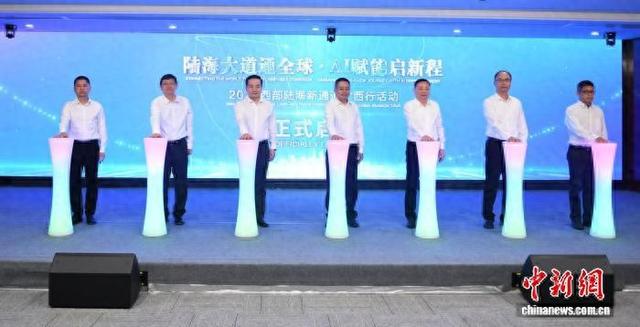
2025西部陆海新通道广西行主题采访活动启动
Zhong Guo Xin Wen Wang· 2025-12-01 10:30
Group 1 - The core viewpoint of the article highlights the significant achievements in the construction of the Western Land-Sea New Corridor, which has contributed to an open framework for internal and external connectivity and mutual assistance between the east and west [1][3]. - The launch of the "Western Land-Sea New Corridor Guangxi Tour" event aims to explore the development opportunities along the corridor through media coverage in various cities such as Nanning, Qinzhou, Beihai, Fangchenggang, and Chongzuo [3][7]. - Guangxi serves as a key junction for the Western Land-Sea New Corridor, focusing on major projects like the Pinglu Canal and the Beibu Gulf International Gateway Port to enhance infrastructure and service capabilities [1][3]. Group 2 - During the 14th Five-Year Plan period, the Beibu Gulf Port aims to enhance its capabilities, increase cargo sources, expand shipping routes, and improve services, with the expected increase in sea-rail intermodal trains from 4,607 in 2020 to 10,500 by 2025 [5]. - The cargo throughput at Beibu Gulf Port is projected to grow from 300 million tons in 2020 to 500 million tons by 2025, indicating a significant increase in operational capacity [5].