
锂矿

Search documents
锂矿供应生变!津巴布韦暂停出口,13家公司受益,7家业绩预喜
Sou Hu Cai Jing· 2026-02-27 23:20
Core Insights - Zimbabwe, the fourth largest lithium resource country globally, has announced an emergency suspension of all lithium ore and concentrate exports, disrupting the global lithium supply chain [1][3] - This decision is aimed at combating mineral smuggling and promoting domestic processing, which will significantly impact the supply of lithium to countries like China that heavily rely on imports [3][4] Group 1: Market Impact - The suspension of exports from Zimbabwe has led to a significant supply gap, as the country accounts for 15.5% of China's lithium concentrate imports, equating to 1 ton of lithium ore for every 6 tons imported [1][3] - The global lithium market was already in a state of supply-demand balance, and this ban exacerbates the situation, leading to an increase in lithium carbonate prices and heightened expectations of price hikes in the futures market [3][4] Group 2: Beneficiary Companies - A total of 13 lithium mining companies are identified as direct beneficiaries of the export ban, categorized into three groups: companies with deep processing capabilities in Zimbabwe, leading firms with overseas lithium mines, and domestic companies with their own lithium resources [4][5] - Among these, 7 companies have already announced significant earnings growth for 2025, with increases generally exceeding 50%, and some even doubling their profits, driven by rising lithium product prices and increased production capacity [6][7] Group 3: Long-term Industry Dynamics - In the short term, the export ban will maintain high lithium prices, benefiting upstream mining companies, while downstream battery manufacturers may face increased costs [7] - Long-term success in the lithium industry will depend on companies' ability to control resources, possess complete supply chains, and maintain technological advantages, rather than merely securing cheap raw materials [7]

中国锂矿产业从资源突围迈向生态构建
Zheng Quan Ri Bao· 2026-02-27 16:28
Group 1: Global Lithium Supply Chain Changes - Zimbabwe, the world's fourth-largest lithium producer, has announced a complete suspension of lithium concentrate and ore exports, accelerating the restructuring of the global lithium resource landscape [1] - The competition for lithium resources has never ceased, influenced by tightening policies from resource countries, periodic supply-demand imbalances, and rapid technological iterations [1] - China, as the largest lithium battery producer and consumer, is transitioning from resource reliance to ecosystem construction, enhancing supply chain resilience through technological innovation and global layout [1] Group 2: Domestic Lithium Resource Development - By 2025, China is expected to import approximately 7.75 million tons of lithium concentrate, a year-on-year increase of about 39.4%, primarily from Australia, Zimbabwe, and Brazil [2] - The discovery of the "Asian Lithium Belt," spanning Sichuan, Qinghai, Tibet, and Xinjiang, has significantly increased China's lithium resource reserves, elevating its global ranking from sixth to second [2][3] - The mining volume of lithium spodumene in China is projected to exceed 10 million tons by 2026, with lithium concentrate production expected to reach 2 million tons, enhancing the country's self-sufficiency in lithium resources [3] Group 3: Full Industry Chain Collaboration - China's lithium industry is evolving from a focus on resource extraction to a complete industry chain collaboration, encompassing exploration, mining, refining, battery manufacturing, and recycling [4] - The development of lithium resources is progressing in various regions, including rapid expansion of salt lake lithium extraction capacity in Qinghai and orderly development of lithium mica resources in Jiangxi and Hunan [4] - China has established a core position in the global lithium salt supply market, with its production capacity and output leading the world, accounting for approximately 70% of the total for key lithium salt products [4] Group 4: Strategic Industry Integration - Companies are shifting from merely competing for resources to collaborative development and ecosystem construction across the entire industry chain [5] - Major companies like Tianqi Lithium and Ganfeng Lithium are investing in downstream markets and developing integrated solid-state battery recycling technologies, creating a closed-loop model for resource utilization [5] - The industry is witnessing a deep integration phase characterized by collaboration, innovation, and sharing, reshaping the global lithium resource supply chain [7] Group 5: Future Development Trends - The future of the lithium industry will depend on balancing resource security, technological innovation, and sustainable development [8] - With improved self-sufficiency, balanced supply-demand dynamics, and optimized industry ecosystems, China's lithium industry is poised to play a crucial role in the global energy transition [8]


格林大华期货研究院专题报告:津巴布韦锂矿出口禁令突袭,碳酸锂价格后市走势分析
Ge Lin Qi Huo· 2026-02-27 10:40
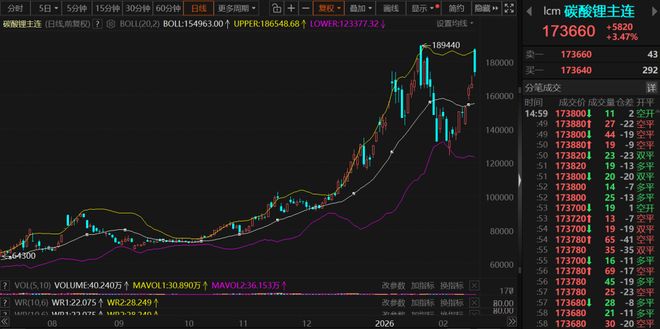
Group 1: Report Industry Investment Rating - Not provided Group 2: Core Viewpoints of the Report - The lithium ore export ban in Zimbabwe is in line with its "value retention" strategy, but the current policy switch to only allowing lithium sulfate exports does not match the local production situation, and the impact of the export ban is expected to be short - term. After rectifying resource losses and illegal smuggling and completing new process approvals for local enterprises with mining rights and concentrators, normal lithium ore exports will resume. [2][6][7] - In the short - term, due to strong demand and low inventory, supply disturbances will be magnified. The current lithium carbonate price faces selling pressure around 190,000 yuan/ton, and if the ban lasts longer than expected or other supply disturbances occur, the price may exceed 200,000 yuan/ton. [2][8] - In the long - term, it is an inevitable choice for Chinese enterprises to set up lithium sulfate processing plants in Zimbabwe, but the construction of production lines faces difficulties in energy and auxiliary material supply, leading to an increase in the cost of importing lithium resources from Africa. [2][8][9] Group 3: Summary by Related Catalogs 1. Policy Background and Market Reaction - On February 25, 2026, Zimbabwe's Ministry of Mines suddenly announced an immediate suspension of all lithium ore and concentrate exports, including in - transit goods, with no clear resumption schedule. On February 26, the opening price of lithium carbonate reached 187,000 yuan/ton, and it closed at 173,660 yuan/ton, a 3.47% increase. [2][3] 2. Importance of Zimbabwe's Lithium Resources - Zimbabwe is one of the important sources of China's lithium ore imports. In 2025, China imported 1.2 million tons of lithium ore from Zimbabwe, accounting for 15.5% of the total lithium ore imports that year, equivalent to about 150,000 tons of lithium carbonate equivalent, accounting for about 15% of China's annual lithium carbonate production and about 10% of the global production. [3] 3. Timeline of Zimbabwe's Lithium Ore Export Policy - December 2022: First ban on lithium ore exports, requiring local processing to start the "value retention" strategy. - June 2025: The mining minister announced a full ban on lithium concentrate exports starting from January 2027 to force the construction of smelting capacity. - January 2026: Strictly investigated lithium ore smuggling, and the state - owned Mineral Marketing Corporation of Zimbabwe (MMCZ) monopolized export approval rights to strengthen the regulatory enforcement agency. - February 17, 2026: Required export license applications to be submitted one month in advance and launched a new license management system to standardize the process, paving the way for the ban. - February 25, 2026: Urgently suspended all lithium ore and concentrate exports (including in - transit goods), and only enterprises with mining rights and concentrators could apply for exports. The policy was implemented ahead of schedule with stronger - than - expected enforcement. [5] 4. Reasons for the Export Ban - The ban is in line with Zimbabwe's "value retention" strategy, aiming to extend the local mineral resource manufacturing and processing chain, increase industrial value - added, and mineral resource export taxes. It is also a sign of the rise of global resource nationalism. [6] 5. Impact on Chinese Enterprises and Supply - All Chinese lithium concentrate exports from Zimbabwe have been suspended, while lithium sulfate can still be exported normally. However, Chinese enterprises' lithium sulfate production lines in Zimbabwe are not yet mature. It is estimated that the ban may be lifted within a month, and the supply disturbance will actually affect the arrival volume of lithium ore in China in April and May. [7] 6. Market Demand and Price Trends - Currently, it is the peak demand season for lithium carbonate. With the concentrated restocking demand during the "Golden March and Silver April" and the "rush to export" before the cancellation of the battery export tax - refund policy, the demand for lithium carbonate has increased. The post - holiday lithium carbonate inventory has dropped to 99,000 tons, and the exchange warehouse receipts are 38,000 lots, equivalent to only one - month's demand. [8] 7. Long - term Challenges for Chinese Enterprises - In the long - term, Chinese enterprises need to set up lithium sulfate processing plants in Zimbabwe, but they face difficulties in energy supply (insufficient power generation and frequent power outages) and auxiliary material supply (dependence on imports of sulfuric acid and key equipment). This will lead to an increase in the cost of importing lithium resources from Africa. [8][9]
据港交所公告,摩根大通对赣锋锂业H股的多头持仓于2月24日从4.83%增至5.36%
Zhi Tong Cai Jing· 2026-02-27 10:25
Group 1 - Morgan Stanley increased its long position in Ganfeng Lithium's H-shares from 4.83% to 5.36% on February 24 [1]
锂价高位运行,新高有待观察
Yin He Qi Huo· 2026-02-27 08:48
有色板块研发报告 碳酸锂 3 月报 2026 年 2 月 27 日 锂价高位运行,新高有待观察 第一部分 前言概要 【行情回顾】 2026 年 2 月碳酸锂市场先抑后扬,春节后现货与期货同步大幅上涨, 核心驱动来自冶炼厂检修导致的供给收缩、下游低库存补库需求释放,叠加 月末津巴布韦禁止未加工锂矿出口政策突发冲击,市场对原料供应收紧预期 急剧升温。期货主力合约 LC2605 从最低 12.4 万冲高至 18.77 万,逼近前 高 18.94 万,但指数持仓仍保持在 70 万手附近,反映强监管环境下流动性 不足导致资金冲击成本较高。 | 第一部分 | 前言概要 | 2 | | | --- | --- | --- | --- | | 【行情回顾】 | | 2 | | | 【市场展望】 | | 2 | | | 第二部分 | 市场回顾 | 3 | | | 第三部分 | 基本面情况 | 4 | | | 一、电池订单饱满,库销比仍在低位 | | 4 | | | 二、高价刺激供应增加,但资源国政策增添扰动 | | 10 | | | 第四部分 | 后市展望及策略推荐 | 15 | | | 免责声明 | | | 16 | 【市场 ...
重磅信号!全球锂矿暴涨,津巴布韦全面禁运,中国恐被冲击
Sou Hu Cai Jing· 2026-02-27 07:45
Group 1 - Zimbabwe, the world's fourth-largest lithium producer, has announced a sudden export ban on all lithium concentrates and ores, impacting global supply dynamics significantly [2][4] - The ban aims to reshape the distribution of industrial chain profits by forcing foreign companies to invest locally and only allowing the export of higher-value lithium sulfate [4] - Zimbabwe accounts for 15% of China's lithium concentrate imports, and the ban is expected to exacerbate existing supply-demand gaps in the lithium market [4][5] Group 2 - Current domestic lithium concentrate inventory in China is below 20,000 tons, with turnover days for material factories under 10 days, indicating a critical supply shortage [5] - The lithium price is projected to rise significantly, potentially exceeding 200,000 yuan per ton and possibly reaching 300,000 yuan per ton due to low inventory, supply disruptions, and recovering demand [5] - The global competition for mineral resources is intensifying, with countries increasing capital expenditures to secure self-sufficiency in industrial products, making basic resources a strategic commodity [7][12] Group 3 - The resource nationalism trend is evident as countries tighten export controls to enhance local processing and retain higher profit margins, as seen with recent actions from Congo and Indonesia [14][20] - The first tier of countries likely to follow Zimbabwe's lead includes those in the lithium triangle of South America, particularly Chile, which may restrict new mining permits [16][18] - The second tier includes Southeast Asian and African nations, with Indonesia likely to extend its export restrictions to copper and bauxite, while Congo may halt cobalt concentrate exports [18][20] Group 4 - The overarching strategy for resource-rich countries is to control resource sources, prohibit raw mineral exports, and leverage geopolitical tensions to enhance bargaining power [22][25] - Key areas to monitor for potential policy changes include cobalt resources in Congo, lithium resources in Chile, and copper and bauxite in Indonesia, as these are likely to be the next focal points for stringent controls [24]
新能源及有色金属日报:津巴布韦锂矿事件发酵,碳酸锂震荡上行-20260227
Hua Tai Qi Huo· 2026-02-27 05:01
Market Analysis - On February 26, 2026, the main contract 2605 of lithium carbonate opened at 187,000 yuan/ton and closed at 173,660 yuan/ton, with a 3.47% change in the closing price compared to the previous trading day's settlement price. The trading volume was 402,461 lots, and the open interest was 375,204 lots, down from 377,037 lots in the previous trading day. The current basis is -3,540 yuan/ton (average price of electric carbon - futures). The lithium carbonate warehouse receipts were 38,451 lots, a change of -74 lots from the previous trading day [1]. Spot Market - According to SMM data, the price of battery - grade lithium carbonate is quoted at 168,000 - 178,000 yuan/ton, a change of 11,250 yuan/ton from the previous trading day. The price of industrial - grade lithium carbonate is quoted at 165,000 - 174,000 yuan/ton, also a change of 11,250 yuan/ton from the previous trading day. The price of 6% lithium concentrate is 2,390 US dollars/ton, a change of 140 US dollars/ton from the previous day [2]. - In December 2025, China's total imports of lithium carbonate were about 24,000 tons, a month - on - month increase of 8.77% and a year - on - year decrease of 14.43%. The import volume of spodumene in December 2025 was about 766,000 tons, a month - on - month increase of 5% and a year - on - year increase of 19% [2]. - In December 2025, the import volume from Australia was 310,000 tons, a year - on - year decrease of 5% and a month - on - month decrease of 27%, accounting for 40%. The import volume from Zimbabwe was 132,000 tons, a year - on - year increase of 39% and a month - on - month increase of 20%, accounting for 17%. The import volume from Nigeria was 80,000 tons, a year - on - year increase of 59% and a month - on - month decrease of 13%, accounting for 10%. The import volume from South Africa was 109,000 tons, a year - on - year increase of 13% and a month - on - month increase of about 109,000 tons [2]. - The spot inventory is 100,093 tons, a month - on - month decrease of 2,839 tons. Among them, the smelter inventory is 18,382 tons, a month - on - month increase of 1,462 tons; the downstream inventory is 40,021 tons, a month - on - month decrease of 4,471 tons; other inventories are 41,690 tons, a month - on - month increase of 170 tons. The downstream inventory decreased, while the smelter and other inventories increased. The overall destocking pattern was maintained in February, and the downstream destocking accelerated [2]. Event Impact - The rise of lithium carbonate yesterday was mainly affected by the fermentation of the Zimbabwe lithium mine event. On February 25, the Zimbabwean Ministry of Mines announced an immediate halt to all exports of raw ore and lithium concentrate, and the duration of the export suspension is uncertain. Zimbabwe accounts for about 10% of the global lithium carbonate supply. In 2025, it exported about 1.2 million tons of lithium ore to China, equivalent to about 150,000 tons of lithium carbonate. The impact of this event mainly depends on the duration of the ban. After the rectification, legal mines are still expected to resume exports. Considering the processing time of lithium concentrate and sea - freight transportation time, the impact on supply is expected to lag by about 3 months. Currently, the event's impact is mainly reflected in sentiment, and its impact on supply and demand remains to be observed [3]. Strategy - The current price is oscillating at a high level, mainly dominated by supply - side interference news, but the overall inventory is continuously being destocked, and the fundamentals support an upward trend. For unilateral trading, conduct short - term range operations, pay attention to inventory - end disturbances, and choose the opportunity to go long at low prices [4].
锂价暴涨背后:资源国不再只做“原料仓库”
Zhong Guo Dian Li Bao· 2026-02-27 04:44
Core Viewpoint - The recent export ban on lithium ore and concentrate by Zimbabwe marks a significant shift in the global lithium industry, indicating a transition from raw material export to value-added processing, and poses a comprehensive test for Chinese enterprises' overseas strategies [1][2]. Group 1: Policy Changes and Market Impact - Zimbabwe's Ministry of Mines announced an immediate suspension of all lithium ore and concentrate exports, affecting all in-transit shipments without a clear timeline for resumption [1]. - This ban is expected to reduce global lithium concentrate supply by approximately 12,000 to 14,000 tons of lithium carbonate equivalent per month, accounting for about 10% of global monthly production [2]. - The country is projected to produce around 28,000 tons of lithium metal by 2025, representing 10% of global output, making it a crucial player in the lithium supply chain [2]. Group 2: Industry Response and Company Differentiation - The policy has led to a notable differentiation among Chinese companies operating in Zimbabwe, reflecting their ability to anticipate industry trends and their depth of supply chain integration [4]. - Companies like Zhongjin Lingnan and Tianhua New Energy are facing challenges due to their limited processing capabilities, highlighting a common shortcoming of focusing on extraction over processing [4][5]. - In contrast, Yahua Group has proactively shipped its lithium concentrate and is well-positioned to meet the new export requirements, demonstrating a strategic alignment with Zimbabwe's push for local processing [5]. Group 3: Long-term Industry Implications - The ban is reshaping the competitive landscape of the global lithium industry, with a shift towards compliance and local processing becoming essential for survival [6]. - Companies lacking their own overseas mines and relying solely on purchased lithium concentrate are likely to face significant pressures, potentially leading to market exits [6]. - The event serves as a warning for Chinese enterprises that have historically prioritized resource acquisition over policy adaptation, emphasizing the need for a comprehensive supply chain strategy that includes local processing capabilities [6][7].
津巴布韦锂矿出口禁令!碳酸锂现货3个交易日涨近3万元!
Xin Lang Cai Jing· 2026-02-27 04:28
Core Viewpoint - The lithium carbonate market is experiencing significant price increases due to supply disruptions, particularly following Zimbabwe's announcement to suspend all raw mineral and lithium concentrate exports, which is expected to tighten supply and drive prices higher [7][10]. Price Movements - Lithium carbonate futures surged for three consecutive trading days after the Spring Festival, with a peak increase of 11.42% on February 26, reaching a high of 187,700 yuan/ton before closing at 173,660 yuan/ton, a 3.47% increase [1]. - The spot price for battery-grade lithium carbonate also saw a notable rise, reaching 168,000 to 178,000 yuan/ton, with an average price of 173,000 yuan/ton, up 29,250 yuan/ton or 20.35% from February 13 [3][4]. Supply and Demand Dynamics - The supply side is currently constrained due to maintenance at upstream lithium salt plants, with a projected 15% decrease in domestic lithium carbonate production in February [9]. - Demand remains robust, particularly as downstream material manufacturers prepare for a March stocking cycle, maintaining a tight balance in the lithium carbonate market [9]. Regulatory Impact - Zimbabwe's export ban aims to enhance mineral regulation and accountability, potentially increasing the export threshold and concentration within the lithium mining industry [7]. - The ban is expected to lead to a short-term tightening of lithium carbonate supply in China, which could significantly boost prices [7]. Market Sentiment and Forecasts - UBS has expressed a bullish outlook on the lithium market, raising price forecasts and indicating that the market has entered a third super cycle for lithium prices, driven by increasing demand from electric vehicles and energy storage [8]. - Analysts suggest that the current market sentiment is strongly bullish, with expectations of continued price support due to tight supply conditions [10][11]. Long-term Considerations - The trend towards localizing lithium resources is seen as irreversible, with companies possessing integrated mining and refining capabilities expected to have a competitive advantage [10]. - Future risks include potential oversupply from high-price incentives and demand pressures from rising lithium prices affecting downstream battery costs [11].
“锂震”突袭,为何无需过度恐慌?
An Liang Qi Huo· 2026-02-27 03:35
1. Report's Investment Rating for the Industry - No information about the report's investment rating for the industry is provided in the given content. 2. Core Viewpoints of the Report - The event of Zimbabwe's lithium ore export ban is more like a "stress test" for the global lithium supply chain's resilience rather than the beginning of a systematic crisis. Although short - term sentiment and price fluctuations are inevitable, there is no need for excessive panic in the market due to the considerable inventory buffer, diversified supply base, and the definite growth of domestic production capacity. The real challenge and opportunity lie in transforming this short - term impact into a strategic opportunity for the mid - to long - term upgrade of the supply chain layout [2]. 3. Summary by Relevant Catalogs 3.1 Zimbabwe Event Overview - On February 25, 2026, Zimbabwe's Ministry of Mining issued an emergency statement, immediately and indefinitely suspending all exports of lithium ore and lithium concentrate. The ban took effect immediately, covering all in - transit goods. This move aims to strengthen mineral supervision, combat illegal exports, and promote local deep - processing of lithium resources to retain more industrial value in the country. The policy is significantly ahead of the original plan in 2027, with an implementation intensity far exceeding market expectations [3]. - Zimbabwe is the world's fourth - largest lithium producer and China's second - largest source of lithium concentrate imports. In 2025, China imported about 775.1 million tons of lithium concentrate, with 1.2 million tons (equivalent to about 150,000 tons of lithium carbonate) from Zimbabwe, accounting for 15.5% - 19% of China's total imports. Over 90% of Zimbabwe's lithium ore exports go to China, directly impacting the raw material security system of Chinese lithium salt enterprises [3]. 3.2 Event Impact Analysis 3.2.1 Substantive Impact on Supply Rhythm - Zimbabwe exports about 10,000 - 15,000 tons of lithium concentrate (in terms of lithium carbonate equivalent, LCE) to China per month. Due to the 2 - 3 - month shipping period, the real impact of the ban is expected to appear on the domestic supply side after May 2026. Although the short - term sentiment led to a sharp rise in lithium carbonate prices (the futures price rose by more than 6% on the day of the ban), the market has about two months to deal with the supply disruption crisis [5]. 3.2.2 Core Basis for Not Over - Panicking - **Sufficient Current Lithium Ore Inventory**: In January 2026, the lithium ore inventory of 17 surveyed lithium salt plants using imported ores was 574,000 tons, with an average inventory days of 46.9 days, providing an important safety cushion for dealing with short - term supply disruptions [6]. - **Effective Supply Increases from Other Sources**: - **Australia**: Australia is China's largest source of lithium concentrate imports. In 2025, the import volume reached 3.817 million tons, about 3 times that of Zimbabwe, and its policy risk is controllable. Its new production capacity release or long - term contract increase may partially fill the supply gap left by Zimbabwe [8]. - **Domestic Salt Lake Lithium Extraction**: In 2026, China's domestic salt lake lithium extraction capacity will be released intensively. The total production capacity of lithium carbonate from domestic salt lake lithium extraction is expected to reach 321,300 tons, a 51.56% increase from 2025. Starting from April, it can contribute an additional monthly supply increase of about 5,000 tons of LCE [11]. - **Domestic Lithium Mica Ore**: The lithium extraction capacity of lithium mica ore in Jiangxi and other places has certain adjustment flexibility. It may be used as a marginal supply source for adjustment under price incentives and supply security requirements [13]. - **China's Pricing Power and Policy Support**: China, as the world's largest consumer of lithium carbonate, has significant pricing influence on global lithium prices. The stable price of lithium carbonate is crucial for the healthy development of the entire industry. When the price is at risk of deviating from the "comfortable zone" of 120,000 - 200,000 yuan/ton, relevant departments may take measures to regulate the price, reducing the probability of continuous and significant price deviation [14]. 3.2.3 Historical Similar Situations - Indonesia implemented a "resource nationalism" policy in the field of key minerals. In 2020, it advanced the nickel ore export ban, which led to a 10.8% increase in nickel prices and a 23% year - on - year decrease in China's nickel ore imports. However, Chinese enterprises like Tsingshan used the "capital + technology + local operation" model to turn the policy barrier into a competitive advantage, strengthening China's leading position in the new - energy nickel supply chain. China's lithium - battery industry can follow a similar path to turn this short - term impact into a strategic opportunity for integrated layout in African lithium resource areas [15][17]. 3.3 Summary - Zimbabwe's sudden lithium ore export ban mainly impacts the market through sentiment and expectations in the short term, driving up lithium prices. However, its actual impact is delayed by 2 - 3 months due to the shipping period and is expected to be felt after May. China's lithium - battery industry has certain resistance to such policy disturbances from resource - producing countries, with inventory providing buffer time and diversified supply sources hedging the supply gap. - The event highlights the fragility of the global lithium supply chain and the rising trend of "resource nationalism", which will accelerate the overseas integrated layout of Chinese lithium enterprises and the process of domestic resource self - control in the long run. In the short term, it is more likely to be a pulse - like impact rather than a continuous supply crisis. The industry should focus on expanding diversified supply channels during the buffer period and pay attention to the actual changes in the supply - demand balance point after May [18][19]. - Key points of concern are the import volume of Australian ore and the change in lithium carbonate inventory.