高技术制造业

Search documents
2025年广东规上工业企业营业收入预计超19万亿元 居全国第一
Zhong Guo Xin Wen Wang· 2026-01-26 10:33
Group 1 - The core viewpoint of the article is that Guangdong Province is expected to achieve over 19 trillion yuan in operating revenue from industrial enterprises by 2025, ranking first in the country [1] - Guangdong aims to have 76,000 industrial enterprises above designated size by 2025, with the industrial and information service sector contributing approximately 50% to GDP growth [1] - The province plans to optimize its industrial structure, with advanced manufacturing and high-tech manufacturing accounting for over 50% and 30% of the industrial enterprises, respectively [1] Group 2 - Guangdong is accelerating the digital transformation of its industrial sector, with over 8,400 enterprises undergoing digital upgrades and six enterprises recognized as national-level intelligent factories [2] - The province is focusing on new industrial tracks, including traditional, emerging, and future industries, to create significant contributions to economic and social development [2] - Guangdong will implement ongoing assessments for nascent industries and increase support for industries in growth and expansion phases to establish new investment hotspots [2]
2025年我国GDP首次突破140万亿元,新旧动能加快转换成关键
Jing Ji Ri Bao· 2026-01-26 10:08
2025年,中国经济在压力中稳步前行,经济总量首次突破140万亿元大关。这份亮眼的成绩单,是发展 韧性的有力彰显,也蕴藏着经济结构向新向优的深刻变革。新旧动能加快转换,正成为当前经济运行的 一个鲜明特征。 产业层面的变化最为直观。部分过去依赖要素投入、规模扩张的传统产业,正面临资源环境约束与效益 提升的双重瓶颈。与之形成对比的是,具有高科技、高效能、高质量特征的行业发展向好,新质生产力 加快成长壮大。 2025年,高技术制造业增加值占规模以上工业增加值比重提升至17.1%,装备制造业占比达36.8%,两 者增速分别为9.4%和9.2%,均大幅领先工业平均增速。服务器、工业机器人等高端产品产量较快增 长,新能源、新材料、航空航天、量子科技、生物制造、具身智能等新兴产业和未来产业,正汇聚成新 的经济增长点。 新旧动能加快转换,是政策引导、市场需求与科技创新共同驱动的结果。我国拥有推进动能转换的显著 优势:超大规模市场提供了丰富的应用场景和试错空间;全球最完整的产业体系构成了融合创新的深厚 土壤;大量高素质人才和企业家队伍是创新的第一资源;集中力量办大事的制度优势,有助于在关键领 域突破瓶颈。 展望未来,新旧动能转 ...
扳回一城!东北第一个万亿之城诞生,大连压线挤入“万亿俱乐部”,南北方数据打成20比10
Jin Rong Jie· 2026-01-26 09:05
Group 1 - Dalian has officially become the 29th city in China to surpass a GDP of 1 trillion yuan, achieving a GDP of 10002.1 billion yuan in 2025, with a year-on-year growth of 5.7% at constant prices [1] - Dalian is recognized as the largest city in Northeast China in terms of economic output and is seen as a leader in the region's revitalization efforts [3] - The industrial sector remains a cornerstone of Dalian's economy, with the secondary industry expected to grow by 7.7% in 2025, and the value added of industrial enterprises above designated size increasing by 11.7%, marking a 4.1 percentage point improvement from the previous year [3] Group 2 - Key industries in Dalian are showing strong growth, with the petrochemical industry increasing by 8.9%, equipment manufacturing by 15.4%, and significant growth in the railway and shipbuilding sector by 57.5% and the automotive industry by 19.5% [3] - High-tech manufacturing in Dalian is also on the rise, with a growth rate of 13.9% [3] - As of 2025, Dalian is projected to have 30 listed companies, with 20 on the Shanghai and Shenzhen stock exchanges, 3 on the Sci-Tech Innovation Board, 4 on the Growth Enterprise Market, and 3 on the Beijing Stock Exchange [9]

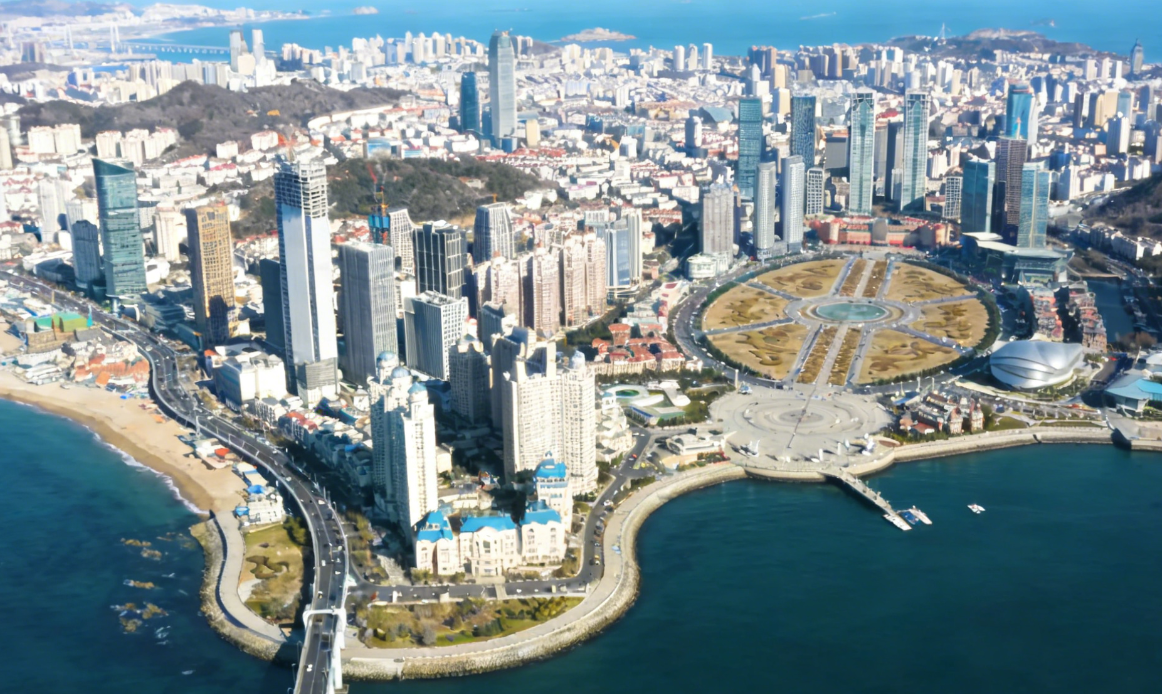
历史性突破!东北第一座万亿GDP城市,来了
3 6 Ke· 2026-01-26 02:58
Core Viewpoint - Dalian has officially entered the "trillion GDP club," becoming the first city in Northeast China to achieve this milestone, with a projected GDP of 10,002.1 billion yuan by 2025, reflecting a year-on-year growth of 5.7% at constant prices [1]. Economic Performance - In 2024, Dalian's GDP reached 9,516.9 billion yuan, indicating it was on track to become a trillion-yuan city [1]. - Dalian's GDP growth rate for the first three quarters of the previous year was 6%, showcasing a robust growth momentum [1]. - The city's second industry is expected to contribute 3,532.5 billion yuan to the GDP in 2025, with a growth rate of 7.7%, the highest among the three industries [3]. Industrial Growth - The industrial sector's steady growth is a crucial support for Dalian's achievement of a trillion GDP [4]. - The petrochemical industry saw an 8.9% increase in value added, while the equipment manufacturing sector grew by 15.4%, with the railway and shipbuilding industry experiencing a remarkable 57.5% growth [4]. - High-tech manufacturing grew by 13.9%, with computer and office equipment manufacturing surging by 78.2% and pharmaceutical manufacturing increasing by 30.9% [5]. Structural Transformation - Dalian's economic structure still relies heavily on petrochemicals, equipment manufacturing, shipbuilding, and electronic information, indicating a need for further industrial upgrading [6]. - The city is actively transitioning towards "smart manufacturing," with initiatives to enhance advanced manufacturing and foster specialized enterprises [6]. - Notable advancements include the launch of the world's first ultra-large turntable bearing and the completion of a domestic 450,000 tons/year polypropylene mixing and granulating machine [6]. Investment Trends - Manufacturing investment in Dalian is projected to grow by 2.8% in 2025, while infrastructure investment is expected to decline by 11.9% [6]. - Investment in technological transformation of industrial enterprises is anticipated to rise by 14.5% [6]. Emerging Industries - Dalian is focusing on developing new industry clusters, including advanced manufacturing, new-generation automobiles, high-end bearings, and rail transit, with expected outputs of 1,000 billion yuan, 200 billion yuan, and 180 billion yuan respectively [6]. - The city aims to develop new information technology and clean energy industry clusters, targeting outputs of over 2,000 billion yuan and 610 billion yuan [8]. Regional Significance - Dalian's entry into the trillion GDP club marks a significant breakthrough for Northeast China, with Shenyang expected to follow suit soon [9]. - The historical context shows that major cities in Northeast China have seen a decline in their national rankings, emphasizing the need for sustainable competitiveness [12][15]. - The revitalization of Northeast China is increasingly reliant on the leading role of its major cities, particularly Dalian and Shenyang [25][30].

“十四五”制造业高质量发展成果丰硕
Zhong Guo Hua Gong Bao· 2026-01-26 02:24
Core Insights - The article highlights six major achievements in China's manufacturing industry during the "14th Five-Year Plan" period, emphasizing high-quality development and innovation in the sector. Group 1: Economic Growth - The manufacturing value added in China is projected to grow from 26.6 trillion yuan to 33.6 trillion yuan from 2020 to 2024, contributing over 30% to global manufacturing growth during this period [1] - The annual growth rate of the equipment manufacturing industry is expected to be 7.9%, while high-tech manufacturing is projected to grow at 8.7% [2] Group 2: Innovation and R&D - By 2024, the proportion of R&D expenditure to operating income for large-scale manufacturing enterprises is expected to reach 1.82%, indicating a steady increase in innovation investment [1] - Key technological innovations in the chemical industry have supported major space missions, showcasing the advancements in industrial technology [1] Group 3: Industrial Structure and Optimization - The proportion of advanced manufacturing in the overall industrial structure is improving, with advanced manufacturing clusters being established in six key areas, including high-end equipment and new materials [1] - The number of national-level green factories has reached 6,430, reflecting a continuous increase in the green aspect of the industry [1] Group 4: Digital Transformation - The digital transformation of the manufacturing sector has shifted from leading benchmarks to large-scale promotion, with the establishment of various levels of smart factories, including 15 leading smart factories and over 35,000 basic smart factories [2] Group 5: Supply Chain Resilience - Significant breakthroughs have been made in key core technologies and strategic products, enhancing the resilience and safety of critical industrial chains, including integrated circuits and industrial mother machines [2] Group 6: SME Development - By 2025, the number of large-scale industrial enterprises is expected to increase by 138,000 compared to the end of 2020, with the number of specialized and innovative "little giant" enterprises reaching 17,600 [2] - The cumulative number of manufacturing champions is projected to reach 1,862, indicating a sustained enhancement in the vitality and competitiveness of small and medium-sized enterprises [2]
基本面托底 结构分化主导
Qi Huo Ri Bao· 2026-01-26 02:00
Group 1 - The core viewpoint indicates that the economic data for December 2025 shows a positive trend, suggesting a strong warming trend for the domestic economy in the first quarter of 2026 [1] - The manufacturing PMI rose to 50.1% in December 2025, marking a 0.9 percentage point increase from the previous month, indicating a return to the expansion zone for the first time since April 2025 [1] - The non-manufacturing business activity index also increased by 0.7 percentage points, reflecting a continuous recovery in non-manufacturing business vitality, although the service sector remains in contraction [1] Group 2 - In December 2025, the industrial added value for large-scale industries grew by 5.2% year-on-year and 0.4% month-on-month, demonstrating solid resilience in industrial production [2] - The manufacturing sector was the main driver of industrial growth, with a year-on-year increase of 5.7%, supported by the recovery in the manufacturing PMI [2] - Consumer demand showed marginal improvement with a year-on-year growth of 0.9% in retail sales, while fixed asset investment decreased by 3.8%, primarily due to a 9.6% decline in real estate development investment [2] Group 3 - The expectation for the first quarter of 2026 is a steady increase in domestic economic growth, characterized by "consumption driving, stable production, and financial support," with the IMF raising global economic growth forecasts [3] - Industrial production is anticipated to continue its recovery, with the added value of large-scale industries expected to maintain a year-on-year growth rate of over 5% [3] - The automotive industry may pose a drag on manufacturing due to a reduction in the new energy vehicle purchase tax, leading to a decline in electric vehicle sales in January 2026 [3] Group 4 - The A-share market is expected to exhibit a "fundamentals supporting, structural differentiation leading" pattern in the first quarter of 2026, with a focus on high-prosperity sectors [4] - The valuation pressure on the Shanghai Composite Index and the CSI 500 Index indicates a need for time to digest previous gains, while the ChiNext Index still holds some valuation advantages [4] - Overall, the market is likely to experience a phase of consolidation, with limited downside potential in a generally optimistic macroeconomic environment [4]
以创新驱动书写中国经济不凡答卷
Yang Shi Wang· 2026-01-24 05:14
央视网消息(焦点访谈):2025年,中国经济顶压前行,交出了一份优异的成绩单。从这份成绩单上可以看出,创新已经成为推动中国经济向新向优、高质 量发展的主要驱动力。从实验室的硬核突破到工厂的产线升级,从消费新场景的涌现到全球竞争力的重塑,创新是如何串起高质量发展全链条的,背后有着 怎样重要的政策支持?今天,我们就透过成绩单,来看创新驱动给2025年中国经济书写的答卷。 2025年,我国现代化产业体系加快建设,"新三样"产品出口增长27.1%,工业机器人出口增长48.7%,我国成为工业机器人的净出口国。以新质生产力为代 表的新动能不断壮大,创新驱动的增长格局加快形成。 国家统计局新闻发言人、国民经济综合统计司副司长王冠华:"中国经济在过去一年顶压前行、向新向优,不仅表现在我们的增长速度可圈可点,更表现在 中国经济发展的质量在稳步提升。去年,制造业增加值占国民经济的比重是稳定在25%左右,而且制造业高端化、智能化、绿色化发展的态势非常明显。" 制造业是大国经济的"压舱石"。2025年,我国规模以上装备制造业、高技术制造业增加值比上年分别增长9.2%和9.4%,占规模以上工业比重分别提升到 36.8%和17.1%。动 ...
140 万亿再出发!揭秘五年连破4个10万亿的经济增长王牌
2 1 Shi Ji Jing Ji Bao Dao· 2026-01-24 01:19
Economic Growth - By 2025, China's economy is projected to surpass 140 trillion yuan, marking a significant milestone with a steady annual growth rate of 5.4%, leading among major global economies [2] - The total retail sales of consumer goods are expected to exceed 50 trillion yuan, while imports and exports have maintained stability at around 40 trillion yuan for four consecutive years, showcasing the vitality of the super-large market [2] Industrial Upgrades - From 2020 to 2025, the proportion of high-tech manufacturing in the industrial sector has increased from 15% to 17%, indicating a significant shift towards intelligent manufacturing [2] - The production of new energy vehicles has surged from 1.456 million units five years ago to 16.524 million units, reflecting a tenfold increase and the rapid rise of emerging industries [2] Consumer Market - By 2025, the service sector's contribution to GDP is expected to rise to 57.7%, with consumer spending contributing an average of 60% to economic growth, solidifying its role as a stabilizing force [3] - There has been a shift in consumer behavior from purchasing goods to enjoying services, with service retail sales projected to grow by 5.5% year-on-year and per capita service consumption reaching 46.1% [3] Overall Economic Resilience - The past five years have demonstrated a robust development path for China, characterized by data growth, improved living standards, industrial upgrades, and thriving consumption, highlighting the resilience of the Chinese economy [3]
2025年福建GDP破6万亿元 民营经济支撑作用凸显
Zhong Guo Xin Wen Wang· 2026-01-23 17:26
Economic Overview - In 2025, Fujian Province's GDP is projected to reach 60,199.45 billion RMB, reflecting a 5% increase from the previous year at constant prices [1] - The primary industry value added is expected to be 3,354.37 billion RMB, growing by 3.6%; the secondary industry value added is projected at 25,497.34 billion RMB, with a growth of 5.1%; and the tertiary industry value added is anticipated to be 31,347.74 billion RMB, also increasing by 5.1% [1] High-Quality Development - The economic operation in Fujian Province is described as generally stable with progress, indicating stronger resilience and higher quality development [1] - Despite the positive outlook, uncertainties in the external environment and insufficient effective demand are noted as challenges that need to be addressed for sustained economic recovery [1] High-Tech Manufacturing Growth - The value added of high-tech manufacturing above designated size is expected to grow by 14.6%, with specific sectors such as aerospace and equipment manufacturing increasing by 22.9% and electronic and communication equipment manufacturing by 16% [1] - The digital transformation is accelerating, with the value added of digital product manufacturing above designated size projected to increase by 10.9% [1] - Production outputs for key products are expected to rise significantly, including liquid crystal display modules (25.7%), integrated circuit wafers (21.5%), semiconductor discrete devices (19.8%), and electronic components (9.5%) [1] Private Sector Contribution - In 2025, the value added of private industrial enterprises above designated size is projected to grow by 7.2%, surpassing the growth rate of the overall industrial sector by 0.7 percentage points, accounting for 62.8% of the total industrial value added [2] - The private sector is expected to contribute 69.9% to the growth of the industrial sector [2] Consumer Market Dynamics - Policies such as trade-in programs are expected to stimulate consumer potential, with retail sales of household appliances and audio-visual equipment projected to increase by 23.1% and new energy vehicle sales by 27% [2] - The equipment manufacturing sector is anticipated to strengthen its leading role due to increased efforts in equipment upgrades and renovations [2]
解码山东5.5%GDP增速的底层逻辑
经济观察报· 2026-01-23 14:59
Core Viewpoint - Shandong's GDP growth rate of 5.5% in 2025 reflects substantial economic quality, with significant contributions from the tertiary sector and industrial growth [2][3]. Economic Growth and Structure - In 2025, Shandong's GDP reached 10.3197 trillion yuan, marking it as the third province in China to surpass 10 trillion yuan [2]. - The tertiary sector's contribution to economic growth increased by 0.8 percentage points, accounting for 59.1% of the growth [2]. - The added value of the equipment manufacturing industry grew by 11.4%, with a 1.4 percentage point increase in growth rate compared to the previous year [2][6]. - Consumption growth in Shandong exceeded the national average by 1.4 percentage points [2]. Industrial Development - Shandong is recognized as a key industrial province, with a comprehensive industrial structure and significant contributions to national GDP [3][4]. - The province's industrial economy is projected to grow with a focus on traditional industry optimization, new industry cultivation, and future industry layout [6]. - In 2025, the added value of Shandong's industrial economy is expected to grow by 7.6%, with 36 out of 41 industrial categories showing positive growth [6]. Consumption Dynamics - In 2025, Shandong's total retail sales of consumer goods surpassed 4.2 trillion yuan, ranking third nationally with a growth rate of 5.1% [9]. - Online retail sales in Shandong reached 241.76 billion yuan, growing by 17.4%, significantly higher than the overall retail growth [9]. - The province implemented a consumption boost plan, allocating 50 million yuan to support local governments in issuing consumption vouchers [10]. Future Outlook - Shandong's per capita disposable income is projected to reach 44,180 yuan, with a nominal growth of 5.0% [10]. - The province aims to maintain rapid consumption growth by enhancing income levels and improving living standards [10].