外卖

Search documents
【环球财经】巴西外卖市场加速扩张 本地巨头iFood加码投资 美团滴滴加快布局
Zhong Guo Jin Rong Xin Xi Wang· 2025-08-09 05:51
Group 1: iFood's Expansion Plans - iFood plans to invest 17 billion reais (approximately 3.5 billion USD) from April 2025 to March 2026, significantly exceeding last year's investment [1] - The investment will focus on enhancing platform traffic, increasing user engagement, and expanding the operational team [1] - iFood aims to add 1,100 employees in the next year, with half of the new hires in technology roles, bringing total employees to over 8,600 [1] Group 2: Market Overview and Competition - The Brazilian food delivery market is valued at approximately 12 billion USD and is growing at around 20% annually [2] - Competitors like Meituan and Didi are accelerating their presence in Brazil, with Meituan's Keeta planning to invest 1 billion USD over the next five years [2] - Didi is reviving its 99 Food service, leveraging its existing resources of over 700,000 motorcycle riders and 50 million users [2] Group 3: Market Dynamics - The Brazilian food delivery market has been historically dominated by a single platform, but recent regulatory changes have diversified the competitive landscape [2] - The prohibition of exclusive agreements by Brazil's antitrust agency is expected to intensify competition among platforms [2] - Despite iFood's current market leadership, the ongoing investments and technological innovations from Meituan and Didi are likely to increase competition, benefiting consumers and merchants [2]



外卖补贴大战背后:骑手日工作超12小时 餐饮商家每单亏8元
Zhong Guo Xin Wen Wang· 2025-08-09 03:00
资料图:外卖小哥顶着烈日在北京街头骑车配送。中新社记者贾天勇摄 01 外卖骑手:每日工作超12小时 "单量明显增加"是外卖骑手最直观的感受。 "去年没有补贴的时候是限单,骑手每天限制不能超过45单或者50单,现在是限低,每天不能低于40单 或者45单。" 赵彰告诉记者,他从2020年年底来到北京,各平台的外卖都送过。"我在骑手里属于比较'极端'的,跑 起来稍微拼命一点。" 外卖订单激增下,赵彰的收入也水涨船高,上个月他跑了约2600单。"订单跟去年比几乎翻倍,我现在 的收入是去年同期的1.5倍,月收入差不多有2万多元。" "我等个奶茶等了一个多小时。"立秋这天,奶茶店爆单,奶茶店员和外卖小哥成了热搜里"立秋第一杯 奶茶的受害者"。 晚上六点,正值外卖点单的高峰期,"85后"外卖骑手赵彰(化名)同时打开美团、京东、饿了么三个平 台接单,并祈祷不同平台派送的单子尽量能在一个方向。另一边,餐饮店员面对着不断新增的外卖订 单,被外卖骑手催到崩溃。 今年以来,各平台掀起新一轮"外卖大战"。这场持续数月的"狂欢",对平台、餐饮商家和外卖骑手,究 竟意味着什么?中国新闻网《民生调查局》进行了采访调查。 不过,赵彰收入提升并 ...


内地大厂,抢滩香港
投中网· 2025-08-09 02:30
Core Viewpoint - Major internet companies are aggressively entering the Hong Kong market, viewing it as a strategic hub for expansion and brand penetration, significantly impacting local consumption patterns [4][5]. Group 1: Market Entry and Strategies - JD.com plans to acquire Hong Kong's well-known discount supermarket chain, Jia Bao, for approximately HKD 4 billion, indicating its commitment to the local market [6]. - Over 1,300 overseas and mainland companies have established a presence in Hong Kong from January 2023 to mid-2025, with nearly half coming from mainland China [6]. - Major players like Alibaba, Tencent, Meituan, ByteDance, and JD.com have set up operations in Hong Kong, with Pinduoduo launching direct mail services to the region [6][7]. Group 2: Competitive Landscape - The competition in Hong Kong's retail and e-commerce sectors is intensifying, with Meituan's Keeta entering the market and quickly gaining traction [8][9]. - The entry of mainland companies has led to a significant shift in the local market dynamics, with traditional players feeling threatened [9][10]. - Keeta has rapidly captured about 27% of the market share in the food delivery sector, competing closely with established players like Foodpanda and Deliveroo [19]. Group 3: Financial Investments and Subsidies - Keeta launched with aggressive subsidies, offering HKD 300 in coupons to new users, which resulted in high order volumes on its first day [11]. - Alibaba and JD.com have announced substantial investments in Hong Kong, with JD.com committing HKD 1.5 billion for logistics and service enhancements [12]. - The scale of subsidies in Hong Kong, relative to its smaller user base, is comparable to much larger investments in mainland China [12]. Group 4: Operational Challenges - High labor costs and complex logistics in Hong Kong present significant challenges for mainland companies, requiring substantial investment to establish efficient delivery networks [13][20]. - The market's unique characteristics, including high population density and strict regulations, complicate operations compared to mainland China [20][21]. - Despite the challenges, the potential for growth in Hong Kong's e-commerce and delivery markets remains attractive for these companies [22]. Group 5: Long-term Goals and Global Strategy - Success in Hong Kong is viewed as a testing ground for broader international expansion, with companies like Meituan already eyeing markets in the Middle East and beyond [24][25]. - The ability to adapt and thrive in Hong Kong's competitive environment is seen as a critical step for companies aiming to penetrate more complex global markets [23][24].



俄美首脑会晤将于15日在阿拉斯加举行;美股上涨,苹果市值一夜暴增9900亿元;北京再次优化住房限购政策 | 每经早参
Mei Ri Jing Ji Xin Wen· 2025-08-08 23:44
Group 1 - The U.S. stock market indices collectively rose, with the Dow Jones up 0.47%, Nasdaq up 0.98%, and S&P 500 up 0.78% for the week [4][10] - Notable technology stocks saw significant gains, with Apple rising over 4%, adding approximately $138.3 billion (about 99.34 billion RMB) to its market value, marking a 13% increase for the week [4][10] - The National Retail Federation reported an 8.4% year-on-year decline in U.S. imports in June due to tariff increases by the Trump administration [4] Group 2 - Beijing's housing policy was optimized, allowing families meeting certain criteria to purchase an unlimited number of properties outside the Fifth Ring Road starting from August 9, 2025 [2][8] - The housing fund loan limits were increased, with the maximum loan amount for the second home raised from 600,000 RMB to 1 million RMB, and the minimum down payment for the second home adjusted to no less than 30% [2][8] Group 3 - The China Securities Regulatory Commission (CSRC) plans to enhance the attractiveness and inclusivity of the domestic capital market, focusing on nurturing long-term and patient capital [8] - The CSRC aims to support "long money long investment" policies and improve the regulatory framework for listed companies to better serve high-quality development [8] Group 4 - The China National Space Administration announced new findings from the Chang'e 6 lunar sample research, revealing the "super restoration" state of the lunar mantle, indicating a more primitive state or past large impact influences [6] - The Ministry of National Defense emphasized the importance of the Fujian aircraft carrier in safeguarding national sovereignty and security [7]


外卖平台规范促销 商家缘何仍“爆单”?
Zhong Guo Jing Ying Bao· 2025-08-08 20:06
Core Viewpoint - The article discusses the ongoing competition among major food delivery platforms in China, particularly focusing on the recent promotional activities and regulatory responses aimed at curbing excessive subsidies and ensuring a healthier market environment [3][5][10]. Group 1: Promotional Activities - Major food delivery platforms, including Meituan, Taobao Shanguo (including Ele.me), and JD.com, have committed to "regulating promotions" following regulatory discussions [3][5]. - The "First Cup of Milk Tea in Autumn" promotion, which has become a staple marketing event since 2020, is set to take place on August 7, with Taobao Shanguo launching the event on July 31, featuring celebrity endorsements [4][6]. - Meituan followed suit by launching its own promotion on August 1, offering 1 million free milk teas, with various celebrities involved [4][6]. Group 2: Market Dynamics - The competitive landscape has shifted with JD.com entering the market in February, disrupting the previous duopoly of Meituan and Ele.me [11]. - The article highlights a significant increase in order volumes and sales for certain merchants, with one merchant reporting a nearly 50% increase in sales on August 2 compared to the previous day, largely driven by Taobao Shanguo's promotions [8][12]. - The promotional strategies have led to a notable increase in customer engagement, with some merchants experiencing a doubling of order volumes compared to earlier months [11][12]. Group 3: Merchant Perspectives - Merchants express mixed feelings about the promotional activities, noting that while the current promotions are less aggressive than previous "0 Yuan Purchase" campaigns, they still attract customers [6][9]. - Merchants are participating in large discount activities, often sharing the burden of subsidies with the platforms, which can impact their profitability [9][10]. - The article indicates that while some merchants may not profit significantly from low-cost items, higher-priced items can still yield profits despite the discounts [10][11]. Group 4: Regulatory Environment - The regulatory framework aims to address issues such as "false advertising" and "exclusive competition," while allowing platforms to innovate within compliance [10][13]. - Analysts suggest that the focus of the subsidy wars has shifted from merely acquiring users to increasing transaction frequency and extracting value from existing customers [13][14]. - The long-term challenge for platforms lies in balancing user demands for low prices with the need for sustainable profitability for merchants and fair treatment of delivery personnel [14].
A股晚间热点 | 北京再推楼市新政!地产新一轮政策开启?
智通财经网· 2025-08-08 14:34
Group 1 - Xi Jinping and Vladimir Putin discussed the current situation regarding the Ukraine crisis and emphasized the importance of political solutions, with China maintaining its consistent stance on promoting peace talks [1] - Both leaders praised the high level of political trust and strategic cooperation between China and Russia, agreeing to further develop bilateral relations and prepare for the Shanghai Cooperation Organization summit [1] Group 2 - Beijing's new real estate policy allows families to purchase an unlimited number of homes outside the Fifth Ring Road starting from August 9, 2025, indicating a potential shift in housing market regulations [2] - The policy aims to alleviate inventory pressure and stimulate economic growth while addressing population distribution and regional collaboration [2] - The maximum loan amount for second homes has increased from 600,000 yuan to 1 million yuan, with adjustments made to down payment ratios and loan eligibility criteria [2] Group 3 - The China Securities Regulatory Commission (CSRC) plans to enhance the attractiveness and inclusivity of the domestic capital market by fostering long-term and patient capital [3] - The CSRC aims to support the development of a policy framework for long-term investments and promote the entry of medium- to long-term funds into the market [3] Group 4 - The Shenzhen Stock Exchange is increasing support for the biopharmaceutical sector and other new productivity industries to aid in the construction of a modern industrial system [5] - This initiative is part of a broader strategy to align with national goals and promote high-quality development [5] Group 5 - The total cash dividends from A-share listed companies in 2024 are projected to reach 2.4 trillion yuan, reflecting a 9% increase from 2023 [6] - The trend of increasing cash dividends indicates a growing internal drive among companies to provide predictable cash flow returns to investors [6] Group 6 - In July, the penetration rate of new energy vehicles in China's overall passenger car retail market reached 54%, a 2.7 percentage point increase year-on-year [8] - Domestic brands led the market with a penetration rate of 74.9%, while luxury and mainstream joint venture brands showed varying performance in the new energy segment [8] Group 7 - The U.S. stock market saw collective gains, with the Dow Jones up 0.46%, the Nasdaq up 0.6%, and the S&P 500 up 0.59% [9] - Gilead Sciences experienced a significant stock increase of over 7% following a positive earnings report, indicating strong market performance [10] Group 8 - The U.S. government has canceled a major wind power project, reflecting ongoing restrictions on renewable energy initiatives under the Trump administration [11] - This decision has led to a decline in stock prices for several wind energy companies, highlighting the impact of regulatory changes on the sector [11] Group 9 - Morgan Stanley has revised its forecast, now expecting the Federal Reserve to cut interest rates three times in 2025, indicating a potential economic slowdown [12] - Recent employment data suggests a significant deceleration in the U.S. economy, prompting this shift in monetary policy outlook [12]

美团8月8日全情报分析报告:「快手上线外卖挑战美团」对股价有积极影响
36氪· 2025-08-08 13:34
Core Viewpoint - The article discusses the competitive landscape of Meituan in the food delivery market, particularly in light of its collaboration with Kuaishou, and highlights both the potential benefits and challenges this partnership may bring to Meituan's stock performance [6][13]. Market Performance Summary - On August 8, Meituan's stock experienced a decrease of 0.98%, closing at 120.80, with a trading volume of 21.91 million shares and a turnover rate of 0.40% [5][6]. - The stock's three-day and five-day declines were recorded at -1.71% and -1.14%, respectively, with a total market capitalization of 738.21 billion [6]. Competitive Landscape Analysis - Kuaishou has introduced a new independent "takeout" entry in its app, utilizing a "Meituan supply chain + Kuaishou traffic" model, which may enhance Meituan's market reach [7][15]. - Despite being the leader in the food delivery sector, Meituan faces significant competition from platforms like Douyin and Kuaishou, which could dilute its advertising budget and user growth potential [7][15]. Sentiment Analysis - As of August 8, the event related to Meituan and Kuaishou generated a total of 808 pieces of online sentiment data, with 33.4% being positive, 31.4% negative, and 35.2% neutral, indicating a generally positive sentiment trend [8]. - The primary channel for this sentiment was WeChat, accounting for 68.19% of the total dissemination [10]. Impact Analysis - Short-term, the collaboration with Kuaishou may stimulate Meituan's stock price due to positive market expectations regarding new business expansion and traffic influx [13]. - Long-term, Meituan must address its low net profit margin of 2.8% in the food delivery segment and effectively leverage its partnership with Kuaishou to sustain growth and positively influence stock performance [13][15]. Business Expansion and Delivery Service Analysis - The partnership allows Meituan to tap into Kuaishou's large user base, potentially increasing order volume and market share, which is a positive factor for stock performance [15]. - The diversified delivery model, utilizing either Meituan or third-party services, could enhance delivery efficiency and user experience, fostering customer loyalty [15]. Profit Structure and Competition Pressure - Meituan's low profit margin in the food delivery sector raises concerns about its overall profitability, which could negatively impact investor confidence and stock price [15]. - The competitive pressure from other platforms may hinder Meituan's market expansion and advertising effectiveness, leading to potential investor apprehension regarding future profitability [15].

快手,杀入外卖
Zhong Guo Ji Jin Bao· 2025-08-08 13:24
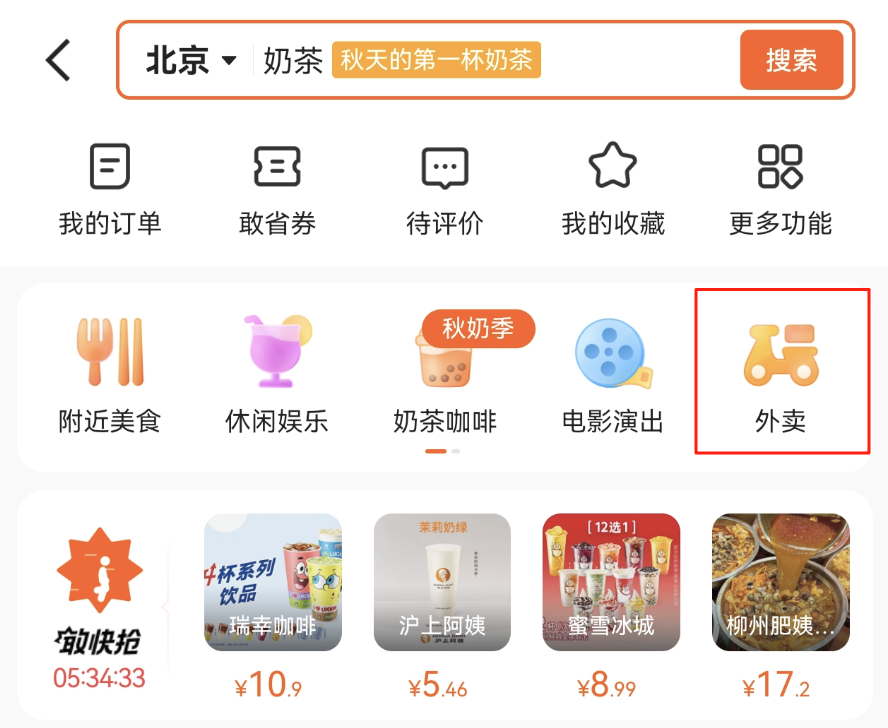
Core Insights - Kuaishou has launched an independent "takeout" entry on its group buying page, indicating its entry into the competitive food delivery market [1][3] - The takeout products primarily feature vouchers from Meituan, with some requiring orders to be placed in live streaming sessions [3][7] - Kuaishou's takeout business has seen a significant increase, with the number of paying users for local takeout products growing over three times quarter-on-quarter in Q2 [7] Group 1: Kuaishou's Strategy - Kuaishou's takeout offerings are mainly based on third-party collaborations, focusing on promoting quality dining products, with plans to expand the range of merchants and categories [7] - The acceleration of Kuaishou's takeout business aligns with its "New Tier Cities + AI" strategy, emphasizing the use of AI technology to reconstruct local service chains [8] - Industry experts suggest that Kuaishou needs to overcome challenges related to delivery speed, merchant availability, and user habits to succeed in the takeout market [8] Group 2: Competitive Landscape - Other major players in the food delivery sector, such as Douyin, are also enhancing their services, with Douyin upgrading its group buying delivery to "随心团" [8][9] - The food delivery industry is experiencing intense competition, with major platforms like Meituan, Taobao, Ele.me, and JD launching high-value subsidies to attract consumers and merchants [11] - Recent regulatory actions have prompted major platforms to call for more rational competition and to avoid disorderly promotional behaviors [11]

快手,杀入外卖!
Zhong Guo Ji Jin Bao· 2025-08-08 13:04
Core Insights - Kuaishou has launched an independent "takeout" entry on its group buying page, indicating its entry into the competitive food delivery market [2] - The takeout channel primarily features product vouchers from Meituan, with some products requiring orders to be placed in live streams, where merchants provide delivery services [2][10] Group 1: Kuaishou's Takeout Strategy - Kuaishou's takeout offerings are mainly based on third-party collaborations, focusing on promoting quality dining products, with plans to expand the range of merchants and categories in the future [10] - In Q2 of this year, the number of paying users for Kuaishou's local takeout products increased by over 300% compared to the previous quarter [10] - Kuaishou's strategy aligns with its 2025 vision of leveraging "new tier cities + AI" to reconstruct local service chains [10] Group 2: Industry Competition - Industry experts suggest that for Kuaishou to succeed in the takeout market, it needs to quickly implement a mixed model of "third-party + self-operated" delivery and shift user perception from "entertainment traffic" to "instant consumption" [11] - Other major players in the food delivery sector, such as Douyin, are also enhancing their services, with Douyin upgrading its group buying delivery to "随心团" [11] - The food delivery industry is experiencing intense competition, with major platforms like Meituan and Ele.me engaging in aggressive promotional activities, leading to calls for more rational competition practices [12]
快手,杀入外卖!
中国基金报· 2025-08-08 12:56
Core Insights - Kuaishou has launched an independent "takeout" entry on its group buying page, indicating its entry into the competitive food delivery market [1][3] - The takeout products primarily feature vouchers from Meituan, with some requiring purchases during live broadcasts [4][9] - Kuaishou's takeout business is mainly based on third-party collaborations, focusing on promoting quality dining products, with plans to expand the range of merchants and categories [9] Group 1: Kuaishou's Takeout Strategy - Kuaishou's takeout product payment user count has increased over three times quarter-on-quarter in Q2 this year [9] - The takeout service was initially launched in June 2024 without a dedicated entry, requiring users to search for takeout items under "group buying discounts" [9] - The acceleration of Kuaishou's takeout business aligns with its 2025 strategy of "New Tier Cities + AI," aiming to reconstruct local service chains using AI technology [9] Group 2: Competitive Landscape - Industry experts suggest that Kuaishou needs to achieve a breakthrough in its fulfillment capabilities by implementing a mixed model of "third-party + self-operated" services [10] - Kuaishou's advantages include a large user base and a solid presence in lower-tier markets, but it faces challenges such as slow delivery, limited merchants, and user habits [10] - Other major players like Douyin are also enhancing their food delivery services, with Douyin upgrading its group buying delivery to "Flexible Group" in November 2024 [10] Group 3: Market Dynamics - The food delivery industry is witnessing intense competition, with major platforms offering high subsidies to attract consumers and merchants [12] - Regulatory bodies have urged platforms like Ele.me, Meituan, and JD to engage in rational competition and promote healthy development in the restaurant service industry [12] - The "first cup of milk tea" marketing campaigns have intensified among delivery giants, with significant promotional activities launched in August [12][13]