
美妆

Search documents
第九届进博会招展启动,40余家企业已正式签约
Bei Ke Cai Jing· 2025-07-25 14:27
Group 1 - The ninth China International Import Expo (CIIE) has officially launched its exhibition recruitment, with over 40 companies signing up as the first exhibitors, covering an exhibition area of 30,000 square meters [1] - Notable companies participating include GE Healthcare, Novartis, Honeywell, Mitsubishi Electric, Jaguar Land Rover, L'Oréal, and HSBC, with many being "full attendance" exhibitors for nine consecutive years [1] - GE Healthcare plans to showcase over 10 new products at the eighth CIIE, focusing on early detection and precise diagnosis of major diseases [1] Group 2 - The Hong Kong Trade Development Council has organized nearly 400 Hong Kong companies to participate in the CIIE over the past seven years, with a total exhibition area of nearly 10,000 square meters [1] - L'Oréal is set to debut new brands and technologies at the eighth CIIE, with the largest exhibition area among personal care companies [1] - Bayer has showcased over 50 new products at the CIIE in the past seven years and will present an 800 square meter double booth this year [1] Group 3 - New Zealand's Fonterra will launch three categories of globally debut products at the eighth CIIE and is among the first exhibitors for the ninth CIIE [2] - Boston Scientific will present over 80 innovative products at the eighth CIIE, including five new products targeting specific health issues [2] - Sonova, a global leader in hearing care, will make its debut at the CIIE, showcasing innovative hearing health technologies and its achievements in China [2]
40余家“首批”签约第九届进博会,多领域新品首秀在即
Guo Ji Jin Rong Bao· 2025-07-25 13:35
Group 1: Event Overview - The ninth China International Import Expo (CIIE) has officially launched its exhibition recruitment, with over 40 companies signing contracts, covering an exhibition area of 30,000 square meters [1] - The eighth CIIE has signed contracts for over 330,000 square meters of exhibition space, with 170 companies and 27 institutions recognized as "full attendance" participants [2] - The event will feature participation from 60 overseas exhibition groups from 40 countries and regions, with record-high participation from countries like Canada, Malaysia, New Zealand, Norway, and Peru, reflecting confidence in the Chinese economy [2] Group 2: Exhibitor Highlights - L'Oréal, a long-time exhibitor, will showcase new brands and technologies, marking the largest debut scale in its history, and will celebrate the 20th anniversary of its R&D center in China [6] - New Zealand's Fonterra will globally launch three new product categories, including "A2 Grass-fed Pure Milk," targeting the health-conscious Chinese consumer market [9][10] - Medtronic will present over 100 innovative medical technology products, including six global debuts, emphasizing the transformation of exhibition items into market products [20][24] Group 3: Innovation and New Products - The eighth CIIE will introduce a special area for products from least developed countries and a "cross-border e-commerce selection platform" [2] - Siemens Healthineers will showcase its largest exhibition area to date, featuring groundbreaking medical technologies such as the world's first life-sensing PET/MR system [20] - Abbott will debut its breakthrough cardiovascular technology, the Diamondback 360™ system, which aims to improve treatment reliability for coronary artery blockages [21]



伊利股份+恩和生物,生物制造大动作!
合成生物学与绿色生物制造· 2025-07-25 09:53
Core Insights - The establishment of Hefei Ian Biotechnology Co., Ltd. with a registered capital of 10 million yuan focuses on the manufacturing and research of bio-based materials, indicating a growing interest in sustainable materials in the industry [1][3]. Group 1: Company Overview - Enhe Biotechnology, founded in 2019 and headquartered in Hangzhou, has become a prominent player in the capital market, utilizing a high-throughput experimental platform to optimize biological engineering for industrial applications [3][4]. - The company has completed over $145 million in financing by 2025 and was recognized as one of the "50 Smartest Companies" by MIT Technology Review in 2020 [4]. Group 2: Strategic Collaborations - In May 2023, a strategic partnership was formed between domestic beauty giant Proya and Enhe Biotechnology, focusing on AI-driven bio-manufacturing technologies for cosmetic ingredient development [5][7]. - This collaboration aims to innovate in the realm of bioactive ingredients for cosmetics, promoting a shift towards efficiency, safety, and sustainability in the beauty industry [7]. Group 3: Industry Movements - Yili Group, a leading dairy company in China, is venturing into synthetic biology, seeking investment opportunities in early-stage innovative companies within the health food sector [8][10]. - Yili has established a venture capital fund with a total subscription amount of 20 million yuan, focusing on high-tech innovations in the health sector, particularly in food science and life sciences [10][11]. Group 4: Sustainability Initiatives - Yili has been actively pursuing sustainable development, as evidenced by its collaboration with Xampla to test a new plant-based packaging material aimed at preserving nutrients in dairy products [12][15]. - The company emphasizes a commitment to a sustainable future while achieving steady business growth [15]. Group 5: Upcoming Events - The 2025 Synthetic Biology and Green Bio-Manufacturing Conference (SynBioCon 2025) will be held from August 20-22 in Ningbo, Zhejiang, focusing on AI and bio-manufacturing, green chemicals, new materials, future food, and agriculture [17][19]. - The conference will feature various activities, including forums, discussions, and showcases of synthetic biology innovations [17][18].


日系消费品牌正在大举进入中国低线城市
3 6 Ke· 2025-07-25 02:03
Core Insights - Japanese consumer brands are increasingly targeting lower-tier cities in China, aligning with their low-key and meticulous approach [1] Group 1: Market Expansion - Shiseido is focusing on lower-tier cities like Heze, Shandong, which has a population of over 8 million, to tap into the potential of these markets [2] - Other Japanese beauty brands, such as Kose and Kanebo, are also entering lower-tier cities, with Kose opening a counter in Fuyang, Anhui, and Kanebo in Taizhou, Jiangsu [2] - Uniqlo plans to open 80-100 new stores annually in China, with over half in third-tier and below cities, having already established stores in cities like Meishan and Zunyi [3] Group 2: Unique Strategies - Lawson is adopting a unique strategy by acquiring and rebranding local family-run stores, known as "Lawson Little Stations," to penetrate the vast individual grocery market in China [4] - The number of "Lawson Little Stations" has reached 200, with a low franchise fee to encourage local partnerships [4] - This strategy allows Lawson to navigate regulatory challenges and focus on lower-tier cities, where competition is less intense [4] Group 3: Market Potential - The population in third-tier and below cities exceeds 1 billion, representing over 70% of China's total population, indicating significant consumer potential [6] - There is a clear trend of consumption upgrading in lower-tier cities, with consumers increasingly seeking quality and brand recognition, providing a broad market space for Japanese brands [6] - Uniqlo's stores in lower-tier cities have become popular destinations, demonstrating strong consumer interest [6] Group 4: Challenges - Japanese brands face intense competition from local brands in lower-tier cities, which have established a strong presence with high cost-performance products [7] - The distribution channels in lower-tier cities are complex and fragmented, posing challenges for brand promotion and market penetration [7] - Consumers in these markets are more price-sensitive, necessitating adjustments in pricing and marketing strategies for Japanese brands [7]
年薪最高120万抢人!渠道战打响
Zhong Guo Ji Jin Bao· 2025-07-25 00:16
Core Insights - Major beauty companies are aggressively recruiting OTC channel professionals, indicating a strategic shift towards OTC as a growth area in the beauty industry [2][4] - The OTC channel is expected to become a key growth engine for the industry in the next 3-5 years, driven by policy changes, market demand, and channel transformation [4][5] - The beauty sector is experiencing a talent and capital influx into OTC, with salaries for OTC positions significantly higher than traditional channels [4][6] Industry Trends - The number of drugstores in China exceeds 700,000, presenting a substantial market opportunity for beauty products, especially given the low current penetration rate of beauty products in drugstores [5] - The success of brands like Winona, which saw OTC sales grow from 500,000 yuan in 2016 to over 1 billion yuan in 2024, highlights the potential of the OTC market [6] - The beauty industry's gross margin exceeds 60%, making it an attractive category for drugstores facing declining profits in traditional pharmaceutical sales [6] Recruitment and Talent Dynamics - Beauty companies are restructuring their recruitment strategies for OTC channels, seeking candidates with a deep understanding of healthcare policies and market management [7][11] - The market is currently facing a shortage of professionals who possess both beauty and OTC distribution expertise, leading to high salary offers for qualified candidates [11][12] - Companies are establishing dedicated OTC divisions, indicating the channel's importance as a core strategic unit requiring independent investment and specialized strategies [11] Challenges and Market Dynamics - The entry into the OTC market is not straightforward, as beauty companies must navigate high channel costs and the need for significant product discounts to retailers [13] - Drugstores face challenges in selling beauty products due to customer behavior and the need for specialized product selection and marketing strategies [14] - The competition in the OTC space is characterized by a complex interplay of resources, brand identity, and operational capabilities, necessitating a comprehensive restructuring for beauty brands [15]

年薪最高120万抢人!渠道战打响
中国基金报· 2025-07-25 00:09
Core Viewpoint - The beauty giants are aggressively recruiting OTC channel professionals, indicating a significant shift in strategy towards OTC channels as a new growth engine in the beauty industry, driven by policy changes, market demand, and channel transformation [2][3]. Recruitment Trends - Major beauty companies like Proya, Shiseido, and Betaini are actively hiring for OTC-related positions, with salaries 30% to 50% higher than traditional cosmetic channels [5]. - The interest in OTC channels is expected to grow significantly, with projections indicating that by 2025, domestic beauty brands will heavily invest in OTC as a new growth area [5]. Market Dynamics - The OTC channel is evolving from a marginal space to a strategic focus for beauty giants, with the potential to become a primary growth driver in the next 3 to 5 years [3]. - The number of pharmacies in China exceeds 700,000, presenting a substantial market opportunity compared to the low beauty penetration rate of 0.5% in pharmacies [6]. Policy and Economic Factors - Recent policy relaxations, such as the Beijing Drug Administration's guidelines allowing pharmacies to sell cosmetics, have opened new avenues for beauty brands [5]. - The economic pressures on pharmacies, including profit declines due to healthcare cost controls, make beauty products, which have a gross margin exceeding 60%, an attractive option for pharmacies [7]. Sales Growth Examples - The OTC sales of the brand Winona have surged from 500,000 yuan in 2016 to over 1 billion yuan in 2024, showcasing the potential for growth in this channel [8]. Recruitment Requirements - The recruitment for OTC positions emphasizes the need for a deep understanding of healthcare policies and market strategies, with salaries for qualified candidates ranging from 50,000 to 80,000 yuan annually [10]. - The establishment of dedicated OTC divisions within beauty companies indicates a shift towards treating OTC as a core strategic unit requiring specialized investment and organizational structure [10]. Challenges in the OTC Market - The entry into the OTC market is not straightforward, as beauty companies face challenges such as high channel costs and the need to sell products at significant discounts to pharmacies [12]. - Pharmacies also face barriers in selling beauty products, including a lack of specialized selection and weak operational capabilities [12]. Conclusion - The entry of beauty brands into the OTC market represents a complex interplay of resources, capabilities, and market dynamics, necessitating a comprehensive restructuring of product logic and organizational capabilities [12].

美妆品牌加速中国布局,新品、新店升级消费体验
Sou Hu Cai Jing· 2025-07-24 15:09
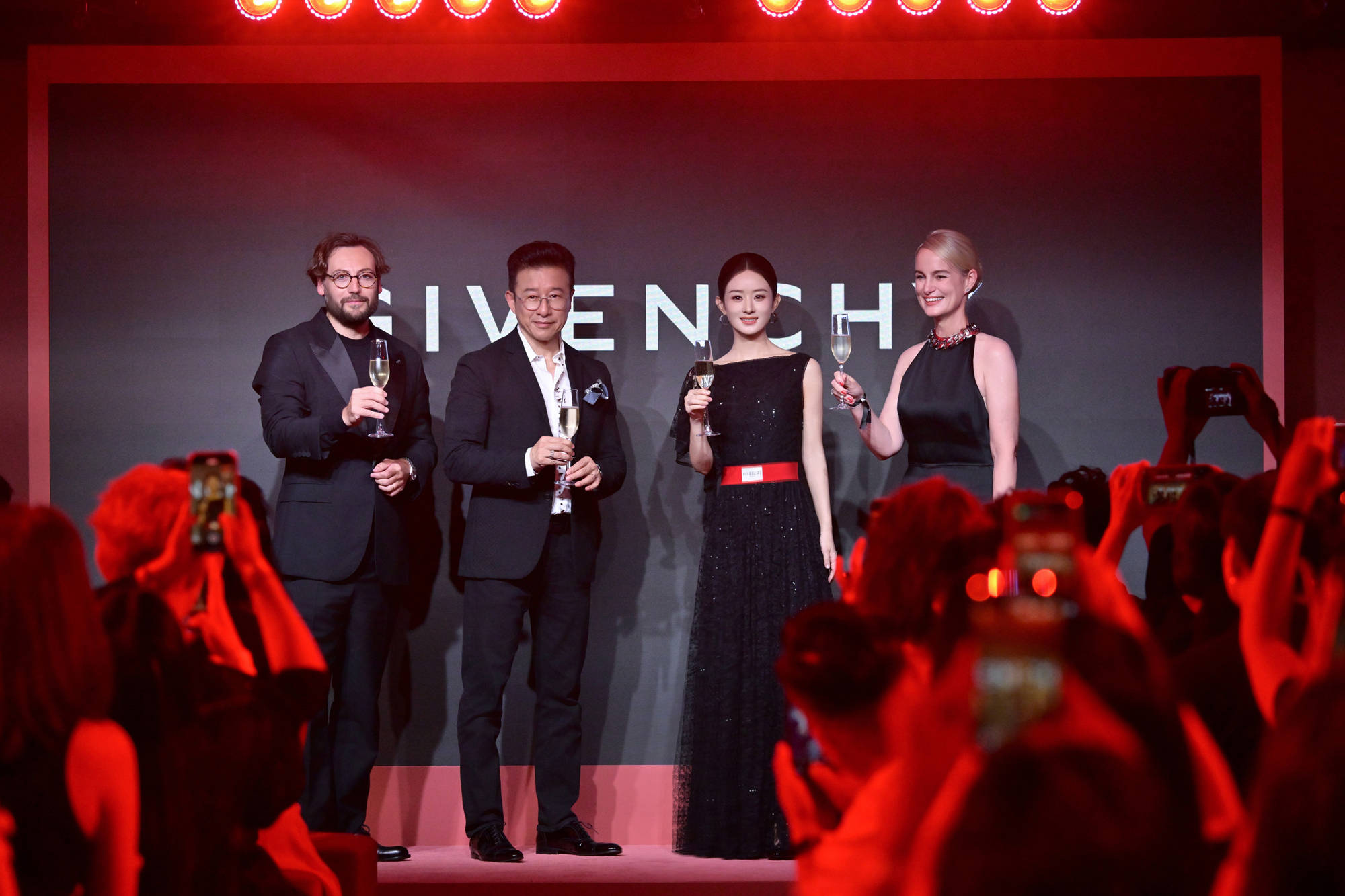
Group 1: Market Overview - The international beauty brands are optimistic about the domestic beauty and fragrance market in China, accelerating their expansion through new product launches and store openings to enhance summer consumer experiences [1] Group 2: Givenchy Beauty Launch - Givenchy Beauty recently held a high-end lip event in Shanghai, unveiling the new "G Tube" lipstick, marking a new chapter for the brand [2] - The Chief Brand Officer of Givenchy Beauty, Yann Musquin, highlighted the brand's commitment to innovation and tradition during the event [2] - The importance of the "G Tube" launch in China was emphasized by Eva Hoffmann, Deputy General Manager of Givenchy Beauty China [2] Group 3: Female Empowerment and Brand Identity - LVMH's China President, Wu Yue, shared insights on contemporary women's self-expression and individuality, engaging in discussions with influential female representatives [3] - Global makeup ambassador Zhao Liying endorsed Givenchy's boundary-breaking style, encouraging modern women to showcase their multifaceted beauty [3] Group 4: Immersive Experience at Givenchy Event - The event featured multiple themed exhibition halls inspired by Givenchy's Parisian fashion house, allowing guests to experience the new "G Tube" lipstick and appreciate the brand's heritage [5] - Attendees could enjoy a unique lip makeup experience with the new 12-color "G Tube" and access personalized engraving services [5] Group 5: New Store Opening for Parfums de Marly - Parfums de Marly opened its first boutique in Southwest China at Chengdu SKP, marking a new chapter in sensory experiences [6] - The brand's philosophy combines art and craftsmanship, redefining perfume as "wearable haute couture" [8] Group 6: Boutique Design and Experience - The Chengdu boutique is inspired by the "fragrance wardrobe" concept, blending Parisian architectural aesthetics with local elements to create an immersive experience [8][9] - Each fragrance is presented as a wearable art piece, with personalized engraving services enhancing the luxury experience [9] Group 7: Expansion Strategy - The opening of the Chengdu store completes Parfums de Marly's strategic layout across major economic regions in China, with plans to enter the Northwest market by opening a store in Xi'an SKP later this year [11]
鲁企“链”动 制造向品牌跨越
Zhong Guo Xin Wen Wang· 2025-07-24 11:07
Group 1 - The event showcased four Shandong enterprises as examples of transitioning from a "manufacturing province" to a "brand strong province" [1][3] - The companies emphasized "chain development" to enhance industrial competitiveness, with Furuida Bio focusing on a full industry chain in the beauty sector, holding over 170 patents and participating in over 30 national standards [3][4] - Hisense Group is expanding from home appliances to high-end industries like semiconductors and smart energy, planning to drive investment or expansion in 25 related enterprises by 2024 [3][4] Group 2 - Furuida Bio aims to create a dual beauty ecosystem through its brand matrix, with a planned output value of 5 billion yuan for its innovation park in 2024 [4] - Hisense is innovating for overseas markets, exemplified by a custom black mirror refrigerator for South Africa, and has maintained the second position in global TV shipments for three consecutive years [4] - Shandong has cultivated 427 brands through systematic initiatives, with 80% of major technology projects in 2024 being undertaken by enterprises in collaboration with universities [4]




广州美妆产地仓提速:应对爆款发货,分货时间缩短近九成
Nan Fang Du Shi Bao· 2025-07-24 09:27
Core Insights - The beauty industry is entering a competitive phase focused on supply chain efficiency, with KJ Logistics opening a flagship warehouse in Guangzhou Baiyun District, enhancing logistics capabilities for domestic beauty brands [1][2] Group 1: Supply Chain Efficiency - KJ Logistics' new warehouse reduces inbound time from 4 hours to 30 minutes, significantly improving logistics efficiency for beauty brands during peak sales periods [2][3] - The warehouse is strategically located near production bases and distribution centers, allowing for lower logistics costs and faster delivery times [2][3] Group 2: Dynamic Inventory Management - KJ Logistics has implemented a system that connects directly with brand systems to manage inventory dynamically, addressing the challenges of unpredictable sales for "hot products" [3][4] - The warehouse features dedicated production lines for "hot products," utilizing automated packing and sealing technologies to enhance efficiency [3][4] Group 3: Market Positioning and Capacity - KJ Logistics has developed semi-automated packing systems and full-chain expiration management systems tailored to the beauty industry's specific needs [4][6] - The warehouse can handle up to 60,000 orders daily, with the capacity to expand to 200,000 orders during peak times, providing flexible production capabilities [6][7] Group 4: Economic Impact - The operation of the new warehouse is expected to create numerous job opportunities and stimulate growth in related industries such as packaging and transportation [7] - KJ Logistics aims to upgrade its technology continuously, positioning the Baiyun warehouse as a national model for "technology logistics empowering industrial zones" [7][8]
福瑞达生物:以品牌文化塑造消费认知,致力引领国货美妆高质量发展
Zhong Guo Fa Zhan Wang· 2025-07-24 08:23
Core Insights - The article highlights the achievements and strategic direction of Furuida Bio, emphasizing its leadership in the beauty industry through technological innovation and brand development [1][2][3][4][6] Group 1: Company Overview - Furuida Bio, established in 1998 and part of the Lushang Group, has evolved into a comprehensive beauty company covering skincare, makeup, fragrance, and more, with over 170 patents and numerous industry awards [2][4] - The company has achieved significant sales milestones, with its flagship product, the Yilian spray, selling over 50 million bottles annually and expanding into over 10 countries [1][2] Group 2: Strategic Initiatives - Furuida has adopted a "5+N" brand development strategy, focusing on five key brands while integrating technology and culture to enhance brand identity and market presence [3][4] - The company is investing in new technologies and materials, aiming for high-end transformation, with plans for a collagen production line projected to generate 1 billion yuan annually [2][4] Group 3: Digital Transformation - Furuida is advancing its digital transformation by implementing systems for manufacturing execution and product lifecycle management, resulting in a 16% increase in production efficiency [4][6] - The company is building a marketing data platform to enhance decision-making across multiple brands and channels, reflecting its commitment to a data-driven approach [4][6]

