
动力电池

Search documents
城记 | “新能源之都”常州:一座“万亿之城”与它的“万亿产业地标”
Xin Hua Cai Jing· 2026-01-23 06:27
Core Insights - Changzhou is set to achieve a scale of 1.0479 trillion yuan in its new energy industry by 2025, marking a significant transformation from a traditional industrial hub to a modern industrial center [1][2] - The city has been on a 16-year journey to become a "New Energy Capital," with strategic initiatives starting in 2009 and culminating in 2023 when the new energy sector contributed nearly 50% of the city's industrial output [2][3] - By 2025, Changzhou aims for a "double trillion" goal, with both the new energy industry and the capital market's new energy sector exceeding one trillion yuan [3] Industry Development Timeline - In 2009, Changzhou launched the "Action Plan for Revitalizing Five Major Industries," marking its entry into the new energy sector [2] - By 2023, the new energy industry generated 768.1 billion yuan, accounting for almost half of the city's industrial output and contributing 98.9% to industrial growth [2] - In 2024, Changzhou was recognized as "China's New Energy Capital," solidifying its position in the national new energy landscape [2] Government and Investment Strategies - The shift from a "land finance" model to a "equity finance" model is emphasized, where local governments are encouraged to act as "angel investors" to attract social capital into high-tech industries [5] - Changzhou's government played a crucial role in revitalizing struggling companies like China Aviation Lithium Battery, which turned around after receiving strategic investments [6] Industry Ecosystem and Collaboration - Changzhou has developed a highly collaborative new energy industry map, with major players like CATL and other battery manufacturers establishing a strong presence [7][8] - The city has created an industrial ecosystem that integrates production, storage, transmission, application, and networking, positioning itself as a leader in the new energy sector [8] Future Prospects - By 2025, the production capacity for power batteries in Changzhou is expected to exceed 212.9 GWh, making it a top player in Jiangsu and among the top three nationally [8] - The city is also recognized as a pilot city for electric vehicle electrification in the public sector, further enhancing its reputation in the new energy domain [8]
懂花钱的年轻人在哪儿,时髦的家乡就在哪儿
3 6 Ke· 2026-01-23 02:19
曾几何时,潮流趋势总是从北上广深向四面八方扩散,一个概念、一种风味、一件单品,要完成从一线到五线的普及,所需时间常常以年为单位。 然而若你留心观察,不难发现,自己的家乡可能早已成为新的爆款发源地。 比如,云贵川的独特风味,通过Bistro(小酒馆)在全国各地遍地开花。贵州酸汤火锅从"小众口味"直达火锅圈顶流;云南菌子火锅凭借鲜香和高颜值迅 速成为火锅界的"漂亮饭";东南沿海,潮州人将一杯工夫茶喝到出神入化,也让"鸭屎香"这个名字令人费解的茶种,成为了全国茶饮店里的爆款基底。 视线转向北方,内蒙古最寻常不过的奶皮子,在某个冬日与街头小吃冰糖葫芦意外相遇,旋即成为上海、北京街头最甜蜜的风景线,引得无数人甘愿在寒 风中排起长队。 小城的独特风情,正在悄然重塑着一线城市的审美与喜好。而那些过去常常被人忽略的小城,也正在成为新的消费热土。 01 如果在几年前提"回老家",还总是与一些无聊、单调、低消费的刻板印象绑定。和大城市相比,家乡就像退而求其次的选择,掀不起多少波澜。 但如今,家乡小城的形态已经变得鲜活而灵动。2024年底,《经济学人》杂志提出了一个有趣的中国城市观察,即"二、三线城市正在崛起,成为中国未 来城市的 ...

欧美动力电池行业“凛冬”已至
Zhong Guo Qi Che Bao Wang· 2026-01-23 01:05
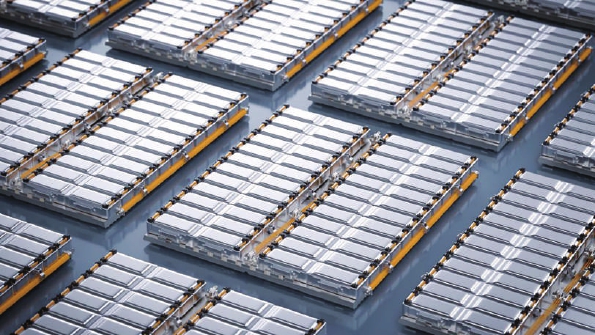
Group 1 - A significant downturn is affecting the European and American power battery industry, highlighted by major cancellations of battery orders and investment reductions from key players like Ford and Volkswagen [2][3][5] - Ford has canceled a battery agreement worth 9.6 trillion won with LG Energy Solution and exited a joint venture with SK On, which collectively represents over half of LG's projected sales for 2024 [3][4] - LG Energy Solution is also delaying production plans for its Michigan plant and has paused operations at its Ultium battery factory due to the cooling electric vehicle market [4][5] Group 2 - The European market is experiencing similar challenges, with companies like Britishvolt and Northvolt facing bankruptcy, and Porsche halting its battery development plans due to market pressures [5][6] - The demand for electric vehicles is projected to decline significantly, with global sales growth expected to drop to 13% by 2026, marking the lowest increase since the pandemic [7][9] - Policy changes, such as the termination of federal tax credits in the U.S. and the potential cancellation of the EU's ban on combustion vehicles, are contributing to the slowdown in electric vehicle demand [7][8] Group 3 - The cancellation of battery orders reflects a broader trend of automakers scaling back their electric vehicle strategies, leading to potential overcapacity and financial strain on battery manufacturers [6][7] - The energy storage battery market is emerging as a new growth opportunity for lithium battery companies, with predictions of significant market expansion by 2030 [10][11] - Companies like Samsung SDI are pivoting towards energy storage solutions, indicating a strategic shift in response to the current challenges in the power battery market [10][11]
多部门部署规范招商引资,“反内卷”制度性政策将落地
Di Yi Cai Jing· 2026-01-22 13:35
廖岷表示,下一步,将持续完善专班工作机制,加强信息共享和监管协同,健全财政补贴规范管理制度 体系,深入推进清理规范工作。同时也会压实属地责任,加强监督管理,对违规问题发现一起、纠治一 起,坚决整治"内卷式"无序竞争。 与以往不同,此次并非单纯的行政手段,而是从制度上优化竞争机制。 纵深建设全国统一大市场、深入整治"内卷式"竞争,正迎来密集的政策部署。与以往不同,此次并非单 纯的行政手段,而是从制度上优化竞争机制,推动经济高质量发展。 第一财经记者注意到,近几日,国家发改委、财政部、工信部、市场监管总局接连对"反内卷"发声,从 加强重点行业产能治理、规范财政补贴等多个方面作出部署。全国统一大市场建设条例、妨碍建设全国 统一大市场事项清单、招商引资鼓励和禁止事项清单等政策文件有望出台,"反内卷"将有更多的法治保 障和制度性支持。 国家发改委副主任王昌林日前在国务院新闻办发布会上表示,今年将把市场运行的调控点放在纵深推进 全国统一大市场建设上,充分激发市场活力。重点是要综合整治"内卷式"竞争,实现从卷价格向优价值 转变。加强产能调控,积极化解供大于求的阶段性矛盾。进一步细化地方招商引资鼓励和禁止事项边 界,规范地方 ...
碳关税时代下,国内动力电池碳足迹开启申报,27年常态化
高工锂电· 2026-01-22 12:31
Core Viewpoint - The urgency for battery companies arises from the impending "carbon tariff" era starting in 2026, necessitating carbon footprint certification for key export products, including lithium batteries [2][3]. Group 1: Carbon Footprint Certification Development - China has established a product carbon footprint certification pilot network across 25 provinces, marking a significant step in the carbon footprint standardization process, particularly for the lithium battery industry [3]. - The transition from "external" to "internal" carbon footprint certification reflects a shift towards mandatory low-carbon practices and certification needs within the industry [3][4]. - The Ministry of Industry and Information Technology (MIIT) will release a carbon footprint accounting system for lithium batteries in June 2024, with mandatory reporting for battery products exceeding 2 kWh by the end of 2025 [4]. Group 2: Mandatory and Essential Aspects of Carbon Footprint Reporting - The MIIT mandates that by the end of 2026, battery pack manufacturers must complete carbon footprint reporting for at least five typical products across all chemical systems, with regular reporting starting in 2027 [5]. - Carbon tariffs have become a critical factor in international trade, with major markets like the EU, US, and Japan requiring carbon footprint assessments for battery exports, making compliance a necessary threshold for domestic companies [6]. Group 3: Data Collection for Carbon Footprint Assessment - Companies must gather data covering the entire lifecycle of the product, including material acquisition, manufacturing, distribution, and recycling, to calculate the carbon emissions associated with battery production [7]. - Two key data types are required: "activity data" from the four lifecycle stages and "background data" on carbon emissions from energy sources and materials used [7]. Group 4: Market Implications and Future Directions - The certification process emphasizes the need for battery companies to evaluate and potentially shift towards lower carbon-emitting chemical systems, as the market dynamics may change based on carbon emissions [10]. - Sodium-ion batteries present a promising low-carbon alternative, as their materials can be sourced from by-products of the chemical industry, significantly reducing emissions from raw material extraction [11]. - The timeline for establishing comprehensive carbon management capabilities across all product lines is tight, with a one-year window before the 2027 regular reporting begins [11].
出口退税“承压”,杨红新详解蜂巢出海打法
高工锂电· 2026-01-22 12:31
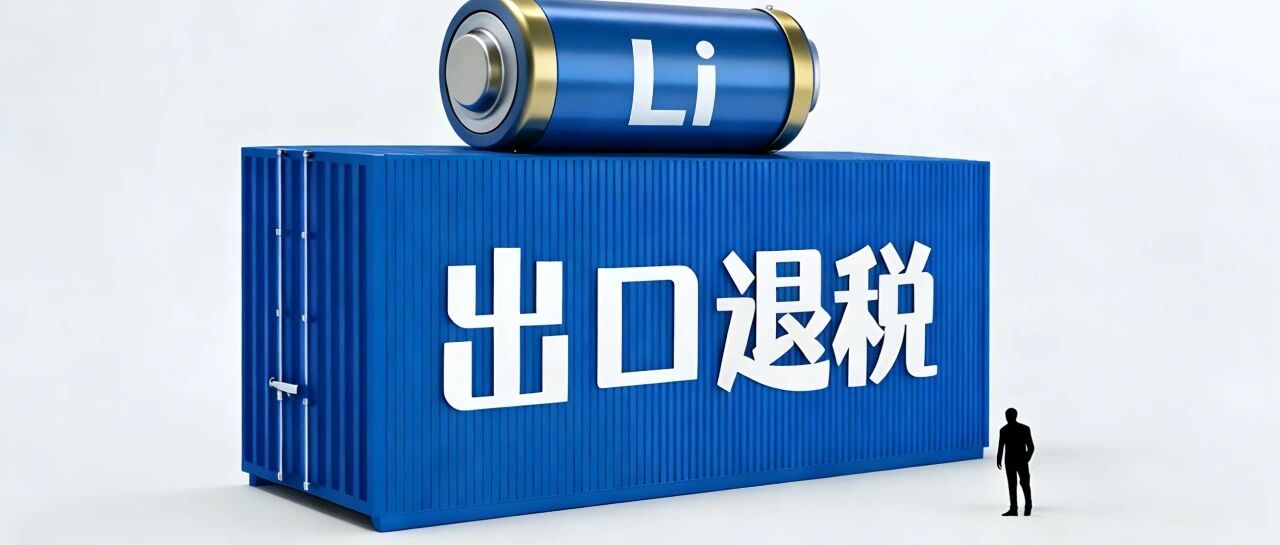
摘要 退税换挡,看蜂巢能源如何破解动力电池出海难题 2026 年初,财政部、税务总局发布电池产品出口退税调整政策,为高歌猛进的中国动力电池出海按下 " 换挡键 " :电池增值税出口退税率从 9% 降至 6% , 2027 年起全面取消。 这一调整不仅直击出口企业核心利润,更倒逼行业告别低附加值竞争,开启全球竞争新序幕。 在此背景下,蜂巢能源董事长杨红新率先锚定 " 死磕海外 " 的核心战略,在坚守国内市场基本盘的同时全力拓展海外市场,其提出的 "聚势质卷" 和 "双向应对" 策略,为中国动力电池产业破局成本压力出海勾勒出全新路径。 破局之道:杨红新的"双向应对"与"质卷"哲思 面对退税政策带来的直接影响,杨红新有着清醒的认知:退税下调多少,企业净利润就会直接受影响多少。但在他看来,这并非单纯的成本冲击,更 是推动产业回归健康发展轨道的契机, 国家取消退税的核心,是让电池价格回归合理水平,而非让企业陷入恶性亏损,这种影响终究需要产业链上 下游共同消化。 基于此,他给出了 " 双向应对 " 的务实解决方案: 一方面与海外客户协商成本共担机制 ,在推动价格回归合理区间的同时,避免过度转嫁成本削 弱客户竞争力,维系产 ...
技术为人而生,宁德时代发布天行 II 轻商系列动力电池
Xin Lang Cai Jing· 2026-01-22 11:57
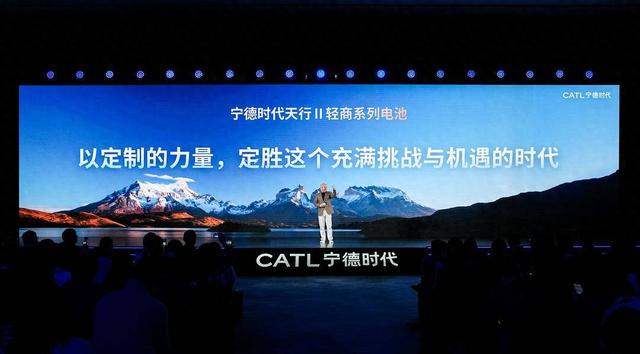
Core Viewpoint - Ningde Times has launched the "Tianxing II Light Commercial Vehicle Customization Series Solutions" and the industry's first intelligent battery management application "Battery Butler" to enhance the operational efficiency and profitability of light commercial vehicles through a comprehensive ecosystem of hardware, software, and services [1][8]. Group 1: Product Innovations - The Tianxing II series offers four customized solutions tailored for various operational scenarios, including urban distribution, intercity transport, last-mile delivery, and cold-region transportation, addressing the need for precision in energy solutions [3]. - The Tianxing II Light Commercial Super Charging Version features significant upgrades in cold resistance, power output, and lifespan, allowing for a 30% faster charging time from 20% to 80% in just 30 minutes [5][6]. - The Long Range Version of the Tianxing II series incorporates the world's first hybrid chemical system battery, achieving a maximum single-pack capacity of 253 kWh, enabling a range of 800 kilometers, and reducing vehicle weight by over 260 kg [6][7]. Group 2: Technological Advancements - The High-Temperature Super Charging Version is designed for last-mile logistics, supporting peak charging of 4C, allowing for a 60% charge in just 18 minutes, and reducing annual charging costs by 500 yuan [7]. - The Low-Temperature Version is the first mass-produced sodium-ion battery in the light commercial vehicle sector, maintaining over 92% usable capacity at -20°C and ensuring safety under extreme conditions [7]. Group 3: Intelligent Management Solutions - The "Battery Butler" app provides users with real-time monitoring of battery lifecycle, maximizing profitability and enabling precise management of assets [8][9]. - The app features proactive alerts for potential risks, direct connection to official service platforms, and emergency charging modes tailored to operational demands [9][11]. Group 4: Market Strategy and Vision - Ningde Times aims to redefine the ecosystem of the light commercial vehicle industry by aligning product offerings with user needs and enhancing service collaboration [11][13]. - The company is committed to continuously developing sustainable, replicable solutions that leverage cutting-edge technology to drive the electrification of light commercial vehicles towards greater efficiency and reliability [13].

40亿!宁德时代“落子”北京
起点锂电· 2026-01-22 10:53
Core Viewpoint - The competition in the electric vehicle (EV) market in 2025 is characterized by "one leader and many strong players, differentiation among new forces, technology-driven advancements, accelerated overseas expansion, and ecological integration" [2] Group 1: Market Dynamics - The market competition is intensifying, with automakers and battery companies increasingly collaborating across technology, supply chains, capital, and standards to address market challenges and technological changes [2] - The establishment of joint ventures remains a common strategy in the industry, exemplified by the rapid progress of the 4 billion yuan, 15GWh capacity battery factory by CATL and BAIC [2][4] Group 2: Joint Ventures and Production Capacity - CATL holds a 51% stake in the newly established Beijing Times Power Battery Co., which is set to be built in two phases and aims for production by 2026, serving major clients like BAIC and Xiaomi [4][5] - The factory is located in Beijing's Yizhuang Economic Development Zone, a core area for the automotive industry, which generates over 200 billion yuan annually, accounting for nearly 60% of Beijing's automotive output [5] Group 3: Strategic Collaborations - CATL's strategy includes not only battery manufacturing but also expanding into battery swapping and industry chain collaboration, with plans to establish around 40 battery swap stations in Beijing by the end of 2025 [6] - The company has formed deep partnerships with various automakers, ensuring stable battery supply while enhancing customer loyalty and market share [7][17] Group 4: Market Position and Challenges - In 2025, CATL maintained its leading position in the power battery market with a domestic installed capacity of 333.57GWh and a market share of 43.42%, despite a slight decline in market share compared to the previous year [16] - The company supplied batteries for 445 vehicle models from 37 automakers, representing 38% of the total models announced, with a notable increase in collaboration with automakers [16][19] Group 5: Future Outlook - CATL is transitioning from a battery supplier to an "energy + chassis solution provider," collaborating with automakers on battery recycling and vehicle-to-grid (V2G) interactions, exploring new business models and growth points [19] - Despite fluctuations in market share, CATL continues to maintain deep collaborations with numerous automakers, extending its cooperation model beyond simple product supply to include technology collaboration and ecological co-construction [19]
第一创业晨会纪要-20260122
First Capital Securities· 2026-01-22 07:26
Group 1: Company Performance - Demingli (001309.SZ) expects a net profit attributable to shareholders of 650 million to 800 million yuan for 2025, representing a year-on-year growth of 85.42% to 128.21%. The net profit after deducting non-recurring gains and losses is projected to be 630 million to 780 million yuan, with a year-on-year increase of 108.13% to 157.68%. The fourth quarter net profit is estimated at 750 million yuan, showing over 11 times growth year-on-year. The rapid increase in storage prices since the fourth quarter is expected to continue driving high growth in the first half of the year [2] - Jin'an Guoji (002636) forecasts a net profit attributable to shareholders of 280 million to 360 million yuan for 2025, indicating a year-on-year increase of 655.53% to 871.40%. The net profit after excluding non-recurring items is expected to be 250 million to 320 million yuan, with a projected year-on-year growth of 4.5 times. The fourth quarter net profit is anticipated to be 135 million yuan, reflecting over 3.8 times growth year-on-year and nearly 1 time growth quarter-on-quarter. The price increase of ordinary copper-clad laminates is expected to cover the rise in upstream raw material costs, supporting continued growth in performance [3] Group 2: Industry Insights - In the advanced manufacturing sector, the domestic power battery installation volume is expected to redistribute in 2025. CATL leads with 333.57 GWh, capturing 43.42% market share, while BYD follows with 165.77 GWh and 21.58% market share. Both companies together hold 65% of the market, but their market shares have decreased by 1.67% and 3.17%, respectively. This shift reflects structural changes in the industry during rapid expansion, with second-tier manufacturers catching up in key performance indicators [6] - He Sheng New Materials anticipates a net profit of 152 million to 171 million yuan for 2025, representing a year-on-year increase of 55% to 75%. The growth is driven by the home appliance appearance composite materials business, with no plans for expansion but rather a focus on supply chain management and cost reduction. The company is also making strides in AI chip development, with significant commercial progress expected in 2026 [8]


中创新航武汉基地产值突破百亿元
Chang Jiang Ri Bao· 2026-01-22 00:47
Core Insights - The Wuhan base of Zhongchuang Innovation is set to achieve an output value exceeding 10 billion yuan by 2025, with a focus on the production of battery pack systems for electric vehicles [1][2] - The base has already established an annual production capacity of 40 GWh for power and energy storage batteries, supporting major electric vehicle manufacturers [1] - The fourth phase of the project is currently in the critical stage of equipment installation and debugging, aiming for production within the year [1] Group 1 - The fourth phase of the Wuhan base will introduce six intelligent production lines with an annual capacity of approximately 400,000 sets of battery packs [1] - Zhongchuang Innovation has made four investments in the Wuhan area over the past five years, demonstrating strong confidence in the local market [2] - The Wuhan base is the most comprehensive production facility within the group, covering a wide range of products from cells to modules and battery packs [2] Group 2 - The completion of the fourth phase will enhance the local supply chain's self-sufficiency in advanced battery packs for electric vehicles produced in Wuhan [2] - The company aims to integrate its technology with the rich application scenarios in Wuhan, promoting high-quality development in the green energy and high-end manufacturing sectors [2] - The overall competitiveness and output scale of the Wuhan base will reach a new level following the launch of the fourth phase [2]