计算机硬件

Search documents
PC供应链调查:存储暴涨后的定价博弈,戴尔惠普联想均计划提价
Ge Long Hui· 2025-12-02 05:50
Core Viewpoint - The global PC industry is facing significant cost pressures due to rising prices of DRAM and NAND storage chips, leading to potential price adjustments for end products by major manufacturers like Lenovo, HP, and Dell [2][3][4]. Group 1: Industry Dynamics - Major PC brands are recalibrating their cost structures, with storage chip prices being the most affected, which is putting profit margins under strain [2][3]. - Dell and HP have warned of a significant shortage of memory chips by 2026, indicating unavoidable price pressures [2]. - Lenovo, as the largest PC vendor, is considering price increases for certain products to address ongoing cost pressures, with plans for differentiated pricing based on regions and product lines [3][4]. Group 2: Financial Implications - The rising costs of storage chips are expected to impact the gross margins of PC manufacturers, with Lenovo's CFO indicating that their component inventory is about 50% higher than usual to mitigate supply chain risks [4][12]. - If end prices remain unchanged, PC manufacturers could face significant profit margin pressures in the upcoming quarters, making price adjustments necessary to maintain profitability [3][12]. Group 3: Market Segmentation - Different manufacturers face varying pressures to raise prices based on their customer structures; Lenovo's business model, which relies heavily on commercial clients, allows for greater pricing flexibility compared to retail-focused brands like HP and Dell [6][11]. - Corporate clients prioritize stability and service over minor price increases, allowing Lenovo to implement price adjustments with less resistance [7][11]. Group 4: Competitive Landscape - The price increase cycle is expected to reshape the competitive landscape, with manufacturers that can maintain stable supply chains and delivery capabilities gaining an advantage [10][14]. - Historical trends indicate that during price increase cycles, larger firms with robust supply chains tend to gain market share, while smaller, less profitable brands may struggle [13][14]. - The current supply-demand structure is leading to a concentration of market share among firms with strong supply chain capabilities, as clients prioritize reliability over cost [14].

传联想ISG上海全员被裁,波及数百员工
Xin Lang Cai Jing· 2025-12-02 05:19
新浪科技讯 12月2日下午消息,据多名认证信息为联想员工的网友近日爆料,联想ISG上海全员被裁。 据悉,联想ISG中国此次裁员沟通会仅开了15分钟,且会议迟到了13分钟,播放了两分钟录音即宣布裁 员事宜。 据爆料信息,此次裁员涉及上海"一个site几百号人",连孕妇都不能幸免。此外,中国区软件、固件和 OS也全部裁撤,涉及北京、上海、天津和深圳等地。 对于前述裁员事宜,新浪科技向联想方面求证,截至发稿公司暂无回应。 责任编辑:江钰涵 新浪科技讯 12月2日下午消息,据多名认证信息为联想员工的网友近日爆料,联想ISG上海全员被裁。 据悉,联想ISG中国此次裁员沟通会仅开了15分钟,且会议迟到了13分钟,播放了两分钟录音即宣布裁 员事宜。 据爆料信息,此次裁员涉及上海"一个site几百号人",连孕妇都不能幸免。此外,中国区软件、固件和 OS也全部裁撤,涉及北京、上海、天津和深圳等地。 对于前述裁员事宜,新浪科技向联想方面求证,截至发稿公司暂无回应。 责任编辑:江钰涵 ...
存储成本飙升!惠普、戴尔涨价在即,联想(00992)计划跟进
Zhi Tong Cai Jing· 2025-12-01 13:25
Core Viewpoint - The ongoing "super cycle" in storage chips driven by AI is exerting significant cost pressure on global PC and mobile manufacturers, leading to anticipated price increases across the board [1] Group 1: Company Responses - Dell Technologies has issued a price increase warning, indicating that costs will ultimately be passed on to end customers, with a possibility of repricing certain products [1] - HP's CEO has stated the company is prepared to raise product prices if necessary, noting that memory costs currently account for 15% to 18% of typical PC total costs [1] - Lenovo Group plans to follow suit with price increases to counteract rising storage prices, having already locked in production capacity for 2026 to manage costs [1] Group 2: Market Trends - Storage chip prices have surged by 50% cumulatively since the beginning of the price increase phase, with 512GB chips rising nearly 500 yuan since October [1] - Counterpoint Research forecasts that memory prices are expected to rise by an additional 50% by the second quarter of 2026, suggesting that price hikes for mobile and PC products are inevitable [1]


研报掘金丨中信证券:维持戴尔“买入”评级 目标价160美元
Ge Long Hui· 2025-12-01 12:07
Core Viewpoint - Citic Securities maintains a "Buy" rating for Dell (DELL.US) with a target price of $160, citing strong demand for AI server orders and an overall positive outlook for the company's performance in FY2026 [1] Group 1: Financial Performance - The company has raised its full-year performance guidance, benefiting from robust AI server orders, with FY2026 shipment guidance set at $25 billion [1] - The storage business has exceeded expectations in cost recovery, contributing to a stable growth outlook for Non-GAAP net profit [1] Group 2: Valuation - Based on comparable company valuations, Dell is assigned a FY2026 price-to-earnings (PE) ratio of 16 times, leading to an increased target price of $160 [1]

存储成本飙升!惠普、戴尔涨价在即,联想计划跟进
Ge Long Hui· 2025-12-01 09:06
Core Viewpoint - The ongoing "super cycle" in storage chips driven by AI is exerting significant cost pressure on global PC and mobile device manufacturers, leading to anticipated price increases across the board [1] Group 1: Company Responses - Dell Technologies (DELL.US) and HP (HPQ.US) have issued warnings about potential price hikes due to rising storage costs, with Dell's COO Jeff Clarke noting unprecedented speed in cost increases [1] - Lenovo Group (0992.HK) is also planning to raise prices to counteract the profit pressure from soaring storage prices, which have increased by 50% cumulatively since the price surge began [1] - HP's CEO Enrique Lores indicated that memory costs now account for 15% to 18% of typical PC total costs, and the company is exploring options to mitigate this pressure, including sourcing from more suppliers and potentially reducing memory capacity in some products [1] Group 2: Market Trends - The price of 512GB storage chips has risen by nearly 500 yuan since October, reflecting the broader trend of increasing storage costs [1] - Lenovo has proactively locked in production capacity for 2026 to manage rising costs, with its CFO stating that current component inventory is approximately 50% higher than usual and long-term supply agreements have been signed [1] - Market research firm Counterpoint Research predicts that memory prices will increase by another 50% by the second quarter of 2026, suggesting that price hikes for mobile and PC products are inevitable as storage prices continue to rise [1]
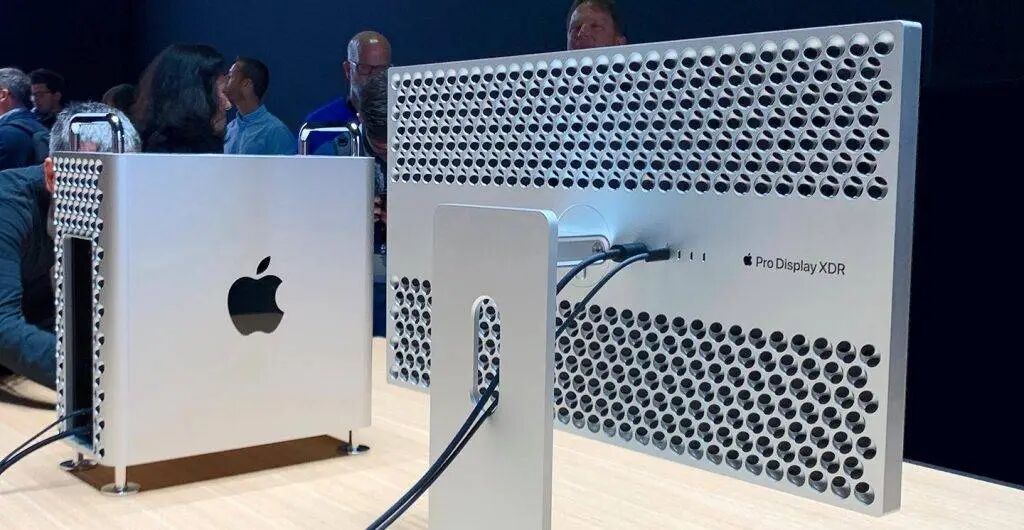
曾经的最强苹果电脑 Mac Pro,已经被时代抛弃
3 6 Ke· 2025-12-01 00:09
Core Viewpoint - Apple has reportedly abandoned the development of the new Mac Pro desktop, which was set to feature the M4 Ultra processor, with the next high-end desktop chip being the M5 Ultra instead [1][3]. Group 1: Mac Pro's Development and History - Apple has essentially given up on the Mac Pro project, believing that the Mac Studio represents the future of their desktop offerings [3]. - The Mac Pro has had a tumultuous history since its inception, with significant transformations in Apple's chip technology over the years [4]. - The original Power Macintosh series set a high-performance standard for Apple computers, primarily targeting high-end business and creative users [6]. Group 2: Design and Performance Challenges - The design of the Power Mac G4 Cube, while innovative, faced performance limitations due to its compact design, leading to its eventual failure [8][14]. - The Mac Pro, introduced in 2006, continued the legacy of the Power Mac but struggled with performance issues due to its design constraints [10][12]. - Apple's acknowledgment of the "trash can" Mac Pro's shortcomings led to the introduction of a more modular design in the subsequent model, which received a better reception [16][17]. Group 3: Transition to Apple Silicon - The introduction of Apple Silicon marked a significant turning point for the Mac lineup, but the Mac Pro was the last to receive an update, featuring the M2 Ultra [21][23]. - The Mac Studio emerged as a more compact and efficient alternative, fulfilling the vision of a high-performance computer without the need for extensive modularity [25][29]. - The shift towards high integration and compact design reflects a broader trend in computing, where performance can be achieved without the traditional large form factors [31][35]. Group 4: Market Position and Future Outlook - The Mac Pro's larger size and higher cost did not translate into superior performance compared to the Mac Studio, which has become the preferred choice in the new era [25][37]. - The evolution of computing towards smaller, more efficient designs aligns with the changing needs of users, particularly in creative industries [31][35]. - The Mac Pro's legacy may now be reduced to its high-quality design, as the market moves towards more integrated solutions like the Mac Studio [37].


联想提出RNL技术,通过多维感知等解决AI训练中的难题
Xin Lang Ke Ji· 2025-11-28 11:09
Core Viewpoint - Lenovo's innovative RNL technology addresses long-standing challenges in load balancing for AI training and inference scenarios, particularly in RoCE networks, as recognized by its acceptance at the IEEE CyberSciTech 2025 conference [1][2]. Group 1: Technology Innovation - The RNL technology incorporates a closed-loop system of "multi-dimensional perception + path load balancing + incremental migration," combining algorithmic innovation with practical value [2]. - The multi-dimensional perception mechanism allows real-time awareness of network topology, AI task network demands, and RoCE link load status, providing a data foundation for dynamic scheduling [2]. - Path load balancing optimization utilizes virtual-physical network mapping and path scoring algorithms to intelligently select optimal data transmission paths, maximizing bandwidth utilization [2]. - Incremental flow migration employs a strategy to avoid instantaneous delays during link traffic adjustments, ensuring business continuity [2]. Group 2: Future Plans - Lenovo plans to extend the RNL technology to high-performance storage and HPC scenarios, incorporating deep learning algorithms to enhance congestion prediction capabilities [2]. - The company aims to validate the comprehensive performance of RNL technology in large AI clusters with thousands to tens of thousands of nodes, continuously driving innovation and iteration in AI network technology [2].
裁掉10%员工,惠普All in AI
Sou Hu Cai Jing· 2025-11-28 06:46
Core Viewpoint - HP is undergoing a significant restructuring, including a global layoff of 4,000 to 6,000 employees, to redirect $1 billion in savings towards AI research and product innovation, marking a strategic shift in response to competitive pressures in the AI landscape [1][2][3] Group 1: Layoff and Restructuring Strategy - The layoffs represent a comprehensive strategy involving personnel reduction, resource reallocation, technological advancement, and ecosystem restructuring, rather than a mere cost-cutting measure [2][3] - The restructuring will incur a one-time cost of $650 million, with a focus on product development, internal operations, and customer support [3][5] - The layoffs target three main job categories: repetitive process roles, traditional technical support positions, and inefficient management layers, with the aim of automating tasks through AI [5][6][12] Group 2: Financial Implications - The restructuring is expected to generate approximately $650 million in one-time costs, impacting the company's cash flow in the short term, while aiming for annual savings of $1 billion by the end of fiscal year 2028 [6][21] - HP's R&D investment is currently at 3.2%, significantly lower than competitors like Lenovo and Apple, highlighting the urgency of increasing AI-related investments [6][8] - The projected free cash flow for fiscal year 2026 is estimated at $2.8 to $3 billion, which will be strained by the restructuring costs [21][22] Group 3: Competitive Landscape - HP's market share in the PC segment is under pressure, with Lenovo capturing 31.1% of the global market, while HP's share stands at 18.5% [7][8] - The AI transformation is seen as essential for HP to remain competitive, as traditional hardware sales are increasingly supplemented by AI service subscriptions [8][9] - The shift in profitability models from hardware sales to "hardware + AI services" is critical, with HP needing to adapt to this new paradigm to maintain pricing power [8][9] Group 4: AI Transformation Strategy - HP's AI transformation strategy includes a three-step approach for its PC business, aiming to integrate AI capabilities into product development and customer engagement by 2028 [9][11] - The company plans to enhance its AI capabilities through partnerships with technology firms like NVIDIA and OpenAI, focusing on developing proprietary AI chips and algorithms [12][24] - The transition to AI-driven services is expected to improve customer retention and create new revenue streams, particularly in the enterprise market [13][14] Group 5: Challenges and Risks - HP faces significant challenges, including high short-term restructuring costs, the need for technological breakthroughs, and the risk of losing key talent during the transition [21][25] - The company must overcome internal resistance to change, as employee sentiment regarding the AI transition is mixed, with concerns about job security [25][26] - The competitive landscape is intensifying, with rivals like Lenovo and Dell making significant strides in AI integration, putting additional pressure on HP to accelerate its transformation [17][18]

机构:2026年中国GenAI PC市场有望同比增长146.5%
Huan Qiu Wang Zi Xun· 2025-11-28 03:35
来源:环球网 【环球网科技综合报道】11月28日消息,行业分析机构IDC最新发布的报告显示,随着AI技术的加速渗 透和终端应用场景的不断扩展,中国PC市场正迎来新一轮结构性变革。2026年中国PC市场稳中有变, 预计同比下降0.8%,GenAI PC爆发同比增长146.5%。 IDC表示,最大亮点在于GenAI PC高速增长,2026年预计同比激增146.5%,2025-2029年复合增长率高 达58.7%。至2029年,GenAI PC有望占整体PC市场的36.5%。随着AI认知提升和端侧应用落地,GenAI PC将成为市场新引擎,驱动行业结构升级。 IDC认为,AI PC作为端侧AI的核心载体,正进入高速增长阶段。尽管当前AI PC仍存在一定溢价,但随 着芯片厂商竞争加剧和产业链规模效应逐步显现,其价格正逐步下沉,向主流价位段靠拢,有望在未来 覆盖更广泛的消费群体。 此外,随着AI应用、AI智能体及大模型的快速普及,越来越多用户借助电脑搭载AI工具来提升工作与 学习效率。随着AI体验的升级和更多场景适配,更强大的AI功能会更促进用户对于AI PC使用的依赖, 增加AI PC及相关大模型使用的活跃时长。与此 ...
IDC:2026年中国PC市场预计同比下降0.8% GenAI PC逆势爆发同比增长146.5%
Zhi Tong Cai Jing· 2025-11-27 06:34
Core Insights - The core insight of the articles is that the Chinese PC market is expected to experience a structural transformation by 2026, driven by the rise of GenAI PCs, gaming PCs, and the diversification of commercial terminals, with significant growth in various segments and a shift in consumer demographics towards second and third-tier cities [12]. Group 1: Market Overview - By 2026, China's PC market shipment is projected to reach 42.22 million units, a slight decline of 0.8% year-on-year, with consumer market expected to drop by 1.1% and small and medium enterprises declining by 2.7% [1]. - GenAI PCs are anticipated to see a remarkable growth of 146.5% year-on-year in 2026, with a compound annual growth rate (CAGR) of 58.7% from 2025 to 2029, potentially capturing 36.5% of the overall PC market by 2029 [1]. Group 2: Gaming PC Demand - The gaming PC market in China is expected to grow by 3.1% in 2026, with shipments reaching 15.13 million units, accounting for 35.9% of total PC shipments [2]. - The focus of competition in the gaming PC industry is shifting from hardware performance to AI-driven ecosystem development, creating a sustainable growth barrier for market participants [2]. Group 3: AIPC and Cloud Computing - AIPC is entering a high-growth phase, with prices expected to decrease as competition among chip manufacturers intensifies, making it more accessible to a broader consumer base [3]. - The cloud terminal market is projected to exceed 6.5 million units in shipments by 2026, with a CAGR of nearly 16% over the next five years, driven by the demand for innovative device forms and enhanced performance [9][10]. Group 4: Commercial Market Trends - The commercial market for GenAI PCs is expected to reach 5.98 million units by 2029, with a CAGR exceeding 72% from 2025 to 2029, driven by the transformation of service models towards AI-integrated solutions [4]. - The large customer market is projected to see non-Windows product shipments reach 5.6 million units in 2026, reflecting a year-on-year growth of 10.3% [5]. Group 5: Consumer Demographics - The demand for consumer PCs is being driven by three main groups: office workers, students, and the elderly, with office workers expected to account for 29.8% of the consumer PC market by 2026 [6]. - The aging population is emerging as a new growth point for PC consumption, with individuals over 60 contributing 6.2% to the PC market [6]. Group 6: Regional Market Shifts - By 2026, second and third-tier cities are expected to account for 39.7% of the PC market share, becoming the main purchasing market as consumer behavior shifts towards more rational spending [11]. - The East China region is projected to see the highest growth in PC sales, with a year-on-year increase of 0.5 percentage points, reaching 5.929 million units [11]. Group 7: AI Impact on PC Usage - The proliferation of AI technologies is expected to enhance user dependency on PCs, potentially shortening the replacement cycle for consumer PCs, which currently stands at 4-5 years [7]. - The proportion of users planning to purchase AIPC is expected to rise from 15% in the first half of 2025 to 32% in the second half, indicating a growing interest in AI-integrated PCs [7]. Group 8: Diversification of Commercial Terminals - The workstation market is projected to see shipments of 660,000 units in 2026, reflecting a year-on-year growth of 5.2%, while the industrial PC market is expected to grow by 11.7% to 4.56 million units [8]. - The demand for diverse commercial products is being driven by the increasing complexity of application scenarios and the rapid development of AI [8].