
运动鞋服

Search documents
安踏回应收购锐步:不作评论
Mei Ri Jing Ji Xin Wen· 2025-08-06 02:39
每经AI快讯,近期有市场传闻称,安踏体育即将完成收购美国运动鞋品牌Reebok锐步。安踏体育企业 传播部门就此消息对《每日经济新闻》记者表示:"我们一向不对市场流言作评论。"安踏体育2025年半 年报显示,今年上半年,安踏品牌产品的零售金额与2024年同期比较取得中单位数的正增长;FILA品 牌产品的零售金额与2024年同期比较取得高单位数的正增长;所有其他品牌产品的零售金额与2024年同 期比较取得60%至65%的正增长。 ...

安踏回应收购锐步传闻称不对市场传闻发表评论
Bei Jing Shang Bao· 2025-08-04 13:46
Core Viewpoint - Anta Group has not commented on market rumors regarding the potential acquisition of the American sports shoe brand Reebok [1] Group 1: Company Background - Reebok was founded in 1958 in the UK, originating from a sports shoe company established by Joseph Foster in 1895 in Bolton, England [1] - In 2006, Adidas acquired Reebok for a price of $3.8 billion [1] - In 2022, Adidas sold Reebok to Authentic Brands Group (ABG) for €2.1 billion (approximately $2.5 billion) [1]

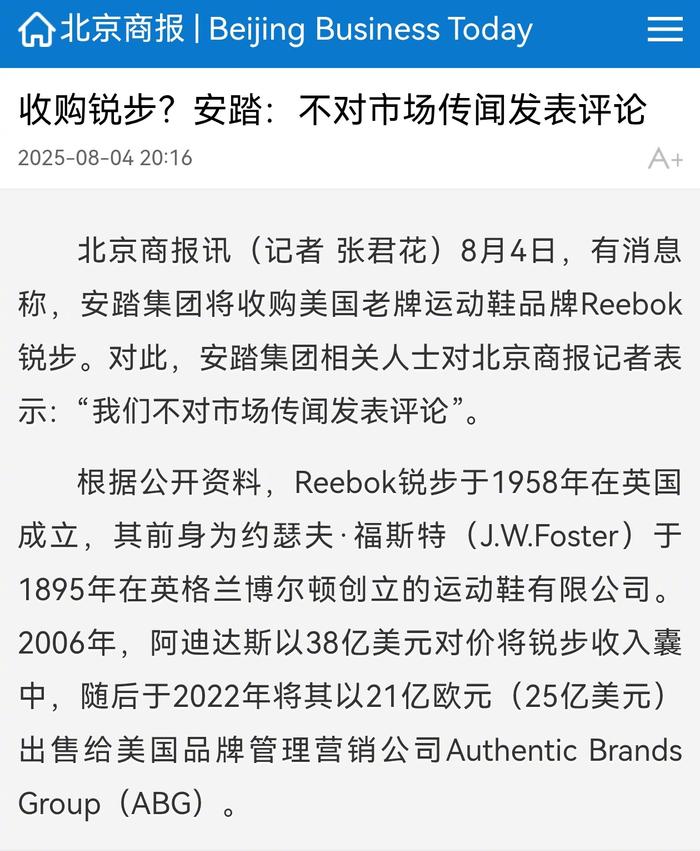
收购锐步?安踏:不对市场传闻发表评论
Bei Jing Shang Bao· 2025-08-04 12:27
根据公开资料,Reebok锐步于1958年在英国成立,其前身为约瑟夫·福斯特(J.W.Foster)于1895年在英 格兰博尔顿创立的运动鞋有限公司。2006年,阿迪达斯以38亿美元对价将锐步收入囊中,随后于2022年 将其以21亿欧元(25亿美元)出售给美国品牌管理营销公司Authentic Brands Group(ABG)。 北京商报讯(记者 张君花)8月4日,有消息称,安踏集团将收购美国老牌运动鞋品牌Reebok锐步。对 此,安踏集团相关人士对北京商报记者表示:"我们不对市场传闻发表评论"。 ...
安踏回应收购锐步传闻,建议以官方信息为准
3 6 Ke· 2025-08-04 11:03
Group 1 - Anta Sports has responded to rumors regarding the acquisition of Reebok, suggesting that the market should rely on official company announcements for accurate information [1] - Reebok, founded in 1958, was once a leading brand in the sports shoe industry, surpassing Nike in sales during the 1980s. However, its performance has declined since being acquired by Adidas for $3.8 billion in 2025 and later sold to ABG for $2.5 billion in 2021, which is less than 60% of its original acquisition price [1] - The potential acquisition of Reebok could mark another significant international brand purchase for Anta, following its recent acquisition of the German outdoor brand Jack Wolfskin for $290 million [1] Group 2 - Since acquiring the Chinese operations of FILA in 2009, Anta has rapidly expanded through strategic acquisitions, covering a wide range of categories from professional sports to outdoor activities [2] - Despite its growth, Anta faces challenges related to multi-brand management, including resource allocation issues and potential brand synergy problems, which could lead to slower growth [2]
氪星晚报 |滴滴顺风车联合上海闵行警方,打击多款顺风车外挂;瑞可达:人形机器人产品现已开始小批量供货,预计2025年销售收入约1000万;LG化学将在韩...
3 6 Ke· 2025-08-04 11:02
Company Performance - Fengli Intelligent reported a net profit of 3.22 million yuan for the first half of the year, a year-on-year decline of 68.79% [1] - Yutong Bus sold 3,219 units in July, a year-on-year decrease of 4.05%, while total sales from January to July reached 24,500 units, an increase of 2.63% compared to the same period last year [4] - Fenbi expects its revenue for the first half of the year to be no less than 1.472 billion yuan, with a net profit of at least 215 million yuan [5] New Products and Services - Ruikeda has begun small-scale supply of humanoid robot products, with expected sales revenue of approximately 10 million yuan by 2025, accounting for 0.41% of the 2024 revenue [2] - Xiaoma Zhixing launched Robotaxi services in Shanghai's Pudong area, operating from 7:30 AM to 9:30 PM on weekdays [8] Industry Insights - The China Machinery Industry Federation reported that the overall production and sales of machinery products in the first half of the year were better than the same period last year, with 68.9% of 122 monitored products showing year-on-year production growth [9] Collaborations and Investments - Peak has officially partnered with ByteDance's Feishu to enhance its digital management system [6] - Zhongwan International led a $40 million Series A2 financing round for Yuanbi Technology, alongside other investors [7] Regulatory Updates - The State Administration for Market Regulation and the China Consumers Association issued a warning that ordinary food cannot claim health benefits, addressing concerns over misleading marketing practices [9]



氪星晚报 |滴滴顺风车联合上海闵行警方,打击多款顺风车外挂;瑞可达:人形机器人产品现已开始小批量供货,预计2025年销售收入约1000万;LG化学将在韩国建设首个加氢植物油工厂
3 6 Ke· 2025-08-04 10:47
Company Performance - Fengli Intelligent reported a net profit of 3.22 million yuan for the first half of the year, a decrease of 68.79% year-on-year, with revenue of 242 million yuan, a slight increase of 0.25% [1] - Yutong Bus sold 3,219 units in July, a year-on-year decline of 4.05%, while total sales from January to July reached 24,500 units, an increase of 2.63% compared to the same period last year [4] - Fenbi expects its revenue for the first half of the year to be no less than 1.472 billion yuan, with a net profit of at least 215 million yuan [5] New Products and Services - Ruikeda has begun small-scale supply of humanoid robot products, expecting sales revenue of approximately 10 million yuan by 2025, which would account for 0.41% of its 2024 revenue [2] - Xiaoma Zhixing launched Robotaxi services in Shanghai's Pudong area, operating from 7:30 AM to 9:30 PM on weekdays, covering key commercial areas and subway stations [9] Industry Insights - The China Machinery Industry Federation reported that the overall production and sales of machinery products in the first half of the year were better than the same period last year, with 68.9% of 122 monitored products showing year-on-year production growth [10] Collaborations and Investments - Peak has officially partnered with ByteDance's Feishu to enhance its digital management system [6] - Zhongwan International led a $40 million Series A2 financing round for Yuanbi Technology, alongside other investors [7][8] Regulatory Updates - The State Administration for Market Regulation and the China Consumers Association issued a warning that ordinary food products cannot claim health benefits, addressing concerns over misleading marketing practices [10]
运动品牌该如何走出中年危机?
3 6 Ke· 2025-08-01 02:28
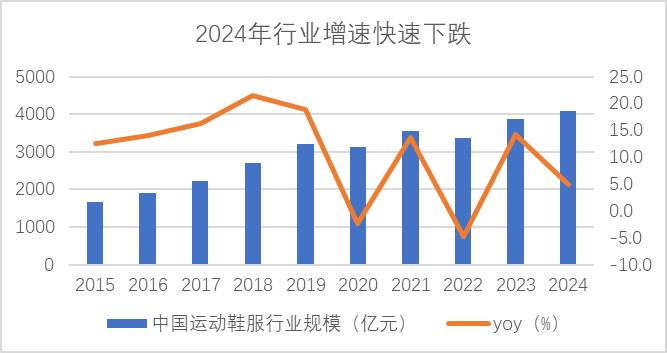
Core Insights - The Chinese sports brand industry is experiencing a collective slowdown, marking the end of the "national sports dividend" period, with market growth projected at only 5.9% in 2024, reaching 410 billion yuan [1][3] - Domestic brands have gained market share due to events like the Xinjiang cotton controversy, with Anta, Li Ning, and other brands collectively surpassing 50% market share, indicating a deepening of domestic replacement [1][3] - The concentration ratio (CR5) of domestic sports brands has reached 53%, making China the most concentrated market globally, leading to a shift where leading brands must transition from offensive to defensive strategies [1][3] Group 1: Industry Challenges - Major brands like Anta, Li Ning, and Xtep are facing a "mid-life crisis," with Anta and FILA experiencing six consecutive quarters of single-digit growth, and Li Ning reporting low single-digit growth for the first half of the year [3][4] - Increased discount rates and return rates have made consumers more price-sensitive, prompting Anta to lower its growth guidance to single digits and reassess its market share goals against Nike [3][4] - The industry is expected to face a turning point in 2024, with Euromonitor predicting a growth rate of only 5.8% over the next five years, indicating a decline in market share for leading brands [3][4] Group 2: Brand Positioning and Strategy - Despite being manufacturing powerhouses, domestic brands struggle with brand positioning and recognition, often relying on price competitiveness rather than brand strength [5][6] - The early success of brands like Anta and Li Ning was driven by domestic sports stars and events, but these strategies are no longer effective as market dynamics change [7][8] - The trend of acquiring overseas brands has been a successful strategy for companies like Anta, which acquired FILA and has since seen significant growth, but this approach may not be sustainable in the long term [10][12] Group 3: Consumer Trends and Market Dynamics - The rise of niche sports and changing consumer preferences present opportunities for domestic brands to strengthen their market position, as seen with successful products like Xtep's marathon shoes [13][14] - The shift towards direct-to-consumer (DTC) models is becoming essential for brands to connect with consumers more effectively and reduce reliance on traditional distribution channels [16][17] - The focus on "value for money" is becoming increasingly important, with brands needing to adapt to consumer demands for better pricing and quality, as evidenced by the success of companies like Uniqlo [21][22]

直营关店、电商增速放缓,李宁的“阵痛期”还在持续
Xi Niu Cai Jing· 2025-07-29 07:31
Core Viewpoint - Li Ning's retail performance in Q2 2025 shows a slowdown in growth, with challenges in both offline and online channels, while the company is increasing marketing investments to boost brand visibility and sales potential [2][3][6]. Group 1: Sales Performance - In Q2 2025, Li Ning's overall retail revenue (excluding Li Ning YOUNG) experienced low single-digit growth year-on-year, indicating a noticeable slowdown compared to Q1 [3]. - The offline direct sales channel saw a mid-single-digit decline, while the wholesale channel achieved low single-digit growth; online channels recorded median growth but at a reduced pace compared to Q1 [3][4]. - As of June 30, 2025, the number of retail points (excluding Li Ning YOUNG) was 6,099, reflecting a net decrease of 19 points in the first half of the year [3][4]. Group 2: Inventory Management - Inventory management emerged as a positive aspect for Li Ning, with the inventory-to-sales ratio returning to a healthy level by the end of Q2 2025, despite increased promotional activities [4][5]. Group 3: Marketing Strategy - Li Ning is betting on a high-intensity marketing campaign, including a strategic partnership with the Chinese Olympic Committee and signing NBA player Yang Hanshen, to enhance brand exposure and influence [6][7]. - The partnership with the Chinese Olympic Committee is expected to provide a platform for brand image enhancement during major international events, while the collaboration with Yang Hanshen aims to drive sales through limited product launches [6][7]. Group 4: Long-term Strategy - The company is focusing on optimizing its product matrix and channel efficiency for long-term growth, with an emphasis on core categories like running and basketball, which are expected to see high single-digit growth [8]. - Li Ning is adjusting its direct sales strategy, having significantly reduced the number of direct stores in 2024, but the pace of closures has slowed in 2025, indicating a shift towards enhancing overall channel efficiency [8]. Group 5: Market Outlook - There is a divergence in market sentiment regarding Li Ning's strategy of sacrificing short-term margins for long-term growth, with some analysts maintaining a positive outlook while others adopt a cautious stance [9]. - Investors are particularly interested in whether Li Ning can leverage its marketing efforts in the second half of the year to achieve revenue recovery and if product innovations can translate into tangible sales growth [9].

彪马业绩预亏:“拿不回”的足球和“挤不进”的跑圈
Bei Jing Shang Bao· 2025-07-28 14:01
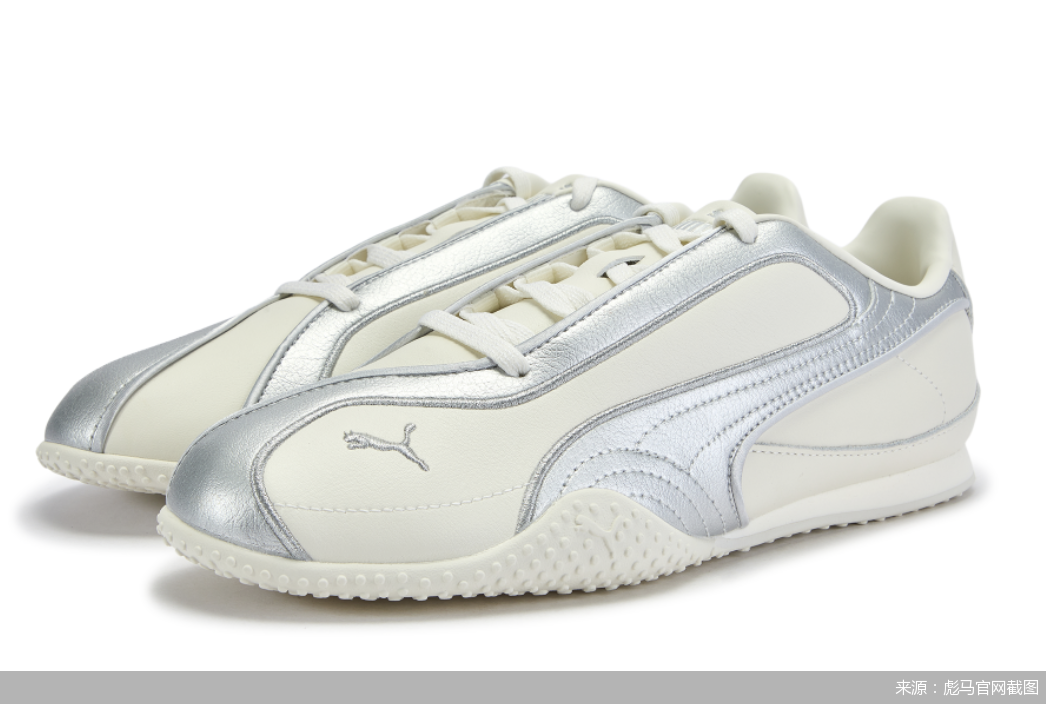
Core Viewpoint - Puma, referred to as the "eternal third," is struggling to regain its competitive edge in the sportswear market, facing ongoing losses and declining sales despite efforts to diversify its product offerings [2][3]. Financial Performance - Puma has issued a profit warning, predicting losses for 2025 and lowering its annual sales forecast, with a projected decline of at least 10% after currency adjustments [3]. - In 2024, Puma's revenue grew by 4.4% to €8.817 billion, but net profit fell by 7.6% to €282 million. In 2023, sales increased by 6.6% to €8.6017 billion, while net profit dropped by 13.7% to €304.9 million [3]. - The company attributes its declining performance to weak sales and the impact of U.S. tariffs on gross profit [3]. Market Position and Competition - Puma ranks behind Nike and Adidas in global revenue, with Nike's revenue at $46.3 billion and Adidas at €23.683 billion for the fiscal year 2025 [5]. - The global athletic footwear market is projected to reach approximately $147.2 billion in 2024, with a year-on-year growth of 5% [3]. - Competitors like Adidas and Lululemon have reported significant revenue growth, outperforming Puma [3]. Brand Strategy and Challenges - Puma is facing challenges in the sportswear market, where leading brands dominate the mass market while niche brands target high-end customers, leaving Puma in a difficult position [4]. - The company has struggled to maintain its historical strength in football, losing market share to Nike and Adidas, which have made substantial investments in sponsorships and athlete endorsements [6][7]. - Despite recent efforts to regain footing in football, including securing contracts with the Portuguese national team and becoming the official ball supplier for the Premier League, Puma's path to recovery remains challenging [8]. Expansion Efforts - Puma is also attempting to re-enter the basketball market and has launched new products aimed at the running segment, including the FAST-R NITRO ELITE running shoe [9][10]. - The company has initiated a cost efficiency plan called "Nextlevel," aiming to generate €75 million in one-time costs by 2025, which includes closing unprofitable stores [10]. - In China, Puma is accelerating its market strategy by appointing experienced executives to enhance its presence and product offerings [11].
科技领航,工业稳舵,消费承压
2025-07-28 01:42
Summary of Key Points from Conference Call Records Industry Overview - **Global Investment Strategy**: Focus remains on the US (60% allocation), followed by Europe (15%), Japan and South Korea (7%), and Southeast Asia (6%). The research covers 11 countries, emphasizing opportunities in the technology sector, benefits in the industrial sector from manufacturing return, and pressure in the consumer sector [1][2]. Core Insights and Arguments - **US-Japan Trade Dynamics**: Japan plans to invest $550 billion in the US, with 90% of profits returning to the US. Investment areas include energy, semiconductors, AI, pharmaceuticals, and steel. The completion is expected within 3-4 years, although details remain vague [1][8]. - **AI Computing Demand Surge**: The US stock market's computing and communication sectors are rising, with North American cloud providers increasing capital expenditure expectations by over 40% for 2025. Custom AI chips are accelerating production, and Ethernet penetration is improving [1][12][13]. - **Optical Module Market Potential**: The market for 800G optical modules is expanding, with 1.6T modules expected to launch soon. The overall sector is projected to maintain high growth rates, with potential revenue guidance upgrades [1][14][15]. - **Industrial Sector Recovery**: The global capital goods index is rising, with Europe showing the most significant gains. The US manufacturing PMI is rebounding, indicating a recovery in the industrial sector, although downstream demand remains weak [3][5][28][29]. - **Consumer Market Divergence**: The luxury goods sector is slowing, with mixed performance in sportswear and beauty markets. The US restaurant sector is experiencing a slowdown in same-store sales, with notable differences between fast food and casual dining [3][4][40][41][46]. Additional Important Insights - **Electric Equipment Demand**: The US electric equipment new orders index is growing, with significant price increases for gas turbine equipment and grid devices. Companies like General Electric and Siemens Energy are expected to see growth in their high-voltage grid businesses [3][32][34]. - **Financial and Raw Materials Sector Outlook**: The financial sector is expected to benefit from a relaxed regulatory environment in the US. Opportunities exist in specific raw materials sectors, such as gold and copper, with price fluctuations impacting profitability [7][56][57]. - **Emerging Market Trends**: Emerging markets are showing signs of recovery, particularly in the Middle East, while facing pressures in Africa and Latin America. The demand for energy drinks is increasing in the US and international markets [48][51]. - **Cloud Computing and AI Trends**: The cloud computing sector is expected to grow, driven by AI supply chain developments and increased demand for data governance. Companies like Google and ServiceNow are leading in AI performance [20][21][23]. - **Consumer Goods Sector Performance**: The consumer goods sector is experiencing a slowdown, with companies adjusting their growth forecasts due to weak demand in mature markets. However, some signs of stabilization are emerging [50][52][53]. This summary encapsulates the key points from the conference call records, highlighting the current state and future outlook of various industries and sectors.