
迪桑特

Search documents
收手吧阿祖,外面都是安踏
远川研究所· 2026-03-30 13:51
Core Viewpoint - Anta Sports has established itself as a leading player in the sportswear market through strategic acquisitions and brand management, positioning itself as a brand management group akin to LVMH, focusing on niche markets and direct-to-consumer (DTC) sales channels [7][23][32]. Group 1: Financial Performance - Anta reported impressive revenue figures, achieving "China's first and the world's third" in revenue, with the main brand facing mid-life pressures while sub-brands like FILA and Descente thrived, contributing to a 59.2% revenue growth to 17 billion CNY [5][31]. - FILA's revenue grew by 6.9% to 28.5 billion CNY, while other brands collectively generated significant growth, indicating a robust performance across the portfolio [5][31]. Group 2: Acquisition Strategy - Anta's acquisition strategy focuses on distressed brands with high potential, such as FILA, Descente, and Amer Sports, which includes brands like Arc'teryx and Salomon, allowing Anta to build a comprehensive brand ecosystem [7][10][23]. - The acquisition of Amer Sports in 2019 for 36 billion CNY marked a significant milestone, increasing Anta's debt but ultimately leading to a doubling of revenue and profitability for the acquired brands [8][10]. Group 3: Brand Management and Market Positioning - Anta has successfully transformed acquired brands by shifting to a DTC model, allowing for better control over inventory and pricing, which is crucial for maintaining brand integrity in a competitive market [15][16]. - The company has strategically positioned brands like Arc'teryx in high-end retail locations, enhancing their market presence and brand perception, akin to luxury brands [20][21]. Group 4: Market Trends and Consumer Behavior - The rise of "sport-luxury" trends has led to increased consumer interest in high-end outdoor brands, with Anta capitalizing on this shift by integrating outdoor brands into its portfolio [30][31]. - Anta's focus on health and fitness as a modern value proposition aligns with changing consumer preferences, positioning its brands as symbols of status and lifestyle among urban elites [30][32].



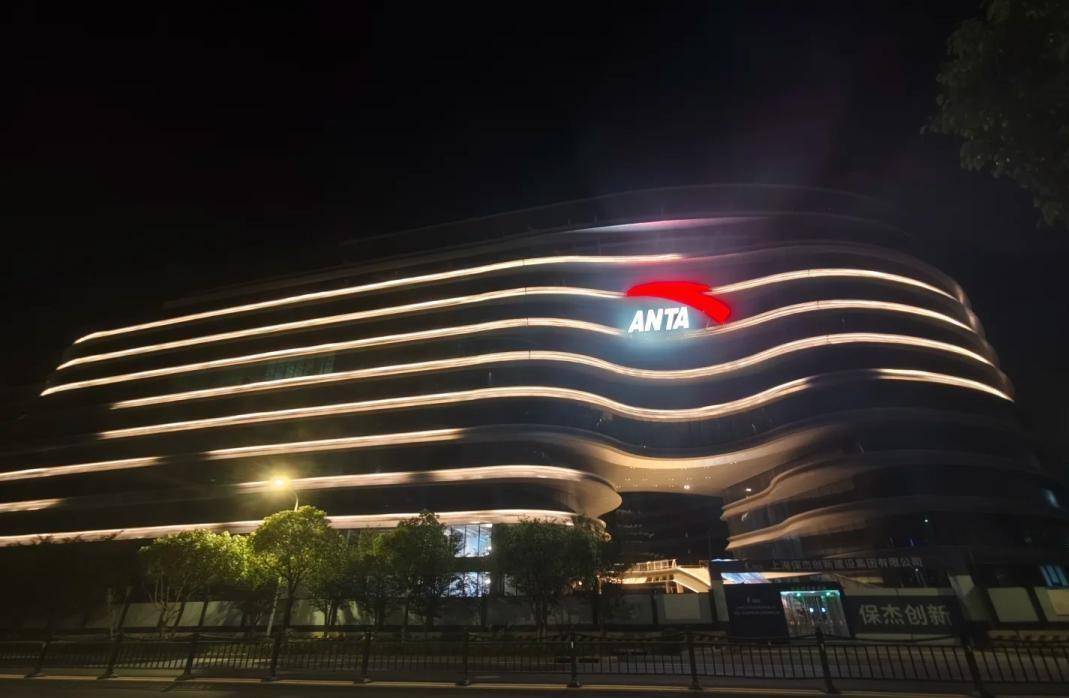
安踏集团全球零售总部,竣工倒计时,再启新程蓄势待发!
Sou Hu Cai Jing· 2026-02-15 20:12
Core Insights - Anta has emerged as the third-largest sports brand globally, following Nike and Adidas, marking a significant shift in the industry landscape [1] Group 1: Company Overview - Anta, originating from Jinjiang, Fujian, has expanded its portfolio to include brands like FILA, Descente, and Arc'teryx, dominating both retail spaces and outdoor equipment markets [3] - The company has invested heavily in a new global retail headquarters in Shanghai, strategically located near the National Exhibition and Convention Center [3][9] Group 2: Headquarters Design and Functionality - The headquarters features a unique design by NBBJ, embodying Anta's brand spirit of "never stop" with a core concept of "healthy work, ten thousand steps connected" [5] - The main building is designed in the shape of a "track," with a circular walking path on each floor, promoting an active work environment [5][7] - The complex includes multiple buildings serving different functions: a flagship store, office spaces for global retail teams, and a boutique hotel for business partners [7][9] Group 3: Strategic Growth and Acquisitions - Anta's growth strategy has involved significant acquisitions, including the purchase of FILA's China operations in 2009 and the €46.6 billion acquisition of Amer Sports in 2019 [14][16] - Recently, Anta announced a €1.5 billion acquisition of a 29.06% stake in Puma, becoming its largest single shareholder, further expanding its brand portfolio [16] - The company's revenue reached 70.826 billion yuan in 2024, with the overall scale surpassing 100 billion yuan for the first time, making it the third sports goods group to achieve this milestone [16] Group 4: Market Expansion and Brand Positioning - Anta is rapidly expanding its global store network, particularly in Southeast Asia, with plans to open over 1,000 stores in the next three years [16] - The company's overseas business revenue saw a year-on-year increase of over 150% in the first half of 2025, reflecting its aggressive market penetration strategy [16] - Anta has risen to the fourth position in the global brand value rankings, showcasing its growing influence in the sportswear industry [16]
安踏体育(02020):公司简评报告:收购Puma股权,全球化进程持续推进
Capital Securities· 2026-02-13 11:41
Investment Rating - The investment rating for the company is "Buy" [1] Core Insights - The company plans to acquire a 29.06% stake in Puma for €1.506 billion (approximately RMB 12.28 billion), becoming Puma's largest shareholder [1] - Puma is currently undergoing a strategic adjustment phase, with expected long-term investment returns [4] - The acquisition price represents a 62% premium based on Puma's stock price as of January 26, 2026, indicating a strong long-term brand value despite short-term profitability challenges [4] - The company is focusing on a multi-brand strategy and global expansion, leveraging its experience to enhance Puma's profitability and support its own international business development [4] Financial Summary - The company's main business revenue is projected to grow from RMB 70.826 billion in 2024 to RMB 94.095 billion in 2027, with a compound annual growth rate (CAGR) of approximately 8.7% [2] - The net profit attributable to shareholders is expected to decrease from RMB 156.0 billion in 2024 to RMB 131.5 billion in 2025, before recovering to RMB 162.2 billion in 2027 [2] - The earnings per share (EPS) is forecasted to decline from RMB 5.52 in 2024 to RMB 4.66 in 2025, then gradually increase to RMB 5.74 by 2027 [2] - The price-to-earnings (PE) ratio is projected to be 16 in 2025, 15 in 2026, and 13 in 2027, reflecting a favorable valuation trend [2] Market Performance - The company's stock price has fluctuated between HKD 107.5 and HKD 65.6 over the past year, with a current price of HKD 85.3 [1] - The company's market capitalization stands at HKD 240.8 billion [1]
福建“豪门”,打响继承之战
创业家· 2026-02-04 10:35
Core Viewpoint - The article discusses the generational transition in family businesses, particularly among Fujian entrepreneurs, highlighting the challenges faced by the second generation as they take over their family enterprises amidst a changing economic landscape and societal expectations [5][8]. Group 1: Succession Battles - The transition of leadership is becoming a reality among Fujian private enterprises, with notable examples including Xu Yangyang taking over Dali Group and Cao Hui succeeding his father at Fuyao Group [7][8]. - The second generation faces dual pressures from familial expectations and societal reputation, often leading to comparisons with their predecessors [5][9]. - The traditional method of succession in Fujian remains focused on blood relations, with the eldest son often seen as the most suitable successor [9][11]. Group 2: Individual Case Studies - Xu Yangyang's journey at Dali Group began with her education and gradual rise through the ranks, ultimately leading to her role as president after her father's retirement [16][23]. - Cao Hui's path to leadership at Fuyao Group involved significant preparation, including international education and hands-on experience in the family business [12][26]. - Xu Lianjie of Hengan Group faced challenges in finding a successor, as his sons initially showed little interest in the family business, but eventually, his eldest son Xu Qingliu took over [13][16]. Group 3: Business Performance and Challenges - Dali Group's revenue peaked at 22.294 billion yuan in 2021 but has since declined, with 2023 revenue reported at 18.86 billion yuan [22][24]. - Hengan Group's paper towel business aims for significant growth, with Xu Qingliu setting ambitious targets despite industry challenges [26]. - Fuyao Group continues to experience growth, with a reported revenue of 21.45 billion yuan and a net profit exceeding 4.8 billion yuan in the first half of 2025 [26][27]. Group 4: Cultural and Strategic Adaptations - The article highlights the importance of adapting to changing consumer preferences, with younger generations needing to innovate beyond traditional business models [24][32]. - Fujian entrepreneurs are increasingly forming family offices to manage wealth and address succession issues, reflecting a blend of traditional and modern approaches to business continuity [30][31]. - Marriages between the second generation of Fujian entrepreneurs are seen as a strategy to strengthen business alliances and create a supportive network [28][29].


安踏体育:收购Puma公司29.06%股权,助力其未来发展
Xin Lang Cai Jing· 2026-02-02 12:27
Group 1: Anta Sports Acquisition of Puma - Anta Sports has signed an agreement to acquire 29.06% of Puma's shares, totaling €1.5055 billion (approximately ¥12.2776 billion), making it the largest shareholder of Puma [1][16][19] - The acquisition aims to collaborate with the Puma team to reshape the brand strategy, enhance its value, and fully unlock Puma's growth potential [2][17][19] - Anta believes that Puma has strong brand value and genetic traits that are rare and cannot be measured solely by short-term profitability or current acquisition prices [2][17] Group 2: Market Potential and Strategic Support - The Chinese market is one of the largest sports goods markets globally, yet Puma's revenue from China accounts for less than 7%, indicating significant development potential [2][17] - Anta's insights into Chinese consumers and its comprehensive operational capabilities are expected to provide strong strategic support for Puma's growth in China, aiming for growth above the industry average [2][17] - Anta has demonstrated strong organizational capabilities over the past decade, successfully growing brands like FILA and Salomon from obscurity to billion-dollar brands [2][17] Group 3: Operational Independence and Collaboration - Despite becoming the largest shareholder, Anta is not a controlling shareholder and recognizes the importance of maintaining operational independence while fostering deep collaboration with Puma [3][18] - The success of the partnership relies on building deep trust and forming a strong alliance, with Anta planning to appoint suitable representatives to work alongside Puma's management team [3][18] Group 4: Financial Performance and Growth Outlook - Anta's acquisition is expected to enhance its financial performance, with a focus on leveraging its strengths to support Puma's recovery and growth in the Chinese market [2][17] - The company has a clear understanding of the operational challenges ahead and has developed internal plans to address Puma's current losses and product line issues [2][17]
福建“豪门”,打响继承之战
创业邦· 2026-02-01 10:09
Core Viewpoint - The article discusses the generational transition in family businesses, particularly among Fujian entrepreneurs, highlighting the challenges faced by the second generation as they take over leadership roles amidst changing market conditions and societal expectations [5][16]. Group 1: Succession in Fujian Enterprises - Xu Shihui, founder of Dali Food Group, has retired, passing leadership to his daughter Xu Yangyang, who has been groomed for this role for years [7][14]. - Cao Dewang, founder of Fuyao Group, has also stepped down, with his son Cao Hui taking over, marking a trend of succession among Fujian entrepreneurs [7][11]. - The transition of leadership is becoming a reality in Fujian's private enterprises, with several second-generation leaders stepping into their roles [7][8]. Group 2: Challenges Faced by Successors - The new generation faces a more challenging business environment and intense competition, along with the pressure of living up to their predecessors' legacies [16][18]. - Many successors, despite having better resources and education, struggle with the dual identity of being both children and inheritors, leading to potential conflicts [8][16]. - The decision to take over family businesses can lead to significant generational "wars," as seen in the case of Fuyao Group, where Cao Hui initially resisted taking over [11][12]. Group 3: Performance and Expectations - Dali Group's revenue peaked at 22.294 billion yuan in 2021 but has since declined, with 2023 revenue reported at 18.86 billion yuan, presenting a significant challenge for Xu Yangyang [20][21]. - Xu Yangyang aims to innovate beyond her father's established "imitator" strategy, which has become less effective in the current market [21][23]. - In contrast, Fuyao Group, under Cao Hui, is experiencing growth, with 2025 fiscal year revenue reaching 21.45 billion yuan, indicating a different set of challenges focused on maintaining market leadership [23][24]. Group 4: Strategies for Business Continuity - The article highlights the trend of inter-family marriages among Fujian entrepreneurs as a strategy to strengthen business alliances and ensure continuity [26][29]. - Establishing family offices has become a common practice among Fujian businesses to manage wealth and address succession issues proactively [27][30]. - The emphasis on collaboration and mutual support among family businesses reflects a cultural approach to navigating risks and uncertainties in the market [30][31].

港股运动板块25Q4运营数据总结:销售略有放缓,寻求渠道及产品创新突破
Shenwan Hongyuan Securities· 2026-02-01 09:43
Investment Rating - The industry investment rating is "Overweight" indicating that the industry is expected to outperform the overall market [2][11]. Core Insights - The report highlights a slowdown in sales growth due to warm weather and delayed Spring Festival, with outdoor categories and high-cost performance brands leading the growth [3]. - Anta's main brand retail sales saw a low single-digit decline year-on-year, while FILA brand showed a mid-single-digit growth, and other brands like Descente and KOLON SPORT experienced significant growth [3]. - Li Ning's overall channel revenue declined in low single digits, but the decline rate narrowed compared to the previous quarter, benefiting from the National Day and Mid-Autumn Festival holidays [3]. - Xtep's main brand revenue remained flat, with a low single-digit growth for the year, while its subsidiary Saucony saw over 30% growth [3]. - 361 Degrees continued to lead the industry with a 10% growth in both adult and children's apparel, and high double-digit growth in e-commerce [3]. Summary by Sections Sales Performance - Anta's main brand offline discount rate was approximately 7.1, with a stock-to-sales ratio slightly above 5 times [3]. - Li Ning's discount rates deepened in December, with a stock-to-sales ratio of about 4-5 months [3]. - Xtep maintained a stable discount rate of 7-7.5, with a stock-to-sales ratio of about 4.5 months [3]. - 361 Degrees' discount rate remained stable at 7-7.1, with a stock-to-sales ratio in the range of 4.5-5 times [3]. Channel Development - Anta opened around 150 Champion series stores, achieving over 1 billion in revenue, and launched over 300 lighthouse stores with significantly higher productivity [3]. - Li Ning introduced new pop-up stores and plans to open flagship stores, receiving positive sales feedback [3]. - Xtep opened its first gold standard leading store and plans to add 20-30 more, with a strong performance in outlet channels [3]. - 361 Degrees expanded its super brand stores, exceeding expectations with a total of 126 stores by the end of 2025 [3]. Product Focus - Anta's outdoor brands performed well, with Descente becoming the third 10 billion brand, and KOLON SPORT showing substantial growth [3]. - Li Ning's outdoor category grew rapidly, applying advanced technologies to new professional sports products [3]. - Xtep's running category saw double-digit growth, extending technology to outdoor products [3]. - 361 Degrees accelerated its One Way layout, opening new stores covering professional skiing and outdoor products [3]. Future Outlook - The year 2026 is expected to be significant for events, with brands planning to increase marketing and product investments [3]. - Li Ning announced its collaboration with the Chinese Olympic Committee for the 2026 Milan Winter Olympics [3]. - Anta plans to increase brand marketing and product investment, which may lead to temporary fluctuations in profit margins [3]. - 361 Degrees announced a strategic partnership with the Asian Olympic Council, becoming the official supplier for the 2025 WTCC [3]. - Xtep focuses on core running business and continues to enhance its brand image through event marketing [3].
福建「豪门」,打响继承之战
3 6 Ke· 2026-01-31 09:22
Core Insights - The article discusses the generational transition in family-owned businesses in Fujian, China, highlighting the challenges faced by the second generation as they take over leadership roles in a competitive and changing market environment [3][4][5]. Group 1: Leadership Transition - Xu Shihui, the founder of Dali Food Group, has retired, passing the presidency to his daughter Xu Yangyang, marking a significant leadership change in the company known for brands like "Dali Garden" and "Kebike" [3][4]. - Similarly, Cao Dewang, founder of Fuyao Group, has stepped down as chairman, with his son Cao Hui taking over, indicating a broader trend of leadership transitions among Fujian entrepreneurs [3][4]. - Other notable transitions include Xu Lianjie of Hengan Group handing over to his son Xu Qingliu, and Fu Guangming of Shennong Group passing control to his daughter Fu Fenfang [4]. Group 2: Challenges of Succession - The second generation faces intense pressure to meet the expectations set by their predecessors, often leading to comparisons in capability and performance [4][12]. - The decision to take over leadership roles is fraught with internal conflict, as many heirs express reluctance to step into their parents' shoes, preferring to pursue their own entrepreneurial paths [5][12]. - The article highlights the contrasting experiences of successors, with some like Cao Hui initially resisting the idea of taking over, while others like Xu Yangyang have been groomed for leadership from a young age [8][12]. Group 3: Market Dynamics and Performance - Dali Group's revenue peaked at 22.294 billion yuan in 2021 but has since declined, with 2023 revenue reported at 18.86 billion yuan, presenting a significant challenge for Xu Yangyang as she takes over [17][19]. - Hengan Group's Xu Qingliu aims to double the paper product business revenue target to 30 billion yuan, facing challenges such as raw material price fluctuations and industry competition [22]. - Fuyao Group, under Cao Hui's leadership, reported a revenue of 21.45 billion yuan in the first half of 2025, with a net profit exceeding 4.8 billion yuan, indicating a strong market position but also the need for continued innovation and growth [22]. Group 4: Cultural and Strategic Considerations - The article emphasizes the traditional approach of bloodline succession in Fujian businesses, where the eldest son is often seen as the most suitable successor [5][12]. - The concept of family alliances through marriage is highlighted as a strategy to strengthen business ties among Fujian entrepreneurs, reflecting a long-standing cultural practice [25][26]. - The establishment of family offices by Fujian businesses is noted as a modern approach to managing wealth and addressing succession issues, allowing for better risk management and strategic collaboration [26][28].

马年买“马”!安踏拟斥资122.8亿元成彪马最大股东
Bei Jing Ri Bao Ke Hu Duan· 2026-01-28 09:05
Group 1 - Anta Sports has announced an agreement to acquire approximately 29.06% of Puma's shares at a price of €35 per share, totaling around €1.506 billion (approximately RMB 12.28 billion) [1][5] - The acquisition is expected to be completed by the end of 2026, making Anta the largest shareholder of Puma [1][5] - Puma has faced challenges with slowing revenue growth and a net loss of approximately €250 million in the first half of 2025, despite its strong brand presence in global markets [5][6] Group 2 - Anta's investment is seen as a strategic move to enhance its global market position and brand influence, with plans to respect Puma's existing governance and brand strategy [5][6] - The acquisition will provide Anta with established retail channels in mature markets, significantly reducing the time and cost of international expansion [5][6] - Since 2019, Anta has expanded its portfolio through international acquisitions, and by 2024, its combined revenue with Amer Sports is expected to exceed RMB 100 billion, making it the third-largest sportswear company globally [6]
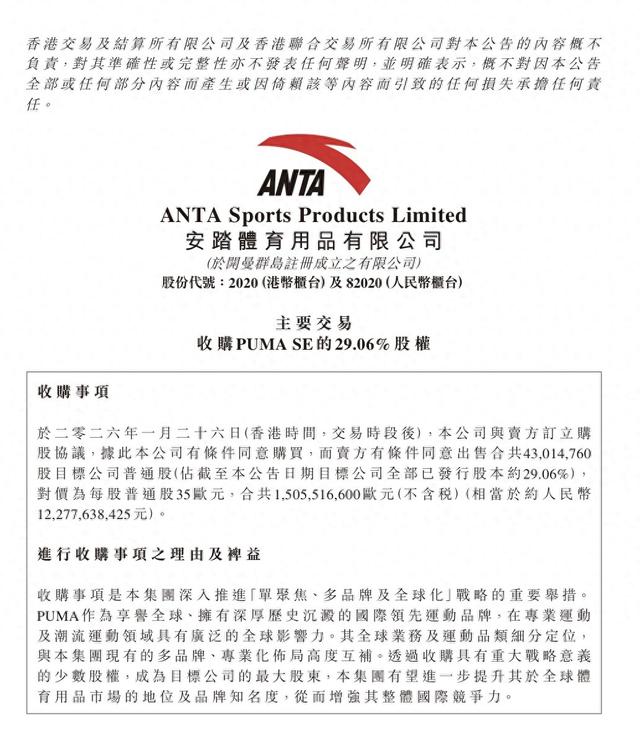
安踏体育(02020.HK):收购PUMA29.06%的股权 多品牌全球化更进一步
Ge Long Hui· 2026-01-27 20:45
Company Dynamics - Anta Sports announced the acquisition of a 29.06% stake in Puma SE for €35 per share, totaling approximately €1.506 billion (around RMB 12.278 billion), fully funded by cash reserves [1] - Upon completion of the transaction, Anta Sports will become the largest shareholder of Puma, which is considered strategically significant [1] Comments - The transaction price is deemed reasonable when considering the long-term brand value, with Puma's projected revenue, net profit, and total assets for 2024 estimated at €8.82 billion, €340 million, and €7.14 billion respectively [1] - Anta Sports stated that the acquisition price represents 0.8 times the enterprise value to the expected revenue for 2027, reinforcing the rationale behind the price [1] Brand Synergy - Puma, with over 70 years of history, excels in various sports sectors and has a strong global presence, particularly in Europe, Latin America, Africa, and India, while its revenue from the Chinese market remains relatively low [2] - The acquisition is expected to enhance Anta Sports' brand portfolio and improve its international competitiveness through complementary product offerings and regional strengths [2] - Anta Sports has successfully developed brands like FILA and Descente in China, and aims to leverage its experience to revitalize Puma's brand value post-acquisition [2] Earnings Forecast and Valuation - The EPS forecast for 2025 is maintained at RMB 4.71, while the forecasts for 2026 and 2027 have been adjusted downwards by 5% and 8% to RMB 4.76 and RMB 5.04 respectively [2] - The current P/E ratios for 2026 and 2027 are projected at 14x and 13x, with a maintained outperform rating for the industry [2] - The target price is set at HKD 110.91, corresponding to 21x and 19x P/E for 2026 and 2027, indicating a potential upside of 45% [2]