电动汽车

Search documents
美股三大指数集体上涨,热门中概股多数走低
Feng Huang Wang Cai Jing· 2025-09-04 14:53
Group 1: Market Performance - The three major U.S. stock indices collectively rose, with the Dow Jones up 0.17%, Nasdaq up 0.27%, and S&P 500 up 0.27% as of the report [1] - Chinese concept stocks showed mixed performance, with Fangdd up over 12%, while companies like Global Data, NIO, and Alibaba fell over 4% [1] Group 2: Federal Reserve and Economic Outlook - The Federal Reserve's latest Beige Book indicates price increases across regions, with most reporting "moderate or slight" inflation and little net change in overall employment levels [2] - The frequency of inflation mentions in the Beige Book is at a near four-year low, suggesting a potential shift in monetary policy [2] Group 3: IPO Regulations - Nasdaq proposed changes to listing standards, requiring new companies primarily operating in China to raise a minimum of $25 million in public offerings [4] Group 4: Gold Market - International gold prices have reached historic highs, with futures prices exceeding $3,620 per ounce and spot prices rising to $3,546, driven by expectations of interest rate cuts and concerns over the Federal Reserve's independence [5] Group 5: Electric Vehicle Market - The impending end of federal tax credits for electric vehicles may significantly impact sales for manufacturers like Tesla, General Motors, and Ford, with analysts predicting a potential 50% drop in U.S. electric vehicle sales [8] - The Inflation Reduction Act allows for tax credits of up to $7,500 for electric vehicles with a certain percentage of critical battery minerals sourced from the U.S. or its trade partners [9] Group 6: Technology and Chip Development - Google is reportedly increasing efforts to promote its self-developed chips, engaging with small cloud service providers that typically purchase Nvidia chips [10] - Google has made progress by reaching an agreement with Fluidstack to host its TPU in a New York data center, indicating a strategic move to enhance its cloud services [10]
特斯拉的Master Plan,没有了特斯拉,也没有了Plan
虎嗅APP· 2025-09-04 13:46
Core Viewpoint - The article discusses Tesla's Master Plan Part IV, highlighting its lack of concrete business goals and data compared to previous plans, suggesting a shift in Musk's focus from practical innovation to broader, less defined aspirations in AI and robotics [14][16][22]. Summary by Sections Introduction - Tesla's Master Plan IV aims to create a sustainable and prosperous world through the integration of AI and robotics, building on two decades of foundational work in electric vehicles and energy products [29][30]. Guiding Principles - Growth is infinite: The article emphasizes that growth in one area does not necessitate decline in another, advocating for technological advancements to create more opportunities [32]. - Technology solves real problems: Products developed during the transition to sustainable prosperity are expected to address real-world issues, enhancing efficiency and sustainability [36]. - Autonomous technology must benefit humanity: Tesla's mission is to develop tools that improve human conditions through autonomous technology [38]. - Broader accessibility drives greater growth: The article argues that a prosperous society requires advanced technologies to be affordable and scalable for everyone [39]. - Accelerating the transition to sustainable prosperity: The article acknowledges the challenges ahead but emphasizes the importance of perseverance in overcoming obstacles [41]. Conclusion - The article concludes that Tesla is on the brink of a revolutionary era that will redefine work, mobility, and energy systems, aiming for a world of sustainable abundance that benefits all [42].


韩国上半年电动汽车销量同比飙升42%,究竟有何缘由?
Zhong Guo Qi Che Bao Wang· 2025-09-04 08:24
Core Insights - The South Korean electric vehicle (EV) market is experiencing a significant recovery, with sales reaching 92,235 units in the first half of the year, marking a year-on-year increase of 42.4% [2] - The government is actively promoting EV adoption through substantial subsidies and infrastructure development, with a budget of 780 billion KRW allocated for purchase incentives [3][5] - Domestic brands are gaining market share, while imported brands like Tesla are seeing a decline, indicating a structural shift towards local dominance in the EV market [4][6] Group 1: Market Growth and Sales Data - In 2024, new electric passenger car sales in South Korea are projected to reach 122,528 units, reflecting a 5.8% year-on-year growth [3] - In May 2025, South Korea's EV sales surpassed 20,000 units for the first time in 14 months, indicating a strong upward trend [3] - The market share of electric vehicles in new registrations was only 8.9% last year, suggesting room for growth despite current increases [4] Group 2: Government Policies and Support - The South Korean government has implemented a comprehensive policy framework combining subsidies, infrastructure development, and long-term planning to stimulate EV demand [5] - The purchase subsidy includes a 20% discount for first-time buyers and additional benefits for families with children, enhancing affordability [3][5] - By the end of this year, the number of fast-charging stations in South Korea is expected to increase to 4,400, improving charging accessibility [4] Group 3: Domestic Industry Dynamics - Local automakers are expanding their electric vehicle product lines, which is a key driver of market recovery [3][5] - The localization of the supply chain, particularly in battery production, is providing domestic manufacturers with a competitive edge, with a projected 75% localization rate by 2025 [6] - Korean automakers maintain an average profit margin of 18%, allowing for continued investment in R&D and competitive pricing strategies [6] Group 4: Lessons and Future Outlook - The success of the South Korean EV market illustrates the importance of a multi-faceted approach that includes a diverse product matrix and robust infrastructure [7][8] - The government's strategy of combining immediate subsidies with long-term planning has effectively stimulated consumer confidence and market growth [7] - The experience of South Korea serves as a model for other countries, emphasizing the need for a complete policy ecosystem to support EV adoption [8][9]

市场监管总局:以标准支撑制造业高质量转型升级
Huan Qiu Wang· 2025-09-04 08:22
Group 1 - The core viewpoint of the article emphasizes the proactive measures taken by the Market Regulation Administration (National Standardization Administration) to support the high-quality development of the manufacturing industry through the establishment of national standards [1][2] - In 2023, over 600 national standards have been released, significantly aiding the transformation and upgrading of the manufacturing sector towards high-end, green, and intelligent development [1][2] - Specific standards have been introduced in key areas such as high-end basic components, electric vehicles, and special processing machine tools, which enhance the industry's value and technological content [1] Group 2 - In the green transformation aspect, national standards have been published focusing on energy consumption efficiency, pollutant emissions, green product evaluation, and resource recycling, promoting the large-scale application of green technologies [2] - The implementation of the national standard for carbon dioxide recovery and disposal in metallurgical lime kilns has facilitated the research and industrial application of carbon capture technology, enabling steel companies to reduce carbon dioxide emissions by 140 kilograms per ton of steel [2] - For the intelligent transformation, standards related to artificial intelligence and industrial internet have been developed, improving the digital and intelligent development levels of the manufacturing industry [2] Group 3 - The Market Regulation Administration plans to continue advancing related work by focusing on key areas and weak links in manufacturing transformation, aiming to revise and establish over 4,000 national standards in fields such as artificial intelligence, IoT, and new materials [3] - There will be an emphasis on monitoring the implementation of standards in key sectors and industries, ensuring that the effectiveness of these standards is fully realized through collaboration with policies in industry, finance, and taxation [3]
印度税务委员会呼吁对豪华电动汽车征税
Guan Cha Zhe Wang· 2025-09-04 07:58
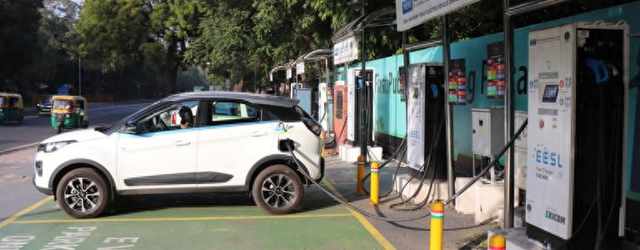
但这项税率减免或许不会运用在已经低至5%税率的电动汽车产品上。提出税率修改建议的印度税务委 员会小组,在详细说明文件中表示,其希望提高电动汽车的税率。 (文/观察者网 张家栋 编辑/高莘) 据路透社当地时间9月2日报道,一份印度政府文件显示,印度税务委员会正提议提高售价超过200万卢 比(约16.2万元人民币)的电动汽车消费税。 当前,由于高关税导致与美国贸易关系恶化,印度总理莫迪正致力于改革国内税收制度。今年8月,印 度政府曾建议大幅削减商品及服务税(GST),以鼓励印度民众购买更多国产商品。该税率削减将覆盖 印度民众的生活用品乃至电子产品,以及汽车等各种商品。 特斯拉Model Y在印度开售 路透社 印度充电站与正在充电的电动汽车 IISD 该小组建议,将售价在200万—400万卢比(约16.2万—32.4万元人民币)之间的电动汽车的商品及服务 税税率从目前的5%提高至18%。该小组还提议将售价超过400万卢比(约32.4万元人民币)的电动汽车 的税率提高至28%,原因是此类汽车面向社会"上层"群体,且主要为进口而非国产。部分提议还称期望 将电动汽车纳入新税率方案中,针对某些奢侈品的40%高税率类别。 据 ...
财经观察 产业向新、开放提质 中国经济屡获“信任票”
Ren Min Wang· 2025-09-04 05:50
Group 1 - Multiple international institutions, including UBS, Deutsche Bank, and Fitch, have raised their forecasts for China's economic growth in 2025, reflecting confidence in the Chinese market [1] - The National Bureau of Statistics reported that in July, the value added of high-tech manufacturing above designated size increased by 9.3% year-on-year, with significant growth in integrated circuit manufacturing and electronic materials [1] - Investment in high-tech manufacturing maintained rapid growth, with aerospace and equipment manufacturing investment increasing by 33.9% from January to July [1] Group 2 - The State Council issued the "Opinions on Deepening the Implementation of 'Artificial Intelligence+' Action," aiming for widespread integration of AI in six key areas by 2027 [2] - China is accelerating its layout in cutting-edge fields such as artificial intelligence, quantum technology, and biomedicine, while promoting high-level opening-up to encourage global enterprises to share development opportunities [2] - The "Artificial Intelligence+" action emphasizes global cooperation and aims to make AI a public good for humanity, potentially bringing tangible cooperation benefits to global enterprises [2] Group 3 - In the first seven months, China's imports and exports to emerging and other markets grew by 5%, accounting for 65.5% of total trade, with significant growth in trade with ASEAN and Africa [3] - The export of electromechanical products increased by 9.3%, representing 60% of total exports, with high-tech and high-value-added products maintaining high export growth rates [3] - The comprehensive advantages of China's large market, efficient supply chain, and new technological revolution are highlighted as reasons for foreign investment in China [3]
特斯拉未来重心转向AI
2 1 Shi Ji Jing Ji Bao Dao· 2025-09-04 05:36
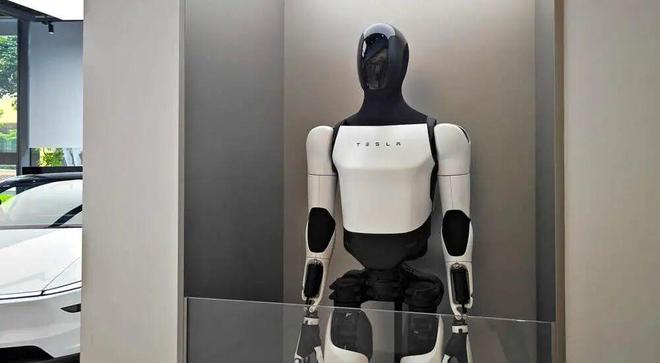
Core Insights - Tesla's "Master Plan" fourth chapter aims to accelerate the transition to "sustainable prosperity" through the integration of AI, automation, and large-scale manufacturing [2][5] - The plan emphasizes products and technologies that help people achieve prosperity, including solar power, battery storage, autonomous vehicles, and the Optimus robot, which is designed to replace humans in repetitive and dangerous tasks [2][4] - The rapid release of the fourth chapter, just two and a half years after the third, marks a significant shift in Tesla's strategic focus from electric vehicles to AI-driven initiatives [2][5] Summary by Sections Master Plan Overview - The fourth chapter of the "Master Plan" is described as a leap rather than a simple step, aiming to redefine fundamental elements of labor, transportation, and energy for a sustainable world [4] - Tesla's CEO Elon Musk stated that 80% of the company's future value will come from robots, indicating a shift in the company's narrative towards robotics [4] Historical Context - Previous chapters of the "Master Plan" focused on developing reliable electric vehicles, solar energy utilization, and full automation, with specific goals and timelines [4][7] - The lack of detailed implementation plans in the fourth chapter contrasts with the more concrete objectives outlined in earlier versions [7] Robotics Focus - The Optimus robot project has faced internal challenges, including leadership changes and a shift in focus towards industrial applications rather than home use [8] - The decision to prioritize industrial scenarios reflects a broader trend in the robotics industry, where companies are moving from demonstration phases to practical applications [8][9] Market Implications - The fourth chapter's emphasis on AI and robotics is seen as a potential catalyst for Tesla's growth, although it also raises concerns about execution risks and competition [5] - The robotics market is expected to see significant advancements in the coming years, with predictions that humanoid robots will achieve substantial efficiency gains in industrial settings [9]
特斯拉的Master Plan,没有了特斯拉,也没有了Plan
Hu Xiu· 2025-09-04 03:11
Core Insights - The article discusses the release of Tesla's Master Plan Part IV, which has generated mixed reactions and lacks the depth and specificity of previous plans [1][9][14]. Group 1: Master Plan Overview - Master Plan Part IV is described as an "epic" but ultimately lacks concrete data and industry-specific goals, making it feel more like a declaration than a strategic plan [9][14][15]. - The plan emphasizes principles such as unlimited growth, innovation breaking constraints, and the necessity of automation benefiting humanity [10][11][36]. Group 2: Public Reception - The announcement received minimal engagement on social media, with only 42 likes on Tesla's Weibo account and 15K likes on X, compared to a much higher engagement on unrelated posts by Musk [3][6]. - The lack of detailed metrics and industry insights contrasts sharply with the comprehensive nature of Master Plan Part 3, which included extensive data and a clear roadmap [16][20]. Group 3: Future Focus - Musk has stated that 80% of Tesla's future value will come from robotics, a claim that has been widely reported but not elaborated upon in the Master Plan itself [15][22]. - The plan suggests a shift in focus from electric vehicles to AI and robotics, indicating a broader vision for Tesla's role in future technological advancements [13][34][52].
马斯克又来“画大饼”了?
Sou Hu Cai Jing· 2025-09-03 16:28
Core Viewpoint - Tesla is integrating hardware and software on a large scale to create a range of products and services that deeply incorporate artificial intelligence into the real world, aiming for a safer, cleaner, and better world [3] Group 1: Tesla's Vision and Strategy - Tesla envisions electric vehicles and humanoid robots as key components in transforming mobility and labor, with autonomous driving technology at the core of this vision [5] - Elon Musk indicated that approximately 80% of Tesla's future value will come from the Optimus humanoid robot project, shifting the company's focus from "energy sustainability" to "reshaping productivity with AI" [6] - Musk anticipates skepticism regarding this ambitious transformation, as some may view it as an impossible task or a mere fantasy without concrete plans [7] Group 2: Guiding Principles for Sustainable Prosperity - Musk outlined five guiding principles for achieving "sustainable prosperity": 1. Technological advancements can solve resource scarcity issues [9] 2. Innovation can break through constraints, similar to how internal combustion engines replaced horses [10] 3. Technology can address real-world problems, enhancing the availability and reliability of clean energy [11] 4. Automation must benefit all of humanity [12] 5. The more inclusive the technology, the more prosperous society will be [13] - These principles suggest a vision where machines create machines and serve humanity, hinting at high cost-performance products and potential regulatory considerations [15] Group 3: Progress and Challenges - Reflecting on Tesla's previous chapters, the ambitious goals of the fourth chapter appear daunting, especially given the unmet targets from earlier plans [16] - The first chapter set a three-step goal, with the third step of creating a more affordable electric vehicle still unfulfilled, and the zero-emission energy goal not yet meeting global standards [17] - The second chapter aimed to create an integrated energy ecosystem and expand product lines, but progress has been slower than expected [19] - The third chapter set quantitative targets for energy storage and renewable power equipment, but achieving these goals will take decades [22] - The fourth chapter seems more like a prelude to the release of Optimus, which is planned for this year, with mass production expected next year [24] Group 4: Market Reactions and Future Outlook - Following the release of the fourth chapter, Tesla's stock price declined for two consecutive days, reflecting market skepticism about the ambitious goals [25] - However, there are indications of interest from major logistics companies in North America, suggesting potential orders for the robots if initial production meets expectations [25] - The realization of a "robot utopia" hinges on the global robot population and profitability, aiming for a self-training cycle that could integrate high-performance robots into everyday life [25]
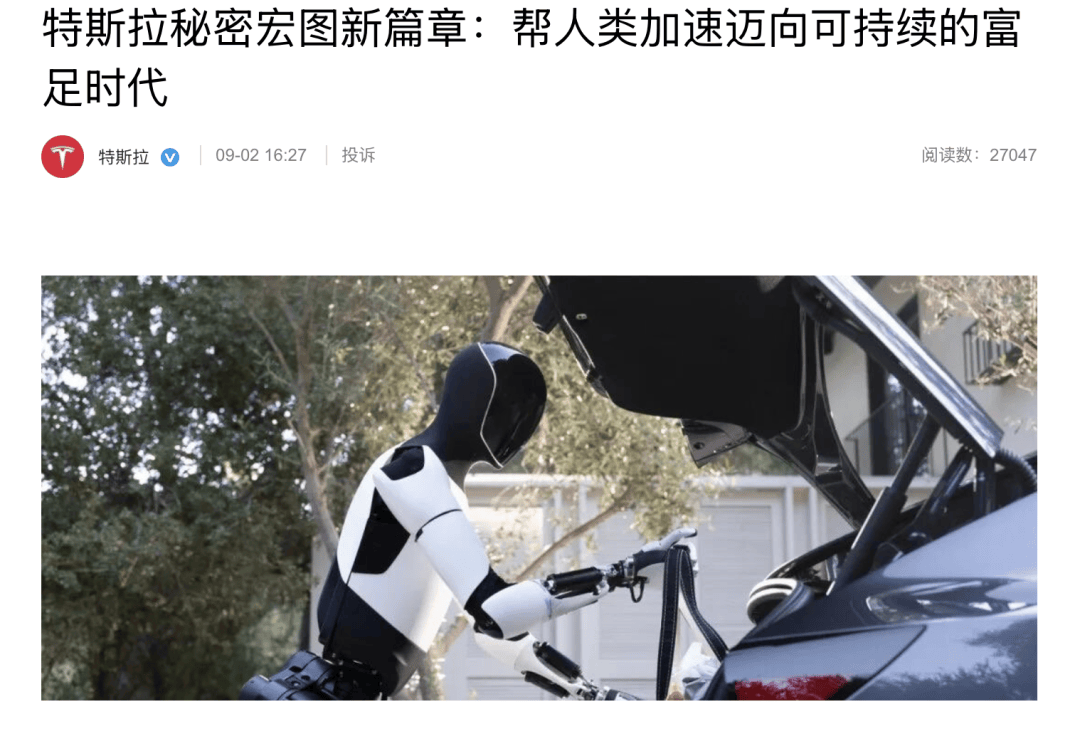
特斯拉未来重心转向AI
21世纪经济报道· 2025-09-03 14:41
Core Viewpoint - Tesla's "Master Plan" Fourth Chapter aims to accelerate the transition to a "sustainable prosperity" through the integration of AI, automation, and large-scale manufacturing capabilities, focusing on products like solar power, battery storage, autonomous vehicles, and the Optimus robot [1][3]. Summary by Sections Master Plan Overview - The Fourth Chapter of the "Master Plan" was released on September 2, marking a faster pace of updates compared to previous chapters, which were released in 2006, 2016, and 2023, with intervals of ten and seven years [1]. - The plan emphasizes helping humanity achieve prosperity through innovative products and technologies [1][3]. Focus on Optimus Robot - The Optimus robot is positioned as a key element in redefining labor, aiming to take over monotonous and dangerous tasks, thereby allowing people to pursue their passions [5]. - Elon Musk stated that 80% of Tesla's future value will come from robots, indicating a shift in the company's strategic focus from electric vehicles to AI-driven solutions [5]. Historical Context - Previous chapters of the "Master Plan" focused on reliable electric vehicles, solar energy utilization, and energy storage, with specific goals and timelines [5][8]. - The Fourth Chapter, however, lacks detailed implementation plans and specifics, leading to criticism regarding its substance [6][8]. Internal Challenges and Market Dynamics - Internal challenges have arisen, including leadership changes in the Optimus project and a shift in focus towards industrial applications due to previous setbacks [9][10]. - The industrial robot market is evolving, with companies moving from demonstration phases to practical applications, indicating a broader trend in the industry [10].