
云计算

Search documents
机器人的“ChatGPT时刻”何时到来?英伟达高管:需满足2个条件
Xin Lang Cai Jing· 2025-12-02 04:11
Core Viewpoint - Amazon's cloud service provider AWS hosted the re:Invent 2025 annual conference in Las Vegas, where Nvidia's robotics and edge computing ecosystem head Amit Goel discussed the future of robotics and its potential "ChatGPT moment" [1] Group 1 - Amit Goel emphasized that for robotics to reach a transformative moment, hardware must become as affordable and ubiquitous as smartphones [1] - He stated that practical intelligence in robots is essential for their widespread adoption [1] - Goel did not provide a specific timeline for this development but mentioned that all necessary "ingredients" for achieving this moment are already in place, and the ecosystem is prepared with the relevant "recipe" [1]

12月2日国际晨讯丨白银再创新高 加密货币市场24小时内近27万人爆仓
Sou Hu Cai Jing· 2025-12-02 03:12
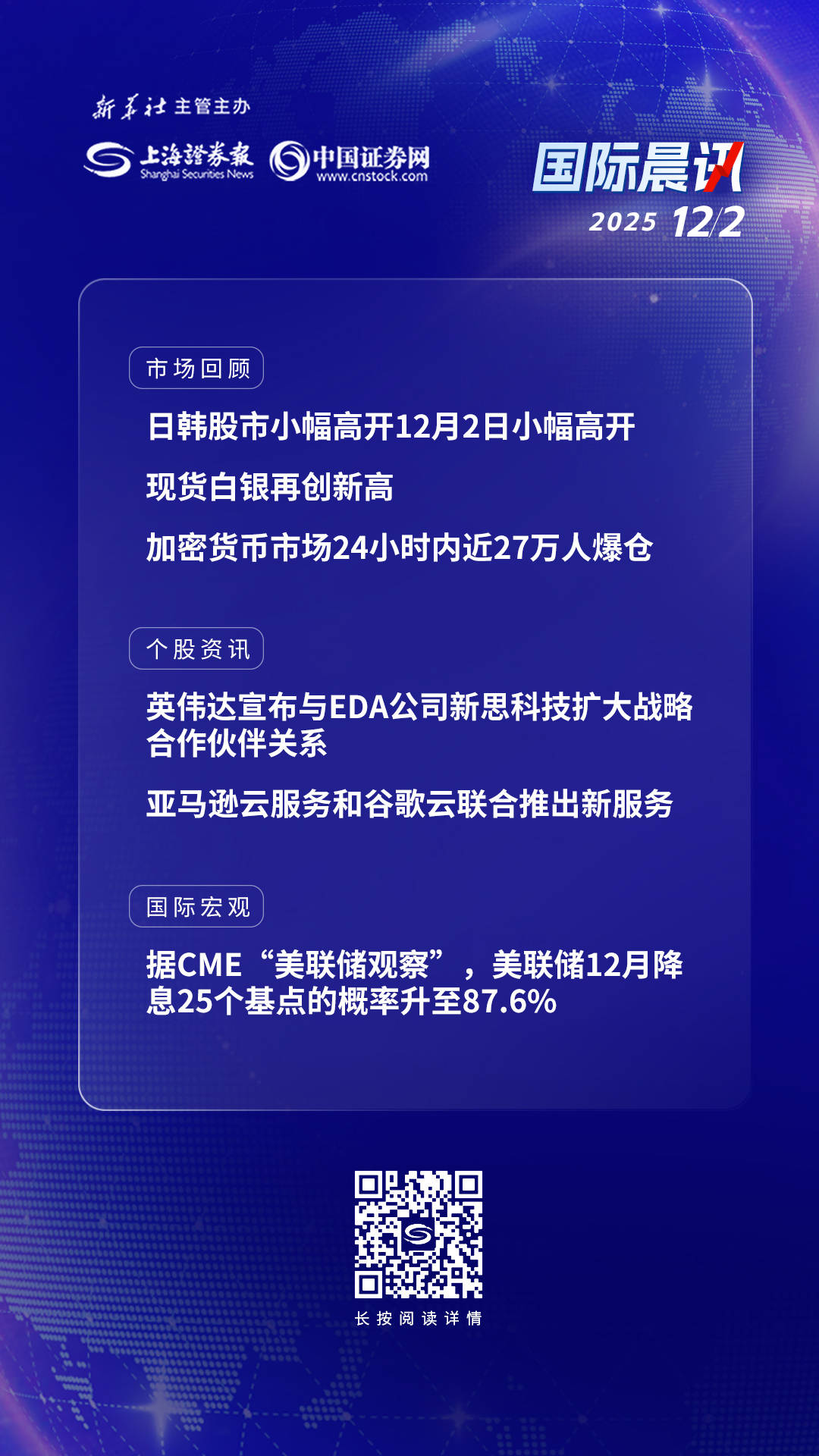
Market Overview - Japanese and South Korean stock markets opened slightly higher on December 2, with the Nikkei 225 index rising by 0.39% and the KOSPI increasing by 0.48% [5] - International gold and silver prices strengthened, with spot silver reaching a new high, breaking above $58.8 per ounce, marking a year-to-date increase of over 100% [5] - The cryptocurrency market faced significant sell-offs, with nearly 270,000 investors liquidated in the last 24 hours, totaling $983 million in liquidations [5] Company News - Nvidia announced an expansion of its strategic partnership with EDA company Synopsys, investing $2 billion to purchase common stock, which led to a pre-market surge of over 11% in Synopsys' stock price, closing up 4.85% [7] - Amazon Web Services and Google Cloud launched a new service allowing customers to establish high-speed connections between the two cloud platforms in minutes, significantly reducing setup time compared to previous methods [7] International Macro - According to CME's FedWatch Tool, the probability of the Federal Reserve lowering interest rates by 25 basis points in December has risen to 87.6%, with a 12.4% chance of maintaining current rates [8] - The Bank of England's hawkish policymaker, Megan Greene, indicated that further weakening in the labor market is needed before she can support another rate cut, suggesting stability in employment and job vacancy data [8]

企业级云服务器如何选?从可靠性到成本治理,看 AWS 的企业级能力体系
Jiang Nan Shi Bao· 2025-12-02 02:50
企业的核心业务通常要求全年不间断运行。云服务器需要具备: 多可用区(Multi-AZ)架构 可预测的高可用性 企业数字化转型不断深化,业务系统的可用性、数据安全性和架构弹性正成为企业核心竞争力的重要组 成部分。云服务器作为企业 IT 基础设施的底座,其选型不再只是单项性能比较,而是对稳定性、安全 治理、全球能力、成本可控性和生态能力的综合评估。 在企业级需求不断扩大的背景下,AWS(Amazon Web Services)因其体系化能力和成熟度,被许多企 业纳入重点考察范围。从行业经验与大量企业级场景的实践来看,企业在进行云服务器选型时关注的关 键因素正在趋于明确。 一、企业级云服务器的五大核心判断标准 1.高可用与稳定性(High Availability) 跨区域容灾能力 支持应对高并发与流量突增 架构的稳定性决定了业务连续性,直接关系到企业运营效率与客户体验。 2.企业级安全体系(Security & Compliance) 企业在云上的数据规模庞大,权限链路复杂,对安全能力要求极高。核心能力包括: 身份与访问管理(IAM)的细粒度权限控制 数据加密体系(KMS 等多层加密方式) 全链路日志与审计记录( ...

东海证券晨会纪要-20251202
Donghai Securities· 2025-12-02 02:49
[晨会纪要 Table_NewTitle] 20251202 [table_summary] 重点推荐 财经要闻 [Table_Reportdate] 2025年12月02日 [证券分析师: Table_Authors] 方霁 S0630523060001 fangji@longone.com.cn 证券分析师: 李嘉豪 S0630525100001 lijiah@longone.com.cn 晨 会 纪 要 证券研究报告 HTTP://WWW.LONGONE.COM.CN 请务必仔细阅读正文后的所有说明和声明 ➢ 1.阿里云Q3营收同比增长34%,华为Mate 80系列与夸克AI眼镜发布——电子行业周报 2025/11/24-2025/11/30 ➢ 2.看好年末风格切换与"开门红"推进下的板块配置机会——非银金融行业周报 (20251124-20251130) ➢ 1.法国总统马克龙将访华 ➢ 2.日本2年期国债收益率升至1%,20年期国债收益率升至2.88% ➢ 3.美国11月ISM制造业PMI为48.2,预期49 | 系列与夸克 眼镜发布——电 1.1. 阿里云 Q3 34%,华为 Mate 80 A ...
亚马逊年度云计算大会开幕,今晚CEO登场,新AI芯片能“追赶谷歌TPU”吗?
Hua Er Jie Jian Wen· 2025-12-02 02:23
Core Insights - The AWS re:Invent conference has commenced, with significant anticipation surrounding the upcoming CEO keynote and the release of the new Nova AI model and Trainium 3 chip [1] - AWS's cloud market share has slightly declined from 49.7% to 45.1%, raising investor concerns about its AI strategy and chip launch timeline [1][9] - The performance of Trainium 3 and Nova will be critical in determining AWS's competitive position against rivals like Google and Microsoft [1] Trainium 3 Chip - Trainium 3 is expected to improve performance by approximately 40% compared to its predecessor, Trainium 2 [3] - There are concerns regarding AWS's ability to keep pace with competitors, as Google’s TPU is already in its seventh generation and NVIDIA’s GPU is in its tenth [3] - Some customers have faced technical challenges with Trainium, leading to a preference for Google’s TPU among key partners like Anthropic [3] - The anticipated preview release of Trainium 3 is expected by the end of 2025, with potential delays into the second quarter of 2026 [3] Nova AI Model - The new Nova model is designed to be a multi-modal AI capable of processing text, speech, images, and video, positioning it as an all-in-one product to compete with Google’s Gemini [5] - AWS aims to address its shortcomings in advanced AI models with the Nova release, although current models are not yet mainstream choices compared to those from OpenAI or Anthropic [5] - Nova is reported to be the second most popular model on AWS's Bedrock platform, with over 10,000 customers including Siemens and Coinbase [5] Partnerships and Collaborations - AWS is expanding its collaboration with Anthropic, which is a key ally, and is developing a supercomputer project that could generate significant revenue for AWS [7][8] - Anthropic is diversifying its computing support by partnering with competitors, indicating a strong demand for computational power [7] - AWS has secured a seven-year, $38 billion agreement with OpenAI to run and expand its workloads on AWS infrastructure [8] Market Dynamics - Despite AWS achieving its fastest growth in 11 quarters, investor sentiment remains cautious due to concerns over Trainium 3 and Anthropic's partnerships with other cloud providers [9] - AWS's backlog has increased by 22% year-over-year to $200 billion, indicating healthy demand trends [9] - The overall cloud infrastructure market share for AWS has decreased from approximately 49.7% in 2022 to 45.1% in the first half of 2025 [9] AI Ecosystem Development - AWS is actively building a comprehensive AI ecosystem to solidify its leadership in the cloud computing market [11][12] - Recent announcements at the conference highlight AWS's commitment to integrating AI capabilities across various industries [12] - Collaborations with companies like BlackRock and Visa demonstrate AWS's focus on enhancing AI applications in financial services [14]
AI基础设施资本开支强劲推动,关注通信ETF(515880)
Mei Ri Jing Ji Xin Wen· 2025-12-02 02:10
Core Viewpoint - The AI infrastructure capital expenditure is expected to drive significant growth in the sector, with major cloud providers projected to increase their capital spending substantially in the coming years [1][2]. Group 1: Market Performance - The computing sector continued its upward trend on December 1, with the Communication ETF (515880) rising by 2.84% and the ChiNext AI ETF (159388) increasing by 2.45% [1]. - The anticipated capital expenditure for the four major U.S. cloud providers (Google, Microsoft, Meta, Amazon) is projected to reach $367 billion in 2025, representing a year-on-year growth of 59%, with a further increase to $495 billion in 2026, reflecting a 35% growth [1]. Group 2: Demand Drivers - AI infrastructure capital expenditure remains a strong driving force for demand, with the ongoing advancements in AI models and hardware, such as Gemini3 and TPU7, contributing to increased computational needs [1]. - The competition among major players in the AI space is expected to further boost overall demand for computing power, benefiting various sectors including optical modules and servers in the A-share market [1]. Group 3: Investment Strategy - The market outlook for artificial intelligence remains positive, with suggestions for investors to consider low-position opportunities in the Communication ETF (515880) and ChiNext AI ETF (159388) through methods like dollar-cost averaging [2].



海内外利好密集来袭,AI算力链迎四大增量,云计算ETF(159890)涨1.85%
Sou Hu Cai Jing· 2025-12-02 01:13
Core Insights - The article highlights the strong performance of sectors such as consumer electronics, components, and communication devices, with a focus on AI infrastructure and applications driving growth in cloud computing ETFs [1] Group 1: AI Computing Developments - Google's TPU has introduced a new direction for AI computing with its OCS next-generation optical interconnect solution, designed specifically for accelerating AI and machine learning tasks, marking it as a significant support following GPUs [6] - Alibaba has raised its AI investment guidance, confirming a potential increase in capital expenditures to 380 billion yuan over the next three years, with cloud business growth reported at 34% [7] - Beijing has launched a "space computing" plan to build large-scale data centers in low Earth orbit, aiming to transfer substantial AI computing power to space [8][9] Group 2: Market Growth Projections - According to the China Academy of Information and Communications Technology, the global computing power scale is projected to grow to over 16 ZFLOPS by 2030, with a compound annual growth rate exceeding 50% [3] - The global cloud computing market is expected to reach $692.9 billion in 2024, reflecting a year-on-year growth of 20.3%, while China's cloud computing market is anticipated to grow to 828.8 billion yuan, a 34.4% increase [3] - The cloud computing ETF (159890) tracks the CSI Cloud Computing and Big Data Theme Index, which includes leading companies in optical modules, electronic terminals, and software development [3][13] Group 3: Investment Opportunities - The investment landscape for computing power is evolving, with new stock offerings from companies like Moore Threads and Muxi indicating a potential shift in the investment paradigm [2] - The demand for AI computing infrastructure is expected to remain robust, with significant opportunities in the supply chain for optical modules and related technologies [18][19]



美股五连涨,结束!英伟达,入股新思科技!
Zhong Guo Ji Jin Bao· 2025-12-02 00:20
Market Overview - US stock market ended a five-day rally with major indices declining: Dow Jones down 427.09 points (0.90%) to 47289.33, Nasdaq down 89.77 points (0.38%) to 23275.92, and S&P 500 down 36.46 points (0.53%) to 6812.63 [3] - The ISM Manufacturing PMI for November fell to 48.2, marking the largest contraction in four months and remaining below the neutral level of 50 for nine consecutive months [3] Oil Market - Crude oil prices increased due to supply concerns following an attack on a Black Sea terminal, with WTI crude rising by $0.77 (1.32%) to $59.32 per barrel and Brent crude up $0.79 (1.27%) to $63.17 per barrel [10] - The Caspian Pipeline Consortium announced a suspension of operations at its Black Sea terminal due to drone attacks, although loading operations at Novorossiysk port continued [10] Nvidia and Synopsys Partnership - Nvidia announced a $2 billion investment in Synopsys, aiming to enhance collaboration in AI and accelerated computing, which will help design and validate smart products more efficiently [4][5] - Nvidia's CEO Jensen Huang emphasized the significance of this partnership for innovation in the design and engineering sectors [5] Semiconductor Sector - Mixed performance in the semiconductor sector with Philadelphia Semiconductor Index down 0.07%, while companies like ASML and NXP Semiconductors saw gains of over 2% [5] - Micron Technology plans to invest $9.6 billion in a new AI memory chip factory in Japan, expected to start production around 2028, supported by substantial government subsidies [7] Large Tech Stocks - Major tech stocks showed mixed results, with Apple up over 1% and Amazon rising 0.28%, while Google, Microsoft, and Facebook experienced declines of over 1% [8]


“谷歌AI生态链”牛市逻辑再强化! 云端AI算力需求猛增 MongoDB(MDB.US)业绩大超预期
智通财经网· 2025-12-02 00:09
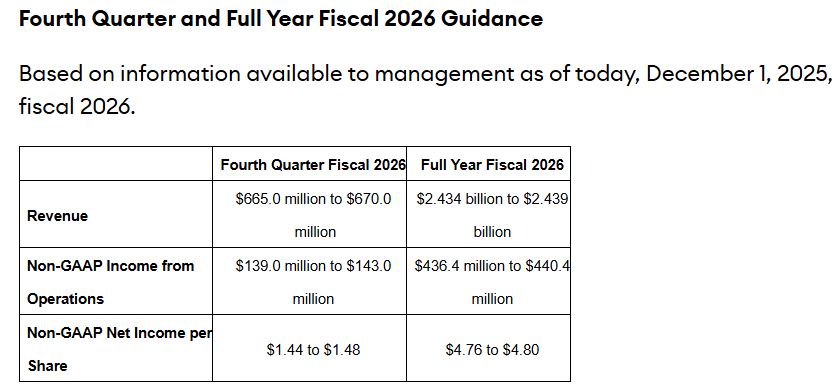
Core Insights - MongoDB reported strong earnings for Q3 of fiscal year 2026, exceeding Wall Street expectations, leading to a stock price surge of over 20% in after-hours trading [1][5] - The company's growth is closely tied to its integration with Google Cloud and the Gemini AI product line, positioning it as a key beneficiary in the AI ecosystem [2][7] Financial Performance - For Q3, MongoDB's total revenue was approximately $628 million, representing a year-over-year growth of 19%, significantly above the expected $592 million [4][5] - The Non-GAAP earnings per share were reported at $1.32, far exceeding the anticipated $0.80 [4][5] - MongoDB's core product, Atlas, achieved a revenue increase of 30%, accounting for about 75% of total revenue, surpassing the expected growth of 20%-25% [4][5] Future Guidance - The company raised its revenue guidance for Q4 to a range of $665 million to $670 million, well above the Wall Street consensus of approximately $626 million [2][4] - For the full fiscal year 2026, MongoDB increased its revenue forecast to between $2.434 billion and $2.439 billion, up from a previous estimate of $2.34 billion to $2.36 billion, and above the average analyst expectation of $2.36 billion [3][4] Market Context - The strong performance of MongoDB is reflective of the broader demand for AI-related infrastructure and services, particularly in the context of Google's significant investments in AI and cloud computing [6][8] - The launch of Google's Gemini AI products has driven a surge in AI token processing, indicating a robust demand for AI capabilities that MongoDB is well-positioned to support [9][10]

白银大涨创新高;造车新势力公布11月销量|南财早新闻
2 1 Shi Ji Jing Ji Bao Dao· 2025-12-01 23:29
Macro Economy - As of November 30, China's express delivery volume has exceeded 180 billion pieces, surpassing the total expected for the entire year of 2024, which is 175.08 billion pieces, marking a historical high [3] - The National Development and Reform Commission has issued a list of industry scope for real estate investment trusts (REITs) projects for 2025, including data center and artificial intelligence infrastructure projects [3] Investment News - On December 1, the A-share market saw a significant upward trend, with the Shanghai Composite Index closing up 0.65% at 3914.01 points, and the Shenzhen Component Index and ChiNext Index rising by 1.25% and 1.31% respectively, with a market turnover of 1.89 trillion yuan [4] - The Shenzhen Stock Exchange announced a periodic adjustment of sample stocks for several indices, including the Shenzhen Component Index and ChiNext Index, effective December 15 [4] - Over 160 stocks have been recommended by brokerages for December, with companies like Zhongji Xuchuang, Midea Group, and Giant Network frequently mentioned [4][5] Company Developments - In November, various new energy vehicle companies reported their delivery figures, with Leap Motor achieving a record high of 70,327 units delivered, a year-on-year increase of over 75% [6] - ByteDance's Doubao team released a technical preview of the Doubao mobile assistant, collaborating with phone manufacturers on the operating system level [6] - CATL announced a salary adjustment for employees at levels 1-6, increasing the base salary by 150 yuan, effective January 1, 2026 [6] - NVIDIA announced a $2 billion investment to purchase common stock of Synopsys and will expand cooperation to enhance the design and verification of smart products [6] International Dynamics - On December 1, U.S. stock indices collectively fell, with the Dow Jones down 0.89% and the Nasdaq down 0.38%, while many popular tech stocks declined [8] - The price of silver in London reached a historical high, surpassing $57 per ounce, with an increase of over 90% this year, significantly outperforming gold [8]