保险

Search documents
人民银行:截至2025年末银行间债券市场的法人机构成员共3923家
Bei Jing Shang Bao· 2026-02-11 10:27
Core Insights - The People's Bank of China released the financial market operation status for 2025, indicating a total of 3,923 institutional members in the interbank bond market, all of which are financial institutions [1] Group 1: Debt Holding - By the end of 2025, the top 50 investors in corporate credit bonds held 53.4% of the total debt, primarily concentrated among state-owned large commercial banks (self-operated), public funds (asset management), and insurance financial institutions (asset management) [1] - The top 200 investors held 84.5% of the total debt in corporate credit bonds [1] Group 2: Trading Volume - In terms of trading scale, the top 50 investors in corporate credit bonds accounted for 59.2% of the trading volume, mainly concentrated in securities companies (self-operated), fund companies (asset management), and joint-stock commercial banks (self-operated) [1] - The top 200 investors accounted for 89.9% of the trading volume in corporate credit bonds [1]
平安人寿保险公司增资至约360亿
Xin Lang Cai Jing· 2026-02-11 10:19
天眼查App显示,近日,中国平安人寿保险股份有限公司发生工商变更,注册资本由338亿人民币增至 约360.03亿人民币,增幅约7%。该公司成立于2002年12月,法定代表人为杨铮,经营范围包括办理各 种法定人身保险业务、证券投资基金销售业务等,由中国平安保险股份有限公司、深圳市投资管理公 司、深圳市新豪时投资发展有限公司等共同持股。 ...

张晨松上任首考:光大永明“造血”局
阿尔法工场研究院· 2026-02-11 10:13
Core Viewpoint - The ability to transform the favorable conditions of the capital market into a long-term stable "blood-making" mechanism is crucial for the effectiveness of various capital infusion measures [4] Group 1: Capital Adequacy and Regulatory Environment - As of the end of Q4 2025, the average core solvency ratio for disclosed life insurance companies is approximately 110%-130%, while large listed life insurance companies maintain a core solvency ratio of 140%-200% [4] - Everbright Sun Life's core solvency ratio is reported at 73.85%, significantly below the industry average, indicating severe challenges in its capital structure [4] - The comprehensive solvency ratio of 129.01% is slightly above the regulatory focus line of 120%, but still under pressure, especially considering it includes a 1.2 billion yuan capital supplement bond issued last year [4][5] Group 2: Financial Performance and Losses - Everbright Sun Life has recorded substantial accounting losses totaling approximately 3.6 billion yuan from 2022 to 2024, which has eroded its equity, a key component of core capital [7] - In 2025, the company managed to turn a profit with a net income of 110 million yuan, aided by favorable market conditions [11] Group 3: Strategic Adjustments and Product Structure - The company is undergoing a transformation by significantly adjusting its product structure, increasing the proportion of participating insurance products to 67% of new long-term insurance premiums, which helps share investment risks with policyholders [12] - The shift towards "insurance + pension" ecosystems aims to align long-term liabilities with long-term assets, although it consumes core capital [12][14] Group 4: Industry Challenges and Regulatory Pressures - The insurance industry faces structural challenges during its transformation, with a persistent downward trend in interest rates compressing returns on traditional fixed-income assets and increasing volatility in equity investments [14] - Regulatory measures have been introduced to guide the industry towards reducing high guaranteed yield products and developing participating and universal insurance products to better match liability costs with investment returns [14][15] Group 5: Future Outlook and Strategic Considerations - The company is at a critical juncture where successful capital increase of at least 1.875 billion yuan by Q1 2026 is essential to avoid entering a conservative survival mode that could halt strategic transformation [12][17] - The management must maintain sufficient capital as a buffer against uncertainties, and the effective coordination of capital, strategic transformation, and regulatory compliance is vital to break the cycle of losses and capital consumption [17]


北水动向|北水成交净买入48.16亿 科网股再度分化 中芯国际(00981)绩后遭抛售
智通财经网· 2026-02-11 10:05
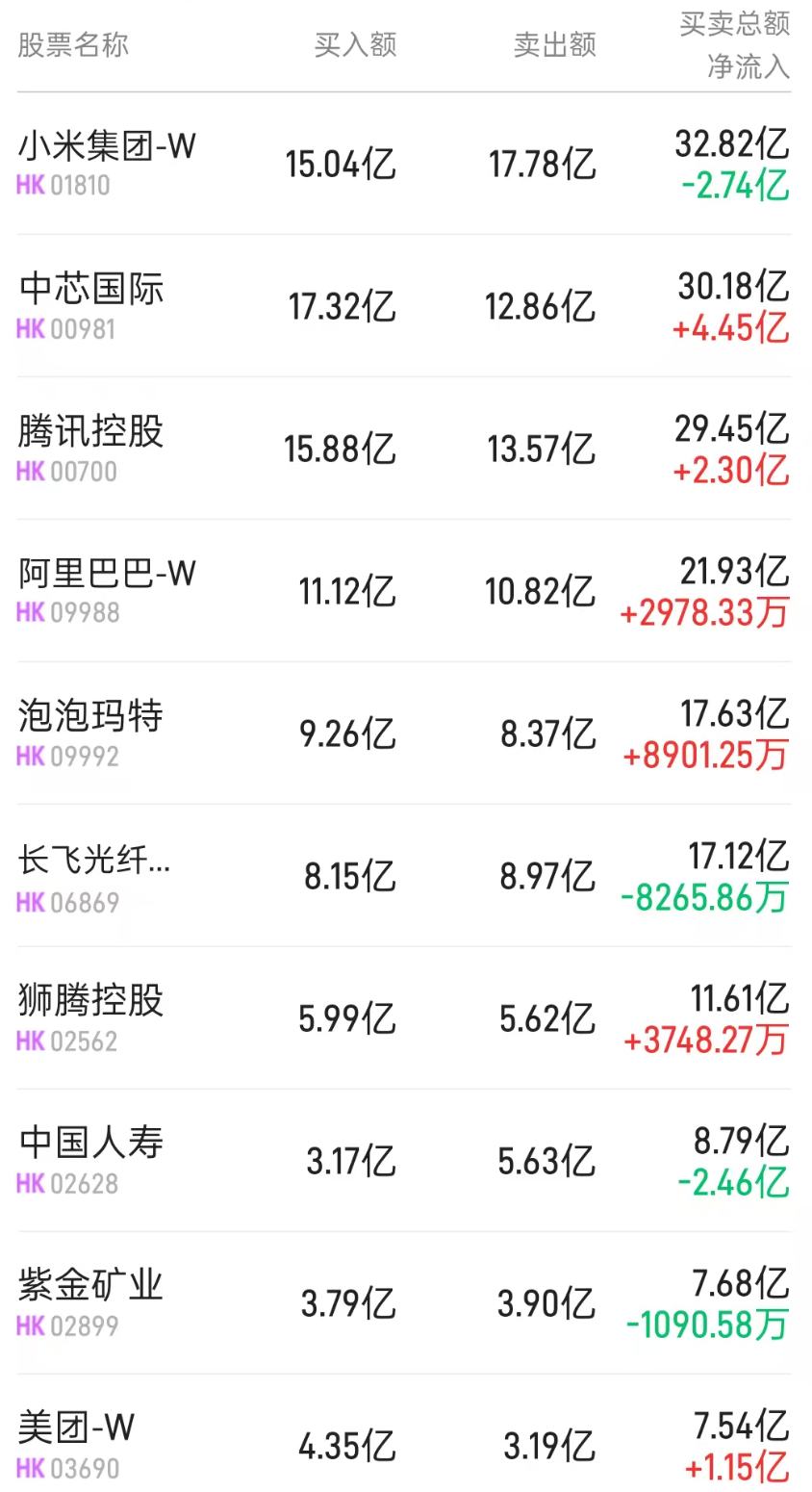
Group 1 - The Hong Kong stock market saw a net inflow of 4.816 billion HKD from Northbound trading, with 2.824 billion HKD from Shanghai and 1.992 billion HKD from Shenzhen [1] - The most bought stocks included Tencent (00700), Zijin Mining International (02259), and Meituan-W (03690), while the most sold stocks were Alibaba-W (09988), SMIC (00981), and China Life (02628) [1] Group 2 - Xiaomi Group-W had a net inflow of 15.04 million HKD, while SMIC experienced a net outflow of 17.32 million HKD [2] - Tencent Holdings saw a net inflow of 15.88 million HKD, and Alibaba-W had a net outflow of 11.12 million HKD [2] Group 3 - China Life faced a net outflow of 3.17 million HKD, while Meituan-W had a net inflow of 4.35 million HKD [3] - The net inflow for Zijin Mining International was 3.25 million HKD, indicating positive market sentiment towards the company [4][5] Group 4 - Meituan announced plans to acquire Dingdong Group's "Dingdong Grocery" business for approximately 717 million USD, which is expected to enhance its market position in fresh food delivery [5] - Zijin Mining International's acquisition of joint gold assets is projected to increase its gold production at a compound annual growth rate of about 37% from 2025 to 2027 [5] Group 5 - China Life's net outflow is attributed to ongoing discussions about deposit migration, with expectations that a significant portion of deposits will remain in the banking system [6] - SMIC's revenue guidance for Q4 2025 is expected to exceed market expectations, while its gross margin guidance is slightly below market forecasts [6]





港股11日涨0.31% 收报27266.38点
Xin Hua Wang· 2026-02-11 09:59
Market Overview - The Hang Seng Index rose by 83.23 points, an increase of 0.31%, closing at 27,266.38 points with a total turnover of HKD 217.218 billion [1] - The National Enterprises Index increased by 25.43 points, closing at 9,268.18 points, a rise of 0.28% [1] - The Hang Seng Tech Index gained 48.96 points, closing at 5,499.99 points, reflecting a growth of 0.9% [1] Blue-Chip Stocks - Tencent Holdings decreased by 0.54%, closing at HKD 548 [1] - Hong Kong Exchanges and Clearing rose by 0.19%, closing at HKD 418 [1] - China Mobile increased by 0.06%, closing at HKD 78.45 [1] - HSBC Holdings fell by 0.36%, closing at HKD 139.8 [1] Local Hong Kong Stocks - Cheung Kong Holdings rose by 0.21%, closing at HKD 46.82 [1] - Sun Hung Kai Properties increased by 0.62%, closing at HKD 129.8 [1] - Henderson Land Development gained 0.49%, closing at HKD 32.96 [1] Chinese Financial Stocks - Bank of China remained unchanged, closing at HKD 4.72 [1] - China Construction Bank rose by 0.37%, closing at HKD 8.15 [1] - Industrial and Commercial Bank of China decreased by 0.15%, closing at HKD 6.56 [1] - Ping An Insurance fell by 1.29%, closing at HKD 72.5 [1] - China Life Insurance dropped by 3.94%, closing at HKD 34.12 [1] Oil and Petrochemical Stocks - Sinopec rose by 1.66%, closing at HKD 5.51 [1] - PetroChina increased by 0.75%, closing at HKD 9.38 [1] - CNOOC gained 0.65%, closing at HKD 24.8 [1]




上市公司春节前分红创新高
Sou Hu Cai Jing· 2026-02-11 09:56
此外,民营企业分红意愿明显提升,分红金额翻倍增长。民企春节前分红金额616亿元,同比增长1.3 倍,在春节前分红中占比由2025年的8%升至18%。(记者刘羽佳、刘慧) 近期,上市公司春节前分红持续推进。记者从中国证监会获悉,2025年12月至2026年1月底,沪深北证 券交易所235家上市公司在春节前两个月实施春节前分红,金额合计3488亿元,超2025年春节前分红总 额。 其中,金融和大消费行业是分红主力。银行业春节前分红2434亿元,占比近七成;保险业合计分红54亿 元,11家券商分红55亿元。 证监会资料图 ...
金融监管总局郭武平:保险公司将针对购物餐饮等各类消费场景开发新产品
Bei Jing Shang Bao· 2026-02-11 09:48
Group 1 - The State Council Information Office held a press conference on February 11 to introduce the 2026 "Lego New Spring" special event and ensure market supply during the Spring Festival [1] - The spokesperson from the Financial Regulatory Administration announced that insurance companies will develop new insurance products targeting various consumption scenarios such as shopping, dining, travel, and sports [1] - In the consumer goods sector, there will be an emphasis on enhancing the functionality of auto insurance platforms and second-hand car information services, along with accelerating the establishment of a comprehensive vehicle classification system to promote automobile consumption [1] Group 2 - In the service consumption sector, there is a focus on integrating consumption promotion with improving people's livelihoods, better meeting the service consumption needs related to elderly care and health [1] - The development of commercial insurance annuity products that combine elderly risk protection with wealth management is encouraged, along with support for commercial health insurance aimed at chronic disease patients and the elderly [1] - There is a strong push for the development of commercial long-term care insurance and the optimization of financial service models in areas such as culture, tourism, sports, and education to stimulate the vitality of improved service consumption [1]
央行发布2025年金融市场运行情况
Xin Lang Cai Jing· 2026-02-11 09:41
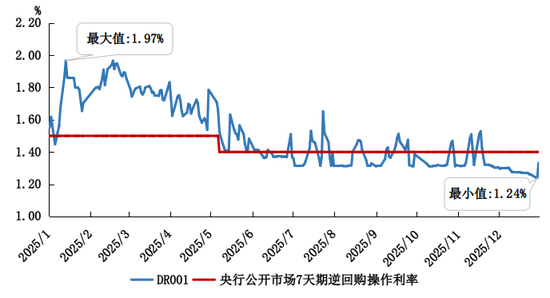
Group 1: Money Market Operations - In 2025, the average daily transaction volume of interbank lending was 361.07 billion yuan, a decrease of 12.1% compared to 2024 [1] - The average daily transaction volume of bond repurchase in the interbank market was 6.9 trillion yuan, an increase of 3.0% compared to 2024 [1] - By the end of 2025, the outstanding balance of interbank lending was 1.0 trillion yuan, while the outstanding balance of bond repurchase in the interbank market was 12.0 trillion yuan [1] Group 2: Bond Market Operations - In 2025, net financing for government bonds reached 1.38 trillion yuan, an increase of 250 billion yuan compared to 2024 [5] - Net financing for corporate bonds was 240 billion yuan, an increase of 48.23 billion yuan compared to 2024 [5] - The bond market's custody balance was 196.7 trillion yuan by the end of 2025 [5] Group 3: Derivatives Market Operations - The transaction volume of the RMB derivatives market in the interbank market was 58.5 trillion yuan, an increase of 58.6% compared to 2024 [11] - The transaction volume of government bond futures was 9.7 trillion yuan, an increase of 43.9% compared to 2024 [11] - The closing price of the 10-year government bond futures main contract was 107.9 yuan, a decrease of 1.0% compared to the end of 2024 [11] Group 4: Commercial Paper Market Operations - In 2025, the acceptance amount of commercial bills was 42.7 trillion yuan, while the discount amount was 33.9 trillion yuan [13] - By the end of 2025, the acceptance balance of commercial bills was 21.2 trillion yuan, an increase of 7.2% compared to the end of 2024 [13] - The discount balance was 16.5 trillion yuan, an increase of 11.2% compared to the end of 2024 [13] Group 5: Stock Market Operations - By the end of 2025, the Shanghai Composite Index closed at 3968.8 points, an increase of 18.4% compared to the end of 2024 [15] - The Shenzhen Component Index closed at 13525.0 points, an increase of 29.9% compared to the end of 2024 [15] - The average daily transaction volume of both markets was 1.70454 trillion yuan, an increase of 61.9% compared to 2024 [15] Group 6: Bond Market Holder Structure - As of the end of 2025, there were 3923 institutional members in the interbank bond market, all of which were financial institutions [30] - The top 50 investors in corporate credit bonds held 53.4% of the total, mainly concentrated in state-owned commercial banks, public funds, and insurance financial institutions [30] - The top 200 investors held 84.5% of the total bonds [30]
建信人寿召开2026年党的建设和经营管理工作会议
Xin Lang Cai Jing· 2026-02-11 09:41
Core Viewpoint - The meeting emphasized the importance of high-quality development and strategic transformation for the year 2026, aligning with national policies and the company's three-year transformation plan [1][2][5]. Group 1: Summary of 2025 Achievements - The year 2025 was highlighted as a critical year for the company, marking the end of the "14th Five-Year Plan" and showcasing significant achievements in high-quality development [1][4]. - The company successfully implemented the "One Three Five Six Ten" transformation strategy, focusing on cost reduction, quality improvement, efficiency enhancement, and risk control [1][4]. Group 2: Goals and Key Tasks for 2026 - The year 2026 is identified as the beginning of the "15th Five-Year Plan" and the completion of the three-year transformation goals [2][5]. - The company aims to enhance its capabilities, focus on core responsibilities, and promote integrated comprehensive operational transformation [2][5]. - Key areas of focus include deepening reforms, strengthening value creation, and ensuring a stable and sustainable high-quality development trajectory [2][5]. Group 3: Strategic Directions and Operational Focus - The meeting outlined several strategic directions for 2026, including: - Strengthening the foundation through party building and fostering development synergy [3][6]. - Aligning with national strategies and enhancing investment capabilities [3][6]. - Utilizing digital transformation to improve operational efficiency and customer service quality [3][6]. - Ensuring risk control and compliance as fundamental safeguards for the company's operations [3][6].
32万亿银行定存到期,保险成最大赢家?银保“开门红”年初爆火,寿险业或现新拐点
Xin Lang Cai Jing· 2026-02-11 09:36
Core Viewpoint - In 2026, a record 32 trillion yuan of residential time deposits will mature, with over 60% concentrated in the first quarter, prompting questions about the future allocation of these funds [2][8]. Group 1: Monetary Policy and Market Changes - The central bank continues to implement a prudent monetary policy, lowering the re-lending and rediscount rates to guide market interest rates downwards, with a recent reduction of 0.25 percentage points announced on January 15, 2026 [2][9]. - As deposit yields decline and interest margin pressures increase, banks are shifting their focus from "retaining deposits" to "activating funds and enhancing intermediary income" [9][10]. Group 2: Insurance Products and Market Adaptation - Savings-type insurance products are becoming increasingly attractive due to their long-term interest rate locking and dual benefits of protection and savings, aligning with banks' transformation needs and residents' demand for stable returns in a low-interest-rate environment [9][10]. - The insurance sector is experiencing significant growth in the bancassurance channel, with reported premium income of 1.03 billion yuan for regular premiums and 1.096 billion yuan for lump-sum premiums in January, marking year-on-year increases of 34% and 24%, respectively [3][9]. Group 3: Industry Transformation and Regulatory Environment - The insurance industry is transitioning from a focus on scale to a focus on quality, with ongoing optimization of savings-type insurance products to better meet residents' stable financial management needs [10][11]. - The regulatory framework established by the Financial Regulatory Bureau in March 2025 emphasizes the importance of understanding products and customers, promoting compliance and suitability in bancassurance partnerships [10][11]. Group 4: Future Trends and Challenges - The future of bancassurance is expected to trend towards standardization, refinement, diversification, and integration, driven by macroeconomic factors such as financial supply-side reform and the increasing demand for diversified wealth management [5][11]. - Challenges remain, including the risk of inadequate customer demand analysis and product customization, which could hinder the effectiveness of bancassurance partnerships [11].