新能源

Search documents
三大先导产业增加值同比增长9.6%!上海工业经济动能强劲
Xin Lang Cai Jing· 2026-01-21 04:46
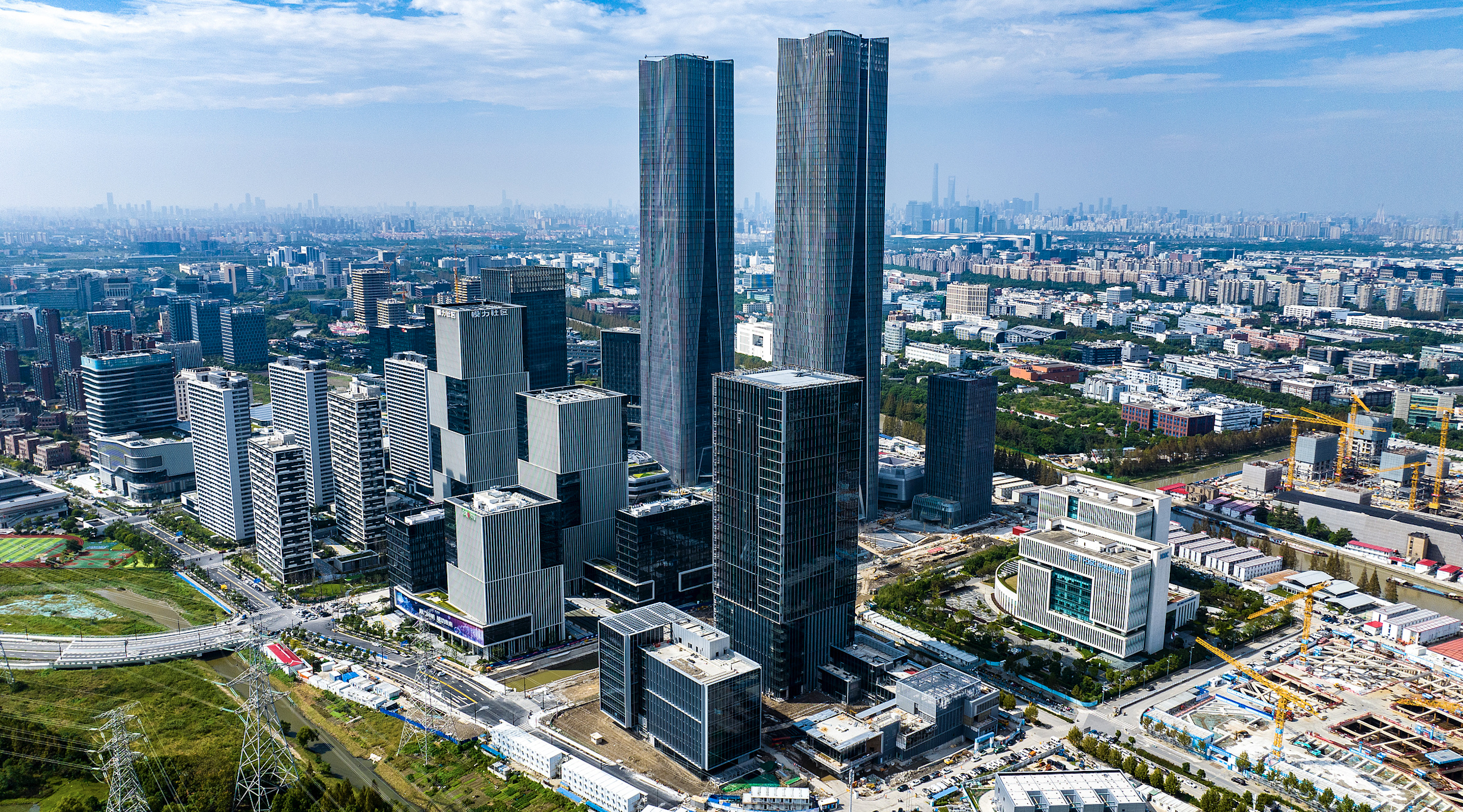
Core Insights - The economic performance of Shanghai in 2025 shows a year-on-year industrial value-added growth of 5.0% and a total industrial output value growth of 4.6% [2][5] - Strategic emerging industries in Shanghai are projected to grow by 6.5%, increasing their share of the total industrial output value to 45% in 2025, up from 43.6% in 2024 [2][5] - The three leading industries in Shanghai are expected to see a manufacturing output growth of 9.6%, with integrated circuit manufacturing growing by 15.1% and artificial intelligence manufacturing by 13.6% [2][5] Industrial Growth - The total output value of Shanghai's strategic emerging industries is expected to grow by 6.5% in 2025, with the new energy industry growing by 12.9% and high-end equipment industry by 11.1% [2][5] - The "14th Five-Year Plan" emphasizes that this period is crucial for Shanghai's comprehensive development and transformation [2][5] Policy Initiatives - The "14th Five-Year Plan" suggests accelerating the development of three leading industries, enhancing the capabilities and manufacturing levels of integrated circuit equipment, and promoting breakthroughs across the entire industrial chain [4][7] - The plan also focuses on advancing artificial intelligence innovations and improving the development of high-performance computing chips and intelligent technology [4][7] - Shanghai's traditional manufacturing sector will concentrate on product value enhancement, efficiency improvement, and structural optimization to transition from a following position to a leading one [4][7]

申能股份20260120
2026-01-21 02:57
Summary of the Conference Call for Sheneng Co., Ltd. Industry Overview - The annual long-term electricity price in Shanghai has slightly decreased, but the profitability of thermal power companies remains strong due to cost control and stable coal supply strategies, including increasing the proportion of imported Indonesian coal to reduce costs [2][4]. Core Company Insights - **Focus on Renewable Energy**: Sheneng Co., Ltd. is prioritizing the development of renewable energy, with significant projects in Hainan, Xinjiang, and Shanghai. The Hainan 600,000 kW wind power project is expected to contribute over 100 million yuan in net profit for the year [2][5]. - **Investment Plans**: The company plans to invest over 130 billion yuan in the next five years, with a capital requirement of 25-26 billion yuan for renewable energy projects and pumped storage facilities [2][7]. - **Coal Procurement Strategy**: For 2026, the company anticipates that approximately 70% of its long-term coal supply will come from foreign suppliers, with a focus on increasing the proportion of imported Indonesian coal to leverage price advantages [2][8]. - **Dividend Policy**: The company aims to maintain a dividend payout ratio of 55% to 60%, ensuring stable dividends even during periods of high capital expenditure [3][24]. Financial Performance - **2025 Performance**: The overall operational performance of Sheneng Co., Ltd. remained stable in 2025, with the thermal power segment benefiting from a significant decrease in fuel costs. The average price of coal was approximately 820-850 yuan/ton, down about 16-17% year-on-year [4]. - **Net Profit from Assets**: The company’s gas cushion assets generated stable net profits of over 500 million yuan annually, while nuclear power dividends are expected to recover in 2026 [4]. Renewable Energy Development - **Project Expansion**: The company is expanding its renewable energy projects, including a second phase of the Hainan wind power project and additional wind power projects in Xinjiang [5][6]. - **Market Position**: Sheneng Co., Ltd. has over 44% of its installed capacity in renewable energy, although competition has slightly reduced utilization hours and electricity prices [2][16]. Financing Strategies - **Funding for Projects**: The company has issued four tranches of perpetual bonds totaling 4.4 billion yuan and plans to raise additional funds through refinancing to support its renewable energy projects [2][17]. - **Future Financing Plans**: The company is considering various financing tools, including convertible bonds and potential equity refinancing, to maintain a healthy balance sheet and stable cash flow [23]. Market Conditions - **Electricity Market Trends**: The long-term electricity price in Shanghai is expected to decrease by about 3 cents, which may exert some pressure on the company's revenue. However, the company is confident in its ability to maintain profitability through improved competitiveness in thermal power [9][10]. - **Impact of Market Changes**: The introduction of a continuous settlement system in the Shanghai spot market is expected to have a limited impact on the company due to its established market position and professional marketing team [13]. Additional Considerations - **Hydrogen Production Viability**: The economic feasibility of green hydrogen production from methanol in Shanghai is being explored, with potential applications in Hainan [21]. - **Subsidy Outlook**: In 2025, the company received over 1.5 billion yuan in national subsidies, which is expected to remain stable or slightly decline in 2026 [22]. This summary encapsulates the key points from the conference call, highlighting the company's strategic focus, financial performance, and market conditions.

2025年上海GDP同比增长5.4%,三大先导产业制造业产值同比增长9.6%
Xin Hua Cai Jing· 2026-01-21 02:51
Economic Overview - In 2025, Shanghai's GDP reached 56,708.71 billion yuan, reflecting a year-on-year growth of 5.4% at constant prices [1] Industrial Production - Shanghai's industrial added value grew by 5.0% year-on-year, with total industrial output value increasing by 4.6% [2] - Key sectors such as railway, shipbuilding, aerospace, and other transportation equipment manufacturing saw a significant increase of 15.8% in output [2] - The three leading manufacturing industries experienced a 9.6% growth, with integrated circuit manufacturing up by 15.1% and artificial intelligence manufacturing up by 13.6% [2] Service Sector Growth - The tertiary sector's added value increased by 6.0%, with the information transmission, software, and IT services sector leading at a growth rate of 15.3% [3] - The financial sector's added value reached 8,979.66 billion yuan, growing by 9.7% [3] Fixed Asset Investment - Fixed asset investment in Shanghai grew by 4.6%, with industrial investment surging by 20.0%, significantly outpacing the overall investment growth [4] - Urban infrastructure investment rose by 11.2% [4] Consumer Market - The total retail sales of consumer goods reached 16,600.93 billion yuan, marking a 4.6% year-on-year increase [5] - Online retail sales from major enterprises grew by 14.1% [5] Financial Market Activity - Major financial markets in Shanghai recorded a transaction volume of 40.5895 trillion yuan, up by 11.2% [6] - The balance of deposits in financial institutions reached 24.50 trillion yuan, growing by 11.3% [6] Trade Performance - Shanghai's total goods import and export volume reached 4.51 trillion yuan, with exports growing by 10.8% [7] - The export of "new three samples" products increased by 17.4%, including a 13.8% rise in electric vehicle exports [7] Price Trends and Income - The consumer price index (CPI) in Shanghai rose by 0.1%, while the core CPI increased by 0.7% [8] - The average disposable income per capita reached 91,987 yuan, reflecting a growth of 4.1% [9]
工信部:支持地方因地制宜建设未来产业,加大政府投资基金投资力度
Zheng Quan Shi Bao Wang· 2026-01-21 02:24
Core Insights - The Ministry of Industry and Information Technology (MIIT) has highlighted significant advancements in industrial and information technology development since the start of the 14th Five-Year Plan, focusing on optimizing traditional industries and fostering emerging sectors [1] Group 1: Innovation and Technology - A series of high-quality innovative outcomes have emerged, with technologies such as perovskite materials, permanent magnet materials, and power batteries reaching international advanced levels [1] - New technologies including emerging networks, high-speed communication, advanced computing, new software, and blockchain are accelerating their iterations [1] Group 2: Market Applications - A range of new products with promising application prospects, such as intelligent robots, are rapidly entering the market, with new scenarios like Industrial Internet+, Robotics+, and Beidou+ being cultivated [1] - These developments provide a broad market space for the rapid industrialization of new products [1] Group 3: Competitive Industries - Several competitive industries have emerged during the 14th Five-Year period, including new energy, automotive, photovoltaic, military equipment, and marine engineering equipment, contributing to a more vibrant image of Chinese manufacturing [1] - The MIIT plans to continue promoting innovative projects and strategic technological initiatives to support local development of future industries [1]
财政部:中小微企业贷款贴息政策重点支持汽车等重点产业链
Cai Jing Wang· 2026-01-21 02:13
Group 1 - The Ministry of Finance announced a new loan interest subsidy policy aimed at supporting the development of small and micro enterprises [1] - The policy focuses on providing loan subsidies to enterprises in 14 key industries, including new energy, automotive, industrial robots, medical equipment, and mobile communication devices [1] - The initiative also targets upstream and downstream industries, as well as production systems and services in technology, logistics, information, and software [1]
2025上海GDP总量全球第五,增速跑赢全国
Di Yi Cai Jing Zi Xun· 2026-01-21 02:09
Core Viewpoint - Shanghai's GDP is projected to reach 56,708.71 billion yuan in 2025, with a year-on-year growth of 5.4%, surpassing the national average of 5% and ranking fifth globally among cities [2] Economic Growth and Resilience - Shanghai has demonstrated resilient growth amidst significant external uncertainties, marking a recovery after previous years of slower growth compared to the national average [2][3] - The city is positioned at a strategic juncture, balancing structural challenges and opportunities, laying a solid foundation for the "14th Five-Year Plan" [2] Key Economic Indicators - Industrial output from strategic emerging industries in Shanghai is expected to grow by 6.5% in 2025, with their share of total industrial output reaching 45%, up from 43.6% in 2024 [3][4] - The three leading industries in Shanghai are projected to see a 9.6% increase in output, surpassing 2 trillion yuan, with integrated circuit manufacturing growing by 15.1% and artificial intelligence manufacturing by 13.6% [4] Consumption, Investment, and Trade - Shanghai's total retail sales of consumer goods are expected to grow by 4.6% in 2025, outperforming the national growth rate of 3.7%, with significant growth in sectors like new energy vehicles and home appliances [5] - Fixed asset investment in Shanghai is projected to increase by 4.6%, exceeding the national decline of 3.8%, with industrial and infrastructure investments growing by 20% and 11.2%, respectively [5] - The total import and export volume is anticipated to reach 4.5 trillion yuan, growing by 5.6%, with exports increasing by 10.8%, particularly to ASEAN and Belt and Road countries [6] Structural Transformation and Industry Development - Shanghai is accelerating the construction of a modern industrial system, with a focus on advanced manufacturing and emerging sectors such as low-altitude economy and commercial aerospace [9][10] - The financial services sector in Shanghai is also seeing improvements, with the total trading volume in financial markets reaching 40.59 trillion yuan, a growth of 11.2% [10] Urban Development and Global Positioning - The "Five Centers" initiative is crucial for enhancing Shanghai's urban capabilities and competitiveness, with ongoing improvements in global rankings across various indices [7][11] - Shanghai's port trade volume is expected to exceed 11 trillion yuan, maintaining its position as a global leader, with container throughput reaching 55.063 million TEUs [10]

浙江舟山海域航标实现氢能供电
Zhong Guo Zi Ran Zi Yuan Bao· 2026-01-21 02:05
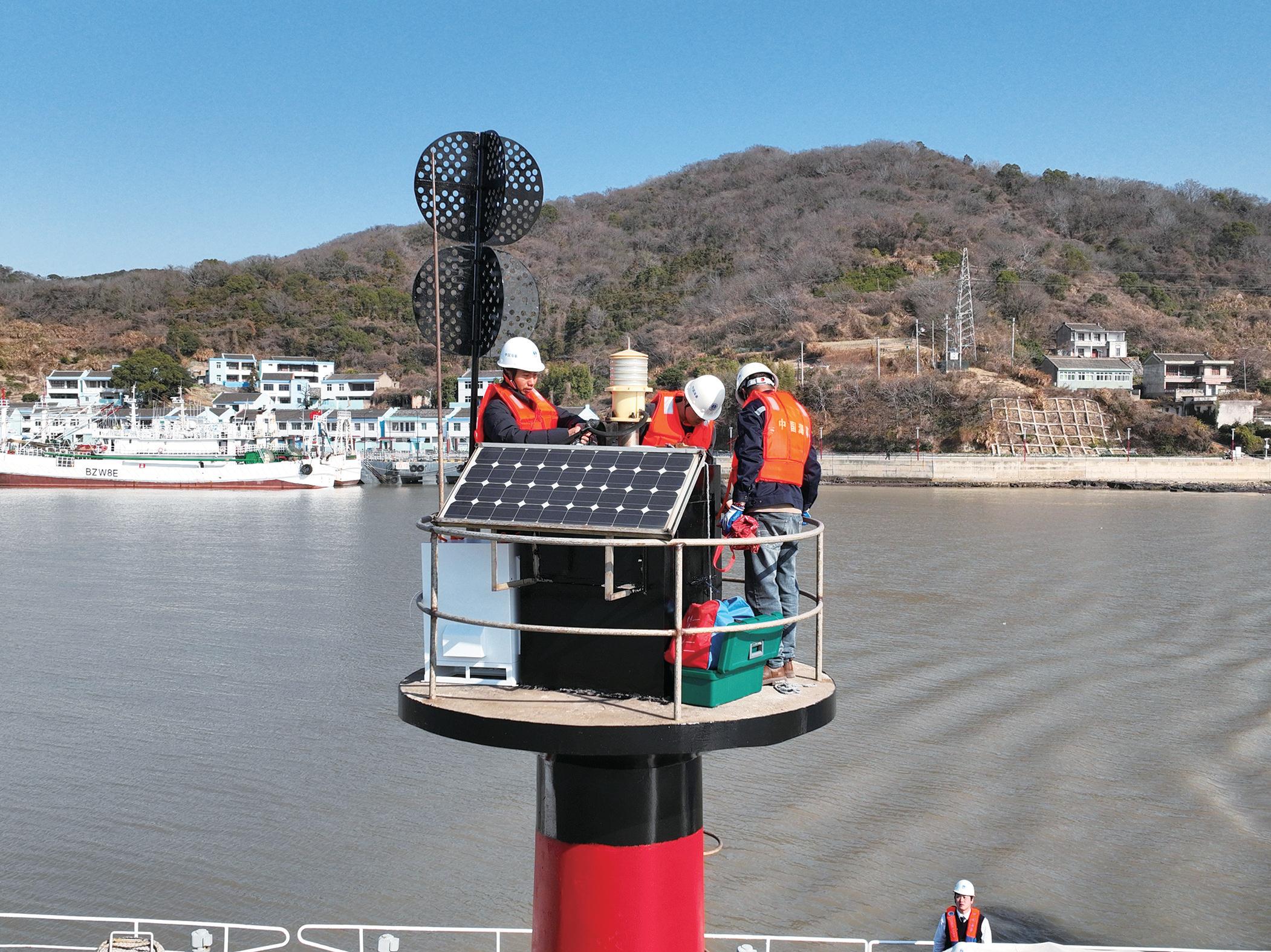
Core Viewpoint - The successful implementation of a hydrogen fuel cell power system for maritime unmanned light buoys in Zhoushan marks a significant advancement in the use of hydrogen energy in the maritime sector, transitioning from traditional solar power systems to a more reliable and environmentally friendly solution [2] Group 1: Technology and Innovation - The newly deployed hydrogen energy power system is the first of its kind in China's maritime sector, indicating a shift towards hydrogen energy for navigation aids [2] - The system operates on a "fuel cell replenishment + battery power" collaborative model, allowing for continuous operation of the light buoy for over 391 days on a single hydrogen refill [2] Group 2: Advantages and Benefits - The hydrogen power system offers zero emissions, long endurance, and strong environmental adaptability, which are crucial for the long-term unattended operation of navigation buoys [2] - The new system significantly reduces the operational burden on ground staff and ensures stable performance of navigation aids in all weather conditions [2] Group 3: Future Developments - A technical team is scheduled to conduct on-site testing of the hydrogen power system in three months to further validate its stability and economic viability in actual maritime operations [2]
中泰国际:美股方面,特朗普威胁向反对美国征收额外关税,市场避险情绪升温
ZHONGTAI INTERNATIONAL SECURITIES· 2026-01-21 01:55
Market Overview - On January 20, the Hang Seng Index fell by 76 points (0.3%) to close at 26,487 points, influenced by a decline in technology stocks[1] - The Hang Seng Tech Index dropped by 66 points (1.1%) to close at 5,683 points, with total market turnover reaching HKD 237.8 billion, an increase of HKD 12.1 billion from the previous day[1] - Southbound capital recorded a net inflow of HKD 3.66 billion[1] Sector Performance - Gold and precious metal stocks surged due to international gold prices hitting a record high, with Zijin Mining (2899 HK) up 1.7%, Shandong Gold (1787 HK) up 2.7%, and Zijin Gold International (2259 HK) up 5.5%[1] - Real estate stocks rose as China announced financial measures for the sector, including a 25 basis point cut in the re-lending rate and a reduction in the minimum down payment ratio for commercial real estate from 50% to 30%[1] - Greentown China (3900 HK) increased by 5.6%, China Resources Land (1109 HK) by 3.7%, and China Overseas (688 HK) by 2.6%[1] U.S. Market Reaction - The Dow Jones Index fell by 870 points (1.8%) to close at 48,488 points, while the Nasdaq Index dropped by 561 points (1.5%) to 22,954 points, and the S&P 500 Index decreased by 143 points to 6,796 points[2] - Technology stocks faced significant declines, with Tesla (TSLA US) down 4.2%, Amazon (AMZN US) down 3.4%, and Google (GOOG US) down 2.5%[2] Macroeconomic Data - The National Bureau of Statistics reported that the per capita disposable income for residents in 2025 is projected to be RMB 43,377, with a real year-on-year growth of 5%[3] - Urban residents' per capita disposable income is expected to be RMB 56,502, reflecting a real growth of 4.2%, while rural residents' income is projected at RMB 24,456, with a real growth of 6%[3] Industry Developments - Pop Mart (9992 HK) shares rose by 9.1% following the announcement of a share buyback of 1.4 million shares at prices between HKD 177.7 and 181.2, totaling approximately HKD 250 million[4] - Weisheng Holdings (3393 HK) increased by 5.5% amid news of a planned investment of RMB 4 trillion by the State Grid during the 14th Five-Year Plan[4] - In the healthcare sector, the Hang Seng Healthcare Index fell by 0.8%, but Insilico Medicine (3696 HK) rose by 1.9% due to a collaboration agreement with Shenzhen Hengtai Biotechnology[5]
达沃斯论坛:欧洲的失落、反思和挣扎
Xin Lang Cai Jing· 2026-01-21 01:52
Group 1 - The core issue at the Davos meeting was Trump's announcement of a 10% tariff on eight European countries participating in military exercises in Greenland, which was met with criticism from EU leaders [1][19] - EU Commission President Ursula von der Leyen emphasized that the 10% tariff is a mistake and that the US should honor the trade agreement made in July [1][19] - French President Macron highlighted the need for Europe to unite against US pressure and mentioned the potential use of the "anti-coercion mechanism" against the US if new tariffs are imposed [2][19] Group 2 - The "anti-coercion mechanism" is described as a toolbox for sanctions that could include tariffs on US goods worth approximately $1.09 trillion, export controls, and restrictions on US investments in Europe [2][20] - European leaders are increasingly aware of the need for strategic autonomy, with discussions on enhancing defense spending and technological independence from the US [3][20] Group 3 - The EU is focusing on strengthening its defense capabilities and has been increasing defense spending in response to perceived unreliability from the US [3][20] - The discussions at Davos revealed a significant shift in European leaders' attitudes towards US relations, with calls for a more self-reliant Europe [24][25] Group 4 - Macron outlined three strategic pillars for Europe: protection, simplification, and investment, emphasizing the need to protect European industries from unfair competition [26][27] - The EU plans to initiate a new budget negotiation to increase investments in key areas such as AI, quantum technology, and defense [27][30] Group 5 - The EU is moving towards a revised cybersecurity law that mandates the removal of equipment from "high-risk suppliers," which is seen as a direct response to geopolitical tensions [31][33] - The law aims to unify member states' approaches to cybersecurity and reduce reliance on Chinese technology, particularly in critical sectors [32][34]


奕帆传动2026年1月21日涨停分析:业务拓展+治理优化+现金分红
Xin Lang Cai Jing· 2026-01-21 01:49
Core Viewpoint - Yifan Transmission (sz301023) reached its daily limit with a price of 56.57 yuan, marking a 20% increase and a total market capitalization of 4.371 billion yuan, with a circulating market value of 2.338 billion yuan and a total transaction amount of 157 million yuan as of the report date [1] Group 1: Business Expansion - The company plans to acquire 87.07% of Beijing Helish Electric Motor, which will enhance its technical strength in the power transmission sector and improve its electromechanical integration layout, indicating further business expansion potential [2] - Yifan Transmission has completed the registration of a wholly-owned subsidiary with a registered capital of 50 million yuan, expanding into the renewable energy sector with solar power technology services, which will provide new business growth points [2] Group 2: Governance Optimization - The company has canceled its supervisory board and revised 28 core systems, establishing specialized committees within the board of directors, which will help improve decision-making efficiency and optimize governance structure [2] - A cash dividend plan has been proposed, with a distribution of 4 yuan per 10 shares, totaling 31.1 million yuan, indicating the company's strong cash flow and commitment to shareholder returns [2] Group 3: Market Trends - The power transmission and renewable energy sectors are currently hot topics in the market, with related sectors experiencing capital inflows, which may have contributed to the stock's limit-up performance [2] - Technical indicators such as the MACD forming a golden cross and the stock price breaking through the upper Bollinger Band may have attracted technical investors, further driving the stock price increase [2] - Data from Dongfang Caifu indicates a net inflow of main funds on that day, reflecting a certain level of market interest in Yifan Transmission [2]