
通信设备

Search documents
日企集体退出 5G 基站赛道,高市早苗却拉美西方围堵中国通信
Xin Lang Cai Jing· 2026-01-04 03:16
Core Viewpoint - Japanese telecom giants NEC and Fujitsu have announced their withdrawal from the 5G base station market, marking a significant setback for Japan's ambitions in 5G technology and leaving the country reliant on foreign suppliers like Ericsson and Nokia [3][4]. Group 1: Company Developments - NEC has officially declared the termination of its 4G and 5G base station research and production by the end of 2025, followed closely by Fujitsu's decision to split its communications equipment business [3]. - Japanese telecom operators NTT, KDDI, and SoftBank have lost confidence in domestic technology, opting to procure 5G base stations exclusively from foreign companies [3][4]. - The failure of Japanese companies to compete in the 5G market is attributed to a lack of technological capability and market share, with Japanese firms holding less than 2% of the global market [4]. Group 2: Market Dynamics - The global 5G base station market is dominated by Huawei, Ericsson, and Nokia, which together account for nearly 80% of the market share, with Huawei alone holding 34% [4]. - Japan's 5G base station count is below 100,000, significantly lagging behind China's over 4.5 million, which has led to higher power consumption and stability issues in Japanese products [4][6]. Group 3: Political and Strategic Responses - Japanese Prime Minister Sanae Takaichi has attempted to form a "global telecom alliance" with Western nations to counter China's 5G technology, despite the lack of a coherent strategy [6][7]. - The proposed Open RAN technology, aimed at decentralizing 5G production, is criticized for its poor compatibility and increased maintenance costs, making it less viable compared to Huawei's integrated solutions [6][7]. - China's response to Japan's political maneuvers includes diplomatic pushback, economic measures such as rare earth export controls, and a focus on advancing its own 5G and future 6G technologies [7][9]. Group 4: Industry Implications - The collapse of Japan's 5G ambitions serves as a cautionary tale for other nations considering political strategies over technological innovation [9]. - China's sustained investment in R&D and its comprehensive industrial chain have solidified its leadership in the 5G sector, demonstrating that market success relies on innovation rather than political alliances [9].


通信行业周报:2026年通信投资展望:聚焦四大核心赛道-20260104
KAIYUAN SECURITIES· 2026-01-04 01:12
Investment Rating - The industry investment rating is "Positive" (maintained) [1] Core Insights - The report emphasizes the significant "siphon effect" of AI and the accelerated development of satellite internet, recommending a focus on the dual core themes of "AI + Satellite" and four key segments: "Optical + Liquid Cooling + Domestic Computing Power + Satellite" [5][15] - It highlights the expected growth in AI applications, particularly in voice and image recognition technologies, which will drive demand for smart computing modules and CDN services [7][17] - The report notes the increasing importance of satellite internet as a core component of 6G, driven by national policies emphasizing self-sufficiency and technological upgrades [8][18] Summary by Sections 1. Investment Outlook for 2026 - The report suggests actively positioning in multiple sub-sectors, focusing on "AI + Satellite" as the main investment themes for 2026 [5][15] 2. Key Segments for 2026 Segment One: Global AI Resonance - 2026 is projected to be the year of significant deployment for 1.6T optical modules, with advancements in silicon photonics technology expected to become mainstream [6][16] - The report anticipates a substantial increase in the penetration rate of liquid cooling technologies, driven by the release of new computing power chips from major companies [6][16] Segment Two: AI Applications - The development of AI toys and applications is expected to accelerate, leading to increased demand for intelligent computing modules and CDN services [7][17] Segment Three: Satellite Internet Development - The report identifies four key areas of focus within the satellite internet sector: satellite manufacturing, launch, ground equipment, and operations, all of which are expected to benefit from increased demand and government support [8][18] 3. Investment Recommendations - The report recommends specific companies across various segments, including optical network equipment, computing devices, and AI applications, highlighting potential beneficiaries in each category [19][20][26][27] 4. Market Review - The communication index experienced a decline of 1.41% during the week of December 29 to December 31, 2025, ranking fourth among TMT sectors [28] 5. Communication Data Tracking - As of November 2025, China had a total of 4.83 million 5G base stations, with 5G mobile phone users reaching 1.193 billion, marking a year-on-year growth of 19.06% [29][34]




华安研究2026年1月金股组合
Huaan Securities· 2026-01-04 00:54
Investment Rating - The report provides a positive investment rating for the regenerative medicine sector, highlighting specific companies as key investment opportunities [1]. Core Insights - The regenerative medicine platform company is positioned in the high-end manufacturing field of neurosurgery, with a projected revenue growth of 30% and a net profit increase of 43% in Q1-Q3 of 2025. The company is expected to enter a product harvest phase from 2025 to 2027, stabilizing net profit margins and increasing profits [1]. - The report emphasizes the benefits of centralized procurement, with the company achieving significant growth by trading price for volume, projecting a 21% revenue increase and a 93% net profit growth in 2024 [1]. - The report identifies new product approvals and expanded indications as key growth drivers, with expectations of a 100% growth rate for certain products from 2025 to 2026 [1]. Summary by Relevant Sections Regenerative Medicine - The regenerative medicine company is expected to see a revenue increase of 30% and a net profit increase of 43% in Q1-Q3 of 2025, entering a product harvest phase from 2025 to 2027 [1]. - The company benefits from centralized procurement, achieving a 21% revenue increase and a 93% net profit growth in 2024 [1]. - New product approvals are anticipated to drive a 100% growth rate from 2025 to 2026 [1]. Automotive - The automotive sector shows a positive outlook with the introduction of a second brand expected to enhance performance significantly compared to Q3 [1]. - The company is projected to achieve a revenue of 1,099 million in 2026, with a growth rate of 37% [1]. Paper Industry - The white cardboard paper industry is expected to see a recovery in downstream demand, with the company positioned to benefit from high market concentration and improved pricing power [1]. - The company anticipates a revenue increase of 407 million in 2026, with a growth rate of 123% [1]. Chemical Industry - The chemical sector is experiencing high demand, with the agricultural market showing signs of recovery [1]. - The company is projected to achieve a revenue of 2,078 million in 2026, maintaining a growth rate of 14% [1]. Mining - The mining sector is benefiting from rising gold and copper prices, with the company expected to see a 54% increase in net profit [1]. - The projected revenue for 2026 is 50,478 million, with a growth rate of 10% [1].



中国通信产业链闭环成型!从芯片到应用,根本不怕美日卡脖子
Sou Hu Cai Jing· 2026-01-03 12:58
Core Viewpoint - The Chinese communication industry has transformed from reliance on foreign technology to establishing a complete domestic industrial chain, significantly reducing dependency on imports and enhancing self-sufficiency in key technologies [3][4][8]. Industry Development - The industry has evolved from a situation where high-end communication equipment was entirely imported to a robust domestic production capability, exemplified by the development of the first domestically produced large-capacity switching machine [3]. - The domestic chip industry has made significant breakthroughs, with companies like China Mobile's Chip Technology achieving over 90% localization in their new satellite and cellular dual-mode communication chip [4]. - The market size of China's chip industry is projected to reach 1.43 trillion yuan in 2024 and 1.62 trillion yuan in 2025, indicating strong growth and confidence in domestic chip production [4]. Equipment Manufacturing - Huawei and ZTE together hold approximately 40% of the global 5G base station market, showcasing their technological leadership [4]. - The market for optical modules in base stations is expected to reach 60.6 billion yuan in 2024 and nearly 70 billion yuan in 2025, highlighting the competitive strength of domestic companies [4]. - The PCB (Printed Circuit Board) market is projected to reach 433.3 billion yuan by 2025, reflecting a complete domestic supply chain from raw materials to manufacturing processes [4]. Network Infrastructure - China Tower's base station sharing model has reduced construction costs by over 30%, setting a global benchmark for efficiency [6]. - The total length of optical cable lines in China has exceeded 72 million kilometers, with widespread 5G base station deployment supporting various applications [6]. Application and Impact - Domestic communication technology has penetrated various aspects of life and production, including satellite communication features in smartphones and smartwatches, enhancing connectivity in remote areas [6][8]. - In industrial settings, 5G private networks have improved production efficiency by 20% and reduced equipment failure rates by 40% [6]. - The closed-loop nature of the domestic communication industry ensures resilience against international competition and potential supply chain disruptions [7]. Future Outlook - The formation of a closed-loop communication industry chain not only secures national information safety but also serves as a core support for the digital economy [8]. - With ongoing advancements in 5G-A and 6G technologies, the Chinese communication industry is expected to strengthen its global influence and competitive edge [8].


2025年深市公司分红总额超5000亿元
2 1 Shi Ji Jing Ji Bao Dao· 2026-01-03 08:42
Core Viewpoint - The article highlights the positive trend in cash dividends among companies listed in the Shenzhen Stock Exchange, indicating a stable and transparent dividend mechanism that enhances shareholder recognition and boosts the market image and long-term investment value of companies [1][2]. Group 1: Dividend Trends and Amounts - In 2025, companies in the Shenzhen market are expected to distribute over 500 billion yuan in dividends, with more than 18 companies anticipated to announce distributions exceeding 10 billion yuan at the beginning of 2026 [1]. - By the end of 2025, a total of 5,475.59 billion yuan in cash dividends will be distributed, contributing to a cumulative total of over 20 trillion yuan during the "14th Five-Year Plan" period [4]. - The number of companies disclosing mid-term dividend plans in 2025 reached 535, an increase of 7.24% year-on-year [3]. Group 2: Regulatory and Policy Support - Recent policies, including the new "National Nine Articles," have strengthened the regulation of cash dividends and increased incentives for companies with high-quality dividend practices [2]. - The China Securities Regulatory Commission (CSRC) has issued guidelines to encourage cash dividends, aiming to enhance the frequency and level of dividends among listed companies [2]. Group 3: Financial Performance and Governance - In the first three quarters of 2025, Shenzhen-listed companies achieved a total operating revenue of 15.72 trillion yuan, a year-on-year increase of 4.31%, and a net profit attributable to shareholders of 903.02 billion yuan, up 9.69% [2]. - The improvement in corporate governance has led to more standardized and predictable dividend distributions, enhancing transparency and investor confidence [3]. Group 4: Sector-Specific Dividend Highlights - Leading companies in the consumer and financial sectors have shown strong dividend distribution activity, with notable examples including Wuliangye and Gree Electric, which announced significant cash distributions in late 2025 [5][6]. - In the advanced manufacturing sector, companies like CITIC Special Steel and Weichai Power have also implemented substantial mid-term dividends, reflecting a robust return mechanism [5][6]. - The green and low-carbon sector is represented by companies like CATL, which distributed significant dividends, further demonstrating the trend of stable dividends across various industries [7].
2025年深市公司分红总额超5000亿元
21世纪经济报道· 2026-01-03 08:37
Core Viewpoint - The article highlights the positive trend of stable dividend distribution among companies listed in the Shenzhen market, with a total dividend payout exceeding 500 billion yuan in 2025, indicating a strong commitment to shareholder returns and enhancing market image [1][4]. Group 1: Dividend Policy and Regulatory Environment - Recent regulatory measures, including the new "National Nine Articles," have strengthened the supervision of cash dividends and incentivized companies with robust dividend policies [4]. - The China Securities Regulatory Commission (CSRC) has issued guidelines to encourage cash dividends, aiming to enhance the overall dividend levels and frequency among listed companies [4]. - The profitability of companies supports regular dividend distributions, with Shenzhen companies reporting a total revenue of 15.72 trillion yuan and a net profit of 903.02 billion yuan in the first three quarters of 2025, reflecting a year-on-year growth of 4.31% and 9.69% respectively [4]. Group 2: Dividend Distribution Trends - In 2025, Shenzhen companies distributed a total of 547.56 billion yuan in cash dividends, with a significant increase in mid-term dividend announcements, up 25.98% year-on-year [7]. - Approximately 60% of companies that declared mid-term dividends had a payout ratio exceeding 20%, with 105 companies exceeding 50%, indicating a strong commitment to returning profits to shareholders [7]. - The number of companies disclosing mid-term dividend plans increased by 7.24% in 2025, with 535 companies participating [5]. Group 3: Sector-Specific Dividend Highlights - Leading companies in the consumer and financial sectors have shown strong dividend distribution, with notable examples including Wuliangye and Gree Electric, which announced substantial cash distributions [9]. - In the financial sector, companies like GF Securities and Ningbo Bank also demonstrated active dividend policies, contributing to the overall positive trend [9]. - The advanced manufacturing and digital economy sectors are also participating in this trend, with companies like CITIC Special Steel and Yilian Network announcing significant mid-term dividends [10].

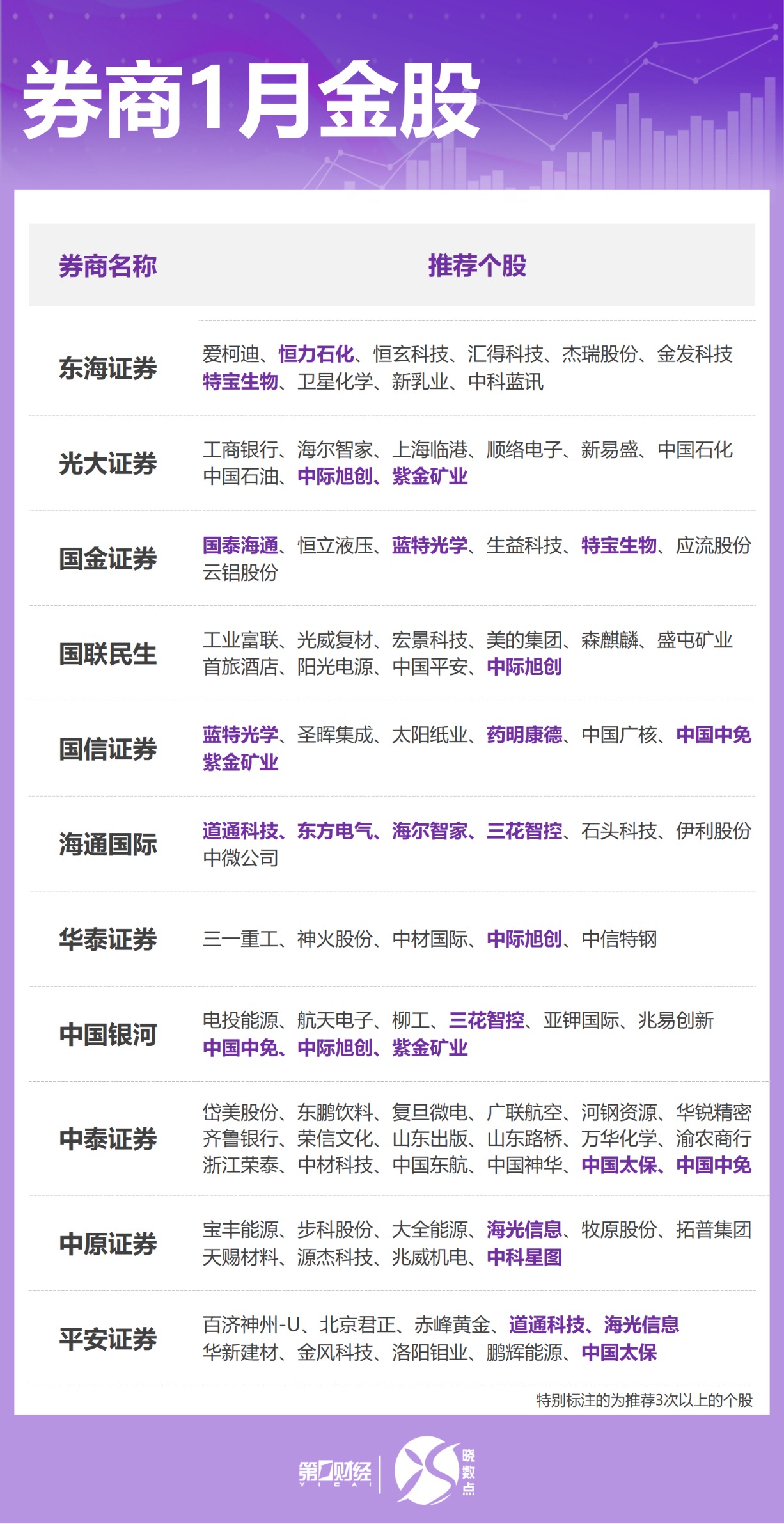
券商1月金股出炉:这些股获力挺 看好商业航天等方向
Di Yi Cai Jing· 2026-01-03 00:11
Market Overview - The A-share market showed a strong upward trend in December 2025, with the Shanghai Composite Index rising by 2.06%, the Shenzhen Component Index increasing by 4.17%, and the ChiNext Index gaining 4.93% [1] Investment Opportunities - Over ten brokerage firms have released their investment portfolios for January, covering various sectors including finance, information technology, and consumer goods [1] - The most frequently recommended stocks include Zhongji Xuchuang, which received recommendations from five brokerage firms, and China Zhongmian and Zijin Mining, which were recommended by four firms each [4] Stock Performance - Zhongji Xuchuang's stock price closed at 610.00 yuan with a market capitalization of 67.78 billion yuan, showing an 18.56% increase in December [5] - China Zhongmian's stock price reached 94.56 yuan, with a market capitalization of 19.29 billion yuan, reflecting a 20.03% increase [5] - Zijin Mining had the highest increase among the mentioned stocks, with a rise of over 20% and a closing price of 34.47 yuan [4][5] Sector Preferences - Multiple brokerage firms suggest that the A-share market may continue to experience a "spring rally," with a likely upward trend [6] - Key sectors to focus on include commercial aerospace, non-ferrous metals, and semiconductors, with recommendations for stocks that are offensive, flexible, and aligned with recent hot themes [6] - Cyclical sectors such as basic chemicals and non-ferrous metals are highlighted for their structural logic, while thematic investment opportunities in AI and commercial aerospace are also noted [6] Strategic Recommendations - Companies are advised to focus on technology sectors such as electrical equipment and semiconductors, as well as resource products and high-dividend stocks [6] - The current market environment is seen as favorable for long-term trends driven by policy and liquidity, suggesting a focus on technology, domestic demand, and anti-involution themes [7] - Attention is also drawn to sectors benefiting from AI-enhanced production efficiency and those with higher demand elasticity amid a backdrop of reduced long-term capital expenditure [7]



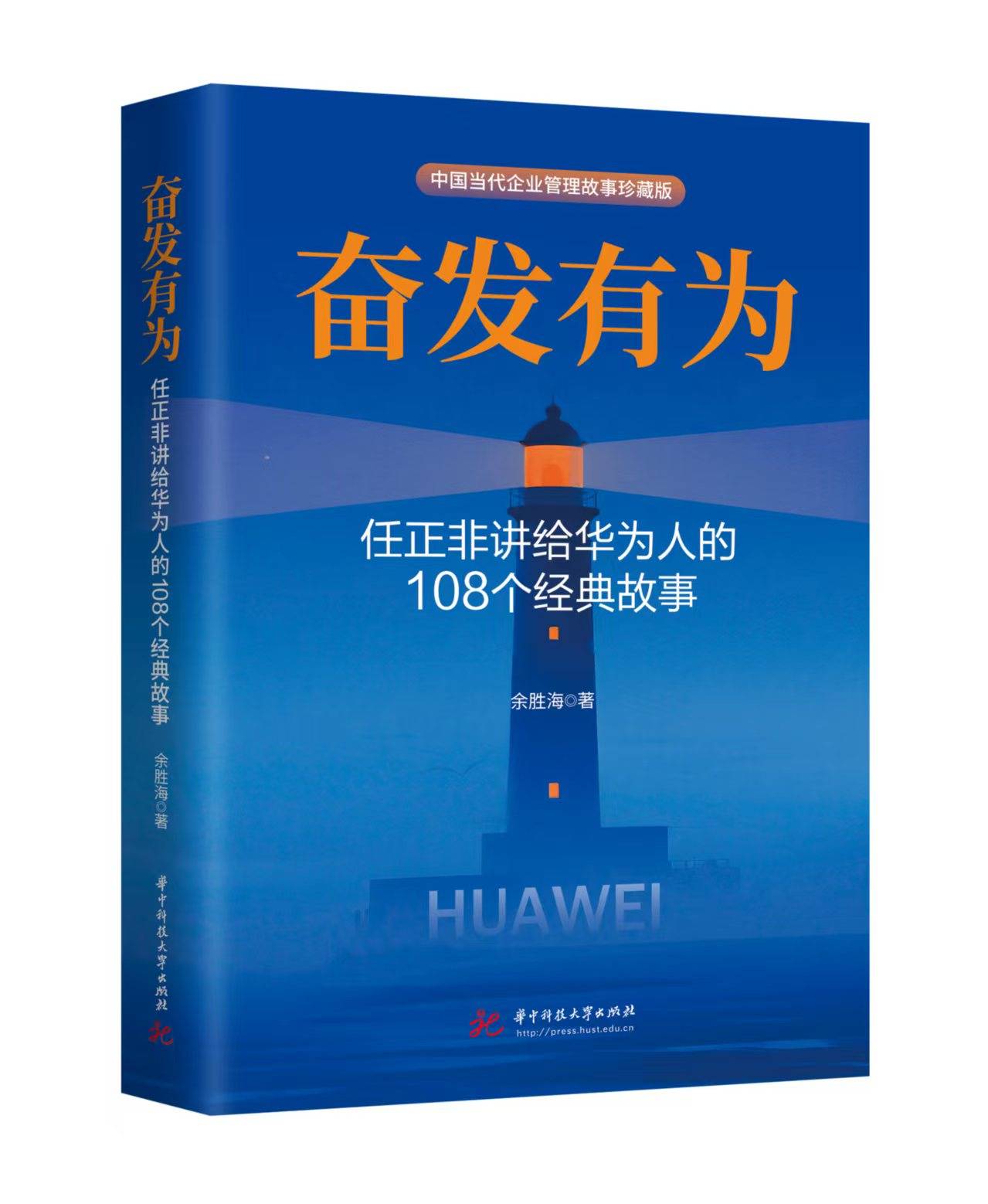
《奋发有为:任正非讲给华为人的108个经典故事》出版
Sou Hu Cai Jing· 2026-01-02 07:17
Core Viewpoint - The book "Striving for Excellence: 108 Classic Stories from Ren Zhengfei for Huawei Employees" by Yu Shenghai is a collection of stories that reflect the journey of Huawei from a grassroots company to a global technology giant, showcasing contemporary Chinese corporate management principles [1][3]. Group 1: Book Structure and Content - The book is divided into eight sections: "Suffering and Perseverance," "Dreams and Missions," "Management and Change," "Common Sense and Truth," "Strategy and Tactics," "Philosophy and Insights," among others, featuring 108 classic stories told by Ren Zhengfei over more than thirty years [3]. - Each story is presented with in-depth analysis, including background, context, and real-life examples, making the content rich and insightful for readers [3]. Group 2: Leadership and Storytelling - Ren Zhengfei's storytelling ability is highlighted as a key aspect of his leadership style, influencing Huawei's corporate culture and management philosophy [4]. - The narrative style used by Ren Zhengfei helps convey the company's values, strategies, and culture, allowing employees to better understand and execute corporate decisions [4]. - The author emphasizes that effective leaders are skilled storytellers, and Ren Zhengfei uses storytelling as a means to empower Huawei employees, enhancing organizational vitality and cohesion [4].
企业家中的故事家任正非
Sou Hu Cai Jing· 2026-01-02 06:35
Core Viewpoint - The article emphasizes the storytelling ability of Huawei's founder Ren Zhengfei as a key leadership trait that has shaped the company's culture and motivated employees, contributing to Huawei's success in the telecommunications industry [1][3][12]. Group 1: Storytelling as a Leadership Tool - Ren Zhengfei is known for his storytelling skills, which he uses to convey corporate values, strategies, and culture, making complex ideas accessible and engaging for employees [3][6]. - The stories told by Ren Zhengfei not only inspire pride among employees but also help external audiences understand Huawei better [3][4]. - Storytelling is highlighted as an effective means to ignite employee motivation and enhance their understanding of the company's vision and goals [3][7]. Group 2: Historical Context and Achievements - In the early days of Huawei, Ren Zhengfei made a bold prediction that Huawei would capture one-third of the global telecommunications market within 20 years, a vision that was realized by 2012 [4][8]. - Ren Zhengfei's military background influences his management style, using military terminology to energize and unify the workforce, fostering a strong corporate culture [6][9]. - The company faced significant challenges, including U.S. sanctions, but Ren Zhengfei's leadership and storytelling helped maintain employee morale and commitment during tough times [8][11]. Group 3: Employee Engagement and Corporate Culture - The article discusses how Ren Zhengfei's stories create a sense of collective responsibility and mission among employees, especially during crises [7][10]. - High employee compensation and a culture of shared success are emphasized as factors that attract talent to Huawei, with average salaries increasing significantly over the years [6][12]. - The concept of "doing" rather than merely contemplating difficulties is presented as a core philosophy of Huawei, encouraging a proactive and resilient workforce [10][11].

每周股票复盘:灿勤科技(688182)拟每10股派0.375元
Sou Hu Cai Jing· 2026-01-01 19:38
Core Viewpoint - Cangqin Technology (688182) has seen a stock price increase of 7.55% this week, closing at 28.06 yuan as of December 26, 2025, with a total market capitalization of 11.808 billion yuan [1] Group 1: Company Announcements - Cangqin Technology will hold its third board meeting on December 30, 2025, to review a profit distribution plan proposing a cash dividend of 0.375 yuan per 10 shares (including tax) based on distributable profits as of September 30, 2025 [2] - The company plans to conduct futures and options hedging business using its own funds, with a margin and rights amount not exceeding 180 million yuan and a maximum contract value of 900 million yuan, for a period of 12 months post shareholder meeting approval [2][4] - A temporary shareholder meeting is scheduled for January 15, 2026, to review the profit distribution plan and hedging business proposal, with a record date of January 8, 2026 [2] Group 2: Financial Details - The proposed cash dividend totals 15 million yuan (including tax), calculated based on a total share capital of 400 million shares as of September 30, 2025, with no stock bonus or capital reserve conversion [2] - The hedging business will focus on raw materials related to the company's production, such as gold and silver, and is not intended for speculative purposes [3]
