
算力产业

Search documents
744万亿次、80亿人、100亿元 “数”说澎湃算力为经济发展积蓄强劲新动力
Yang Shi Wang· 2025-10-19 02:22
Core Insights - Since the "14th Five-Year Plan," China has initiated a new round of digital infrastructure development, establishing a national integrated computing network that connects various regions, positioning itself as the second-largest computing power globally, which supports the growth of the digital economy and creates new opportunities for growth [1][8][16] Group 1: Digital Infrastructure Development - The total computing power in China has seen an annual growth rate of 30% since the "14th Five-Year Plan," with over 70% of the new computing power coming from the western regions [8] - The "East Data West Computing" project has established eight national computing hub nodes and ten data center clusters, with over 60% of cities able to access a computing cluster within 5 milliseconds [9][11] - The construction of the largest and most extensive network infrastructure globally has made China one of the countries with the richest data application scenarios [16] Group 2: Economic Impact and Growth - In Gansu's Qingyang, the digital economy has transformed, with new enterprises generating nearly 10 billion yuan in revenue, showcasing the rapid growth of the digital economy in previously underdeveloped areas [13] - The emergence of over 30 "computing new cities" across China during the "14th Five-Year Plan" period has become a critical support for the artificial intelligence era, facilitating various applications from animation rendering to intelligent driving model training [18] - The digital revolution is redefining agriculture and manufacturing, with automated systems and real-time data collection enhancing productivity and efficiency [23][26]


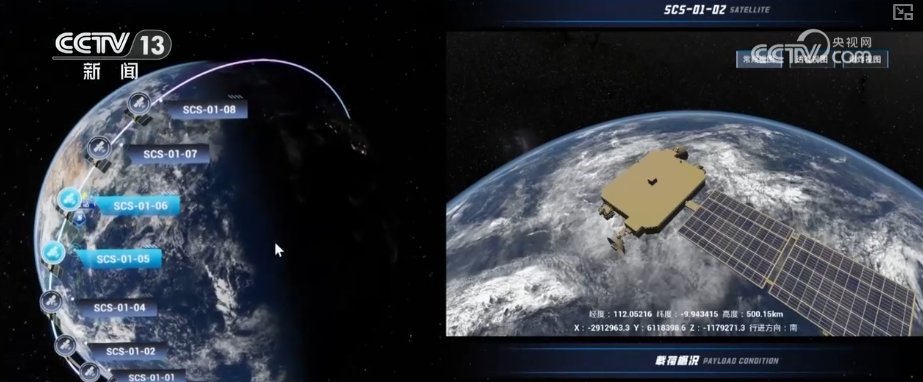
算力高速公路:一切皆有可能
2 1 Shi Ji Jing Ji Bao Dao· 2025-10-17 11:33
Core Insights - The Chinese computing power industry is receiving significant policy support, marking a transition from the first phase of scale expansion to a second phase focused on deep integration with the real economy and value creation [1] - The national strategy emphasizes the construction of new information infrastructure and the application of computing power in various industries, with a focus on security and data protection [1][10] Policy and Infrastructure Development - On October 11, a joint implementation plan was released by multiple government departments to promote service-oriented manufacturing innovation, setting a new direction for the computing power industry [1] - Shanghai has responded with its own action plan for high-quality development of the intelligent terminal industry, aiming to create a cluster for intelligent computing servers and promote the large-scale application of core components [1] - The establishment of a national computing power network is underway, with various cities forming alliances to meet regional computing demands [3][4] Industry Growth and Company Initiatives - Companies like Dongfang Guoxin and Qidi Design are actively investing in intelligent computing center construction, with significant project investments reported [5][6] - The computing power infrastructure is expanding rapidly, with cities like Ceyuan and Langfang leading in data center operations and service provision [4][5] Technological Advancements - The domestic computing power industry is experiencing a historic shift from "usable" to "well-used" due to policy guidance and technological breakthroughs [7] - Major companies like Huawei are advancing their AI chip development, with plans for continuous product iterations and high-performance cluster solutions [7][8] AI Commercialization and Industry Integration - The integration of computing power with various industries is accelerating, with a focus on creating high-quality industry data sets and promoting the commercialization of AI applications [10][11] - Companies are forming strategic partnerships to enhance AI capabilities in sectors such as finance, education, and security, indicating a trend towards deeper industry integration [11][12] Future Outlook - The demand for computing power is expected to grow significantly as AI applications become more widespread, with emerging sectors like low-altitude economy poised for rapid development [13]
开展城域“毫秒用算”专项行动,算力产业受关注
Xuan Gu Bao· 2025-10-16 15:09
Industry Insights - The Ministry of Industry and Information Technology (MIIT) has launched a special initiative called "Millisecond Computing" aimed at developing a high-capacity, low-latency metropolitan network that provides millisecond-level computing resources. The goal is to achieve interconnectivity of computing centers within 1 millisecond, resource access in key locations within 1 millisecond, and application accessibility with network latency under 10 milliseconds by 2027 [1] - Dongwu Securities highlights that the AI computing power sector is experiencing rapid iterations in hardware and software collaboration, which is expected to lower the cost of computing power significantly within 12-18 months. This shift is anticipated to enable developers to utilize more complex models and systems, thereby enhancing the parameters, context, and parallelism of AI applications [1] Company Highlights - Yuanjie Technology focuses on the research, design, production, and sales of optical chips, primarily serving the telecommunications and data center markets [2] - Cambridge Technology specializes in the development, production, and sales of terminal devices and high-speed optical modules for telecommunications, data communications, enterprise networks, and home networks [2]
科技创新赋能 点亮幸福生活
Jin Rong Shi Bao· 2025-10-14 02:08
Economic Growth and Development - Hubei has achieved significant economic growth, crossing the milestones of 5 trillion and 6 trillion yuan, with a growth rate of 6.2% in the first half of the year, ranking third in the country [1] - The province's economic indicators are better than the national average, indicating a robust development trajectory [1] Technological Innovation - Hubei's technological advancements are exemplified by companies like HuanDao Biotechnology, which has developed a leading wireless physiological monitoring system [2][3] - The Optics Valley demonstration park is nurturing hard-tech enterprises and breaking foreign technology monopolies, showcasing breakthroughs in various fields, including telecommunications and robotics [3] - Hubei's technology contract transaction volume is projected to exceed 550 billion yuan in 2024, with significant technological achievements expected in 2025 [4] Industry Upgrades and Consumer Growth - The "Four Seasons Shrimp" farming model in Qianjiang has revitalized the local industry chain, generating over 870 billion yuan in comprehensive output and employing 220,000 people [5] - The tea industry in Wufeng has seen increased income for farmers through the integration of technology and tourism, enhancing the value chain [5] - The clothing e-commerce sector in Tianmen has expanded significantly, with over 13,000 businesses and an annual transaction volume exceeding 50 billion yuan [6] Financial Support for Consumption - Financial institutions in Hubei are actively supporting the tourism and hospitality sectors, providing loans to enhance service capacity and upgrade local businesses [7][8] - The People's Bank of China in Hubei is focusing on boosting consumption by optimizing credit resource allocation and promoting innovative financial products [8]
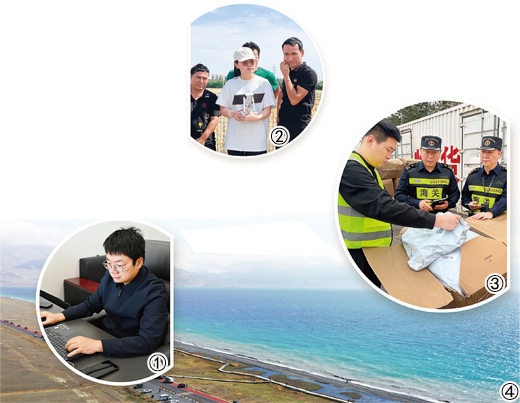
投身国际物流、智慧农业、人工智能等领域干事创业—— “拼”在发展一线的新疆青年(追梦人)
Ren Min Ri Bao· 2025-10-11 00:46
Core Insights - The development of the Silk Road Economic Belt is accelerating, showcasing a new image of openness and confidence in Xinjiang's modernization [1] Group 1: Economic Development - Xinjiang is becoming a new hub for Chinese goods to reach the world, with significant growth in air cargo operations, particularly at Urumqi Tianshan International Airport, which saw a 715% year-on-year increase in cargo capacity [3] - The introduction of bonded aviation fuel at Urumqi has reduced costs by approximately 13% per ton, enhancing the competitiveness of air freight [2][3] Group 2: Youth Engagement in Trade - Young professionals like Yao Huiming are seizing opportunities in foreign trade, transitioning from road to air freight, and managing logistics with precision [2][4] - The workforce in foreign trade is predominantly composed of individuals born in the 1980s and 1990s, reflecting a shift in work and lifestyle preferences among younger generations [4] Group 3: Agricultural Innovation - Agricultural practices in Xinjiang are evolving, with researchers like Ma Yiru applying scientific knowledge to reduce farming costs by about 25% through precise fertilization techniques [5][6] - The establishment of companies focused on smart agriculture is gaining traction, with a younger workforce driving innovation in agricultural technology [6][7] Group 4: Energy and Computing Development - Hami is positioning itself as a key player in the "East Data West Computing" initiative, leveraging its abundant energy resources to support the development of computing power [7][8] - The successful launch of advanced computing clusters in Hami marks a significant milestone in the region's technological advancement, with collaborations with cities like Chongqing to meet growing computing demands [8]

“拼”在发展一线的新疆青年(追梦人)
Ren Min Ri Bao· 2025-10-10 22:10
Group 1: Economic Development in Xinjiang - Xinjiang is rapidly advancing the construction of the Silk Road Economic Belt, showcasing a new image of openness and confidence in socialist modernization [2] - The region is becoming a hub for international trade, with significant growth in air cargo operations, particularly through Urumqi Tianshan International Airport, which has seen a 715% year-on-year increase in cargo capacity [4] - The introduction of bonded aviation fuel at Urumqi Airport has reduced fuel costs by approximately 13%, enhancing logistics efficiency [4] Group 2: Young Entrepreneurs and Innovation - Young professionals like Yao Huiming and Ma Yiru are seizing opportunities in foreign trade and smart agriculture, respectively, contributing to the region's economic dynamism [3][5] - Ma Yiru's initiatives in precision fertilization have led to a 25% reduction in farming costs for local farmers, demonstrating the application of academic research in practical agriculture [6] - The agricultural sector is increasingly attracting young talent, with a focus on smart agriculture and technology integration [7] Group 3: Development of Computing Power - The Hami region is positioning itself as a key player in the national "East Data West Computing" initiative, leveraging its abundant energy resources for the development of computing power [8] - The establishment of a computing power network has been facilitated by overcoming challenges related to data transmission and construction in harsh weather conditions [9] - Collaborations with cities like Chongqing are underway to provide computing power support, indicating a growing inter-regional partnership [9]
青海“绿电”不仅点亮万家灯火 还在驱动这些产业
Yang Shi Xin Wen· 2025-10-08 04:11
Core Viewpoint - In the era of the Internet of Things, big data has transformed from an abstract concept into a "smart brain" that underlies every click, travel, and consumption, particularly in Qinghai, which leads in clean and renewable energy installation in China [1] Group 1 - Qinghai generates green electricity that not only powers homes but also drives the energy-intensive computing industry [1] - The province has become the first national pilot zone for "coordinated electricity and computing" [1]
“视”界大同微视听作品征集启幕 聚焦古都新城三重魅力
Zhong Guo Xin Wen Wang· 2025-10-04 01:51
Core Points - The "Visual World of Datong" micro-visual works collection and promotion activity has been officially launched, aiming to showcase Datong's unique stories in energy transition, computing power rise, historical heritage, and urban life [1][2] - The event is guided by the China Television Artists Association and co-hosted by the China Association of Radio and Television and the Propaganda Department of the Datong Municipal Committee [1] Summary by Categories Objectives - The activity aims to vividly present Datong's charm as a "cultural ancient capital + new energy city + computing power highland" through mobile, social, and visual methods [1] Content Focus - The collection will focus on ten creative directions, including: - Showcasing the renewal and confidence of ancient civilization in the new era [1] - Highlighting Datong's successful transformation from "China's coal city" to a benchmark for "new energy city" [1] - Presenting Datong as a leader in the national computing power industry, illustrating the shift from "energy output" to "data empowerment" [1] - Encouragement for works to depict Datong's role in regional collaborative development, ecological transformation, and the integration of culture and tourism [1] Participation Details - The interactive collection is open to micro-visual creators nationwide, running from now until November 5, 2025 [2] - Works must be original micro-visual pieces created since January 2023, including micro-documentaries, short dramas, micro-animations, and micro-videos, with a maximum duration of 10 minutes per episode [2] - The event consists of three phases: collection, evaluation, and results announcement, culminating in an awards ceremony during the "World Datong · Datong 'Visual' World" themed gala [2]
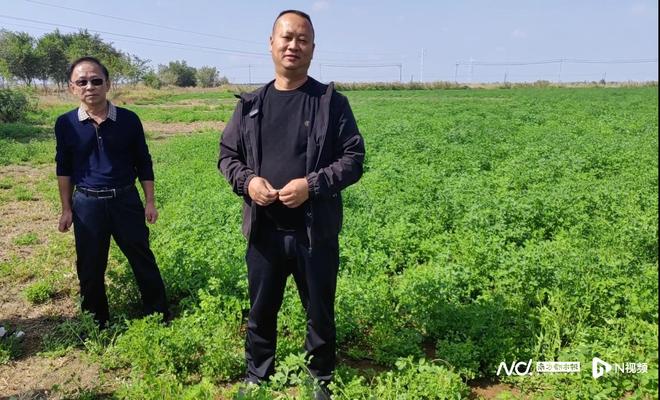
沙漠育草、戈壁追光、疆算东送!看科技如何赋能新疆向新向绿
Nan Fang Du Shi Bao· 2025-10-03 08:16
Core Insights - Xinjiang is transforming into a hub for clean energy and advanced agricultural practices, leveraging technology to enhance traditional industries and promote sustainable development [1][2][3] Group 1: Agricultural Innovations - The introduction of underground drip irrigation technology has significantly increased alfalfa yields, with reports of production rising by 200-300 kg per mu compared to traditional methods [4][5] - The "Two Irrigations and One Protection" technique has improved seedling survival rates in arid conditions from 40% to 90%, expanding alfalfa cultivation from 100,000 mu to over 300,000 mu [10][12] - The establishment of the Alfalfa Technology Institute in Hohotubie County focuses on integrating green industry practices, addressing challenges in water conservation and crop yield [7][9] Group 2: Renewable Energy Developments - The Hami molten salt tower solar power plant, with a capacity of 50 MW, utilizes advanced technology to achieve a thermal conversion efficiency 2-3 times higher than conventional photovoltaic plants, generating approximately 198 million kWh annually [16][19] - The plant's innovative design allows for continuous power generation, utilizing thermal storage to provide electricity even at night, thus enhancing energy reliability [16][20] - The project has significantly reduced carbon emissions, saving approximately 61,900 tons of standard coal and 154,800 tons of CO2 annually [16] Group 3: Digital and Computational Advancements - The establishment of the Hami (Yiw) Cloud Integration Computing Center is pivotal in transforming Xinjiang's energy-based economy into a digital economy, facilitating rapid data transmission and enhancing computational capabilities [24][25] - The region is developing a comprehensive computing network that integrates various computational resources, aiming to support national initiatives like the "East Data West Computing" project [26][27] - The Hami Energy Computing Integration Research Institute is actively recruiting and training talent to support the burgeoning computational industry, addressing the skills gap in this emerging sector [29][30]
农尚环境拟投建广州智慧创新谷算力基础设施项目
Zhi Tong Cai Jing· 2025-09-30 10:55
Core Viewpoint - The company, Nongshang Environment (300536.SZ), is expanding its business in the computing power service sector by investing in infrastructure to enhance its competitive advantage in the computing power industry [1] Group 1: Investment Details - The company’s subsidiary, Guangzhou Xinsuan Shengyang Technology Co., Ltd. (referred to as "Xinsuan Shengyang"), plans to invest no more than RMB 83.6963 million in the construction of the Guangzhou Smart Innovation Valley computing power infrastructure project [1] - The project will primarily be used for the company's own operations or to provide data center infrastructure leasing services to external clients [1]
