蔬菜种植

Search documents
“十五五”开好局起好步丨奋发进取 绘就乡村振兴新图景
Yang Shi Xin Wen Ke Hu Duan· 2026-01-11 01:45
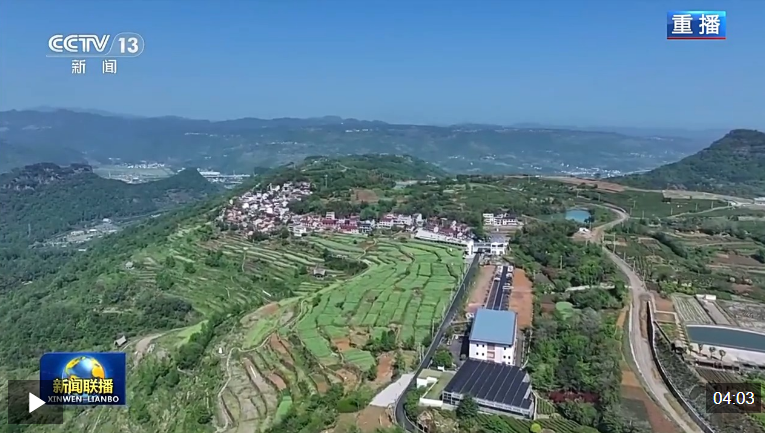
Core Viewpoint - The article emphasizes the importance of rural revitalization in China, highlighting the development of industries that enrich farmers as a key focus for achieving modernization [1][8]. Group 1: Agricultural Development - In Hubei's Jiyu County, the annual output value of vegetable planting has surpassed 6.5 billion yuan, with plans to promote high-yield, resilient cabbage varieties in collaboration with the Chinese Academy of Agricultural Sciences [3]. - The local farmer, Ye Xiangsong, reported an annual income of over 200,000 yuan from cabbage farming, indicating a positive trend in rural income generation [4]. - The agricultural bureau in Hubei plans to enhance vegetable product quality and extend the industrial chain to increase farmers' income [6]. Group 2: Modern Agricultural Practices - In Chongqing's Wanzhou National Modern Agricultural Industrial Park, the citrus harvest spans 100,000 acres, with a target to exceed 10 billion yuan in total output value through green processing and ecological branding [11]. - The total output value of modern agricultural industrial parks in China has exceeded 3 trillion yuan, showcasing significant growth in the sector [13]. Group 3: Tourism and Employment - In Xinjiang's Xuedu Village, the introduction of new tourism products has attracted more visitors, with over half of the village's 700 residents now engaged in the tourism industry [15]. - In Heilongjiang's Beiji Village, over 300 unique hotels and guesthouses have been established, with the area receiving over 700,000 tourists since winter began [18]. Group 4: Talent Development - Yunnan plans to train over 500,000 individuals in various skills to support rural revitalization, while Zhejiang has introduced a local standard for modern "new farmers" to meet the talent needs in rural development [20][22].

冬季蔬菜实现本地化稳定供应
Xin Lang Cai Jing· 2026-01-10 17:26
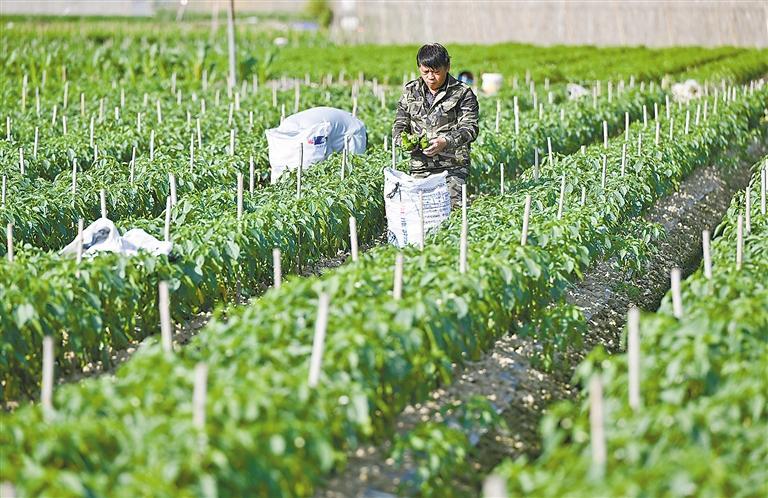
Core Insights - The article highlights the successful winter vegetable production in Dulan County, facilitated by the establishment of greenhouses and improved infrastructure, which has significantly enhanced local food supply during winter months [1][2] Group 1: Production and Infrastructure - The Chaiyuan Vegetable Planting Cooperative operates 122 greenhouses, with 76 of them currently in winter production, growing 18 varieties of vegetables including peppers, eggplants, and tomatoes [1] - The annual production capacity of the cooperative is projected to reach 460 tons, effectively meeting local winter vegetable demand [1] - Dulan County has invested in upgrading greenhouse infrastructure and improving temperature control and moisture retention capabilities, which has led to increased vegetable yield and quality [1] Group 2: Economic Impact and Employment - The cooperative employs an innovative model of "rent + wages + dividends," which allows local villagers to gain employment close to home, thus promoting income growth alongside industrial development [2] - The ongoing greenhouse projects not only provide fresh vegetables but also contribute to the overall well-being and economic stability of the local community, supporting rural revitalization efforts [2]
【“十五五”开好局起好步】奋发进取 绘就乡村振兴新图景
Yang Shi Wang· 2026-01-10 11:50
Group 1 - The core viewpoint emphasizes the importance of advancing rural revitalization through the development of profitable industries, as highlighted by President Xi Jinping [1] - In Hubei's Jia Yu County, the annual output value of vegetable planting has surpassed 6.5 billion yuan, with plans to promote high-yield, resilient cabbage varieties in collaboration with research institutions [1] - The total output value of modern agricultural industrial parks in China has exceeded 3 trillion yuan [3] Group 2 - In Chongqing's Wanzhou National Modern Agricultural Industrial Park, the citrus harvest is expected to drive total output value to exceed 10 billion yuan through green processing and ecological branding [2] - In Xinjiang's Xuedu Village, tourism has become a major resource, with over half of the 700 residents engaged in the tourism industry, supported by new offerings like bonfire parties [3] - In Heilongjiang's Mohe North Pole Village, over 300 unique hotels and guesthouses have been established, attracting more than 700,000 tourists since winter began [3] - Yunnan plans to train over 500,000 individuals in various skills to support rural revitalization efforts [3] - Zhejiang has introduced the first local standard for "new farmers," addressing talent needs in the rural revitalization process [3]
海南冬季瓜菜陆续上市
Xin Lang Cai Jing· 2026-01-09 04:13
Group 1 - The core viewpoint of the article highlights the peak season for winter vegetable planting and harvesting in Hainan Province, with farmers actively working in the fields [3] - For the 2025-2026 season, Hainan plans to plant winter vegetables over an area of 2.9 million acres, expecting a yield of 5 million tons [3] - The anticipated production will supply over 170 large and medium-sized cities across the country [3]
当日采收凌晨直达,全方位安全管控 全链条织密“菜篮子”安全保供网
Zhen Jiang Ri Bao· 2026-01-08 23:45
Core Viewpoint - The article highlights the efforts of Zhenjiang Economic Development Zone in ensuring a fresh and safe supply of vegetables for the upcoming Spring Festival, emphasizing the importance of local production and quality control measures [1][2][3] Group 1: Freshness and Supply - The vegetable bases in Zhenjiang are operating at full capacity to ensure fresh produce is harvested and delivered promptly, with a focus on "same-day harvest, early morning delivery" [1] - The Dalu Town Modern Agricultural Industrial Park has over 800 acres of vegetable planting area, with a stable daily harvest of around 500-600 pounds of fresh vegetables [1] - The agricultural park is currently supplying approximately 12.5 tons of vegetables daily to the market, covering over ten seasonal varieties to meet consumer demand during the holiday period [2] Group 2: Quality Control and Safety - The agricultural park implements multiple measures for vegetable quality control, including issuing notices on banned pesticides and signing safety commitment letters with farmers [2] - A unified natural disaster insurance policy for farmers has been established to alleviate their concerns and encourage production [2] - The park's detection team conducts random inspections and increases the frequency of product testing to ensure all vegetables meet safety standards [3] Group 3: Future Planning - Zhenjiang Economic Development Zone plans to continuously monitor weather patterns and market supply-demand changes to optimize planting strategies and improve distribution efficiency [3] - The goal is to maintain a rich variety of fresh and safe vegetables for consumers, enhancing the quality of holiday meals [3]
海南冬季瓜菜 陆续上市
Xin Lang Cai Jing· 2026-01-08 20:05
Group 1 - The core viewpoint of the article highlights the active agricultural activities in Hainan Province, particularly focusing on the winter vegetable planting and harvesting season [3] - In the 2025 to 2026 period, Hainan plans to cultivate winter vegetables over an area of 2.9 million acres, with an expected yield of 5 million tons [3] - The produce from Hainan is projected to supply over 170 major and medium-sized cities across the country [3]
小时候不爱吃的丑菜,又在江浙沪火起来了?
3 6 Ke· 2026-01-07 09:35
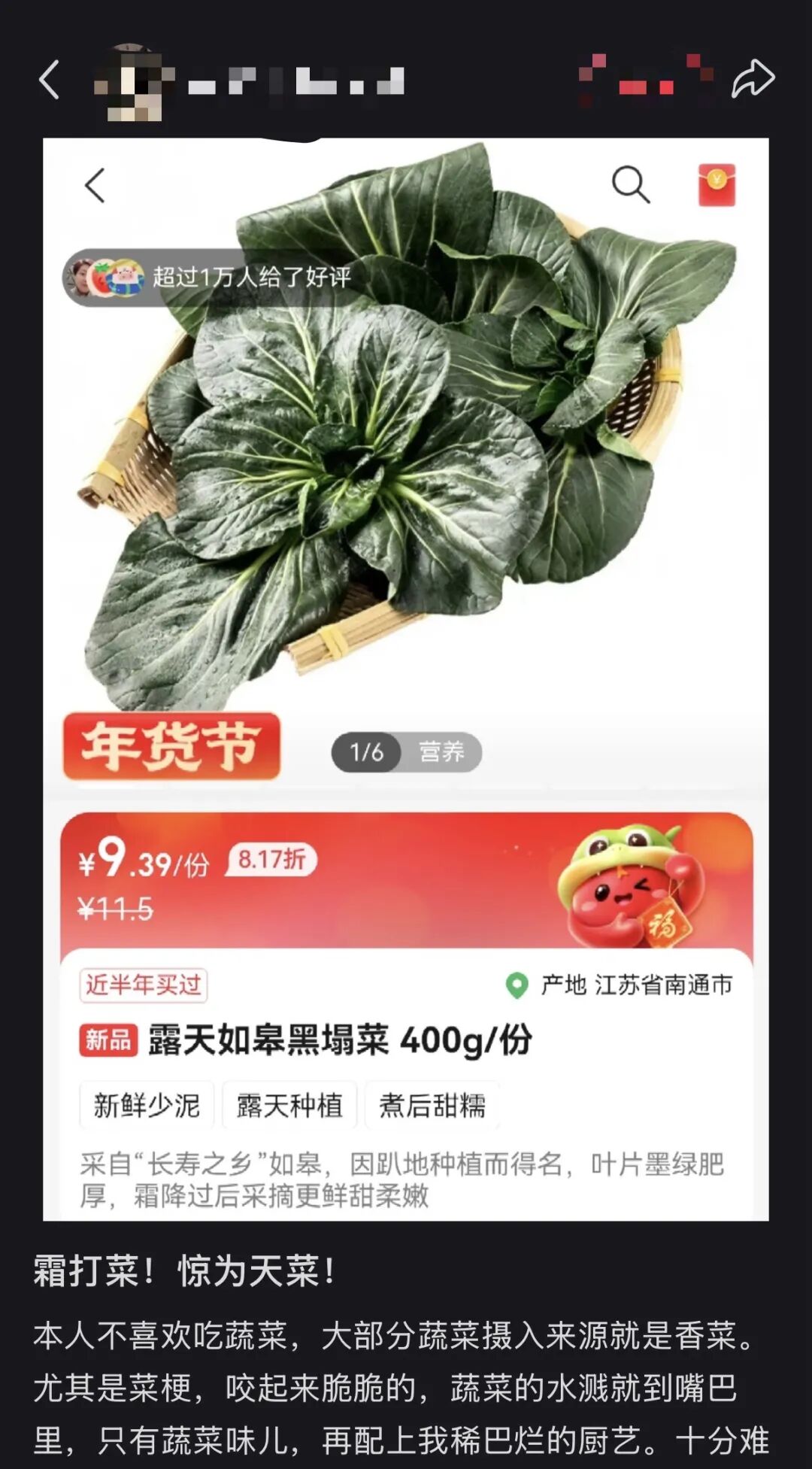
Core Viewpoint - The rise in popularity of "Heitaicai" (black tatsoi) from Rugao, Jiangsu, has transformed it into a sought-after vegetable, with prices surpassing those of meat, driven by health trends and effective marketing strategies [4][6][8]. Group 1: Market Dynamics - In early December, local farmers in Rugao sold Heitaicai for 1.5 yuan per jin, with a total sale of 3,000 yuan [1]. - In Shanghai, Heitaicai is currently priced at 5 yuan per jin, down from 7-8 yuan last year, indicating a shift in market dynamics [1][3]. - The price of Heitaicai has reached 9.39 yuan for 400 grams during festive seasons, highlighting its premium status [3]. Group 2: Cultural Significance - Heitaicai is traditionally consumed in Jiangsu and has been associated with local customs and health benefits, often referred to as "longevity vegetable" [6][8]. - The vegetable's unique taste and texture, especially after frost, contribute to its cultural significance in winter meals [5][6]. - The popularity of Heitaicai has led to a resurgence in its consumption, with many people reminiscing about their childhood experiences with the vegetable [10][11]. Group 3: Agricultural Practices - Rugao has standardized the cultivation of Heitaicai, with 20,000 acres dedicated to its production, enhancing its status as a geographical indication product [8]. - The local soil, rich in selenium and minerals, is believed to contribute to the health benefits associated with Heitaicai [7]. Group 4: Marketing and Branding - The rise of Heitaicai can be attributed to effective branding and promotion by local businesses, such as He Fu Ramen, which has introduced the vegetable to a wider audience [8][10]. - Social media has played a significant role in popularizing Heitaicai, with many users sharing their experiences and recipes [6][8].
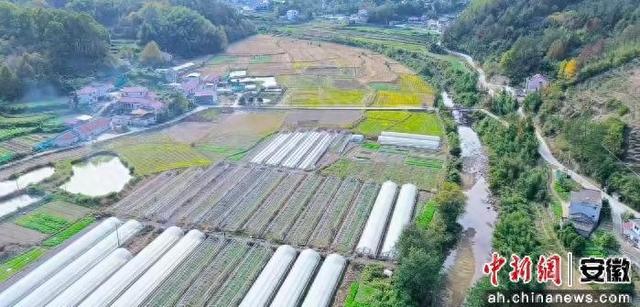
旌德县旌阳镇:大棚茄子挂满枝 村民增收笑开颜
Xin Lang Cai Jing· 2026-01-07 08:59
Group 1 - The core idea of the news is the successful implementation of a vegetable greenhouse project in Haizhuang Village, which has revitalized idle land and increased income for the local community [1][2] - The project involves the construction of 60 standardized steel frame greenhouses, expected to be completed by October 2024, with new agricultural operators set to join by 2025 [1] - The initiative has created job opportunities for over 300 workers during the entire cycle from seedling to harvest, allowing villagers to earn approximately 150 yuan per day [1] Group 2 - The "collaborative development" model adopted by Dijing Town encourages cross-village cooperation and resource sharing, moving from isolated efforts to a synergistic approach [2] - Future plans include deepening the "collaborative development" strategy to involve more villages and communities in the industrial alliance, thereby extending the industrial chain and diversifying industry forms [4]
武汉一高校学生自种蔬菜成“抢手货”
Zhong Guo Xin Wen Wang· 2026-01-07 01:18
Core Viewpoint - The initiative by Huazhong Agricultural University students to grow and sell vegetables emphasizes practical agricultural education and promotes organic farming practices, attracting significant customer interest and engagement [1][2]. Group 1: Student Initiative and Practices - Students from Huazhong Agricultural University are involved in all stages of vegetable production, from selection to sales, under the guidance of professional instructors [1]. - The vegetables are grown using organic methods, avoiding ripening agents and pesticides, and utilizing organic fertilizers made from fully fermented animal manure [1]. - The sales process occurs regularly, with students selling fresh produce at the university's teaching base, often selling out quickly due to high demand [1]. Group 2: Customer Engagement and Feedback - Customers appreciate the freshness and quality of the vegetables, with some traveling significant distances to purchase them, indicating strong community interest [2]. - The initiative has evolved to include online engagement, with students live-streaming their farming and selling activities, which has attracted attention from outside the university [2]. - The program serves as a practical social experience for students, fostering a deeper appreciation for agricultural labor and the value of land [2].
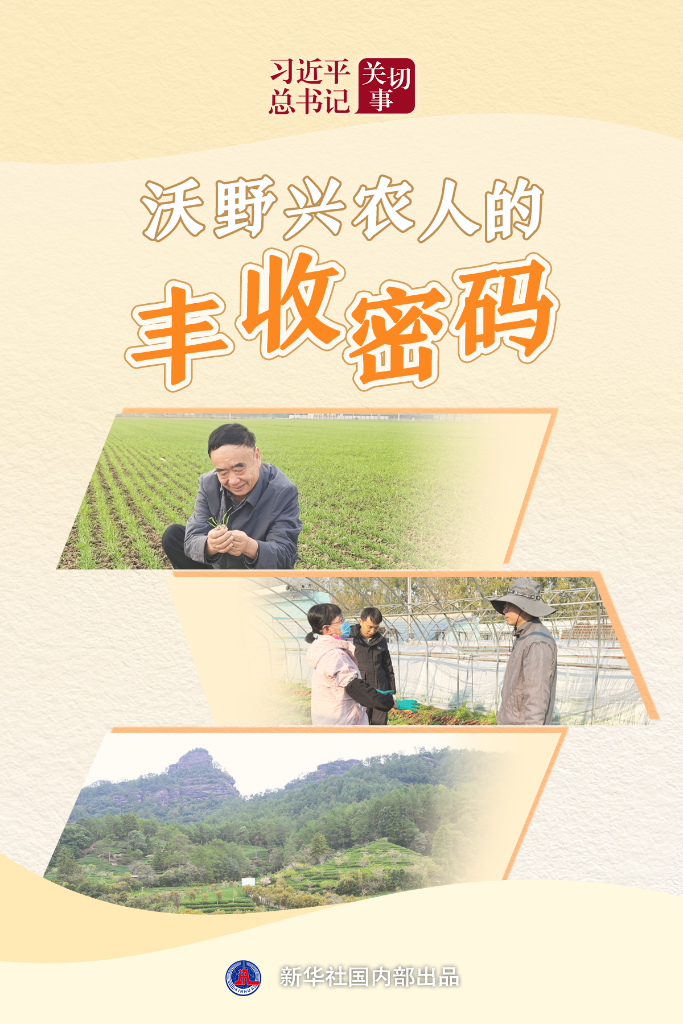
习近平总书记关切事·嘱托丨沃野兴农人的丰收密码
Xin Hua She· 2026-01-06 13:11
Core Viewpoint - The article emphasizes the importance of food security and the role of modern agricultural technology in enhancing grain production and quality, as highlighted by President Xi Jinping's directives to agricultural practitioners [2][4][8]. Group 1: Grain Production - The article describes the efforts of Xu Zongxiang, a prominent grain farmer in Anhui Province, who has successfully increased wheat yields through modern agricultural practices, achieving over 800 kg per mu in 2022 [4][5]. - Xu Zongxiang has established a farmer training school to share his knowledge and techniques with local farmers, promoting a collaborative model that has expanded to cover 300,000 mu of farmland [5][4]. - The article notes that Xu's initiatives align with President Xi's encouragement for large-scale farmers to lead smaller farmers in improving grain production [4][3]. Group 2: Vegetable Industry - Wang Shufen, a leading expert in vegetable breeding, has focused on enhancing the quality and safety of vegetables, responding to President Xi's call to integrate technology into agriculture [8][10]. - Her team has developed several new varieties of radishes, including the high-quality "Sheng Luoyan Yu," which is resistant to various diseases and suitable for saline-alkali conditions [10][8]. - The article highlights that 80% of vegetable cultivation varieties in Shandong have been domestically produced, showcasing significant progress in agricultural self-sufficiency [10]. Group 3: Tea Industry - The article discusses the work of Professor Liao Hong in promoting ecological tea farming in Wuyishan, which has improved tea quality and farmer incomes through innovative practices [12][16]. - Liao's team has implemented a model that combines ecological planting with traditional methods, resulting in increased tea yield and quality without the use of chemical fertilizers [12][16]. - The article mentions the broader impact of the technology commissioner system, which has mobilized thousands of agricultural scientists to support rural development in Fujian Province [16][12].