
自动驾驶

Search documents
阿里启动“千问”项目,全面对标ChatGPT; 京东物流三季度总收入551亿元|未来商业早参
Mei Ri Jing Ji Xin Wen· 2025-11-14 00:00
NO.1 滴滴自动驾驶出海首站落户中东阿布扎比 11月13日消息,滴滴自动驾驶宣布与阿布扎比投资办公室(ADIO)达成战略合作。滴滴自动驾驶加入 阿布扎比智能和自动驾驶汽车产业集群SAVI,双方将在自动驾驶技术创新应用、AI人才培养、生态建 设等领域开放合作,共同支持阿布扎比建设领先的智慧出行和可持续交通生态,并逐步将合作拓展至更 广泛的中东地区。滴滴自动驾驶和广汽埃安合作的具有全球化适配能力的新一代自动驾驶车,将于年底 交付。 点评:全球自动驾驶赛道已从技术研发转向场景落地的攻坚期,中东地区凭借雄厚的石油资本和对智慧 城市建设的迫切需求,正成为国际自动驾驶企业的必争之地。 点评:2025年,AI大模型市场已完成初步洗牌,字节、阿里、百度等巨头凭借技术、资金与生态优势 占据主导,而"AI六小龙"等初创企业生存空间被挤压,行业焦点从模型研发转向C端产品落地与全球市 场争夺。上百名工程师的专项投入与专属办公区域的设置,凸显了阿里将AI视为"必答题"的战略决心。 NO.4 菜鸟服务淘宝闪购仓配"小时达"已覆盖重点12城 11月13日,《每日经济新闻》记者从菜鸟获悉,自10月菜鸟加入淘宝闪购以来,伴随"双11"加快推 ...

科技点亮十五运会 智能技术赛后将加速商用
Shang Hai Zheng Quan Bao· 2025-11-13 17:55
Group 1: Technological Innovations at the Event - The 15th National Games showcased over 130 high-tech products focusing on artificial intelligence and new-generation information technology to enhance event operations and spectator experience [5][11] - The event featured the first-ever collection of the Olympic flame from combustible ice at a depth of 1522 meters in the South China Sea, marking a historic achievement in sports [6][9] - A humanoid robot named "Kua Fu" participated in the torch relay, utilizing a 5G-A network for real-time interaction, demonstrating advancements in robotics and communication technology [7][10] Group 2: Autonomous Vehicles and Robotics - Over 300 autonomous vehicles were deployed in Guangzhou for the event, operating on five bus routes and 11 support lines, showcasing the city's commitment to smart transportation [11][13] - AI-powered patrol robots were utilized for security and order maintenance during the event, with seven units deployed for practical testing and demonstration [11][13] - The event served as a testing ground for various intelligent technologies, including autonomous driving and security robots, with plans for post-event applications in urban transportation and public safety [13] Group 3: Enhanced Spectator Experience - The "Event Freedom Perspective System" provided multi-angle video capture of various sports, enhancing viewer engagement and aiding athletes in performance analysis [12] - An AI-powered assistant was developed to provide real-time information about the event schedule and venues, improving visitor experience [12] - A cultural AR digital RMB wallet was introduced, allowing cashless payments and interactive experiences with event mascots, integrating technology with cultural elements [12]




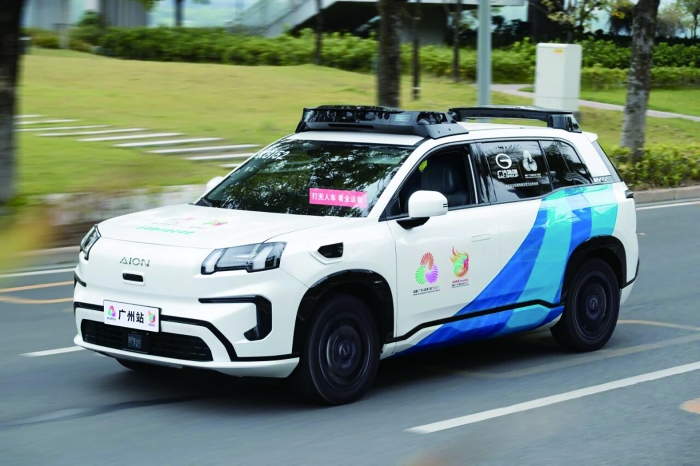
万马科技与百度合作升级 拓展自动驾驶运营生态
Zheng Quan Shi Bao· 2025-11-13 17:48
Core Insights - Wanma Technology's subsidiary, Youka Technology, has entered into a deep strategic partnership with Baidu's Apollo Intelligent Driving, transitioning from basic service collaboration to a comprehensive, global "full-stack, all-domain" cooperation [1][2] - Youka Technology will provide advanced Robotaxi connectivity management and integrated hardware-software solutions, enhancing the reliability and responsiveness of autonomous driving services [1][2] Group 1 - Youka Technology has evolved from a vehicle networking service provider to a high-end connectivity solution supplier, strengthening its leadership position in the advanced connectivity sector [2] - The strategic partnership aims to create a "vehicle-road-cloud integration" ecosystem, focusing on global Robotaxi operations and exploring a "service + technology" model for international expansion [2] - The collaboration coincides with a critical phase for global Robotaxi commercialization, supported by China's push for "vehicle-road-cloud integration" pilot cities and extensive testing roadways [2] Group 2 - Morgan Stanley identifies autonomous driving as a key opportunity in the automotive industry, potentially unlocking $2 trillion to $3 trillion in new market value [2] - The National Intelligent Connected Vehicle Innovation Center predicts that by 2030, the total output value of the "vehicle-road-cloud integration" industry in China will increase by 2.58 trillion yuan, with a compound annual growth rate exceeding 28% [2]


独家对话小马智行CEO彭军、CFO王皓俊:复盘Robotaxi的10年路
Hua Er Jie Jian Wen· 2025-11-13 13:25
Group 1 - Robotaxi is entering a phase of accelerated commercialization, with significant developments from companies like Pony.ai and WeRide, which recently completed a dual listing in Hong Kong [1] - Xpeng plans to launch three Robotaxi models by 2026, while Hello Robotaxi aims for small-scale production in 2026 and deployment of over 50,000 autonomous vehicles by 2027 [1] - HSBC predicts that the scale of Robotaxi fleets in China will grow tenfold between the second half of 2025 and 2026, marking a significant expansion in the industry [1] Group 2 - Pony.ai's IPO in Hong Kong is its second listing, following its debut on NASDAQ in November 2024, indicating strong investor interest and confidence in the company [2] - The founders of Pony.ai reflect on their journey, emphasizing the importance of building trust with investors through transparency and data sharing during early trials [10][11] Group 3 - The company is focused on achieving profitability by 2028 or 2029, with plans to operate a fleet of 50,000 Robotaxis primarily in first-tier cities [16][29] - The management believes that achieving a fleet size of several hundred to a thousand vehicles is essential for scaling operations effectively [17] Group 4 - The company positions itself as an "AI driver," aiming to integrate with existing ride-hailing platforms like Didi and Gaode, rather than competing directly with them [32][42] - The strategy includes expanding into international markets, particularly in the Middle East, where regulatory environments are favorable for autonomous vehicle deployment [46][50] Group 5 - The company emphasizes the importance of safety and regulatory compliance, stating that obtaining L4 licenses requires extensive testing and public engagement [18][24] - The founders express a commitment to maintaining a clear technological direction, focusing on L4 capabilities while recognizing the challenges of competing in a rapidly evolving market [37][39]
万马科技与百度合作升级 拓展自动驾驶生态运营
Zheng Quan Shi Bao Wang· 2025-11-13 11:01
Core Insights - Wanma Technology's subsidiary, Youka Technology, has entered into a deep strategic partnership with Baidu's Apollo Intelligent Driving, transitioning from basic service cooperation to a comprehensive collaboration aimed at global markets [1][2] - Youka Technology has evolved from a vehicle networking service provider to a high-end networking solution supplier, enhancing its leadership position in the high-end networking sector [2] Group 1: Strategic Partnership - The partnership will leverage Youka Technology's full-chain technical capabilities to provide integrated hardware and software solutions for Robotaxi services [1] - The high-end networking solution includes global connectivity, high-precision positioning, AI networks, smart hardware, and comprehensive services, significantly improving the reliability and responsiveness of autonomous driving services [1][2] Group 2: Market and Policy Context - The collaboration aligns with the global commercialization and expansion of Robotaxi services, supported by China's push for "vehicle-road-cloud integration" in 20 pilot cities and the opening of over 35,000 kilometers of test roads [2] - Morgan Stanley identifies autonomous driving as a key opportunity in the automotive industry, predicting a potential market value increase of $2 trillion to $3 trillion [3] - The National Intelligent Connected Vehicle Innovation Center forecasts that by 2030, the total output value of the "vehicle-road-cloud integration" industry in China will reach 2.58 trillion yuan, with a compound annual growth rate exceeding 28% [3]
萝卜快跑无人驾驶订单量全球居首,李彦宏称将创造移动新空间
Sou Hu Cai Jing· 2025-11-13 10:44
最新运营数据印证了这一趋势。百度旗下自动驾驶出行服务平台"萝卜快跑"目前每周全无人订单量已突破 25 万 单,全球累计出行服务次数超过 1700 万次,成为全球订单量第一的自动驾驶出行服务商。 【太平洋科技快讯】在 11 月 13 日举办的百度世界大会上,百度创始人李彦宏就无人驾驶技术的发展前景发表观 点。他指出,无人驾驶不仅将改变传统交通出行方式,甚至会改变社会生态。通过引用投资机构 ARK 的研究数 据,他预测到 2030 年,美国 Robotaxi(无人驾驶出租车)的单英里成本将降至约 0.25 美元,而打车需求将随之 增长 5 至 7 倍。 李彦宏强调,当打车服务变得足够便宜和便捷时,市场需求将被激发。他认为,无人车将突破传统交通工具的范 畴,成为人们全新的移动生活空间,并为社会发展创造更多可能性。 截至目前,萝卜快跑的服务网络已覆盖全球 22 座城市,全无人驾驶总里程突破 1.4 亿公里,自动驾驶总里程更 达到 2.4 亿公里。 ...
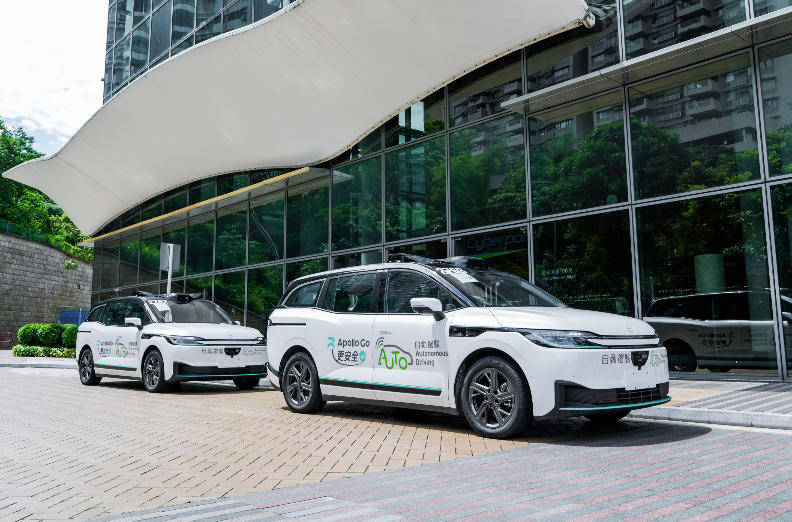
滴滴自动驾驶加入阿布扎比智能和自动驾驶汽车产业集群SAVI
Bei Jing Shang Bao· 2025-11-13 10:01
Core Insights - Didi Autonomous Driving has announced a strategic partnership with the Abu Dhabi Investment Office (ADIO) to collaborate on autonomous driving technology innovation, AI talent development, and ecosystem building [1] Group 1: Partnership Details - Didi Autonomous Driving joins the Abu Dhabi Smart and Autonomous Vehicle Industry Cluster (SAVI) [1] - The collaboration aims to support Abu Dhabi in building a leading smart mobility and sustainable transportation ecosystem [1] - The partnership is expected to expand to a broader scope across the Middle East region [1] Group 2: SAVI Industry Cluster - The SAVI industry cluster is initiated by the Abu Dhabi Department of Economic Development and ADIO, positioning itself as a smart transportation hub in the Middle East and North Africa [1] - The cluster aims to promote innovation and commercialization of autonomous driving technologies across land, sea, and air [1] - ADIO projects that by 2045, the SAVI cluster will contribute 44 billion dirhams to Abu Dhabi's GDP and create 40,000 jobs [1]

坤元资产FOF生态圈“隐形冠军”天团驰骋第十五届数智全运
Cai Fu Zai Xian· 2025-11-13 09:58
Core Insights - The 15th National Games in the Guangdong-Hong Kong-Macao Greater Bay Area showcases a "smart sports" theme, integrating cutting-edge technology into the event [1][4] - Companies within the Kun Yuan Asset FOF ecosystem are positioned as key players in the fields of humanoid robotics, smart security, autonomous driving, and green energy [2][3][9] Group 1: Humanoid Robotics - UBTECH's Walker S2 humanoid robot represented the Greater Bay Area at the opening ceremony, highlighting China's advancements in humanoid robotics [2] - The global humanoid robot market is expected to experience explosive growth, with projections indicating a market size exceeding $87 billion by 2030 [4] Group 2: Smart Security - Yushu Technology's smart police robots enhance event security through 5G and AI technologies, providing real-time monitoring and alerts [3][8] - The integration of AI and self-evolving security systems by Qi Anxin ensures data security throughout the event [8] Group 3: Autonomous Driving - Autonomous vehicles are being tested at the National Games, with projections of 500,000 Robotaxis operating in China by 2030, creating a market worth $47 billion [5][6] - The laser radar technology from SUTENG and Hesai Technology is crucial for the success of autonomous driving applications [5][6] Group 4: Green Energy - The event emphasizes low-carbon principles, with venues designed for "all-green electricity" operations, supported by leading companies like Canadian Solar [9][10] - Hicharge Energy's advanced storage systems ensure stable energy supply, addressing the intermittency of solar power [10] Group 5: Overall Impact - The integration of humanoid robotics, autonomous driving, and green energy technologies at the National Games reflects a broader trend towards technological innovation in sports and event management [1][13] - Kun Yuan Asset's strategic investments in these sectors align with national goals for high-quality development and sustainability [10][13]

中游设备与材料环节迎来订单窗口期
Cai Fu Zai Xian· 2025-11-13 09:25
Core Insights - The 15th National Games in the Guangdong-Hong Kong-Macao Greater Bay Area showcases a "smart sports" theme, integrating cutting-edge technology into the event [1] - The event highlights the deep integration of sports and advanced technology, with companies in the Kunyuan Asset FOF ecosystem playing a crucial role [1][4] Group 1: Embodied Intelligence - The humanoid robot Walker S2, developed by UBTECH, represented the Guangdong-Hong Kong-Macao region at the opening ceremony, showcasing China's strength in embodied intelligence [2] - UBTECH is a leader in the humanoid robot sector, demonstrating advanced technology in motion control and human-robot interaction [2][4] - The global humanoid robot market is expected to experience explosive growth, potentially exceeding $87 billion by 2030, with Chinese companies leading in technology and commercialization [4] Group 2: Smart Security - Yushu Technology, another partner in the Kunyuan Asset FOF ecosystem, deployed intelligent police robots for enhanced security at the event, utilizing 5G and AI technologies [3][4] - These robots can perform all-terrain patrols and real-time anomaly detection, significantly improving security efficiency [3] Group 3: Autonomous Driving - Autonomous vehicles are providing smart transportation services for the event, with a projected market size of $47 billion for Robotaxis in China by 2030 [5][6] - Key players in the laser radar market, such as Suteng Juchuang and Hesai Technology, are crucial for the success of autonomous driving technology [5][6] Group 4: Cybersecurity - Qi Anxin plays a vital role in ensuring cybersecurity for the event, utilizing AI and a self-evolving security framework to protect data [8] - The company focuses on cross-border data security, ensuring data safety throughout its lifecycle [8] Group 5: Green Energy - The event emphasizes low-carbon principles, with venues designed for "all-green electricity" operation, supported by companies like Canadian Solar [9][10] - Hai Chen Energy provides advanced energy storage solutions, ensuring stable power supply from renewable sources [10] - The collaboration between Canadian Solar and Hai Chen Energy creates a complete green energy cycle, essential for achieving China's dual carbon goals [10]
文远知行跌2%创收盘价新低 上市募24亿港元首日破发
Zhong Guo Jing Ji Wang· 2025-11-13 09:20
Core Points - The stock of Wunyan Zhixing (00800.HK) closed at HKD 20.70, marking a decline of 2.358% and reaching a new low since its listing [1] - The company was listed on the Hong Kong Stock Exchange on November 6, 2025, with an opening price of HKD 24.98, which has since dropped below the issue price [1] - The final issue price was HKD 27.1, raising a total of HKD 2,391.58 million, with a net amount of HKD 2,264.34 million after deducting estimated listing expenses [1] Summary by Sections - **Stock Performance** - Wunyan Zhixing's stock is currently in a state of decline, having fallen to HKD 20.70, which is a 2.358% decrease [1] - The stock has experienced a significant drop since its initial public offering (IPO), where it opened at HKD 24.98 and closed at HKD 24.40, reflecting a 9.96% decline [1] - **IPO Details** - The company issued 88,250,000 shares, with 17,650,000 shares allocated for public sale in Hong Kong and 70,600,000 shares for international sale [1] - The total funds raised from the IPO amounted to HKD 2,391.58 million, with a net amount of HKD 2,264.34 million after accounting for listing expenses of HKD 127.24 million [1]