
风电

Search documents
综述丨在绿色转型中寻求共赢——中英商界共话经贸合作新机遇
Xin Hua Wang· 2025-10-17 00:55
Group 1 - The core theme of the event is the collaboration between China and the UK in seeking new economic opportunities through green transformation, technology innovation, and open cooperation [1] - Chinese representatives from various regions highlighted their industrial advantages and cooperation opportunities in sectors such as new energy, smart manufacturing, digital economy, and marine engineering [1] - UK experts emphasized the need for international partnerships, particularly with China, to achieve their goals of net-zero emissions and energy transition by 2030, including tripling offshore wind capacity [1] Group 2 - There is significant potential for collaboration in net-zero technologies, artificial intelligence, cybersecurity, advanced manufacturing, and life sciences between Chinese and UK enterprises [2] - Participants suggested focusing on high-growth sectors and key scenarios for cooperation, including offshore and onshore wind, solar energy, hydrogen, and energy storage [2] - The ESG (Environmental, Social, and Governance) framework is becoming a new standard for cross-border investments, with Chinese local governments exploring the integration of ESG standards into project approvals and financing [2]
跨越与蝶变:140万亿背后,N组数据透视中国经济这五年
2 1 Shi Ji Jing Ji Bao Dao· 2025-10-17 00:18
Economic Growth and Achievements - China's GDP reached approximately 140 trillion yuan, with per capita GDP surpassing 13,000 USD for the first time, indicating significant economic growth and improved national strength [5][6][7] - Over the past five years, China has crossed multiple 10 trillion yuan milestones in GDP, maintaining its position as the world's second-largest economy [5][6] - The average annual growth rate of China's economy is about 6%, nearly double the global average growth rate of 3.1%, contributing around 30% to global economic growth [7][9] Technological Advancements - China has accelerated its technological transformation, moving from "catching up" to "keeping pace" and now "leading" in various sectors [12][13] - The global innovation index ranking for China improved from 34th in 2012 to 10th in 2025, marking it as one of the fastest-growing economies in terms of innovation [12][14] - R&D investment intensity in China has surpassed the average level of EU countries, with significant increases in high-tech industry investments [10][15] Industrial Development - The contribution of final consumption expenditure to economic growth has increased by 11.1 percentage points compared to the "13th Five-Year Plan" period, with domestic demand accounting for over 80% of economic growth [9][10] - The share of the "three new" economy (new technologies, new industries, and new business models) in GDP is projected to exceed 18% by 2024, indicating a shift towards higher-end industries [9][10] - The number of high-tech enterprises in China has grown significantly, with over 50,000 active high-tech firms expected by 2025 [10][11] Social Welfare and Quality of Life - Key indicators of social welfare, such as income growth and employment rates, have exceeded expectations during the "14th Five-Year Plan" period, enhancing the quality of life for citizens [26][28] - The urban unemployment rate has remained below 5.5%, and the coverage of basic pension insurance has exceeded 95% [28][29] - The focus on improving public services and promoting common prosperity is expected to continue, with a commitment to enhancing employment and social security systems [26][28]


能源早新闻丨晋北采煤沉陷区,百万千瓦风电项目,全面开工
中国能源报· 2025-10-16 22:33
Regulatory Developments - The "Regulations on Fair Access to Oil and Gas Pipeline Facilities" will be implemented starting November 1, 2025, requiring independent operation and financial management for oil and gas pipeline operators [2] - The National Energy Administration emphasizes the need for enhanced safety management for users connected to the grid, mandating strict quality control in equipment design and installation [2] Energy Projects - The first batch of hydrogen energy pilot projects has been announced, supporting 41 projects including integrated green ammonia and hydrogen applications in Inner Mongolia [2] - The world's largest single-unit solar thermal power project has commenced construction in Golmud, Qinghai, with a capacity of 350 MW [3] - The first pumped storage power station in western Henan has officially started generating power, with a total investment of 8.88 billion yuan and a capacity of 1.4 million kilowatts [5] Infrastructure and Technology - The "Nordic Wind" installation vessel, capable of lifting over 3,000 tons, has been delivered in Yantai, marking a technological breakthrough in large-scale wind power installation [4] - The application of Building Information Modeling (BIM) technology is being promoted in major infrastructure projects across various sectors including energy [2] Corporate Developments - The 1 million kilowatt wind power project in the Jinbei coal mining subsidence area has officially started construction, with an investment of approximately 4.09 billion yuan [7]
“风”从何起归何处(评论员观察)
Ren Min Ri Bao· 2025-10-16 22:04
Core Insights - The article emphasizes the importance of leveraging unique advantages for development, focusing on innovation and proactive measures to create conditions for growth [1][2]. Group 1: Development Strategies - Yunnan province is utilizing its natural resources, such as wind power, to provide green energy to over 1.08 million households through 310 wind turbines [1]. - The region is enhancing agricultural infrastructure by constructing 320 kilometers of industrial roads and 17 kilometers of rural roads to facilitate product circulation [2]. - The integration of tourism and local culture is evident in the transformation of traditional homes into guesthouses, generating annual incomes exceeding 2 million yuan for some households [2]. Group 2: Environmental and Ecological Initiatives - The establishment of wind farms has led to ecological restoration, showcasing a harmonious coexistence of agriculture and renewable energy [3]. - The implementation of a high-precision CO2 monitoring system supports carbon trading, reflecting a commitment to green development [3]. - Comprehensive environmental governance around Dianchi Lake has resulted in improved water quality and biodiversity, enhancing the quality of life for residents [4]. Group 3: Community and Cultural Integration - The promotion of cultural events among different ethnic groups fosters a sense of community and shared identity, contributing to social cohesion [4]. - The opening of the China-Laos railway has expanded trade opportunities, covering 19 countries and facilitating the exchange of over 3,300 types of goods [4]. Group 4: Vision for Sustainable Development - The article advocates for a holistic approach to ecological protection and community development, emphasizing the need for a shared prosperity model among diverse ethnic groups [6]. - The focus on ecological benefits as a fundamental aspect of public welfare highlights the importance of sustainable practices in enhancing living standards [6]. - The narrative underscores the significance of aligning development strategies with the interests of the people and global cooperation for mutual benefits [7].
国内风电企业出海欧洲市场调研
2025-10-16 15:11
Summary of Key Points from the Conference Call Industry Overview - The conference call focuses on the **European wind power market** and the challenges faced by **Chinese wind power companies** entering this market [1][2][3]. Core Insights and Arguments - **Slow Development in Europe**: The European wind power market is experiencing slow growth due to bureaucratic hurdles, aging grid infrastructure, and local protectionism, which hinder project approvals and construction speed [1][2]. - **Auction Mechanism Inefficiency**: The auction mechanism for wind power projects in Europe is inefficient, with varying policies across countries leading to slow project progress. Investors are advised to be cautious about expecting rapid acceleration in project development [4][5]. - **Energy Demand Growth**: Over the next 3-5 years, energy demand in Europe is expected to grow slowly, with infrastructure improvements continuing but at a slower pace compared to the Asia-Pacific region [6]. - **Importance of Energy Storage**: Energy storage systems are crucial for addressing grid bottlenecks. Chinese companies like CATL are actively penetrating the European market with integrated solutions that combine wind turbines and energy storage [7]. - **Chinese Manufacturers' Progress**: Chinese manufacturers, such as Daikin, have made progress in the European market through close cooperation with original equipment manufacturers (OEMs) and cost advantages, although their overall supply chain position remains limited [8][9]. - **Domestic Wind Power Pricing**: Domestic wind power bidding prices have hit a bottom, with some companies facing losses. Prices are expected to stabilize over the next 3-5 years, leading to potential industry consolidation [16]. - **Trend of Larger Turbines**: The trend towards larger wind turbines is essential for maintaining competitiveness. Current domestic onshore turbines are around 6 MW, while offshore turbines range from 10 to 12 MW, compared to international leaders like Vestas, which have 15 MW turbines [17][18]. - **Offshore Wind Power Development**: Domestic offshore wind power is expected to continue growing, driven by limited onshore resources and higher profit margins, although it heavily relies on policy support [19]. - **Floating Wind Technology**: Floating wind technology is anticipated to achieve commercial viability within three years, but high costs related to infrastructure and tower construction remain a barrier [20]. - **Market Dynamics in South America**: The South American wind power market is in a rapid expansion phase, comparable to China's renewable energy market five to eight years ago [23]. Additional Important Insights - **Challenges for Chinese Companies**: Chinese companies face significant challenges in entering the European market due to political factors and local supply chain protections. However, they have made progress in more favorable regions like South America and the Asia-Pacific [12][15]. - **Competitive Advantages of Chinese Firms**: Chinese wind power companies have competitive advantages in pricing (5%-10% lower than international competitors), product performance, and customer service, which are crucial for success in international markets [24]. - **Tight Supply of Installation Vessels**: There is a tight supply of installation vessels for offshore wind projects, which is expected to continue for the next two to three years due to high demand [25]. - **Foreign OEMs' Profitability**: Foreign OEMs profit from after-sales services, providing comprehensive management services that generate stable income over time. Domestic companies need to adapt to this model to meet local customer demands [26].
新能源及储能政策解读及热点分析
2025-10-16 15:11
Summary of Key Points from the Conference Call Industry Overview - The conference call primarily discusses the renewable energy and energy storage sectors in China, focusing on the implications of recent policies and market dynamics affecting these industries [1][2][3]. Core Insights and Arguments 1. **Severe Power Limitations in Northern Regions**: The "Three North" regions (including Xinjiang, Gansu, and Inner Mongolia) are experiencing significant photovoltaic (PV) power limitations, with some areas exceeding 40% curtailment. This situation necessitates the expansion of non-electric applications to address consumption issues and ensure the development of wind and solar projects [1][2]. 2. **Policy Changes Impacting Renewable Energy**: The cancellation of the full guaranteed purchase policy (Document 136) means that grid companies are no longer responsible for unconnected power, raising the bar for renewable energy markets to expand non-electric applications [2][3]. 3. **Minimum Renewable Energy Consumption Requirement**: The new regulations introduce a minimum renewable energy consumption ratio, placing responsibility on high-energy-consuming enterprises to either purchase or self-generate renewable energy [1][2]. 4. **Projected Wind and Solar Installations**: It is anticipated that wind and solar installations will maintain an annual capacity of approximately 250 GW during the "15th Five-Year Plan" period, indicating continued government support for renewable energy development [2][3]. 5. **Green Hydrogen and Methanol Development**: Green hydrogen and methanol are highlighted as crucial solutions in the energy transition, with production costs in regions like Inner Mongolia dropping to 12-13 RMB per ton, making them competitive with coal-derived hydrogen [1][4]. 6. **Energy Storage Market Dynamics**: The energy storage industry is at a turning point, with capacity compensation and electricity pricing policies becoming focal points. In Inner Mongolia, a subsidy of 0.35 RMB per kWh is stimulating the storage market, potentially leading to annual revenues of 55%-60% for storage projects [1][5][7]. 7. **Regional Policy Variations**: Different provinces are exploring capacity compensation policies, with Gansu implementing a two-year electricity pricing policy at 330 RMB per kW, aimed at ensuring cost recovery for new storage projects [2][10][12]. 8. **Future Growth of Energy Storage**: The energy storage market is expected to grow significantly, with new installations projected to reach 45-50 GW in 2025 and over 200 GW by 2027, driven by supportive provincial policies [2][11]. 9. **Profitability Challenges in Energy Storage**: Current profitability in the storage sector varies widely by region, with Inner Mongolia showing the highest returns due to favorable compensation policies, while other regions struggle to achieve profitability [1][15][16]. 10. **Technological Trends in Energy Storage**: The development of energy storage technologies is shifting towards lithium batteries, which are expected to dominate the market due to their lower costs and mature technology. Other technologies like compressed air and liquid flow storage are also being explored but face economic challenges [19][20]. Additional Important Insights - **Impact of New Energy Orders on the PV Industry**: The introduction of new energy orders has led to price limits that affect the photovoltaic sector, with upstream silicon material price pressures being transmitted through supply-demand dynamics [25][26]. - **Differences in Storage Demand**: There is a notable difference in storage demand between China and other countries, with China's robust grid infrastructure reducing reliance on storage compared to regions like Europe and the U.S. [28][29]. - **Long-term Outlook for New Energy Storage**: While the overall urgency for new energy storage may be lower due to existing infrastructure, specific regions still require significant storage solutions due to limited interconnections and high coal dependency [29]. This summary encapsulates the critical points discussed in the conference call, providing a comprehensive overview of the current state and future outlook of the renewable energy and energy storage sectors in China.
新能源板块三季度业绩前瞻,关注新能源车ETF(159806)、创业板新能源ETF(159387)
Sou Hu Cai Jing· 2025-10-16 13:54
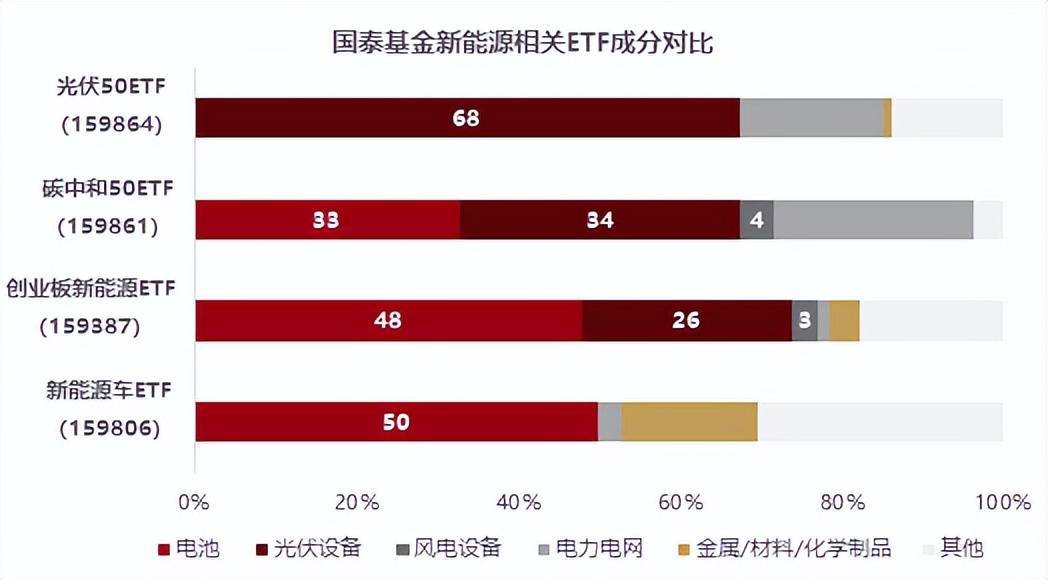
Group 1: Overall Situation of New Energy - Despite recent volatility in the new energy sector, the overall fundamentals are gradually improving, presenting a good opportunity for investment after adjustments [1] - Three main lines to focus on include strong performance in offshore wind, continuous demand growth in energy storage, and improved supply-demand dynamics in lithium batteries [1] - The upcoming Fourth Plenary Session is a critical observation point for anti-involution policies, particularly in the silicon material and lithium battery sectors [1] Group 2: Lithium Battery Sector Expectations - The lithium battery sector is expected to see steady improvement in Q3 due to increased production from leading manufacturers, driven by rising demand and supply constraints [2] - The outlook for the future indicates sustained high growth in lithium battery demand, particularly in the energy storage and commercial vehicle markets, with significant price increases anticipated in certain materials [2] - Recent breakthroughs in solid-state battery technology are expected to catalyze market activity in Q4, with a focus on specific components like iodide ions and electrolytes [2] Group 3: Photovoltaic Sector Expectations - The photovoltaic sector is experiencing upward pressure on silicon material prices, leading to reduced inventory impairment and improved Q3 performance for some silicon material companies [3] - However, the overall performance in Q3 is expected to remain flat compared to Q2 due to declining terminal demand and price pressures in the module segment [3] - Future support for the industry is anticipated from policy backing, market clearing, and technological advancements, with a focus on silicon materials, battery upgrades, and module pricing dynamics [3] Group 4: Wind Power Sector Expectations - The wind power sector is benefiting from accelerated project construction and a positive pricing environment, with Q3 performance expected to reflect volume and price increases [4] - The sector is poised for a new upward cycle, particularly in offshore wind, with significant growth potential in deep-sea projects and positive policy support [4] - Onshore wind projects are also expected to see optimistic shipment guidance and a recovery in bidding activities [4] Group 5: Investment Participation in New Energy - A diversified index-based approach is recommended for participating in the new energy sector [5] - Investors interested in lithium battery demand and solid-state battery breakthroughs can consider the New Energy Vehicle ETF, which covers the entire lithium battery supply chain [5] - For comprehensive exposure to lithium, energy storage, photovoltaic, and wind power, investors may look at the 20cm ChiNext New Energy ETF and the Carbon Neutrality 50 ETF for balanced allocations [5]

福建海上风电书写“领跑者”答卷
Xin Hua Wang· 2025-10-16 13:39
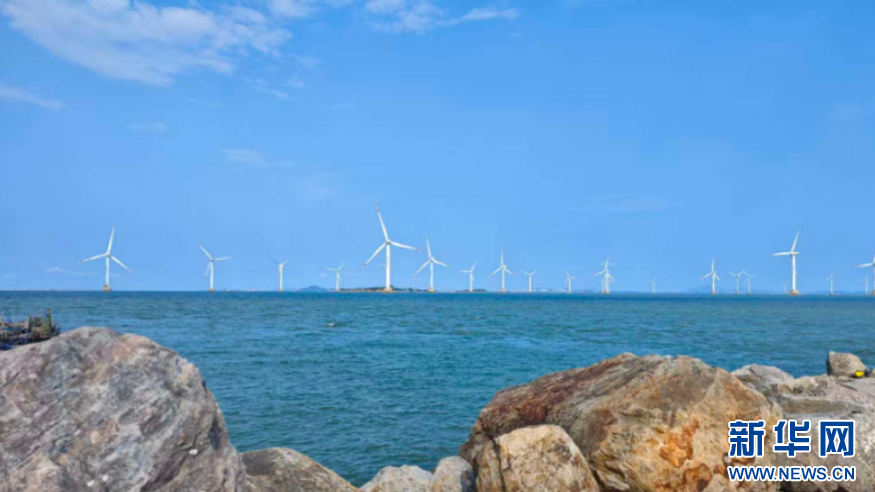
Core Insights - The 2025 World Maritime Equipment Conference and the 2025 Third China Marine Equipment Expo are being held concurrently in Fuzhou from October 16 to 19, highlighting the importance of maritime equipment in the region [1] - Fujian Province has transformed from a "follower" to a "leader" in the offshore wind power industry, leveraging its rich wind energy resources [1] Industry Developments - The "Wind from the Sea" exhibition, focusing on offshore wind power equipment, is a significant part of the Third China Marine Equipment Expo [1] - Fujian's offshore wind power industry has seen substantial growth, with projects like the Fuzhou Xinghua Bay offshore wind farm, which consists of two phases and has installed 59 wind turbines [3] Company Initiatives - The China Three Gorges Corporation's Fujian Offshore Wind Power International Industrial Park serves as a starting point and high ground for the development of Fujian's offshore wind power industry [5][6] - Goldwind Technology's Fuzhou assembly plant is actively engaged in the production of wind turbine components, showcasing the operational activities within the industry [7][8][10] - The Water and Electricity Fourth Bureau's Fuzhou company is involved in the production of photovoltaic components, indicating diversification within the renewable energy sector [12][13]
节能风电:2025年半年度权益分派实施公告
Zheng Quan Ri Bao· 2025-10-16 13:11
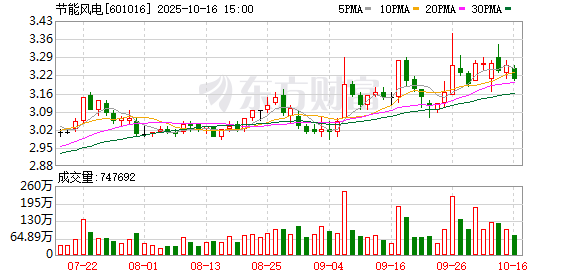
Core Viewpoint - The company announced a cash dividend distribution plan for the first half of 2025, indicating a commitment to returning value to shareholders [2] Summary by Category Dividend Announcement - The cash dividend for A-shares is set at 0.03518 yuan per share (including tax) [2] - The record date for the dividend is October 22, 2025, and the ex-dividend date is October 23, 2025 [2]

风格切换,红利迎来配置窗口?
Sou Hu Cai Jing· 2025-10-16 11:29
Core Viewpoint - The A-share market is experiencing a mixed trading pattern characterized by "traditional defensive sectors outperforming while technology growth sectors are undergoing a pullback" [1] Market Performance - A-share market showed a slight increase with the Shanghai Composite Index closing at 3916.23 points, up 0.1%, while the Shenzhen Component and ChiNext Index fell by 0.25% and rose by 0.38% respectively [2] - The Hang Seng Index closed down 0.09% at 25888.51 points, with the Hang Seng Tech Index dropping 1.18% to 6003.56 points, indicating pressure on tech leaders [2] Industry Highlights and Driving Logic - The coal sector led gains with a 2.35% increase, driven by winter demand and valuation recovery of state-owned enterprises [3] - The banking sector rose by 1.35%, with regional banks performing well due to their low valuation and high dividend appeal [3] - The insurance sector increased by 1.8%, supported by positive third-quarter earnings expectations [3] - The technology growth sector faced a collective pullback, with the humanoid robot index down 2.04% due to clarifications from a leading company regarding order rumors [3] - The artificial intelligence index fell by 1.3%, reflecting profit-taking pressures [3] Investment Strategy Recommendations - The market is in a "high valuation digestion + low valuation rebound" phase, with policy expectations and industry prosperity set to guide market direction [4] - Suggested investment lines include focusing on the technology growth sector for recovery opportunities, particularly in the AI industry chain [4] - Emphasis on cyclical and resource sectors driven by "policy + supply-demand" dynamics, with copper and aluminum expected to benefit from global easing and policy support [4] Policy-Driven Opportunities - Focus on high-end manufacturing sectors such as industrial robots and semiconductor equipment, which are expected to benefit from self-sufficiency policies [5] - The consumer sector is advised to target leading brands for low-position recovery, with e-commerce logistics indices indicating a continuation of consumption recovery trends [5]