饮料

Search documents
对话好望水创始人孙梦鸽:敬佩农夫山泉,是少有大品牌能持续创新还持续赢
Xin Lang Cai Jing· 2025-09-13 03:21
Core Insights - The founder of Haowang Water, Sun Mengge, shared insights on the brand's development, product innovation, and future outlook for the beverage industry during the 21st Summer Annual Meeting of the 2025 Yabuli Entrepreneur Forum [2] Company Overview - Haowang Water started from the dining scene and has expanded to a full-channel approach, with two main products, "Wang Shan Zha" and "Wu Zhi Mao Tao Yi Mi Shui," having nearly equal sales proportions. The overall scale of the company has not yet exceeded 1 billion yuan [2] - The company initially focused on creating a beverage that matched the dining experience, leading to the development of carbonated fruit juice, a concept that was nearly non-existent in the market at the time [2] Product Development - The brand incorporates traditional cultural elements into its packaging and product design, reflecting the founder's background and aesthetic preferences. Ingredients like dried tangerine peel, licorice, and hibiscus are used instead of standardized industrial materials [3] - Haowang Water emphasizes product quality and brand communication, relying on professional distributors for sales rather than aggressive channel expansion [4] Market Strategy - The current channel structure consists of approximately 30% from online, offline modern channels, and dining, with a focus on building win-win relationships with distributors [3][4] - The company has a market share of 5% in first-tier cities and only 0.5% in lower-tier cities, indicating potential for growth in these markets [4] Financial Performance - Haowang Water's gross margin is over 40%, with a net profit margin of about 5-10%, which is considered moderate within the industry [5] - The founder expressed skepticism about the sustainability of high profit margins, advocating for a more reasonable profit model that allows for long-term viability [5] Future Outlook - The company is developing a new line of health drinks targeting sports scenarios, aiming to combine traditional Chinese health concepts with modern electrolyte technology [5] - Haowang Water is committed to maintaining a balance between product innovation, brand building, and channel cooperation, with a focus on sustainable growth and fair pricing for consumers [5]



食品板块的低估值探讨
雪球· 2025-09-13 03:05
Core Viewpoint - The article discusses the investment opportunities in the consumer sector, particularly focusing on traditional consumption, which is perceived to have more potential than new consumption due to the undervaluation of leading companies in this space [3][15]. Summary by Sections Traditional vs. New Consumption - The consumer market is divided into traditional consumption (e.g., Guizhou Moutai, Haitian Flavoring, Yili) and new consumption (e.g., Pop Mart, Laopu Gold, Weilong). The author favors traditional consumption due to strong companies with clean balance sheets and current undervaluation [4][5]. Performance of Food and Beverage Sector - The article reviews the half-year performance of various segments within the food and beverage sector: - **Baijiu**: Revenue growth of -0.4% and net profit growth of -0.9%, with a notable decline in Q2 due to policy impacts [7]. - **Beer**: Revenue growth of +2.8% and net profit growth of +11.8%, with a focus on non-drinking channels and premium products [7]. - **Beverages**: Revenue growth of +7.2% and net profit growth of +3.2%, driven by new product launches [7]. - **Condiments**: Revenue and net profit growth both at +10.6%, with a recovery in soy sauce and vinegar [7]. - **Dairy Products**: Revenue growth of +1.9% and net profit decline of -1.3%, but a significant recovery in Q2 with a net profit growth of 44.2% [7]. - **Frozen Foods**: Revenue growth of +0.2% and net profit decline of -11.5%, impacted by reduced dining out [7]. - **Snacks**: Revenue growth of -4.2% and net profit decline of -42.9%, with some segments performing better [7][8]. Future Outlook - The article suggests that the food and beverage sector's performance is generally underwhelming, reflecting a recovering economic environment where consumer spending on dining out is reduced [8][9]. - For the baijiu industry, a U-shaped recovery is expected, with growth resuming in two to five years [10]. - For other consumer goods, a recovery is anticipated, but the timing of a market turnaround remains uncertain [11]. Investment Directions - Notable investment opportunities include leading companies like Ningde Times and Guizhou Moutai, with the latter serving as a benchmark for evaluating other investments [12]. - The article highlights the low valuation of the consumer sector, with the food ETF's price-to-earnings (PE) ratio at 21.3, which is at the 10th percentile compared to the past decade [12][13][14]. - The author suggests that if investors recognize these leading consumer companies as strong, the current valuation presents a worthwhile opportunity [15]. Investment Strategy - The article advises a diversified investment approach, balancing high-growth sectors with traditional consumption and utilizing ETFs for broader exposure to leading companies [16].


安徽氢然栗语饮品有限责任公司成立 注册资本1000万人民币
Sou Hu Cai Jing· 2025-09-13 02:15
Group 1 - The company Anhui Qiran Liyu Beverage Co., Ltd. has been established with a registered capital of 10 million RMB [1] - The legal representative of the company is Du Hai [1] - The business scope includes beverage production, tea product production, and food production, which requires approval from relevant authorities [1] Group 2 - The company is also involved in the production, sales, processing, transportation, storage, and other related services of agricultural products [1] - It engages in the primary processing of edible agricultural products, excluding licensed businesses, and can operate projects that are not prohibited or restricted by laws and regulations [1]
“六个核桃”卖不动?前衡水首富转身走向半导体
2 1 Shi Ji Jing Ji Bao Dao· 2025-09-12 11:35
Core Viewpoint - The company Yango Beverage is experiencing a significant decline in revenue and profit, indicating a loss of market appeal for its flagship product, walnut milk, which previously generated nearly 10 billion yuan in sales [1][2]. Financial Performance - In the first half of 2025, the company reported revenue of 2.465 billion yuan, a year-on-year decline of 16.19%, and a net profit attributable to shareholders of 744 million yuan, down 27.76% [1]. - The company's revenue in the first quarter of 2025 fell by 19.7% to 1.86 billion yuan, marking a five-year low [2]. Sales Decline - Sales revenue across seven major regions, including Northeast, Northwest, East China, and North China, saw significant declines, with drops of 40.64%, 36.62%, 22.35%, and 19.63% respectively [2]. - The company's marketing expenses increased by 3.73% to 330 million yuan in the first half of 2025, but the sales expense ratio rose from 10.81% to 13.37%, indicating diminishing returns on marketing investments [2][3]. Investment Strategy - The company has shifted its focus towards diversified investments in sectors like artificial intelligence and semiconductors, attempting to find new growth avenues [5][6]. - Despite maintaining a high level of financial assets between 7 billion to 10.5 billion yuan from 2019 to 2022, the returns from conservative investments were low, with a yield of only 2.17% in 2022 [5][6]. - The company has made aggressive investments in various sectors, including 1 billion yuan in AI and 8 billion yuan in lithium battery companies, but these investments have often resulted in significant losses [6][7]. Strategic Challenges - The company's heavy reliance on marketing over research and development has raised concerns about its long-term competitiveness in a rapidly evolving beverage market [3]. - The ongoing decline in sales and the challenges of balancing core business development with cross-industry investments highlight the need for a strategic reassessment [7].

六个核桃卖不动了,前衡水首富转身搞起半导体
2 1 Shi Ji Jing Ji Bao Dao· 2025-09-12 11:06
Core Insights - The company Yango Beverage, known for its "Six Walnuts" product, is experiencing a significant decline in both revenue and profit, with a revenue of 2.465 billion yuan, down 16.19% year-on-year, and a net profit of 744 million yuan, down 27.76% year-on-year [1][2] - The once-popular walnut milk product is losing its appeal, leading to a search for new growth opportunities in sectors like semiconductors and AI [1][5] Revenue and Profit Decline - In the first half of 2025, the company reported a rare revenue decline of 19.7% in the first quarter, totaling 1.86 billion yuan, and a net profit drop of 26.95% to 642 million yuan, marking a five-year low [2][3] - Sales revenue across major regions, including Northeast, Northwest, East, and North China, saw significant declines, with drops of 40.64%, 36.62%, 22.35%, and 19.63% respectively [2] Marketing and R&D Strategy - The company increased its marketing expenses by 3.73% to 330 million yuan in the first half of 2025, but this led to a rise in the sales expense ratio from 10.81% to 13.37%, indicating diminishing returns on marketing investments [2][3] - In contrast, R&D expenses decreased by 11.2% to 18.36 million yuan, highlighting a strategic imbalance where marketing spending far exceeds R&D investment, with a ratio exceeding 20:1 from 2021 to 2024 [3] Diversification and Investment Strategy - To counteract declining sales, the company has diversified its investments into sectors like AI, new energy, and semiconductors, with significant cash reserves allocated to these areas [5][6] - The company has faced challenges with its investment returns, with a notable decline in investment income from 4.64 billion yuan in 2019 to just 219.61 million yuan in 2021, followed by consecutive losses in 2023 and 2024 [6][7] Market Reactions and Future Outlook - The company's cross-industry investment strategy has sparked discussions about the balance between core business development and diversification, especially as the beverage market faces shrinking demand [7] - The effectiveness of the company's approach to navigate its current challenges remains uncertain, as it seeks to balance traditional beverage operations with high-risk investments in unrelated sectors [7]
六个核桃卖不动了,前衡水首富转身搞起半导体
21世纪经济报道· 2025-09-12 11:01
Core Viewpoint - The company Yangyuan Beverage, known for its "Six Walnuts" product, is experiencing significant declines in both revenue and profit, indicating a loss of market appeal for its flagship product [1][3]. Group 1: Financial Performance - In the first half of 2025, Yangyuan Beverage reported revenue of 2.465 billion yuan, a year-on-year decline of 16.19%, and a net profit of 744 million yuan, down 27.76% [1]. - The company's sales revenue across seven major regions, including Northeast, Northwest, East, and North China, all saw declines, with the Northeast region experiencing a drop of 40.64% [3]. - The first quarter of 2025 marked a rare revenue decline of 19.7% to 1.86 billion yuan, with net profit falling 26.95% to 642 million yuan, reaching a five-year low [3]. Group 2: Marketing and R&D Strategy - Yangyuan Beverage increased its marketing expenses by 3.73% to 330 million yuan in the first half of 2025, marking the first significant advertising budget increase in recent years [3]. - Despite the increase in marketing spending, the sales expense ratio rose from 10.81% to 13.37%, indicating diminishing returns on marketing investments [3]. - The company has consistently allocated significantly more to marketing than to research and development, with a ratio exceeding 20:1 from 2021 to 2024, raising concerns about its strategic focus [4]. Group 3: Product Diversification and Investment Strategy - Yangyuan Beverage has attempted to diversify its product offerings with various new lines targeting different demographics, but the core business continues to face pressure [7]. - The company has shifted its investment strategy towards higher-risk sectors such as artificial intelligence and semiconductors, with significant cash reserves being allocated to these areas [7][8]. - Investments in sectors outside its core beverage business have raised questions about the effectiveness of this strategy, especially as the company faces declining sales in its primary product line [9].

瑞银下调可口可乐及百事可乐目标价 均维持“买入”评级
Ge Long Hui· 2025-09-12 09:44
Group 1 - UBS has lowered the target price for Coca-Cola from $84 to $80 while maintaining a "Buy" rating [1] - UBS has also reduced the target price for PepsiCo from $175 to $170, also maintaining a "Buy" rating [1]


小罐茶无糖茶饮奇袭广东,三个月全国扩张撬动行业格局丨鱼眼·观察
Sou Hu Cai Jing· 2025-09-12 09:13
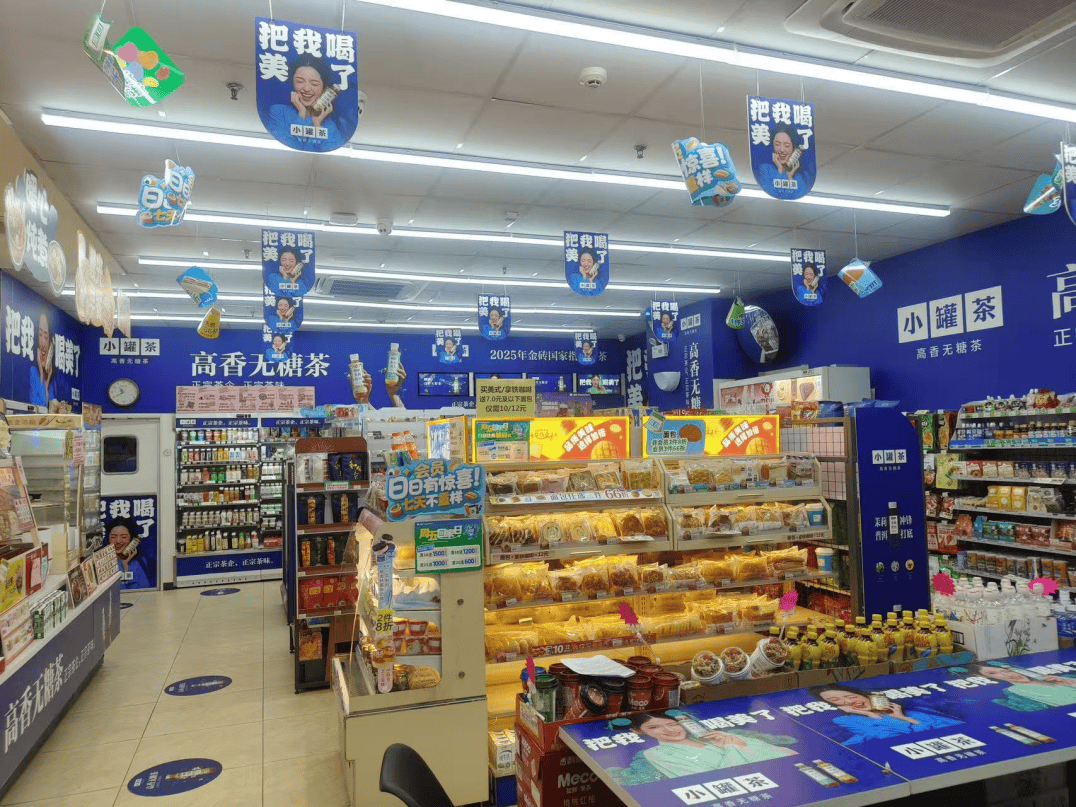
Core Insights - The sugar-free tea beverage market is projected to become a key driver of growth in the beverage industry by 2025, with sales expected to increase by 112% year-on-year in the first half of 2025, reflecting a significant shift in consumer preferences towards health and quality [1][2][4] Market Dynamics - The rise of sugar-free tea is fundamentally driven by the integration of consumer demand and health consciousness, particularly among the youth, with 70.8% of the main consumer group being under 30 years old [2][4] - In major cities, over 40% of young consumers purchase sugar-free tea three or more times a week, indicating a strong and growing consumption habit [2][4] Consumer Preferences - Health concerns are the primary reason young consumers choose sugar-free tea, with 68% expressing a clear intention to reduce sugar intake [4] - Sugar-free tea's attributes of "0 sugar, 0 calories, 0 additives" align well with the desire for taste without guilt, enhancing its appeal in various scenarios such as work, study, and fitness [4] Competitive Landscape - The sugar-free tea segment is experiencing a shift in market share, with ready-to-drink tea surpassing carbonated beverages for the first time, holding a 21.1% market share compared to 18.5% for carbonated drinks [5][7] - Despite efforts from carbonated beverage companies to introduce sugar-free options, the market continues to decline, with a 7% drop in sales in 2023 [5] Brand Competition - The market is characterized by a "head brand leading, challengers under pressure" dynamic, with brands like Nongfu Spring's Oriental Leaf holding over 70% market share, while others like Suntory face growth challenges [7][8] - The entry of new players like Xiaoguan Tea, which launched its sugar-free tea series in Guangdong, is reshaping the competitive landscape, leveraging innovative flavors and high-quality production techniques [8][9] Expansion Strategies - Xiaoguan Tea has rapidly expanded its presence in Guangdong, achieving coverage in over 50,000 retail outlets within three months and selling nearly one million boxes [8][9] - The company plans to accelerate its national expansion, with over 2,000 distributors established and new product innovations aimed at enhancing its market position [9]
大手笔布局饮料业务,*ST兰黄能否振奋业绩?
Bei Ke Cai Jing· 2025-09-12 06:56
Core Viewpoint - After two consecutive years of losses, *ST Lanzhou Huanghe is shifting its focus to the beverage business, particularly through the acquisition of Yiwang Juice, indicating a strategic pivot to find new growth opportunities in a challenging beer market [1][3][5]. Group 1: Company Overview - *ST Lanzhou Huanghe is a regional brand engaged in the production and sale of beer and beverages, with its main brands being "Yellow River" and "Qinghai Lake," accounting for over 90% of its main business [2]. - The company has been facing declining revenue, with a significant drop from 1.86 billion in 2021 to 970 million in 2025, reflecting a continuous downward trend [8]. Group 2: Financial Performance - In the first half of 2025, *ST Lanzhou Huanghe reported revenue of 96.84 million, a 15.82% decrease from 115 million in the same period of 2024, with a net loss of 11.91 million, marking a 45.29% increase in loss [6]. - The sales of beer and beverage products primarily rely on a distribution model, with beverage sales declining by 20.64% to 11.56 million [7]. Group 3: Strategic Moves - The company plans to establish a joint venture with Chongqing Chengbiao Agricultural Development and Yancheng Silk Road Anlu Investment, with a registered capital of 70 million, aiming to enhance its beverage business [3][4]. - The acquisition of Yiwang Juice, which specializes in concentrated apple juice, is part of a broader strategy to integrate the beverage supply chain and expand its market presence [5][12]. Group 4: Industry Context - The beer industry is currently in a period of adjustment, with major players like Qingdao Beer and Chongqing Beer also diversifying into non-beer products to seek growth [11]. - The overall beer production in China has seen a slight decline of 0.3% in the first half of 2025, indicating a challenging environment for traditional beer companies [10].

菲诺推出椰子水果汁饮料 夏日清甜补水新选择
Sou Hu Wang· 2025-09-12 03:26
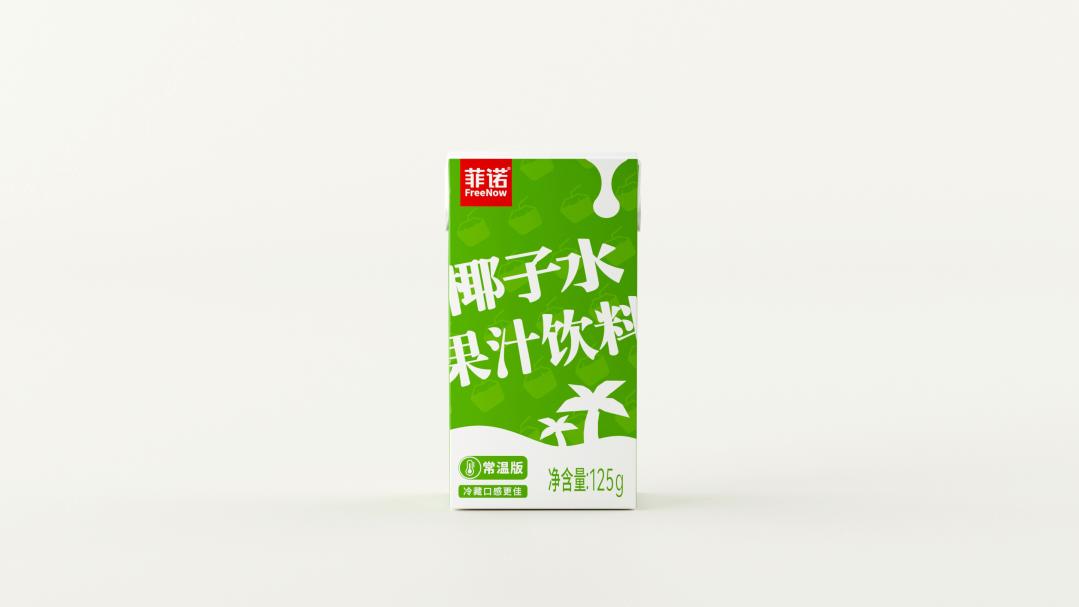
近期,植物基头部品牌菲诺推出椰子水果汁饮料,丰富椰子水细分品类,成为夏日清甜补水新选择。 菲诺甄选泰国丹嫩莎朵的椰子,让椰子水更纯粹清甜。 配料表仅含水、椰子水饮料浓浆、椰子水浓浆(10%),0添加香精、色素、防腐剂,0脂肪。200g与125g 两种规格,1盒仅0.5苹果的热量,自在随享,畅饮无负担。 菲诺采用UHT超高温瞬时杀菌,更大限度保留营养物质及风味;无菌灌装,严格把控生产环境。 另据资料显示,目前菲诺有自建5家工厂,掌握油水混合、油脂分离等核心技术,并直采泰国、越南、 印尼、海南等优质产区椰子,实现了从源头到成品,保障产品品质稳定。 ...