高端制造

Search documents
我市企业界认真学习领会市委经济工作会议精神
Nan Jing Ri Bao· 2025-12-28 01:59
Group 1 - The city is focused on implementing the spirit of the municipal economic work conference to support economic stability and growth, emphasizing the importance of strategic deployment and policy measures [1] - The conference proposed the establishment of a "1+4+6" industrial attack system and the cultivation of "1026" emerging industrial clusters and chains, aiming to deepen the integration of industry and technology [1] - Companies are encouraged to actively participate in the construction of innovation zones and to implement AI-driven initiatives to enhance their technological capabilities [2][3] Group 2 - Nanjing Steel Group is aligning its practices with the conference's spirit by adopting smart manufacturing models and collaborating with Huawei on AI initiatives, aiming to enhance its digital capabilities [2] - Tianjia Environmental Technology Co., Ltd. is committed to contributing to the city's industrial strength through green development and technological innovation, focusing on building an international-leading laboratory [2] - The conference highlighted the importance of foreign trade in driving economic recovery, with companies like Suhao Yunshang planning to leverage AI and big data in cross-border e-commerce to enhance their platform capabilities [3] Group 3 - The conference introduced the "8.0 version of the business environment policy" to attract global capital, providing confidence for long-term investments in Nanjing [4] - Companies like ABB have expressed increased confidence in investing and developing in Nanjing due to strong government support for digital transformation and technological innovation [4][5] - The overall economic strategy for the coming year has been set, emphasizing the importance of practical efforts and the contributions of enterprises to the city's economic development [5]
AI钉钉1.1落地上海金山,助力制造业转型
Zhong Guo Jing Ying Bao· 2025-12-26 13:54
Group 1 - DingTalk has accelerated its AI strategy with the launch of AI DingTalk 1.1 in Shanghai's Jinshan District, following the release of over 20 new AI products, including the world's first AI-designed work intelligence operating system, Agent OS [1] - Jinshan District is promoting an "AI+" industrial transformation, aiming to create a regional AI development hub characterized by active technological innovation and deep application empowerment [1] - DingTalk's CTO stated that the application of AI in enterprises has evolved from being an auxiliary tool to becoming an executor, aligning with national strategies for AI-enabled industrialization and Shanghai's goals for AI+ manufacturing [1] Group 2 - Domestic GPU leader Muxi Co. and Lixing Industrial have partnered with DingTalk, benefiting from Jinshan District's digital transformation policies and DingTalk's digital capabilities [2] - Muxi Co. has implemented DingTalk as its core digital foundation since 2021, enhancing its organizational collaboration and information security through private deployment and data management strategies [2] - Lixing Industrial focuses on intelligent assembly product development for high-end manufacturing, utilizing DingTalk to address collaboration needs and enhance security and AI capabilities starting in 2023 [2]


“抢出口”抢出上扬线,中国以开放突围赋能全球经济
Hua Xia Shi Bao· 2025-12-26 10:11
Core Viewpoint - In 2025, despite global trade protectionism, China's foreign trade demonstrated resilience with export growth and an optimized trade structure, showcasing the strength of China's supply chain [3][4]. Group 1: Trade Performance - In 2025, China's exports experienced a surge, with a notable increase in non-U.S. market exports effectively offsetting declines in exports to the U.S. [5][6]. - China's goods trade maintained a year-on-year growth for 10 consecutive months since February 2025, with a record-breaking import and export scale exceeding 41 trillion yuan [6]. - The export share of China in global markets reached a historical high of 14.2% in the first half of 2025, with a steady increase in export growth rates throughout the year [6]. Group 2: Policy Support and Economic Outlook - The Chinese government is enhancing policy support for foreign trade enterprises, aiming for sustained growth and structural optimization in foreign trade [7][8]. - The release of policy dividends from the Hainan Free Trade Port and the reduction of the negative list for market access are expected to further bolster foreign trade [8]. - The 2025 version of the Market Access Negative List has been optimized, reducing the number of items from 117 to 106, which is anticipated to strengthen foreign investment [10]. Group 3: Foreign Investment Confidence - Multinational companies are increasingly confident in investing in China, shifting their focus from mere expansion to profitability through local innovation and digital investment [9]. - A significant 94% of surveyed multinational companies continue to invest in China, with 75% planning to maintain or increase their investments in 2025 [9].

龙南深度融入国家级开放平台 系统培育外贸新优势
Jing Ji Ri Bao· 2025-12-26 03:37
Group 1 - The core viewpoint of the articles highlights the significant advancements in cross-border e-commerce and logistics efficiency in Longnan, Jiangxi, which is enhancing the region's foreign trade capabilities [1][2] - Longnan's foreign trade import and export total reached 4.33 billion yuan in the first ten months of the year, showcasing its role as a key player in China's cross-border e-commerce [1] - The establishment of a cross-border e-commerce industrial park provides one-stop services for customs clearance and logistics, resulting in an average reduction of 50% in shipping time and 33% in logistics costs for foreign trade enterprises [1] Group 2 - Longnan focuses on extending and supplementing its advantageous industries such as electronic information and new materials, while also innovating financial services with an industrial fund exceeding 5 billion yuan [2] - The region has developed specialized service platforms, including a testing center for special equipment, allowing local high-end manufacturing products to complete certification and testing without leaving the area, thus enhancing export competitiveness [2] - Longnan is implementing a comprehensive strategy combining platforms, channels, environment, and industry to systematically cultivate new competitive advantages in foreign trade [2]
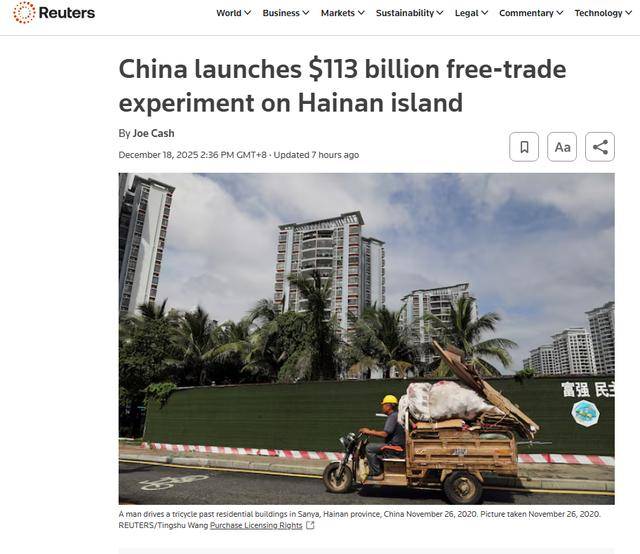
海南“封关”真相:瞄准的根本不是香港,而是整个东南亚
Sou Hu Cai Jing· 2025-12-26 00:07
Core Viewpoint - The discussion around Hainan's "full island closure" indicates a strategic shift in China's economic policy, focusing on creating a manufacturing hub rather than merely a shopping paradise [1][2]. Group 1: Strategic Moves - The first strategy emphasizes "zero tariff production" rather than "duty-free shopping," transforming Hainan into a vast bonded zone for foreign investment, allowing companies to import production materials and core equipment without tariffs [4][6]. - The target clientele includes cost-sensitive high-tech and advanced manufacturing enterprises that benefit from reduced import costs [8]. - The second strategy aims to attract back production capacity that has relocated to Southeast Asia by offering zero-tariff imports and tax exemptions for processed goods entering the mainland market [9][10]. Group 2: Economic Restructuring - The new policies in Hainan are designed to counteract the trend of labor-intensive industries moving to countries like Vietnam and Indonesia, effectively creating a competitive environment for these industries to return [11]. - The third strategy positions Hainan as a "pressure testing ground" for high-standard trade liberalization and investment facilitation policies, allowing for experimentation with new regulations in a controlled environment [13]. - Hainan's ultimate goal is to become a global hub for high-end production factors and a source of emerging industries, countering external pressures for decoupling and disconnection [15].
“先锋助业”带来稳稳的幸福
Su Zhou Ri Bao· 2025-12-25 22:33
日前,太仓港经济开发区党工委和太仓市浮桥镇党委在浮南社区党群服务中心共同举办"先锋助 业"就业帮扶专场,汇聚玖龙纸业、中谷等30余家企业推出近500个优质岗位,覆盖生产制造、物流运输 等领域。 根据区域发展差异,太仓市委组织部聚焦"工业强镇""乡村振兴""民生服务"等不同区域定位,按 照"一域一策、群体精准"原则定制每场活动内容。 超800名求职者和居民现场参与,共收到简历306份,用人单位和求职者初步达成双向招工意愿122 人,真正实现了"岗位送上门"。 民生万事,就业为本。就业一头连着经济动脉,一头连着万家灯火,是社会发展的晴雨表。 然而,就业服务是涉及政府、企业、个人的系统性工程,企业的用工需求与求职者的就业需求如何 对接?城乡不同发展差异下,资源供给如何直达"最后一公里"? 针对这些痛点、难点问题,太仓抓住党建引领"桥梁纽带"作用,发挥党建统领资源整合、精准服务 的核心优势,开展"先锋助业"惠民行动,推动就业帮扶热潮持续升温、矩阵效应逐步彰显,就业服务 从"单点发力"向"全域覆盖"升级。 "同心圆"打破供需壁垒,解决差异化需求 以太仓市委组织部为总牵引,联动太仓市级社保、民政等部门,整合各镇(街道)党 ...
广发证券刘晨明:科技、出海、反转三重奏 重塑2026年A股格局
Mei Ri Jing Ji Xin Wen· 2025-12-25 17:40
Group 1 - The core viewpoint is that the market is still in the first half of a bull market, and investment should focus on three dimensions: the technology industry wave, global competitive output, and the reversal of cyclical dilemmas [1][5] - The A-share market is undergoing profound changes, breaking historical patterns in profit assessment and valuation, with non-financial ROE stabilizing for three consecutive quarters despite traditional economic sectors not showing significant improvement [2][3] - The electronic industry's institutional holdings have reached historical highs, challenging the old belief that a 20% holding indicates a peak, while TMT sector transaction volumes have also set new records during the AI boom [2][3] Group 2 - The future market's core engine relies on substantial improvements in corporate profits, driven by strong external demand and the globalization of Chinese manufacturing capabilities [4][5] - The AI revolution is another key driver, with no signs of bubble formation, and 2026 is expected to be a pivotal year for hardware products in the AI sector [4][6] - The industry configuration for 2026 should focus on technology chains, external demand chains, and opportunities arising from cyclical reversals, with a particular emphasis on sectors like electric equipment and new energy [5][6][7] Group 3 - The innovative drug sector is transitioning from a long R&D phase to an internationalization phase, with Chinese pharmaceutical companies becoming key players in global licensing transactions [7] - Future industries such as humanoid robots, hydrogen energy, and synthetic biology are expected to commercialize sooner due to their relative maturity, leading to improved profit growth expectations across key segments [7] - The industry configuration map for 2026 is clear, emphasizing technology growth as an offensive strategy and cyclical reversals as a stabilizing shield, while enhancing China's global competitive strength [7]

康曼德资本董事长丁楹:A股将进入“盈利驱动+政策引导”双轮驱动新阶段
Mei Ri Jing Ji Xin Wen· 2025-12-25 15:00
Core Viewpoint - The A-share market is expected to enter a new phase driven by "profitability and policy guidance" in 2026, transitioning from a liquidity-driven market in 2025, with a focus on both growth and stability in investment strategies [2][5]. Investment Opportunities - The two main investment lines for the next 3-5 years are: 1. "Growth Steed" representing technology innovation fields such as domestic computing power, AI applications, robotics, and energy storage 2. "Steady Horse" representing traditional industry upgrades and value reassessment, including high-end manufacturing, resource security, and financial openness [3][4]. - Institutional funds are expected to continue focusing on AI and computing power, but with a more balanced allocation towards traditional industries like finance and resource optimization [2][3]. Market Characteristics - The 2026 market is characterized by a shift from liquidity-driven dynamics to profitability-driven dynamics, which may increase volatility but still present structural opportunities [5]. - The "15th Five-Year Plan" emphasizes "technological self-reliance" as a core strategy for high-quality development, which is anticipated to reshape the valuation system of A-shares, particularly benefiting technology growth stocks [4]. Valuation and Pricing Logic - The "technological self-reliance" policy is expected to enhance the visibility of earnings and policy certainty for technology growth stocks, thereby reducing risk premiums and raising valuation benchmarks [4]. - The pricing logic for technology stocks will shift from being purely thematic-driven to a three-dimensional assessment based on "technical barriers, market space, and policy support" [4]. Investment Strategy for Ordinary Investors - Ordinary investors are advised to adopt a "core + satellite" allocation framework, focusing on long-term growth sectors while dynamically adjusting satellite positions based on market conditions and policy catalysts [3][5]. - In 2026, it is recommended to initially lean towards "Growth Steed" sectors in the first half of the year, and gradually increase exposure to "Steady Horse" sectors in the latter half to manage potential market fluctuations [5].
专访邢自强:从投资于物到投资于人,持续撬动消费市场
2 1 Shi Ji Jing Ji Bao Dao· 2025-12-25 12:03
Core Insights - The future of China's economy relies on achieving a dual focus on "starry skies and vast seas" innovation and "daily necessities" improvement in living standards, emphasizing the need for a balanced approach to technological advancement and social welfare [1][2][3] Group 1: Economic Strategy - The strategy involves leveraging China's existing advantages in industrial chains, engineer dividends, and a large-scale market to foster innovation in cutting-edge technologies like 6G, quantum technology, and biomanufacturing [2][5] - The "dual-wheel drive" approach necessitates simultaneous progress in technological innovation and enhancing living standards to solidify the economic foundation [2][3] Group 2: Capital Market Role - The capital market must support both innovation and living standards by enhancing residents' consumption capacity and promoting a sustainable innovation ecosystem [6] - A robust capital market can help alleviate the low-price cycle by providing a stable return on investment, thus encouraging consumer spending [6][8] Group 3: Market Confidence Recovery - Since September 2024, market confidence has been restored due to a threefold awakening in policy, enterprise resilience, and funding dynamics [7][8] - Policy reforms aimed at addressing the low-price cycle have signaled a commitment to development alongside security, fostering a healthier market environment [7] Group 4: Structural Reforms - Key reforms during the "14th Five-Year Plan" include enhancing the national unified market and substantial social security reforms to improve consumer spending and reduce preventive savings [9][11] - The goal is to increase the share of resident consumption in GDP from under 40% to around 45% by 2030, creating a $10 trillion consumption market [9][12] Group 5: Fiscal Transformation - The shift from "investment in material" to "investment in people" is crucial for addressing structural issues of high savings and low consumption [11][13] - Strategies include increasing the proportion of state-owned capital allocated to social security funds and adjusting fiscal spending towards social services [13][14] Group 6: Real Estate Market Stabilization - To stabilize the real estate market, strategies include inventory reduction through government purchases of unsold properties and supporting key real estate firms facing difficulties [15][16] - Implementing interest subsidies on mortgage loans can significantly ease the financial burden on homebuyers, thereby boosting consumer confidence [16]

机构展望2026年中国股市:科技成长与高股息策略成焦点
Hua Xia Shi Bao· 2025-12-25 11:52
Core Viewpoint - The outlook for the 2026 stock market emphasizes the long-term value reassessment of quality companies amid China's rising global industrial competitiveness [1] Group 1: Market Trends and Opportunities - The current macroeconomic environment and structural changes are shaping a new market landscape, with technology industries, particularly artificial intelligence, entering a substantial development phase [1] - Traditional industries are being reassessed for their profitability and dividend potential after undergoing supply-side adjustments and international upgrades, indicating unique allocation value [1] - The market style is expected to become more balanced and diversified, with both technology growth and stable returns being significant investment paths [2] Group 2: Key Investment Directions - The lithium battery sector is highlighted as a key area, with expectations of a "not-so-dull" off-season in Q1 next year, supported by strong production plans from major companies and steady demand [2] - The consumer electronics sector is seen as having multiple growth drivers, including the anticipated launch of foldable iPhones by Apple, which could revitalize the industry and trigger a significant device upgrade cycle [3] - The "self-indulgent" consumption sector, including airlines, hotels, and tourism, is showing signs of recovery, with operating data turning positive year-on-year since September and October [3] Group 3: Value Reassessment and Global Expansion - The long-term outlook for equities is optimistic, with a focus on cyclical industries like non-ferrous metals, which are transitioning from strong cyclical stocks to value stocks with stable cash flows and potential for increased dividends [5] - High-end manufacturing industries are expanding overseas, leveraging China's strong supply chain and efficiency advantages, with a focus on capturing higher value-added segments [6] Group 4: High-Growth Sectors - The lithium and energy storage industries are expected to see structural changes, with energy storage becoming the primary driver of lithium demand growth due to increasing needs for grid construction and energy security [7] - Investment opportunities driven by artificial intelligence technology are emphasized, with a focus on practical advancements in AI applications and hardware in 2026 [8] - For conservative investors, the Hong Kong stock market presents structural opportunities, particularly if the quality of listed assets can gain international investor recognition [8]