
稀土

Search documents
10月13日主题复盘 | 指数低开高走,稀土再度爆发,半导体、核聚变延续强势
Xuan Gu Bao· 2025-10-13 08:28
Market Overview - The market opened lower but rebounded slightly, with the three major indices experiencing minor declines. The trading volume reached 2.37 trillion [1] - Rare earth stocks surged, with multiple stocks such as China Rare Earth and Northern Rare Earth hitting the daily limit [1] - Gold stocks strengthened in the afternoon, with companies like Western Gold and Silver Nonferrous also reaching the daily limit [1] - The semiconductor industry showed a recovery, with stocks like Huahong Semiconductor and Luwei Optoelectronics hitting the daily limit [1] - In contrast, the robotics sector faced adjustments, with Shoukai Co. hitting the daily limit down [1] Hot Topics Rare Earth Materials - The rare earth magnet material sector saw significant gains, with stocks like Huahong Technology, Northern Rare Earth, and Baotou Steel hitting the daily limit [4] - The catalyst for this surge was the announcement from the Ministry of Commerce on October 9, which imposed export controls on certain heavy rare earths and related technologies [4][6] - Northern Rare Earth announced an adjustment in the trading price of rare earth concentrates for Q4 2025, increasing it by 37.13% to 26,205 yuan/ton [4] - The company expects a net profit of 1.5 to 1.57 billion yuan for the first three quarters of this year, marking a year-on-year increase of 272.54% to 287.34% [4] Domestic Chips - The domestic chip sector also performed strongly, with stocks like Zhichun Technology and New Lai Materials hitting the daily limit [7] - The upcoming "Bay Chip Exhibition" on October 15 in Shenzhen is expected to showcase significant advancements in semiconductor equipment [7] - The semiconductor parts sector is crucial for supporting the growth of downstream industries, with annual output reaching hundreds of billions of dollars [8] Nuclear Fusion - The nuclear fusion sector continued to strengthen, with companies like Hezhuan Intelligent and Antai Technology achieving consecutive daily limits [9] - The International Atomic Energy Fusion Energy Conference (FEC2025) is scheduled to take place from October 13 to 18 in Chengdu, which may lead to significant announcements [9][13] - The domestic BEST project is expected to initiate a second round of intensive bidding in Q4, further stimulating the market [13] Summary of Key Stocks - Notable stocks in the rare earth sector include Huahong Technology, Northern Rare Earth, and Baotou Steel, all of which have shown significant price increases [4][14] - In the domestic chip sector, key players include Zhichun Technology and New Lai Materials, which have also seen substantial gains [7][15] - The nuclear fusion sector features companies like Hezhuan Intelligent and Antai Technology, which are experiencing strong market performance [9][18]



A股收评 | 三大因素提振!A股低开高走、科创50收涨1.4% 有色板块大涨
智通财经网· 2025-10-13 08:28
Market Overview - A-shares opened lower but closed higher, with the Shanghai Composite Index down 0.19%, Shenzhen Component down 0.93%, and ChiNext down 1.11%, while the Sci-Tech 50 Index rose by 1.4% [1] - Private equity investors believe that the market adjustment should end within two trading days if no major changes occur [1] - Adjustments to marginable securities and their conversion rates by several brokerages took effect on October 13, partially offsetting last week's negative market news [1] Sector Performance - The rare earth sector saw a significant surge, with over 10 stocks including China Rare Earth and Northern Rare Earth hitting the daily limit [3] - The banking sector strengthened in the afternoon, with Shanghai Pudong Development Bank and Nanjing Bank both rising over 5% [1] - Precious metals and military industries also performed well, with Western Gold hitting the daily limit and Changcheng Military Industry achieving consecutive gains [1] - The semiconductor sector continued its strong performance, with stocks like Xinlai Material and Kaimeteqi achieving consecutive gains [1] Key Individual Stocks - Upwind New Materials hit a 20% limit down, despite a year-to-date increase of nearly 19 times, as the company announced no plans for a backdoor listing in the next 36 months [2] - The software sector was active, with stocks like Rongji Software hitting the daily limit and Kingsoft Office rising over 10% [5] Analyst Insights - Huaxi Securities suggests that the impact of the current trade tensions will be less severe than in April, with a focus on sectors like agriculture, military, and rare earths [6] - China Galaxy believes that the market is unlikely to replicate the April 7 performance, with increased external uncertainties and profit-taking pressures [7] - Guojin Securities indicates that while there may be potential adjustments in the A-share index, the extent will be controllable, and opportunities should be sought in domestic policies and recovering domestic demand [8]



“覆盖从汽车到战斗机的各个领域”,中方“以美之道”反制令美国叫苦不迭
Guan Cha Zhe Wang· 2025-10-13 08:25
Core Viewpoint - China's recent regulations on rare earth exports significantly enhance its influence over key manufacturing sectors globally, particularly in the context of escalating international trade tensions [1][4][5]. Group 1: New Regulations Overview - The new regulations, effective from December 1, cover rare earth magnets and certain semiconductor materials containing 0.1% or more of Chinese rare earth components, requiring foreign companies to obtain Chinese approval for exports [9]. - The regulations extend to any products produced abroad using Chinese rare earth mining, smelting, and magnet manufacturing technologies, indicating a broad scope of control [9][10]. - Military-related exports will generally not be permitted, with applications for AI technologies with potential military uses subject to case-by-case approval [5][10]. Group 2: Impact on Industries - The automotive and military sectors are particularly vulnerable, as many components rely on rare earth materials, leading to production halts in several European automotive suppliers due to shortages [8][9]. - Companies in the automotive industry have reported delays in obtaining export licenses, complicating their supply chains and operations [6][9]. - The regulations may hinder European countries' military support to Ukraine, as many military equipment components depend on Chinese rare earths [5][10]. Group 3: Geopolitical Reactions - The new export controls have raised concerns among Western nations, particularly regarding their implications for military capabilities and supply chains [5][10]. - China's actions are viewed as a response to perceived unfair trade practices by the U.S., including tariffs and export controls that have affected various sectors [10].
巴基斯坦利用中国技术向美国赠送稀土?外交部驳斥
中国能源报· 2025-10-13 08:23
Core Viewpoint - The recent export control measures on rare earths by China are unrelated to Pakistan and are a legitimate action by the Chinese government to enhance its export control system in accordance with laws and regulations [1][2]. Group 1: China-Pakistan Relations - China and Pakistan are described as "all-weather strategic partners" with a strong and enduring friendship, maintaining high levels of strategic trust [1]. - Both countries communicate closely on significant issues concerning their mutual interests [1]. Group 2: Export Control Measures - The export control measures on rare earths are aimed at better maintaining world peace and regional stability, as well as fulfilling international obligations related to non-proliferation [2]. - The measures are part of China's efforts to improve its export control system and are not a reaction to any specific actions by Pakistan [2]. Group 3: Clarification on Media Reports - Reports suggesting that Pakistan is using Chinese technology to export rare earths to the U.S. are characterized as either misunderstandings or unfounded claims [1]. - The Pakistani leadership has assured that their interactions with the U.S. will not harm China's interests or the cooperation between China and Pakistan [1].

逆市大涨!稀土ETF易方达、稀土ETF涨超7%
Ge Long Hui· 2025-10-13 08:14
Core Viewpoint - The A-share market experienced a collective decline in major indices in the morning, but narrowed losses by the end of the trading session, with the Shanghai Composite Index down 0.19% and the Shenzhen Component Index down 0.93%. The rare earth sector surged due to new export controls announced by the Ministry of Commerce, leading to significant gains in related stocks [1][2]. Rare Earth Sector - The Ministry of Commerce and the General Administration of Customs announced export controls on certain rare earth-related items, which is set to take effect on November 8, 2025. This includes controls on equipment and raw materials used in rare earth production [4]. - Major rare earth companies, Northern Rare Earth and Baotou Steel Rare Earth, announced price increases for rare earth concentrates, with a new price of 26,205 yuan per ton (excluding tax), reflecting a 37% increase compared to the previous quarter, marking the highest price since Q2 2023 [4]. - Northern Rare Earth expects a net profit of 1.51 billion to 1.57 billion yuan for the first three quarters of 2025, an increase of 272.54% to 287.34% year-on-year [4]. Market Performance - The rare earth ETF, managed by E Fund, rose over 7%, with a year-to-date increase exceeding 90%. The ETF closely tracks the rare earth industry index, including major stocks like Northern Rare Earth and China Rare Earth [3]. - The overall market turnover was 2.37 trillion yuan, a decrease of 159.9 billion yuan from the previous trading day, with over 3,600 stocks declining [1]. Strategic Value and Outlook - Analysts from Shenwan Hongyuan Securities highlighted that the new export controls on rare earths enhance the strategic value of the sector amid the US-China competition, suggesting that the sector's valuation has room for growth [5]. - Everbright Securities noted that the strategic importance of rare earths is becoming more pronounced, with recent US actions indicating a focus on building its rare earth supply chain, reflecting the geopolitical significance of these resources [6]. Emerging Opportunities - The demand for rare earths is expected to grow due to new applications in humanoid robots and low-altitude flying vehicles, which utilize neodymium-iron-boron magnets. This presents new growth opportunities for the rare earth sector [7].
A股奇迹日!特朗普重大突发!
天天基金网· 2025-10-13 08:12
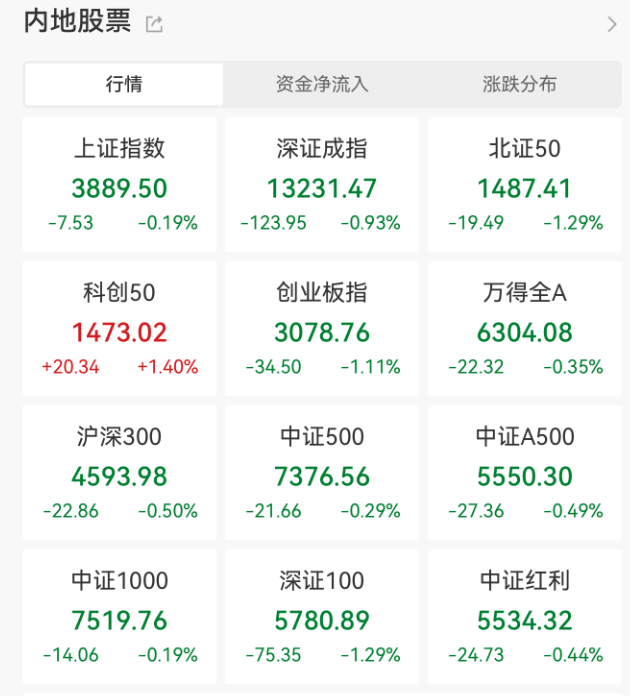
Market Performance - The A-share market showed a recovery after a significant drop at the opening, with the Shanghai Composite Index closing down 0.19% and the ChiNext Index down 1.11%, while the STAR Market Index rose by 1.4% [5][6] - A total of 1,684 stocks rose, with 73 hitting the daily limit, while 3,634 stocks declined, indicating a mixed market sentiment [7] Sector Highlights - The rare earth sector experienced a collective surge, with companies like China Rare Earth and Northern Rare Earth hitting the daily limit. This was driven by a significant drop in September rare earth exports to 4,000.3 tons from 5,791.8 tons in August [7][8] - Gold stocks strengthened in the afternoon, with West Mining and Silver Resources among those that surged, attributed to a nearly 3% increase in spot silver prices, reaching historical highs [8][9] Political Influence - Market performance exceeded expectations partly due to former President Trump's indication of potentially canceling new tariffs on Chinese goods, contrasting his previous threats of imposing a 100% tariff on November 1 [15][16] - Trump's comments about the U.S.-China relationship being "very good" contributed to a positive market outlook, although uncertainty remains regarding the final decision on tariffs [15][16] Economic Context - Analysts from GF Securities suggest that the current tariff threat is likely a typical "TACO trade," where short-term declines present buying opportunities. The current market environment differs from April due to clearer monetary and fiscal policies [18]


招商证券:继续看涨稀土价格
Xin Lang Cai Jing· 2025-10-13 08:09
Core Viewpoint - The rare earth industry chain control has been upgraded, expanding the regulatory scope both horizontally and vertically, which enhances the strategic position of the rare earth industry and is expected to improve the valuation of listed companies in this sector [1] Group 1: Industry Insights - The significant increase in rare earth prices during the third quarter is noted, with expectations for substantial profit improvements for rare earth and magnetic material companies in the third and fourth quarters [1] - The outlook remains bullish for rare earth prices, indicating a positive trend for the industry [1]

奇迹日!特朗普,重大突发!
Zhong Guo Ji Jin Bao· 2025-10-13 08:08
Market Overview - The market showed resilience despite a slight decline in the three major indices, with the overall performance exceeding expectations amid tariff pressures [1][14]. - On October 13, A-shares opened significantly lower but rebounded, with the Shanghai Composite Index closing down 0.19%, the Shenzhen Component down 0.93%, and the ChiNext Index down 1.11%. The STAR 50 Index was the best performer, rising 1.4% [3][4]. Stock Performance - A total of 1,684 stocks rose while 3,634 stocks fell, with 73 stocks hitting the daily limit up. The total trading volume reached 23,742.21 billion, with a total turnover of 146,016.8 million shares [5]. - The rare earth sector saw a collective surge, with companies like China Rare Earth and Northern Rare Earth hitting the daily limit up. In September, China exported 4,000.3 tons of rare earths, down from 5,791.8 tons in August [6][7]. Gold and Silver Stocks - Gold and silver stocks strengthened in the afternoon, with West Mining and Silver Resources hitting the daily limit up. The spot silver price surged nearly 3%, reaching a historical high, while spot gold prices briefly exceeded $4,070 per ounce [8][10]. Semiconductor Sector - The semiconductor industry experienced a rebound, with companies like Huahong Semiconductor and Luwei Optoelectronics hitting the daily limit up [10][11]. Xiaomi Stock - Xiaomi's stock fell nearly 7% following an incident where a Xiaomi SU7 caught fire after a collision in Chengdu, raising concerns about safety [12]. Tariff Developments - Trump's recent comments suggested a potential cancellation of new tariffs on Chinese goods, which has led to a significant rise in U.S. stock index futures. This contrasts with previous threats of imposing additional tariffs [14][16].
出口管控持续强化 稀土永磁板块配置价值凸显
Xin Lang Cai Jing· 2025-10-13 08:06
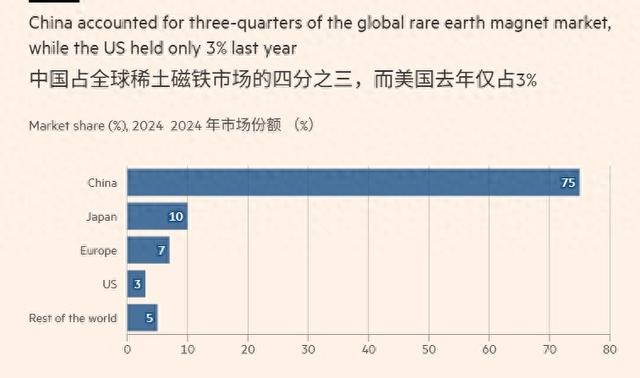
据悉,美国地质调查局USGS数据显示,2024年,全球总稀土氧化物储量约为9000万吨,中国是目前全 球最大稀土储量国。根据新华社数据,中国稀土冶炼加工能力占全球稀土金属总需求量的90%以上,是 世界级的加工冶炼中转站。我国2025年第一季度出口稀土14177吨,较2024年同期同比上升5.14%。综 合机构观点,新一轮出口管制下,稀土永磁或成本轮谈判关键内容,板块战略价值再迎催化。英大证券 表示,我国稀土领域优势显著,进可攻退可守。稀土广泛运用于高端制造业以及军工等关键领域,而中 国在稀土冶炼、提取领域具备优势。目前中国稀土产量占全球 60% 以上,出口配额制度和环保政策限 制供应弹性。展望未来,2025 四季度,如果贸易谈判向好发展,在出口可能逐步放开、需求持续增 长、供给刚性下,稀土产业战略价值日益彰显,基本面复苏预期持续增强;若未来管控趋严,稀土相关 公司也有望在事件性催化下上涨。经梳理,近期美国对于稀土产业链建设也有诸多动作:2025年10月7 日凌晨,美国宣布与矿产勘探公司Trilogy Metals合作,获得Trilogy Metals 10%的股份;10月6日,特朗 普政府正在讨论入股Crit ...
中国反制巴基斯坦向美国出口稀土?外交部:捕风捉影、挑拨离间
Zhong Guo Xin Wen Wang· 2025-10-13 08:05
中国反制巴基斯坦向美国出口稀土?外交部:捕风捉影、挑拨离间 中新网北京10月13日电 (记者 郭超凯 谢雁冰)中国外交部发言人林剑13日主持例行记者会。 中方日前发布关于稀土等相关物项的出口管制措施,与巴基斯坦没有任何关联,这是中国政府依据法律 法规,完善自身出口管制体系的正当做法,旨在更好维护世界和平与地区稳定,履行防扩散等国际义 务。(完) 来源:中国新闻网 本文为转载内容,授权事宜请联系原著作权人 中新经纬版权所有,未经书面授权,任何单位及个人不得转载、摘编或以其它方式使用。 关注中新经纬微信公众号(微信搜索"中新经纬"或"jwview"),看更多精彩财经资讯。 有记者提问:近日,有媒体报道,巴基斯坦利用中国设备和技术向美国出口稀土,触发了中国出台严格 管控稀土相关技术出口的新规,部分自媒体发表视频和文章,称"巴方向美赠送稀土样品并同意开展稀 土合作""中国出招反制巴基斯坦向美国出口稀土"。请问发言人对此有何评论? 林剑:中国和巴基斯坦是全天候战略合作伙伴,两国铁杆友谊历久弥坚。双方始终保持高度战略互信, 在事关双方共同利益的重大问题上密切沟通。据我所知,关于巴美矿产合作事,中巴双方有沟通,巴方 强调, ...