
氢能

Search documents
欧元区成投资新宠:千亿美元涌入欧股基金 美国政策不确定性致资金外流
智通财经网· 2025-06-30 06:31
Group 1 - The contrast between the stability of the Eurozone and the uncertainty of the US economy is leading to a significant shift in capital flows, with investors increasingly viewing Europe as a more reliable option for hydrogen investments [1][2] - European stock funds attracted over $100 billion in inflows in the first half of 2025, a threefold increase compared to the same period last year, while US funds experienced a net outflow of nearly $87 billion, more than doubling year-on-year [1] - Foreign direct investment in Germany reached €46 billion in the first four months of 2025, doubling year-on-year and marking the highest level since 2022, with a rare phenomenon of German companies withdrawing investments from the US [1] Group 2 - Siemens CFO noted a significant increase in investor interest in the European market during recent roadshows, correlating with an 84% rise in the company's stock price this year [2] - The strategic shift of construction giant Hochtief, with its North American subsidiary Amrize performing poorly on its debut, contrasts with the 15% rise in the parent company's stock focused on Europe, Latin America, and North Africa [2] - The uncertainty caused by the Trump administration's trade policies is eroding investor confidence in the US capital markets, while the European Central Bank president sees positive signals from the capital flows into Europe [2]
势银访谈|骥之翼:“氢能+四足机器人”的国产先锋
势银能链· 2025-06-30 06:17
Core Viewpoint - The article discusses the rapid development and commercialization of quadruped robots powered by hydrogen fuel cells, highlighting China's leading position in this emerging field and the advantages of hydrogen energy over traditional lithium batteries [3][4][19]. Group 1: Industry Trends - The integration of embodied AI and hydrogen energy is reshaping the robotics landscape, with quadruped robots showcasing significant application potential across various sectors [3]. - The commercialization of quadruped robots is driven by technological maturity and decreasing costs, shifting the competitive landscape from Western dominance to Chinese leadership [3][4]. Group 2: Company Insights - Jichong Hydrogen Energy, as the first domestic company to launch hydrogen-powered quadruped robots, has successfully completed key endurance tests, marking a significant step in practical applications of hydrogen energy in robotics [4][5]. - The company focuses on portable fuel cell development, with a core team that has been involved in significant national projects since 2016, positioning itself as a leader in portable fuel cell technology [5]. Group 3: Product Features - The hydrogen-powered quadruped robot developed by Jichong features a 300W fuel cell system, with a hydrogen storage capacity of 770L and operational temperature range from -5°C to 40°C, achieving a maximum speed of 1.5m/s and a load capacity of 4kg [7]. - Compared to lithium battery-powered quadruped robots, the hydrogen variant offers significantly improved endurance, with static operation lasting 7-8 hours and dynamic movement lasting 4-5 hours, effectively doubling the operational time [7][8]. Group 4: Technical Challenges - Key technical challenges include enhancing the energy density of the hydrogen fuel cell system and managing temperature control in low-temperature environments, which are critical for the robot's performance [12][13]. - The company employs a combination of simulation and experimental methods to optimize thermal management and mechanical structure, aiming to reduce system weight and volume while maintaining power output [13]. Group 5: Market Potential and Future Directions - The introduction of hydrogen-powered quadruped robots expands the application boundaries of hydrogen energy, moving beyond traditional transportation sectors into robotics, which could lead to broader adoption in various industries [19]. - Future developments may focus on enhancing the intelligence of quadruped robots and addressing hydrogen sourcing challenges, with potential applications in military, emergency rescue, and outdoor exploration [17][19].


欢迎订阅 | 势银《中国氢能及燃料电池产业月度分析报告》
势银能链· 2025-06-30 06:17
Core Viewpoint - The hydrogen energy industry is at a critical juncture in 2025, requiring national policy support, with both domestic and international signals indicating progress in the sector [9]. Group 1: Industry Dynamics - The National Development and Reform Commission is establishing a "carrier-level" national venture capital guidance fund, expected to attract nearly 1 trillion yuan in social capital, focusing on cutting-edge fields including hydrogen energy [7]. - Australia announced an investment of 750 million AUD (approximately 474 million USD) to support green mining and processing technologies, particularly hydrogen-based iron reduction technology [8]. - The hydrogen energy industry standards are gradually being improved, with the National Energy Administration releasing a guideline for the 2025 energy industry standards plan, which includes hydrogen production, storage, transportation, and fuel cell applications [9]. Group 2: Green Hydrogen Projects and Market Trends - As of Q1 2025, there are 788 domestic green hydrogen projects, with the scale of electrolyzer bids increasing over 58 times compared to the same period last year [10]. - The total scale of publicly bid electrolyzers in Q1 2025 reached 482.825 MW, indicating significant growth in project demand [11]. - The top three companies in fuel cell installation capacity in Q1 2025 are Dongfang Hydrogen Energy, Rongcheng Hydrogen Yang, and Guohydrogen Technology, with a market concentration of 74% [12][13].

中国清洁能源投资全球居首,非化石能源消费占比跃升至18.3%
Sou Hu Cai Jing· 2025-06-30 04:44
Group 1 - China's total investment in clean energy for 2024 is projected to reach $625 billion, accounting for one-third of global clean energy investments, showcasing its strong capabilities and determination [1] - China has maintained the world's largest installed capacity in photovoltaic and wind power for ten consecutive years, contributing over 45% to the global increase in non-fossil energy consumption [1] - The proportion of non-fossil energy consumption in China has significantly increased from 9.4% in 2010 to 18.3% in 2024, while the share of coal power installations has dropped below 40% for the first time [3] Group 2 - China has achieved international leadership in ultra-high voltage transmission and smart grid technologies, providing strong technical support for the efficient utilization of clean energy [3] - The market share of key components from Chinese companies in the wind power industry exceeds 70%, demonstrating their strong capabilities and competitiveness [3] - The installed capacity of new energy storage has grown fivefold compared to 2022, and the number of hydrogen refueling stations has surpassed 300, accelerating the construction of a new energy system in China [3]
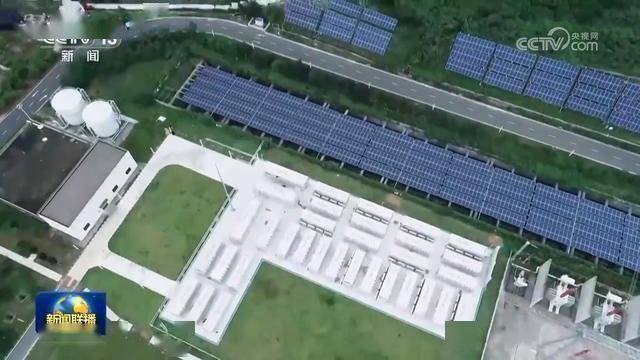
闽出台氢能产业发展中长期规划
Zhong Guo Hua Gong Bao· 2025-06-30 02:13
Core Viewpoint - Fujian Province has issued a long-term plan for hydrogen energy industry innovation and development, aiming for large-scale commercial application by 2030 and a total output value exceeding 300 billion yuan by 2035 [1] Group 1: Development Phases - The period from 2025 to 2030 is designated as the initial development phase, with goals to cultivate 1-3 large-scale green hydrogen demonstration projects, establish 1-3 hydrogen-based green ship fuel refueling port pilot projects, and build 50 hydrogen refueling stations, targeting a green hydrogen production capacity of 30,000 tons/year and a hydrogen-based green fuel production capacity of 100,000 tons/year, with an industry output value exceeding 60 billion yuan/year [1] - The period from 2030 to 2035 is identified as the rapid growth phase, aiming to achieve a green hydrogen production capacity of 100,000 tons/year and a hydrogen-based green fuel production capacity of 1 million tons/year, with a total output value exceeding 300 billion yuan/year [1] Group 2: Industry Chain Layout - Fujian Province is strategically planning the entire hydrogen energy industry chain, focusing on utilizing industrial by-product hydrogen for supply in traditional sectors like steel, coal, and chemicals, aiding in the green transformation of traditional industries, and extending the industrial chain of major petrochemical projects [1] - In the medium to long term, the province aims to promote hydrogen production from renewable energy sources such as wind and solar, gradually reducing production costs and expanding production scale to make green hydrogen mainstream [1] Group 3: Storage, Transportation, and Application - In the storage and transportation sector, the focus is on developing high-pressure gaseous hydrogen storage and long-tube trailer transportation, promoting ammonia as a hydrogen storage medium, and supporting the development of organic liquid hydrogen, solid-state hydrogen storage, and related manufacturing [2] - For the refueling sector, the plan emphasizes building comprehensive hydrogen refueling stations and upgrading existing fuel stations to include hydrogen facilities, particularly in logistics, ports, and industrial parks [2] - In terms of applications, the plan aims to promote the industrialization of hydrogen-based fuels like ammonia and methanol in the chemical sector, scale up hydrogen fuel cell vehicles and ships in the transportation sector, and advance the demonstration of hydrogen energy in emergency backup power and grid peak-shaving scenarios [2]
美锦能源: 山西美锦能源股份有限公司公开发行可转换公司债券2024年度受托管理事务报告
Zheng Quan Zhi Xing· 2025-06-29 16:06
Core Viewpoint - Shanxi Meijin Energy Co., Ltd. is facing significant financial challenges, with a reported net loss of 1.13 billion yuan in 2024, primarily due to declining profits in the coking industry and ongoing losses in the hydrogen energy sector [9][12][18]. Group 1: Bond Issuance and Management - The company issued convertible bonds totaling 3.59 billion yuan, with a current balance of 2.78912 billion yuan [4]. - The bonds have a six-year term, with an initial coupon rate starting at 0.30% in the first year and increasing to 3.00% by the sixth year [4]. - The bond's credit rating was downgraded to A+ due to ongoing financial difficulties and high debt levels [5][18]. Group 2: Financial Performance - In 2024, the company reported total assets of 45.043 billion yuan, an increase of 5.95% from 2023, while total liabilities rose to 28.832 billion yuan, a 12.65% increase [11]. - Operating revenue decreased by 8.55% to 19.031 billion yuan, and operating profit turned negative at -1.444 billion yuan, reflecting a significant decline in profitability [11][12]. - The company’s cash flow from operating activities was stable, with net cash flow of 0.941 billion yuan in 2024 [15]. Group 3: Business Operations and Sector Challenges - The company is involved in various sectors, including coking, coal mining, and hydrogen energy, but has faced challenges in profitability due to market conditions [9][12]. - The hydrogen energy sector continues to incur losses, and projects have experienced delays, raising concerns about investment risks [13]. - The coking industry is currently in a downturn, impacting the company's overall financial health and future earnings potential [12][18]. Group 4: Use of Proceeds from Bond Issuance - The proceeds from the convertible bonds are allocated for projects including the production of new chemical materials and hydrogen fuel cell systems, as well as to supplement working capital [14]. - The company has established a special account for managing the proceeds from the bond issuance, ensuring proper oversight and usage of funds [15].

降本增效下,PEM制氢隔膜材料和工艺创新新趋势
DT新材料· 2025-06-29 14:01
Core Viewpoint - DT New Energy aims to build a platform for cooperation and exchange in the hydrogen energy and fuel cell industry between domestic and international markets, providing comprehensive services including industry research, consulting, investment, technology transfer, market promotion, media conferences, and data analysis [1]. Industry Overview - The hydrogen energy industry is characterized by high marketization, with electrolyzers being a key component. The competition between alkaline and PEM (Proton Exchange Membrane) electrolyzers is increasingly market-driven, especially with the rise of large-scale green electricity projects [3]. - The focus for PEM electrolyzers is on reducing costs while enhancing performance to maintain a competitive edge against alkaline electrolyzers. The cost of equipment is a significant factor in the early stages of market adoption [4]. Proton Exchange Membrane (PEM) Innovations - The two main keywords for the proton exchange membrane market are cost reduction and performance enhancement. Innovations in materials and processes are crucial for achieving these goals [4][5]. - The development of composite membranes, which are thinner and can reduce the amount of perfluorosulfonic acid used, is a significant trend. Companies are validating the reliability of these membranes for large projects [6]. Material Developments - There is a growing demand for short-chain perfluorosulfonic acid resins, which improve the conductivity of proton exchange membranes. The Aquivion short-chain resin from Solvay is a notable example, currently holding a 60% market share in membrane electrode slurry applications [7]. - The innovation in PEM technology is supported by collaboration among universities, enterprises, and research institutions, indicating a shift beyond traditional industry boundaries [7]. Upcoming Events - DT New Energy will host the 2025 Renewable Energy Hydrogen Industry Development Forum on July 10-11, 2025, in Jiangsu, focusing on key materials and hydrogen production systems, including discussions on ALK/PEM/AEM technologies and market trends [13].

电力设备与新能源行业6月第4周周报:5月风光装机高增,小米YU7订单亮眼-20250629
Bank of China Securities· 2025-06-29 11:02
电力设备 | 证券研究报告 — 行业周报 2025 年 6 月 29 日 强于大市 电力设备与新能源行业 6月 第 4 周周报 5 月风光装机高增,小米 YU7 订单亮眼 新能源汽车方面,本周小米 YU7 正式上市,1 小时大定突破 28.9 万台,下 半年随着新能源新车型不断推出,新能源汽车产品力不断增强,2025 年国内 新能源汽车销量有望保持高增,带动电池和材料需求增长。动力电池方面, 固态电池催化不断,本周美国 QS 宣布其固态电池生产获里程碑式进展,固 态电池产业化趋势明确,后续关注固态电池相关材料和设备企业验证进展。 光伏方面,中央经济工作会议明确提出综合整治"内卷式"竞争,国家市场监 管总局针对光伏组件进行抽检,光伏供给侧改革力度有望加强;需求侧,我 国 5 月光伏装机高达 92.92GW,装机同比增长 388%,可能一定程度上压制 25H2 光伏装机需求,密切关注供给变化情况,光伏板块重点关注硅料环节 和 BC 以及贱金属降本方向。氢能方面,政策持续推动氢能产业化发展,能 源局开展能源领域氢能试点,地方政策催化不断,建议关注具备成本优势、 技术优势的电解槽生产企业、受益于氢能基础设施建设的燃料 ...
中日产业联姻记:神户氢能港“牵手”阳江风电场
2 1 Shi Ji Jing Ji Bao Dao· 2025-06-28 12:42
Core Insights - The event in Kobe, Japan, highlighted a strategic partnership between the Guangdong-Hong Kong-Macao Greater Bay Area and Japan's Kansai region, focusing on green energy and health industries [1][2] - The collaboration aims to integrate resources and innovation across various sectors, including offshore wind power, hydrogen energy, and smart medical devices [1][3] Group 1: Industry Collaboration - The meeting attracted 350 representatives from Chinese and Japanese enterprises, discussing cooperation in health technology, market expansion, and product innovation [2] - The Guangdong-Hong Kong-Macao Greater Bay Area is recognized for its high economic vitality and innovation-driven approach, leading to a new wave of industrial transformation [2][3] - The partnership emphasizes a "Japan technology + Bay Area intelligence" model, leveraging Japan's advanced medical technology and Guangdong's market potential [3][4] Group 2: Aging Population Solutions - Both regions face aging population challenges, with Japan having a well-established elder care system and Guangdong possessing advantages in AI healthcare and remote monitoring [5][4] - The collaboration aims to combine Japan's expertise in elder care with Guangdong's technological capabilities, creating new business opportunities [5][6] Group 3: Innovative Business Models - The event showcased a shift from traditional trade to innovative collaboration, with over 60% of discussions focused on joint research and technology licensing rather than simple trade [6][7] - The partnership is expected to enhance global competitiveness, with examples of successful integration of Japanese precision manufacturing in Guangdong's wind power equipment [6][7] Group 4: Investment Opportunities - Hong Kong is positioned as a regional headquarters for over 1,400 Japanese companies, facilitating connections to mainland innovation [7] - The Greater Bay Area's market size and high GDP per capita make it an attractive investment destination for Japanese enterprises [7][8]
加快构建新型能源体系,2025能源产业生态论坛在昌平区举办
Xin Jing Bao· 2025-06-28 12:18
Group 1 - The 2025 Energy Industry Ecological Forum was held in Changping District, focusing on accelerating the construction of a new energy system in line with the "14th Five-Year Plan" [1] - The forum featured discussions on China's energy industry's green and low-carbon transformation, aiming to gather industry wisdom to promote energy reform and innovation [1] - Key reports such as the "2025 Energy Industry Ecological Report" and the "Gas Station Prosperity Index" were released, showcasing the latest data and a paradigm shift in energy terminal services [1] Group 2 - Changping District has become a hub for advanced energy industry elements, hosting branches of major oil companies and power generation groups, as well as numerous high-tech private enterprises [2] - The district has established over 60 national and municipal key laboratories and engineering technology centers, making it one of the richest areas for energy innovation elements in the country [2] - The energy industry revenue in the district is projected to exceed 250 billion yuan in 2024, indicating significant growth in the energy sector [2]