家电

Search documents
国泰海通|食饮:强化内需战略基点,激发消费内生动力——评2026年两会政府工作报告
国泰海通证券研究· 2026-03-08 14:30
Core Viewpoint - The 2026 government work report continues to position consumption as the main engine of economic growth, shifting policy focus from "scale stimulus" to "precise efficiency enhancement and long-term income growth" with four main lines of benefit: service consumption, mass consumption (price increase line), new consumption, and emotional consumption [1][2]. Group 1: Policy Characteristics - The 2026 consumption policy is characterized by "steady tone, strong tools, efficiency enhancement, and structural optimization" [2]. - The report emphasizes the continuity of policies aimed at boosting consumption, which remains the primary driver of economic growth [2]. - A new 100 billion yuan fiscal-financial collaborative fund is established to support domestic demand, alongside 250 billion yuan in special bonds for trade-in programs [2][3]. Group 2: Investment Recommendations - The report suggests focusing on four investment lines that resonate with policy and fundamentals: service industry recovery, mass consumption (price increase line), new consumption, and emotional consumption [2][3]. - The service consumption quality improvement action is highlighted, aiming to optimize vacation systems and activate offline consumption [3]. - The mass consumption line is supported by income growth plans for low-income groups, with expectations of a moderate CPI rebound benefiting sectors like food and beverages, daily chemicals, home appliances, and automobiles [3]. Group 3: Policy Innovations - The 2026 report introduces a new urban and rural resident income growth plan, focusing on increasing property income and improving social security [3]. - Financial support measures are expanded, including increased interest subsidies and extended terms, with a focus on credit repair [3]. - The policy direction shifts from "expanding scale" in 2025 to "enhancing efficiency, adjusting structure, and stabilizing expectations" in 2026, indicating a stronger long-term focus [3].


【太平洋研究院】3月第二周线上会议(总第49期)
远峰电子· 2026-03-08 12:12
Group 1: Mechanical Industry Insights - The mechanical industry update is scheduled for March 9, focusing on current trends and future outlooks [4][23]. - The session will be led by Cui Wenjuan, the chief analyst for the mechanical sector [23]. Group 2: Water Purifier and Drinking Machine Industry - A discussion on the differentiation path of the water purifier and drinking machine industry post-subsidy reduction will take place on March 9 [23]. - Analysts Meng Xin and Zhao Mengfei will present insights on this topic [23]. Group 3: Industry Configuration Model Review - An update on the industry configuration model will be presented on March 9, focusing on the latest developments [23]. - Liu Xiaofeng, the chief analyst for quantitative finance, will lead this session [23]. Group 4: Smart Home Lock Industry - The smart home lock industry will be discussed on March 10, emphasizing product structure upgrades and the impact of subsidy decline [23]. - This session will also be led by analysts Meng Xin and Zhao Mengfei [23]. Group 5: Smart Camera Industry - A session on the smart camera industry is scheduled for March 11, highlighting the rise in both volume and price, along with new competitive dynamics [23]. - Analysts Meng Xin and Zhao Mengfei will provide insights during this discussion [23]. Group 6: AI in Pet Appliances - The pet appliance industry will be explored on March 12, focusing on the trends of smart pet care in the AI era [23]. - This session will be presented by analysts Meng Xin and Zhao Mengfei [23]. Group 7: Home Appliance Industry Summary - A comprehensive summary of the home appliance industry will be presented on March 13, discussing the restructuring and evolution following three years of national subsidies [23]. - Analysts Meng Xin and Zhao Mengfei will lead this concluding session [23].

策马逐牛9:把握一季报最强线索:涨价+出海
CAITONG SECURITIES· 2026-03-08 11:54
Group 1: Overview of the Two Sessions - The growth target has been adjusted downwards from 5% to a range of 4.5-5%, with a continued focus on consumption and domestic demand [2][9] - Fiscal spending is expected to remain close to last year's levels, with a total deficit of 11.9 trillion yuan for 2026, comprising a deficit of 5.89 trillion yuan, special bonds of 4.4 trillion yuan, and special treasury bonds of 1.6 trillion yuan [2][9] - Special treasury bonds of 2.5 billion yuan will be allocated for new consumption, with an additional 1 billion yuan for fiscal-financial collaborative special funds [2][9] Group 2: Performance Trading Period Post Two Sessions - The correlation between market trading signals and performance changes will strengthen after the Two Sessions, with a focus on price increases and overseas expansion [3][13] - The upcoming month will see a concentrated disclosure of annual and quarterly reports, which will significantly influence market trading styles and directions [3][13] - High-prosperity industries are expected to focus on overseas "offensive HALO" and domestic "defensive HALO" strategies [3][15] Group 3: Impact of Rising Oil Prices on Asset Classes and Industries - During the oil price upcycle, stocks and commodities tend to perform well, with a monthly increase probability of 73% for stocks and 68% for commodities [4][26] - In contrast, during the downcycle, gold becomes a focus, with a monthly increase probability of 62% [4][26] - Key cyclical industries during the oil price upcycle include food and beverage, banking, automotive, home appliances, coal, and chemicals, which show significant cyclical characteristics [4][26] Group 4: Investment Strategy Directions - The report recommends focusing on "offensive HALO" strategies, which include price increases and overseas expansion in sectors such as TDI, amino acids, and high-end manufacturing [5] - Defensive HALO strategies involve sectors with low fund holdings, such as coal and construction, as well as TMT sectors with low correlation [5] - Emerging technology sectors like commercial aerospace, domestic computing power, and quantum communication are highlighted as potential catalysts for investment [5]
大消费行业周报:政府工作报告推动消费持续增长,消费有望迎来复苏-20260308
Ping An Securities· 2026-03-08 10:29
Investment Rating - The industry investment rating is "stronger than the market," indicating an expected performance that exceeds the market by more than 5% within the next six months [21]. Core Insights - The government work report emphasizes stimulating domestic consumption and implementing policies to promote sustained growth in consumer spending, which is expected to lead to a recovery in consumption [3][7]. - The overall market experienced a pullback, with most segments of the consumer sector underperforming the broader market during the week of March 2 to March 8, 2026 [3][6]. Summary by Relevant Sections Social Services - The tourism sector is expected to continue its recovery, with leading companies responding quickly to changes in consumer demand. The retail tourism industry is stabilizing, supported by policies that may boost sales [4]. - The beauty industry is experiencing steady growth, with a focus on companies that can quickly adapt to market dynamics and integrate products, brands, and channels [4]. - In the food and beverage sector, the at-home dining market shows significant potential, with companies like Guoquan building barriers through their products, channels, and supply chains [4]. - The dairy industry is seeing an improvement in supply-demand relationships, with leading companies likely entering a profit recovery phase [4]. Media - Companies in the media sector are encouraged to focus on consumer sentiment and emotional fluctuations, which may present opportunities for growth [4]. Food and Beverage - Mass Market - The market for at-home dining is expanding, with companies like Guoquan showing positive trends in store recovery and expansion [4]. - The dairy sector is improving, with leading companies expected to recover profitability [4]. - The restaurant supply chain is stabilizing, with sectors like condiments and frozen foods emerging from a downturn [4]. Food and Beverage - Alcohol - Many liquor companies are experiencing deeper declines in net profits, but leading firms are expected to maintain or increase market share due to superior brand management [4]. - The report highlights three main investment lines: high-end liquor with stable demand, mid-range liquor with national expansion, and local market-focused products [4]. Key Company Announcements - Up-and-coming companies like Shangmei are projected to see significant revenue growth, with expected revenues of approximately 9.1 to 9.2 billion yuan, reflecting a year-on-year increase of 34% to 35.4% [8]. - Bilibili reported a net revenue of 8.32 billion yuan for Q4 2025, marking an 8% year-on-year increase, driven primarily by a 27% increase in advertising revenue [9][10].
上证50确认日线级别下跌
GOLDEN SUN SECURITIES· 2026-03-08 07:02
Quantitative Models and Construction Methods 1. **Model Name**: CSI 500 Enhanced Portfolio - **Model Construction Idea**: The model aims to outperform the CSI 500 index by leveraging a strategy model to optimize portfolio allocation and generate excess returns - **Model Construction Process**: The strategy model identifies securities for the portfolio based on specific criteria and allocates weights to each security. The portfolio's performance is then compared to the CSI 500 index to measure excess returns[46][48] - **Model Evaluation**: The model has demonstrated consistent excess returns over the CSI 500 index since 2020, indicating its effectiveness in generating alpha[46][48] 2. **Model Name**: CSI 300 Enhanced Portfolio - **Model Construction Idea**: Similar to the CSI 500 Enhanced Portfolio, this model aims to outperform the CSI 300 index by utilizing a strategy model for portfolio optimization - **Model Construction Process**: The strategy model selects securities and assigns weights to them based on predefined criteria. The portfolio's performance is benchmarked against the CSI 300 index to evaluate its ability to generate excess returns[52][53] - **Model Evaluation**: The model has shown strong performance, consistently achieving excess returns over the CSI 300 index since 2020, with relatively low drawdowns[52][53] --- Model Backtesting Results 1. **CSI 500 Enhanced Portfolio** - Weekly return: -2.40% - Outperformance over benchmark: 1.04% - Cumulative excess return since 2020: 46.40% - Maximum drawdown: -10.90%[46][48] 2. **CSI 300 Enhanced Portfolio** - Weekly return: -0.68% - Outperformance over benchmark: 0.39% - Cumulative excess return since 2020: 46.38% - Maximum drawdown: -5.86%[52][53] --- Quantitative Factors and Construction Methods 1. **Factor Name**: A-Share Sentiment Index - **Factor Construction Idea**: The index is constructed to capture market sentiment by analyzing the relationship between market volatility and trading volume - **Factor Construction Process**: The market is divided into four quadrants based on the direction of volatility and trading volume changes. The quadrant with increasing volatility and decreasing trading volume is associated with significant negative returns, while the other quadrants are associated with positive returns. The sentiment index includes bottom and top warning signals[35][41] - **Factor Evaluation**: The sentiment index provides a comprehensive view of market sentiment and is used to generate signals for market timing[35][41] 2. **Factor Name**: Style Factors (BARRA Model) - **Factor Construction Idea**: The BARRA model is used to construct ten style factors to analyze the A-share market's performance and risk exposure - **Factor Construction Process**: The ten style factors include size (SIZE), beta (BETA), momentum (MOM), residual volatility (RESVOL), non-linear size (NLSIZE), valuation (BTOP), liquidity (LIQUIDITY), earnings yield (EARNINGS_YIELD), growth (GROWTH), and leverage (LVRG). These factors are calculated based on specific financial and market data[56][57] - **Factor Evaluation**: The model effectively captures the market's style dynamics and provides insights into factor performance and risk exposure[56][57] --- Factor Backtesting Results 1. **A-Share Sentiment Index** - Bottom warning signal: Empty - Top warning signal: Empty - Comprehensive signal: Empty[35][41] 2. **Style Factors (BARRA Model)** - Recent performance: High earnings yield stocks showed strong performance, while size and residual volatility factors underperformed. Non-linear size exhibited significant negative excess returns[57][58][63]
家电周报:新宝股份发布25年业绩预告,LED有望凭节能成为光互连替代方案-20260307
Shenwan Hongyuan Securities· 2026-03-07 14:59
Investment Rating - The report maintains a positive outlook on the home appliance sector, indicating a "Buy" rating for leading companies in the industry [4][5]. Core Insights - The home appliance sector is experiencing a mixed performance, with significant growth in air conditioning and refrigerator shipments, while washing machines show a divergence in domestic and export sales [2][3][35]. - The report highlights the potential of LED solutions to replace traditional copper cables in data centers due to their energy efficiency, which could drive industry transformation [12]. - Key investment themes include focusing on leading companies with low valuations and high dividends, as well as exploring opportunities in emerging technologies and markets [5][62]. Summary by Sections Air Conditioning - In January 2026, the air conditioning industry produced 19.93 million units, a year-on-year increase of 19.52%, with total sales reaching 19.85 million units, up 11.92% [2][35]. - Midea leads the market with a 33.00% share, followed by Gree at 15.50% [37]. Refrigerators - The refrigerator sector saw production of 8.81 million units in January 2026, a 15.3% increase year-on-year, with sales of 8.51 million units, up 2.12% [38][41]. Washing Machines - The washing machine industry produced 8.88 million units in January 2026, a 7.6% increase year-on-year, but domestic sales fell by 3.45% while exports rose by 4.10% [3][43]. Company Performance - Xinbao Co. expects a revenue of 16.192 billion yuan for 2025, a decline of 3.74% year-on-year, with net profit projected at 1.002 billion yuan, down 4.85% [11][57]. - The report notes that the home appliance sector underperformed compared to the broader market, with a 3.0% decline in the home appliance index against a 1.1% drop in the CSI 300 index [4][6]. Market Dynamics - The report emphasizes the importance of adapting to changing consumer demands and the competitive landscape, with a focus on high-end products and efficient operations [62][63].




经济大省如何挑大梁?山东省作答
第一财经· 2026-03-07 07:45
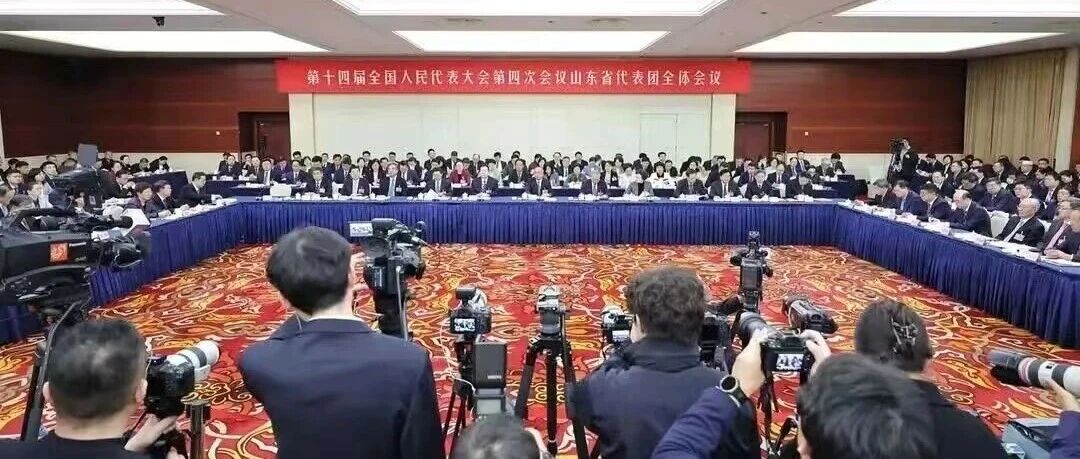
2026.03. 07 全国人大代表、山东省委书记林武表示,锚定"走在前、挑大梁",以落实黄河重大国家战略为牵 引,大力实施工业经济"头号工程",着力塑造"十个新优势",统筹推进改革发展稳定各项工作,加 快建设绿色低碳高质量发展先行区,打造高水平对外开放新高地,努力成为北方地区经济重要增长 极,现代化强省建设取得新进展新成效。 着力提振消费、扩大投资规模、稳定外贸外资;以真金白银投入激发群众消费需求,未来五年能源领 域投资超过万亿元、全部向民企放开;持续推动外贸从"拼规模"向"拼价值"跃升……山东明确,今 年将坚持扩大内需这个战略基点,更好服务和融入新发展格局,推动经济实现质的有效提升和量的合 理增长,持续塑强高质量发展新优势。 林武谈到,今年山东将在充分利用中央政策资金的基础上,提供专门财政资金支持,发放零售、餐饮 等消费券,将以真金白银投入激发群众消费需求。同时,深挖居民消费潜力,把握消费变革新趋势, 稳住扩大汽车、家电、家居等大众消费的同时,壮大演艺、赛事、IP等消费规模。 本文字数:1433,阅读时长大约3分钟 作者 | 第一财经 祝嫣然 今年政府工作报告提出,加强改革攻坚、政策赋能和要素保障,支持经 ...
高股息真的依赖于成长性吗
雪球· 2026-03-07 01:31
Core Viewpoint - The article emphasizes the importance of focusing on companies with competitive advantages and high dividend yields, rather than solely on growth potential, to achieve sustainable long-term investment returns [5][11]. Group 1: Company Analysis - Gree Electric Appliances has faced concerns regarding its growth potential since 2014, with a saturated market leading to low valuations. Its revenue increased from 140 billion in 2014 to 190 billion in 2024, reflecting a cumulative growth of 35.73%, equating to an annualized growth rate of only 3.1% [6]. - Despite the limited revenue growth, Gree's net profit rose significantly from 14.155 billion to 32.185 billion, showing a cumulative growth of 127.36% and an annualized rate of approximately 8.56%, which exceeds inflation levels [7]. - The increase in net profit is attributed to improvements in social productivity, with advancements in advertising and inventory management leading to enhanced economic efficiency [9]. Group 2: Industry Insights - The article suggests that as new technologies mature and are applied, the positive effects on leading companies' performance will continue, provided they maintain their market share [10]. - The core principle of the high dividend strategy is to closely monitor whether a company's competitive advantage is being undermined, as this is crucial for long-term investment success [11].

消费组行业深度研究报告:服务消费迎来黄金十年
Huachuang Securities· 2026-03-06 12:08
Investment Rating - The report maintains a "Recommendation" rating for the consumer services sector, indicating a positive outlook for investment opportunities in this industry [4]. Core Insights - The report identifies that service consumption in China is entering a "golden decade," transitioning from basic survival needs to higher-level life experiences and values [2][15]. - It emphasizes the evolution of consumer demand, highlighting a shift from physical goods to service-oriented experiences, which are becoming the core of consumption growth [18][21]. - The analysis framework includes "demand progression," "supply upgrade," and "policy empowerment," suggesting a systematic approach to understanding the future of service consumption in China [7]. Summary by Sections 1. Service Consumption Enters a Golden Decade - Consumer demand is evolving from basic survival needs to life enjoyment and value, with significant improvements in living standards driving this change [15]. - The past two decades have seen saturation in basic physical consumption, leading to a focus on quality and service experiences [2][15]. 2. New Engines of Consumption - The report identifies two new engines driving consumption: the standardization and industrialization of service demands, and the shift from services supporting physical goods to services being the primary offering [5][21]. - The younger generations (Y and Z) are becoming the main consumer force, emphasizing emotional and experiential consumption [22][25]. 3. Supply-Side Dynamics - The report discusses the collaborative evolution of industry, technology, and talent, which is driving the upgrade of service consumption [5][18]. - The rise of AI and technology is expected to enhance service efficiency and consumer experience significantly [5][18]. 4. Policy Support - The report notes that both demand and supply sides are being supported by government policies aimed at boosting service consumption, with various initiatives being rolled out since 2025 [5][18]. 5. Investment Opportunities in Sub-Sectors - **Dining**: The report highlights the trend of chain restaurants focusing on supply chain integration and service experience as key competitive advantages, recommending companies like Gu Ming and Hai Di Lao [5][8]. - **Retail**: It discusses the transformation of retail formats to enhance shopping experiences, recommending companies like Yonghui Supermarket [5][8]. - **Cultural Tourism**: The shift from sightseeing to experiential tourism is noted, with recommendations for companies like Shoulv Hotel and Jinjiang Hotel [5][8]. - **Education**: AI is reshaping educational experiences, with a focus on vocational education, recommending companies like Fenbi and China Oriental Education [5][8]. - **IP Toys**: The transition from toys to emotional assets is highlighted, with recommendations for companies like Pop Mart and Chuangyuan [5][8]. - **Pet Healthcare**: The report notes the growth in demand for specialized pet healthcare services, recommending companies like Ruipai Pet Hospital [5][8]. - **Gaming**: Opportunities in overseas markets and new user demographics are emphasized, with recommendations for companies like Century Huatong and Perfect World [5][8]. - **Health and Wellness**: The report discusses the transformation of insurance models to include health services, recommending companies like China Ping An and China Life [5][8]. - **Physical Consumption**: The shift from selling products to selling lifestyles is noted, with recommendations for companies like Midea and Kweichow Moutai [5][8].
乘风破浪 | 中金公司2026年春季投资策略会
中金点睛· 2026-03-06 11:03
Core Insights - The article discusses the upcoming CICC Investment Strategy Conference scheduled for March 10-11, 2026, in Shenzhen, focusing on macroeconomic outlooks and investment opportunities across various sectors [2][3]. Group 1: Keynote Speakers and Topics - Notable speakers include Wei Lun Professor of Economics at The Chinese University of Hong Kong, the Chief Economist of CICC, and the Senior Managing Director & Chief Strategist of CICC [5][8][11]. - The conference will feature a keynote speech on the macroeconomic outlook for China and the United States, highlighting the global economic landscape [16]. Group 2: Market Outlook Sessions - Sessions will cover A-share market outlook, Hong Kong and overseas market perspectives, and major asset class forecasts [18]. - Specific discussions will address the real estate market trends, fixed income market developments, and the growth of multinational enterprises in a globalized context [19]. Group 3: Sector-Specific Discussions - The conference will include breakout sessions focusing on various sectors such as AI, telecommunications, consumer goods, and renewable energy [20][21][22]. - Topics will explore investment opportunities in the automotive industry, logistics, and the impact of AI on different sectors [21][22][31]. Group 4: Participating Companies - A range of companies from different sectors will participate, including banks, non-bank financial institutions, and technology firms [23][24][26]. - Notable participants include major banks like CITIC Bank and Minsheng Bank, as well as companies in the energy and materials sectors [23][24].