生物医药

Search documents
就业“风向标”来了!读懂政府工作报告里的新岗位新机会
第一财经· 2026-03-05 09:15
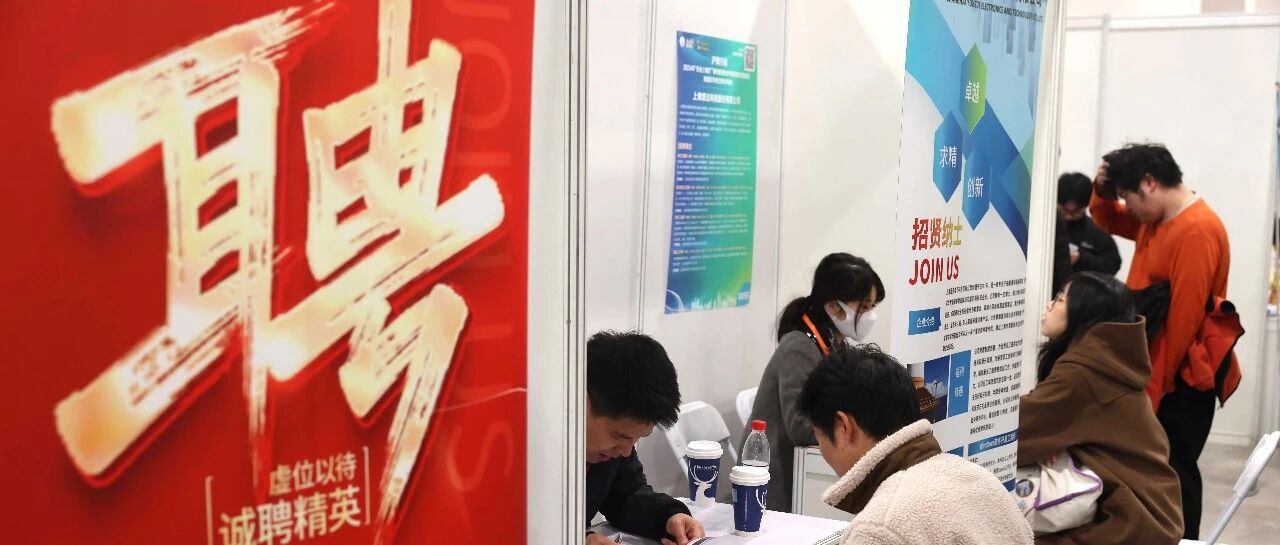
Core Viewpoint - The article emphasizes the importance of employment as a fundamental aspect of people's livelihoods, highlighting the government's proactive measures to address employment pressures through stabilizing existing jobs, creating new positions, and enhancing skills [3][4]. Employment Policy Directions - The government report categorizes employment policies into three main directions: stabilizing existing jobs, creating new employment opportunities, and enhancing the skills of the workforce [5]. - The report aims to promote high-quality and sufficient employment by increasing support for various employment policies and implementing measures such as wage subsidies and special loans [5][6]. Employment Statistics and Goals - For 2025, the target for urban new employment is set at 12.67 million, with an average urban survey unemployment rate of 5.2%. The goal for 2026 is to maintain an urban survey unemployment rate of around 5.5% and create over 12 million new jobs [4]. - The report indicates that the unemployment rate reflects significant structural pressures in the job market, necessitating a focus on both quantity and quality of employment [4][5]. New Employment Opportunities - The report highlights the need to cultivate new professions and positions, particularly in emerging and future industries, while also enhancing the service sector's capacity to absorb employment [6]. - Key sectors identified for growth include integrated circuits, aerospace, biomedicine, and low-altitude economy, with a focus on fostering innovation and risk-sharing mechanisms [6]. Skills Development and Training - A large-scale vocational skills enhancement program is proposed to help workers adapt to changes brought about by industrial restructuring and technological advancements [6]. - The report emphasizes the importance of developing employment measures that align with advancements in artificial intelligence, reflecting the government's commitment to balancing technological progress with employment stability [6]. Employment Quality Improvement - The report stresses the need to improve the quality of employment by introducing policies that support flexible and new employment forms, ensuring labor rights, and addressing employment discrimination [7].

国泰海通 · 宏观|一图概览政府工作报告
国泰海通证券研究· 2026-03-05 08:56
Economic Indicators - The actual GDP growth rate for 2026 is projected to be between 4.5% and 5%, compared to approximately 5% in 2025 [2] - The Consumer Price Index (CPI) year-on-year growth is expected to remain at 2% for both 2026 and 2025 [2] Employment - The target for new urban employment in 2026 is set at over 12 million, consistent with the 2025 target [2] - The urban survey unemployment rate is projected to be around 5.5% for both years [2] Agricultural Production - The grain production target for 2026 is approximately 1.4 trillion jin, similar to the 2025 target of over 1.4 trillion jin [2] Environmental Protection - The goal for reducing carbon dioxide emissions per unit of GDP is set at around 3.8% for 2026, compared to a 3% reduction in energy consumption per unit of GDP in 2025 [2] Fiscal Policy - The budget deficit rate is maintained at 4% for both years [2] - New local special bonds are projected at 4.4 trillion yuan for 2026, unchanged from 2025 [2] - Central budget investment is planned at 755 billion yuan for 2026, an increase from 735 billion yuan in 2025 [2] - General budget expenditure is expected to increase by approximately 1.27 trillion yuan in 2026, compared to an increase of 1.2 trillion yuan in 2025 [2] Monetary Policy - The approach to monetary policy will involve flexible and efficient use of tools such as reserve requirement ratio (RRR) cuts and interest rate reductions [2] - The growth rate of M2 and social financing will align with economic growth and overall price level expectations [2] Real Estate Market - The focus will be on stabilizing the real estate market with targeted measures to control supply and reduce inventory [2] - Emphasis on improving housing quality and enhancing property services, alongside measures to prevent debt default risks [2] Modern Industrial Development - The strategy includes fostering new economic drivers, optimizing traditional industries, and promoting advanced manufacturing [2] - Key sectors highlighted for growth include integrated circuits, aerospace, biomedicine, and digital economy [2] Consumer Spending - Initiatives to promote income growth among residents and support consumption through various financial measures are planned [2] - The government aims to enhance service consumption and improve consumer experiences through policy adjustments [2] Investment - Central budget investment is set at 755 billion yuan for 2026, with a focus on supporting infrastructure projects [2]

2026年两会政府工作报告精神学习
Soochow Securities· 2026-03-05 08:40
Core Insights - The 2026 government work report sets a more pragmatic GDP growth target of "4.5%-5%", emphasizing quality over quantity in economic development, allowing more room for structural adjustments and risk prevention [1][2] - The nominal GDP for 2026 is projected to reach 147 trillion, up from 140.2 trillion in 2025, indicating a focus on price considerations alongside growth targets [1] - The CPI target is set at 2%, balancing expectations and realistic possibilities to promote reasonable price recovery [1] Macroeconomic Policy - The report emphasizes a "more proactive fiscal policy," with significant fiscal spending focused on expanding domestic demand, key projects, and ensuring livelihoods [2] - Monetary policy will remain "appropriately accommodative," with a focus on maintaining low comprehensive financing costs and utilizing structural monetary tools flexibly [2] - The establishment of a 100 billion yuan fiscal-financial collaborative fund to boost domestic demand is highlighted [2] Green Development - The policy shift from energy consumption control to carbon emission control is noted, with a focus on reducing carbon emissions per unit of GDP rather than energy consumption [3] - The government aims to strengthen carbon emission constraints and accelerate the elimination of outdated production capacity, driving technological upgrades and structural optimization [3] Domestic Demand Expansion - New policies to support first-time marriage and childbearing families through housing guarantees are introduced, aimed at stimulating consumption and addressing real estate inventory [3] - The focus of consumption policies is shifting from durable goods subsidies to broader demand, particularly in service consumption and new consumption scenarios [3] Technological Industry Development - The report identifies four emerging pillar industries: integrated circuits, aerospace, biomedicine, and low-altitude economy, alongside future industries like future energy and quantum technology [4] - The integration of advanced manufacturing and modern services is emphasized as a key direction for future growth [4] - The creation of a "smart economy" through deep integration of AI technology with the real economy is highlighted [4] Real Estate Market Stability - Policies aim to resolve existing risks and establish new development models in the real estate sector, focusing on stabilizing ongoing projects and encouraging the use of existing housing for affordable housing [4] - The report advocates for city-specific policies to control new supply, reduce inventory, and enhance the quality of housing [4] Capital Market Reform - The report calls for continued deepening of capital market reforms, enhancing mechanisms for long-term capital entry, and improving investor protection [6] - The focus is on increasing the proportion of direct and equity financing through comprehensive reforms in the investment and financing landscape [6]
医药生物行业学习《2026年政府工作报告》体会:开启多元支付、银发经济新纪元,关注AI医疗、脑机接口等新方向
EBSCN· 2026-03-05 08:02
Investment Rating - The report maintains an "Overweight" rating for the pharmaceutical and biotechnology industry [5] Core Insights - The 2026 Government Work Report emphasizes the development of emerging industries such as biopharmaceuticals and brain-computer interfaces, alongside initiatives to enhance healthcare services and insurance systems [1][2] - The introduction of a commercial health insurance innovation drug catalog is expected to improve the commercialization environment for innovative drugs, marking a shift towards a multi-payment structure in healthcare [2] - The report highlights the potential for AI in healthcare and the significance of brain-computer interfaces as future industries, indicating a focus on ethical, regulatory, and commercialization pathways [3] Summary by Sections Government Initiatives - The report outlines government plans to implement a strong healthcare foundation, enhance pediatric and mental health services, and improve disease prevention measures, including a budget allocation of 200 billion yuan for medical equipment upgrades [1][3] Commercial Health Insurance - The establishment of a dedicated commercial health insurance drug catalog is anticipated to alleviate the reliance on national basic medical insurance for innovative drug market access, thus enhancing the commercial viability of these drugs [2] Aging Population and Long-term Care - The report mentions pilot programs for elderly care consumption subsidies, particularly for moderately to severely disabled seniors, which could drive demand for rehabilitation medical devices and related consumables [2] Investment Recommendations - The report suggests focusing on three key areas: 1. Innovative drugs with differentiated clinical value, recommending companies like BeiGene and Innovent Biologics [4] 2. Smart rehabilitation and home medical devices driven by long-term care insurance, recommending companies like Yuyue Medical and Sanofi [4] 3. AI and future industries, recommending companies with established commercial pathways in AI drug development and brain-computer interfaces, such as Jingtaikong and Yingshi Intelligent [4]
内需主导,民生为先【华福宏观•陈兴团队】
陈兴宏观研究· 2026-03-05 07:12
Economic Growth and Inflation - The government has set the economic growth target for 2026 at 4.5%-5%, allowing for flexibility in policy implementation while aiming for better outcomes [2] - The CPI target for 2026 remains at 2%, with a focus on controlling inflation and improving corporate profitability and household income expectations [2] Employment Stability - The target for urban new employment in 2026 is maintained at over 12 million, with the urban survey unemployment rate aimed to stay around 5.5% [3] Fiscal Policy - The government plans to implement a more proactive fiscal policy, maintaining a deficit rate around 4% and increasing the deficit scale to 5.89 trillion yuan [6] - Local special bond quotas are set at 4.4 trillion yuan, and the issuance of long-term special government bonds is planned at 1.3 trillion yuan to support key initiatives [6] Efficiency of Fiscal Funds - The fiscal policy structure will focus on enhancing the effectiveness of fund usage, with an emphasis on supporting consumption, investment in human capital, and ensuring livelihood [9] Monetary Policy - The monetary policy will continue to be moderately loose, utilizing structural monetary policy tools to support domestic demand and key sectors such as technology and small enterprises [9] Consumer Promotion - The government will enhance consumer policies, including support for low-income groups and the promotion of service consumption, aiming for sustainable growth in domestic demand [12] Investment Focus - The investment strategy will prioritize both "investment in material" and "investment in people," with an increase in central budget investment and support for social capital investment [13] New Economic Drivers - The report emphasizes the importance of the real economy, with plans to support traditional industries and develop emerging sectors such as integrated circuits and aerospace [14] Real Estate Market - The government aims to stabilize the real estate market by optimizing supply and enhancing housing security for newly married and multi-child families [14]

一图看懂2026政府工作报告
清华金融评论· 2026-03-05 06:03
Core Viewpoint - The article outlines the key economic goals and tasks for 2026, emphasizing sustainable growth, employment generation, and advancements in various sectors, including technology and agriculture [2][7][10]. Economic Growth and Employment - The GDP growth target for 2026 is set between 4.5% and 5% [7]. - More than 12 million new urban jobs are expected to be created [8]. - The average annual growth rate of disposable income for residents is projected at 5.4% [5]. Agricultural and Industrial Production - The grain production target for 2026 is approximately 1.4 trillion jin [8]. - The manufacturing value-added scale is expected to maintain its global leadership [5]. - The production capacity for grain is aimed to reach 1.45 trillion jin [7]. Research and Development - The total R&D expenditure is expected to grow by over 7% annually [6]. - The average years of education for the working-age population is targeted to increase to 11.7 years [7]. Environmental Goals - A cumulative reduction of 17% in carbon dioxide emissions per unit of GDP is aimed for [6]. - The target for the reduction of carbon emissions in 2026 is approximately 3.8% [8]. Fiscal Policy and Budget - The budget deficit is projected to increase by 230 billion yuan, reaching a total deficit scale of 1.3 trillion yuan [8]. - The general public budget expenditure is expected to reach 30 trillion yuan for the first time [8]. - Special long-term bonds worth 1.3 trillion yuan are planned to be issued [8]. Sectoral Development Initiatives - The government plans to support emerging industries such as integrated circuits, aerospace, and biomedicine [10]. - Initiatives to promote future industries like quantum technology and 6G are also highlighted [10]. - Measures to enhance the agricultural sector through a national agricultural census and urbanization strategies are outlined [13].

政府工作报告讲了这些能源事
国家能源局· 2026-03-05 04:26
Core Viewpoint - The article emphasizes the importance of advancing green and low-carbon transformation across key industries, enhancing energy security, and achieving sustainable economic growth through various strategic initiatives and projects [4][9][14]. Group 1: Green and Low-Carbon Transformation - The production capacity of renewable energy is being expanded, with the first batch of "Shago Desert" new energy base projects nearing completion, and new energy storage installations exceeding 130 million kilowatts [4]. - Non-fossil energy consumption has reached 21.7%, showcasing a significant shift towards sustainable energy sources [4]. - The goal is to reduce carbon emissions per unit of GDP by 17% cumulatively by 2035, while continuing to promote green and low-carbon transformation in key sectors [4][9]. Group 2: Energy and Food Security - The comprehensive production capacity for grain is targeted to reach approximately 1.45 trillion jin, while energy production capacity aims for 5.8 billion tons of standard coal [9]. - Safety capabilities in key areas such as food, energy resources, and finance have been notably strengthened, ensuring stability and preventing systemic risks [6]. Group 3: Major Engineering Projects - A total of 23 engineering projects are proposed to build a modern infrastructure system, focusing on a comprehensive transportation network and new energy systems [11]. - An additional 18 projects are aimed at promoting green and low-carbon transformation, enhancing environmental quality, and ecological protection [11]. Group 4: Economic Growth and Employment - The expected economic growth rate is set between 4.5% and 5%, with urban unemployment targeted at around 5.5% and over 12 million new urban jobs to be created [14]. - The consumer price index is projected to rise by approximately 2%, with a focus on synchronizing income growth with economic expansion [14]. Group 5: Investment and Innovation - The government plans to allocate 755 billion yuan for central budget investments and 800 billion yuan in special bonds for long-term projects, aiming to stimulate effective investment in key areas [16]. - There is a strong emphasis on fostering new industries and future technologies, including integrated circuits, aerospace, and quantum technology, to drive economic growth [18][21].

政府工作报告极简版来了!不到1000字
券商中国· 2026-03-05 03:36
3月5日,李强总理向十四届全国人大四次会议作政府工作报告,要点如下: 二、"十五五"时期主要目标和重大任务 一、2025年工作回顾 国内生产总值增长5% 城镇新增就业1267万人 粮食产量达到1.43万亿斤 新能源汽车年产量超过1600万辆 过去5年 国内生产总值年均增长5.4% 制造业增加值规模连续16年保持全球第一 居民人均可支配收入年均增长5.4% 城镇新增就业累计超过6000万人 国内生产总值增长保持在合理区间 全社会研发经费投入年均增长7%以上 单位国内生产总值二氧化碳排放累计降低17% 数字经济核心产业增加值占国内生产总值比重达到12.5% 劳动年龄人口平均受教育年限提高到11.7年 人均预期寿命提高到80岁 粮食综合生产能力达到1.45万亿斤左右 能源综合生产能力达到58亿吨标准煤 三、2026年经济社会发展总体要求和政策取向 经济增长4.5%—5% 城镇新增就业1200万人以上 居民消费价格涨幅2%左右 粮食产量1.4万亿斤左右 单位国内生产总值二氧化碳排放降低3.8%左右 赤字率拟按4%左右安排,赤字规模比上年增加2300亿元 一般公共预算支出规模将首次达到30万亿元 拟发行超长期特别国债1 ...

2026年政府工作报告,一图速览!
国家能源局· 2026-03-05 03:00
Core Viewpoint - The article outlines the achievements and future goals of China's economic and social development, emphasizing high-quality growth, innovation, and improved living standards as key priorities for the upcoming "15th Five-Year Plan" period [4][5][18]. Economic Performance - In 2025, China's GDP reached 140.19 trillion yuan, with a growth rate of 5% [6][12]. - Urban employment remained stable, with 12.67 million new jobs created and an average urban unemployment rate of 5.2% [6]. - The total grain production was approximately 1.43 trillion jin [7]. Technological and Industrial Advancements - Significant advancements in technology and industry were noted, including a 28% increase in industrial robot production and a 10.9% increase in integrated circuit production [9]. - China maintained its position as the world's largest manufacturing nation for 16 consecutive years, with R&D expenditure growing at an annual rate of 10% [13]. Social Development - The average disposable income of residents grew by 5.4% annually, and the average life expectancy increased to 79.25 years [13]. - Over 14 million children benefited from a year of free preschool education, and over 30 million infants received childcare subsidies [7]. Environmental Progress - The quality of the ecological environment improved, with a 5.1% reduction in energy consumption per unit of GDP [9]. - The proportion of days with good air quality in cities increased to 89.3% [13]. Future Goals and Strategies - The expected economic growth for 2026 is set between 4.5% and 5% [19]. - Key tasks include enhancing domestic market strength, fostering new economic drivers, and promoting high-level technological self-reliance [20][21]. - The government aims to implement proactive fiscal and monetary policies while ensuring social stability and improving living standards [20][22].

两会受权发布|李强在政府工作报告中指出,“十四五”圆满收官,中国式现代化迈出新的坚实步伐
证券时报· 2026-03-05 01:38
Core Viewpoint - The article emphasizes China's economic resilience and progress in the face of complex domestic and international challenges, highlighting key achievements and future goals for development [1][2][3]. Economic Performance - China's GDP grew by 5% over the past year, reaching 140.19 trillion yuan [1] - Urban employment remained stable with 12.67 million new jobs created, and the urban survey unemployment rate averaged 5.2% [1] - Foreign trade showed rapid growth, with a diversified export structure and a balanced international payment situation [1] Social Development - The article notes significant improvements in people's livelihoods, with resident income growth keeping pace with economic growth [1] - The poverty alleviation achievements have been consolidated, and policies such as free education for one year before primary school benefitted 14 million children [1] - A comprehensive childcare subsidy system was implemented, benefiting over 30 million infants [1] Technological and Industrial Advancements - New productive forces are developing steadily, with significant achievements in technology innovation, particularly in AI, biomedicine, robotics, and quantum technology [2] - The production value of high-tech manufacturing and equipment manufacturing increased by 9.4% and 9.2%, respectively [2] - The output of industrial robots and integrated circuits grew by 28% and 10.9%, respectively, while the annual production of new energy vehicles exceeded 16 million [2] Policy and Economic Strategy - The article discusses the government's proactive approach to economic challenges, including a combination of macroeconomic policies to stabilize employment, enterprises, markets, and expectations [3] - The importance of maintaining a unified leadership under the Communist Party is highlighted as essential for overcoming difficulties and achieving economic goals [3] - The need for a dual focus on policy support and reform innovation is emphasized to fully tap into economic potential [3]