人工智能

Search documents
智通港股解盘 | 大模型节前密集发布大浪淘沙 机器人或形成接力
Zhi Tong Cai Jing· 2026-02-10 12:43
Market Overview - The market continues to follow the rebound of US stocks, with Hong Kong stocks jumping above 27,000 points but later experiencing volatility, closing up 0.58% [1] - The competition among major companies in large model development is intensifying, transitioning from a "hundred model war" to a focus on commercialization, innovation, and global layout, with the number of capable developers reduced from over 200 to less than 10 [1] AI Model Developments - ByteDance's image generation model Seedream 5.0 has launched on various platforms, enhancing image generation capabilities and allowing precise adjustments [2] - Alibaba has reportedly integrated its new model Qwen 3.5 into the HuggingFace open-source project, indicating an imminent release [2] - The launch of Seedance 2.0 has been highly praised, marking a significant advancement in video generation technology, leading to concerns over privacy and copyright issues [1][2] Company Performance and Strategies - The CEO of Yueda Group has outlined three core strategic directions for the year: "evergreen content, IP+AI, and globalization," which are expected to benefit from the advancements in AI models [2] - Xunce (03317) is positioned as a leader in real-time data infrastructure and analysis solutions, with expectations of being included in the Hong Kong Stock Connect list, leading to a stock increase of over 15% [4] Financial Highlights - Semiconductor company SMIC reported a 2025 Q4 revenue of 17.813 billion yuan, a year-on-year increase of 11.9%, with a net profit of 1.223 billion yuan, up 23.2% [8] - The company anticipates a revenue growth rate higher than the industry average for 2026, with a capital expenditure plan similar to 2025 [8] Industry Trends - The demand for AI-driven applications is driving interest in related stocks, with companies like Xunce and others in the AI data analysis sector gaining attention [3] - The shipping sector is also showing strength, with companies like Pacific Shipping and COSCO Shipping Energy experiencing stock increases due to rising demand for dry bulk shipping [6] Robotics and AI Innovations - Alibaba's Damo Academy has released the RynnBrain model, significantly enhancing robotic capabilities, which is expected to attract investment in the robotics sector [7] - The launch of the Gino1 robot by Geekplus is anticipated to have a broad application in China's logistics sector, contributing to a stock increase of over 11% [6]

神秘模型霸榜全球模型服务平台 知情人士:该模型是智谱即将发布的GLM-5︱一探
Di Yi Cai Jing· 2026-02-10 12:39
Core Viewpoint - The launch of the anonymous model "Pony Alpha" by OpenRouter has garnered significant attention, indicating a potential evolution in AI model offerings, particularly linked to popular open-source models [1] Group 1: Product Development - Pony Alpha is described as a specialized evolution of a highly popular open-source model from a global laboratory, suggesting advancements in AI technology [1] - There is speculation that Pony Alpha may be related to either DeepSeek-V4 or the upcoming GLM-5 model from Zhipu [1] - Zhipu is reportedly advancing a confidential project related to the new generation model GLM-5, indicating ongoing innovation in the AI sector [1] Group 2: Market Performance - Zhipu (2513.HK) reached a new stock price high on February 10, with its market capitalization exceeding 150 billion HKD, nearly three times its IPO valuation [1]
春节AI企业红包大战再扩容 字节跳动豆包携“实体科技”入局
Zheng Quan Ri Bao Wang· 2026-02-10 12:37
2月10日,字节跳动旗下AI应用豆包宣布,正式开启"豆包过年"新春活动,加入春节AI红包阵营。活动 期间,豆包将向用户发放新春红包;在2026年春晚直播过程中,还将面向全国观众送出超过10万份接入 豆包大模型的科技好礼及现金红包。 徐奕胜进一步分析认为,这场红包大战,将推动AI行业加速发展:一是在商业化落地上,红包活动带 动广告、电商、娱乐等多场景的AI融合,为产业链开拓了更清晰的成长路径;二是在技术升级上,高 并发、实时互动的需求直接推动算力租赁与云计算基础设施的发展;三是在用户教育上,"红包即体 验"的模式让用户在参与中自然学习AI使用,为AI的全民普及完成了关键一步。这场由"红包"引发的竞 争,正推动AI从技术概念走向规模化、场景化落地。 中国电子商务专家服务中心副主任郭涛对《证券日报》记者分析称,元宝依托微信社交链,以10亿元红 包推动AI对话、文案生成等任务,联动社交裂变,并推出社交功能打造AI社交生态;通义千问投入30 亿元推出"春节请客计划",以AI免单模式联动外卖、生鲜等消费场景,打通阿里旗下业态,构建AI办事 闭环,抢占智能服务入口;豆包则凭借央视春晚独家AI云合作伙伴身份,将AI互动融入春 ...
Seedance2.0开启“一句话成片”时代
第一财经· 2026-02-10 12:37
2026.02. 10 本文字数:2310,阅读时长大约4分钟 作者 | 第一财经 吕倩、刘晓洁 "AIGC的童年时代,结束了。" 游戏科学创始人、CEO,《黑神话:悟空》制作人冯骥发文谈及Seedance 2.0时这样说。 2月10日,在字节跳动AI视频生成模型Seedance2.0带动下,传媒板块涨势扩大,Wind数据显示, 文化传媒主题指数(884111.WI)收涨4.51%,AI应用指数(8841683.WI)涨1.93%。 Seedance2.0自发布以来引发行业热议,它支持图像、视频、音频、文本四种模态输入,"参考能 力"是最大亮点,即参考图像可精准还原画面构图、角色细节;参考视频支持镜头语言、复杂动作节 奏、创意特效复刻;编辑能力同步增强。 不久前,国内AI视频生成领域另一强将可灵AI近期发布3.0版本,支持多模态输入输出大一统模型体 系,从模型生成迈向理解。 方正证券研报分析认为,从产业基本面来看,国内互联网大厂的密集动作已明确印证:2026年AI应 用产业周期正步入景气上行通道。作为AI应用大年,2026年板块机会将持续发散至AI漫剧、影视 IP、数据要素等细分领域,而大厂的发力动作将是核心 ...


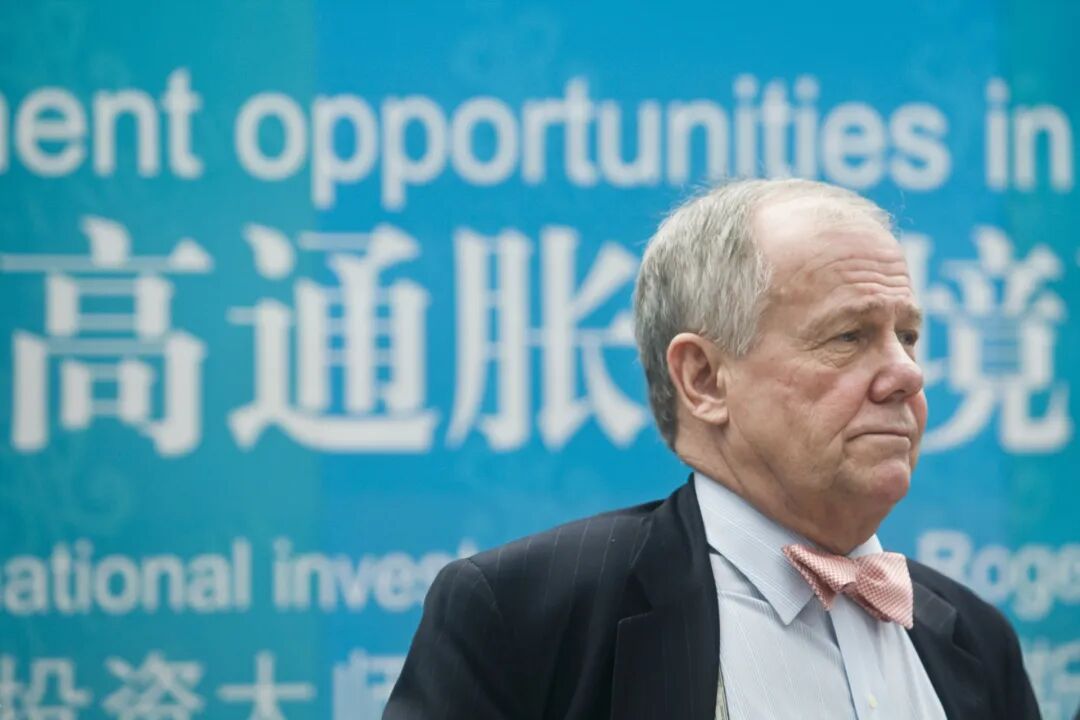
曾准确预测1987年全球股灾和2008年美国次贷危机,84岁“商品大王”:我清空了美股,但绝不会卖掉金银铜
Mei Ri Jing Ji Xin Wen· 2026-02-10 12:36
Group 1: Investment Strategy - Jim Rogers has liquidated all his U.S. stock holdings and views gold, silver, and copper as "perfect insurance" for potential economic crises, planning to pass them on to future generations [3][4] - He emphasizes the importance of holding physical metals, stating that they serve as a crucial safeguard in times of economic turmoil and can also appreciate in value during stable periods [4][5] Group 2: Market Insights - Silver experienced a significant price increase of 147% in 2025, driven by industrial demand, but Rogers maintains that he will not trade silver for short-term profits, preferring to hold it long-term [5][6] - Copper prices have reached historical highs due to its essential role in electric vehicles and infrastructure, with Rogers advising investors to retain their copper holdings due to increasing demand and limited new supply [6][7] Group 3: Economic Concerns - Rogers warns that the U.S. national debt, currently at $38 trillion, poses a severe risk, predicting that the next financial crisis could be the worst he has ever witnessed, rooted in overwhelming global debt levels [3][10][12] - He draws parallels between the current U.S. debt situation and historical precedents, suggesting that excessive national debt often leads to significant economic crises [9][10] Group 4: Views on China - Rogers has been a long-time bull on the Chinese economy, citing its unique resilience and potential for recovery after downturns, and expresses optimism about sectors like tourism and agriculture in China [16][17] - He believes that external pressures can stimulate innovation within China, particularly in technology sectors, including artificial intelligence [17][19]
美股盘前要点 | 特朗普拟豁免科技巨头芯片关税,台积电1月销售额创新高
Ge Long Hui· 2026-02-10 12:32
Group 1 - US stock index futures showed slight increases, with Nasdaq futures up 0.22%, S&P 500 futures up 0.15%, and Dow futures up 0.01% [1] - European stock indices had mixed results, with Germany's DAX up 0.03%, UK's FTSE 100 down 0.34%, France's CAC up 0.25%, and the Euro Stoxx 50 up 0.19% [1] - Citigroup warned that "AI disruption" could lead software stocks to retest their 2023 lows, with a potential long-term terminal value evaporation of about one-third [1] - AI startup Anthropic plans to secure 10 gigawatts of data center computing power, surpassing OpenAI [1] - The US plans to exempt companies like Amazon, Google, and Microsoft from upcoming chip tariffs, potentially linked to TSMC's investment commitments [1] - TSMC reported a 36.8% year-on-year increase in January sales to a record high of NT$401.26 billion, with a board-approved capital budget of $44.962 billion [1] - Amazon plans to launch a content trading platform allowing publishers to sell content to AI companies [1] - Alphabet's Waymo achieved fully autonomous driving operations in Nashville, Tennessee [1] - Tesla's North American sales head Raj Jegannathan has left the company amid challenges of declining global demand [1] - Salesforce reportedly laid off fewer than 1,000 employees earlier this month, affecting marketing and product management roles [1] Group 2 - Eli Lilly will acquire Orna Therapeutics for $2.4 billion to strengthen its position in the autoimmune sector [2] - Baidu is reportedly secretly launching the "O Plan," which insiders say is related to the Baidu app [2] - Qianwen APP is testing integration with Damai, covering the entire process from film recommendations to payment and ticket issuance [2] - AstraZeneca expects a 9% increase in product sales to over $55.5 billion by 2025, anticipating continued growth this year [2] - Coca-Cola's Q4 net revenue of $11.8 billion fell short of expectations, with an anticipated adjusted organic revenue growth of 4-5% this year [2] - BP's Q4 underlying replacement cost profit increased by 32% year-on-year to $1.54 billion, with stock buybacks paused [2] - Barclays reported a pre-tax profit of £1.9 billion in Q4, exceeding expectations, and committed to returning at least £15 billion to shareholders by 2028 [2] - ON Semiconductor's Q4 revenue declined by 11% year-on-year to approximately $1.53 billion, with first-quarter guidance falling short of expectations [2] - Ferrari's Q4 net profit of €381 million exceeded expectations, with orders already booked through the end of 2027 [2]




ETF复盘资讯|创新药反弹还看港股!520880放量摸高近4%!字节Seedance2.0爆火出圈,科创AI、科创芯片连续上攻
Sou Hu Cai Jing· 2026-02-10 12:19
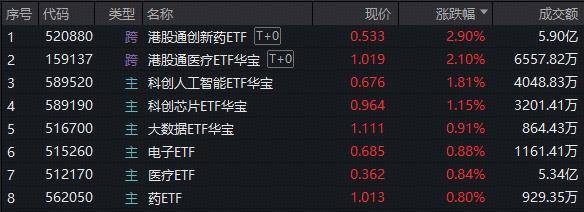
Market Overview - A-shares experienced narrow fluctuations, with the Sci-Tech Innovation Board showing strong performance, particularly in AI applications and computing chips [1] - The Hong Kong stock market saw a significant rebound in the pharmaceutical sector, with the Hong Kong Innovation Drug ETF (520880) reaching a peak increase of 3.86% and closing up 2.9% [3][5] ETF Performance - The Hong Kong Innovation Drug ETF (520880) recorded a trading volume of 5.9 billion, while the Hong Kong Medical ETF (159137) rose by 2.1%, marking its sixth consecutive day of gains [2][3] - The Sci-Tech Artificial Intelligence ETF (589520) increased by 1.81%, with a peak rise of over 2.4% during the trading session [8] Industry Insights - The Chinese innovative drug sector is experiencing a dual breakthrough in internationalization and commercialization, with over 70% of innovative drug companies reporting positive revenue growth [6][7] - Significant collaborations in the innovative drug space include a strategic partnership between Innovent Biologics and Eli Lilly, valued at up to $8.85 billion, and a $18.5 billion collaboration between CSPC Pharmaceutical and AstraZeneca [6] AI and Technology Developments - ByteDance's recent launches, including the Seedance 2.0 video generation model and Seedream 5.0 image generation model, have generated significant interest in the AI sector [11] - The Sci-Tech Artificial Intelligence ETF (589520) has a substantial exposure to ByteDance, with a weight of 29.42% in its index [11][13] Semiconductor and Chip Industry - The semiconductor equipment industry is experiencing an upward trend, with projected sales growth of 26% in 2026, reaching $791.7 billion [17] - The Sci-Tech Chip ETF (589190) is positioned to benefit from the ongoing "super cycle" in the semiconductor industry, with a focus on domestic production and expansion [15][17] Investment Strategy - Analysts suggest that the current market conditions present a favorable opportunity for investment in innovative drugs and AI sectors, with a recommendation to focus on ETFs that track these industries [7][19] - The Sci-Tech Chip ETF has shown a strong annualized return of 17.93%, outperforming other semiconductor indices [19][20]


【明日主题前瞻】算力基础设施核心,AI浪潮下电力设备供需缺口进一步放大
Xin Lang Cai Jing· 2026-02-10 12:08
Group 1: AI and Power Equipment - Alphabet plans to raise $20 billion through bond issuance, exceeding previous expectations, to invest heavily in data centers crucial for its AI strategy [1] - The global demand for high-power, stable electricity supply for AI computing is increasing, leading to a supply-demand gap in high-voltage power equipment [1] - TBEA is a leading private transformer manufacturer in China, capable of integrated services in high-voltage cables and accessories [2] Group 2: AI and Security - The integration of AI into cybersecurity is creating new opportunities, with safety and trust becoming core themes in the industry [3] - The implementation of new cybersecurity regulations in China marks a shift towards more detailed governance in the sector [3] - Anheng Information has launched China's first AI security agent, enhancing its capabilities in various security scenarios [4] Group 3: Metal Prices - The price of indium has surged to its highest level in over a decade, with a significant increase of 88% from 2500 RMB/KG to 4700 RMB/KG [5] - China accounts for 70% of global indium production, and the supply growth has been limited, indicating potential for further price increases [5] - Xiyang Co. holds the largest indium resource reserves globally, producing 101.62 tons of indium [5] Group 4: Tourism Industry - The domestic tourism market is expected to see a 300% increase in planned trips during the upcoming Spring Festival, indicating a strong recovery [6] - Companies like Sanxia Tourism are expanding their offerings to meet diverse consumer demands, including high-end cruise services [7] Group 5: AI Content Creation - Reading Group is focusing on AI-driven content creation, aiming to enhance the efficiency and value of IP development [8] - Daily Interactive provides data intelligence services, catering to the short video and short drama sectors [9] Group 6: Automotive Industry - The Ministry of Commerce is implementing measures to boost automotive consumption, including trade reforms and policies to support vehicle replacement [11] - Companies like Feilong Co. and Xingyu Co. are positioned to benefit from the anticipated growth in the automotive sector [11]



深圳打造“双万基金”:数量超万家、规模超万亿
FOFWEEKLY· 2026-02-10 12:08
来源:深圳特区报 2月9日,深圳市第七届人民代表大会第七次会议开幕,市长覃伟中代表市政府向大会作政府工作 报告。报告明确了"十五五"时期深圳经济社会发展的主要目标:地区生产总值超过5万亿元。在十 五五"开局之年,深圳提出了5%的GDP预期增速目标,并对全年重点工作作出具体部署。 会上,深圳市市长覃伟中表示,健全与企业全生命周期更相适应的多元化、接力式科技金融服务体 系,壮大耐心资本、长期资本, 加快形成各类创新创业和产业投资基金数量超万家、总规模超万 亿元的"双万基金"格局。 这是深圳两会首次提出"双万基金"格局。 此外,会议还在创新策源、关键核心技术攻关、人才等方面做出谋划,提出加快建设清华大学深圳 国际研究生院(二期)、香港中文大学(深圳)医学院、电子科技大学(深圳)高等研究院等项 目,开展集成电路、工业母机、高端仪器、基础软件、先进材料、生物制造等领域重点产业研发项 目150个以上,今年将推动全社会研发投入增长10%以上,继续组织"百万英才汇南粤"深圳行动 计划,优化实施"孔雀团队"项目,吸引集聚集成电路、人工智能、生物科技、量子科技等重点领 域高层次科技创新人才。 热文: 谁押中了沐曦股份? 荐读: ...

人类画了100年的脑图,AI仅用几小时!还绘制出新脑区
量子位· 2026-02-10 11:59
听雨 发自 凹非寺 量子位 | 公众号 QbitAI 好消息,AI也可以帮科学家画脑图了! 近期,一个来自加州大学旧金山分校的神经科学团队提出了一种新的机器学习算法—— CellTransformer ,仅 花费几个小时 就完成了对5 只小鼠大脑图谱的分类和绘制工作。 这五只小鼠大脑的基因数据中包含1040万个细胞,每个细胞包含数百个基因。但通过这一创新性算法,研究团队不仅清晰地划分出了小鼠大 脑内的已知区域,还 绘制出了新的脑区 。 更夸张的是,这项技术很可能会进一步 应用于人类 。 画脑图的最新黑科技:CellTransformer 大脑图谱绘制是一门古老的学科,过去画脑图的方法相当复杂,需要科学家用铅笔在脑部图像上画线,连接不同区域。 2020年发布的艾伦小鼠脑通用坐标框架 (Allen Mouse Brain Common Coordinate Framework), 就是采用这种方法画出来的。 这幅脑图基于1675只小鼠的脑部数据,涵盖了1000多个不同的脑区,具有很高的价值。 但这类手工特征很强的图谱也不可避免地存在一个问题: 具有主观性 。 宾夕法尼亚州立大学医学院的神经解剖学家金永洙 (Yon ...