
AI

Search documents
裁员、出海与生死竞速:Manus何以至此?
Hu Xiu· 2025-07-10 07:41
Core Insights - Manus, an AI Agent company, has faced significant challenges, including a large-scale layoff of employees, with 80 out of 120 employees being let go as part of a restructuring to focus on core business operations [1][6][21] - The company has shifted its headquarters to Singapore and is expanding its global presence, which is closely tied to its financing process [2][3][10] - Despite rapid fundraising success, Manus has not made substantial product updates since its initial launch, indicating a potential risk in maintaining user engagement and market competitiveness [3][13][22] Company Developments - Manus's restructuring involved moving over 40 core technical staff to Singapore, while the remaining employees were laid off, reflecting a strategic shift towards operational efficiency [1][6] - The company has completed two rounds of financing within a year, with a notable $75 million B round led by Benchmark, raising its valuation to nearly $500 million [5][10] - The company has been actively recruiting in Singapore, with job postings indicating a significant increase in salary offerings compared to previous domestic positions [7][10] Market Position and Competition - Manus is facing intense competition in the AI Agent space, particularly from newer entrants like GenSpark, which has demonstrated rapid growth and user acquisition [14][15][22] - The competitive landscape is further complicated by the entry of major tech companies into the AI application market, which could threaten Manus's market share [15][22] - The company has accumulated a waitlist of 2 million potential users, which could be a valuable asset if effectively converted into paying customers [16][20] Strategic Challenges - Manus's ability to maintain user engagement and loyalty is critical, as many AI products struggle with user retention [13][20] - The company must navigate the challenges of localization and integration into local markets as it expands internationally [11][12] - There is a pressing need for Manus to innovate and differentiate its product offerings to avoid being overshadowed by competitors [17][22]

Azerion announces definitive agreement with DoubleDown Interactive for the sale of Whow Games Company sharpens focus on digital advertising, cloud services and AI
Globenewswire· 2025-07-09 21:30
Core Insights - Azerion, a prominent European digital advertising platform, has sold its subsidiary Whow Games to DoubleDown Interactive for €65 million, consisting of an upfront payment of €55 million and an earn-out of up to €10 million [1][2][3] Company Strategy - The sale is part of Azerion's strategy to reinforce digital advertising as its core business while expanding into cloud infrastructure and AI-driven solutions [2][3] - The company has been optimizing its portfolio, including the divestment of its social card games portfolio in 2023 for €81.3 million [3] Financial Performance - Azerion generated €551 million in revenue in 2024, reflecting a 7% year-on-year increase, with revenue guidance for 2025 projected between €600 million and €650 million [4] - In Q1 2025, the company reported a 68% growth in EBITDA compared to the same period last year, attributed to a focus on efficiency and profitability [4] Market Position - Azerion is positioned as one of Europe's innovative players in digital advertising and is addressing the growing demand for scalable cloud and AI alternatives to large US providers [3][5] - The company recently launched Azerion Intelligence, a platform offering affordable cloud hosting and access to open-source AI tools, catering to the increasing demand for local and cost-efficient AI services [5]

Manus裁员,改新加坡公司了
Hu Xiu· 2025-07-09 14:18
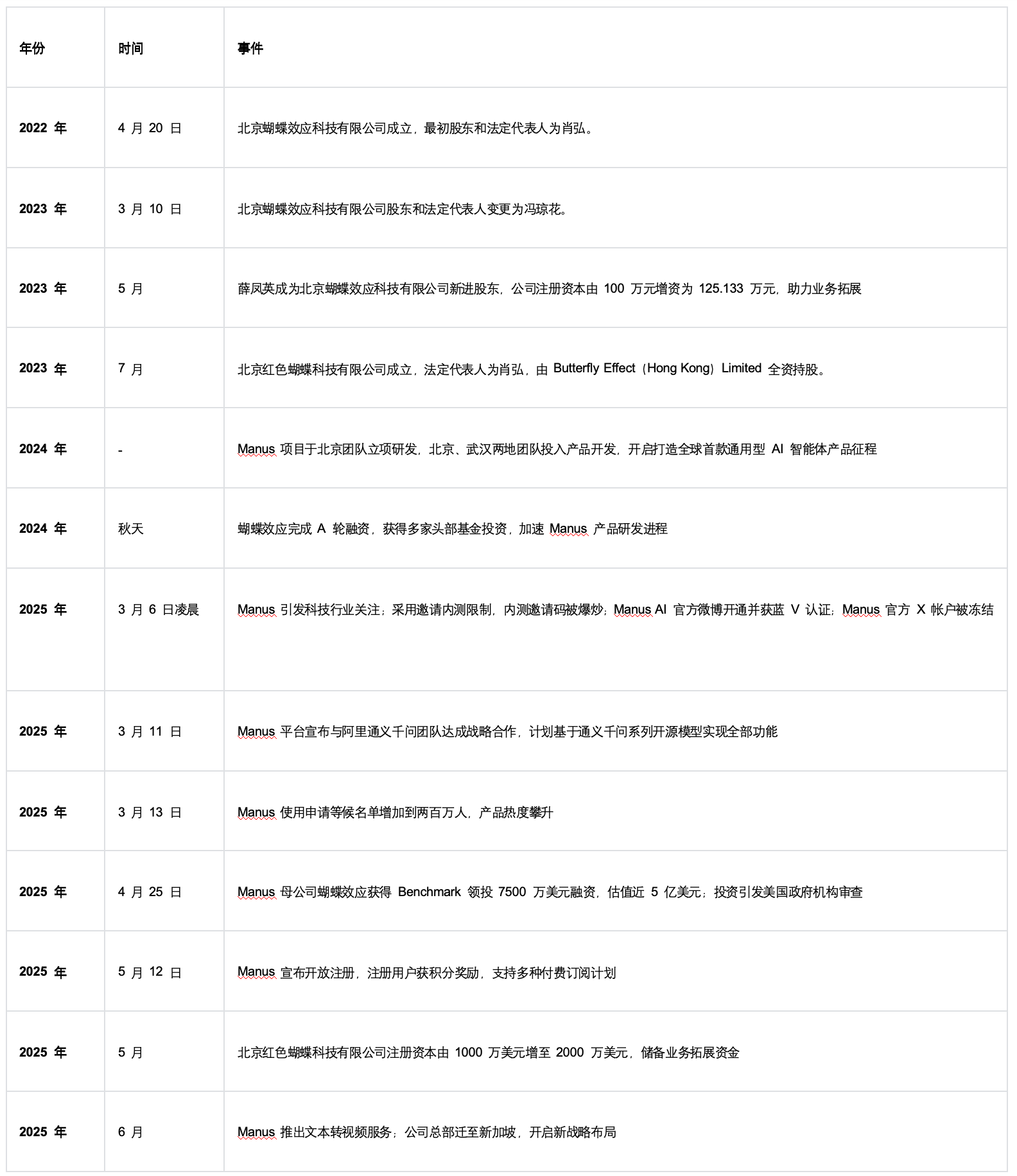
本文来自微信公众号:MacTalk,题图来自:AI生成 Manus 裁员,改新加坡公司了。 中国区员工 120 多人裁了 80 左右,也算大规模。 总部迁走,裁员开始,新加坡这边也在同步招人。 在 AI Agent 赛道里,Manus 是一个典型的样本。从中国起势,用英文命名,快速出海,背后站着资本 的推力和政策的红线。这类公司的走向,某种程度上也是整个行业的一面镜子。 至于 Manus 将总部迁入新加坡的原因,主要有两种声音: 社交平台信息显示,目前 Manus 在中国区的员工总数 120 人左右,除了四十多名核心技术人员迁往新 加坡总部之后,其余员工都将会进行裁员优化,给予 N+3 或者 2N 的赔偿。 今年初在全球爆火的中国 AI Agent 产品 Manus,4 个月后,主体迁到新加坡。动作之快,堪称"闪电迁 都"。 早在今年 6 月,Manus 的合伙人张涛就在一场活动上透露,公司总部已经迁往新加坡。查了一下资料, 新总部名叫"Butterfly Effect",去年 8 月就已经在新加坡注册,背后的母公司设在开曼群岛。 根据 The information 的报道,Manus 已完成硅谷顶级风投 ...
巴克莱2.8亿港元举牌宜搜科技背后:垂直AI的“小而美”
Zheng Quan Shi Bao Wang· 2025-07-09 11:51
Core Insights - Barclays has significantly increased its stake in Yisou Technology (02550.HK) from 2.41% to 13.04%, investing approximately HKD 280 million, indicating strong confidence in the vertical AI sector and Yisou's business model [1][2] - The investment reflects a shift in international capital's AI investment strategy, moving from general large models to favoring companies with clear profitability paths in vertical fields [1][3] Group 1: Investment Rationale - Yisou Technology has a validated profit model, with its core business in AI recommendation engines for digital marketing and reading showing resilience, with projected revenue growth in 2024 [1] - The company has established industry data barriers, focusing on deep data accumulation in specific fields, which enhances its competitive edge over general models reliant on computational power [1] - Yisou's recent strategic announcements, including a partnership for exploring real-world asset tokenization and a significant investment in data centers, are seen as drivers for future market value growth [2] Group 2: Market Implications - Barclays' investment has prompted market discussions on the development paths of the AI industry, highlighting the potential of a focused approach on vertical applications rather than competing with tech giants [3] - Yisou Technology is accelerating its international expansion, planning localized content in Southeast Asia and establishing game studios in Europe and the US, aiming to evolve into a digital ecosystem platform centered on "data + algorithms" [3]
2025下半年权益投资展望:科技突围与消费新生,三大主线布局机遇
Xin Lang Ji Jin· 2025-07-09 10:12
Market Overview - In the first half of 2025, the A-share market showed a differentiated pattern amidst internal and external disturbances, with the total A-share index rising by 5.83% [2][3]. - Small-cap stocks significantly outperformed, with the North Securities 50 index increasing by 39.45% and the Micro Index by 36.41% [2]. Industry Performance - The non-ferrous metals sector led the industry gains with an 18.12% increase, followed by banking at 13.10% and national defense and military industry at 12.99% [5]. - The AI industry chain experienced a resonance due to breakthroughs in DeepSeek technology, with high-dividend sectors like banking and technology growth sectors forming the core market lines [5]. Future Outlook - The focus for the second half of 2025 will be on three main lines: technology self-sufficiency, new consumption, and supply-side clearing [8][20]. - The technology self-sufficiency line is driven by external pressures, such as tariffs and technology blockades, which are pushing domestic industries to upgrade [8]. - The new consumption line is characterized by the rise of Generation Z, shifting consumer focus from product price to experience [13][16]. - Supply-side clearing is seen as crucial for economic recovery, with sectors like industrial metals, lithium batteries, and innovative pharmaceuticals expected to benefit [20]. Key Trends - In the AI and semiconductor sectors, the commercial application of AI models is driving demand for computing power, benefiting domestic GPU and server supply chains [12]. - The new energy sector is witnessing rapid advancements in technologies like TOPCon batteries and 800V electric drive systems, leading to improved profitability for leading companies [12]. - Generation Z's consumption behavior is marked by a focus on emotional value, with trends such as experiential services and the rise of domestic brands gaining traction [18].

谷歌AI制药将进行人体试验;阿里开源网络智能体WebSailor;长鑫存储启动上市辅导
Guan Cha Zhe Wang· 2025-07-08 01:19
Group 1 - Google AI's Isomorphic Labs is set to begin its first human trials for AI-designed cancer drugs, leveraging the advancements from the AlphaFold model [1] - Alibaba Cloud has officially open-sourced its web intelligence agent WebSailor, which has shown superior performance compared to other models in both open-source and closed-source categories [1] - Tencent's Hunyuan3D-PolyGen is the first art-grade 3D generation model aimed at improving modeling efficiency for artists by addressing challenges in 3D asset generation [2] Group 2 - Zhiyuan has launched the Lingxi X2-N humanoid robot, featuring a dual-mode design that allows it to switch between wheeled and bipedal movement, enhancing its ability to navigate complex terrains [3] - The "New Generation Black Panther 2.0" has set a new world record for robotic dogs, achieving a speed of 10.3 meters per second, surpassing the previous record held by Boston Dynamics [4] Group 3 - ByteDance has denied reports of selling TikTok's U.S. operations to a consortium led by Oracle, emphasizing that the information is false [5] - Apple has appealed against a €500 million fine imposed by the EU for violating the Digital Markets Act, arguing that the penalty exceeds legal boundaries [6] Group 4 - A report by AlixPartners predicts that only 15 out of 129 electric vehicle brands in China will achieve financial sustainability by 2030 due to intense competition leading to market consolidation [7] - Changxin Storage has initiated its listing guidance, with major financial institutions involved, focusing on the development and production of DRAM products [8] Group 5 - The U.S. has announced new tariffs on 14 countries, with rates ranging from 25% to 40%, set to take effect on August 1 [8]





金鸡湖畔打造国际人才“强磁场”
Su Zhou Ri Bao· 2025-07-08 00:28
Core Viewpoint - The article highlights the efforts of Suzhou Industrial Park to attract and retain top talent through innovative policies and a supportive ecosystem, aiming to foster high-quality development in various industries, particularly in biotechnology and semiconductor sectors [1][2][7]. Talent Attraction and Policies - The park has implemented proactive and open talent policies, creating a favorable environment for high-level talent to start businesses and innovate [1][3]. - Specific initiatives include the "园梦未来" youth innovation and entrepreneurship action plan, which targets high-quality young talent [3]. - The park has simplified processes for foreign talent, enhancing the ease of obtaining work permits and residence documents [3][6]. Industry Development and Support - The park's diverse industrial foundation, including sectors like semiconductors and biomedicine, provides fertile ground for interdisciplinary teams to thrive [2][4]. - The establishment of the iDream talent platform aims to efficiently match high-level overseas talent with key industries [3][6]. - The park supports startups through various programs, including expert guidance and training, which help entrepreneurs navigate the initial stages of their businesses [4][5]. Ecosystem and Growth - A comprehensive talent empowerment system has been developed to support talent throughout their career lifecycle, ensuring they can grow and innovate effectively [4][5]. - The park emphasizes collaboration between academia and industry, facilitating technology transfer and providing ample opportunities for innovation [5][6]. - The park has created a "class overseas" environment, enhancing the quality of life for talent and ensuring their long-term retention [6][7]. Future Directions - The park aims to refine its talent policies and mechanisms to build a world-class talent team and a competitive talent ecosystem [7].
华为否认抄袭!
国芯网· 2025-07-07 13:48
Core Viewpoint - The article discusses the controversy surrounding Huawei's Pangu model, which faced allegations of plagiarism. Huawei's team quickly denied these claims and provided evidence to support their assertion of originality, highlighting the sensitivity of the AI industry regarding innovation and intellectual property protection [1][2]. Group 1: Controversy and Response - The controversy began when some tech enthusiasts discovered similarities between Huawei's Pangu model and a well-known foreign AI model, leading to widespread discussions on social media [1]. - Huawei's Pangu team issued a statement asserting that the Pangu model is a result of independent research and development, emphasizing its originality and the extensive effort of thousands of researchers [1]. - An engineer from Huawei, using the pseudonym "TechTruth," published a detailed article defending the Pangu model, outlining its technical roadmap, innovation points, and experimental data to counter the plagiarism allegations [1][2]. Group 2: Technical Clarifications - Critics pointed out that both models utilized a similar sparse attention mechanism; however, Huawei's evidence indicated that the Pangu model's dynamic sparse mode is patented and can adjust attention based on task requirements, differing fundamentally from traditional fixed models [2]. - The training methodology was also contested, with Huawei claiming that their "curriculum learning" strategy is a unique three-stage progressive training method, contrasting with the two-stage training of the compared model [2]. - These clarifications have led to a more objective understanding of the originality of the Pangu model within the industry [2]. Group 3: Industry Implications - The incident reflects a broader challenge in the AI industry, where innovations often build on existing research, blurring the lines between originality and borrowing [2]. - There is a growing trend of homogeneity in global AI research, with different teams potentially arriving at similar solutions independently [2]. - In response to these challenges, companies, including Huawei, are collaborating to draft an "Ethical Convention for Large Model Development" to establish clearer guidelines for technological innovation [2].

套壳、续训、洗水印?如何看待疑似某厂员工的自爆?
Hu Xiu· 2025-07-07 09:55
Core Viewpoint - The article discusses a significant controversy involving Huawei, where allegations of model plagiarism and internal management issues have emerged, highlighting the importance of effective communication channels and management practices within companies [2][4][8]. Group 1: Timeline of Events - On June 30, Huawei open-sourced the Pangu-7B dense model and Pangu Pro MoE 72B [2]. - On July 4, a GitHub account published a paper claiming that Pangu Pro MoE is highly similar to Alibaba's Qwen-2.5 14B, suggesting potential plagiarism [2]. - On July 5, Huawei denied the allegations, asserting that the model was independently trained on the Ascend platform and questioned the methodology of the paper [2]. - On July 6, the whistleblower, claiming to be a member of the Pangu team, detailed issues of internal governance and talent loss [2]. - On July 7, multiple tech media outlets reported on the allegations, and the community began comparing model weights [2]. Group 2: Management and Communication Issues - The incident is characterized as a failure of information channels and ineffective grassroots management, leading to the release of negative energy within the company [8][12]. - Negative information must be monitored and controlled; without proper channels for expression, it can fester and lead to larger issues [7][8]. - The whistleblower's actions may stem from a sense of injustice, as they expressed feelings of humiliation and frustration regarding the treatment of team contributions [11][32]. Group 3: Implications of the Allegations - If the allegations are substantiated, they could severely damage Huawei's reputation in the AI sector, affect its technical credibility, and potentially trigger regulatory investigations [24]. - The whistleblower's detailed account includes sensitive internal information, which could lead to significant personal and legal repercussions for them [27][25]. - The article emphasizes the need for companies to create effective internal reporting mechanisms to prevent such situations from escalating [11][12]. Group 4: Broader Context of Whistleblowing - The article references other notable whistleblowing cases in the tech industry, illustrating the potential personal and professional risks involved [13][14][17]. - It highlights that while whistleblowers may aim to expose wrongdoing, they often face severe backlash, including legal actions and personal consequences [25][26]. - The discussion suggests that the culture of fear and negative energy in workplaces can lead to significant talent loss and morale issues [32][33].
中国资产重估三重奏——2025年度A股中期投资策略
2025-07-07 00:51
Summary of Key Points from the Conference Call Industry and Company Overview - The report focuses on the Chinese stock market, particularly the A-share and Hong Kong markets, with an emphasis on asset revaluation strategies for 2025 [1][3][4]. Core Insights and Arguments - **Market Performance**: In the first half of 2025, the A-share market exhibited structural differentiation, with sectors like AI, new consumption, and robotics performing well. The Hong Kong market saw a rise of approximately 20%, transitioning from a dividend bull market to an AI bull market [1][4]. - **Optimistic Outlook for H2 2025**: The outlook for the second half of the year is optimistic, with recommendations to invest in both emerging assets and traditional economic sectors, which are expected to face upward revaluation trends [1][5][6]. - **Focus on New Growth Areas**: Emphasis on autonomous and controllable sectors such as military and semiconductor industries, alongside a gradual clearing of traditional sectors like finance, banking, insurance, and brokerage [1][6][8]. - **Policy Expectations**: Despite potential fundamental pressures in Q3, the overall sentiment remains positive for the Chinese market, with expectations of a loosening credit policy if export growth declines significantly [1][7]. - **Valuation Discrepancies**: The report highlights a significant PE gap (20-40 points) between leading Chinese AI companies and their counterparts in the Nasdaq, indicating substantial room for growth in domestic tech stocks [1][8]. Important but Overlooked Content - **New Consumption Trends**: The revaluation of new consumption is informed by Japan's macroeconomic environment over the past 30 years, focusing on the consumption habits of Generation Z in China, which are expected to drive future market performance [1][11]. - **Red Code Concept**: This concept combines characteristics of dividend and blue-chip stocks, identifying traditional blue-chip stocks with enhanced dividend potential, particularly in logistics, condiments, film, and engineering machinery sectors [2][12]. - **Investment Recommendations**: Key recommended sectors include electronics, computing, communications, metals, machinery, military, and pharmaceuticals, covering 20 sub-sectors and 30 to 50 stocks [1][10]. Future Market Outlook - The annual strategy maintains a bullish perspective, with expectations of improved risk appetite in Q4. The three main revaluation directions are growth, new consumption, and traditional economy, with a focus on autonomous sectors and internationalized new consumption stocks [1][13].