
家居

Search documents
美股:特朗普引发军工巨震,谁是下一只翻倍黑马?
3 6 Ke· 2026-01-09 03:55
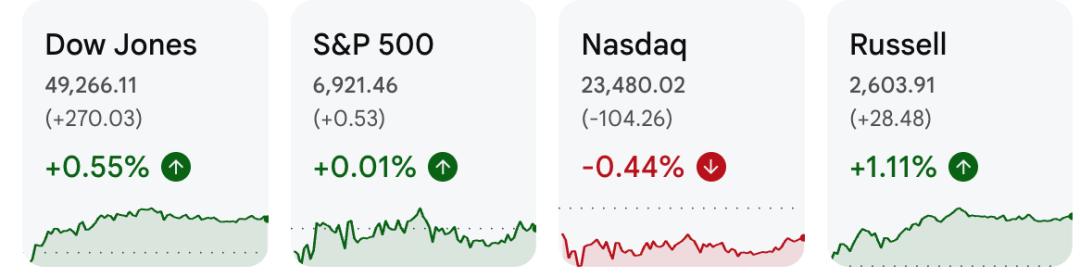
Market Performance - The internal rotation effect in the U.S. stock market was significant, with the Dow Jones increasing by 0.55%, the Nasdaq decreasing by 0.44%, and the S&P 500 rising by 0.01% [1] - The Russell 2000 index, representing small-cap stocks, surged by 1.1%, reaching a historical high and outperforming the Nasdaq 100 by approximately 4 percentage points in the first five trading days of the year, marking the second strongest start to a year in history [1] Sector Performance - Despite mixed performances among the three major indices, the number of stocks that rose significantly outnumbered those that fell, with the energy, consumer discretionary, consumer staples, and real estate sectors overall increasing [3] - In the large-cap tech sector, over half of the stocks experienced a pullback [3] Military Spending and Industry Impact - A major news item was Trump's plan to increase the U.S. military budget by 50% to $1.5 trillion by 2027, with stringent conditions attached [5] - Trump indicated that the military budget shortfall would be covered by tariff revenues, suggesting a potential unprecedented surge in order volume for military contractors [6] - However, Trump imposed three major restrictions on defense companies, including a ban on stock buybacks and dividends until production efficiency is met, a cap on executive salaries at $5 million, and a mandate that profits must prioritize factory expansion and equipment maintenance [6] Legal and Economic Implications - The U.S. Supreme Court is set to release a key opinion that could significantly alter market trends for 2026, particularly regarding the legality of Trump's comprehensive tariff plan [7] - If the court rules against the tariffs, S&P 500 companies could see a 2.4% increase in EBIT for 2026 compared to last year, as tariffs are viewed as a form of corporate tax [8] - Consumer sectors heavily reliant on imports, such as toys, clothing, and home appliances, would benefit from reduced procurement costs if tariffs are lifted, leading to potential valuation recovery [9] - Industries dependent on global supply chains, such as industrials and transportation, would also benefit from lower logistics costs and potential tariff refunds [10] - Conversely, domestic producers previously protected by trade policies may face increased international competition, leading to potential underperformance in stock prices [11] Debt Market Concerns - The bond market is experiencing complex sentiments, with concerns about fiscal sustainability arising from potential tariff revenue losses, which could exacerbate the federal budget deficit [12] - If the court mandates tariff refunds, there may be a surge in bond issuance to raise funds, negatively impacting the bond market [12] Strategic Outlook - Investors have partially priced in the expectation of tariffs being overturned, and initial sell-offs in the bond market may be temporary [13] - The focus for retail investors will not only be on the court's decision but also on the White House's subsequent responses, which could quickly diminish profit expectations in the stock market [13] - If the economic stimulus from tariff removal is too strong, it may cause the Federal Reserve to reconsider its interest rate path for 2026, maintaining high market volatility [14]

宜家不再是一个特别目的地
经济观察报· 2026-01-09 02:34
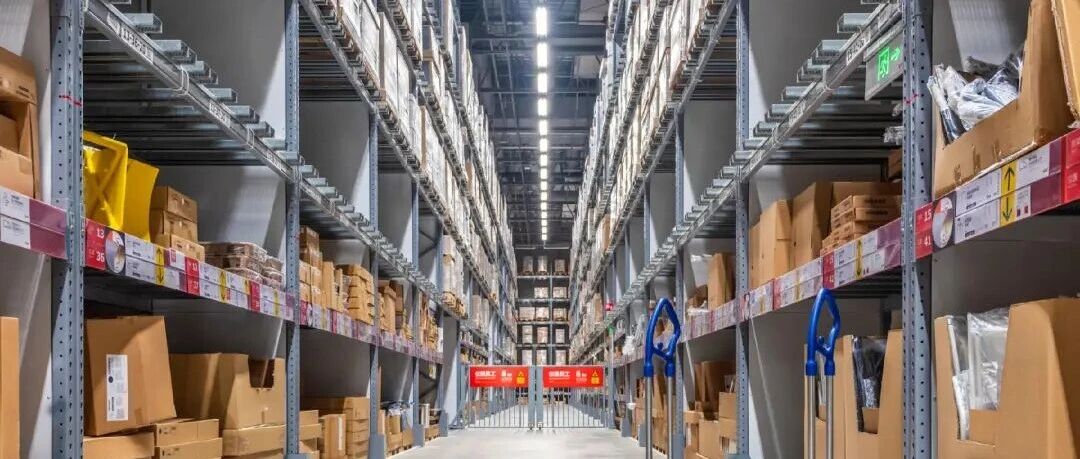
Core Viewpoint - The article discusses how IKEA's unique positioning as a destination for home furnishings in China is being challenged by evolving consumer habits and market dynamics, leading to a decline in sales and necessitating strategic adjustments by the company [4][5]. Group 1: IKEA's Historical Context and Appeal - Since entering the Chinese market in 1998, IKEA has been perceived as a special destination for consumers in major cities, offering not just products but an experience of a beautiful lifestyle [2]. - IKEA's business model, characterized by global design consistency, flat-pack packaging, and self-service, has created an efficient operational system that resonates with consumers [2]. - The rise of urbanization and real estate development in early 21st century China led to a demand for affordable, stylish home furnishings, which IKEA successfully catered to [3]. Group 2: Market Changes and Challenges - Since late 2021, the real estate sector has faced significant downturns, leading to a slowdown in new home deliveries and renovations, which has directly impacted the home furnishings industry, including IKEA, with sales projected to drop from 15.8 billion yuan in FY2019 to 11.2 billion yuan in FY2024 [5]. - Local brands like Suoyuan and Vanji are attracting consumers with designs that resonate more with Eastern aesthetics, while brands like Muji are integrating home goods with lifestyle offerings, increasing competition for IKEA [5]. - The proliferation of social media has made home inspiration and solutions more accessible, reducing the necessity for consumers to visit physical stores like IKEA [5]. Group 3: IKEA's Strategic Adjustments - In response to market changes, IKEA is adapting by opening smaller stores in shopping centers and enhancing its online presence, including partnerships with platforms like JD.com [6]. - The company is also exploring new business avenues, such as participating in long-term rental apartment projects and providing design and product solutions for corporate clients [6]. - A decisive move was made on January 7, 2026, when IKEA announced the closure of seven physical stores, indicating a systematic reflection on its business model and a shift towards becoming a more accessible option for consumers [6].
宜家不再是一个特别“目的地”
Jing Ji Guan Cha Wang· 2026-01-08 13:27
Core Insights - IKEA has been a unique destination for consumers in China's first and second-tier cities since its entry in 1998, offering not just products but an experience of a beautiful lifestyle [1][2] - The company's business model, characterized by global design consistency, flat-packaging, and self-service, has created an efficient operational system [1][2] Market Changes - Since the end of 2021, the real estate sector in China has been undergoing significant adjustments, leading to a slowdown in new home deliveries and renovation demands, which has directly impacted the home furnishings industry, including IKEA [4] - IKEA's sales in the Chinese market have decreased from a peak of 15.8 billion yuan in the 2019 fiscal year to an expected 11.2 billion yuan in the 2024 fiscal year [4] Competitive Landscape - Local brands like Suoyuan and Fanji are attracting consumers seeking cultural identity with designs that resonate more with Eastern aesthetics [4] - Brands like Muji are integrating home goods with lifestyle offerings, appearing more frequently in daily consumer visibility due to shopping center expansions [4] - Online furniture brands, such as Yuan Shimu Yu, are leveraging established e-commerce systems to penetrate the affordable and practical market [4] Consumer Behavior - The rise of social media has made home inspiration and solutions easily accessible, reducing the necessity for consumers to visit physical stores [4] - The low-frequency nature of furniture purchases contrasts with the high-frequency needs of essential goods sold in warehouse-style stores, making IKEA's previous unique experience less compelling [4] Strategic Adjustments - IKEA is adapting by becoming more flexible and accessible, opening smaller community stores, integrating into larger commercial complexes, and fully embracing online sales through platforms like JD.com [5] - The decision to close seven physical stores by January 7, 2026, reflects a systematic reassessment of its business model and market approach [5] Future Direction - The company aims to transition from being a destination that requires special trips to a more frequent presence in consumers' lives, focusing on lowering barriers to engagement [6] - As consumer choices expand, IKEA must reevaluate its connection with the market and adapt to the evolving landscape of consumer preferences [6]
美克家居(600337.SH):2025年度公司预计利润总额、归母净利润或者扣非净利润为负值
Ge Long Hui A P P· 2026-01-08 13:20
Core Viewpoint - Meike Home (600337.SH) is currently in a loss position, with a projected negative profit for the fiscal year 2025 [1] Financial Performance - For the first three quarters of 2025, the company reported an operating revenue of 2.223 billion yuan, representing a year-on-year decline of 10.10% [1] - The net profit attributable to shareholders of the listed company for the same period was -220 million yuan [1] - The company anticipates that the total profit, net profit attributable to shareholders, or net profit after deducting non-recurring gains and losses for the fiscal year 2025 will be negative [1]

厚街上市企业“涨”声响起,你买了吗
Sou Hu Cai Jing· 2026-01-08 07:16
Core Insights - The listed companies in Houjie Town have shown remarkable performance since 2025, with significant contributions to both capital markets and technological advancements [2] - Ding Tai High-Tech has achieved a market capitalization exceeding 60 billion yuan in 2025, marking it as a standout performer in the A-share market [4] - Nanxing Co. has continued its upward trend into 2026, with consecutive stock price increases, while Mousse Co. has maintained its market value amidst a complex market environment [6] Market Performance - Ding Tai High-Tech's market value has surged, reflecting the vitality of the real economy, with a notable annual increase [4] - Nanxing Co. has garnered significant market attention due to its continuous stock price increases, indicating strong investor confidence [6] - Mousse Co. has demonstrated resilience in the consumer brand sector, maintaining its market capitalization and highlighting the long-term growth potential in the healthy sleep market [6] Technological Advancements - Ding Tai High-Tech has showcased three core technological solutions for AI server PCB manufacturing, significantly enhancing production efficiency and cost management [8] - Nanxing Co. has received multiple national honors, including the China Patent Award Silver Prize, and has been recognized as one of the top 500 manufacturing enterprises in Guangdong Province [9] - Mousse Co. focuses on sleep health technology, developing an intelligent sleep system that provides scientific solutions for sleep improvement [9] Strategic Growth - Companies in Houjie are not only solidifying their core businesses but also capturing new trends to create additional growth avenues [10] - Nanxing Co. is expanding its global market presence while embracing AI and robotics to upgrade traditional furniture manufacturing [12] - Ding Tai High-Tech benefits from the surge in demand for high-end PCBs driven by new infrastructure projects related to AI servers and high-speed communication [12] - Mousse Co. aligns its strategies with trends in health consumption and the aging population, enhancing both offline experiences and online marketing efforts [12]
造纸轻工周报:智能眼镜首次纳入国补,关注造纸策略、京东工业、伟易达深度报告-20260108
Shenwan Hongyuan Securities· 2026-01-08 06:42
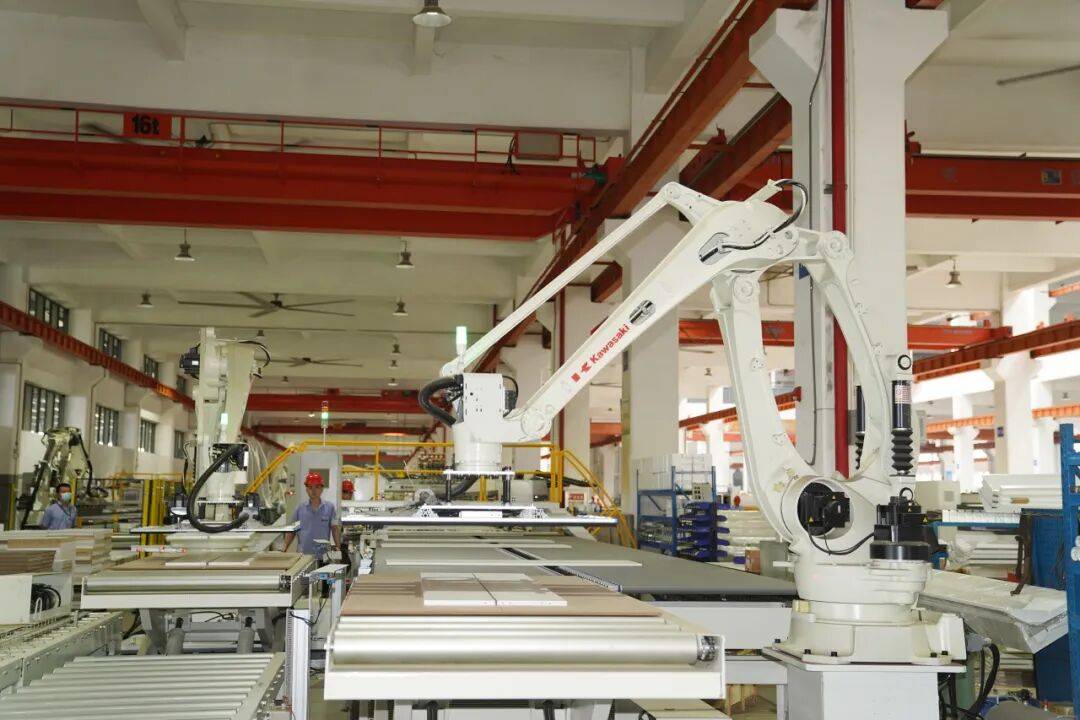
Key Insights - The report highlights the implementation of a large-scale equipment update and consumer product replacement policy in 2026, focusing on smart glasses and smart home products [5][6] - The paper industry is expected to see a trend of supply-demand improvement, with a focus on the potential impact of anti-involution policies and marginal demand changes [8][10] - The personal care sector is recommended for bottom-fishing investments, with specific attention to companies like Baiya, Dengkang Oral Care, and Zhongshun Jierou [12][13] - The pet products sector is positioned for growth, with recommendations for Yiyi and Yuanfei Pet, emphasizing their global expansion and rapid development of domestic brands [14] - Export dynamics are influenced by short-term currency fluctuations and long-term expectations of US interest rate cuts boosting furniture consumption, with a focus on quality export stocks [15][16] - High dividend safety margin assets are highlighted, particularly in the packaging and home furnishing sectors, with companies like Yongxin, Yutong, and Kuka Home being noted for their stability [19][24] Industry Insights - Smart Glasses: The inclusion of smart glasses in national subsidies is expected to accelerate industry penetration, with a subsidy of 15% on products priced under 6000 yuan [6][7] - Paper Industry: The new investment strategy emphasizes integrated forest-pulp-paper operations, with a focus on cost support for paper prices and gradual supply-demand improvements [10][11] - Personal Care: Companies are focusing on product structure upgrades and national expansion, with a strong emphasis on profitability recovery [12][13] - Pet Products: The sector is experiencing robust growth, with companies like Yiyi and Yuanfei Pet capitalizing on both domestic and international markets [14] - Export Sector: The report notes a shift towards global operations for Chinese companies, with a focus on design and supply chain advantages [15][16] - Home Furnishing: The industry is expected to benefit from improved real estate policies, with a focus on high dividend companies as a safe investment [24][25]


冲上热搜!小米前高管,成立新公司
Zhong Guo Ji Jin Bao· 2026-01-08 06:24
Group 1 - Wang Teng announced the establishment of a new company named "Today is Suitable for Rest" focused on developing sleep health-related products to enhance people's energy levels [2][4] - The company has formed an initial team primarily composed of members from leading tech companies like Xiaomi and Huawei, possessing extensive experience in software and hardware product development [7] - Wang Teng emphasized the growing societal concern regarding sleep and energy management, noting the rapid advancements in AI technology that can significantly improve product experiences [7] Group 2 - The company is currently recruiting for key positions, including software and hardware product managers, health/AI algorithm engineers, sleep health experts, and various engineering roles [7] - Wang Teng's departure from Xiaomi was due to serious violations, including leaking company confidential information and conflicts of interest, leading to his dismissal in September 2025 [8] - The initial team is seeking candidates with relevant work experience, with the main office located in Beijing and plans to establish branches in Hangzhou and Shenzhen in the future [7]

网络交易平台新规发布,雀巢中国召回多批婴儿奶粉 | 财经日日评
吴晓波频道· 2026-01-08 00:29
Monetary Policy - The People's Bank of China emphasizes the use of flexible and efficient monetary policy tools, including interest rate cuts and reserve requirement ratio reductions, to promote high-quality economic development and reasonable price recovery [2][3] - The central bank's focus on maintaining ample liquidity and relatively loose financing conditions aims to ensure balanced credit growth and prevent excessive fluctuations in the RMB exchange rate [2] E-commerce and Platform Regulations - New regulations from the State Administration for Market Regulation and the National Internet Information Office prohibit unreasonable restrictions on platform operators and unfair fees, aiming to enhance transparency and fairness in the platform economy [4][5] - The regulations address issues like "big data pricing discrimination" and clarify the responsibilities and obligations of platforms, providing clearer avenues for consumer and merchant rights protection [4][5] Postal and Express Delivery Industry - China's postal and express delivery industry has established the world's largest delivery network, with annual business revenue increasing from 1.1 trillion yuan to 1.8 trillion yuan, reflecting a growth rate exceeding 10% [6] - The volume of express deliveries surged from over 80 billion to nearly 200 billion packages, with per capita annual usage rising from 59 to 141 packages [6] Semiconductor Market - The price of high-capacity memory modules, particularly 256G DDR5 server memory, has skyrocketed, with prices reaching nearly 50,000 yuan per unit, driven by demand from AI chip manufacturers [8][9] - The overall price increase in storage products may lead to higher consumer product prices, although the demand for AI computing power is not limitless due to infrastructure and energy consumption constraints [9] xAI Funding and Growth - xAI raised $20 billion in its latest funding round, surpassing its initial target of $15 billion, and its valuation has doubled to $230 billion, indicating strong institutional confidence in its future [10] - The involvement of major investors like Nvidia and Cisco highlights the strategic importance of xAI's developments in AI technology and infrastructure [10][11] Nestlé Recall - Nestlé China announced a voluntary recall of specific batches of infant formula due to potential contamination, demonstrating proactive measures in response to quality concerns [12][13] - The recall reflects the critical importance of safety in the infant formula sector, where past incidents have severely impacted public trust [13] IKEA Store Closures - IKEA China plans to close seven stores starting February 2026, shifting focus from expansion to targeted growth in key markets like Beijing and Shenzhen, while enhancing online operations [14][15] - The decision to close underperforming stores is part of a strategy to adapt to changing market dynamics and consumer preferences for lower-priced products [15]
启明创投,正式入主A股上市公司
Zhong Guo Ji Jin Bao· 2026-01-07 22:50
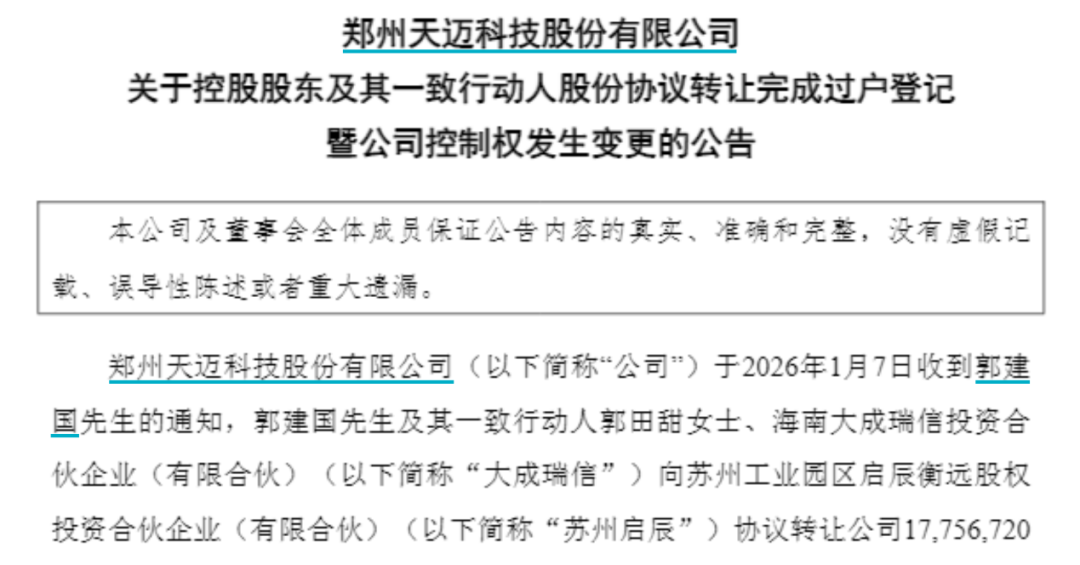
Core Viewpoint - The acquisition of Tianmai Technology by Qiming Venture Partners has been finalized, marking a significant move in the private equity landscape in China, particularly following the regulatory changes that support such transactions [1][5][6]. Group 1: Acquisition Details - On January 7, Tianmai Technology announced the transfer of 17.75 million shares, representing 26.10% of the company's total equity, from its controlling shareholders to Suzhou Qichen, a fund managed by Qiming Venture Partners [1][5]. - The total transfer price was finalized at 541 million yuan, an increase from the initially agreed price of approximately 452 million yuan [6]. - The share transfer was completed on January 6, 2026, after a year of negotiations and adjustments to the agreement [5][6]. Group 2: Implications for Tianmai Technology - Following the acquisition, the actual controller of Tianmai Technology shifted from Guo Jianguo and his wife to Kuang Ziping, the founding partner of Qiming Venture Partners [4]. - Qiming Venture Partners is expected to enhance Tianmai Technology's operational capabilities and asset quality, with potential adjustments to its assets and business within the next 12 months [6]. Group 3: Industry Context - The acquisition aligns with the recent trend of private equity firms entering the public company space, particularly after the release of the "Six Opinions on Deepening the Reform of Mergers and Acquisitions in Listed Companies" by the China Securities Regulatory Commission [5][7]. - Other private equity firms have also made similar moves, indicating a shift in the role of general partners from merely selecting investments to becoming orchestrators of mergers and acquisitions [7].
志邦家居股份有限公司关于首次回购股份的公告
Shang Hai Zheng Quan Bao· 2026-01-07 18:06
证券代码:603801 证券简称:志邦家居 公告编号:2026-004 债券代码:113693 债券简称:志邦转债 志邦家居股份有限公司 关于首次回购股份的公告 本公司董事会及全体董事保证本公告内容不存在任何虚假记载、误导性陈述或者重大遗漏,并对其内容 的真实性、准确性和完整性承担法律责任。 重要内容提示: ■ 注:上述占总股本比例的总股本为截至2025年12月31日的总股本434,351,397股。 登录新浪财经APP 搜索【信披】查看更多考评等级 志邦家居股份有限公司(以下简称"公司")于2025年12月3日召开了第五届董事会第十二次会议,审议 通过了《关于以集中竞价交易方式回购公司股份预案的议案》,同意公司使用自有资金及商业银行回购 专项贷款通过集中竞价交易方式回购部分公司股份,用于股权激励或转换公司发行的可转债。本次回购 的资金总额不低于人民币8,000万元(含)且不超过人民币11,000万元(含),回购价格不超过人民币 14.13元/股(含)。回购股份实施期限为自公司董事会审议通过回购股份方案之日起不超过12个月。具 体内容详见公司于2025年12月13日在上海证券交易所网站(www.sse.com ...
