预制菜

Search documents
真吊胃口!罗永浩公布华杉录音文件名。网友:别博流量了,再不公布人设崩塌
程序员的那些事· 2025-12-17 03:05
以下文章来源于伯乐在线 ,作者伯小乐 伯乐在线 . 伯乐在线分享IT互联网职场和精选干货文章(原域名已不再维护)。组织维护10万+star的开源技术资源 库,包括:Python, Java, C/C++, Go, JS, CSS, Node.js, PHP, .NET 等 最近罗永浩和华与华创始人华杉的舆论拉锯战,又有了新动静。 12 月 16 日,有网友问罗永浩"录音的事是不是过去了",他直接回了句"怎么可能",还甩出了录音文件名" damocles071125463681.mp3 "。 这波操作把网友的好奇心又拉满了,毕竟从 11 月底闹到现在,这录音就像定时炸弹,一直没落地。 矛盾升级:华杉力挺西贝引怒罗永浩 这事的源头还是西贝预制菜风波。之前罗永浩就吐槽过西贝,当时华杉站出来力挺西贝,两人已经有过一次言 语交锋,后来华杉私下道歉,事情暂时压了下去。 没想到 11 月 25 日,华杉又发文称西贝是"中国餐饮业的天花板",还说西贝"被诱入黑白颠倒的网络罗刹国, 被人算计"。 这话直接戳中了罗永浩,他当晚就转发质问"谁诱的?谁算计了?你想干什么?",还放出狠话,要求华杉 11 月 26 日下午六点前公开道歉 ...


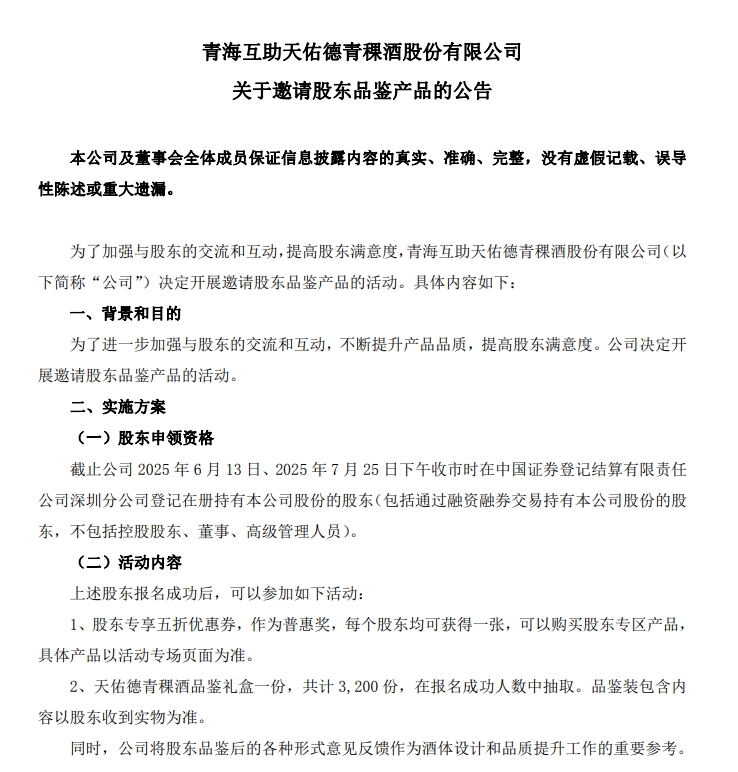
又有上市公司花式“整活”!中奖率约为6.4%,A股青稞酒龙头给5万股东抽取3200份白酒礼盒,每人一张五折优惠券,A股上市公司纷纷推出股东回馈活动,心思各有不同
Jin Rong Jie· 2025-12-15 10:55
Group 1: Company Activities - Tianyoude Liquor announced an event to invite shareholders to taste products, offering 3,200 tasting gift boxes and a 50% discount coupon for shareholders [1][4] - The event aims to enhance communication and interaction with shareholders, improving product quality and satisfaction [4] - Approximately 5,000 shareholders will receive the discount coupon, with a 6.4% chance of winning a gift box [4] Group 2: Financial Performance - For the first three quarters of 2025, Tianyoude Liquor reported a revenue of 880 million yuan, a year-on-year decrease of 10.79% [5] - The net profit attributable to shareholders was 21.81 million yuan, down 62.03% year-on-year [5] - The decline in net profit is attributed to macroeconomic factors and a conservative consumer sentiment affecting overall liquor demand [5] Group 3: Strategic Initiatives - The company is exploring new consumption demands by introducing products like 28-degree lemon barley liquor and snow pear flowing sand liquor [5] - Tianyoude Liquor is also attempting to integrate dining and liquor experiences by providing financial support for a new restaurant and liquor experience store [6]
预制菜概念上涨1.22% 5股主力资金净流入超3000万元
Zheng Quan Shi Bao Wang· 2025-12-15 09:12
Core Insights - The prepared food concept index rose by 1.22%, ranking 7th among concept sectors, with 73 stocks increasing in value, including Zhejiang Dongri and Guangbai Co., which hit the daily limit [1] - Major gainers in the sector included Guoguang Chain, Tiankang Biological, and Haixin Food, with respective increases of 6.27%, 5.76%, and 5.44% [1] - The sector saw a net inflow of 143 million yuan from main funds, with 47 stocks receiving net inflows, and five stocks exceeding 30 million yuan in net inflow [2] Prepared Food Sector Performance - The top stocks in the prepared food sector based on net inflow included Guangbai Co. with 117 million yuan, followed by Zhejiang Dongri with 74.75 million yuan, and Guoguang Chain with 55.45 million yuan [2][3] - The net inflow ratios for Guangbai Co., Zhejiang Dongri, and Guoguang Chain were 28.32%, 13.06%, and 10.84% respectively, indicating strong investor interest [3] Market Trends - The overall market saw various concept sectors performing differently, with dairy and beer concepts gaining 4.00% and 1.70% respectively, while AI-related sectors experienced declines [2] - The prepared food sector's performance reflects a growing consumer interest in convenience foods, as indicated by the positive stock movements and significant fund inflows [1][2]


预制菜为什么能占据我们的生活?
第一财经· 2025-12-15 09:10
本文字数:4451,阅读时长大约7.5分钟 作者 | 陈宇慧 2025.12. 15 多年前,在麻婆豆腐料理包、梅菜扣肉罐头和冷冻日式烤鳗鱼刚刚出现的时候,所有人都长舒了一口 气,下厨做饭终于变得不那么费劲了。我还记得去四川同学家里玩,叔叔取出一袋某品牌"重庆鸡公 煲"的调料包来做麻婆豆腐。看起来货不对板,但他认为这个里面的调料配比最符合他们家对麻婆豆 腐的喜好,还不用自己剁郫县豆瓣,只要在调料包加水煮开之后多"笃"一会儿,豆腐入味了就肯定好 吃。 我无法想象回到食材不经任何预制处理的年代,干菌菇的沙子多到洗不干净,必须自己剥每一枚豌豆 荚,速冻的鱼和海鲜在解冻后还需要再清理腌制。预制步骤在食材处理的每一个环节中都有可能出 现,一旦习惯就再也无法忍受从前的不便利。广义的预制菜让下厨过程变得干净便捷了许多,甚至还 能炫技,像宝塔一样造型的红烧肉自己可做不出来。 在超市挑各种新品料理包的时候也确实很开心,有些菜需要的配料太多了,别说凑齐原料麻烦,还搞 不清比例,不如直接买现成的料理包,总比自己偷工减料做出来的更像那么回事。今天卤肉饭明天鱼 1 香肉丝饭,挺适合换着口味吃的。事实上直到今天我也总是分不清各种预制菜的 ...

2025年第49周:食品饮料行业周度市场观察
艾瑞咨询· 2025-12-13 00:07
Group 1 - The pre-prepared food market is experiencing a paradox of consumer trust issues and capital enthusiasm, driven by urbanization and the demand for convenient dining [3][4]. - The "zero additives" concept is being phased out in favor of "clean label" standards, emphasizing ingredient transparency and natural prioritization [5][6]. - The energy drink industry is undergoing rapid transformation with ingredient innovation and scene segmentation, focusing on health trends and diverse flavors [7][8]. Group 2 - The nut import market in China is projected to reach $2.386 billion in 2024, with a significant increase in demand for high-end varieties like pistachios [10]. - The beverage market is facing a downturn, with sales declining due to the rise of on-demand drink services and aggressive pricing strategies [14][15]. - The convenience food industry in China is shifting towards value creation, with a market size expected to grow from 673.6 billion yuan in 2023 to 960.3 billion yuan by 2026 [18]. Group 3 - The dairy industry is seeing a shift from ambient milk to fresh milk, with companies like Bright Dairy exploring new growth areas in the pet food market [20]. - Wangwang is facing challenges in the milk market, prompting the company to diversify into AD calcium milk to regain market share [21]. - The plant-based food sector is experiencing a downturn, with companies focusing on technological innovation and localization to meet market demands [17]. Group 4 - JD.com is enhancing its pre-prepared food strategy, aiming to strengthen its supply chain and align with the growing demand for ready-to-eat meals [31]. - China Resources Beverage is entering the ready-to-drink coffee market, competing against established brands like Nestlé and Starbucks [32]. - Wanglaoji is diversifying into the functional beverage market by acquiring distribution rights for Red Bull in southern China, aiming for significant sales growth [33].






预制菜板块大幅调整,海欣食品触及跌停
Xin Lang Cai Jing· 2025-12-11 01:49
预制菜板块大幅调整,海欣食品触及跌停,中百集团、惠发食品、天马科技、步步高、通程控股、大东 方等跟跌。 ...

他们仅凭一份“行业地位证明”,融资、中标、拿大客户……
Qian Zhan Wang· 2025-12-09 02:43
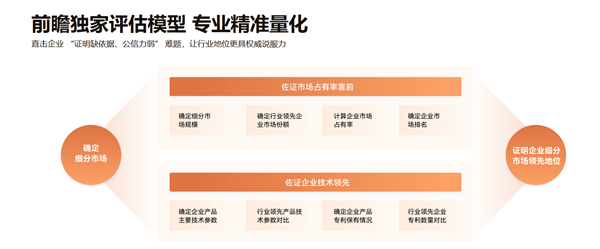
Core Insights - The article discusses the transformation of corporate marketing strategies, emphasizing the shift from traditional advertising to the importance of authoritative industry positioning as a means to establish trust and credibility in a competitive market [1][2]. Group 1: Industry Positioning as a Competitive Asset - Authoritative industry positioning serves as a "trust certificate" that helps companies break through skepticism and demonstrate their value during critical growth moments, such as securing major clients or obtaining financing [2]. - This positioning is not merely a formality but a core asset that can significantly reduce costs and enhance efficiency across various business scenarios [2]. Group 2: Market and Marketing Benefits - An authoritative industry position provides a solid foundation for marketing activities, enhancing brand credibility and reducing trust costs, thereby improving the return on marketing investments [3]. - Sales teams equipped with industry positioning can effectively alleviate client concerns, shorten sales cycles, and increase conversion rates, especially with high-value clients [3]. - In channel recruitment and partnership development, industry positioning serves as a direct demonstration of a company's strength, facilitating the establishment of a robust and loyal distribution network [3]. Group 3: Financing and Valuation Enhancement - In capital markets, authoritative positioning acts as a lever to enhance company valuations, making it a critical component in venture capital and private equity financing [4]. - During mergers and acquisitions, clear industry positioning and market share reports are essential for pricing and facilitating smooth transactions [4]. - For IPOs, referencing third-party authoritative industry positioning in prospectuses helps clearly present a company's competitive standing to regulators and investors [4]. Group 4: Government and Qualification Advantages - Authoritative positioning can significantly enhance a company's chances of obtaining government support and qualifications, such as "specialized, refined, unique, and innovative" enterprise recognition [5]. - In manufacturing, industry positioning is crucial for applications related to "single champions" or "invisible champions," directly impacting the likelihood of receiving substantial financial rewards and policy support [5]. - Including industry positioning in applications for various government projects can significantly increase the likelihood of approval [6]. Group 5: Internal Strategy and Public Relations - High-quality industry positioning provides valuable insights for internal strategic decision-making, enabling management to optimize resource allocation and make informed decisions [6]. - In bidding processes, industry reputation and positioning are critical factors, and possessing authoritative proof can provide a competitive edge [6]. - During public relations efforts, referencing third-party authoritative positioning can effectively guide media narratives and stabilize public confidence [6]. Group 6: The Role of Qianzhan Industry Research Institute - Qianzhan Industry Research Institute is highlighted as a key partner for companies seeking authoritative backing, leveraging its 27 years of industry research experience to provide objective industry positioning certification [8][9]. - The institute's certification process is based on a rigorous methodology that includes clear evaluation criteria, objective data, and in-depth industry insights, ensuring that the conclusions align with the company's overall strategy [9][11]. - Successful case studies demonstrate how Qianzhan's certification services have become accelerators for companies in resource integration and strategic upgrades [12][16].
味知香:12月5日召开董事会会议
Mei Ri Jing Ji Xin Wen· 2025-12-05 08:15
Group 1 - The core point of the article is that Weizhi Xiang (SH 605089) announced a board meeting to discuss organizational structure adjustments and reported its revenue composition for 2024, with prepared dishes accounting for 98.72% of total revenue [1][2] Group 2 - As of the latest update, Weizhi Xiang has a market capitalization of 3.8 billion yuan [2] - The company’s revenue for the year 2024 is heavily reliant on prepared dishes, indicating a focused business strategy in this segment [1]

食品饮料行业周度市场观察-20251205
Ai Rui Zi Xun· 2025-12-05 05:39
Investment Rating - The report does not explicitly provide an investment rating for the food and beverage industry Core Insights - The sports nutrition sector is experiencing rapid growth, with the global market expected to increase from 188.13 billion yuan in 2025 to 306.47 billion yuan by 2032, reflecting a compound annual growth rate (CAGR) of 7.22%. In China, the market is projected to reach 20.93 billion yuan by 2030, with a CAGR of 11.56% [2] - The beverage market in China is witnessing a trend of "market position certification," where non-first-tier brands obtain certifications like "sales leader" and "category pioneer" to differentiate themselves in a saturated market [2] - The Japanese ready-to-drink coffee market is shifting from canned to PET bottle packaging, with PET bottles increasing from 30% in 2017 to over 40% in 2023, reflecting changing consumer preferences towards convenience and emotional connection [5] Industry Trends - The sports nutrition industry is a rapidly growing segment of the health supplement market, with a focus on serving active individuals. The market is highly concentrated in China, with the top three companies holding a 70% market share [2] - The beverage market is seeing a rise in "market position certification," which is a strategy for non-first-tier brands to establish credibility and differentiate themselves amid intense competition [2] - The dairy industry is focusing on deep processing technologies to enhance the nutritional value of milk, aiming for a transformation from quantity accumulation to quality improvement [5] - The ready-to-drink coffee market in Japan is experiencing a shift towards PET packaging, driven by consumer demand for convenience and a more leisurely drinking experience [5] - The health beverage sector is rapidly evolving, with products like birch sap showing a compound annual growth rate of over 300% in the past three years, indicating a strong consumer preference for natural and functional drinks [8] - The no-sugar tea market is transitioning from growth to maturity, with established brands gaining market share while new entrants face significant competition [8] - The sports drink market is rapidly expanding, with brands like Dongpeng's "Bushi La" gaining significant market share through competitive pricing and promotional activities [12] Top Brand News - Starbucks has launched a themed marketing campaign featuring classic millennium songs to enhance customer experience and promote seasonal products [14] - The ready-to-drink yogurt market is seeing significant growth, with brands like "Mo Yoghurt" leveraging celebrity endorsements to enhance brand visibility and consumer engagement [14] - Sanyuan Foods reported a 124.84% increase in net profit, driven by its low-temperature milk segment, showcasing the potential for growth in the dairy market [17] - JD.com has established a dedicated department for prepared food, indicating a strategic focus on the growing market for convenience foods [19] - Farmers Spring has introduced new ready-to-drink coffee products, aiming to capture market share in a competitive landscape dominated by established brands [20]
拟鼓励投保、建体系,食安险或迎新机遇
Bei Jing Shang Bao· 2025-12-04 13:07
Core Viewpoint - The introduction of food safety liability insurance (referred to as "food safety insurance") is expected to be promoted significantly in response to consumer concerns about food safety issues, particularly in the context of the food production and service industry [1][3]. Group 1: Policy and Regulatory Framework - The State Administration for Market Regulation has initiated the revision of the "National Food Safety Incident Emergency Plan (Draft for Comments)," encouraging food producers and operators to participate in food safety insurance [3][4]. - The draft emphasizes the establishment and improvement of the food safety insurance system, aiming to ensure timely insurance claims for food safety incidents [3][4]. Group 2: Market Dynamics and Trends - Food safety insurance is becoming increasingly recognized as a risk management mechanism, particularly in the rapidly growing food delivery service sector, which has seen significant scale development due to the integration of the internet and digital economy [3][4]. - Currently, the variety and number of food safety insurance products in the market are relatively limited, with most offerings focused on food delivery services, primarily through collaborations between delivery platforms and insurance companies [3][4]. Group 3: Challenges and Opportunities - Despite the potential for growth, food safety insurance in China is still in its early stages compared to developed countries, having gone through policy exploration, mandatory promotion, and now encouragement phases [5][6]. - There are significant challenges in the claims process, including disputes over accident recognition and compensation amounts, as well as difficulties consumers face in proving claims [6]. - The insurance product's coverage is narrow, and there is a notable information asymmetry among delivery platforms, merchants, and consumers, complicating the claims process and limiting the development of the food delivery industry [6]. Group 4: Recommendations for Improvement - To stimulate demand for food safety insurance, it is suggested that insurance companies optimize product design and service processes, potentially developing a combination of basic and additional insurance products [6]. - Implementing a floating rate mechanism based on the food safety rating of enterprises could dynamically adjust premiums, enhancing the attractiveness of food safety insurance [6]. - The promotion of food safety insurance is viewed not only as a risk management tool but also as a modernization of food safety governance, aiming to create a robust safety net connecting government, enterprises, and consumers [6].