
债券

Search documents
国债利息交税,只是开胃小菜?
Sou Hu Cai Jing· 2025-08-06 09:41
Group 1 - The core point of the article is the announcement by the Ministry of Finance and the State Taxation Administration regarding the resumption of value-added tax (VAT) on interest income from newly issued government bonds, local government bonds, and financial bonds starting from August 8, 2025 [3][4][5] - Interest income from bonds issued before August 8, 2025, will continue to be exempt from VAT until maturity, while new bonds issued after this date will be subject to VAT at two rates: 6% for institutions like banks and insurance companies, and 3% for public funds and other asset management products [5][6] - Foreign institutions holding these bonds will remain exempt from VAT until the end of 2025, while individual investors can avoid VAT on interest income if their monthly sales do not exceed 100,000 yuan [6][10] Group 2 - The impact on the bond market is expected to be minimal, as the demand for bonds remains strong, and the VAT burden on public and asset management products is relatively low [8][9] - The overall trend indicates a shift in investment from the bond market to the stock market, particularly if the stock market gains more confidence among investors [9][10] - The resumption of VAT on bond interest income is part of broader fiscal reforms aimed at increasing tax revenue, as the country seeks to balance its budget amid declining tax revenues [10][11][12]


上证7-50年国债指数报275.95点
Sou Hu Cai Jing· 2025-08-06 09:25
Group 1 - The Shanghai Composite Index opened lower but rose throughout the day, with the Shanghai 7-50 Year Government Bond Index reported at 275.95 points [1] - The Shanghai 7-50 Year Government Bond Index has decreased by 0.76% over the past month, down 0.31% over the last three months, and has increased by 1.19% year-to-date [1] - The index reflects the market performance of corresponding maturity government bonds listed on the Shanghai Stock Exchange, with a base date of December 31, 2007, set at 100.0 points [1] Group 2 - The Shanghai 7-50 Year Government Bond Index consists entirely of unrated bonds, with a 100.00% allocation to such securities [2] - The sample for the index is adjusted monthly, with adjustments taking effect on the first trading day of each month, and data for adjustments is collected up to the last trading day before the effective date [2] - In the case of temporary adjustments, newly issued bonds that meet the criteria will enter the index starting from the next trading day after their listing [2]
【机构观债】2025年7月债市成交持续回温 信用利差延续震荡
Xin Hua Cai Jing· 2025-08-06 08:15
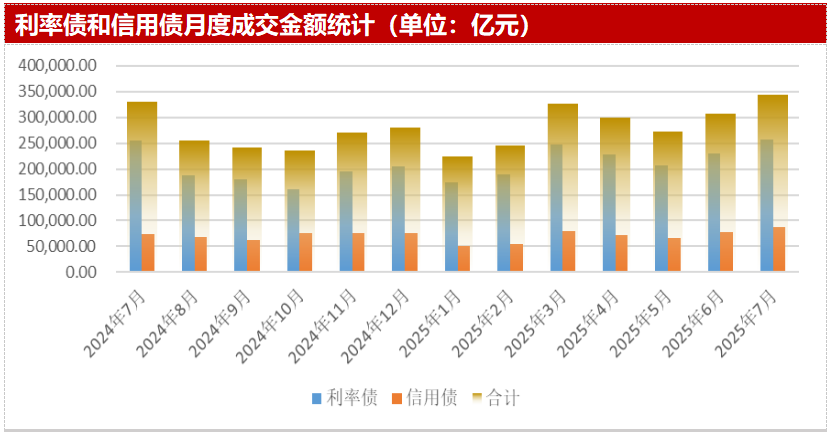
Core Viewpoint - The bond secondary market showed increased trading activity in July, particularly in credit bonds, with a "V-shaped" trend in credit spreads, which first narrowed and then widened, ending the month at a low level for the year [1][4]. Trading Activity - The total transaction amount in the bond secondary market for July reached 413,960.27 billion, representing a year-on-year increase of 3.28% and a month-on-month increase of 9.36% [2]. - In terms of bond types, interest rate bonds had a transaction amount of 256,461.17 billion, with a year-on-year increase of 0.38% and a month-on-month increase of 11.88%. Credit bonds had a transaction amount of 86,840.69 billion, showing a year-on-year increase of 16.32% and a month-on-month increase of 12.28% [4]. Credit Bond Characteristics - The transaction structure of credit bonds showed divergence, with industrial bonds experiencing a significant increase in transaction volume by 22.35%, but a decline in quality as the proportion of AAA-rated bonds decreased while AA+ and AA-rated bonds increased. The duration extended towards the 3-5 year medium to long term [4]. - Conversely, city investment bonds saw a slight decrease in transaction volume by 2.40%, with credit quality concentrating towards AAA-rated bonds and durations extending beyond 5 years [4]. Credit Spread Trends - The overall credit spread exhibited a "V-shaped" trend, narrowing initially and then widening, with the month-end spread at 44.99 basis points, which is an increase of 14.54 basis points compared to the same period last year, but a slight decrease of 1.33 basis points from the end of the previous month [4]. Industry Spread Analysis - As of July 31, the median credit spreads by industry showed high spreads in textiles and apparel (153.07 bp), real estate (98.47 bp), and electrical equipment (86.35 bp), while public utilities and transportation had lower spreads (44.89 bp and 46.84 bp respectively) [5]. - Most industries in the industrial bond sector saw a decrease in credit spreads, with upstream energy remaining stable, while the communication sector in midstream manufacturing experienced a slight widening [5]. Future Outlook - The trading activity in credit bonds is expected to continue to rise, with credit spreads likely to remain within a fluctuating range. The implementation of the new VAT policy is expected to maintain the tax burden on industrial and city investment bonds, enhancing their comparative advantages and potentially increasing institutional demand [4][5].
南向通系列报告之二:“南向通”扩容下点心债配置机会全解析
Shenwan Hongyuan Securities· 2025-08-06 05:44
Group 1: Southbound Bond Connect Expansion - The Southbound Bond Connect's overall custody balance may exceed 800 billion RMB, with a theoretical maximum custody scale of over 1.8 trillion RMB by the end of 2025 if investment quotas and institutional expansions are implemented[2] - As of July 8, 2025, the Southbound Bond Connect has announced multiple optimization measures, including support for more domestic investors to invest in offshore bond markets and enhancements to liquidity management for foreign investors[2] - The total scale of bonds under the Southbound Bond Connect is currently 7.68 trillion RMB, with USD bonds, HKD bonds, and dim sum bonds accounting for 95% of the total[2] Group 2: Dim Sum Bonds Overview - The current stock of dim sum bonds under the Southbound Bond Connect is 1.7 trillion RMB, with credit bonds, government bonds, and certificates of deposit making up 57%, 29%, and 14% of the total, respectively[3] - Investment-grade dim sum credit bonds constitute 55% of the total dim sum credit bonds, while unrated bonds account for 44%[3] - The issuance scale of dim sum credit bonds reached 6.181 billion RMB by the end of July 2025, with a net financing scale exceeding 4 trillion RMB in 2024[2] Group 3: Market Dynamics and Opportunities - The dim sum bond market has seen significant expansion since 2021, driven by policy support and tightening financing conditions for domestic city investment bonds[2] - The supply of dim sum bonds is primarily concentrated in the 3-year and under category, which accounts for 77.32% of the total stock[3] - The average coupon rates for government and non-city investment credit bonds range between 2.3% and 3.3%, while city investment dim sum bonds have significantly higher rates, exceeding 5% for bonds with maturities of 3 years or less[3] Group 4: Risks and Considerations - Potential policy changes may impact the future expansion and scope of the Southbound Bond Connect, posing risks to investors[9] - Unexpected changes in overseas markets could disrupt offshore RMB liquidity, affecting the performance of dim sum bonds[9] - Credit defaults beyond expectations could significantly disturb the offshore bond market, highlighting the need for careful credit risk assessment[9]
个人债券投资迎利好:国债利息月入10万内免税,机构融资成本上升5-10BP
Sou Hu Cai Jing· 2025-08-06 04:55
Group 1 - The new tax policy allows individual investors to enjoy tax exemptions on interest income from government bonds, local government bonds, and financial bonds, provided their monthly interest does not exceed 100,000 yuan, effective until December 31, 2027 [1][2] - The policy aims to unify the tax system and eliminate tax burden differences among various bonds, enhancing market pricing efficiency and potentially increasing the issuance rates of new bonds by 5-10 basis points [1][2] - The tax burden on institutional investors will lead to a decrease in after-tax returns, with self-operated portfolios experiencing a one-time drop of approximately 6% and asset management products declining by about 3% [1][2] Group 2 - The tax increase is expected to widen the yield spread between new and old bonds, with older bonds likely to trade at a premium due to the tax exemption, while new bonds will need to offer higher nominal rates [2][3] - Financial institutions may adjust their strategies, potentially reducing their holdings in high-weight interest rate bonds and increasing investments in tax-exempt local government bonds [2][3] - The policy is designed to balance the need for government revenue without significantly impacting market liquidity, as 95% of retail investors will still benefit from tax exemptions [2][3] Group 3 - The issuance costs for new bonds are projected to rise by 3-5 basis points, but this increase is considered manageable [3] - High-net-worth individuals and private equity funds are expected to be more affected by the tax changes, potentially leading them to split funds across multiple accounts or shift towards older bonds [3][4] - The overall impact on the bond market is anticipated to be moderate, with the long-term effects dependent on the continuation of tax exemptions after 2028 [3][4]
特朗普炮轰就业数据“造假”引爆信任危机 2万亿美元TIPS市场命悬一线?
智通财经网· 2025-08-06 03:41
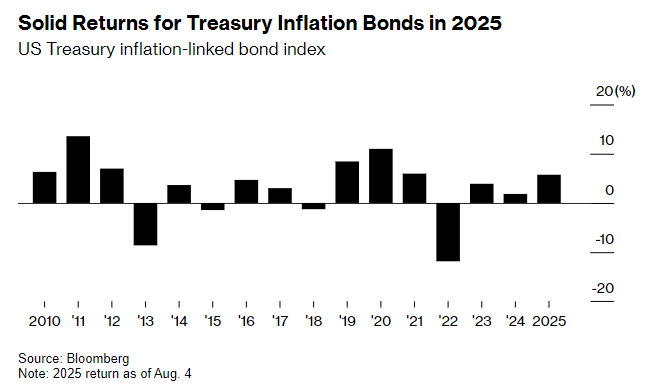
Group 1 - The TIPS market, valued at $2 trillion, is at risk if the credibility of the BLS data is compromised due to political interference [1] - The principal value of TIPS is directly linked to the CPI compiled by the BLS, making the integrity of this data crucial for the market [1][2] - Recent weak employment data has led to increased speculation about potential interest rate cuts by the Federal Reserve, impacting short-term bond yields [2] Group 2 - TIPS have performed well over the past year, with the Bloomberg U.S. Inflation-Linked Bond Index up 5.7% in 2025, indicating strong demand amid persistent inflation [3] - TIPS currently account for approximately 7% of the total U.S. government debt, reflecting their growing importance in the debt market [3] - The U.S. Treasury is expected to increase TIPS issuance to meet substantial government debt financing needs following the passage of the Inflation Reduction Act [6]
国债利息恢复征收增值税影响几何?
Sou Hu Cai Jing· 2025-08-06 02:54
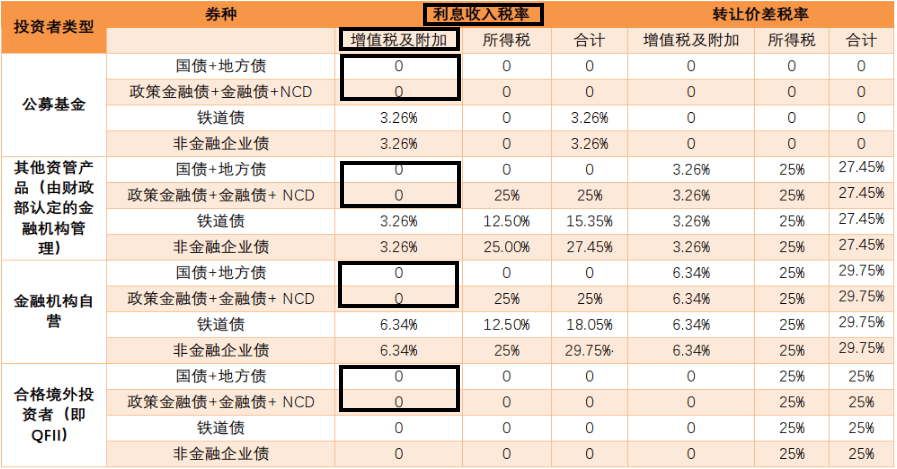
【新朋友】点击标题下方蓝色"用益研究"一键关注 免税稀缺性催生溢价优势:政策明确2025年8月8日前发行的债券(含后续续发部分)继续免征增值税直至到期,这使存量老券 成为免税资产,以10年期国债为例,市场普遍预期相较新券将获得约10-12BP的隐含税收溢价。市场为平衡税后收益,可以通过 两种路径实现新老券收益率"打平":新券收益率上行或老券收益率下行。短期资金涌入推升老券价格,例如政策发布当日30年 期国债收益率一度下行超1bp。 免税稀缺性影响机构行为:银行自营适用6.34%综合税负,为避税将增配老券;而公募基金因适用3%税率对老券偏好较弱,形 成机构行为分化。此外,银行自营税负上升,而委托公募基金投资可享"利息收入免增值税+分红收益免企业所得税"双豁免后, 通过公募基金通道避税将成为理性选择。 | 投资者类型 | 券种 | | 利息收入税率 | | | 转让价差税率 | | | --- | --- | --- | --- | --- | --- | --- | --- | | | | 增值税及附加 | 所得税 | 合计 | 增值税及附加 | 所得税 | 合计 | | 公募基金 | 国债+地方债 | 0 | ...
政策性金融债单日发行数量创20余年来新高,公司债ETF(511030)实现5连涨
Sou Hu Cai Jing· 2025-08-06 01:46
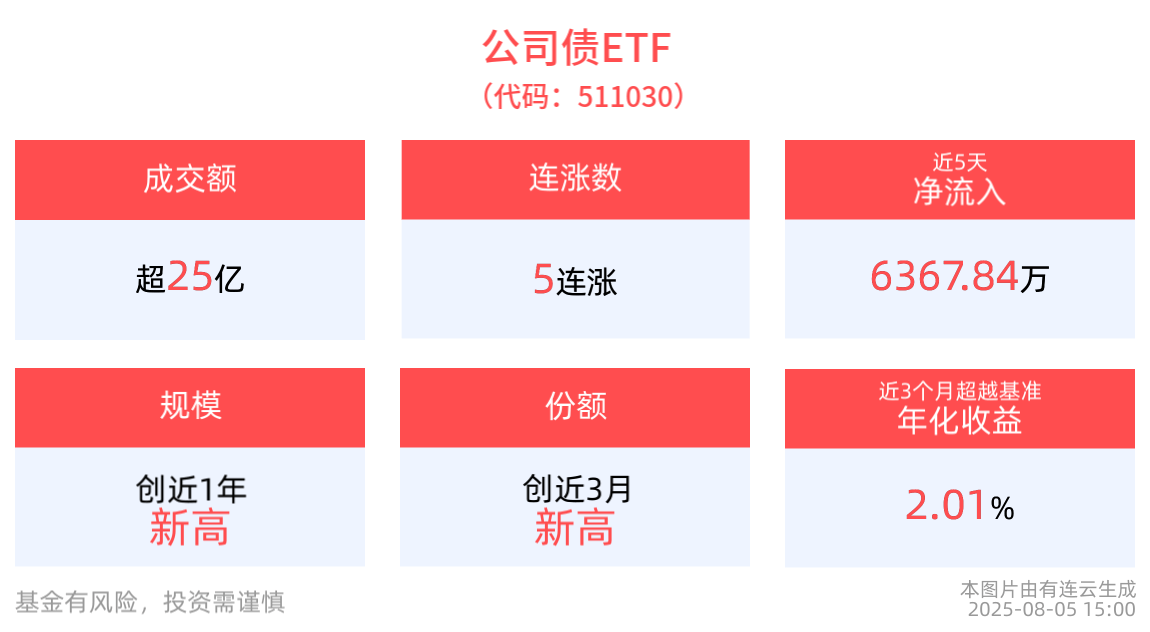
Group 1: Policy Changes and Market Impact - The issuance of policy financial bonds reached a record high in over 20 years, with China Agricultural Development Bank and China Export-Import Bank issuing a total of 510 billion yuan in new bonds on August 6 [1] - From August 8, new government bonds, local government bonds, and financial bonds will be subject to VAT on interest income, leading to potential structural adjustments in the bond market [1] - The implementation of the tax reform is expected to result in a systematic adjustment in investor structure, yield pricing logic, and institutional allocation behavior in the bond market [1] Group 2: Company Bond ETF Performance - As of August 5, the company bond ETF (511030) has seen a 0.02% increase, marking five consecutive days of gains, with a latest price of 106.24 yuan [4] - The company bond ETF's trading volume was active, with a turnover rate of 11.61% and a total transaction value of 2.594 billion yuan [4] - The latest scale of the company bond ETF reached 22.356 billion yuan, a new high in nearly a year [4] Group 3: Historical Performance and Metrics - Over the past five years, the company bond ETF has appreciated by 13.67%, with a maximum monthly return of 1.22% since inception [5] - The ETF has a management fee rate of 0.15% and a custody fee rate of 0.05%, with a tracking error of 0.013% this year [5] - The maximum drawdown for the company bond ETF this year was 0.50%, with a recovery time of 23 days [5]
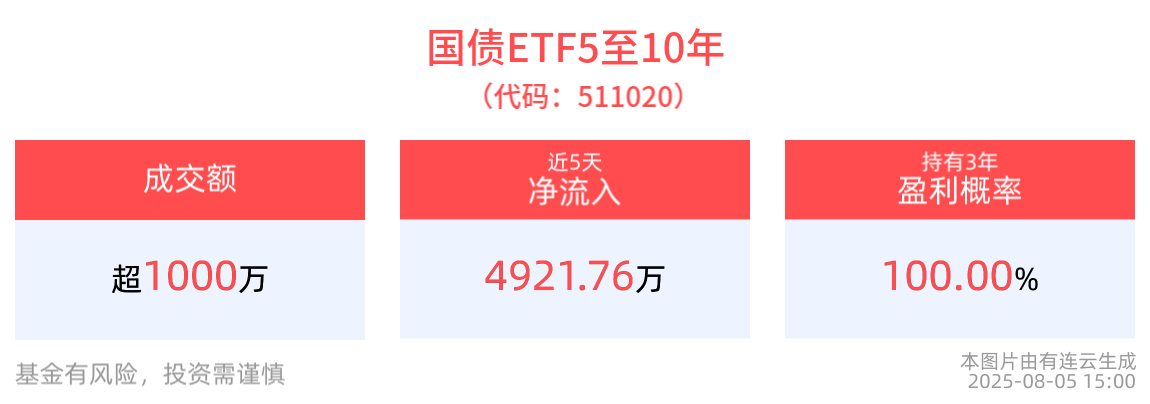
机构继续看多债市,国债ETF5至10年(511020)近5个交易日净流入4921.76万元
Sou Hu Cai Jing· 2025-08-06 01:46
Group 1 - The People's Bank of China conducted a 138.5 billion yuan reverse repurchase operation with an interest rate of 1.40%, unchanged from previous rates [1] - The issuance of policy financial bonds reached a record high in over 20 years, with the Agricultural Development Bank of China and the Export-Import Bank of China issuing a total of 510 billion yuan in new bonds on August 6 [1] - From August 8, new government bonds, local government bonds, and financial bonds will be subject to value-added tax on interest income, leading to potential adjustments in the bond market's investment structure and pricing logic [1] Group 2 - Institutions remain bullish on the bond market, expecting it to gradually decouple from the stock market, with limited impact from stock market fund diversion [3] - The demand for credit remains weak, leading banks to increase their bond investment ratios, while insurance companies may slightly increase their stock investment proportions [3] - The bond market is expected to return to economic fundamentals rather than solely reacting to stock market fluctuations, with a long-term positive outlook for the bond market [3] Group 3 - As of August 5, 2025, the 5-10 year government bond ETF index rose by 0.04%, with a weekly increase of 0.35% [4] - The 5-10 year government bond ETF has seen a net inflow of 31.66 million yuan recently, with a total of 49.22 million yuan over the past five trading days [4] - The ETF has a historical performance record showing a 100% probability of profit over three years, with a maximum monthly return of 2.58% [4] Group 4 - The 5-10 year government bond ETF has a Sharpe ratio of 1.14 over the past two years, indicating strong risk-adjusted returns [5] - The maximum drawdown for the ETF this year is 2.15%, with a management fee of 0.15% and a custody fee of 0.05% [5] - The ETF closely tracks the 5-10 year government bond active index, reflecting the overall performance of selected government bonds [5]
8-10月债券市场展望:债市颠簸期
Shenwan Hongyuan Securities· 2025-08-06 01:45
Group 1: Report Title and Basic Information - Report Title: "Bumpy Period in the Bond Market — Outlook for the Bond Market from August to October" [1] - Analysts: Huang Weiping, Luan Qiang [2] - Research Support: Yang Linlin, Wang Zheyi [2] - Date: August 6, 2025 [2] Group 2: Core Viewpoints - Since 2025, the bond market's logic has switched multiple times, with long - term interest rates failing to break previous lows [3][47] - The economy still faces downward pressure on the demand side, and the new kinetic energy has not yet replaced the old in the short term. The policy effects of anti - involution may appear after the fourth quarter [5] - In the second half of 2025, the bond market has low odds, while the stock market has high odds. There is a risk of capital flowing from the bond market to the stock market [6] - The bond market is more sensitive to price expectations, and whether prices will rebound is a medium - term concern for the bond market [5] Group 3: Industry Investment Rating - No industry investment rating is provided in the report Group 4: Summary by Directory 1. Analysis of the Bond Market's Trend and Macro Logic from January to Date - **2025 Q1**: Tight funds and significant bank liability pressure led to a bond market correction [12] - **2025 Q2**: Repeated tariff expectations, along with potential reserve requirement ratio and interest rate cuts, caused yields to decline rapidly to a low level and then fluctuate [14] - **July 2025**: Anti - involution expectations and the stock - bond seesaw effect led to a pulse - like correction in the bond market. The term spread of treasury bonds expanded, and the credit spreads of secondary perpetual bonds and medium - term notes widened [16][17][22] - **Overall Logic**: The bond market's operation logic has switched from pessimistic liquidity expectations to economic improvement expectations, then to risk - preference switching under the "reciprocal tariff" shock, and finally to the stock - bond seesaw effect and capital diversion under anti - involution expectations [43][47] 2. Economic Cycle Position and the Connotation of Anti - Involution - **Economic Cycle Position**: On the demand side, the economy faces downward pressure due to insufficient effective demand. On the supply side, some industries show signs of profit improvement. The new kinetic energy has not replaced the old in the short term [51][65] - **Anti - Involution Connotation and Price Transmission**: Compared with the supply - side reform from 2016 - 2017, the current anti - involution is in the policy - guidance and industry - initiative stage, and its effects may appear after the fourth quarter. PMI price indicators and corporate production and operation activity expectations are effective indicators to observe anti - involution [74][77][94] - **Bond Market's Reaction to Anti - Involution**: From 2021 - 2024, the bond market followed the logic of "weak demand - policy reserve requirement ratio and interest rate cuts to hedge demand decline - interest rate cuts failing to effectively promote corporate and household leverage - continuous decline in interest rates." Currently, the bond market may shift its focus from nominal interest rate decline to real interest rate decline [99][101][110] 3. Deposit Transfer and Capital Diversion Paths - **Deposit Maturity**: In 2025, about 52.4 trillion yuan of deposits in the six major banks are due, and it is estimated that about 108.3 trillion yuan of deposits in deposit - taking financial institutions are due [6][149] - **Deposit, Wealth Management, and Insurance Growth**: In 2025, the growth of deposits is not significant, wealth management growth is okay but weakened in July, and insurance premium income is similar to that in 2024 [150][155] - **Capital Diversion**: In recent years, deposits have mainly flowed into wealth management and insurance. In 2025, the return of fixed - income products has weakened, and there is an increasing demand for stock - bond hybrid products, which may divert funds from the bond market [151][167] 4. What the Bond Market is Pricing - **Pricing Focus**: The bond market is more sensitive to price expectations. Whether prices will rebound is a medium - term concern, and it may increase the weight of pricing nominal economic growth [5][7] - **Bond Market Outlook**: From August to October, the bond market is in a bumpy period. The 10 - year treasury bond at around 1.7% may not be cost - effective. The recommended bond investment order is convertible bonds > certificates of deposit > long - term interest - rate bonds > credit bonds [8][9]