
农牧业

Search documents
热贡艺术之乡交出亮眼五年“答卷”:步入发展最快 惠民最多时期
Xin Lang Cai Jing· 2026-02-05 14:04
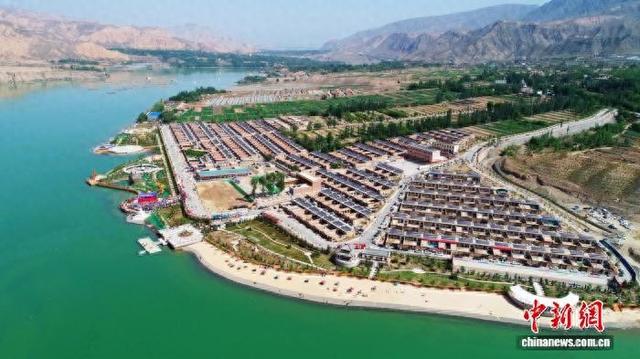
据介绍,过去五年,黄南州颁布施行多项生态保护条例,创新建立"河湖长+林草长"联动协作机制,生 态文明制度体系日趋完善。通过实施大规模国土绿化、水土流失治理、河湖保护修复等工程,累计完成 国土绿化400万亩,治理水土流失369平方公里。 在高质量发展方面,黄南州经济质效稳步提升。该州地区生产总值突破120亿元,较"十三五"末增长 14.8亿元。全社会固定资产投资累计完成281.2亿元。城乡居民人均可支配收入年均分别增长4.1%和 7.1%,农村居民收入增速快于城镇居民,发展成果更多惠及于民。 资料图为青海省黄南藏族自治州尖扎县德吉村。(无人机照片)黄南州委宣传部 供图 聚焦产业"四地"建设,黄南州现代产业体系加速构建。绿色农牧业实现有机认证、质量追溯等"四个全 域覆盖",建成一批特色种植养殖基地,农畜产品加工转化率达64.3%。清洁能源产业迅猛发展,风 电、光伏等新增装机178万千瓦,总装机达418万千瓦。文化旅游深度融合,热贡文化国际影响力持续扩 大,年度旅游人次突破千万,旅游总花费达36.4亿元。 中新网西宁2月5日电 (李江宁)"过去五年,黄南州圆满完成'十四五'规划主要目标任务,全州经济实 力、生态环境 ...

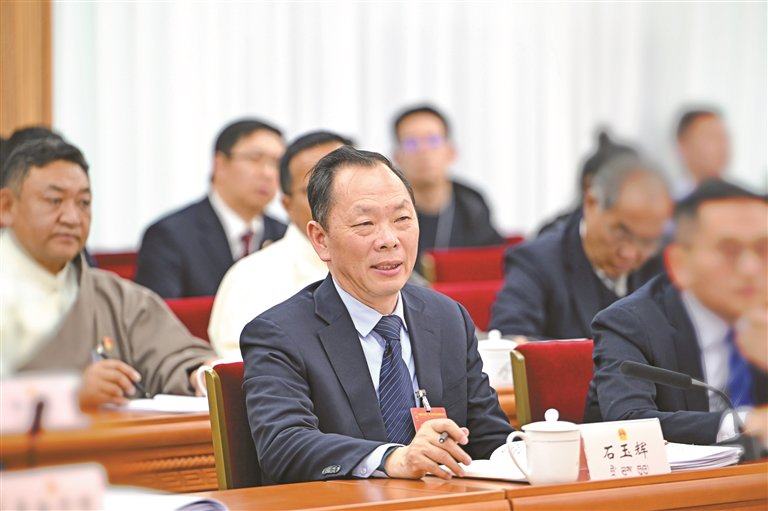
自治区人大代表、阿里地委副书记、行署专员石玉辉
Xin Lang Cai Jing· 2026-02-04 00:57
自治区人大代表、阿里地委副书记、行署专员石玉辉。记者 永青 摄 "2025年,阿里地区聚焦'四件大事'聚力'四个创建',深化'三基'工作和'三大'行动,推动经济社会呈现'稳中有 进、进中提质、质效双升'的高质量发展良好态势。地区生产总值增长6.6%,展现出强劲的发展韧性和活力; 规上工业增加值增长251.3%,工业引擎作用凸显;城乡居民人均可支配收入分别增长5.6%、7%,城乡居民收 入稳步提升。"近日,自治区人大代表、阿里地委副书记、行署专员石玉辉在接受本报记者专访时说。 人居环境呈现新面貌。坚持城乡融合发展,一体推进新型城镇化和乡村全面振兴。加快推进G4218昆莎机场 至狮泉河公路新建工程、昆仑大道、狮泉河镇德吉路至象泉路桥梁建设。持续巩固拓展脱贫攻坚成果,统筹 各类衔接资金精准投入产业发展、基础设施和乡村治理。累计建成43个宜居宜业高原和美乡村,惠及众多居 民。全地区农牧民专业合作社达到206家,村集体经济持续壮大。深入开展城乡环境综合提升行动,推动城乡 环境面貌持续改善。 生态底色愈发鲜明。坚定不移走生态优先、绿色发展之路,制发"四个体系"建设工作方案和河湖长制、林草 长制高质量发展若干措施,持续完善 ...
内蒙古两地入选国家乡村振兴示范县创建名单
Xin Lang Cai Jing· 2026-02-02 20:06
Core Viewpoint - The announcement of the 2025 National Rural Revitalization Demonstration County list includes Tumote Right Banner and Horqin Right Front Banner in Inner Mongolia, highlighting the importance of these initiatives in promoting comprehensive rural revitalization through optimized management and diverse development models [1][2]. Group 1: Demonstration County Creation - The creation of National Rural Revitalization Demonstration Counties is a significant measure to apply the "Ten Thousand Projects" experience and promote rural revitalization [1]. - The initiative aims to explore various organizational methods, development models, and practical paths for rural revitalization across different regions [1]. Group 2: Agricultural Development in Tumote Right Banner - Tumote Right Banner has advanced large-scale farming and animal husbandry, leading to the establishment of six major characteristic industries, including grain, meat, dairy, eggs, sugar, and fruits and vegetables [2]. - The production capacity includes an annual output of 850,000 tons of grain, 270,000 tons of fruits and vegetables, 186,000 tons of milk, 80,000 tons of sugar, 81,800 tons of meat, and 7,900 tons of eggs [2]. Group 3: Agricultural Development in Horqin Right Front Banner - By 2025, Horqin Right Front Banner plans to establish 350,000 acres of high-standard farmland and implement yield improvement actions on 400,000 acres [2]. - The region aims to maintain stable planting of grain crops on 3.9 million acres, achieving a total output of 3.26 billion pounds, and ensuring livestock populations of 300,000 pigs, 420,000 cattle, and 3.9 million sheep [2]. Group 4: Policy Support and Future Directions - Since 2022, the Ministry of Agriculture and Rural Affairs has approved the creation of 200 demonstration counties, promoting the application of the "Ten Thousand Projects" experience and enhancing organizational leadership [2]. - The next steps include continuous learning and application of the "Ten Thousand Projects" experience, innovating work mechanisms, and strengthening policy measures to support rural revitalization [3].
2025年青海省科技投入6.24亿元 同比增长超11%
Zhong Guo Xin Wen Wang· 2026-02-02 13:20
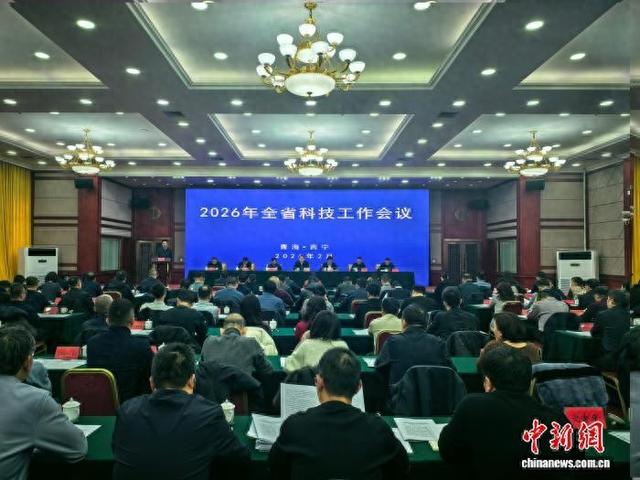
Group 1 - In 2025, Qinghai Province allocated 624 million yuan for scientific and technological funding, representing a year-on-year increase of 11.32%, and implemented 779 scientific and technological projects, generating an additional output value of 869 million yuan [1][3] - The province focused on building an ecological civilization and developing four key industries, achieving significant breakthroughs in core technologies and innovation platforms, which contributed to high-quality regional economic development [3][4] - A total of 722 scientific achievements were registered in 2025, with a technical contract transaction value of 2.602 billion yuan, marking a year-on-year growth of 10.96%, indicating a continuous acceleration in the integration of technological innovation and industry [3][4] Group 2 - The salt lake industry saw notable advancements, including the production launch of a lithium salt project and the development of special magnesium oxide products that broke international monopolies [3] - Thirteen technologies for the separation and extraction of rare and precious metals made progress, establishing three demonstration lines for the recovery of these metals, generating over 500 million yuan in revenue [3][4] - 68% of the province's R&D investment came from enterprises, with 100% of major provincial scientific and technological projects led or participated in by enterprises, highlighting the increasing role of businesses in technological innovation [4] Group 3 - Qinghai's scientific research collaboration has expanded to cover 39 "985" universities, with 62% of industrialized technology projects implemented in cooperation with external partners, involving 495 external research teams [7] - The establishment of innovation platforms, such as the National Strategic Rare Metal Mineral Efficient Development Technology Innovation Center in Qinghai, and the launch of the first external "Innovation Pilot Zone" demonstrate the province's commitment to fostering innovation [7]
履职为民解“水”困
Xin Lang Cai Jing· 2026-01-31 19:28
扎根草原、情系乡亲,春雨交出的履职答卷始终带着泥土味和烟火气。早在2017年,她就牵头成立了鄂 托克前旗蒙都草业种养殖专业合作社,带领48户养殖户抱团发展绒山羊产业,通过科学养殖、划区轮牧 和引进优质牧草"苏丹草"等举措,既保护了草原生态,又鼓了乡亲们的腰包。 鄂尔多斯市鄂托克前旗位于毛乌素沙地腹地,风沙大、降雨少。水资源匮乏长期影响着群众的生产生 活,制约着区域高质量发展。"群众急难愁盼的问题,就是人大代表履职的重中之重。"自治区人大代 表、鄂托克前旗上海庙镇芒哈图嘎查牧民春雨说。 作为一名来自基层的代表,春雨连续两年在自治区两会上就农业节水议题建言献策。去年提交的《关于 推广农牧业节水技术带动农牧业高质量发展的建议》,以翔实的调研传递了群众心声。这份聚焦民生关 切的建议,得到了自治区农牧厅、水利厅及鄂托克前旗的高度重视与积极回应。2025年,鄂托克前旗出 台节水行动方案,投入专项资金在3万亩农田实施小流量滴灌技术示范推广。经试验测算,该技术比传 统灌溉方式每亩节水30%以上。春雨回访种植户时了解到,与以往相比,灌溉时间缩短三分之一,亩均 节约电费约15元,劳动力投入减少三分之一。 "种植户们都很认可这项技 ...
大北农(002385.SZ)发预亏,预计2025年归母净亏损4.5亿元至5.8亿元
智通财经网· 2026-01-30 12:54
Group 1 - The company Dabeinong (002385.SZ) has disclosed its annual performance forecast for 2025, expecting a net loss attributable to shareholders of the listed company between 450 million to 580 million yuan [1] - The net loss after deducting non-recurring gains and losses is projected to be between 590 million to 720 million yuan [1]

新质生产力是推进民族地区现代化的强大引擎
Xin Lang Cai Jing· 2026-01-30 01:00
Core Viewpoint - The development of new productive forces is essential for the modernization and revitalization of ethnic regions, addressing both opportunities and challenges in achieving common prosperity for all ethnic groups [1][2]. Group 1: New Productive Forces as a Driving Engine - New productive forces provide significant momentum for the leapfrog development of ethnic regions, addressing issues of development quality and efficiency during the 14th Five-Year Plan period [2]. - These forces enable ethnic regions to "overtake on the curve," moving from low-value industries to innovation-driven sectors, thus narrowing the gap with developed areas [2]. - The integration of digital economy, clean energy, and biotechnology allows ethnic regions to leverage their unique resources and advantages, positioning them on equal footing with eastern regions in the new technological revolution [2]. Group 2: Building a New Industrial System - The development of new productive forces should be tailored to local conditions, avoiding overcapacity and ensuring sustainable growth [4]. - Ethnic regions should transition from being "energy bases" to "computing power hubs," utilizing their renewable energy resources to support national data center initiatives [4]. - Upgrading from "primitive industries" to "smart industries" involves applying modern technologies to enhance traditional sectors, such as agriculture and tourism, thereby creating new economic growth points [5]. Group 3: Promoting Common Prosperity - The ultimate goal of developing new productive forces is to meet the aspirations of all ethnic groups for a better life, rather than merely increasing GDP [6]. - Efforts should focus on bridging the digital divide and ensuring that technological advancements benefit all communities, particularly through improved education and healthcare access [6]. - Establishing mechanisms for profit-sharing and local participation in resource development is crucial for ensuring that the benefits of economic growth are equitably distributed among local populations [7].
金融有力支持巩固拓展脱贫攻坚成果 同乡村振兴有效衔接
Jin Rong Shi Bao· 2026-01-29 06:16
Core Viewpoint - The Chinese government has established a five-year transition period starting in 2021 to consolidate and expand poverty alleviation achievements while effectively connecting them with rural revitalization efforts [1] Group 1: Financial Support and Policy Implementation - The People's Bank of China in Qinghai Province has adhered to the central government's "four no drop" policy, enhancing financial service supply and optimizing the financial environment in rural areas [1] - From 2021 to October 2025, the total amount of agricultural and small enterprise re-loans issued by the provincial banking system reached 37.46 billion yuan, while financial institutions provided 76.77 billion yuan in targeted financial assistance loans [1] - As of October 2025, the balance of agricultural loans in the province reached 182.18 billion yuan, with growth rates for loans in agriculture, forestry, animal husbandry, and fishery at 6.9% and for farmer loans at 9.4% [2] Group 2: Industry Revitalization and Economic Development - Financial institutions are encouraged to focus support on key areas, implementing differentiated credit support policies for county-level industries and enterprises that connect farmers [3] - Innovative financial products such as "livestock loans" and "noodle loans" have been developed, enhancing financial services for the entire industrial chain of agricultural products [3] - Since 2021, loans in 15 key counties for rural revitalization have seen annual growth rates exceeding 10%, with the highest reaching 22.4% [3] Group 3: Inclusive Development and Financial Services - A multi-tiered financial service system has been established to support various groups in rural revitalization, including entrepreneurship guarantee loans and small loans for impoverished populations [4] - From 2021 to September 2025, a total of 660 million yuan in entrepreneurship guarantee loans, 2.78 billion yuan in student loans, and 1.109 billion yuan in small loans for impoverished populations have been issued, benefiting 571,000 individuals [4] Group 4: Credit Cultivation and Financial Environment Optimization - Financial institutions are guided to extend service chains and build rural credit systems, with a total of 324 credit towns and 3,558 credit villages established by October 2025 [5] - The balance of credit loans for rural households reached 41 billion yuan, 2.7 times that of the end of 2020, with 500 million yuan in interest relief provided to credit users during the transition period [5] - A total of 6,017 financial service points have been established, facilitating 1.839 million transactions amounting to 670 million yuan, with a 100% coverage rate for rural payment networks [5]
在华四十余年 泰国正大集团不断加码投资——“深耕中国市场的决心从未改变”(见证·中国机遇)
Ren Min Ri Bao· 2026-01-28 22:07
Core Viewpoint - Charoen Pokphand Group (CP Group) has significantly contributed to China's economic development over the past 40 years, evolving from a small seed business to a major multinational corporation with extensive investments across various sectors in China [1][3][4]. Group 1: Company History and Development - CP Group was founded in 1921 by a Chinese immigrant, starting as a small seed shop in Bangkok, Thailand, and has since become one of the largest foreign investors in China [2][3]. - The company established its first modern feed factory in Shenzhen in 1979, marking its entry into the Chinese market [3]. - As of 2024, CP Group operates over 670 enterprises in China, employing more than 80,000 people and generating a total revenue of 208 billion RMB [3][4]. Group 2: Investment Strategy and Market Position - CP Group has maintained a strong commitment to investing in China, adapting to market changes and focusing on high-quality development opportunities [4][10]. - The company emphasizes a "three benefits" business philosophy, prioritizing benefits for the country, the people, and the enterprise [4]. - CP Group's investment strategy includes exploring new business models and expanding its product offerings to meet the evolving demands of Chinese consumers [5][10]. Group 3: Innovations and New Business Models - CP Group is leveraging technology in its operations, such as using smart robotics in egg production, which allows one person to manage 168,000 chickens [5]. - The company is diversifying its product range to include health-oriented options like DHA eggs and selenium-enriched eggs, responding to consumer trends [5][6]. - CP Group is also exploring industrial tourism by transforming its egg production facilities into educational and tourist attractions [5][6]. Group 4: Cultural and Economic Contributions - CP Group has invested in the Hainan coffee industry, revamping the "Sun River" coffee brand and establishing a cultural park that integrates tourism and coffee production [7][9]. - The company aims to enhance local economies by collaborating with farmers and local governments, creating job opportunities and promoting rural revitalization [6][9]. - CP Group's coffee products have gained international recognition, with exports to Australia underlining its commitment to expanding its global footprint [9].
推动农业向“新”提“质” 赋能乡村产业振兴
Xin Lang Cai Jing· 2026-01-28 18:54
新疆是农业大区,具有发展现代农业得天独厚的资源气候条件。近年来,新疆牢牢把握打造全国优质农 牧产品重要供给基地的战略定位,推动乡村全面振兴、农业强区建设取得积极成效,"三农"进入了发展 最快、成效最好、群众得实惠最多的时期。 ●兵团日报全媒体记者 王素凡 刘美惠子 禚艺 沈元赓 "随着新疆农业现代化水平的提升,农田白色污染仍需高度重视、持续治理。"在分组讨论中,自治区人 大代表、塔里木大学机械电气化工程学院二级教授周岭指出,地膜覆盖技术具有"增温、保墒、抑制杂 草生长"的功效,是保障粮食安全、促进农民增收的关键支撑技术。但长期大量使用地膜且回收不彻 底,会形成白色污染,制约农业可持续发展。 "实践证明,农田白色污染可防可治,关键需要政策、技术、宣传多管齐下。"周岭说,要构建覆盖地膜 生产、使用、回收、再利用的全链条闭环管理体系,推动农业绿色高质量发展。 周岭建议,严格源头管控,建立地膜全生命周期追溯体系;完善市场机制,制定"以效定补"激励政策, 培育"生产+回收+再利用"产业联合体,解决地膜"回收难、再利用难"问题;强化科技支撑,重点攻关全 生物降解地膜适应性技术及高效回收机械,支持生物转化等前沿技术推广应用 ...