
卡车运输

Search documents
道指重挫逾600点!AI抛售潮重燃 思科暴泻12% 商业地产遭遇“黑色星期四”
Di Yi Cai Jing· 2026-02-12 23:27
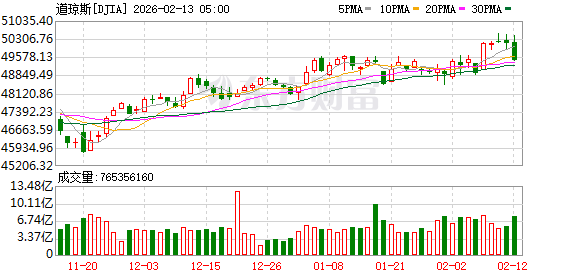
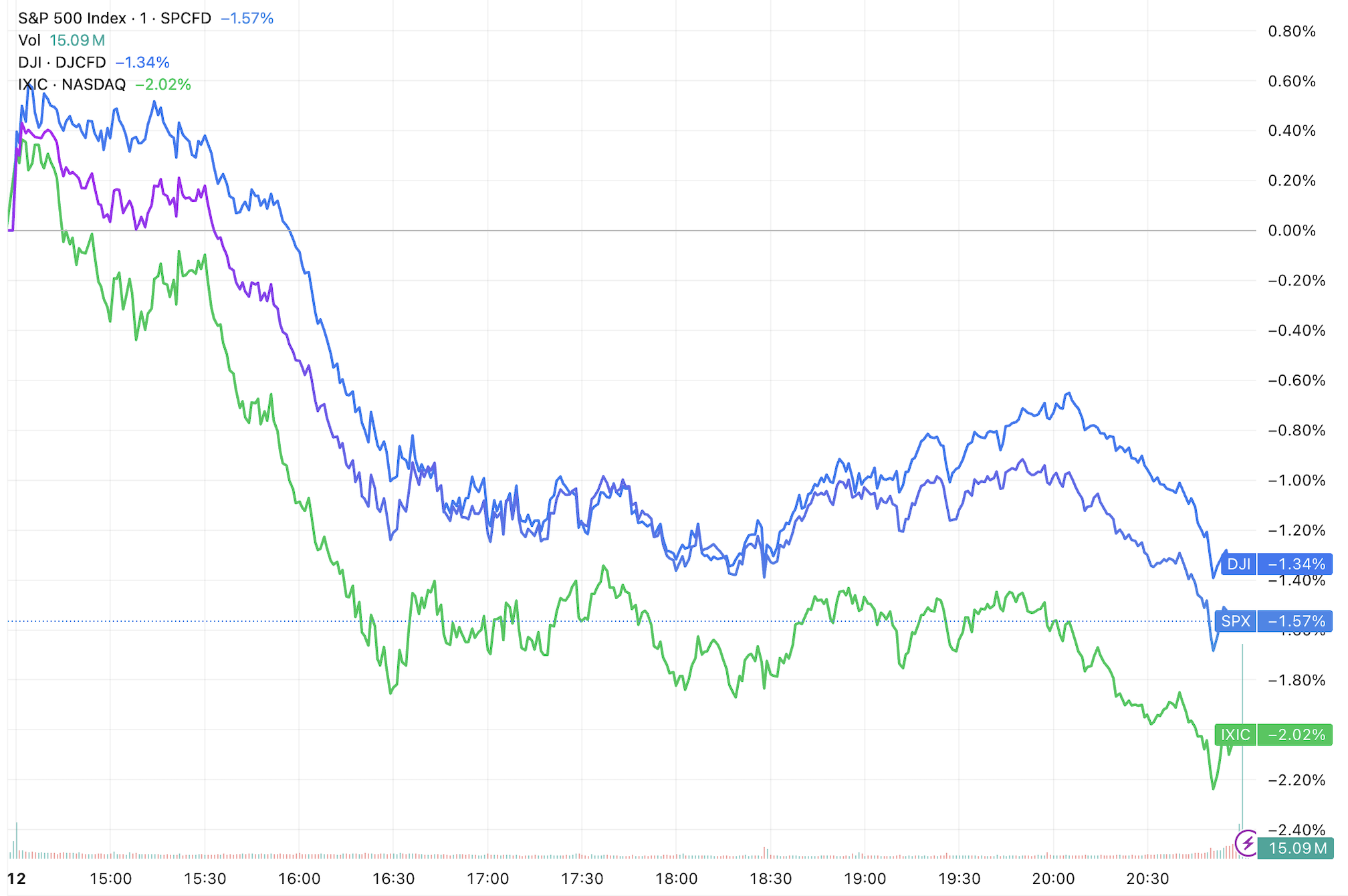
Market Overview - US stock market experienced a significant decline, driven by concerns over the accelerated penetration of artificial intelligence impacting the software industry and office space demand, leading to pressure on commercial real estate and tech sectors [2] - The Dow Jones Industrial Average fell by 669.42 points, a decrease of 1.34%, closing at 49,451.98 points; the S&P 500 dropped by 108.71 points, down 1.57%, closing at 6,832.76 points; the Nasdaq Composite decreased by 469.32 points, a decline of 2.03%, closing at 22,597.15 points [2] Popular Stocks Performance - Major tech companies faced significant losses, with Apple plunging 5%, marking its largest single-day drop since April 2025, following claims by the US Federal Trade Commission regarding Apple's suppression of conservative content [3] - Other notable declines included Meta Platforms down 2.82%, Amazon down 2.20%, Tesla down 2.62%, Nvidia down 1.64%, Microsoft down 0.63%, and Google C shares down 0.63% [3][4] Commercial Real Estate and Financial Services - The current sell-off in the US stock market is primarily focused on commercial real estate and related financial services, with fears that increased use of AI tools may structurally weaken demand for office space, impacting leasing and valuation [5] - Major commercial real estate service companies saw significant stock price drops, with CBRE Group down 8.8%, JLL down 7.6%, and Colliers International down 11.5% [5] - Analysts noted that the discussion around AI reducing office demand has been ongoing, but the recent sell-off in brokerage stocks has led investors to reassess commercial real estate risks more directly [5] Transportation and Logistics Sector - The trucking and logistics sector also faced notable pressure, with the Dow Jones Transportation Average dropping over 4%, marking its worst day since the US announced tariff increases in April of last year [6] - Among the 20 component stocks of the Dow Jones Transportation Average, 17 experienced declines, with Landstar System and C.H. Robinson seeing drops of 15.6% and 14.5%, respectively [6] - Concerns were heightened following Algorhythm Holdings' disclosure that its SemiCab division increased customer freight volumes by 300% to 400% without a corresponding increase in workforce, raising fears about AI's potential to reduce labor demand in logistics [6] Labor Market Data - Recent labor market data showed that initial jobless claims fell by 5,000 to 227,000, indicating overall stability in the job market [7] Bond Market Reaction - US Treasury yields fell, with the 10-year Treasury yield decreasing by 8.1 basis points to 4.102%, marking the largest single-day drop in October; the 2-year yield fell by 4.8 basis points to 3.464% [8] Commodity Market Performance - International oil prices saw a significant decline, with light crude oil futures for March delivery dropping by $1.79 to $62.84 per barrel, a decrease of 2.77%; Brent crude futures for April fell by $1.88 to $67.52 per barrel, down 2.71% [10] - Precious metals also faced pressure, with spot gold down 3.26% to $4,918.36 per ounce and silver down 10.89% to $75.0942 per ounce [10]


道指重挫逾600点!AI抛售潮重燃,思科暴泻12%,商业地产遭遇“黑色星期四”
第一财经· 2026-02-12 23:22
Core Viewpoint - The article discusses the significant decline in the U.S. stock market, driven by concerns over the impact of artificial intelligence on the software industry and office space demand, leading to a reassessment of the Federal Reserve's interest rate path [3]. Market Performance - Major U.S. indices fell sharply, with the Dow Jones Industrial Average down 669.42 points (1.34%) to 49,451.98, the S&P 500 down 108.71 points (1.57%) to 6,832.76, and the Nasdaq Composite down 469.32 points (2.03%) to 22,597.15 [3]. - Tech giants faced significant pressure, with Apple dropping 5% (largest single-day decline since April 2025), Meta down 2.82%, Amazon down 2.20%, and Tesla down 2.62% [6][7]. Commercial Real Estate Concerns - The sell-off focused on commercial real estate and related financial services, with fears that increased AI usage could structurally weaken demand for office space, impacting leasing and valuation [10]. - Major commercial real estate service companies saw significant stock declines, with CBRE down 8.8%, JLL down 7.6%, and Colliers down 11.5% [10]. - Analysts noted that the discussion around AI reducing office demand has been ongoing, but recent sell-offs in brokerage sectors have intensified fears regarding commercial real estate risks [10]. Transportation and Logistics Sector - The transportation and logistics sector also faced declines, with the Dow Jones Transportation Average dropping over 4%, marking its worst day since April of the previous year [11]. - Key logistics companies like Landstar System and C.H. Robinson saw declines of 15.6% and 14.5%, respectively, due to concerns over AI potentially reducing labor demand in the logistics industry [12]. Economic Data and Federal Reserve Outlook - Recent labor market data showed a smaller-than-expected drop in initial jobless claims, leading to fluctuating market expectations regarding the Federal Reserve's interest rate decisions [12]. - The market is currently pricing in a cumulative rate cut of 59 basis points by the end of the year, up from 54 basis points earlier in the day [12]. Commodity Market Trends - International oil prices fell significantly, with WTI crude down $1.79 to $62.84 per barrel (2.77% decline) and Brent crude down $1.88 to $67.52 per barrel (2.71% decline) [15]. - Precious metals also faced pressure, with spot gold down 3.26% to $4,918.36 per ounce and silver down 10.89% to $75.0942 per ounce [15].




AI颠覆性担忧发酵,美股三大指数均跌超1%,中概股集体下跌
Feng Huang Wang· 2026-02-12 22:23
Market Overview - The three major indices closed lower, with the Dow Jones down 1.34% at 49,451.98 points, the S&P 500 down 1.57% at 6,832.76 points, and the Nasdaq down 2.03% at 22,597.15 points [2] - Concerns over AI tools disrupting various sectors, including software companies, publishers, and financial services, have led to significant market volatility [2] Sector Performance - Financial stocks, including Morgan Stanley, faced pressure due to fears that AI could disrupt wealth management [2] - Trucking and logistics companies, such as C.H. Robinson, saw a 14% drop in stock price amid concerns that AI could optimize freight operations and reduce revenue sources [2] - The real estate sector is also affected, with stocks like CBRE and SL Green Realty declining due to anticipated higher unemployment impacting office space demand [3] - Defensive sectors saw gains, with Walmart and Coca-Cola rising 3.8% and 0.5%, respectively [3] Stock Movements - Major tech stocks experienced declines, with Nvidia down 1.64%, Apple down 5.00%, and Microsoft down 0.63% [5] - Chinese stocks listed in the U.S. also fell, with the Nasdaq Golden Dragon China Index down 3.00% [5] Company News - The European Union has initiated another antitrust investigation into Google, focusing on potential illegal manipulation of search engine advertising pricing [6][7] - OpenAI launched its first AI model based on Cerebras Systems chips, aiming to compete in the AI programming assistant market [8] - AI company Anthropic raised $30 billion in funding, reaching a valuation of $380 billion, with investments from Coatue and GIC among others [9][10] - Google released an updated version of its Gemini 3 model, targeting applications in science and engineering [11] - Intel was fined 273.8 million rupees by India's Competition Commission for violating competition laws [12]


人工智能货运规模化工具发布,卡车运输及物流股下跌
Xin Lang Cai Jing· 2026-02-12 20:30
Core Viewpoint - The introduction of Algorhythm Holdings' new AI tool, SemiCab, has led to significant declines in the stock prices of several trucking and logistics companies, raising investor concerns about reduced service demand in the freight sector due to the elimination of inefficiencies [1][2] Group 1: Market Reaction - Major trucking and logistics stocks such as C.H. Robinson and RXO fell over 20% during Thursday's trading session [1][2] - J.B. Hunt Transport Services experienced a decline of approximately 9%, while XPO's stock dropped nearly 7.9% [1][2] - Expeditors International of Washington saw a decline of nearly 16.5% [1][2] Group 2: AI Tool Impact - Algorhythm's stock, previously a penny stock, surged approximately 31% following the announcement of the SemiCab tool [1][2] - The market is increasingly scrutinizing traditional companies that may struggle to keep pace with the rapid advancements in AI technology [1][2] Group 3: Analyst Insights - Analyst Daniel Moore from Baird noted an emerging debate around open-source automation agents like Molt Bot, which could enhance the automation of routine backend tasks and level the technological playing field for smaller operators [1][2]
工业转型规模化:2025年高排放行业与净零转型进展
Zhong Guo Yin He Zheng Quan· 2026-01-28 03:24
Group 1: Industrial Transition Overview - The report highlights that global industrial transition is entering a decisive phase by 2025, with a clear decarbonization path established[3] - The focus has shifted from "can emissions be reduced" to "how to achieve large-scale reductions at acceptable costs"[6] - In 2024, global CO2 emissions are projected to reach 3.82 billion tons, marking a historical high with a year-on-year increase of 0.9%[8] Group 2: Key Challenges - Five core constraints identified include technology deployment pace differences, insufficient low-carbon demand, fragmented policies, infrastructure gaps, and uneven capital allocation[4] - Approximately 50% of industrial emissions can be reduced using existing mature technologies, while the remaining emissions rely on advanced technologies like hydrogen and CCUS[6] - The rising interest rates are expected to increase the costs of wind and solar energy by approximately 30%[6] Group 3: Sector-Specific Insights - In 2024, the aviation sector is expected to see a 10.4% increase in operational activity, contributing 1.108 billion tons of CO2 emissions, a 6.4% rise from the previous year[8] - The cement and steel industries are projected to experience slight decreases in emissions, while sectors like aviation and aluminum will see significant increases[8] Group 4: Policy and Economic Environment - The global industrial transition exhibits significant regional differentiation, with the EU leading compliance, the US balancing incentives and compliance, and emerging markets developing frameworks[14] - The economic environment is characterized by rising interest rates and cost inflation, which elevate the economic feasibility threshold for low-carbon projects[15] Group 5: Recommendations for Scaling Transition - The report suggests five strategic actions to promote large-scale transition: standardizing demand mechanisms, accelerating shared infrastructure construction, optimizing financing costs, prioritizing mature technology deployment, and enhancing policy and innovation collaboration[23]
报告点评:工业转型规模化:2025年高排放行业与净零转型进展
Yin He Zheng Quan· 2026-01-28 02:55
Group 1: Industrial Transition Overview - The report highlights that global industrial transition is entering a decisive phase by 2025, with a clear decarbonization path established[3] - Approximately 50% of industrial emissions can be reduced using existing mature technologies, while the remaining emissions rely on deep innovation and large-scale application of frontier technologies like hydrogen and CCUS[6] - In 2024, global CO2 emissions are projected to reach 38.2 billion tons, marking a historical high with a year-on-year increase of 0.9%, where high-emission industries contribute nearly 40% of the emission growth[8] Group 2: Key Challenges - The core challenges for high-emission industries have shifted from technical feasibility to economic feasibility and system coordination for large-scale deployment[4] - Five main constraints identified include: technology deployment pace differences, insufficient low-carbon demand, fragmented policies, infrastructure gaps, and uneven capital allocation[4] - The rise in interest rates and cost inflation has increased the economic viability threshold for low-carbon projects, making financing and policy coordination critical for project implementation[15] Group 3: Sector-Specific Insights - In the aviation sector, operational activity is expected to grow by 10.4% in 2024, with emissions increasing to 1.108 billion tons, a rise of 6.4%[8] - The shipping industry will see a 5.5% increase in operational activity, with emissions reaching 0.847 billion tons, up by 2.7%[8] - The cement and steel industries are projected to experience slight decreases in emissions, while sectors like aluminum and basic chemicals will see significant increases in emissions[8] Group 4: Policy and Economic Environment - The global industrial transition exhibits significant regional differentiation, with the EU leading compliance, the US balancing incentives and compliance, and emerging markets developing frameworks[14] - The EU's carbon market is expected to cover over 45% of industrial emissions by 2030, while the US faces policy volatility affecting corporate decision-making[14] - Emerging markets like China and India are accelerating carbon accounting systems, but face challenges in policy maturity and infrastructure development[14] Group 5: Recommendations for Scaling Transition - Establish standardized low-carbon demand mechanisms to enhance the credibility of demand signals and promote public procurement of low-carbon products[23] - Accelerate the construction of shared infrastructure, including integrated energy networks and CO2 transport pipelines, to support large-scale reductions[23] - Innovate financial tools to lower financing costs and support the scaling of frontier technologies like hydrogen and CCUS[24]
2026年开局动荡,高盛顶级交易员感叹:这15个交易日“度日如年”
Hua Er Jie Jian Wen· 2026-01-26 12:20
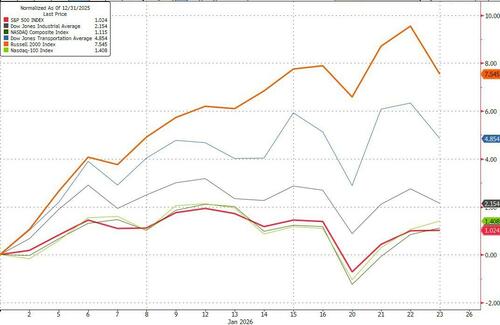
Core Viewpoint - Despite a tumultuous start to 2026 with various policy shocks and geopolitical events, the S&P 500 index has managed to rise by 1.02% year-to-date, indicating resilience in the market [1] Market Performance - The S&P 500 index is projected to reach 7800 points in 2026, driven by a recovery in mergers and acquisitions, stock issuance activities, and a resurgence in retail and corporate buying [2] - The Russell 2000 index has outperformed the S&P 500 for 14 consecutive trading days, marking the longest streak since 1996 [1] Market Breadth Expansion - Goldman Sachs views the expansion of market breadth as a healthy sign for the U.S. stock market, with institutional investors significantly increasing their positions, particularly in healthcare and financial sectors [4][5] - The improvement in market breadth is attributed to a broader set of investment opportunities arising from enhanced economic growth prospects and favorable Federal Reserve policies, despite uncertainties surrounding the earnings outlook of large tech stocks [5] Institutional Positioning - Institutional investor positions have reached extreme levels, with total exposure at 302%, indicating a significant increase in long positions, although this may not provide upward momentum in 2026 [8] - Cash levels among asset management companies are at historical lows, suggesting a shift towards increased risk-taking in the market [8] Sector Insights - Goldman Sachs maintains a positive outlook on the transportation sector, which is benefiting from supply reductions and improved pricing dynamics following a period of oversupply [10] - The transportation sector is also seen as a beneficiary of artificial intelligence applications, enhancing productivity and market share for companies within this space [10]

美国经济向好前景提振!美股运输类股摆脱关税及停摆阴霾,强势反弹创新高
Zhi Tong Cai Jing· 2026-01-06 23:58
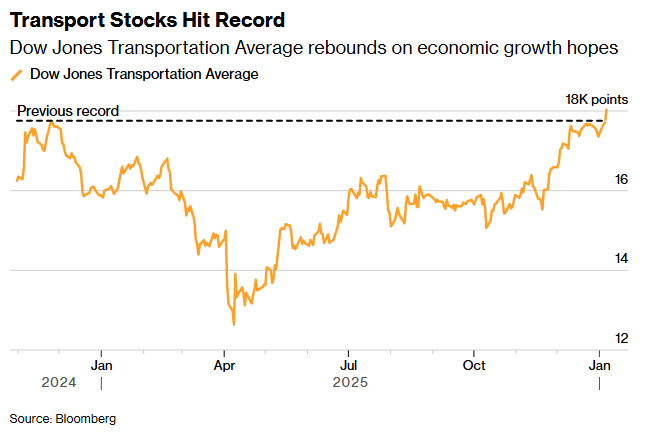
Group 1 - The core viewpoint of the articles highlights that U.S. transportation stocks reached a historical high driven by strong economic growth expectations for the year [1][2] - The Dow Jones Transportation Average Index rose by 1.7%, closing at 18,033.58 points, surpassing its previous historical high set in November 2024 [1] - The index tracks 20 U.S. transportation stocks across various sectors including airlines, trucking, shipping, and logistics, serving as an economic barometer [1] Group 2 - Transportation stocks faced several headwinds over the past 12 months, including trade wars, tariffs, and government shutdowns, which made investors cautious [2] - The sector continued to rise after a 1.2% increase on Monday, with gains attributed to expectations of lower fuel prices due to potential U.S. intervention in Venezuela [2] - As transportation stocks reached new highs, the overall U.S. stock market also strengthened, with major indices like the S&P 500 and Dow Jones hitting record levels [2]
美国经济向好前景提振!美股运输类股摆脱关税及停摆阴霾 强势反弹创新高
Zhi Tong Cai Jing· 2026-01-06 23:35
Group 1 - The Dow Jones Transportation Average Index reached a historical high of 18,033.58 points, driven by strong expectations for U.S. economic growth [1][3] - The index, which tracks 20 U.S. transportation stocks across various sectors including airlines, trucking, shipping, and logistics, is considered a barometer for the economy due to its insights into supply and demand across industries [3] - The rebound in transportation stocks follows a challenging year marked by trade wars, tariffs, and a prolonged government shutdown that negatively impacted the sector [3] Group 2 - Transportation stocks continued to rise after a 1.2% increase on the previous day, with airlines and logistics stocks benefiting from expectations of lower fuel prices due to potential U.S. intervention in Venezuela [3] - The overall U.S. stock market also performed well, with all three major indices closing higher, including the S&P 500 and the Dow Jones, which surpassed 49,000 points for the first time [3] - Market strategist Michael O'Rourke noted that transportation stocks are catching up to the overall market performance after facing several headwinds over the past year [3]
告别底部徘徊?大摩上调2026年货运业展望至“有吸引力” Knight-Swift Transportation(KNX.US)仍为首选股
Zhi Tong Cai Jing· 2025-12-09 03:55
Core Viewpoint - Morgan Stanley has upgraded the outlook for the freight transportation industry in 2026 to "attractive," citing the best risk-reward profile since 2020, despite unclear industry prospects [1] Trucking Industry - In a bearish scenario, the trucking industry in 2026 is expected to be similar to 2025, but in a bullish scenario, stock prices could see over a 50% upside [1] - 2026 is anticipated to be a decisive year for autonomous trucks, as companies will seek to expand pilot fleets in preparation for commercial launches in 2027 [1] Rail Industry - The focus for the rail industry in 2026 will be on the merger developments between Union Pacific (UNP.US) and Norfolk Southern (NSC.US), among others [1] - If the fundamentals do not keep pace with the trucking industry during the upcycle, merger enthusiasm may decline; low single-digit percentage growth in volume and rates is expected [1] - Preference continues for Canadian rail companies over U.S. rail companies [1] Logistics/Third-Party Logistics Industry - 2026 may be a transformative year for brokers, as some stocks begin to reflect the "AI concept halo" [1] - The effectiveness and sustainability of technology enhancements will be evaluated, along with how AI-enabled brokers respond to the upcycle and maintain market share against asset-based carriers [1] Package Delivery Industry - 2026 is expected to be a critical year for package delivery companies as major cost/restructuring plans reach completion, providing clearer insights into normalized EPS levels [1] - Structural changes in the e-commerce market may continue, with rural delivery and returns becoming new competitive fronts [1] Stock Recommendations - Morgan Stanley has upgraded the ratings for Canadian Pacific Kansas City (CP.US) and Old Dominion Freight Line (ODFL.US) from "market perform" to "overweight" [1] - Knight-Swift Transportation (KNX.US) remains the top-ranked stock in the freight transportation industry for 2026, followed by GXO Logistics (GXO.US) and Ryder (R.US) [1] - Canadian National Railway (CNI.US) and Canadian Pacific Kansas City have entered the top five rankings [1]
