
咖啡加工

Search documents
升“咖”正当时
Jin Rong Shi Bao· 2026-01-13 04:42
Core Viewpoint - The coffee industry in Baoshan, Yunnan, is undergoing a transformation driven by financial empowerment, addressing the challenges of branding and pricing while enhancing the income of coffee farmers [1][2]. Financial Empowerment - The People's Bank of China in Baoshan has initiated a financial transformation focusing on credit value discovery, converting soft information into assessable hard assets, and introducing specialized loan products like "Coffee Loan" and "Cloud Coffee Loan" [2]. - As of November 2025, the loan balance for the Baoshan coffee industry reached 568 million yuan, a year-on-year increase of 160.2%, benefiting 1,943 market entities [1][2]. Supply Chain Financing - Financial institutions are providing supply chain financial services, such as "Cloud Coffee Chain Financing," to support the seasonal and urgent funding needs of coffee procurement and processing [3]. - By November 2025, a total of 118 million yuan was allocated to coffee supply chain financial products, serving 796 operating entities and reducing the sales return cycle for farmers from 30-45 days to 7-15 days, with an average annual interest savings of approximately 2,100 yuan per household [3][4]. Asset Utilization - Innovative financing methods, including movable asset pledge financing, have been developed to support coffee processing enterprises by leveraging their inventory and accounts receivable [4]. - By November 2025, banks had provided 40 million yuan in accounts receivable pledge financing, supporting an additional 4,000 tons of coffee processing capacity and enabling 35 processing enterprises to expand their procurement radius by 3 to 5 administrative villages [4]. Integration and New Business Models - Financial institutions are developing customized credit products to support the integration of coffee with tourism and cultural experiences, enhancing the value of coffee-related businesses [5]. - By November 2025, loans for coffee tourism integration projects reached 88.68 million yuan, a 189.05% increase from the previous year, supporting the establishment of 8 projects and increasing average annual income for surrounding farmers by approximately 13,000 yuan [5][6]. Overall Impact - The comprehensive financial support has translated into enhanced competitiveness for the coffee industry, with the area under coffee cultivation expected to exceed 124,300 acres and the total output value projected to surpass 10 billion yuan by 2025 [6].
云南园区经济按下快进键:优化布局 错位发展 协同并进
Xin Lang Cai Jing· 2026-01-13 00:14
Core Viewpoint - Yunnan province has implemented a three-year action plan for the revitalization of development zones, significantly contributing to the regional economy and achieving high-quality development through optimized industrial layout and regional cooperation [1][2]. Group 1: Economic Contributions - Development zones occupy less than 1% of the land area but contribute over 20% of the regional GDP, 30% of employment, 40% of industrial investment, 60% of operating income, and 80% of the industrial output value above designated size [1]. - From January to November 2025, the industrial output value above designated size in development zones grew by 6.0% year-on-year, while the industrial added value increased by 5.6%, both exceeding the provincial average [1]. Group 2: Industrial Upgrading and Collaboration - Yunnan is addressing the challenges of small, scattered, and weak industrial parks by establishing a benefit-sharing mechanism to promote collaborative efforts and efficient resource allocation [2]. - The province has focused on key projects like the Shanghai-Yunnan Port Technology City and the Ruili Industrial Cooperation Park to foster industrial upgrades and demonstrate successful models [2]. Group 3: Innovation and Technology - Eight high-tech zones in Yunnan host 613 high-tech enterprises and 1,307 technology-based SMEs, showcasing a robust innovation ecosystem with 100% of the province's national engineering research centers and 33% of national key laboratories [3]. Group 4: Cross-Regional Cooperation - The Shanghai-Yunnan Port Technology City is emerging as a model for cross-regional industrial cooperation, with 145 enterprises registered and 24 operational, enhancing industrial clustering effects [4]. - A total of 119 projects have been signed and implemented, with a total investment of approximately 36 billion yuan, demonstrating the effectiveness of the "Shanghai headquarters + Yunnan base" collaboration model [6]. Group 5: Shared Development Mechanisms - Yunnan's border cooperation with Laos has led to the establishment of 38 cross-border logistics and manufacturing enterprises, enhancing resource flow and economic cooperation [7]. - Various regions in Yunnan are adopting innovative "park within a park" models to share benefits and attract quality projects, promoting collaborative development across counties and cities [8].
咖啡飘香 新寨兴旺
Xin Lang Cai Jing· 2026-01-07 20:19
Core Insights - The article highlights the transformation of Xinzhai Village into a thriving coffee production hub, showcasing the successful integration of coffee cultivation with tourism and local culture [2][6][9] Development Breakthrough - Xinzhai Village has established a coffee base of 13,600 acres and formed six cooperatives, leading to a significant increase in coffee production and quality [2][5] - The village's coffee production has evolved from a struggling industry to a profitable venture, with the introduction of high-quality coffee varieties and modern processing techniques [5][6] - The village's coffee output has reached over 4,000 tons annually, with the unique Baoshan small-grain coffee recognized as a geographical indication product [3][4] Value Chain Extension - The establishment of coffee processing facilities has allowed villagers to enhance the value of their coffee products, with many investing in roasting machines to improve quality [6][7] - Xinzhai Village has embraced a "coffee + tourism" model, attracting over 200,000 tourists annually and significantly increasing coffee-related income [7][9] - The village's coffee industry has seen a revenue increase from 70 million yuan in 2020 to an expected 150 million yuan in 2024 [7] Integration and Coexistence - Xinzhai Village has developed six differentiated coffee estates and ten specialty coffee houses, creating a multi-faceted industry that includes cultivation, processing, and tourism [9][10] - The community has successfully engaged in cultural tourism activities, enhancing the overall experience for visitors and promoting local coffee culture [6][9] - The village's approach has attracted young entrepreneurs, revitalizing the local economy and fostering a culture of coffee appreciation among residents [10][11]


海南会成为下一个新加坡吗?不,海南将成为整个东南亚的贸易中心
Sou Hu Cai Jing· 2025-12-22 03:08
Core Viewpoint - The official launch of the Hainan Free Trade Port on December 18 marks a significant milestone in China's reform and opening-up, symbolizing a new starting point for higher-level openness [1][3]. Group 1: Policy Changes - Hainan will implement a "one line open, two lines controlled, and free within the island" policy, significantly reducing trade barriers with the world, with approximately 74% of goods enjoying zero tariffs, expanding from over 1,900 to over 6,600 tax items [3][5]. - Goods processed in Hainan with over 30% added value can enter the mainland market tax-free, altering the business calculations for companies [5][10]. - The tax rate for corporate and personal income tax in Hainan is uniformly set at 15%, making it more competitive compared to Singapore [10]. Group 2: Trade Dynamics - Hainan's closure is reshaping regional trade flows, transitioning from a "single hub transit" model to a more efficient "multi-center complementary" model [10][12]. - The proportion of goods imported from Southeast Asia to China via Singapore is projected to drop from 82% in 2015 to 45% by 2025, as goods can now be directly shipped to Hainan [12][14]. - Hainan is fostering a new trade path of "Southeast Asian raw materials—Hainan processing—mainland distribution," enhancing trade efficiency [12][14]. Group 3: Economic Opportunities - The Hainan Free Trade Port is attracting global companies to establish high-value production segments, with zero-tariff imports valued at 27.06 billion yuan and tax reductions of 5.09 billion yuan by September 2025 [14][19]. - Hainan's geographical advantage allows for a 4-hour flight radius covering 21 countries and regions, and an 8-hour radius encompassing 67% of the global population, providing unique conditions for industries like aviation logistics and high-end manufacturing [21][23]. - The adjustment of the duty-free policy allows residents to purchase a wider range of imported products, with duty-free sales exceeding 1.5 billion yuan since the new policy implementation [21][23].
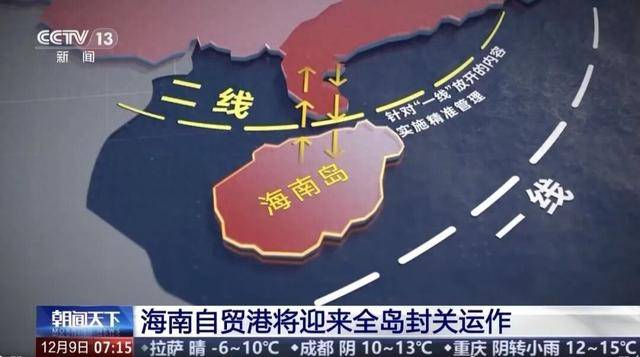
海南自由贸易港全岛封关
Nan Fang Du Shi Bao· 2025-12-16 23:15
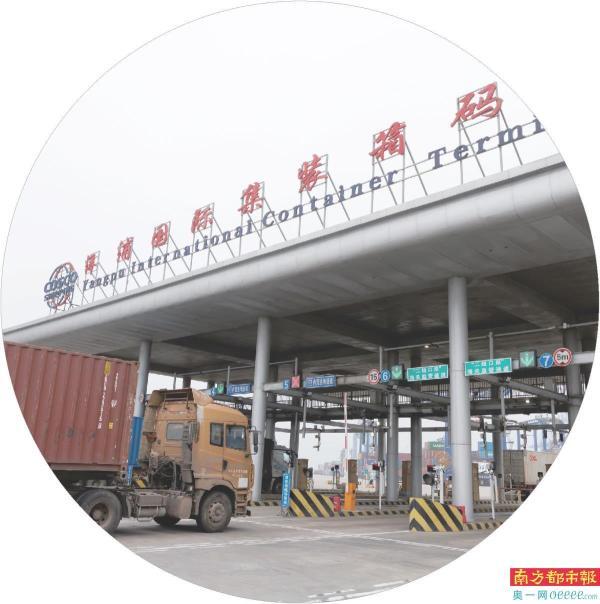
Core Viewpoint - The Hainan Free Trade Port will officially implement a full island closure on December 18, 2025, which aims to enhance trade facilitation and attract global resources through a series of liberalization policies [5][6]. Group 1: Definition and Implications of Closure - Closure refers to establishing Hainan Island as a special customs supervision area, characterized by "open on the first line, controlled on the second line, and free circulation within the island" [5]. - The closure is not a lockdown but an expansion of openness, facilitating more convenient international connections and promoting high-quality development of the Hainan Free Trade Port [6]. Group 2: Current Policies and Measures - The current closure policies can be summarized into "four enhancements": 1. More favorable "zero tariff" policies for goods, increasing the proportion of zero-tariff items from 21% to 74% [7]. 2. More relaxed trade management measures, allowing certain previously restricted imports [7]. 3. More convenient passage measures through designated ports [7]. 4. More efficient and precise regulatory models for zero-tariff goods [7]. Group 3: Zero Tariff Goods - The range of "zero tariff" goods will expand to approximately 6,600 tax items, accounting for about 74% of all tax items, an increase of 53% from before the closure [8]. - Importing companies are expected to save about 20% in tax costs due to these changes [8][22]. Group 4: Benefits for Individuals and Businesses - High-end talent working in Hainan will benefit from tax incentives, with personal income tax burdens exceeding 15% being exempted [11]. - The closure will not complicate travel to Hainan; most goods and personnel will continue to be managed under existing regulations [12]. - The closure will release various benefits, including continued implementation of corporate and personal income tax incentives to attract talent and businesses [14]. Group 5: Future Developments and Tax Reforms - The Ministry of Finance will continue to deepen tax reforms in line with the needs of the Free Trade Port, ensuring ongoing policy benefits [13]. - The scope of "zero tariff" goods will be further expanded, and adjustments to the import tax item catalog will be made as necessary [15]. - The sales tax reform will be gradually advanced, involving the consolidation of multiple taxes [16]. Group 6: Logistics and Customs Management - Goods leaving Hainan for the mainland will be subject to specific requirements, including pre-appointment for trucks at designated ports [18][20]. - Customs will implement intelligent systems for efficient cargo inspection and management at the ports [21]. Group 7: Economic Impact on Enterprises - The "zero tariff" policy is expected to significantly benefit enterprises, particularly in sectors like pharmaceuticals and high-end food processing, by reducing operational costs [22][23]. - The number of encouraged industries has expanded to over 1,100, allowing companies to benefit from a reduced corporate income tax rate of 15% [23].
我眼中的海南自贸港|共享发展红利 推动经济繁荣
人民网-国际频道 原创稿· 2025-12-15 08:29
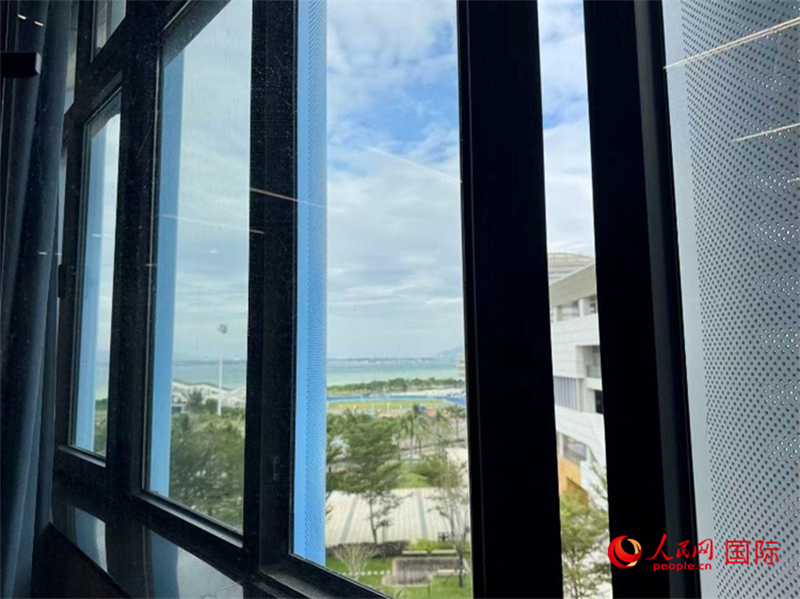
Group 1: Hainan Free Trade Port Overview - Hainan's geographical proximity to Thailand attracts Southeast Asian investors, particularly from Thailand, to invest in the region [1] - The implementation of the closure policy in Hainan is seen as a significant and effective government initiative, embraced by various sectors [1] Group 2: Boao Lecheng International Medical Tourism Pilot Zone - Boao Lecheng is one of the 13 key parks in Hainan Free Trade Port, featuring 4 public hospitals and 35 private hospitals [2] - The zone has expedited the approval process for innovative international drugs and medical devices, reducing the approval time from 6 months to 3-5 working days, thus making essential medications more accessible and affordable for patients [2] Group 3: Lingshui Li'an International Education Innovation Pilot Zone - The zone hosts 6 renowned universities, including the University of Glasgow and Beijing Language University, sharing resources and facilities [3] - The favorable visa conversion mechanism allows international students to seek employment in Hainan post-graduation, enhancing the attractiveness of the educational environment [3] Group 4: Tourism and Duty-Free Shopping - Hainan offers visa-free entry for tourists from 85 countries, with convenient transportation options available [6] - The duty-free policy, effective from November 1, expands the categories of duty-free goods from 45 to 47, including new technology products, positioning Hainan as a premier international shopping destination [6] Group 5: Product Processing and Cultural Industries - The collaboration between Thai enterprises and local government in the coffee industry exemplifies successful foreign investment, enhancing local agricultural development while preserving cultural heritage [7] - The Lingshui Haifeng International Film and Television Base attracts Thai film crews due to favorable tax rates, promoting the region as a filming destination [7] - Companies like Haikou Yiyou Network Technology are benefiting from the closure policy, improving cross-border operational efficiency through better infrastructure and simplified foreign exchange management [7] Group 6: Economic Impact and Future Outlook - The closure policy is expected to enhance market openness, attract foreign investment, and promote economic prosperity in Hainan, positioning it as a key gateway for foreign investors into mainland China [9] - The overall development strategy aims to support high-quality growth and exemplify a higher level of openness to the outside world [9]
云咖产业“出圈”冲进文旅赛道 “咖啡+”融合带动乡村体验“焕新”
Yang Shi Wang· 2025-12-08 04:17
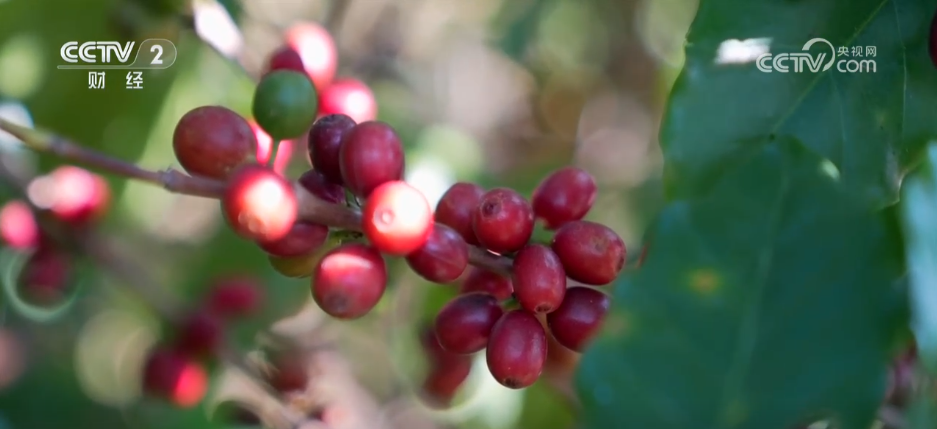
Group 1 - The coffee harvesting season in Yunnan, China's largest coffee-producing region, is currently at its peak [1][3] - Yunnan has a coffee cultivation history of over 100 years, with planting area and production accounting for over 98% of the national total [5] - A 200-acre coffee estate can yield approximately 180 tons of coffee cherries annually, making coffee a significant source of income for farmers [5] Group 2 - Boutique coffee estates in Yunnan have become popular tourist destinations, with 14 estates recognized as "Yunnan Province Boutique Coffee Estates" by 2024 [7] - Daily visitor numbers to these estates can reach up to 3,000, with a diverse customer demographic engaging in various coffee-related experiences [7] - The introduction of new consumption scenarios, such as "coffee + education" and "coffee + cultural heritage," has significantly increased customer engagement [7] Group 3 - The initial processing of coffee involves methods such as sun-drying, washing, and honey processing, followed by drying, hulling, and grading to produce green coffee beans [8] - Recent investments in automation have increased processing capacity from an average of over 30 tons per day to between 100 and 150 tons [8] - The annual production capacity of certain enterprises has reached 20,000 tons due to equipment upgrades [8]
海南产经新观察:“咖啡产业目前处于风口期”
Zhong Guo Xin Wen Wang· 2025-11-16 09:45
Core Viewpoint - The coffee industry in Hainan is currently at a pivotal moment, driven by the local culture and tourism, with significant growth potential and challenges ahead [6][10]. Group 1: Historical Context and Cultural Significance - The history of Fushan coffee began in 1935 when overseas Chinese brought coffee seeds to the region, leading to the establishment of the first coffee processing factory in the 1970s [3]. - Fushan coffee is deeply integrated into local life, with 80% of visitors coming to experience the coffee culture and "slow life" of Hainan [3][4]. - The traditional roasting technique of Fushan coffee has been recognized as a provincial intangible cultural heritage [3]. Group 2: Current Opportunities and Challenges - The coffee industry in Hainan is experiencing a boom due to the Free Trade Port policy, increasing tourist numbers, and the growth of brands like Luckin and Kudi [6]. - Challenges include small coffee planting areas, vulnerability to natural disasters, and competition from established brands in Europe and America [6]. - The market is facing oversupply, with the number of coffee shops in Fushan increasing from a few to around sixty or seventy since 2005 [6]. Group 3: Development Strategies - Fushan coffee is exploring standardization in production and has established a vocational school to train over 200 coffee professionals annually [6]. - The integration of coffee with rural tourism is being pursued, creating immersive experiences that enhance customer engagement [10]. - The Fushan Coffee Cultural Town has transformed from merely selling coffee to offering cultural and experiential products, generating over 100 million yuan in annual revenue [10]. Group 4: Policy and Economic Impact - Companies are leveraging the Free Trade Port policies to extend their industrial chains and focus on deep processing, which allows for tax savings and market expansion [8]. - The introduction of international coffee competitions in Hainan is expected to enhance brand recognition and improve the quality perception of Hainan coffee [10].
“零关税”扩围 “低税率”惠企
Xin Hua Ri Bao· 2025-11-07 21:11
Core Points - Hainan Free Trade Port will enter a new phase of full island closure operation, establishing itself as a special customs supervision area rather than an isolated island [1][2] Group 1: Benefits for Enterprises - Enterprises will enjoy broader benefits and lower thresholds, with the first batch of coffee beans imported under the "zero tariff" policy marking the acceleration of policy dividends into the real economy [3] - The "zero tariff" policy will cover approximately 74% of product tax categories, benefiting key industries such as pharmaceuticals and high-end food processing, with an expected increase to about 6,600 tax categories [3] - The processing and value-added tax exemption policy has been upgraded, removing income proportion restrictions and expanding the range of imported materials, which will further lower the threshold for enterprises to benefit [4] - The "low tax rate" policy will also benefit enterprises, with over 1,100 encouraged industry categories now available, allowing for a 15% corporate income tax reduction [4] Group 2: Benefits for Individuals - High-end and urgently needed talents in Hainan will benefit from personal income tax exemptions on amounts exceeding 15%, with a more flexible residency requirement introduced [5][6] - The recent adjustments to the duty-free shopping policy for residents have increased shopping flexibility and convenience, allowing for unlimited purchases of 15 categories of goods with just one departure record [6] Group 3: Regional Development - The new "second-line port" for cargo has significantly improved customs efficiency, allowing for faster processing times and enhancing the flow of goods [7] - Infrastructure improvements are translating into development momentum, with new shipping routes established, enhancing trade connections between Hainan and South America [7][8] - Hainan is positioned to become a strategic hub for economic cooperation with ASEAN, leveraging its unique geographical and policy advantages [8]
新华视点丨海南自贸港全岛封关,将带来哪些红利?
Xin Hua Wang· 2025-11-07 07:18
Core Insights - The full closure operation of Hainan Free Trade Port on December 18 will transform the island into a special customs supervision area, enhancing trade facilitation and economic benefits for enterprises and individuals [1][2]. Group 1: Benefits for Enterprises - The implementation of "zero tariffs" will significantly increase the number of duty-free goods, covering approximately 74% of product categories, benefiting key industries such as pharmaceuticals and high-end food processing [3]. - The number of "zero tariff" product categories will rise to about 6,600, potentially saving import equipment companies around 20% in tax costs [3]. - Upgraded processing and value-added tax exemption policies will lower the threshold for enterprises to enjoy benefits, promoting the transformation and upgrading of Hainan's manufacturing sector [4]. - The number of encouraged industries has expanded to over 1,100, including biomedicine and green building materials, allowing related companies to benefit from a 15% corporate income tax reduction [4]. Group 2: Benefits for Individuals - High-end and urgently needed talents in Hainan can benefit from personal income tax exemptions on amounts exceeding a 15% tax burden, with a more flexible residency requirement introduced [5][6]. - Recent adjustments to the duty-free shopping policy allow local residents to purchase a variety of goods without restrictions after a single departure from the island, enhancing shopping flexibility [6]. Group 3: Regional Development - The new "second-line port" for cargo has improved customs efficiency, allowing vehicles to pass through in an average of 2.5 minutes, thus enhancing logistics and trade flow [7]. - The establishment of direct shipping routes between Hainan and South America will facilitate the import and export of goods, such as tilapia and avocados, at lower costs and higher freshness [7]. - Hainan aims to become a strategic hub for economic cooperation with ASEAN, leveraging its unique geographical and policy advantages to attract global enterprises [8].