
商业服务业

Search documents
中泰国际每日晨讯-20251022
ZHONGTAI INTERNATIONAL SECURITIES· 2025-10-22 01:34
Market Overview - The Hang Seng Index closed at 26,028 points, up 0.7%, while the Hang Seng China Enterprises Index rose 0.8% to 9,303 points[1] - Total trading volume in Hong Kong stocks was HKD 264.7 billion, an increase from HKD 239.2 billion on Monday, indicating investor contention[1] - Key sectors: Industrial (+1.4%), Consumer Discretionary (+1.2%), Financials (+1.1%); Consumer Staples (-0.1%), Telecoms (-1.0%), Utilities (-0.1%)[1] Stock Performance - China Life (2628 HK) and BYD Electronics (285 HK) led gains, rising 6.0% and 3.8% respectively[1] - Pop Mart (9992 HK) and China Resources Mixc Lifestyle (1209 HK) were the biggest losers, falling 8.1% and 1.9% respectively[1] Gold Price Trends - Gold prices peaked above USD 4,300 before retreating to around USD 4,100, with expectations of continued consolidation due to already priced-in U.S. rate cut factors[1] Global Economic Factors - U.S. Treasury Secretary may hold trade talks with China's Vice Premier, potentially easing U.S.-China tensions[1] - European leaders expressed support for Trump's stance on a ceasefire in Ukraine, indicating a stabilization of geopolitical risks[1] U.S. Market Update - The Dow Jones Industrial Average closed at 46,925 points, up 0.5%, while the Hang Seng Index futures settled at 25,919 points, down 109 points[2] Japanese Economic Update - The Japanese yen depreciated to approximately 151.8 against the USD, down from 149.5 the previous week following the election of new Prime Minister[3] Industry Insights - Pop Mart reported Q3 revenue growth of 245%-250%, with domestic revenue up 185%-190% and overseas revenue up 365%-370%, despite a stock price drop of 8.1%[4] - The healthcare sector saw a slight increase of 0.3%, with major companies showing minimal volatility[4] - New energy and utilities stocks experienced fluctuations, with notable gains in nuclear and thermal power sectors[4]
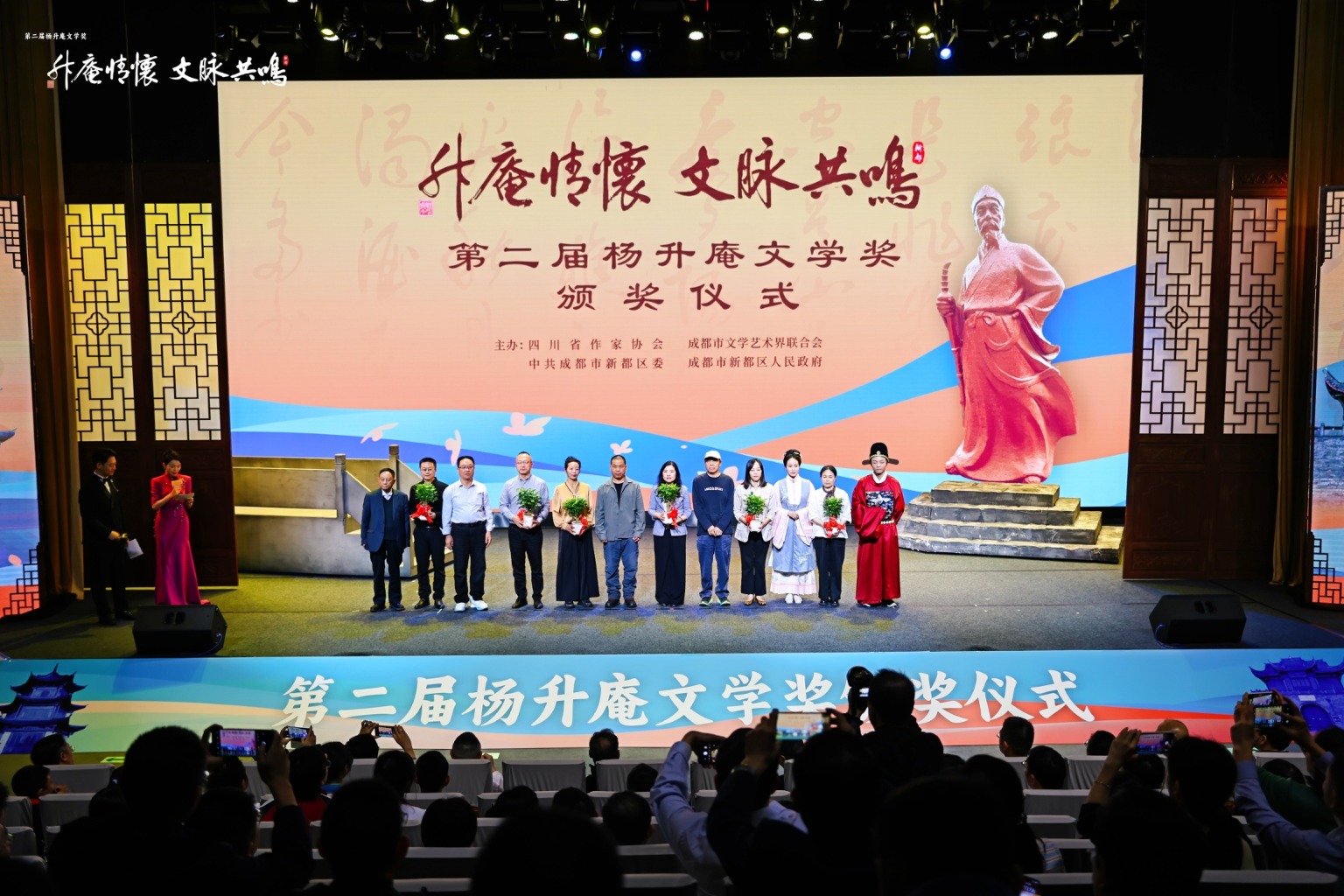
激活名人IP助推文商旅体深度融合发展 第二届杨升庵文学奖在成都新都区揭晓
Mei Ri Jing Ji Xin Wen· 2025-10-13 21:32
Core Points - The second Yang Sheng'an Literary Award ceremony was held in Chengdu's Xindu District on October 13, aiming to promote the deep integration of culture, commerce, tourism, and sports in the city [2][3] - The award, initiated by various local cultural organizations, received 1,652 submissions since its launch in December last year, highlighting its national and global reach [2] - The event included a "Cultural City Alliance" ceremony, where representatives from several cities planted trees to symbolize the transmission and growth of the Sheng'an spirit in the new era [2] Group 1 - The Yang Sheng'an Literary Award is a new mainstream literary award that reflects the cultural soft power of Chengdu, contributing to a rich literary atmosphere in the city [3] - The award supports the expansion of literary IP value through multidimensional interactions such as "culture + tourism" and "culture + commerce," injecting momentum into Chengdu's goal of becoming a world cultural tourism city [3] - Xindu District has established a comprehensive cultural resource system related to Yang Sheng'an and is implementing a cultural inheritance and innovation project [2] Group 2 - Future plans for Xindu District include leveraging the Yang Sheng'an Literary Award to activate celebrity IP and deepen the construction of the "Cultural City Alliance," promoting literary creation and cultural heritage revitalization [2]

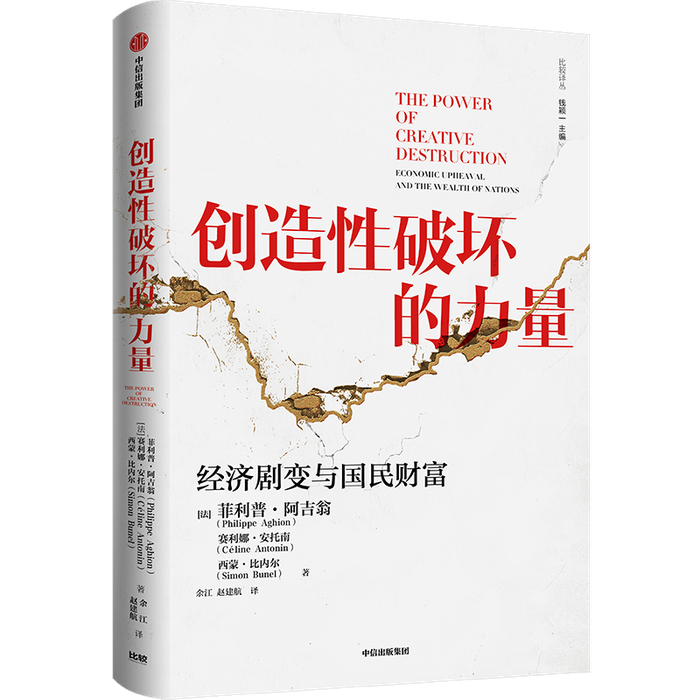
诺奖得主菲利普·阿吉翁:技术革命会导致大规模失业吗?
Xin Lang Cai Jing· 2025-10-13 13:53
Core Insights - The article discusses the delay between the emergence of general-purpose technologies and subsequent economic growth acceleration, questioning why previous technological revolutions did not lead to mass unemployment as feared by historical figures like Ned Ludd and John Maynard Keynes. It also explores the future of the artificial intelligence revolution in terms of job creation versus destruction [1][11]. Group 1: Characteristics of General-Purpose Technologies - General-purpose technologies are characterized by three fundamental features: they spawn numerous secondary waves of innovation, they improve over time leading to reduced user costs, and they become ubiquitous across all sectors of the economy [3][4]. - Secondary innovations are crucial as they adapt general-purpose technologies to specific sector needs, enhancing productivity and serving as a source of long-term growth. However, these innovations require time and resource reallocation, which can temporarily lower GDP growth rates [5][8]. Group 2: Delays in Technology Adoption - There are instances where society may never optimally adopt new technologies due to a lack of secondary innovations or widespread acceptance, leading to missed opportunities for productivity improvements [7]. - The transition from old to new general-purpose technologies often intensifies the process of creative destruction, as new firms can avoid the costs associated with transitioning from outdated technologies [8]. Group 3: Impact on Employment - Historical perspectives reveal that fears of machines destroying jobs have existed for centuries, but technological advancements have often led to positive effects on production, exports, and employment [13][14]. - Automation has been shown to create more jobs than it destroys, with studies indicating that a 1% increase in automation can lead to a 0.25% increase in employment two years later and a 0.4% increase ten years later [15][16]. Group 4: Conclusion on Technological Revolutions - The article challenges two common misconceptions: that technological revolutions inevitably lead to accelerated growth and that they are detrimental to employment. While growth may accelerate, it often requires a time lag, and inappropriate institutional frameworks can hinder the potential benefits of new technologies [17][18].
永泰运:9月29日召开董事会会议
Mei Ri Jing Ji Xin Wen· 2025-09-29 12:04
Group 1 - Yongtaiyun held its 36th meeting of the second board of directors on September 29, 2025, to review the proposal for amending the "Board Secretary Work Guidelines" [1] - For the first half of 2025, Yongtaiyun's revenue composition was entirely from the commercial services sector, accounting for 100.0% [2] - As of the report date, Yongtaiyun's market capitalization was 2.5 billion yuan [2] Group 2 - The competition between Nongfu Spring and Yibao has intensified, with Nongfu Spring's green bottle launch leading to a significant market share decline for Yibao, dropping nearly 5 percentage points [2]
跨境运营:2025年中国企业出海风险观察报告
Sou Hu Cai Jing· 2025-09-25 14:18
Group 1 - The report titled "Cross-Border Operations: 2025 Risk Observation Report for Chinese Enterprises Going Abroad" focuses on the global risk environment, overseas market risks, and domestic industry operations for Chinese enterprises venturing abroad [1][4][6] - From 2021 to the first half of 2025, Chinese mainland enterprises established 35,893 subsidiaries overseas, with 2,292 new establishments in the first half of 2025, primarily in Hong Kong (47.8%) and the United States (10.7%) [1][26][30] - The export value reached 13 trillion yuan in the first half of 2025, a year-on-year increase of 7.2%, with electrical and mechanical equipment accounting for 42.2% of the total exports [1][42][45] Group 2 - The report highlights significant bankruptcy risks for enterprises, with a notable increase in bankruptcies in the Asia-Pacific region, particularly in Australia and Singapore, which saw increases of 37% and 40% respectively in 2024 [1][53][54] - Payment risks vary significantly by region, with timely payment rates improving in most Asia-Pacific markets, while declining in several European and American countries [1][61][62] - In the domestic context, industries such as electronic information manufacturing and electrical machinery showed leading revenue growth, while sectors like metal products and textiles experienced sluggish growth [1][15][42] Group 3 - The report emphasizes the need for enterprises to enhance risk assessment of overseas partners using data and to manage domestic payment risks effectively to navigate the complex environment of going abroad [1][10][14] - The majority of new Chinese enterprises established abroad are concentrated in wholesale and retail (34.1%) and commercial services (21.6%) [1][36][40] - The report indicates that despite challenges such as trade wars and economic slowdowns, the number of Chinese enterprises going abroad remains significant, with a focus on understanding the risks associated with different markets [1][13][25]

永泰运:9月4日召开董事会会议
Mei Ri Jing Ji Xin Wen· 2025-09-04 10:42
Group 1 - The core point of the article is that Yongtaiyun (SZ 001228) held its 35th meeting of the second board on September 4, 2025, to review the special report on the use of previously raised funds [1] - For the first half of 2025, Yongtaiyun's revenue composition is entirely from the commercial service industry, accounting for 100.0% [1] - As of the report date, Yongtaiyun has a market capitalization of 2.4 billion yuan [1]
创业黑马:8月25日召开董事会会议
Mei Ri Jing Ji Xin Wen· 2025-08-25 16:10
Group 1 - The core point of the article is that Chuangye Heima (SZ 300688) announced the convening of its 13th board meeting for the fourth session on August 25, 2025, to review the 2025 semi-annual report and its summary [1] - For the year 2024, Chuangye Heima's revenue composition is entirely from the commercial services sector, accounting for 100.0% [1] - As of the time of reporting, Chuangye Heima has a market capitalization of 6 billion yuan [1]

政府就业被高估——7月美国非农数据解读【陈兴团队•财通宏观】
陈兴宏观研究· 2025-08-02 05:56
Core Viewpoint - The July non-farm employment data shows a significant downward revision in previous months, indicating an overestimation of employment levels, particularly in government sectors. The overall labor market is cooling down, with rising unemployment rates and declining labor participation rates [2][3][5]. Employment Data Revision - The July non-farm employment recorded an increase of 73,000 jobs, but previous months' data were heavily revised downwards. June's employment was adjusted from 147,000 to 14,000, and May's from 144,000 to 19,000, totaling a downward revision of 258,000 jobs [3][2]. Unemployment Rate Trends - The unemployment rate rose slightly by 0.1 percentage points to 4.2% in July, while the U6 unemployment rate increased by 0.2 percentage points to 7.9%. This indicates a broad cooling of the job market, with a decrease in labor participation rate to 62.2%, the lowest since the beginning of 2023 [5][6]. Sector-Specific Employment Changes - Job growth in July was concentrated in the education and healthcare sectors, with retail, education, and financial activities seeing the most significant increases. However, government employment decreased by 10,000 jobs, marking the third negative month this year, with substantial downward revisions in previous months [6][2]. Labor Market Supply and Demand - As of June, job vacancies in the U.S. fell to 7.44 million, with a vacancy rate of 4.4%. The labor supply-demand gap recorded 422,000, indicating a return to pre-pandemic levels and suggesting a balance in the labor market [8]. Wage Growth Trends - Average hourly earnings in July increased by 0.3% month-over-month, with a year-over-year growth of 3.9%. However, long-term trends show a slowdown in wage growth since November 2024 [9][10]. Real Wage Growth - The real wage growth, adjusted for inflation, showed a year-over-year increase of 1% in June, down by 0.4 percentage points from the previous month. This indicates stable wage income growth [10]. Sectoral Wage Changes - In July, the highest year-over-year wage growth was observed in the retail and business services sectors, at 5.2% and 5.1%, respectively. Conversely, the slowest growth was in public utilities and construction, with declines of approximately 0.7 and 0.2 percentage points [12]. Interest Rate Expectations - Following the release of weak employment data, expectations for interest rate cuts in September have increased, with the probability rising from 40% to 80%. The anticipated number of rate cuts for the year has also increased from 1.3 to 2.2 [16].

【环球财经】5月澳大利亚工业集团产业指数上升 产业活动持续缓慢复苏
Xin Hua Cai Jing· 2025-06-04 03:33
Core Insights - The Australian Industry Group reported a 4.2-point increase in the Australian Industry Index to -12.3 in May, indicating a continued contraction in industrial activity, though at a reduced pace [1][2] - The index has remained in negative territory for 35 consecutive months, reflecting ongoing challenges in the industrial sector [1] - A slow recovery trend has been observed since the end of last year, primarily driven by improvements in the construction and commercial services sectors [1] Summary by Category Industry Index Overview - The Australian Industry Index is based on monthly surveys of a sample of national businesses, measuring changes in industrial activity [1] - An index value above 0 indicates expansion, while below 0 indicates contraction, with the distance from 0 reflecting the magnitude of change [1] Key Indicators - Activity/Sales Index rose 0.9 points to -18.3 - Employment Index increased by 6.2 points to -9.6 - New Orders Index remained unchanged at -10.3 - Input Quantity Index rose 8.6 points to -2.7 - Input Prices Index increased by 8.1 points to 47.6 - Sales Prices Index rose 0.4 points to -5.9 - Average Wage Index decreased by 0.6 points to 38.8 [2] Sector Performance - Manufacturing Performance Index (PMI) fell by 0.3 points to -23.5, influenced by global uncertainties and project delays [2][3] - Construction Performance Index (PCI) rose by 1 point to -6.4, supported by a backlog of projects despite increased competition [2][3] - Commercial Services Performance Index increased by 7.2 points to -4.3, the highest level since April 2024, benefiting from new orders and strong demand for construction materials [2][3] Challenges Faced - The manufacturing sector is struggling due to project delays, market hesitance, and increased costs from supply chain disruptions [3] - The construction industry faces reduced projects and heightened competition, leading to increased discounting strategies [3] - The commercial services sector is impacted by global economic instability, rising tariffs, and competition from countries with lower labor costs [3]