智能辅助驾驶

Search documents
今日新闻丨Model Y标准版批量下线!博世中阶智能辅助驾驶批量交付!
电动车公社· 2025-10-17 16:04
Group 1 - Tesla Model Y standard version has begun mass production at the Texas Gigafactory, with a starting price of $39,990, which is a $5,000 reduction (approximately 11%) from previous versions [2][10] - The new Model Y features a simplified design, removing the continuous daytime running lights and tail lights, and is available in three colors: gray, white, and black [4] - The vehicle is equipped with a 69.5 kWh battery, offering an EPA range of 517 km, a 0-96 km/h acceleration time of 6.8 seconds, and a peak charging power of 225 kW, allowing for a 265 km charge in just 15 minutes [9] Group 2 - Bosch has commenced mass delivery of its mid-level intelligent driving assistance system, which has been adopted by several automakers including Jietu, Dongfeng, and BAIC for over ten models [11][14] - Bosch is the only global supplier with both high-level and mid-level intelligent driving technologies, having established a comprehensive regulatory compliance system [14] - The introduction of mid-level intelligent driving assistance may enable many gasoline vehicles to transition to smart features, allowing gasoline vehicle owners to experience L2-level driving assistance [16]



博世中阶智能辅助驾驶正式实现规模化交付
Zhong Guo Qi Che Bao Wang· 2025-10-17 08:23
Core Insights - Bosch has officially achieved large-scale delivery of its mid-level intelligent driving assistance system, which has been adopted by over ten models from five automakers including Jietu, Dongfeng, and BAIC [4] - This delivery marks the first instance in China of a mid-level intelligent driving assistance system that is compatible with fuel vehicles, breaking the long-standing limitation of such features being exclusive to new energy vehicles [4] - Bosch is accelerating its commercialization process in the intelligent driving assistance sector, with its high-level end-to-end intelligent driving assistance solution also set for mass production [8] - Bosch is currently the only supplier globally that possesses both high-level intelligent driving assistance technology and a comprehensive regulatory compliance system [8]

智驾最后的窗口期,冲出AI新玩家
远川研究所· 2025-10-12 13:04
Core Insights - The intelligent assisted driving industry has experienced a stark contrast over the past year, with advancements in technology leading to increased consumer demand and cost reductions, allowing L2+ systems to penetrate the mid-to-low-end market [2][4][5] - The competitive landscape is intensifying, with a clear emergence of leading players, and companies must adapt to new technological paradigms to remain relevant [2][9] - The rise of multi-modal large models and end-to-end systems is reshaping the industry, with companies like Qianli Technology positioning themselves strategically to leverage these advancements [12][21] Industry Dynamics - The shift from modular to end-to-end architectures in intelligent driving systems is becoming a standard, as exemplified by Tesla's FSD V9.0, which emphasizes a pure vision-based approach [4][5][6] - The software value in intelligent driving systems is projected to exceed 40% of the total vehicle value, indicating a significant shift in the industry's focus towards software-driven solutions [6][18] - The competitive landscape is characterized by a mix of vertically integrated companies like Tesla and third-party suppliers, highlighting the importance of collaboration and resource integration [9][18] Company Developments - Qianli Technology, founded by AI pioneer Yin Qi, aims to become a platform-level AI company, focusing on intelligent assisted driving and smart cockpit solutions [11][21] - The company has established partnerships with major automotive players, including Geely, to enhance its market presence and technological capabilities [17][25] - Qianli Technology's RLM (Reinforcement Learning-Multi-modal) model is gaining attention for its ability to improve driving experience and safety through advanced perception and decision-making capabilities [21][24] Future Trends - The integration of multi-modal large models and reinforcement learning is expected to be crucial for the future of intelligent driving systems, enhancing their adaptability and safety [20][22] - The global market for automated and intelligent driving vehicles is projected to reach $1.2 trillion by 2040, with significant growth opportunities for companies like Qianli Technology [25] - The development of Robotaxi services is a key focus for Qianli Technology, aiming to establish a comprehensive operational framework within 18 months [27]


奔驰13亿砸向重庆AI明星,身体还德国,灵魂得中国
3 6 Ke· 2025-09-28 07:37
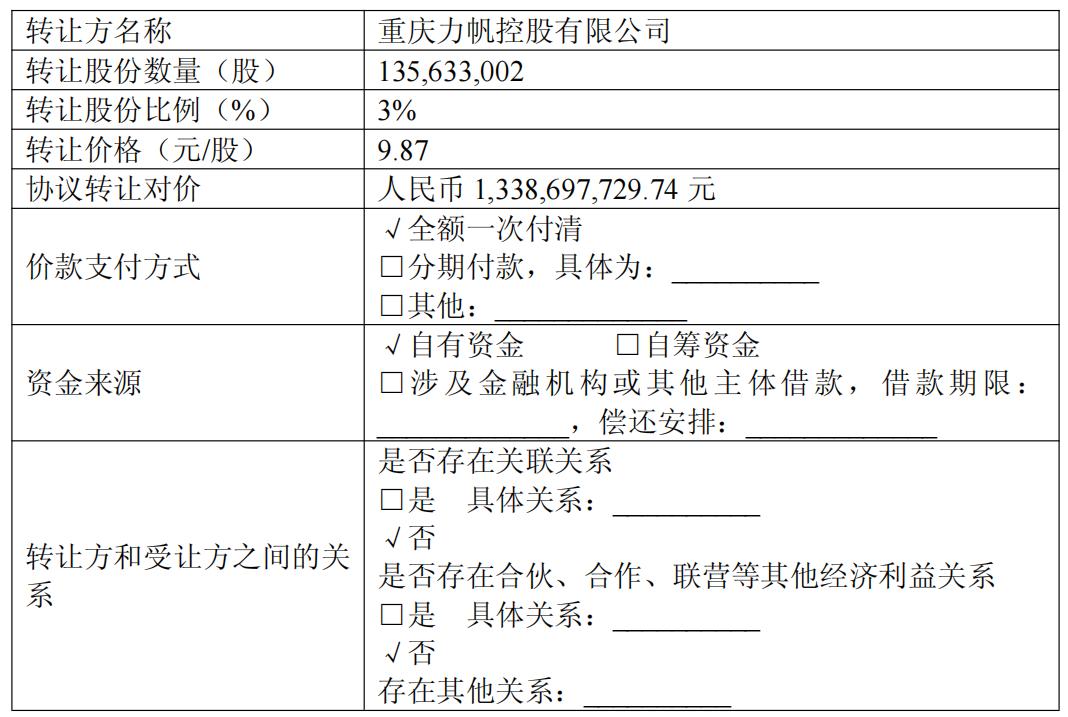
Core Viewpoint - Mercedes-Benz has invested 1.339 billion RMB in Qianli Technology, becoming its fifth-largest shareholder, marking a strategic move towards enhancing its presence in the Chinese smart driving sector [1][2][12]. Group 1: Investment Details - Qianli Technology announced that Chongqing Lifan Holdings transferred 135.63 million shares at a price of 9.87 RMB per share, which is a 25% discount from the previous closing price [2][3]. - After the transaction, Lifan's shareholding in Qianli will decrease from 13.68% to 10.68%, while Mercedes-Benz will hold a 3% stake [3][12]. - The investment is part of Mercedes-Benz's broader strategy to integrate Chinese technology into its operations, following a similar investment in Momenta [15][17]. Group 2: Company Background - Qianli Technology, previously known as Lifan Technology, has undergone significant transformation under the leadership of its new chairman, Yin Qi, who has a strong background in AI and technology [7][9]. - The company is planning to list H-shares on the Hong Kong Stock Exchange, with a board meeting held on September 12 to approve the proposal [11][12]. Group 3: Strategic Implications - The investment is seen as a further alignment between Mercedes-Benz and Geely, which has previously collaborated with Mercedes on various projects [12][14]. - Qianli Technology is expected to provide technical support for upcoming Mercedes models in China, particularly in the electric vehicle segment [13][14]. - The collaboration with Qianli and previous investments in Momenta indicate a shift towards utilizing Chinese technology for smart driving solutions in Mercedes-Benz vehicles [15][19].
醉酒司机深夜无人驾驶 "智驾神器”滥用风险引关注
Jing Ji Guan Cha Wang· 2025-09-27 22:54
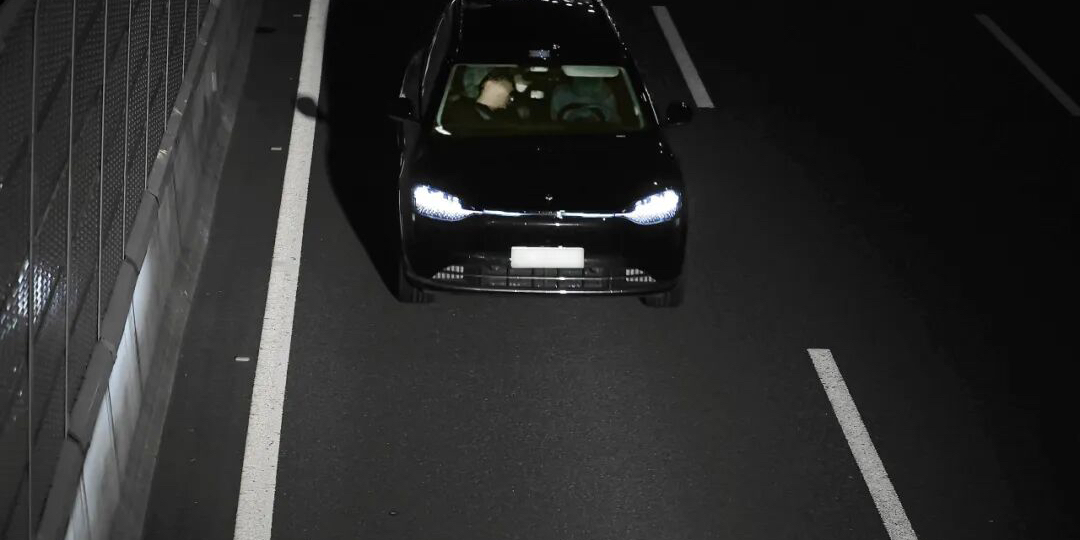
Core Viewpoint - The incident involving a drunk driver using a "smart driving device" to operate a vehicle autonomously highlights the risks associated with the misuse of intelligent driving assistance systems [3][4][5]. Group 1: Incident Details - On September 13, a driver in Hangzhou, under the influence of alcohol, used a device to trick the vehicle's intelligent driving system, allowing it to drive for 20 minutes without anyone in the driver's seat [4][5]. - The vehicle was equipped with an L2 level intelligent driving assistance system, which is designed to alert the driver if hands are removed from the steering wheel for more than two minutes [4][14]. - The driver, identified as Wang, had a history of drunk driving and was subsequently sentenced to 45 days in detention and fined 4,000 yuan for dangerous driving [5][15]. Group 2: Technology and Misuse - The "smart driving device," referred to as "智驾神器," has evolved from simple weighted accessories to more sophisticated electronic modules that can deceive the vehicle's monitoring systems [6][7]. - These devices are marketed online and are designed to bypass the driver monitoring systems, allowing for extended periods of hands-free driving [6][7]. - The rise of high-level intelligent driving systems has led to the development of customized "smart boxes" for specific vehicle brands, which can maintain autonomous driving without driver intervention [7][14]. Group 3: Regulatory and Safety Concerns - The incident underscores the need for stricter regulations and oversight regarding the production, sale, and use of such devices, as current laws do not adequately address the risks posed by external modifications to driving systems [14][15]. - Authorities emphasize that intelligent driving requires human oversight and should not be mistaken for full automation, warning against the dangers of using such devices [15].
投注“端到端”:AI驶向物理世界,阿里云加速“闭环”
第一财经· 2025-09-27 12:39
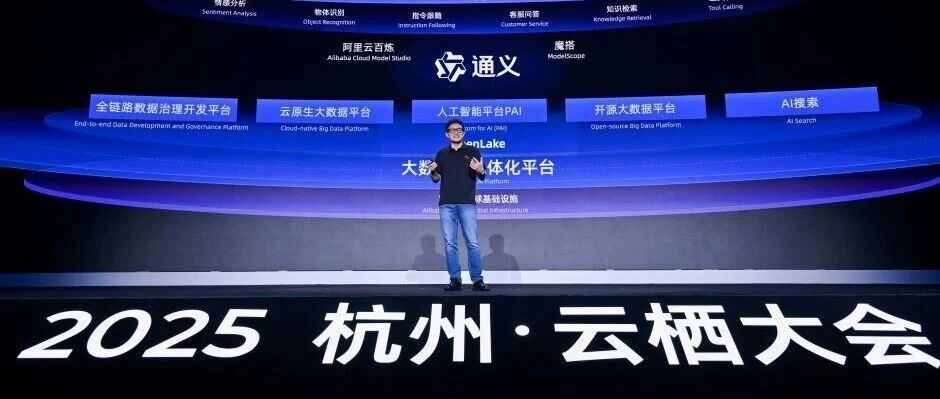
Core Viewpoint - The rise of AI is leading to a new era characterized by embodied intelligence and intelligent assisted driving, marking the beginning of a competitive landscape in the Agentic AI era [1] Group 1: End-to-End Transformation - The transition from modular to end-to-end architectures in intelligent assisted driving is a significant shift, allowing for rapid iteration and adaptation to complex scenarios [3][4] - The end-to-end architecture requires exponential growth in data volume and computational power, with current mainstream intelligent driving companies needing 10P-30P of data for single model training [4] - The embodied intelligence sector faces even greater complexity, requiring machines to understand physical laws and execute intricate actions, which presents unique challenges in data handling and computational needs [4] Group 2: Cloud Infrastructure and AI Integration - Companies are increasingly seeking a unified cloud AI infrastructure that integrates computational power, big data, and AI platforms to support embodied intelligence [5] - Alibaba Cloud has upgraded its intelligent assisted driving solutions, achieving significant efficiency improvements, such as a 2-3 times increase in task management and scheduling capabilities [7] - The integration of NVIDIA's tools into Alibaba Cloud's AI platform aims to enhance the development of embodied intelligence applications, showcasing a comprehensive support system for data processing and model training [9] Group 3: High Demand and Future Outlook - The demand for high availability and extreme communication capabilities in embodied intelligence is pushing cloud providers to innovate beyond traditional models, leading to a new "network-storage-computation integration" requirement [10] - Alibaba Cloud is positioning itself as a leader in the AI infrastructure space, with ambitions to build a super AI cloud that can support the future needs of various industries [11][12] - The future may see a limited number of super cloud computing platforms, with Alibaba Cloud aiming to be a key player through substantial investments in AI infrastructure [11]
股价跌超6%!地平线机器人拟配股筹资63亿港元,半年亏损52亿元
Sou Hu Cai Jing· 2025-09-26 08:01
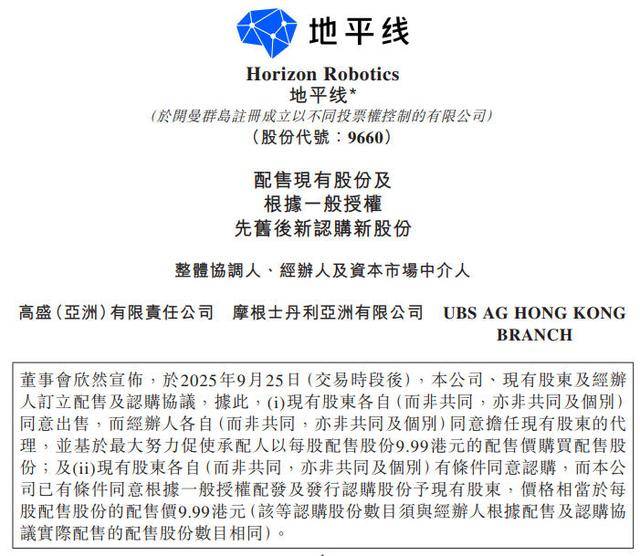
Core Viewpoint - Horizon Robotics plans to raise approximately HKD 63.39 billion through a share placement at HKD 9.99 per share, which represents a discount of about 5.75% [1][2] Group 1: Fundraising and Use of Proceeds - The share placement will account for approximately 4.6% of the company's existing issued share capital and about 1.9% of the voting rights at the shareholders' meeting [1] - The net proceeds from the placement will be used to expand overseas market operations, support the scaling of advanced driver assistance solutions, and invest in emerging fields such as Robotaxi-related initiatives [2] Group 2: Market Performance and Financials - On the secondary market, Horizon Robotics opened down over 5% on September 26, and by the time of reporting, the stock had dropped over 6% to HKD 9.92 per share [5] - The company reported a revenue of approximately CNY 15.67 billion for the first half of the year, marking a year-on-year increase of 67.6%, while losses widened from CNY 50.98 billion to CNY 52.33 billion [8] - The increase in sales costs and R&D expenses has been identified as the primary reason for the widening losses [8] Group 3: Customer Base and Market Position - Horizon Robotics is a leading supplier of intelligent driving assistance solutions for passenger vehicles, with significant revenue contributions from its top five customers, which accounted for 52.48% of total revenue in the first half of the year [8] - The revenue from the top five customers has shown a trend of increasing diversification, with the largest customer contributing 19.7% of total revenue [8]

中国智能辅助驾驶方案加速进入国际赛道
Xin Hua Wang· 2025-09-13 16:27
Group 1 - The core focus of the 2025 Munich Auto Show is on intelligent assisted driving, showcasing the rapid evolution of this technology from concept to implementation, and from local to global markets [1] - Chinese companies are presenting mature mass production solutions and advanced technologies, demonstrating breakthroughs and collaborative advantages across the intelligent assisted driving industry chain [2] - Companies like Zhi Yu Technology and FAW-Volkswagen are launching intelligent assisted driving systems in models such as the Sagitar L and Tayron L, achieving A-SPICE CL2 certification, indicating maturity in international market processes and quality systems [2] Group 2 - European traditional automakers are facing transformation challenges, with many falling behind in the electric vehicle market due to slow product launches and technological reserves [3] - Collaboration with Chinese companies is seen as a way to accelerate the implementation of intelligent assisted driving technologies [3] - Chinese enterprises are establishing a presence in Europe, including setting up headquarters or R&D centers, and forming local teams to enhance collaboration with international automakers and suppliers [3] Group 3 - Safety is paramount for the future of intelligent assisted driving, with companies emphasizing the need for mass production verification and process certification to ensure technology reliability [4] - A survey by the German Association for Information Technology, Telecommunications and New Media highlights ongoing concerns regarding safety, accident liability, and data privacy in intelligent assisted driving [4] - Companies are encouraged to regularly disclose metrics such as disengagement rates and incident rates to build trust in their technologies [4] Group 4 - Chinese companies are adapting to overseas markets through collaboration and technological innovation, with companies like Lingzhou Zhihang partnering with Qualcomm to launch intelligent assisted driving products in Europe, the US, Japan, and South Korea by 2026 [5] - The focus on a unified architecture and cross-platform compatibility is seen as crucial for successful overseas deployment in the next three years [5]

综述|中国智能辅助驾驶方案加速进入国际赛道
Xin Hua She· 2025-09-13 14:19
Core Viewpoint - The article highlights the rapid advancement of Chinese intelligent assisted driving solutions entering the international market, particularly showcased at the 2025 Munich Auto Show, emphasizing the transition from concept to implementation and from local to global [1]. Group 1: Chinese Solutions Implementation - The Munich Auto Show has evolved into a platform for showcasing software, chips, and mobility solutions, with Chinese companies presenting mature mass production solutions and advanced technologies [2]. - Zhuoyue Technology and FAW-Volkswagen have launched an intelligent assisted driving system, set to be available on models like the Sagitar L and Tayron L, achieving A-SPICE CL2 certification, indicating maturity in international market processes and quality systems [2]. - Qingzhou Zhihang has demonstrated its intelligent assisted driving solutions, which have been widely applied in China, with an automatic emergency braking system false trigger rate lower than the industry average, approaching a million units in mass production [2]. - Horizon Robotics showcased its automotive-grade AI chip, the Journey 6 series, which is being used by Bosch in developing the fourth-generation multifunctional camera, expected to start mass production in 2026 [2]. - Some Chinese automakers are exploring comprehensive self-research paths, with Leap Motor proposing a "full-domain self-research" approach covering electric drive, batteries, cabins, and intelligent assisted driving [2]. Group 2: Accelerated Sino-European Cooperation - European traditional automakers are facing transformation challenges, with product launches and technology reserves lagging, leading to a competitive disadvantage in the electric vehicle market [3]. - Collaboration with Chinese companies is seen as a way to accelerate the implementation of intelligent assisted driving technologies [3]. - Chinese enterprises are increasingly establishing a presence in Europe, including setting up headquarters or R&D centers and forming local teams, such as Horizon Robotics and Qingzhou Zhihang establishing European headquarters in Munich [3]. Group 3: Safety, Compliance, and Innovation - The future of intelligent assisted driving must be built on safety, with companies emphasizing the need for mass production validation and process certification to ensure technology reliability [4]. - A survey by the German Association for Information Technology, Telecommunications, and New Media indicates that safety, accident liability, and data privacy are critical concerns among respondents [4]. - Industry experts suggest that companies need to regularly disclose metrics such as disengagement rates, incident rates, and false trigger rates of automatic emergency braking systems to build trust [4]. Group 4: Market Expansion through Collaboration and Innovation - To expand into overseas markets, Chinese companies are adjusting and adapting through collaboration and technological innovation, with Qingzhou Zhihang announcing a partnership with Qualcomm to launch intelligent assisted driving products in Europe, the US, Japan, and South Korea by 2026 [5]. - The unified architecture and cross-platform adaptability are seen as key to overseas deployment in the next three years [5].
华为高管:世界上根本没有免费的东西
Di Yi Cai Jing Zi Xun· 2025-08-27 08:51
Core Insights - Huawei's automotive business is rapidly expanding its assisted driving solutions and collaborating with various car manufacturers, including Baojun, Leap Motor, and Hongqi, indicating a growing presence in the industry [2][3] - The company emphasizes a diverse cooperation model with car manufacturers, ranging from component supply to full-stack solutions, enhancing their capabilities from product definition to marketing [2][9] - Huawei's approach to assisted driving technology diverges from the prevalent Vision-Language-Action (VLA) model, focusing instead on a World and Action (WA) model that utilizes direct sensory inputs for vehicle control [3][10] Cooperation Models - Huawei's cooperation with car manufacturers includes multiple models: component supply, single intelligence (either smart cockpit or assisted driving), dual intelligence (both), and full-stack solutions [2][9] - The collaboration process is designed to deepen over time, with Huawei supporting car manufacturers throughout the entire product lifecycle, from design to marketing [2][9] Technology Perspective - Huawei does not endorse the VLA approach, believing it is not the ultimate solution for autonomous driving; instead, it prioritizes the WA model, which aims for direct control through sensory inputs [3][10] - The company acknowledges the rapid development of assisted driving technology and anticipates a consolidation of players in the market, driven by data, computing power, and algorithms [11] Commercial Strategy - Huawei does not have a specific short-term profitability target for its automotive business, focusing instead on long-term user-centered investments and sustainable growth [8] - The company argues that there is no such thing as a free service in the automotive sector, as costs are often hidden in vehicle pricing or future service fees [13]