电力设备

Search documents
特变电工:深度研究四大产业矩阵,产能出海共振,加速转型全球能源服务商-20260331
东方财富· 2026-03-31 10:50
Investment Rating - The report assigns an "Accumulate" rating for the company, marking its first coverage [2]. Core Viewpoints - The company is positioned as a global energy service provider through its diversified four-industry matrix, which includes power transmission and transformation, new energy, traditional energy, and new materials [9][16]. - The company has a strong foothold in the high-end equipment manufacturing sector for power transmission and transformation, benefiting from domestic investment expansion and international capacity deployment [9][16]. - The new energy segment is primarily operated through a controlling stake in Xinjiang New Energy, which is a leading player in the upstream polysilicon segment of the solar industry [9][16]. - The energy segment, through its controlling stake in Tianchi Energy, boasts a coal production capacity of 74 million tons per year, ensuring reliable energy supply [9][16]. - The new materials segment, through Xinjiang Zhonghe, is a leader in high-purity aluminum and electronic aluminum foil production, with plans to expand upstream [9][16]. Summary by Sections Company Overview - The company, known as China's first transformer stock, has developed a four-industry matrix focusing on power transmission, new energy, traditional energy, and new materials [4][16]. - It has established manufacturing bases across various provinces in China and aims to become a globally trusted energy service provider [4][16]. Power Transmission and Transformation Business - The company has expanded its international footprint in power transmission and transformation, with ongoing contracts exceeding $5 billion in unconfirmed revenue [9][16]. - Domestically, it leads in the converter transformer market and is advancing digital factory construction [9][16]. New Energy Business - The new energy segment is primarily driven by Xinjiang New Energy, which has a significant share in the polysilicon market and is enhancing operational resilience through cost reduction measures [9][16]. - The company aims to increase its inverter production capacity significantly following the launch of its digital factory in Xi'an [9][16]. Energy Business - The energy segment, through Tianchi Energy, has a robust coal production capacity and integrates coal and electricity operations, showcasing strong profitability [9][16]. New Materials Business - The new materials segment focuses on high-purity aluminum and electronic aluminum foil, with plans to build a new alumina project to secure raw material costs [9][16]. Financial Projections - The company forecasts revenues of approximately 97.87 billion yuan in 2024, with a projected net profit of 4.13 billion yuan [6]. - Expected net profits for 2025, 2026, and 2027 are 6.59 billion yuan, 8.05 billion yuan, and 9.33 billion yuan, respectively [6].

南网科技:多点开花带动业绩快速增长-20260331
HTSC· 2026-03-31 10:40
Investment Rating - The report maintains a "Buy" rating for the company [7] Core Views - The company achieved a revenue of 3.685 billion RMB in 2025, representing a year-on-year growth of 22.27%, with a net profit attributable to shareholders of 421 million RMB, up 15.28% year-on-year [1][5] - The "Electricity Calculation Synergy" initiative has been officially recognized as a national strategy, enhancing the company's competitive edge due to its strong resource and technological advantages [1] - The company is expected to continue its rapid growth trajectory, particularly in the energy storage sector, which is projected to be a major revenue driver [3][5] Revenue and Profitability - In Q4 2025, the company reported a revenue of 1.586 billion RMB, a significant increase of 75.44% year-on-year, and a net profit of 134 million RMB, up 57.10% year-on-year [2] - The overall gross and net profit margins for 2025 were 29.79% and 11.62%, respectively, showing slight declines compared to the previous year [2] - The company has successfully broken regional barriers, with non-South Grid market revenue accounting for nearly 60% of total revenue, growing over 70% year-on-year [2] Business Segments - The primary revenue sources for 2025 included energy storage system technology services, testing and commissioning services, smart monitoring equipment, and robotics and drones, collectively accounting for 98.92% of total revenue [3] - Revenue from energy storage system technology services reached 943 million RMB, growing 58.84% year-on-year, although the gross margin decreased to 9.90% due to certain large EPC projects [3] - The "Silk Road" system saw significant revenue growth, with smart monitoring equipment and robotics maintaining high growth rates [4] Profit Forecast and Valuation - The profit forecast for 2026 and 2027 has been revised downwards due to lower-than-expected profit growth, with net profit estimates adjusted to 574 million RMB and 722 million RMB, respectively [5] - The target price for the company is set at 66.11 RMB, based on a projected PE ratio of 65 times for 2026, reflecting the company's strong resource advantages and growth potential [5]

金融工程专题报告:公司治理专题系列报告二:基于多因子框架的中证500指数增强模型
BOHAI SECURITIES· 2026-03-31 09:49
Quantitative Models and Construction Methods Model Name: CSI 500 Index Enhancement Model - **Model Construction Idea**: The model is constructed using a series of continuous financial factors reflecting corporate governance capabilities combined with some technical factors[3][10][43] - **Model Construction Process**: - Monthly rebalancing frequency for the investment portfolio - Backtest data from March 18, 2021, to March 18, 2026 - Use previous year's semi-annual report data for rebalancing from January to April, previous year's annual report data for rebalancing from May to August, and current year's semi-annual report data for rebalancing from September to December - Data cleaning including missing value handling and standardization - Factors used: momentum factor, low volatility factor, low debt factor, operational capability factor, growth factor, profitability factor[3][43] - **Model Evaluation**: The model successfully outperformed the benchmark index, achieving significant excess returns, but there is still room for optimization in factor construction, timing mechanism, and stock selection efficiency[3][49][50] Model Backtest Results - **CSI 500 Index Enhancement Model**: - Cumulative Return: 63.84%[46][48] - Excess Cumulative Return: 34.79%[46][48] - Annualized Return: 10.83%[46][48] - Excess Annualized Return: 5.38%[46][48] - Annualized Volatility: 17.94%[46][48] - Excess Volatility: -2.92%[46][48] - Sharpe Ratio: 0.60[46][48] - Excess Sharpe Ratio: 0.34[46][48] - Maximum Drawdown: 23.86%[46][48] - Excess Maximum Drawdown: -17.95%[46][48] - Daily Win Rate: 53.39%[46][48] - Excess Daily Win Rate: 1.74%[48] Quantitative Factors and Construction Methods Factor Name: Profitability Factor - **Factor Construction Idea**: Reflects the efficiency of using net assets to generate profits and the profit margin of core business[10] - **Factor Construction Process**: - Net Asset Return (ROE): Reflects the efficiency of using net assets to generate profits, a core indicator of shareholder returns - Gross Profit Margin: Reflects the profit margin of core business, an important manifestation of the company's "moat"[10] - **Factor Evaluation**: These factors comprehensively and accurately quantify the quality of corporate governance, providing a solid theoretical and data support for stock selection strategies[10][11] Factor Name: Debt Capacity Factor - **Factor Construction Idea**: Reflects the company's long-term debt level and financial risk, as well as short-term debt capacity and financial liquidity[10] - **Factor Construction Process**: - Asset-Liability Ratio: Reflects the company's long-term debt level and financial risk - Current Ratio: Reflects the company's short-term debt capacity and financial liquidity[10] - **Factor Evaluation**: These factors form the "firewall" of corporate financial security, providing a solid theoretical and data support for stock selection strategies[10][11] Factor Name: Operational Efficiency Factor - **Factor Construction Idea**: Reflects the efficiency of capital recovery and bargaining power, as well as the speed of inventory realization and inventory management level[10] - **Factor Construction Process**: - Accounts Receivable Turnover Ratio: Reflects the efficiency of capital recovery and bargaining power - Inventory Turnover Ratio: Reflects the speed of inventory realization and inventory management level[10] - **Factor Evaluation**: These factors directly reflect the company's operational management efficiency and resource utilization capabilities, providing a solid theoretical and data support for stock selection strategies[10][11] Factor Backtest Results - **Profitability Factor**: - ROE: Reflects the efficiency of using net assets to generate profits[10] - Gross Profit Margin: Reflects the profit margin of core business[10] - **Debt Capacity Factor**: - Asset-Liability Ratio: Reflects the company's long-term debt level and financial risk[10] - Current Ratio: Reflects the company's short-term debt capacity and financial liquidity[10] - **Operational Efficiency Factor**: - Accounts Receivable Turnover Ratio: Reflects the efficiency of capital recovery and bargaining power[10] - Inventory Turnover Ratio: Reflects the speed of inventory realization and inventory management level[10]
粤开市场日报-20260331-20260331
Yuekai Securities· 2026-03-31 08:12
Market Overview - The A-share major indices closed lower today, with the Shanghai Composite Index down by 0.80% at 3891.86 points, the Shenzhen Component down by 1.81% at 13478.06 points, the Sci-Tech 50 down by 2.59% at 1256.33 points, and the ChiNext Index down by 2.70% at 3184.95 points [1][10] - Overall, there were 1008 stocks that rose and 4372 stocks that fell, with a total market turnover of 199.25 billion yuan, an increase of 76.7 billion yuan compared to the previous trading day [1][10] Industry Performance - Most of the Shenwan first-level industries closed lower today, with the home appliance, banking, and food and beverage sectors showing gains of 1.57%, 0.72%, and 0.23% respectively. In contrast, the coal, electric equipment, and electronics sectors experienced significant declines of 3.67%, 3.21%, and 2.71% respectively [1][10] Concept Sector Performance - The concept sectors that performed well today included automotive complete vehicles, CRO, new energy vehicles, high-speed rail, and selected medical services, among others [2][11]
南网科技(688248):多点开花带动业绩快速增长
HTSC· 2026-03-31 08:05
Investment Rating - The report maintains an "Accumulate" rating for the company [7] Core Views - The company achieved a revenue of 3.685 billion RMB in 2025, representing a year-on-year growth of 22.27%, with a net profit attributable to the parent company of 421 million RMB, up 15.28% year-on-year [1] - The "Electricity Calculation Synergy" initiative has been officially recognized as a national strategy, indicating significant growth potential for the company, which benefits from strong resource advantages from the Southern Power Grid platform [1][5] - The company is expected to continue its rapid growth trajectory, particularly in the energy storage sector, which is projected to be a major revenue driver [3] Revenue and Profitability - In Q4 2025, the company reported a revenue of 1.586 billion RMB, a substantial increase of 75.44% year-on-year, and a net profit of 134 million RMB, up 57.10% year-on-year [2] - The overall gross and net profit margins for 2025 were 29.79% and 11.62%, respectively, showing slight declines compared to the previous year [2] - The company has successfully broken regional barriers, with non-Southern Power Grid market revenue accounting for nearly 60% of total revenue, growing over 70% year-on-year [2] Business Segments - The primary revenue sources for 2025 include energy storage system technology services, testing and commissioning services, smart monitoring equipment, and robotics and drones, collectively accounting for 98.92% of total revenue [3] - Revenue from energy storage system technology services reached 943 million RMB, growing 58.84% year-on-year, although the gross margin decreased to 9.90% due to certain large EPC projects [3] - The "Silk Road" system saw significant revenue growth, with smart monitoring equipment and robotics maintaining high growth rates [4] Profit Forecast and Valuation - The profit forecast for 2026 and 2027 has been revised downwards due to lower-than-expected profit growth, with net profit estimates adjusted to 574 million RMB and 722 million RMB, respectively [5] - The target price for the company is set at 66.11 RMB, based on a projected PE ratio of 65 times for 2026, reflecting the company's strong market position and growth potential [5]
流动性、交易拥挤度、投资者温度计周报:自媒体A股搜索热度创今年以来新高-20260331
Huachuang Securities· 2026-03-31 06:09
Group 1: Liquidity and Capital Flow - The supply side of equity public offerings remains at a historically high level, with new fund issuance at 110 billion yuan, maintaining an 81% percentile over the past three years[6] - Margin financing net inflow decreased to -247.2 billion yuan, placing it in the 7% percentile over the past three years[11] - Southbound capital net inflow increased to 223.2 billion yuan, reaching the 72% percentile historically[38] Group 2: Trading Activity and Market Sentiment - Trading heat in the light industry sector rose by 13 percentage points to 38%, while the construction materials sector fell by 16 percentage points to 53%[44] - The search interest for A-shares on social media reached a new high for the year, driven by a 3.6% drop in the Shanghai Composite Index on March 23[2] - Retail investor net inflow decreased to 1200.5 billion yuan, down 610.2 billion yuan from the previous value, representing the 67.8% percentile over the past five years[2] Group 3: Stock Buybacks and Financing - The total amount of stock buybacks last week was 20.9 billion yuan, up from 9.8 billion yuan, placing it in the 59% percentile historically[23] - Equity financing amounted to 121.3 billion yuan, with IPOs contributing 45.8 billion yuan and refinancing 75.5 billion yuan, at the 58% percentile historically[26] Group 4: Investor Behavior - The number of individual investors participating in margin trading reached 8.071 million, with daily active participants decreasing by 45,000 from the previous value[14] - The overall margin trading turnover rate last week was 36.2%, down from 38.7%, placing it in the 68% percentile historically[14]
2026年4月A股及港股月度金股组合:把握布局机遇-20260331
EBSCN· 2026-03-31 05:46
Overall Research - In March, both A-shares and Hong Kong stocks experienced a general pullback, with significant differentiation across sectors. The A-share market saw the ChiNext index decline by 0.4%, while the Sci-Tech 50 index fell by 12.6%. In Hong Kong, the Hang Seng China Enterprises Index dropped by 4.6%, and the Hang Seng Index fell by 6.3% [1][2]. A-share Insights - Chinese assets are expected to show internal stability and potential for mid-term upward movement. Despite facing short-term risks from oil price fluctuations and declining risk appetite, the domestic market's high energy self-sufficiency provides some resistance to rising external energy prices. Historically, domestic exports tend to benefit from increased external uncertainties, indicating a stable supply chain [1]. Sector Recommendations - Focus on sectors that have previously experienced significant declines, those benefiting from rising commodity prices, and industries with potential for exceeding performance expectations. The report highlights resource products, essential consumption, hard technology, and government investment-related sectors as key areas of interest [2]. Hong Kong Market Insights - The Hong Kong market is positioned for resilience, with the OpenClaw framework redefining the AI industry narrative. The performance of leading AI companies in the US, such as Nvidia and Google, supports a robust fundamental backdrop for a rebound in Hong Kong stocks. The market is experiencing a convergence of three favorable factors: clear industry prosperity, improving sentiment as geopolitical concerns ease, and strong capital support, with net inflows of 63.2 billion HKD as of March 27 [3]. Investment Focus - The report recommends prioritizing investments in the technology sector, particularly through Hong Kong technology ETFs, to capitalize on the overall rebound. Specific focus should be on companies that are rapidly commercializing AI and have stable cash flows and low valuations [3]. A-share Stock Recommendations - The recommended A-share stocks for April 2026 include: - Zhongji Xuchuang (中际旭创) - Communication - Teruid (特锐德) - Power Equipment - Jereh (杰瑞股份) - Machinery - Nanjing Bank (南京银行) - Banking - Zijin Mining (紫金矿业) - Non-ferrous Metals - China Petroleum (中国石油) - Oil and Petrochemicals - China National Offshore Oil Corporation (中国海油) - Oil and Petrochemicals - Jinjiang Hotels (锦江酒店) - Social Services - Huaneng International (华能国际) - Utilities - Haier Smart Home (海尔智家) - Home Appliances [4][6]. Hong Kong Stock Recommendations - The recommended Hong Kong stocks for April 2026 include: - Hon Teng Precision (鸿腾精密) - Communication - Huiju Technology (汇聚科技) - Power Equipment - Alibaba (阿里巴巴-W) - Retail [4][7].





国证国际-港股晨报-20260331
国投证券(香港)· 2026-03-31 05:13
Group 1: Market Overview - The Hong Kong stock market experienced a collective decline, with the Hang Seng Index falling by 0.81%, the Hang Seng China Enterprises Index down by 0.65%, and the Hang Seng Tech Index decreasing by 1.84% [2] - Southbound capital saw a net outflow of 2.467 billion HKD, with Tencent Holdings and Xun Ce being the most actively bought stocks, while the most sold were the Tracker Fund of Hong Kong and Southern Hang Seng Tech [2] Group 2: Sector Performance - In the consumer sector, the pork concept led the decline, with stocks like Muyuan Foods down by 6.04% and Hisense Home Appliances down by 6.43%. The industry faces significant short-term downward pressure due to rising feed costs and ongoing losses [3] - The renewable energy sector, including solar and wind power stocks, also performed poorly, with New Special Energy down by 5.22% and Datang New Energy down by 11.29%. The cancellation of the 9% VAT export rebate for solar products starting April 1 is expected to negatively impact financial results for the second quarter [3] Group 3: Gold and Metals Performance - Gold and non-ferrous metal stocks showed strong performance, with companies like Chifeng Jilong Gold up by 10.3% and China Aluminum up by 7.31%. The geopolitical tensions in the Middle East have heightened inflation risks, impacting global energy supply chains [4] - The recent rise in gold prices, alongside oil prices, indicates a shift in market perception towards gold as a hedge against macroeconomic risks, with gold becoming a rare asset that can counter both inflation and recession [5] Group 4: Company Analysis - Alibaba - Alibaba's revenue for the December quarter was 284.8 billion CNY, a year-on-year increase of 1.7%, slightly below market expectations. Excluding certain retail segments, revenue growth was 9%, with notable increases in cloud intelligence [7] - The company is optimistic about its full-stack AI capabilities under the Agentic paradigm, with external revenue from Alibaba Cloud growing by 35% year-on-year. The company aims for AI and cloud revenue to exceed 100 billion USD in the next five years [8] - Financial forecasts for Alibaba have been adjusted, with expected revenue growth of 9.7% for FY2026 and 6.3% for FY2027 in the Chinese e-commerce segment, while cloud intelligence revenue is projected to grow by 35% and 43% respectively [10]

万联晨会-20260331
Wanlian Securities· 2026-03-31 01:54
Market Overview - The A-share market showed signs of recovery with the Shanghai Composite Index rising by 0.24% to 3923.29 points, while the Shenzhen Component Index fell by 0.25% and the ChiNext Index dropped by 0.68% [1][7] - The total trading volume in the Shanghai and Shenzhen markets reached 1.92 trillion yuan [1][7] - In the Shenwan industry sectors, non-ferrous metals, building materials, and communications led the gains, while utilities, home appliances, and power equipment lagged [1][7] - The Hong Kong Hang Seng Index fell by 0.81% to 24750.79 points, marking a new low since April of the previous year [1][7] Important News - The Ministry of Transport and other departments released the "Smart Shipping 2030 Action Plan," aiming for deep integration of AI in the shipping industry by 2027, including the establishment of over three smart shipping pilot areas and the operation of more than 100 smart vessels [2][8] - The World Data Organization was established in Beijing with over 200 member institutions, focusing on promoting data development and governance practices [2][8] Investment Insights - The A-share market sentiment weakened due to geopolitical risks, but there was a recovery in sentiment towards the end of March, driven by fluctuations in commodity prices and strong performance in energy and green electricity sectors [9][10] - The industrial profit data for February showed a significant recovery, with profits rising by 15.2% year-on-year, indicating a strong start to the year for industrial enterprises [12] - The communication industry is focusing on the upgrade of optical modules and advanced cooling technologies, with policies supporting the development of AI server supply chains [15][16] - The concept of "Token" was introduced as a key element in the AI economy, with a significant increase in its usage projected over the next few years [19][20] Industry Dynamics - The lithium battery industry is experiencing a recovery in demand, with rising prices for lithium carbonate and other materials, indicating a positive outlook for the sector [26][29] - The humanoid robot sector is gaining traction, with Amazon's acquisition of Fauna Robotics marking a significant entry into the market, highlighting the potential for growth driven by aging populations and rising labor costs [22][25] - The semiconductor industry is seeing price increases for CPUs due to high demand for AI computing power, suggesting a robust growth trajectory for related sectors [31][32]
价量一致性和RSI信号本周同步转空,市场情绪指标进一步回落——量化择时周报20260329
申万宏源金工· 2026-03-31 01:02
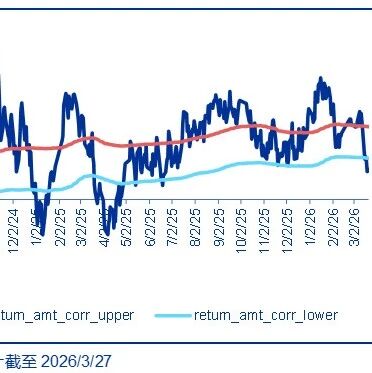
Market Sentiment - The market sentiment indicator as of March 27 is 1.2, down from 1.7 the previous week, indicating a bearish outlook as sentiment continues to decline throughout the week [1][6]. - The price-volume consistency indicator and RSI have both turned negative this week, reflecting a shift from previous oscillation to a sustained bearish view, indicating a weakening market [1][8]. Trading Volume - The total trading volume for the A-share market decreased by 0.65% week-on-week, with an average daily trading volume of 1,394.17 billion yuan, suggesting a slight decline in market activity compared to the previous week [1][10]. Industry Performance - As of March 27, the short-term score rankings for industries show that utilities, coal, power equipment, telecommunications, and oil and petrochemicals are leading, with utilities scoring 91.53, the highest among industries, and coal scoring 84.75, second [1][34]. - The industry crowding indicator shows a low correlation of 0.17 with the weekly price changes, indicating that the crowding level is not significantly impacting price movements [1][37]. Risk Appetite - The relative trading volume of the Sci-Tech 50 index remains low, indicating that market risk appetite is also low, with a slight fluctuation observed [1][13]. - The financing balance ratio has slightly increased this week, suggesting a minor rise in market sentiment and trading activity in the financing market [1][21]. Technical Indicators - The RSI indicator has penetrated the lower boundary and continues to decline rapidly, indicating a weakening short-term momentum [1][25]. - The main buying power indicator has shown a downward trend, reflecting reduced willingness from institutional investors to actively allocate capital in the market [1][28].